
The thing you’re secretly terrified of as a locum is not missing an airway. It’s getting sued.
Not talked about on the recruiter calls. Not on the glossy locums brochures. But it’s the 2 a.m. thought: What if I get sued as a locum physician? Am I just… on my own?
Let me be blunt: if you do locums without understanding your malpractice coverage cold, you’re playing financial Russian roulette. But the flip side: if you set this up correctly, you’re way more protected than your anxiety is telling you right now.
Let’s walk through this like someone who worries about worst‑case scenarios. Because that’s you. And honestly, it should be.
The Worst-Case Scenario: You Get Named in a Lawsuit
You’re six months into locums. Maybe you bounced between three hospitals in two states. You get an email from risk management. Or worse, a certified letter.
You. Are. Named.
The panic-script in your brain goes like this:
- “Does the locums agency cover this?”
- “What if I already left that hospital?”
- “What if the patient sues three years from now when I’m in another state?”
- “Can they come after my house? My savings?”
- “What if my ‘coverage’ wasn’t actually coverage?”
You’re not crazy to ask those. I’ve seen smart physicians blindsided because they trusted the line “Don’t worry, we cover malpractice” and never asked another question.
There are three pillars that determine whether this turns into a scary month or a life‑altering disaster:
- What type of malpractice policy you had
- Who actually provided it (agency vs hospital vs you)
- Whether the coverage follows the claim across time and jobs
If you understand those three, the whole “what if I get sued as a locum” thing becomes a lot less like freefall.
Malpractice Coverage 101 (Locums Edition)
Let’s decode the unpleasant part first.
There are two main policy types you’ll see as a locum:
- Claims-made
- Occurrence
And they behave very differently when you get sued years later.
| Feature | Claims-Made | Occurrence |
|---|---|---|
| Triggers coverage | When claim is filed | When care was provided |
| Needs tail if you leave? | Yes | No |
| Common in locums? | Very | Less common |
| More complex for multi-state locums? | Yes | Less |
Here’s the anxiety translation:
- Claims-made: You’re only covered if the policy is active when the claim is made. So if you worked Hospital A in 2024 and get sued in 2027, you need:
- A still-active policy covering that time
- Or a tail that extends that policy into the future
If there’s no tail? That 2024 work becomes effectively uninsured when the policy ends. That’s the nightmare scenario.
- Occurrence: You’re covered if the incident happened while the policy was active, even if the lawsuit comes years later. No tail needed for that period.
Locums agencies love saying “we provide malpractice” but they rarely lead with: “It’s claims‑made, here’s exactly who buys the tail, in writing.”
You need that in writing. Every. Single. Assignment.
Who Actually Covers You as a Locum?
Here’s where it gets messy and confusing on purpose. Different setups exist:
Coverage through the locums agency (most common)
They say: “We provide malpractice.” You need to know:- What limits (usually something like $1M / $3M)
- Claims-made or occurrence
- Who pays for tail when the assignment ends
- Whether it’s per-assignment or broad coverage for all their clients
Coverage through the facility/hospital
Common with direct locums contracts or academic centers. They add you to their policy. Again:- Is it claims-made?
- Do they provide tail when you leave?
- Does coverage include you if they get dissolved, bought out, or switch carriers?
Your own personal malpractice policy
You buy your own independent coverage as a locums doc. This can:- Fill in gaps if agencies are sketchy
- Cover you across multiple assignments
- Be tailored as occurrence (often safer for your anxiety)
But this is what actually happens: physicians assume #1 is always enough, never look at the contract, hop between agencies and hospitals, and then years later can’t tell who was supposed to cover what.
Your future sued-self will be begging you to keep a simple folder (physical or digital) with:
- Every locum contract
- The certificate of insurance (COI) for each assignment
- A one-page email from the recruiter or facility confirming:
- Policy type (claims-made vs occurrence)
- Limits
- Who pays for tail and when
If you do nothing else after reading this, do that.
Tail Coverage: The Thing That Will Keep You Up at Night
Tail coverage is the big one. This is the “bridge” that protects you after you leave an assignment that used a claims‑made policy.
No tail = past work functionally uninsured after you move on.
This is where I see the ugliest fights between doctors, agencies, and hospitals.
Common nightmare scripts:
- “I thought the agency was buying my tail.”
- “The contract says they only cover tail if the assignment lasts 12+ months.”
- “The hospital says their policy doesn’t cover temps after termination.”
- “The agency switched insurance carriers, and now no one knows who’s responsible.”
Your job (unfortunately) is to be the annoying person who asks about tail before you sign.
Very direct questions you should ask the recruiter and get in writing:
- Is the malpractice coverage claims-made or occurrence?
- If claims-made, who pays for the tail when I stop working there?
- Is tail automatic or conditional (e.g., only if I complete X months)?
- Does the tail start automatically at the end of the contract, or only if your company chooses to buy it?
- Can I get a copy of the malpractice declaration page for my records?
If they get vague, change the subject, or say “everyone is covered, we’ve never had a problem”—that’s not reassuring. That’s a red flag.
Here’s what a more stable setup looks like from a pure anxiety standpoint:
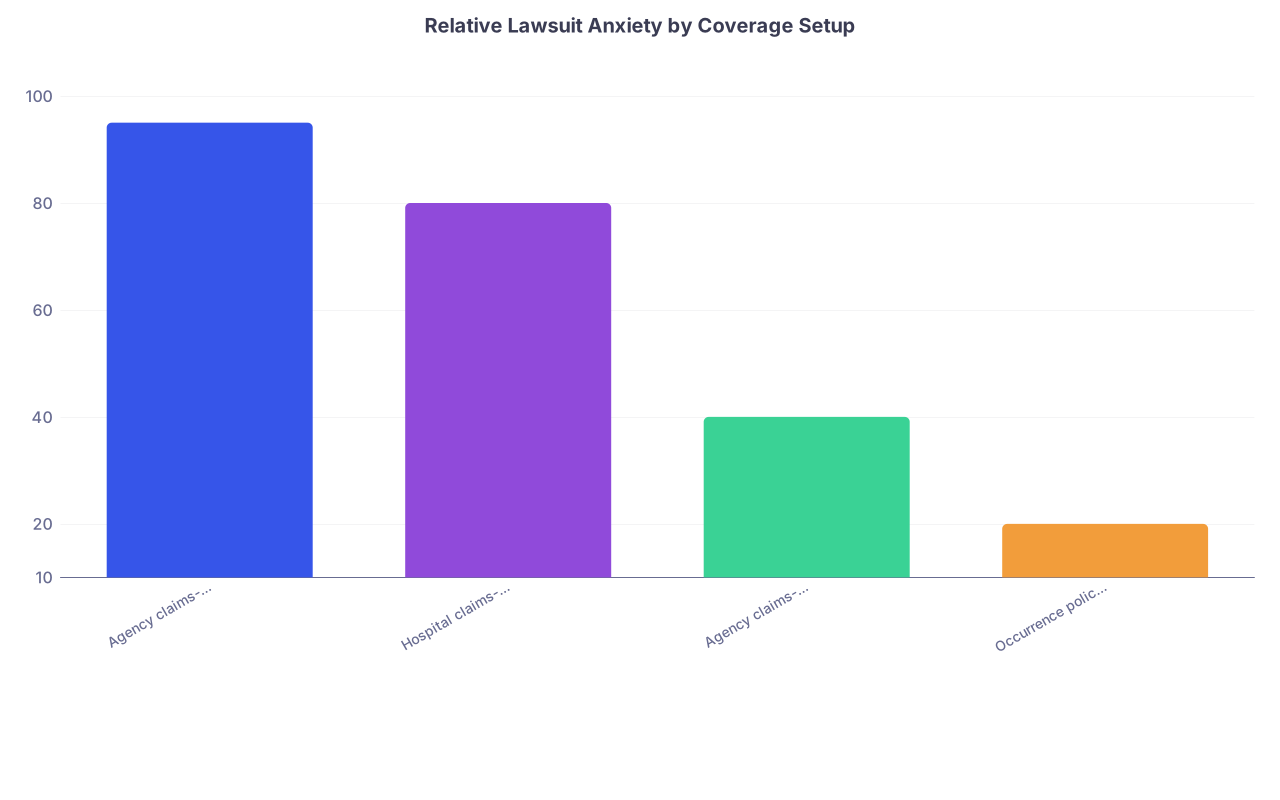
| Category | Value |
|---|---|
| Agency claims-made, no clear tail | 95 |
| Hospital claims-made, tail unclear | 80 |
| Agency claims-made, tail guaranteed in writing | 40 |
| Occurrence policy, no tail needed | 20 |
Is this oversimplified? Sure. But the pattern is correct: the more explicit and occurrence‑based or tail‑guaranteed the coverage, the less you’ll be spiraling at 3 a.m.
What Actually Happens When You’re Sued as a Locum
Let’s say the bad thing happens. You get named.
Here’s the sequence, stripped of the euphemisms:
- You’re notified (letter, email, hospital risk office)
- You notify whoever’s supposed to cover you:
- Agency risk/claims department
- Hospital risk management
- Or your personal malpractice carrier
- They open a claim and assign:
- A defense attorney
- Possibly a claims adjuster or risk manager contact
- You’re told:
- “Do not contact the patient or family.”
- “Do not alter the chart” (obviously).
- “Do not discuss the case outside of privileged meetings.”
It feels like you’re falling into a legal hole. But if your coverage is legit, you’re not supposed to pay legal defense costs out of pocket. The insurer handles:
- Attorney fees
- Expert witnesses
- Settlements (within policy limits)
Your worst-case financial fear is usually: “Are they going to take my house?” Real talk:
- If you’re properly covered and the claim resolves within policy limits, your personal assets usually aren’t touched.
- If the verdict exceeds policy limits, theoretically they could go after personal assets, but:
- That’s uncommon
- Often there’s settlement within limits
- This is why reasonable coverage limits matter (e.g., $1M/$3M or higher depending on state and specialty)
Where locum docs get burned is not “I lost a huge trial.” It’s “no one actually covered this time period” or “my coverage had already ended when the claim was made and I didn’t have tail.”
That’s the scenario you’re trying to avoid with all this contract reading and awkward questioning.
State Lines, Multiple Assignments, and Total Confusion
You know what makes this even more fun? Crossing state lines and juggling multiple sites.
Common anxiety triggers:
- “Do I need different limits in different states?”
- “What if I’m on two policies for the same week?”
- “What if one hospital has sovereign immunity and another doesn’t?”
- “What if I’m named both individually and as ‘Dr. So-and-So, locum through XYZ Agency’?”
Here’s the stabilizing version:
- Your malpractice policy (whoever provides it) should be state-specific compliant; that’s their job, not yours. Ask once: “Is this policy valid for [state] and does it meet that state’s minimum requirements?”
- It’s not inherently bad to be covered by multiple policies; it may actually help. Insurers can sort out who’s primary/excess. Your job is to not hide coverage and notify all relevant carriers if you’re sued.
- If a hospital claims some immunity/protection, that doesn’t usually erase your individual exposure. You still want your own name clearly on a real policy.
You’re allowed to say to a risk manager or recruiter: “I need clarity on which policy lists me by name and which policy will respond first to a claim.”
If they sound irritated, remember: they go home at 5. You’re the one potentially sitting in a deposition years later.
Practical Moves to Protect Yourself Before You Ever Get Sued
This is the stuff future-you will be grateful (and slightly shocked) you actually did.
Create a “Malpractice” folder
For every assignment:- Contract
- COI (certificate of insurance)
- Any emails confirming coverage type/limits/tail responsibility
Standard email script to recruiters
Copy/paste something like:“Before I finalize, I need written confirmation of:
- Policy type (claims-made vs occurrence),
- Coverage limits,
- Who is responsible for tail coverage for all work done under this assignment and under what conditions it is provided.”
Then save that reply as a PDF.
Know your limits
Don’t just “trust they’re standard.” Ask:- “What are the per-claim and aggregate limits?”
- “Have you ever had a locums doc hit those limits?”
Consider a personal umbrella / personal malpractice consultation
For high-risk specialties (EM, OB, neurosurg, anesthesia) or high-anxiety personalities (you, me), sitting down once with a malpractice broker or med-mal attorney can be worth it. Yes, you’ll pay. No, it’s not fun. But you buy clarity.
Here’s how this looks over a typical busy locums year:

| Step | Description |
|---|---|
| Step 1 | New Assignment Offer |
| Step 2 | Ask about coverage details |
| Step 3 | Get policy type and limits in writing |
| Step 4 | File contract and COI in folder |
| Step 5 | Work assignment |
| Step 6 | End of assignment |
| Step 7 | Confirm tail in writing |
| Step 8 | No tail needed |
| Step 9 | Move to next assignment |
| Step 10 | Claims-made? |
Nothing fancy. Just boring, defensive documentation. Your anxiety will still exist, but at least you’ll have paper to back you up.
What If I Already Did Locums and I’m Not Sure I Was Covered?
This is the part that really spikes your heart rate.
Maybe you did assignments in PGY‑3 moonlighting, or right after residency, and you didn’t even know the word “tail” back then. Now you’re wondering if there’s a ticking time bomb.
Deep breath. Here’s the triage:
Make a list of every locums gig / moonlighting site you can remember, with:
- Approx dates
- Agency or direct contract name
- Hospital/facility name
- State
Reach out to:
- Former agencies: Ask for past COIs, policy type, and whether tail was purchased when you ended.
- Facilities: Ask risk management if you were covered on their facility policy and if they maintain tail coverage for former locums.
Document their responses. Even if they say “we no longer have that,” you now have:
- Proof you tried
- Names, dates, and responses you can reference later
Optional, but rational if you’re very anxious:
- Short consult with a med-mal defense lawyer in the states where you worked. Ask directly: “Given this history, what’s my real exposure and what can I do now?”
Most of the time, this exercise turns panicked uncertainty into “Okay, I was actually covered more than I thought, and a few gaps are small and lower risk.”
Is it fun? No. Is it less awful than waking up five years from now with zero records? Absolutely.
Quick Comparison: Anxiety Levels by Setup
| Setup | Risk Level (Reality) | Anxiety Level (Feels Like) |
|---|---|---|
| Clear occurrence policy, docs saved | Low | Medium |
| Claims-made with tail guaranteed in contract | Low-Medium | High |
| Claims-made, tail “assumed,” no docs | High | Extreme |
| Multiple past locums, no records, no idea who covered | Variable | Off the charts |
Your brain tends to push everything into that last category. The actual goal is to drag yourself into the top two, where reality and anxiety at least start talking to each other.
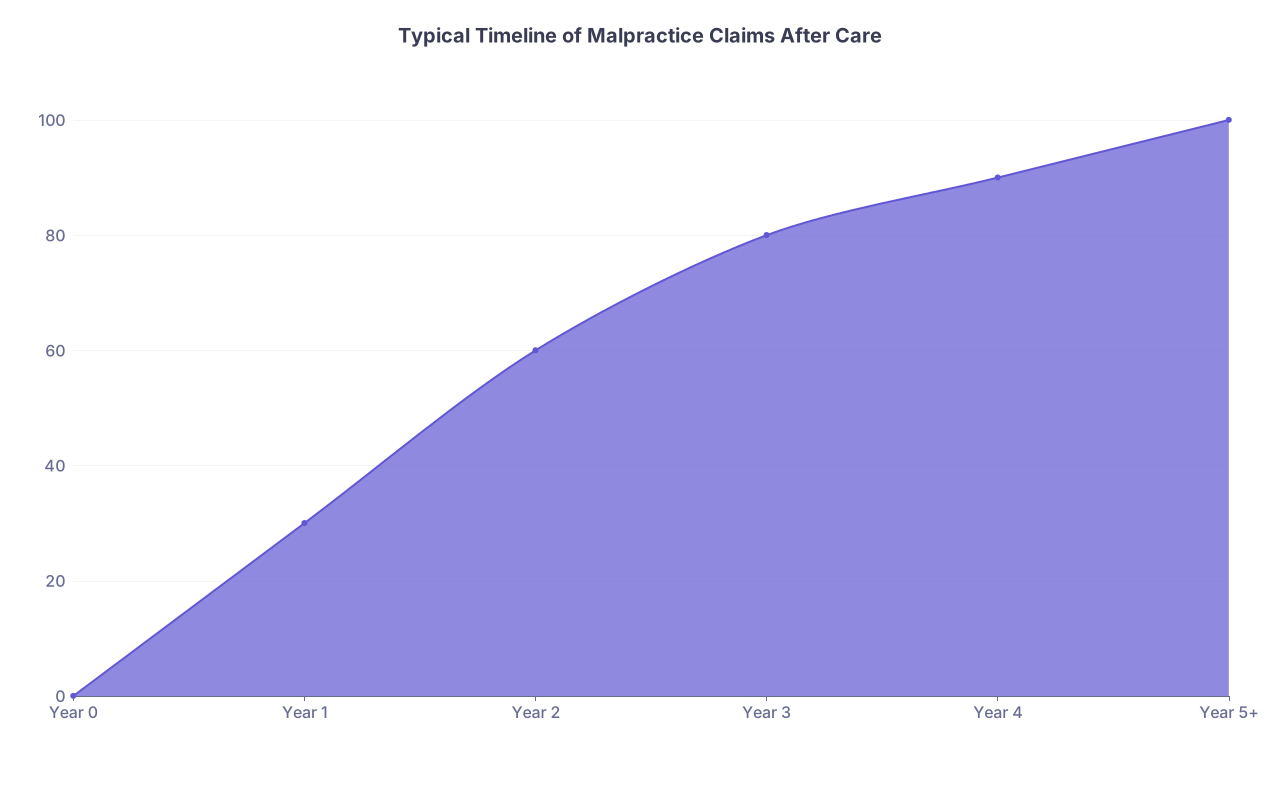
| Category | Value |
|---|---|
| Year 0 | 0 |
| Year 1 | 30 |
| Year 2 | 60 |
| Year 3 | 80 |
| Year 4 | 90 |
| Year 5+ | 100 |
Most claims don’t pop up the same week as the encounter. They creep in over years. That’s why all of this “tail” talk matters. You’re not being paranoid. You’re planning for how medicine actually works.
FAQ (Exactly the Stuff You’re Afraid to Ask Out Loud)
1. Can I personally be sued even if the hospital or agency “covers” me?
Yes. Plaintiffs almost always name everyone: you, the hospital, the nursing home, the agency, the janitor if they can find a way. Coverage doesn’t stop you from being named; it’s what pays for your defense and potential settlement. That’s why you care who’s actually insuring you, not just that some entity has coverage in the abstract.
2. Could I lose my personal assets (house, savings) as a locum if a verdict is huge?
Worst-case? It’s possible if:
- The verdict massively exceeds your policy limits
- Or some period of your work was completely uninsured
In practice, big cases usually settle within limits, and good coverage makes that less terrifying. Your main job is: don’t work uninsured and don’t let claims-made coverage end without tail. If you’re in a very high-risk specialty or have large assets, talk to an attorney about asset protection and possibly higher limits.
3. Is it overkill to get my own malpractice policy if the locums agency already covers me?
Not overkill if you’re anxious and bouncing between multiple agencies or doing some independent gigs. A personal policy (especially occurrence) can:
- Provide consistency across assignments
- Cover you when some agency’s policy is vague
- Give you one place to call if you get sued
But it costs money, and you need to be sure there’s no exclusion against locums work. It’s a tradeoff: money now vs. peace of mind and reduced chaos later.
4. What happens if an agency goes out of business after I leave—am I just exposed?
If they were providing a claims-made policy and didn’t secure tail before disappearing, that can be a real problem. If they bought tail from the insurer, you’re generally still covered, because tail sits with the carrier, not the agency’s existence. This is why you want documentation from the insurer (COI, tail confirmation), not just verbal reassurances from a recruiter whose company might not exist in 5 years.
5. Can I negotiate tail coverage into my locum contract?
Yes, and you absolutely should try. Especially for:
- Longer assignments
- High-risk specialties
- Direct contracts with hospitals
You can ask for language like: “Upon termination of this agreement, Facility/Agency shall purchase extended reporting (tail) coverage for Physician for all services rendered under this agreement, with limits at least equal to those in effect during the term.” They might push back. Sometimes you lose that fight. But asking forces clarity, and sometimes you win.
6. If I get a letter about a possible claim, should I call a lawyer myself or just the insurer?
First call: the insurer or risk management you believe covers that work. That notifies them properly and triggers defense. If the situation feels off—like they’re hinting you might not be covered, or there’s a dispute between agency and hospital—then yes, you can and sometimes should get your own independent attorney to advise you specifically. The insurer’s lawyer defends you, but their client is the carrier. Having someone whose client is just you can lower your blood pressure a lot in messy cases.
Key takeaways, stripped down:
- Do not do locums on blind faith—know who covers you, what type of policy it is, and who buys tail, in writing.
- Save every contract and COI like they’re gold; future-you in a lawsuit will depend on them.
- You’re not crazy for worrying about this. But if you set up coverage correctly, the “I’m going to lose everything” scenario becomes incredibly unlikely, not inevitable.