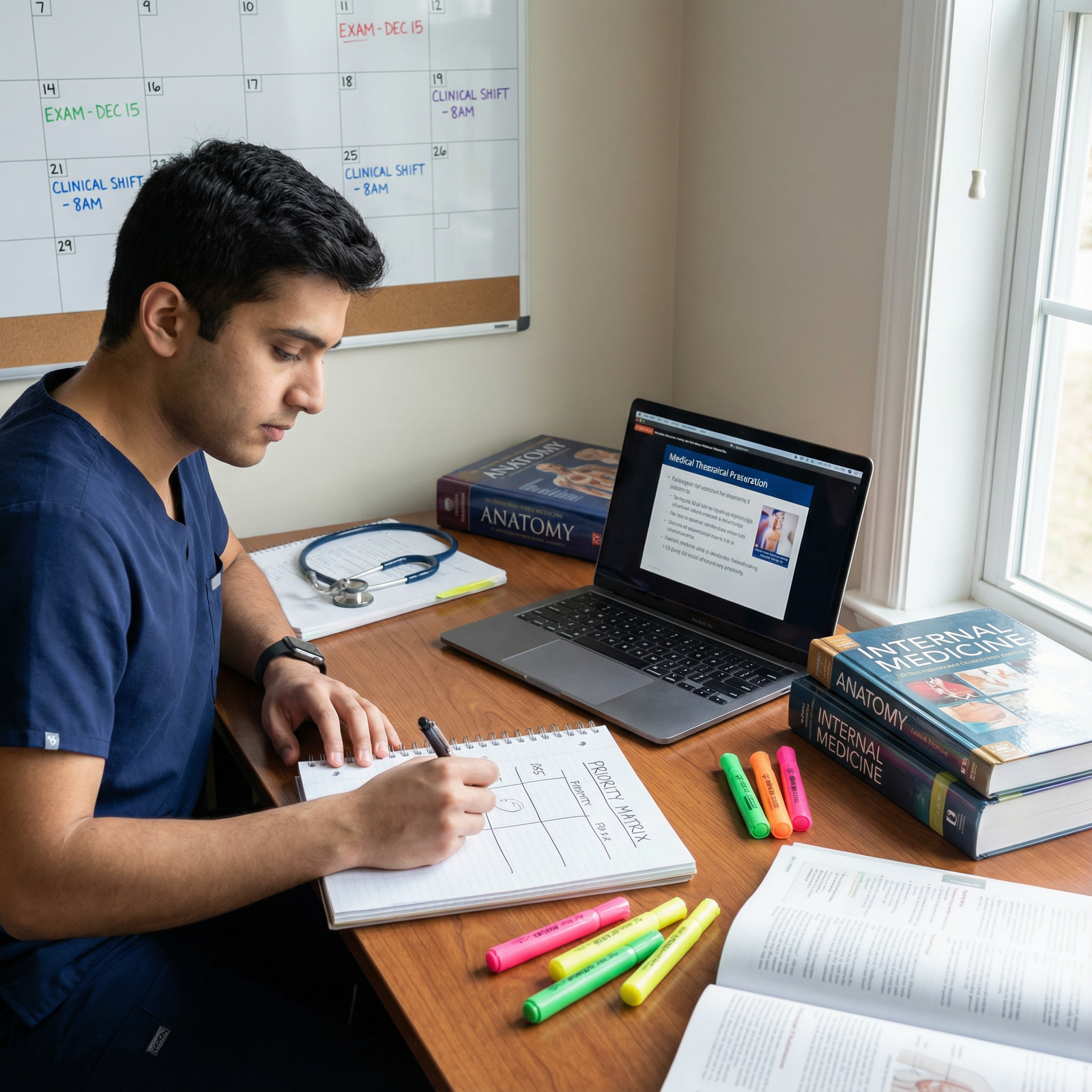
The most dangerous part of USMLE prep is not the exam. It is the hours you quietly waste in “productive” group study that is anything but.
You are not just at risk of losing time. You are at risk of copying bad strategies, memorizing partial information, and walking into the exam with false confidence because your group “went over everything.” I have watched strong students sink their Step scores by clinging to dysfunctional study groups out of fear of missing out.
Let’s walk through the group study traps that sabotage USMLE prep, and how to avoid walking into them like everyone else.
1. The False Productivity Trap: Talking ≠ Learning
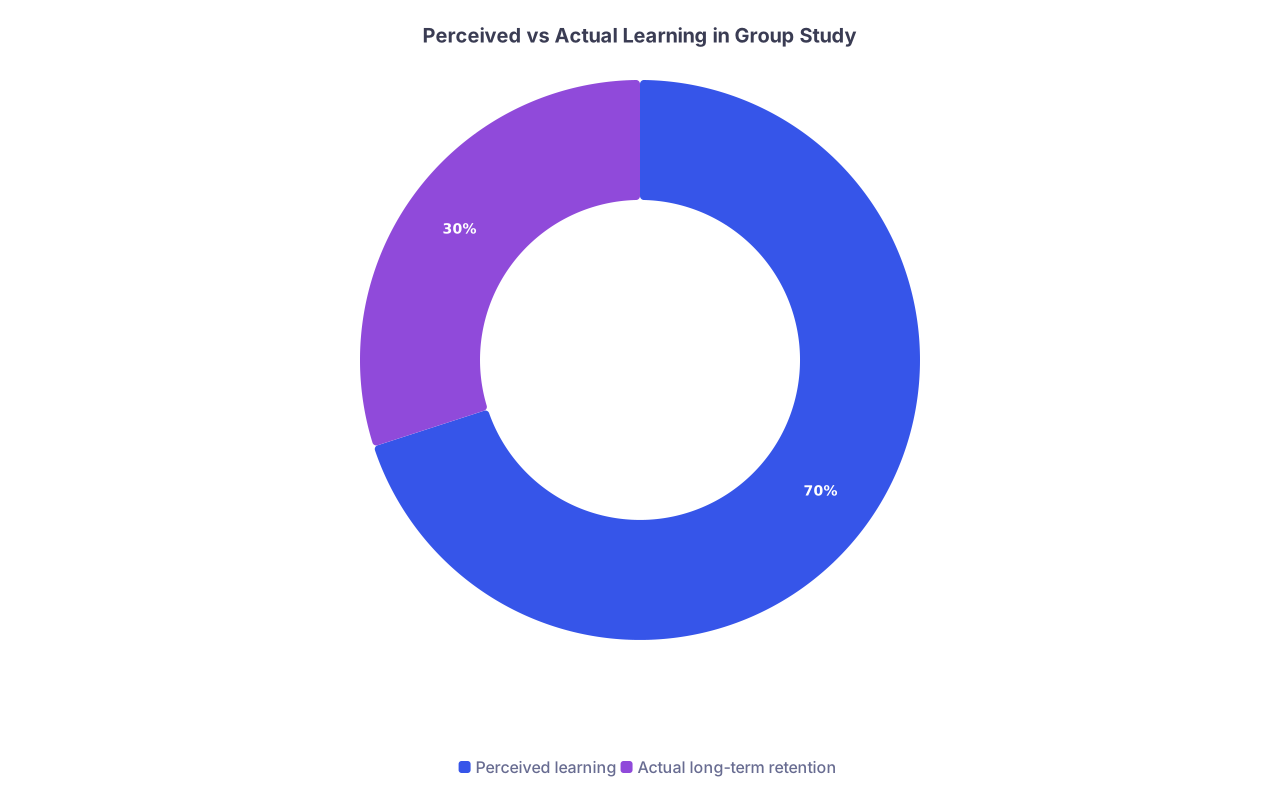
| Category | Value |
|---|---|
| Perceived learning | 70 |
| Actual long-term retention | 30 |
The first mistake is simple: mistaking activity for learning.
Group study feels productive. You are:
- Talking through questions
- Nodding along
- Agreeing with explanations
- Highlighting notes together
You walk out exhausted and think, “We crushed it today.” You did not. Most of what happened was passive.
Red flags your group session is fake productivity:
- You speak in vague generalities: “Yeah, so basically nephrotic is protein, nephritic is blood.”
- Nobody is writing their own answers before discussion; you just “talk it out.”
- People are scrolling through PDFs or Anki decks while someone else explains.
- You all “get” the explanation, but nobody can reproduce it cleanly when cold-called.
Here is the painful truth:
If you are not retrieving information yourself, you are not preparing for the USMLE. The exam will not be a group discussion; it will be you, alone, with a timer and a question that does not care how nicely your classmate explained hepatorenal syndrome last night.
What to do instead
If you insist on group sessions, enforce this rule:
Everyone answers silently first. Then you discuss.
That means:
- Pick 10–15 questions from UWorld/NBME-style sources.
- Each person writes down their answer and why they chose it.
- Only after that do you go around and defend your reasoning.
If people resist that structure, you just identified your problem. The group cares more about comfort than performance.
2. The “Social Support” Group That Becomes a Complaining Circle

There is a real need for emotional support during USMLE prep. But many “study groups” are actually venting groups with a thin layer of academic guilt on top.
You know this group:
- First 30 minutes: talking about how awful the exam is, how unfair the curve is.
- Next 20 minutes: trading horror stories about last year’s class.
- Random tangents: gossip about who got which score, who is applying derm, which attending is toxic.
- Actual studying: squeezed into whatever crumbs of time remain before someone has to leave.
By the end, you feel emotionally closer to your classmates but academically stuck in the same place.
Why this is dangerous before USMLE:
- It normalizes anxiety and helplessness instead of strategy.
- It reinforces the idea that “everyone is screwed,” which kills your urgency.
- It eats peak brain hours on emotional processing that you could have reserved for solo question blocks.
Support is not the problem. Unstructured support disguised as “study” is.
How to separate support from study (so you do not wreck both)
- Set explicit boundaries:
- “First 5 minutes: check-in. Then we work. No extended complaining.”
- Create a separate time for venting:
- Group dinner, walk, or coffee after your dedicated solo blocks.
- If someone constantly derails the session with negativity, stop pretending it is a study group. Either:
- Turn it into an actual social group, or
- Shrink the group and keep only people who respect structure.
Do not tie your exam performance to a setup where emotional chaos dictates your schedule.
3. The Mismatch Trap: Studying With the Wrong People for Your Level
| Group Type | Risk to Your Prep |
|---|---|
| Slightly stronger peers | Low |
| Similar-level peers | Moderate |
| Mixed, wide range | High |
| Mostly weaker than you | Very High |
| Mostly much stronger than you | High |
One of the worst mistakes I see: good students joining weak or chaotic groups out of loyalty or fear of missing out. Or weaker students clinging to much stronger peers and hoping scores will rise by osmosis.
Both versions are dangerous.
If you are stronger than the group
You become:
- The default explainer
- The one who “knows the answers”
- The anchor that everyone leans on
You feel important, which is seductive. But you are sacrificing your own learning to tutor others. There is a time and place to help. The month before Step 1 or Step 2 is not that time.
If you are weaker than the group
You risk:
- Nodding along without truly grasping concepts
- Being too embarrassed to stop and say, “I do not understand this basic step”
- Letting others drive the pace so fast you do not consolidate anything
- Mistaking exposure for competency: “We saw this; I should be fine.”
The USMLE does not care that you “went over” heart failure five times in a group. It only cares whether you can solve it, alone, at speed.
How to choose the right group (or walk away)
You want:
- 2–4 people max. Anything larger collapses into chaos.
- Comparable work ethic and seriousness.
- Similar timeline and exam date.
- Some overlap in score goals and baseline performance.
And you must have the courage to leave if:
- You are teaching far more than you are learning.
- You feel lost but are too intimidated to slow things down.
- The group refuses to adjust structure despite poor outcomes.
Loyalty to a dysfunctional group is not noble. It is self-sabotage.
4. The Question Discussion Trap: Over-Talking a Single Item
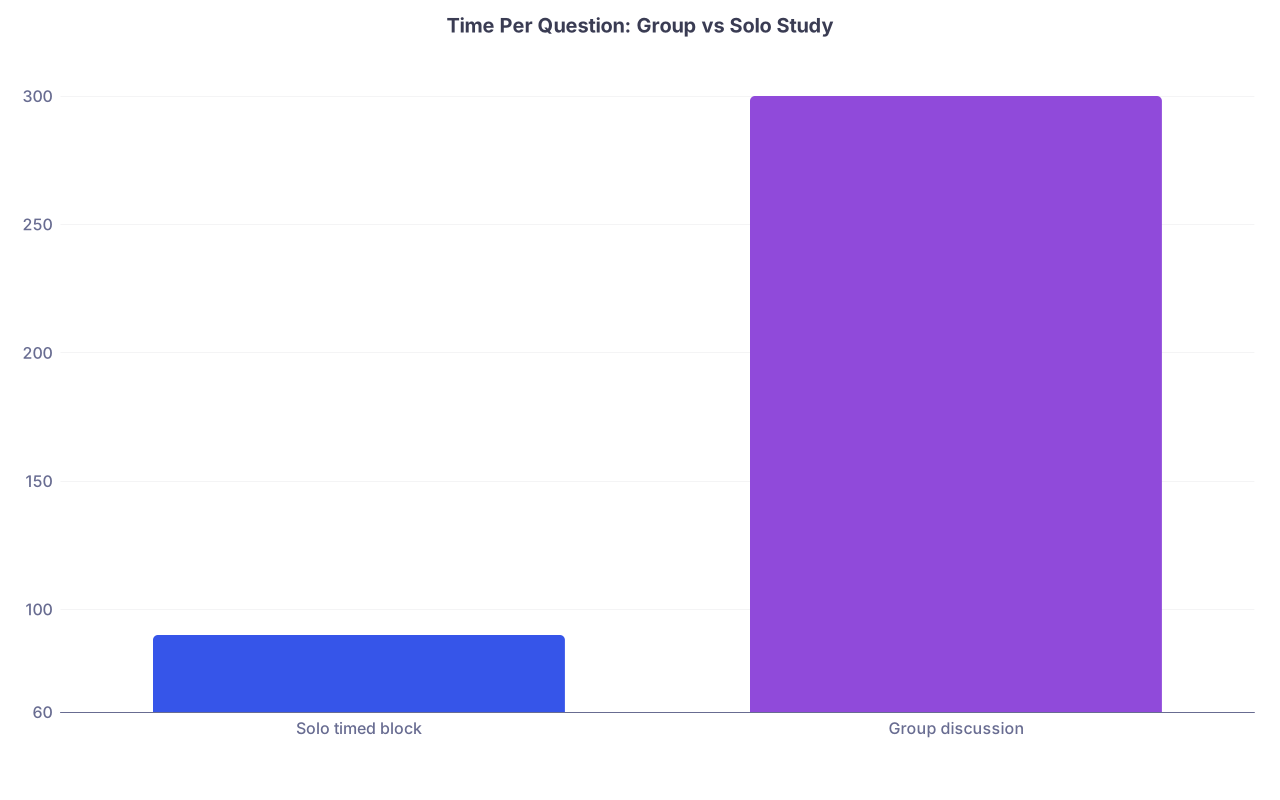
| Category | Value |
|---|---|
| Solo timed block | 90 |
| Group discussion | 300 |
Here is a classic time sink: the 20-minute question.
You know the one. Someone pulls up a renal question and suddenly:
- You are arguing over exact Starling forces formulas
- Someone wants to “review all the diuretics while we are at it”
- Another person dives into a 10-minute story about a patient on their rotation
- Then someone decides to redraw the entire nephron on the board
And boom—15–20 minutes are gone. For a single item.
Multiply that across 8–10 questions. You just turned what could have been a high-yield hour into a bloated, unfocused three-hour marathon with the same or worse retention.
Why this kills your performance
The exam is not testing whether you can reconstruct an entire textbook topic from memory after one question. It is testing pattern recognition, core concepts, and speed. Over-talking a single item tricks you into thinking:
- “We went really deep; this must be solid now.”
- “We covered everything around this topic.”
Reality: your breadth suffers, and breadth is what you need to survive an 8-hour test with hundreds of vignettes across all systems.
A healthier structure for group questions
Use a strict protocol:
- Timed answering:
- Everyone answers silently in exam-like time (60–90 seconds per question).
- Quick poll:
- A, B, C, D, E—hands up. No justification yet.
- One person explains their reasoning in < 2 minutes.
- Group clarifies only the key concept tested.
- Move on.
If a topic exposes a big gap (e.g., nobody understands restrictive vs obstructive lung disease), mark it for solo review later instead of hijacking the whole session.
If your group refuses to time-limit discussions, you are not in a prep session. You are in an academic book club.
5. The Resource Chaos Trap: Everyone Using Different Materials
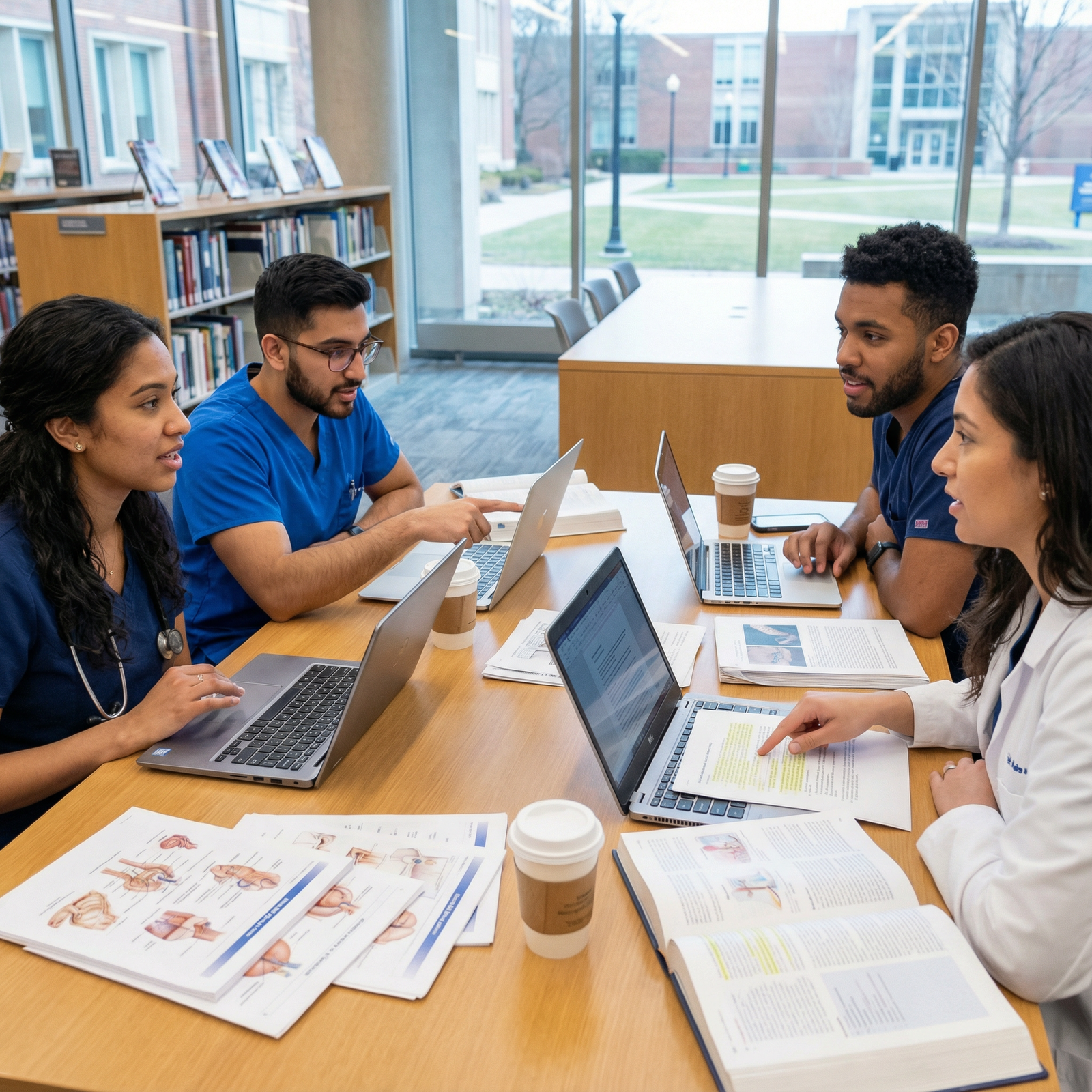
Wildly underrated problem: resource mismatch.
I have seen groups where:
- One person is on UWorld, one on AMBOSS, one on a random PDF of old questions.
- Someone keeps referencing a review course nobody else uses.
- Another swears by Boards and Beyond; someone else only does Anki.
- People argue about minutiae from different sources instead of building a shared, clean framework.
This leads to:
- Conflicting explanations that waste time resolving
- Fragmented mental models (“Wait, in my book it says…”)
- Endless side debates about which resource is “best” rather than using any of them properly
Better approach: standardize or separate
If you are going to work in a group:
- Use the same primary question bank in-session (UWorld, NBME-style, etc.).
- Agree on a reference hierarchy, e.g.:
- UW/NBME explanation
- First Aid / school’s preferred text
- One agreed-upon video source if absolutely needed
If someone insists on a different universe of resources and constantly drags the group into it, they may need to study separately and compare notes only at high level.
You cannot build a coherent understanding while everyone is pulling from a different rulebook.
6. The Scheduling Trap: Group Study Eating Your Best Brain Hours

| Step | Description |
|---|---|
| Step 1 | Morning: Peak focus |
| Step 2 | Timed solo question blocks |
| Step 3 | Midday: Moderate focus |
| Step 4 | Targeted review & Anki |
| Step 5 | Late afternoon: Lower focus |
| Step 6 | Optional short group session |
| Step 7 | Evening: Depleted |
| Step 8 | Light review / Rest |
Another subtle trap: putting group study in your peak cognitive hours.
Most people do their best focused work:
- Early morning
- Or mid-morning after waking up fully
Yet I routinely see schedules like:
- 9–12: Group study “to start the day together”
- 1–4: Solo questions
- 7–9: Exhausted, guilty “review”
That is backwards.
Group sessions, by design, are:
- Slower
- Less tightly controlled
- Vulnerable to tangents and delays
You are burning your sharpest thinking time on the least efficient format.
How to protect your high-yield hours
Flip it:
- Morning: solo, timed, exam-like question blocks + immediate review.
- Midday/early afternoon: content review, Anki, filling gaps.
- Late afternoon or early evening: optional, tightly structured group work.
If the only time the group can meet is during your best solo window, you have a choice:
- Protect your score, or
- Protect the group’s convenience
Before USMLE, you cannot afford to choose convenience.
7. The Confidence Echo Chamber: Mistaking Group Success for Individual Readiness
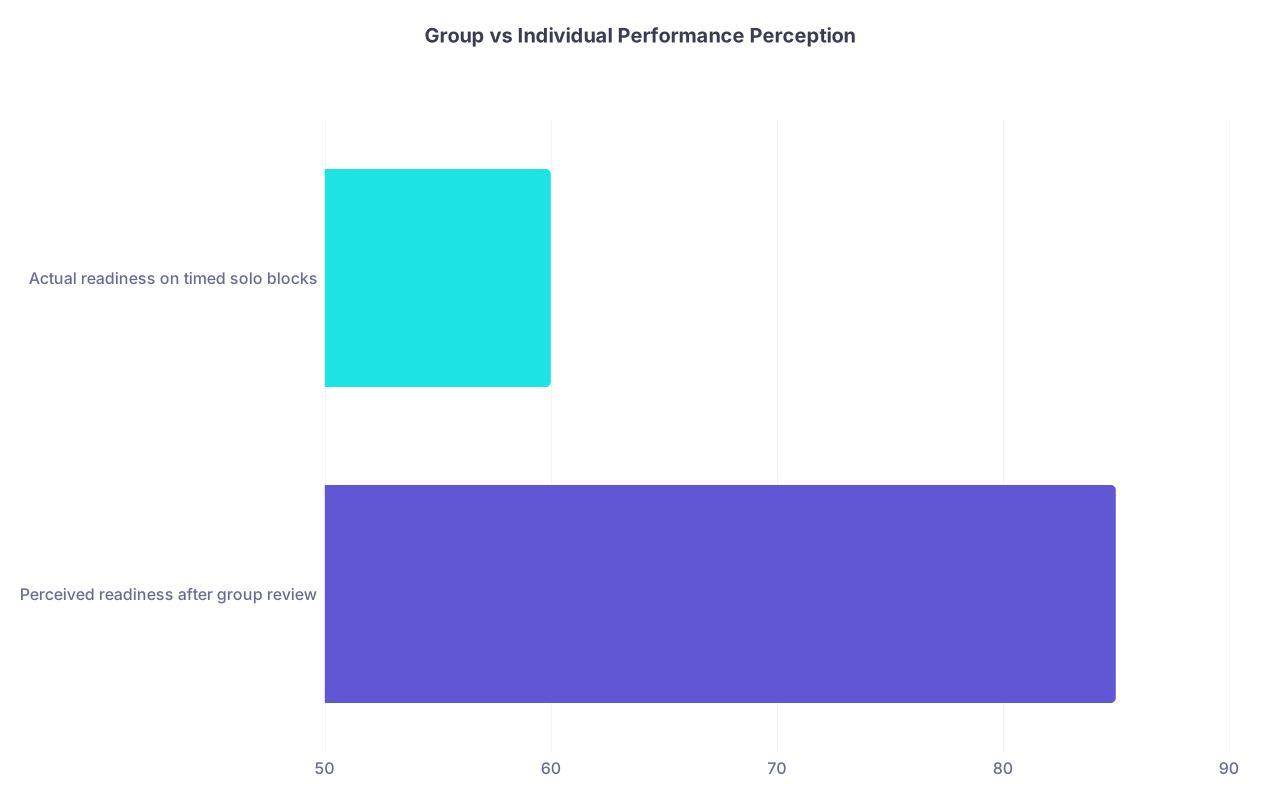
| Category | Value |
|---|---|
| Perceived readiness after group review | 85 |
| Actual readiness on timed solo blocks | 60 |
Group study has a nasty psychological side effect: it inflates your sense of readiness.
Here is how it happens:
- In the group, someone always knows the answer.
- Difficult explanations get smoothed out collectively.
- You hear the right answer multiple times, which feels familiar and safe.
- You walk out thinking, “We know cardiology cold.”
Then you sit alone in front of a timed block and get wrecked by cardiology.
Why?
Because during group sessions:
- You benefit from pooled knowledge, which will not exist on test day.
- You get cues and hints from others’ reasoning.
- You are not under full time pressure and performance stress.
- You rarely face the humiliation of blanking completely on your own.
This creates what I call “group fluency illusion”: your brain mistakes the group’s competence and repeated exposure for your own independent mastery.
How to break this illusion
Non-negotiable rule:
Your real readiness is measured by timed, solo blocks and NBME practice exams. Not by how you feel in group.
So:
- Track your solo question performance weekly (blocks of 40, timed).
- Make decisions about time allocation and content based on those metrics.
- Use the group only to patch specific, identified weaknesses—not to estimate overall readiness.
If your solo metrics are stagnant or declining, but your group feels “amazing,” believe the numbers. Not the vibe.
8. How to Structure Group Study So It Does Not Wreck You
You do not have to abandon group work completely. You do have to get ruthless about structure.
A safe template (90–120 minutes max):
5 minutes – Agenda and roles
- Decide: topics, number of questions, end time.
- Assign: timekeeper, moderator.
40–60 minutes – Timed questions (solo first)
- Everyone answers 10–20 questions independently under strict time.
- No talking until all are done.
30–40 minutes – Focused discussion
- For each question:
- Quick poll of answers.
- One person explains reasoning.
- Group clarifies core concept only.
- Any big gaps: mark for later solo review.
- For each question:
10–15 minutes – Debrief
- Each person identifies 2–3 topics to review alone.
- Decide if the group is still worthwhile or needs adjusting.
And here is the critical safeguard:
If the group repeatedly breaks time limits, drifts off-topic, or refuses structure—leave. You owe them nothing that is worth your score.
FAQ (Exactly 4 Questions)
1. How do I know if I should stop group studying altogether before my USMLE exam?
Ask yourself three questions:
- Are my solo timed block scores improving, stable, or getting worse since starting group sessions?
- Do I leave group study feeling clearer and more focused, or drained and uncertain?
- If I stopped group tomorrow, would my actual study hours and question counts go up or down?
If your performance metrics are flat or falling, and your question volume is suffering, cut group sessions for at least 2 weeks and reassess. Your score is more important than the fear of missing out.
2. Is there any situation where group study is actually high-yield for USMLE?
Yes, but only when it is narrow and specific. For example:
- Rapid-fire pathology image ID with a small, serious group.
- Brief sessions to explain 2–3 high-yield concepts that everyone struggled with on NBMEs.
- Dedicated “teaching days” where each member prepares a concise, 10-minute board-style mini-lesson on a single topic.
Even then, these should be a supplement to heavy solo question work, not the bulk of your prep.
3. My friends want to keep our big group going, but I study much better alone. How do I say no without alienating them?
Be direct and blame the exam, not them. For example:
“I realized I learn best from timed solo blocks and quick review. I need to switch to mostly solo study until my exam date. I am still happy to grab coffee or do a short check-in once a week, but I cannot commit to long group sessions right now.”
Anyone serious about their own exam will understand. If they guilt-trip you, that is another sign you made the right choice.
4. How close to my exam date should I completely avoid group study?
For most students, the last 2–3 weeks before Step 1 or Step 2 should be almost entirely solo, with very limited group interaction (if any). You need to:
- Mimic test conditions.
- Follow your own weak-area map.
- Protect every hour.
Short, targeted, structured group reviews can still be acceptable early in the dedicated period, but as the exam approaches, the cost of misusing time rises sharply. Err on the side of independence.
Open your calendar for the next 7 days and mark your best-focus hours. Now assign those slots to solo, timed question blocks—and only then decide if there is any leftover time worth risking on group study.