
The myth that attendings notice every awkward word you say on rounds is flat-out wrong.
Or at least… it’s wildly exaggerated compared to how it feels in your head at 7:02 a.m. when your heart is pounding and your mouth goes dry right before it’s your turn to present.
Let me guess what’s been running through your mind:
“I blanked on the assessment—do they think I’m incompetent?”
“I said ‘um’ like 14 times. They definitely noticed.”
“I mixed up creatinine and BUN. That’s it. Career over.”
Yeah. I know that brain. The catastrophizing, replaying-every-interaction-at-3-a.m. brain. Let’s walk through what’s actually happening on rounds, how much attendings really notice, and what they do remember when they sit down to evaluate you.
Because no, your one awkward presentation on Tuesday probably didn’t tank your eval. But also no, you’re not invisible.
There’s a middle ground.
What Attendings Are Actually Paying Attention To (That You Don’t Realize)
Here’s the piece nobody tells you: attendings are not primarily judging the “performance” you’re obsessing over. They’re filtering 30 different things at once, and your presentation is just one small input.
Most of them are paying way more attention to patterns than to individual moments.
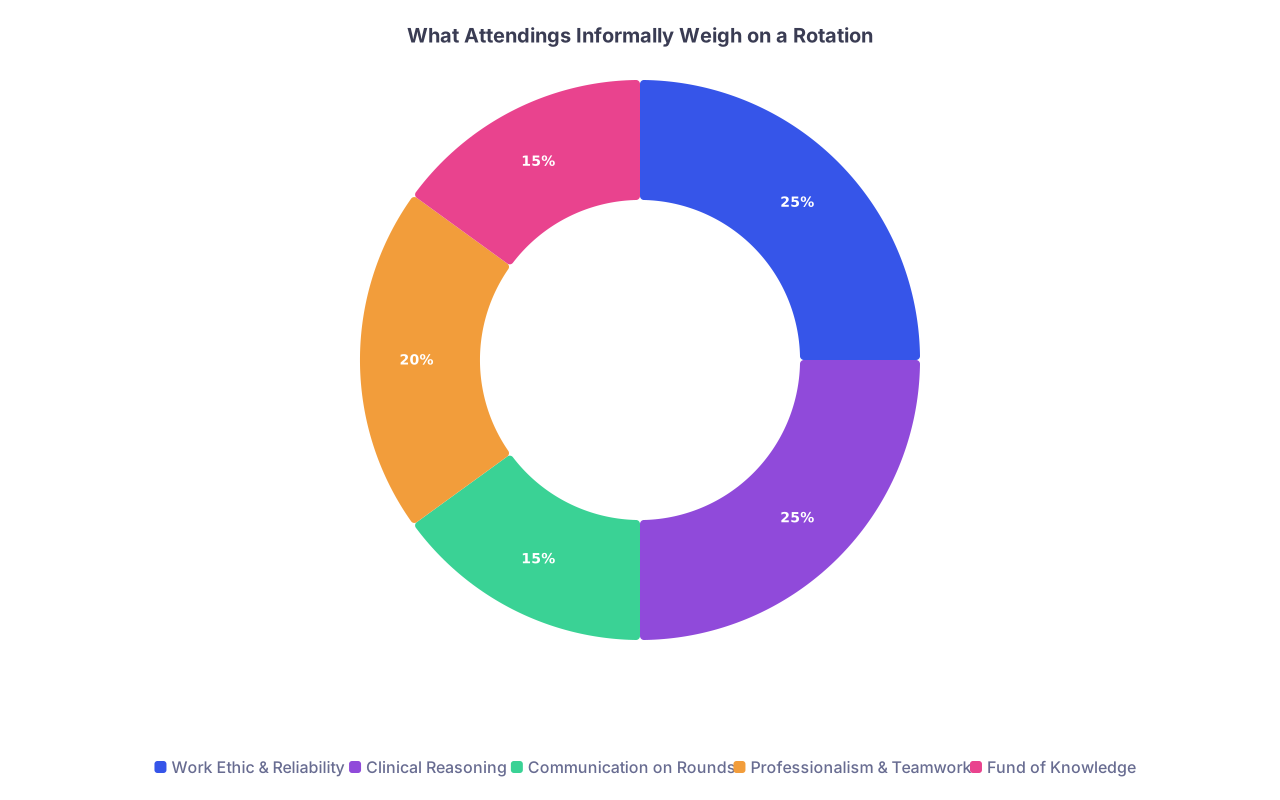
| Category | Value |
|---|---|
| Work Ethic & Reliability | 25 |
| Clinical Reasoning | 25 |
| Communication on Rounds | 15 |
| Professionalism & Teamwork | 20 |
| Fund of Knowledge | 15 |
I’ve seen attendings do this in real time when filling out evals. They don’t say “On 11/3 at 8:12 a.m., student stumbled over sodium level.” They say things like:
- “Shows improvement over the course of rotation.”
- “Good team player, comes prepared.”
- “Needs to work on confidence when presenting.”
Notice how vague that is? That’s because most don’t have a perfect memory of specific sentences you said on rounds. They remember a vibe. A general trend.
You remember the one time you mispronounced “piperacillin-tazobactam.”
They remember whether, by the end of week two, you could give a coherent, structured presentation without prompting.
Do They Notice When You’re Quiet? Yes. But Not The Way You Think.
This is the fear that really stings: If I don’t talk much, will they think I’m lazy or dumb?
Short answer: They notice patterns of silence. But usually not the way you’re spinning it.
If you’re consistently:
- Standing in the back
- Never volunteering an answer
- Giving super short, hesitant responses when asked directly
Then yeah, they clock something like: “shy,” “low confidence,” or “hard to assess.”
That last one is the annoying part: “hard to assess” can translate into a bland, middle-of-the-road evaluation because they never got to see what you can do.
But here’s the part your anxiety is ignoring: they also notice effort. Even messy, awkward, stumbly effort. An attending will absolutely think more highly of the student who:
- Tries to answer, gets it half-right, is open to feedback
…than the student who never opens their mouth and just stares at the floor.
If you spoke up three or four times on a busy set of rounds and felt like you bombed every one of them, there’s a real chance the attending’s mental note was simply: “Participated. Needs more polish but engaged.”
Not exactly the cinematic failure you’re imagining.
What They Remember vs. What You Obsess About
Let’s put it side by side, because your brain is exaggerating the wrong column.
| Thing You Spiral About | What Attendings Actually Remember |
|---|---|
| Saying “um” constantly | Were you generally understandable and organized? |
| Pausing to check notes | Did you know your patients overall? |
| One wrong lab value | Did you fix mistakes quickly and learn from them? |
| Speaking too fast/too quiet once | Did your communication improve over time? |
| Not knowing a random obscure fact | Did you read and follow up on feedback and knowledge gaps? |
Most attendings will not remember:
- The exact wording you used
- The number of times you looked at your note
- That one time you misunderstood the imaging from two days ago
They’re much more likely to remember:
- Week 1 vs. Week 3 difference
- Whether you showed up prepared
- Whether you seemed to care about the patients
- If you were respectful to nursing and staff
- If you took feedback seriously
I’ve watched a student who flubbed multiple presentations end up with honors because the attending wrote: “Huge growth over the month, eager to learn, strong team member.” Their presentations were never perfect. But they improved. And that’s what stuck.
The Worst-Case Scenarios You’re Imagining (And What Actually Happens)
Let’s lean into the catastrophizing brain for a second, because I know it’s already there.
“I froze and couldn’t finish my presentation. They must think I’m incompetent.”
Realistic attending reaction: “Nervous student, needs structure. Probably knows more than they can show under pressure.”
If that happens once, it’s a blip. If it happens repeatedly, it might end up as: “Needs more confidence and organization when presenting.” That’s not a career-ending comment. That’s practically template feedback on half of med students.
“They pimped me and I missed every question. They definitely think I don’t know anything.”
You’re overestimating both their memory and their expectations.
Some attendings fire off rapid questions to probe your level. They’re not expecting a 100% hit rate. Sometimes they’re literally trying to figure out what level to teach at.
I’ve seen plenty of eval comments like: “Knowledge appropriate for level. Needs to continue to build fund of knowledge.” That could apply to the student who missed one question. Or ten. They’re not writing: “Student incorrectly stated the mechanism of action of vancomycin on 10/5.”
“I contradicted the resident in front of the attending. I’m done.”
This one depends heavily on how you did it.
If you aggressively said, “That’s not right,” and tried to flex your UpToDate knowledge publicly? Yeah, that can create a “not a team player” impression.
But if you said something like: “I thought I read last night that we typically don’t use that in AKI—is that wrong?” most attendings see that as curiosity, not mutiny. Half the time they’ll say, “Good question, let’s look it up after rounds.”
Your anxiety is confusing “I drew attention” with “I ruined my reputation.” Those are not the same thing.
How Much One Bad Day Actually Matters
Here’s the harsh-but-oddly-reassuring truth: one bad day on rounds almost never defines your eval. But a consistent pattern does.
I once watched an attending fill in evals for an entire team after a month-long rotation. Their process (more honest than you’d think):
- “Who was always prepared? That person gets top marks.”
- “Who seemed lost most of the time? That’s the ‘needs improvement.’”
- “Who was quiet but solid? That’s the ‘meets expectations’ with a note about confidence.”
- “Who improved? I’ll bump them a bit and mention growth.”
No one pulled up a log of individual presentations. No one replayed that one painfully awkward differential you gave on day 3.
Pattern > performance. Always.
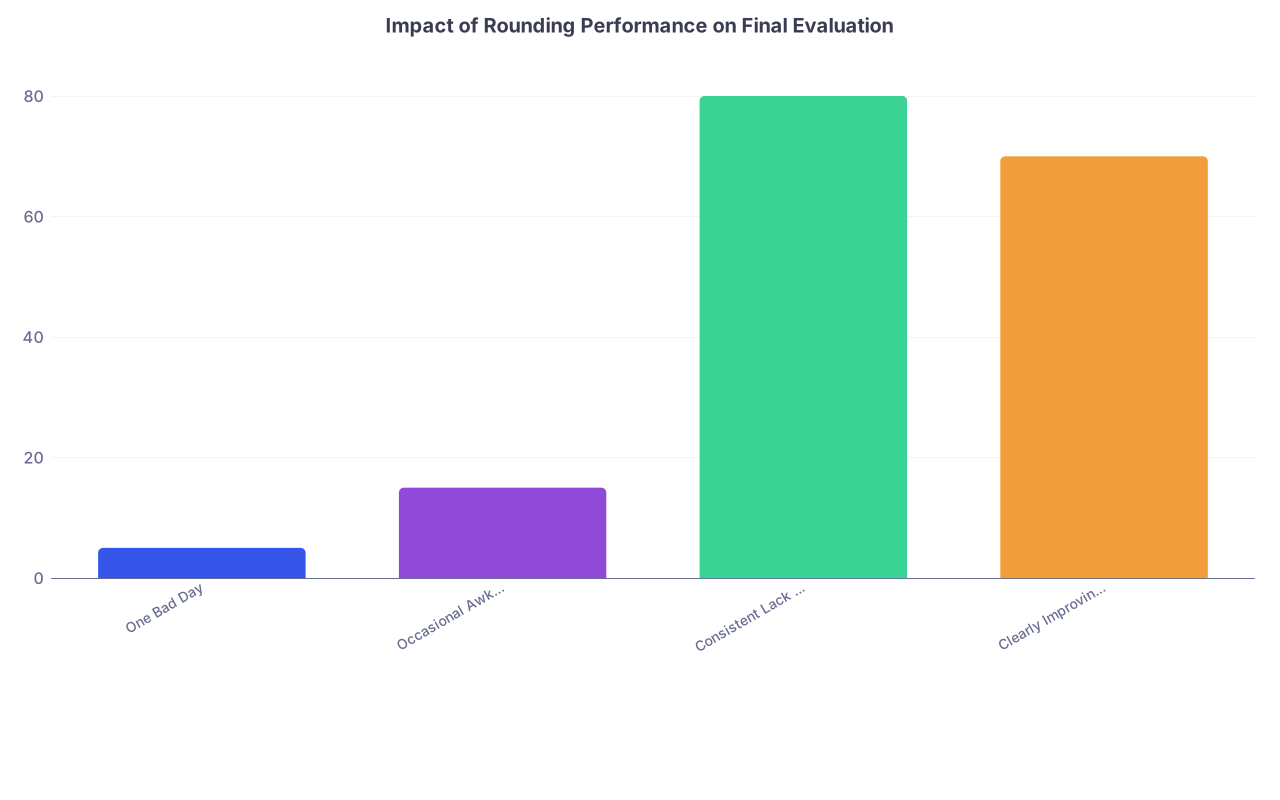
| Category | Value |
|---|---|
| One Bad Day | 5 |
| Occasional Awkward Presentations | 15 |
| Consistent Lack of Preparation | 80 |
| Clearly Improving Over Time | 70 |
That chart is rough, but honest: attendings care way more about chronic issues (never prepared, chronically disengaged) and are very positively biased toward clear improvement.
If your story is: “I was shaky the first week, better the second, and kind of okay by the third,” you’re in the majority. And you’re probably going to be evaluated as at least average, sometimes better.
What Attendings Secretly Like Seeing On Rounds (Even If It’s Messy)
This is the part students don’t believe when I say it: attendings are weirdly charmed by certain imperfect things, if they come from a genuine place.
They tend to like when you:
- Admit when you don’t know something and offer to look it up.
- Show that you actually know the patient as a human, not just a lab value.
- Try to synthesize your own plan, even if it’s a bit off.
- Incorporate something they taught you yesterday into today’s presentation.
I’ve seen this exact thing happen:
Student, day 2: Completely scattered, reading the whole note on rounds, clearly terrified.
Attending reaction (to resident later): “They’re nervous, but they’re trying.”
Student, week 3: Starts with: “Mr. S is clinically stable. Overnight he had X. Today my main concerns are Y and Z. I’m thinking we could…”
Attending eval comment: “Impressed with improvement and ability to organize thoughts. Shows initiative.”
The student still stumbled sometimes. Still needed help. But they moved. They grew. That’s what mattered.
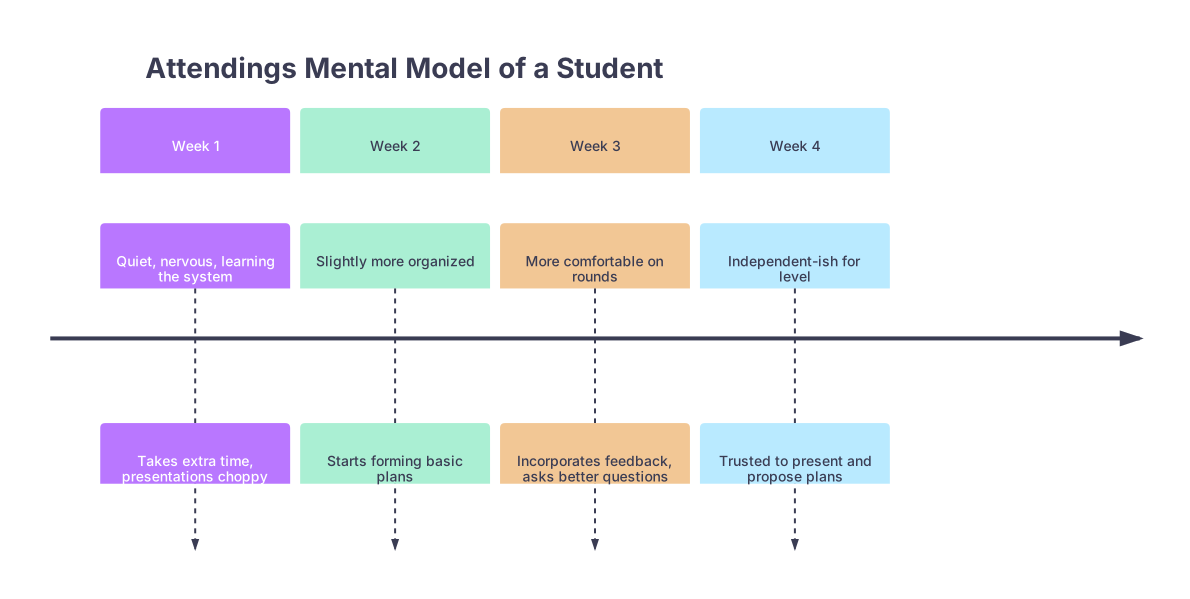
| Period | Event |
|---|---|
| Week 1 - Quiet, nervous, learning the system | Takes extra time, presentations choppy |
| Week 2 - Slightly more organized | Starts forming basic plans |
| Week 3 - More comfortable on rounds | Incorporates feedback, asks better questions |
| Week 4 - Independent-ish for level | Trusted to present and propose plans |
That’s the arc they’re looking for. Not “perfect from day one,” but “better by week four.”
How to Be “Noticeably Good” Without Being the Loudest Person
If you’re naturally reserved, this is probably what scares you the most: “Do I have to be that super-outgoing, constantly-talking student to be seen as strong?”
No. But you do need to be visible in a controlled, intentional way. Quiet and invisible are not the same thing.
If you want attendings to notice you (for the right reasons), focus on a few small behaviors:
- On rounds: ask 1–2 thoughtful questions per day. Not dozens. Just one or two that show you’re thinking.
- When presenting: clearly state your assessment and plan, even if you’re unsure. “I think the main problem is X, and I’d like to treat with Y because…”
- After feedback: explicitly show you used it. “Yesterday you mentioned focusing on problem-based presentations—today I tried to structure it that way.”
Those little things stick. I remember an attending saying, “I really like that she actually changed how she presented after feedback. Shows maturity.”
Nobody said, “Wow, he never said ‘um’ once.”
The One Thing That Really Makes You Look Worse Than You Are
You want to know what attendings do consistently notice and interpret harshly?
Defensive behavior.
Not not-knowing. Not being quiet. Not awkwardness.
Defensiveness.
If you:
- Argue with feedback instead of considering it
- Always blame the system / the nurse / the sign-out
- Shut down or get visibly annoyed when corrected
That becomes a red flag very fast. That’s when you start seeing comments like “difficulty accepting feedback” or “needs to work on professionalism.”
Your anxiety about speaking on rounds is not the problem. How you handle it might be.
If you can say, “I get really nervous presenting, but I’m working on it,” and then slowly get better over the rotation? That reads as self-awareness + growth. That’s actually a plus.
If you try to cover up your anxiety by acting like you’re above feedback or by disappearing into the wallpaper so no one can critique you—that’s when it backfires.

What To Do Tomorrow Morning When You’re Dreading Rounds
Let’s get painfully practical. Because you’re not going to cure performance anxiety overnight. But you can make small changes that shift how you’re perceived.
Before rounds tomorrow, do three things:
Pick one patient whose story you know cold.
Not every single detail for every person. Just one you can present without reading full sentences off your note. That one really solid presentation will do more for you than five mediocre, shaky ones.Decide on one question you’ll ask.
Not “What’s the differential for shortness of breath?” Too broad. Something like: “Can I ask why we chose heparin instead of DOAC in this case?” or “Would we ever manage this outpatient?” That makes you look thoughtful, not needy.Choose one piece of feedback to implement.
Maybe last week someone said: “Lead with your one-liner.” So tomorrow, you start every presentation with a strong one-liner. Even if everything after that is so-so, they’ll notice the effort.
These tiny changes, repeated over days, create the pattern attendings actually notice.

Your Anxiety Isn’t Lying… But It’s Not Telling the Whole Truth
You’re not crazy for feeling like you’re being watched on rounds. You are being evaluated. People are forming impressions.
But your anxiety zooms in on individual seconds and turns them into life sentences.
Reality is slower. Blunter. More forgiving. Attendings don’t remember every stumble. They remember if you showed up, tried, learned, and didn’t make their lives harder.
You don’t have to be the star. You just have to be obviously trying, and a little bit better on Friday than you were on Monday.
Today, do this: open your next patient presentation and rewrite just the first three sentences so they’re clear, structured, and confident. Practice saying them out loud twice. Not perfect—just intentional. That’s the part your attending is most likely to notice.