
Most students learn pharmacology backwards—and then wonder why they cannot answer a simple ward pimp question.
Let me be blunt: memorizing drug lists by class is exactly why clinical pharmacology feels impossible. Real patients do not present as “beta‑blocker questions”. They walk in as chest pain, wheeze, septic shock, postpartum hemorrhage. If your pharmacology knowledge is not organized by system and clinical scenario, it will fail you when it actually matters—on exams and on the wards.
This is where a systems-based drill strategy changes the game.
You are not going to “kind of remember” 200+ drugs under pressure. You need a ruthless, structured way to encode:
- What the drug does (MOA),
- Where it acts (system/organ),
- Why you give it (indications), and
- Who it will harm (toxicities and contraindications).
Let me break this down specifically.
Why Classic Pharm Studying Fails You
Most students do some version of this: watch lecture → highlight Katzung or Basic and Clinical Pharmacology → cram Anki → pray. Then Step-style questions expose all the cracks.
The usual failure patterns:
- You remember the side effects list but not the primary indication.
- You recognize the class (e.g., “non‑selective beta‑blocker”) but not which specific member is used in the question’s scenario.
- You know that ACE inhibitors cause cough, but cannot articulate why (bradykinin, not “because my lecturer said so”).
- You cannot link drugs across systems (e.g., why an NSAID exacerbates hypertension or CKD).
This “one drug at a time in a vacuum” method is too shallow and too scattered.
Clinical pharmacology is inherently integrated. A diuretic is not just “renal”; it changes BP (CV), electrolytes (neuro/muscle), volume status (pulm/edema), and kidney perfusion (renal again). If your study approach does not mirror that, you will sound lost during rounds.
The fix is not “more flashcards”. It is restructuring how you encode pharmacology: system first, drug second.
Core Idea: Systems-Based Drill, Not Drug-by-Drug Memorization
Here is the guiding principle:
You should be able to sit down, pick one organ system, and within 40–60 minutes rapidly drill all the high‑yield drugs relevant to that system in clinical context.
System examples:
- Cardiovascular
- Respiratory
- Renal
- Gastrointestinal / Hepatobiliary
- Endocrine
- CNS / Psychiatry
- Hematology / Oncology
- Infectious Diseases (by organ + organism)
- Reproductive / OB‑GYN
- Rheum / MSK / Pain
You are building vertical depth within a system first, then connecting horizontally across systems.
Concretely, you want to be able to do things like:
- “For acute decompensated heart failure, list first‑line and second‑line drugs, their MOAs, and key toxicities—no notes.”
- “For moderate persistent asthma, walk through the chronic regimen and rescue therapy, with mechanisms and contraindications.”
- “For hyperthyroidism, go through thioamides, beta‑blockers, iodide, radioactive iodine, their timing, and pregnancy implications.”
That is systems-based drill. It is active, fast, and clinically anchored.
The Three‑Layer Framework for Each System
Every system you study, you attack at three layers:
- Clinical scenarios
- Drug families within those scenarios
- Mechanism–toxicities “micro‑chains”
Let me walk you through this with an example.
1. Clinical Scenarios: Anchor Everything
You do not start with “ACE inhibitors are…”. You start with:
- Hypertension (uncomplicated vs comorbidities)
- Heart failure (acute vs chronic)
- Angina (stable vs unstable vs Prinzmetal)
- Arrhythmias (SVT, AFib, VT)
- Post‑MI care
For each system, you list the 5–10 most common exam and ward scenarios. This is your backbone.
Example for pulmonary:
- Mild intermittent vs persistent asthma
- COPD exacerbation vs stable COPD
- Pulmonary embolism (acute management)
- ARDS / severe hypoxemia (ICU context)
You then attach drugs onto these scenarios, not the other way around.
2. Drug Families: Group, Do Not Fragment
Once your scenarios are clear, you drop drugs into families that “solve” each scenario.
Cardio example—Hypertension chronic management:
- RAAS blockers: ACEi, ARB, direct renin inhibitor
- Diuretics: thiazides, loop diuretics, K‑sparing
- Sympatholytics: beta‑blockers, alpha‑blockers, central alpha‑2 agonists
- Vasodilators: DHP CCBs, non‑DHP CCBs, direct vasodilators (hydralazine, minoxidil)
- Special agents: nitrates, sacubitril/valsartan, etc. (when linked with HF)
You do not memorize lisinopril, losartan, amlodipine as isolated facts. You see them as: “What can I use to control BP in a diabetic with proteinuria?” or “What is safe in pregnancy?”
3. Mechanism–Toxicity Micro‑Chains
Here is where the real retention happens. For each major family, you consciously build concise “micro‑chains”:
MOA → Physiologic effect → Clinical use → Toxicity → Contraindications
Example: ACE inhibitors
- MOA: Inhibit ACE → ↓ Ang II → ↓ efferent arteriole constriction + ↑ bradykinin
- Effect: ↓ BP, ↓ afterload, ↓ aldosterone, ↓ glomerular pressure (renal protective in diabetics)
- Clinical use: HTN, HF, post‑MI remodeling, diabetic nephropathy, CKD with proteinuria
- Toxicity: Cough, angioedema, hyperkalemia, ↑ creatinine (especially in bilateral RAS), teratogenic
- Contraindications: Pregnancy, bilateral renal artery stenosis, history of angioedema
You drill this as a chain, not as a bucket of disconnected facts.
A Concrete Weekly Drill Structure
Students constantly ask, “What does this look like in real study hours?” Let me outline a structure that actually works.
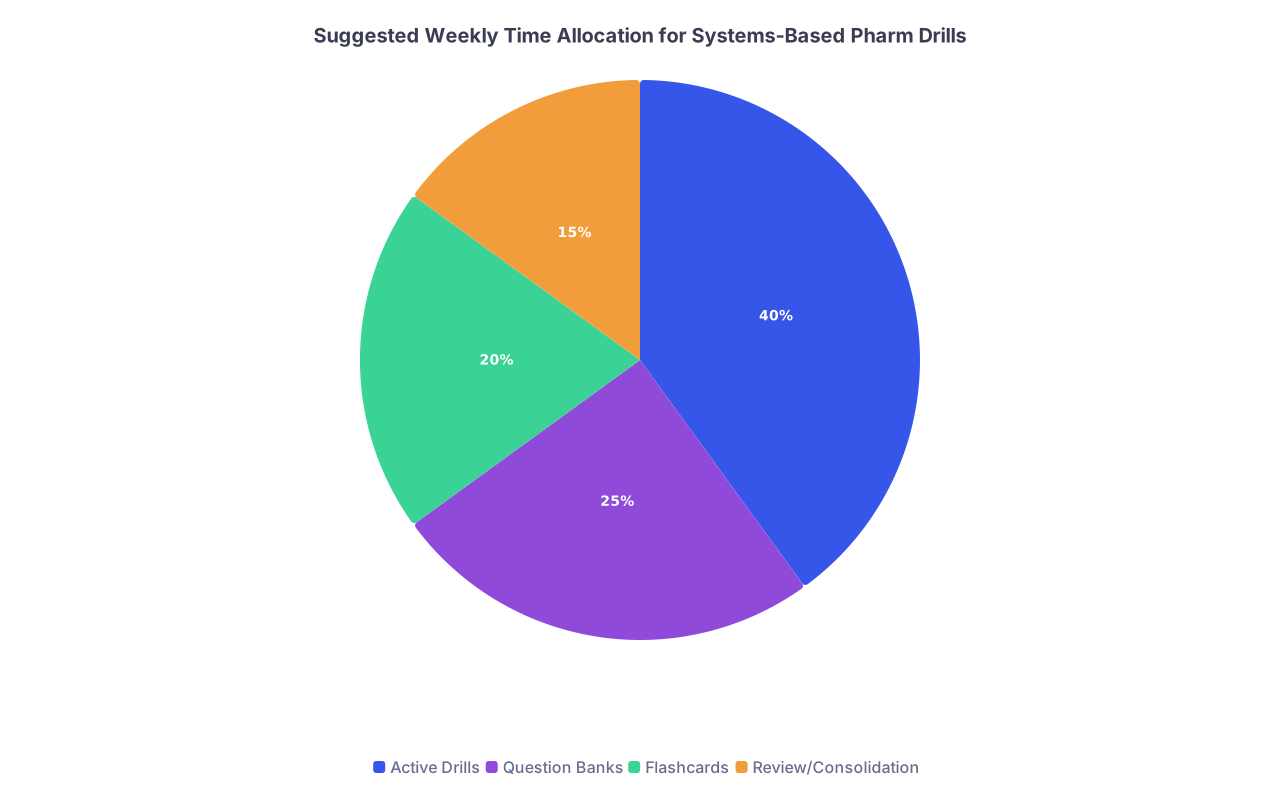
| Category | Value |
|---|---|
| Active Drills | 40 |
| Question Banks | 25 |
| Flashcards | 20 |
| Review/Consolidation | 15 |
Think in weekly blocks, not daily chaos. You want:
- 3–4 system‑focused drill sessions per week (45–60 minutes each)
- 2–3 pharm‑heavy question bank sessions (UWorld/Amboss, 10–20 questions focused per system)
- Short daily spaced repetition of your micro‑chains (Anki or written recall)
Example: Week focused on Cardio + Pulmonary
- Monday: CV – Hypertension + Heart Failure drills
- Wednesday: Pulm – Asthma + COPD drills
- Friday: CV – Arrhythmias + Ischemic heart disease drills
- Saturday: Mixed cardio/pulm pharm questions from Q‑bank, then micro‑chain review
Each drill session follows the same spine:
- Choose 1 system + 2–3 key scenarios
- Brain dump from memory (no notes) which drug families you would use in each scenario
- For each family, recite the MOA–effect–use–toxicity–contraindication chain
- Spot‑check with your notes or a review book and tighten the chains
- End with 3–5 board‑style questions on those topics
Building System Sheets: Your High‑Yield Pharm Dashboards
You cannot keep this all in your head unless you externalize it cleanly. I push students to create “system sheets”: a single, tightly organized page (or two) for each organ system.
Think of them as your personal pharmacology dashboards.
Key features of a strong system sheet:
- Organized first by clinical scenario, then by drug family
- Only the must‑remember items: prototype drugs, shared MOA, signature side effects, killer contraindications
- Visually clear: boxes, arrows, short phrases; not walls of text
Example: Cardiovascular system sheet layout
| Section | Content Focus |
|---|---|
| Hypertension | First-line by comorbidity, drug tiers |
| Heart Failure | Mortality benefits vs symptom relief |
| Ischemic Heart Dz | Acute vs chronic, antianginals |
| Arrhythmias | Class I–IV, stable vs unstable |
| Special Situations | Pregnancy, CKD, post-MI bundles |
You keep these sheets in a thin binder or digital notebook. Before each drill, you try to reconstruct parts of a system sheet from scratch, then compare to your master.
The act of trying to “rebuild the board” is where you notice gaps.
How to Actually Drill: Step‑by‑Step Walkthrough
Let me walk you through a single 45‑minute session. No fluff.
Say we are doing: Respiratory – Asthma and COPD

Step 1: Write the Scenarios (3 minutes)
On a blank paper or tablet, write:
- Mild intermittent asthma (rescue)
- Persistent asthma (controller + rescue)
- Acute severe asthma (status asthmaticus)
- Stable COPD
- COPD exacerbation
That is your battlefield.
Step 2: From Memory, List Drug Families Under Each (10 minutes)
Example (from your head, not the book):
- Mild intermittent asthma: SABA (albuterol)
- Persistent asthma: ICS, LABA, leukotriene receptor antagonists, theophylline (rare), anti‑IgE, anti‑IL‑5
- Acute severe asthma: SABA nebs, systemic steroids, ipratropium, Mg sulfate, oxygen
- Stable COPD: LAMA, LABA, ICS (selected), smoking cessation aids
- COPD exacerbation: SABA/SAMA nebs, systemic steroids, antibiotics, O2 / NIV if needed
If you stall, mark the gap and move on.
Step 3: Micro‑Chain Drill for Each Family (20–25 minutes)
Pick the high‑yield families and run full chains out loud or on paper.
Example: Inhaled corticosteroids (ICS)
- MOA: Inhibit phospholipase A2 → ↓ arachidonic acid → ↓ inflammatory mediators, ↓ cytokines
- Effect: ↓ airway inflammation, ↓ hyperresponsiveness, ↓ mucus production
- Clinical use: Controller therapy in persistent asthma; sometimes in COPD (frequent exacerbators, high eosinophils)
- Toxicity: Oral candidiasis, dysphonia, some systemic absorption (HPA axis suppression in high doses), mild ↓ growth velocity in children
- Contraindications: Relative—caution in untreated infections; ensure proper inhaler technique and rinsing mouth
Example: LABAs (salmeterol, formoterol)
- MOA: Long‑acting β2‑agonists → ↑ cAMP in bronchial smooth muscle → bronchodilation
- Effect: Long‑term airway relaxation, not for acute relief
- Clinical use: Controller therapy for asthma ONLY with ICS; monotherapy in COPD is acceptable
- Toxicity: Tremor, tachycardia, risk of asthma‑related death if used without ICS
- Contraindications: Monotherapy in asthma
You do this for SABAs, anticholinergics (ipratropium/tiotropium), leukotriene modifiers, and systemic steroids.
Step 4: Rapid Q‑bank Pulse (7–10 minutes)
Pull 3–5 high‑quality questions on asthma/COPD pharmacology from UWorld/Amboss. Do them timed, then read explanations for the drugs, not just the answer choice. Any nuance you missed gets added as a small note next to that drug on your system sheet.
Integrating Pharm Into Clinical Rotations
If you wait until Step 2 dedicated to “get good at pharm”, you are already late. Clinical rotations are free, high‑yield pharm drills if you use them correctly.
You do not need extra hours. You need better habits on the ward.
The One‑Patient, Three‑Drug Rule
For each new patient you admit or follow, pick three medications they are on and run quick chains in your head or in your pocket notebook:
- Why is this patient on this drug?
- What is the MOA in this specific context?
- What monitoring should I care about?
- What is the worst thing that could happen with this drug today?
Example: Patient with HFrEF on:
- Sacubitril/valsartan
- Carvedilol
- Furosemide
You should immediately think:
- Sacubitril/valsartan: ARNI; neprilysin inhibitor + ARB; prevents breakdown of natriuretic peptides; improves outcomes in HFrEF; watch for angioedema, hyperkalemia, hypotension.
- Carvedilol: Non‑selective β + α1 blocker; reduces mortality in HFrEF; start low, go slow; watch for bradycardia, hypotension, acute HF worsening if titrated too fast.
- Furosemide: Loop diuretic at thick ascending limb; blocks Na‑K‑2Cl; strong diuresis; watch for hypokalemia, ototoxicity, contraction alkalosis, over‑diuresis with pre‑renal AKI.
You just drilled three chain sequences in 1–2 minutes of “walking time” between rooms.
Use Rounds as Live Question Bank
When an attending says, “Why did we hold this patient’s lisinopril?” and the intern mumbles “uhh maybe kidney stuff,” you should have a sharper answer:
“ACE inhibitors cause efferent arteriole dilation and can drop GFR, especially in bilateral renal artery stenosis or volume depletion. The creatinine bumped from 1.0 to 1.8 after aggressive diuresis yesterday, so we held it to avoid worsening pre‑renal AKI.”
Same drug facts. Different level of ownership.
Each of those questions is a prompt to review that drug family system‑based later that day.
Tying Pharm to Pathophysiology (Or You Will Forget It)
Pharmacology drilled in isolation fades fast. Tied to path, it sticks.
Consider this the non‑negotiable rule:
Whenever you learn or review a drug, connect it to one pathophysiologic process and one real patient type.
Example: Metformin
- Pathophysiology: Insulin resistance, hepatic gluconeogenesis, AMPK activation
- Patient type: Overweight type 2 diabetic, normal or mildly impaired renal function
- You mentally link: “Lactic acidosis risk if hypoxic / renal failure / contrast load”
Same for diuretics: tie each to nephron segments and the electrolytes that will shift. For anticoagulants: tie them to coagulation cascade steps and clinical vignettes (post‑op DVT prophylaxis vs mechanical valve vs atrial fibrillation).
You will notice this is exactly how NBME and Step questions are written—path first, drug second.
Tactical Use of Question Banks for Pharm
Many students “do questions” but never actually test pharm in a focused way. You should be more surgical.
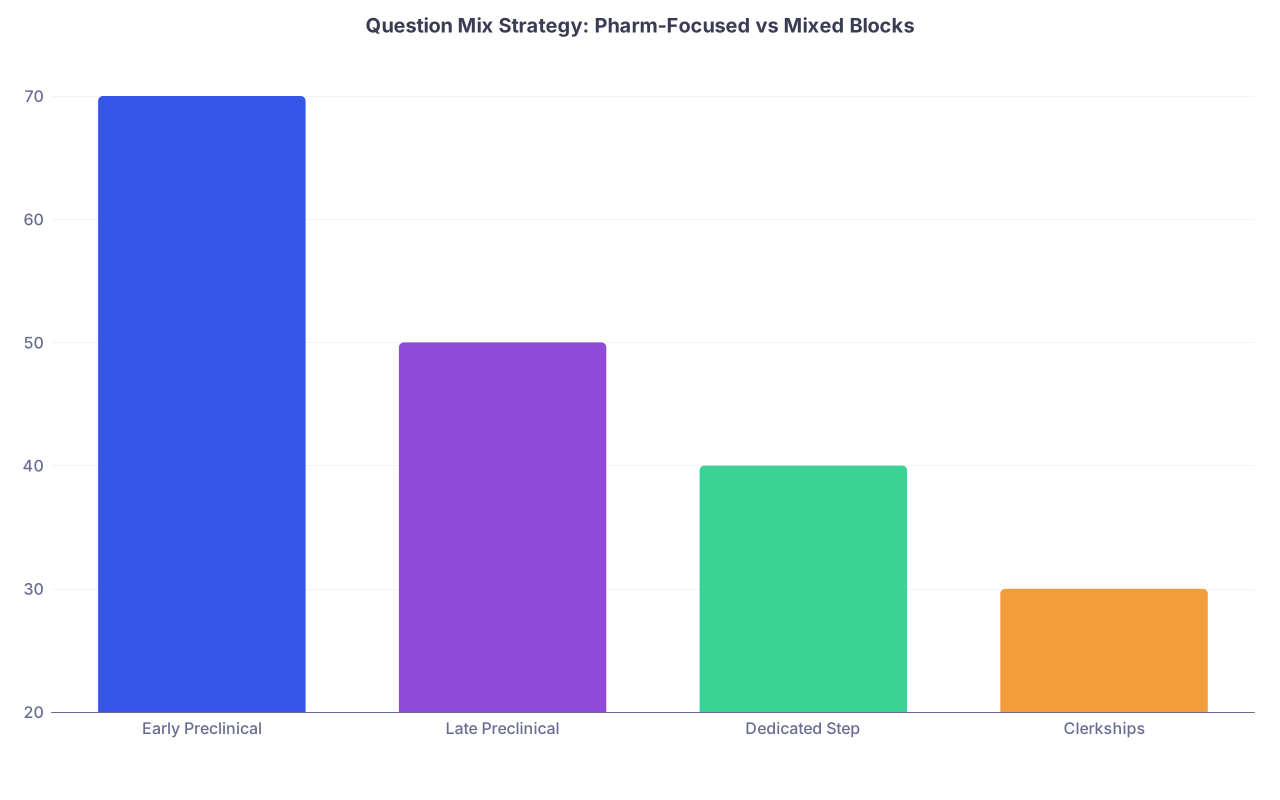
| Category | Value |
|---|---|
| Early Preclinical | 70 |
| Late Preclinical | 50 |
| Dedicated Step | 40 |
| Clerkships | 30 |
Interpretation: percentage of blocks that should be pharm‑intentionally analyzed, not pure random.
Strategy:
- Early preclinical: 60–70% of your blocks should include a specific pharm focus. You are training your brain to see drugs as part of the solution.
- Late preclinical: Half your blocks are chosen for systems (cardio block → cardio pharm heavy).
- Dedicated: You do full random blocks, but your post‑review isolates pharm chains methodically—do not just read explanations, rebuild the mechanism/use/toxicity chain for every drug you got wrong or felt shaky on.
- Clerkships: Mixed blocks, but you keep a simple rule—any question involving a drug gets at least a 10‑second mental chain review.
When you review questions, ask:
- Could I have answered this using only the mechanism and toxicity I claim to “know”?
- Did I miss a contraindication, black box warning, or patient‑specific nuance?
If yes, that drug family gets flagged in your next system drill.
Common Mistakes That Destroy Pharm Mastery
Let me call out a few errors I see over and over.
1. Treating All Drugs as Equal
You do not need the same depth on every single drug. Prototype dominance is real.
Examples:
- You must own losartan’s class effects, not memorize every ARB’s half‑life.
- You must understand cisplatin’s nephrotoxicity and ototoxicity, not every obscure chemo agent.
- You must know warfarin vs DOACs differences cold; no one will grill you as hard on fondaparinux kinetics.
Your system sheets should bold or highlight prototypes and the drugs that show up constantly in UWorld/NBME questions.
2. Ignoring Rare but Deadly Toxicities
You will not be forgiven for missing:
- Clozapine → agranulocytosis
- Dantrolene for malignant hyperthermia
- Nitroprusside → cyanide toxicity
- Amiodarone → pulmonary fibrosis, thyroid dysfunction
- Lamotrigine → SJS/TEN risk with rapid uptitration
These get drilled explicitly in your toxicity sections. Many of them are exactly what exam writers love.
3. Studying Pharm Only Before Exams
Pharm is spaced‑repetition dependent. Doing a 10‑hour cram the night before your pharm shelf looks impressive but does not scale to the thousands of drugs across your curriculum.
Instead, short daily or near‑daily touches:
- 10–15 minutes of micro‑chain Anki
- One system drill every 2–3 days
- Quick “3‑drug rule” on the wards
That is how you build real, recall‑ready mastery.
A Visual Map: How Systems-Based Pharm Builds Over Time
Sometimes seeing the phases laid out helps students realize it is not magic, just consistent layering.
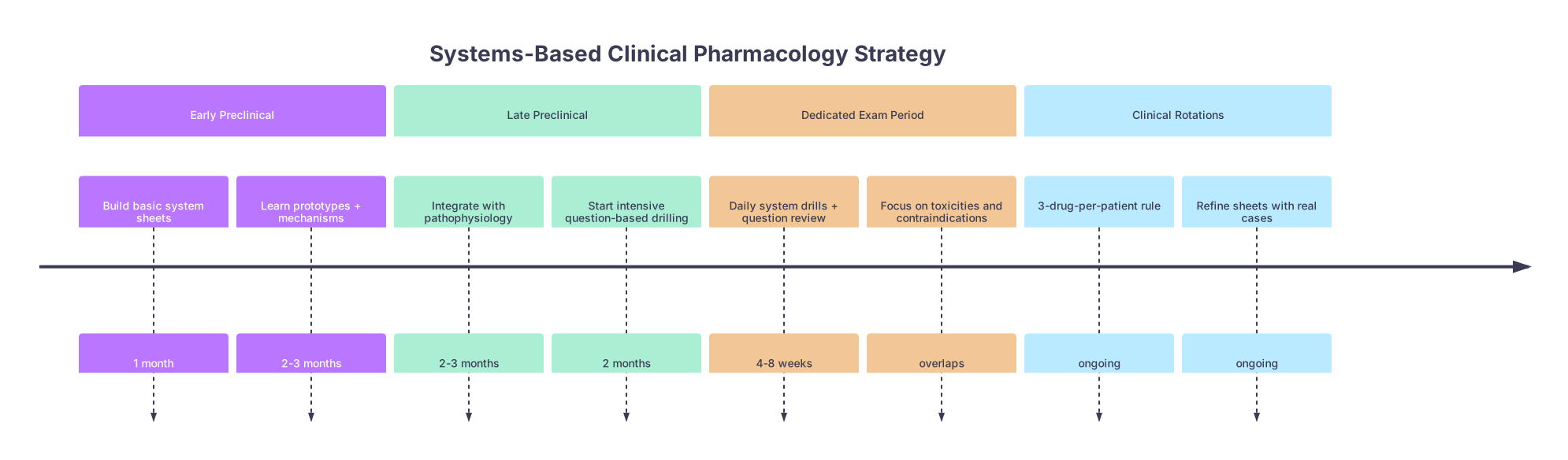
| Period | Event |
|---|---|
| Early Preclinical - Build basic system sheets | 1 month |
| Early Preclinical - Learn prototypes + mechanisms | 2-3 months |
| Late Preclinical - Integrate with pathophysiology | 2-3 months |
| Late Preclinical - Start intensive question-based drilling | 2 months |
| Dedicated Exam Period - Daily system drills + question review | 4-8 weeks |
| Dedicated Exam Period - Focus on toxicities and contraindications | overlaps |
| Clinical Rotations - 3-drug-per-patient rule | ongoing |
| Clinical Rotations - Refine sheets with real cases | ongoing |
Notice there is no phase called “memorize 600 side effects in a vacuum.” You accumulate them as a byproduct of smart structure.
Putting It All Together: A One‑Month Pharm Reset Plan
If you are halfway through med school and feel your pharm base is shaky, you can reset in four weeks with focused work.
Week 1 – Cardiovascular + Renal
Week 2 – Pulmonary + GI / Hepato
Week 3 – Endocrine + CNS / Psych
Week 4 – Heme/Onc + Infectious Disease (main ABX) + Repro
For each week:
- 3–4 system drill sessions (as described above)
- 2–3 targeted Q‑bank sessions
- Daily micro‑chain review (15–20 minutes)
By the end of this month, you will not “know every drug” perfectly. That is not the goal. You will, however, have:
- A solid, recall‑ready grasp of the major drug families per system
- Functional system sheets you can return to and refine
- The habit of thinking pharmacologically in clinical language
That is the foundation you need for Step, shelves, and real patients.
FAQ: Mastering Clinical Pharmacology – Systems-Based Drill
1. How many drugs per system should I aim to know in depth?
You want depth on prototypes plus the most clinically common variants. Rough rule:
- Cardio: ~30–40 drugs/families in real depth (ACEi/ARBs, CCBs, diuretics, beta‑blockers, antiarrhythmics, statins, antiplatelets, anticoagulants, nitrates).
- Pulm: ~15–25 (SABA, LABA, ICS, LAMA, leukotriene modifiers, theophylline, mast cell stabilizers).
- ID: Focus on ~30–40 key antibiotics/antivirals (penicillins, cephalosporin generations, carbapenems, vancomycin, macrolides, FQs, TMP‑SMX, tetracyclines, linezolid, azoles, amphotericin, basic HIV/HCV agents).
Master these well and you will outperform classmates trying to carry 150 half‑remembered names.
2. Should I use Anki for pharm or rely only on my system drills?
Use both, but with intention. Anki is great for micro‑chains and toxicities. It is poor for clinical integration unless your cards are scenario‑based. I recommend:
- Decks that are organized by system, not “general pharmacology soup”.
- Cards that prompt: “Drug X; mechanism / main indication / one key toxicity,” not 12‑line essays.
- Use Anki as your maintenance tool; use your live system drills and Q‑banks as your strengthening tool.
3. How do I handle antibiotics, which feel like an entire course by themselves?
You do not cram all antibiotics at once. You split them by site + bug type and then by mechanism:
- “Respiratory infections” (CAP, HAP, atypicals)
- “Urinary infections” (uncomplicated vs complicated)
- “Skin/soft tissue infections” (MSSA vs MRSA vs polymicrobial)
Within each, identify first‑line and major alternatives, then drill: spectrum → MOA → toxicity. Save the ultra‑rare agents for later. If you can confidently choose empiric therapy for common vignettes, you are exam‑ready.
4. My school’s curriculum is not systems-based. How do I adapt this strategy?
You simply reorganize the output of your classes. If your course gives pharmacology by “drug classes” or “general principles,” you still rewrite your notes onto system sheets. For example, your lecture on “antihypertensives” gets distributed into the Cardiovascular sheet under “Hypertension/Heart Failure/Post‑MI.” The test may be given by block, but the way you store the knowledge should be systems‑based.
5. How often should I update my system sheets?
Continuously, but lightly. The big build is the first 2–3 passes during preclinical years or early clerkships. After that, you update when:
- You see a drug used in an unexpected way on the wards.
- A Q‑bank explanation gives a nuance you had not captured.
- Guidelines change (e.g., heart failure management, anticoagulant use).
Once a month, do a “maintenance pass” where you skim 1–2 systems and clean up clutter.
6. How will I know if my pharm is actually strong enough for Step and shelves?
You will see it in questions and on the wards. Concrete benchmarks:
- You can do a 20‑question block and, for >80% of pharm questions, articulate the drug’s MOA–use–toxicity without checking the explanation.
- During rotations, when asked “Why this drug?” or “What are you watching for?” you can give a concise, mechanism‑based answer.
- You can teach a junior student or friend one full system (e.g., all heart failure drugs) from memory in 10–15 minutes.
If you hit those, you are in the top tier for clinical pharmacology knowledge.
With a systems-based drill strategy, pharmacology stops being a pile of random drug names and becomes exactly what it should be: a toolbox you can actually use. Once you own these foundations, the next layer is tailoring your approach to each major exam—Step 1, Step 2, shelves—so that your pharmacology does real scoring damage. But that, frankly, is a story for another day.