
The way most MS2s “start Step prep in the spring” is uselessly vague. You do not need vibes. You need a week-by-week, almost day-by-day handoff from systems exams to full Step mode.
Here is that plan.
You are in MS2 spring. Classes are still going, maybe systems are wrapping. Step 1 might be pass/fail now, but programs still screen with it. A bad Step 1 score or a borderline pass follows you. So you treat this transition with discipline.
I will walk you from February to the start of dedicated, week by week, then zoom into a model week and day. At each point: what to start, what to stop, and what you can safely ignore.
Overall Spring Strategy: The 3-Phase Transition
At this point, before we get granular, you need a structure.
Spring of MS2 usually breaks down into three phases:
Phase 1 – On‑Ramp (8–10 weeks before dedicated)
Goal: Build habits, link class to boards, start questions without tanking your course grades.Phase 2 – Hybrid Mode (4–6 weeks before dedicated)
Goal: Shift your primary identity from “class student” to “Step candidate” while still passing school exams.Phase 3 – Soft Dedicated (1–2 weeks before official dedicated)
Goal: Run a “mini‑dedicated” while school is ending, so Day 1 of official dedicated is not a shock.
| Phase | Typical Timing Before Dedicated | Daily Qbank Target | Dedicated Focus Level |
|---|---|---|---|
| Phase 1 | 8–10 weeks | 20–30 questions | Low–Moderate |
| Phase 2 | 4–6 weeks | 40–60 questions | Moderate–High |
| Phase 3 | 1–2 weeks | 60–80 questions | High |
If you do not structure it this way, you end up with the classic disaster: 2–3 NBMEs in the last 10 days and panic.
Month-by-Month: February to Start of Dedicated
February: Build the Foundation and Stop Wasting Time
At this point you should:
Pick your core resources and stop shopping:
- Qbank: UWorld for almost everyone. Amboss as a second bank if you are very high‑yield and on schedule.
- Core text: First Aid or Boards & Beyond / Sketchy notes as your “spine”.
- Anki deck: One mature Step 1 deck (e.g., AnKing). Not three. Not “my own completely from scratch”.
Lock in your exam date and count backward:
- Identify your official dedicated start (usually right after MS2 finals).
- Count back 8–10 weeks. That is today’s “Phase 1” starting line.
Weekly Targets for February
Qbank:
- Week 1–2: 15–20 questions/day × 5 days. Untimed, tutor mode, system‑based matching your course.
- Week 3–4: 25–30 questions/day × 5 days. Start mixing in random blocks once or twice a week.
Anki:
- 200–300 reviews/day maximum if you are new to it. Your goal is sustainability, not martyrdom.
- Add only high‑yield, board‑style cards. If your deck already has a card, do not clone it.
Content Review:
- 30–60 minutes most days.
- Tie your lectures directly to board resources: watch a Boards & Beyond / Sketchy video that aligns with your current system.
At this point, your classwork is still slightly ahead of Step prep. That is fine. Just make sure every new lecture concept has an Anki hook or a page in your primary resource.
March: Hybrid Mode Begins
By March, your classmates start to panic in group chats. Ignore the chaos. You need controlled escalation.
At this point you should:
- Shift your mindset: Step prep is no longer optional “extra.” It is a required “course” you pass or fail.
- Start tracking real metrics:
- Qbank percentage (but do not obsess over early numbers).
- Daily Anki done/not done.
- Weekly hours on pure Step work vs school work.
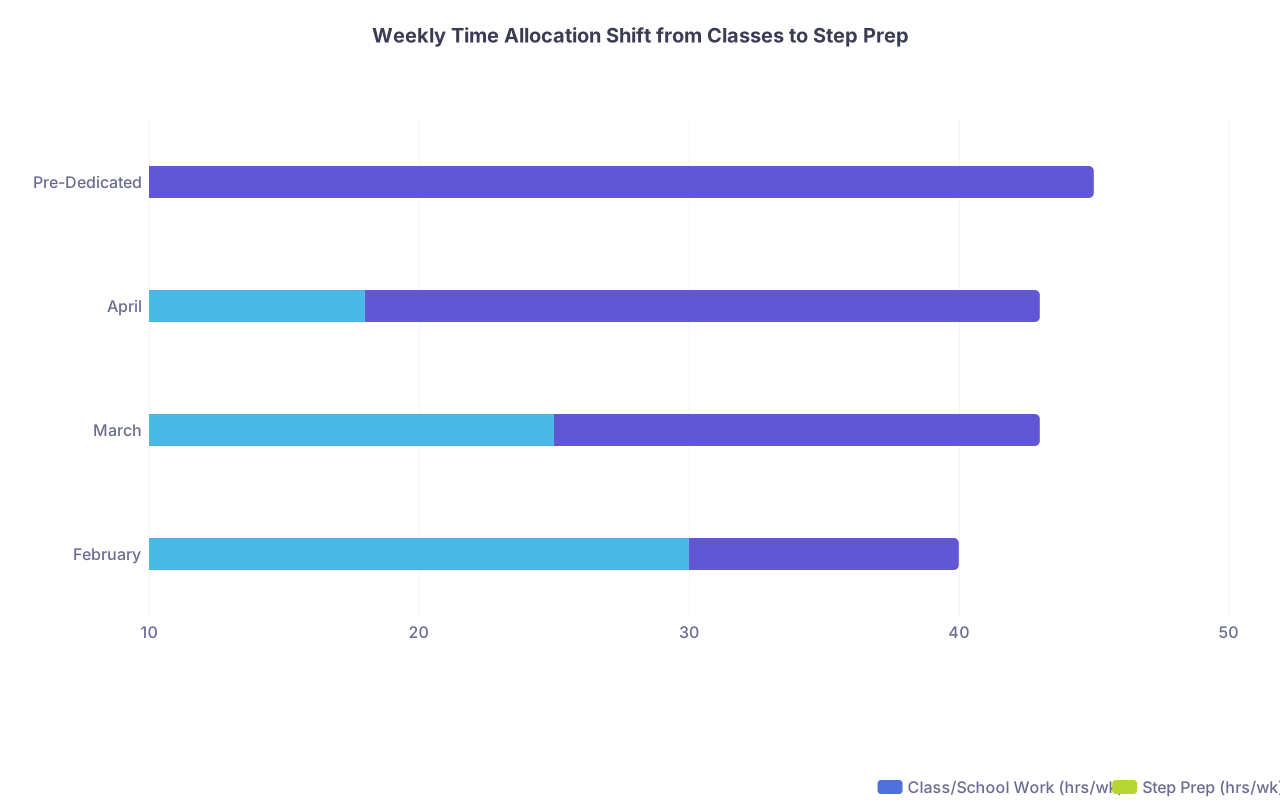
| Category | Class/School Work (hrs/wk) | Step Prep (hrs/wk) |
|---|---|---|
| February | 30 | 10 |
| March | 25 | 18 |
| April | 18 | 25 |
| Pre-Dedicated | 10 | 35 |
Weeks 1–2 of March
Increase intensity, but do not torch your class grades yet.
Qbank:
- 30–40 questions/day × 5–6 days.
- Move to timed, tutor mode for most blocks.
- Start doing at least 2 random 10–20 question blocks per week.
Anki:
- 250–400 reviews/day depending on your backlog.
- If you’re perpetually behind, you are adding too many new cards. Cut new cards by 30–50%.
Content Review:
- 60–90 minutes/day, mostly on weak topics exposed by your Qbank performance.
At this point, if you are still watching 3+ hours of full‑length lectures daily, you are doing it wrong. Speed them up, skim slides, and anchor every topic in a board resource instead.
Weeks 3–4 of March
You are now about 6–8 weeks from dedicated. Time to run your first serious self‑check.
- End of March: NBME or UWorld Self‑Assessment #1
- Take it in a single sitting. No pausing.
- Same wake time as your eventual exam if possible.
Your goal is not a specific score. Your goals are:
- Tolerance for a full exam-style testing block.
- Honest sense of which subjects are embarrassing.
Use that result to pick 2–3 priority systems for April (e.g., renal, neuro, endocrine).
April: Step Prep Takes the Wheel
By April, you are 4–6 weeks from dedicated. This is where I see people either lock in or fall apart.
At this point you should:
- Treat each week as a mini‑dedicated, inside the constraints of class.
- Let go of perfection in your courses. Passing is enough; honors will not erase a weak Step performance.
Weeks 1–2 of April
Qbank:
- 40–50 questions/day × 6 days.
- Timed, random blocks for at least half.
- One review block per day that targets your weakest NBME topics.
Anki:
- 300–500 reviews/day, split into morning and evening sets.
- If you are burning out, preserve reviews and cut new cards to near zero. Mastery of current content beats collecting new flashcards you never revisit.
Content Review (targeted):
- 60 minutes focused on 1–2 subjects/day (e.g., Monday = renal, Tuesday = neuro).
Self‑Assessment #2:
- Mid‑April: NBME or UWSA.
- Again, single sitting. Use a test‑day routine: same breakfast, no phone during breaks.
Weeks 3–4 of April
You are now 2–4 weeks from dedicated. This is Phase 3 – Soft Dedicated creeping in.
Qbank:
- 50–60 questions/day × 6 days.
- Most blocks random, timed, exam‑length (40+ questions when your schedule allows).
Anki:
- Hold at 300–500 reviews/day.
- Add only surgical‑precision new cards for things you keep missing.
Content Review:
- One longer weekly “deep dive” session (2–3 hours) on your lowest subject from the last self‑assessment.
At this point, I want your daily schedule to look much more like dedicated than like MS2 fall.
Weekly Breakdown Template: Hybrid Spring Week
Let us build a concrete weekly plan you can plug into February–April, scaled by intensity.
Step 1: Define Non‑Negotiables
First, block out:
- Required classes / labs / small groups.
- Exams and quizzes.
- Personal immovables (therapy, important family commitments, religious services).
Then, you fill the rest with:
- Qbank blocks
- Anki
- Targeted review
- Light exercise / basic human maintenance
Step 2: Sample Hybrid Week (Mid‑March / Early April)
Assume:
- 20 hours/week of class + studying for school exams.
- Target: 200–250 Qbank questions/week + 1 NBME every 3–4 weeks.
Monday–Friday
06:30–07:00 – Wake, coffee, absolutely no phone scroll.
07:00–08:00 – Anki Session 1 (150–250 reviews). Brain is fresh; this is retention work.
08:00–12:00 – Classes / required activities. During slow segments, lightly annotate First Aid or related resource instead of doom‑scrolling.
12:00–13:00 – Lunch + short walk. 10–15 min of low‑stakes Anki if you feel like it.
13:00–15:00 – Qbank Block #1 (20–25 questions, timed, mixed or system-based).
- 45–60 minutes questions
- 45–60 minutes reviewing explanations, tagging weak topics
15:00–17:00 – School‑specific studying (for upcoming quizzes/exams).
17:00–18:00 – Break + light exercise (walk, short run, gym).
18:00–19:30 – Targeted content review:
- Focus on 1 subject per day:
- Mon: Cardio
- Tue: Pulm
- Wed: Neuro
- Thu: Renal
- Fri: Micro
- Focus on 1 subject per day:
19:30–20:00 – Anki Session 2 (finish remaining reviews).
20:00–22:00 – Free / social / wind‑down. Bed by 22:30–23:00.
Saturday
- Morning:
- 2 Qbank blocks (20–25 questions each) + review → 3–4 hours.
- Afternoon:
- 2–3 hours of content review or lecture catch‑up if needed.
- Evening:
- Off or very light Anki.
Sunday
- Light Day / Reset:
- 1 Qbank block (20–25 questions).
- Short review of the week’s weakest topic.
- Plan next week: exam dates, when you will do next NBME, adjust targets.
This is a real, sustainable hybrid week I have seen people run for 6–8 weeks without meltdown.
Day-by-Day Micro‑Adjustments as Dedicated Nears
As you approach your official dedicated period (last 2–3 weeks of the semester), start shifting each day 10–15% more toward Step.
Three Levers to Pull (In Order)
Shorten school review time
- Stop rewriting lecture notes.
- Use school slides as an index; learn details from board resources instead.
Lengthen Qbank time
- Move from 20‑question blocks to 40‑question blocks when possible.
- Always review explanations with intention, not just reading green/red.
Refine Anki, do not expand it
- Cull useless cards you keep “again‑again‑again” without conceptual understanding.
- Replace with 1–2 high‑yield, well‑worded cards per concept.
What Changes the Week Before Official Dedicated
This week should already feel like dedicated, just with some leftover school obligations.
At this point you should:
Simulate a full test day once.
7 blocks of 40 questions, timed, with Step‑like breaks. Use UWorld or a combination of UWSA + extra blocks.Run your final pre‑dedicated self‑assessment.
- About 5–7 days before dedicated starts.
- Do not burn all NBMEs. You will need some during dedicated as well.
Clean up your environment.
- Clear your desk.
- Remove extra resources you are not using.
- If Pathoma has not been opened by now, you are not becoming a Pathoma‑completist in three weeks. Accept that.
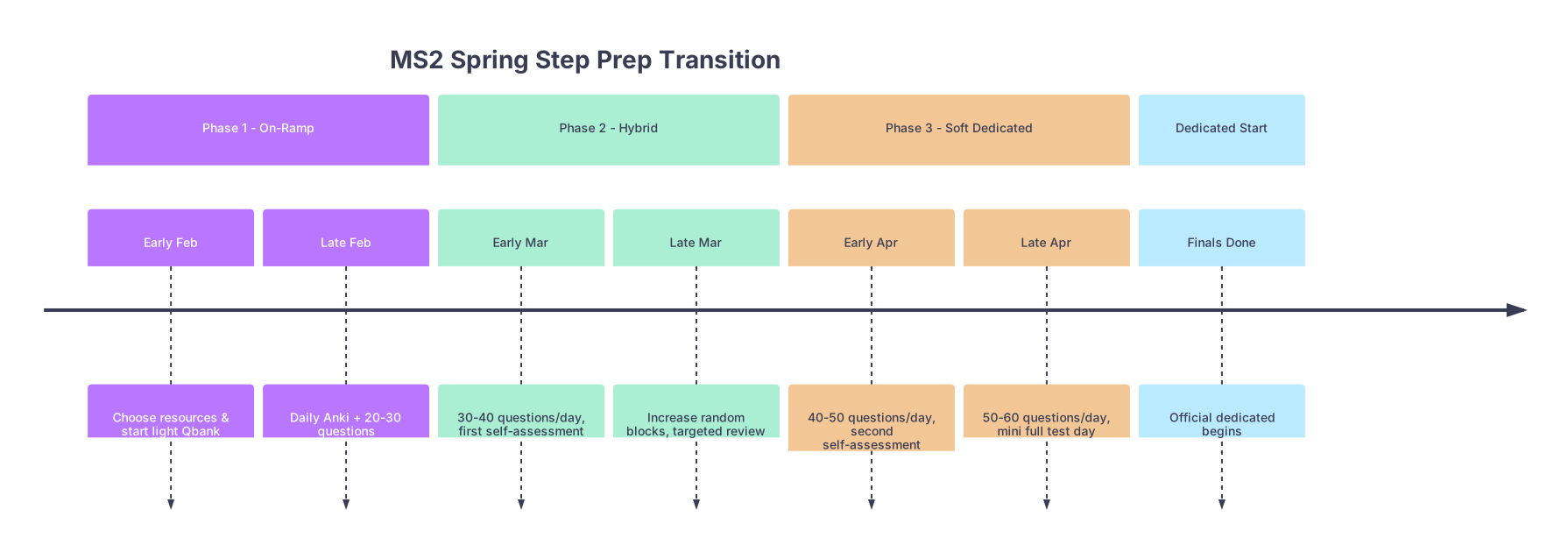
| Period | Event |
|---|---|
| Phase 1 - On-Ramp - Early Feb | Choose resources & start light Qbank |
| Phase 1 - On-Ramp - Late Feb | Daily Anki + 20-30 questions |
| Phase 2 - Hybrid - Early Mar | 30-40 questions/day, first self-assessment |
| Phase 2 - Hybrid - Late Mar | Increase random blocks, targeted review |
| Phase 3 - Soft Dedicated - Early Apr | 40-50 questions/day, second self-assessment |
| Phase 3 - Soft Dedicated - Late Apr | 50-60 questions/day, mini full test day |
| Dedicated Start - Finals Done | Official dedicated begins |
Common Mistakes by Week and How to Avoid Them
In February
Mistake: “I’ll start UWorld in dedicated so I don’t ‘waste’ it.”
Fix: Start now, but in tutor mode, system‑based, with careful review. UWorld is not a finite treasure; it is a learning tool.Mistake: Building a perfect, custom 10,000‑card deck.
Fix: Use a vetted deck. Customize minimally. Time is your rare resource, not creativity.
In March
Mistake: Letting school exams wipe out Step work for entire weeks.
Fix: On heavy school weeks, keep Anki and at least 10–15 Qbank questions/day. Do not let Step practice drop to zero.Mistake: Taking an NBME, then never really reviewing it.
Fix: Spend 4–6 hours over 1–2 days going through missed and guessed questions in detail. That is where the gains are.
In April
Mistake: Adding new resources because you feel behind (Goljan audio, full Kaplan series, etc.).
Fix: Double down on what you already use: Qbank + 1 content spine + Anki. Depth beats breadth now.Mistake: Trying to maintain honors in every course.
Fix: Strategically accept “good enough” in classes to secure a strong Step performance. That trade is almost always worth it.
How to Know the Plan Is Working (Week-by-Week Signals)
You are not guessing. Every 1–2 weeks, look for these signs:
Qbank % slowly trending up
- Not every day. But 2–3 weeks apart, you should see a 3–5% improvement, or at least more consistency.
NBME scores stabilizing or climbing
- Even a small bump is progress. Flat but solid is acceptable in early stages.
Your fatigue moves later in the day
- In February, you are cooked by 15:00.
- By late April, you can sustain focus for 6–7 hours of serious mental work.
Your review becomes more focused
- You start saying “I always miss renal phys questions on concentrating ability” instead of “I’m bad at kidney.”
If none of these are true by the end of March, your schedule is probably aspirational fiction. Tighten it. Reduce resources. Increase daily Qbank and Anki consistency.
Final Calibration: Customizing the Weekly Plan
Not everyone’s spring looks identical. Adjust along these axes:
If your school is light in spring:
- Move faster: hit 50–60 questions/day by late March. You are basically in early dedicated mode already.
If your school is brutal in spring:
- Protect your floor: minimum 20–30 Qbank questions/day + full Anki. Expand only when major exams pass.
If Step is pass/fail for your cohort:
- This is not a license to coast. It just changes the target:
- Focus more on safety (no glaring weak systems).
- Slightly less obsession with squeezing out the last 5 points on NBME.
- This is not a license to coast. It just changes the target:
The Short Version: What You Should Be Doing When
February:
- Pick resources.
- Start 15–30 Qbank questions/day, daily Anki, light content review.
March:
- Ramp to 30–40 questions/day, 250–400 Anki reviews.
- Take first self‑assessment late March.
April:
- Treat spring like mini‑dedicated.
- 40–60 questions/day, second self‑assessment, targeted review.
- Final week pre‑dedicated: one full practice test day and a cleaned‑up study ecosystem.
If you follow that timeline with discipline, Day 1 of dedicated will not feel like jumping off a cliff. It will feel like the next logical week in a plan you have already been living.