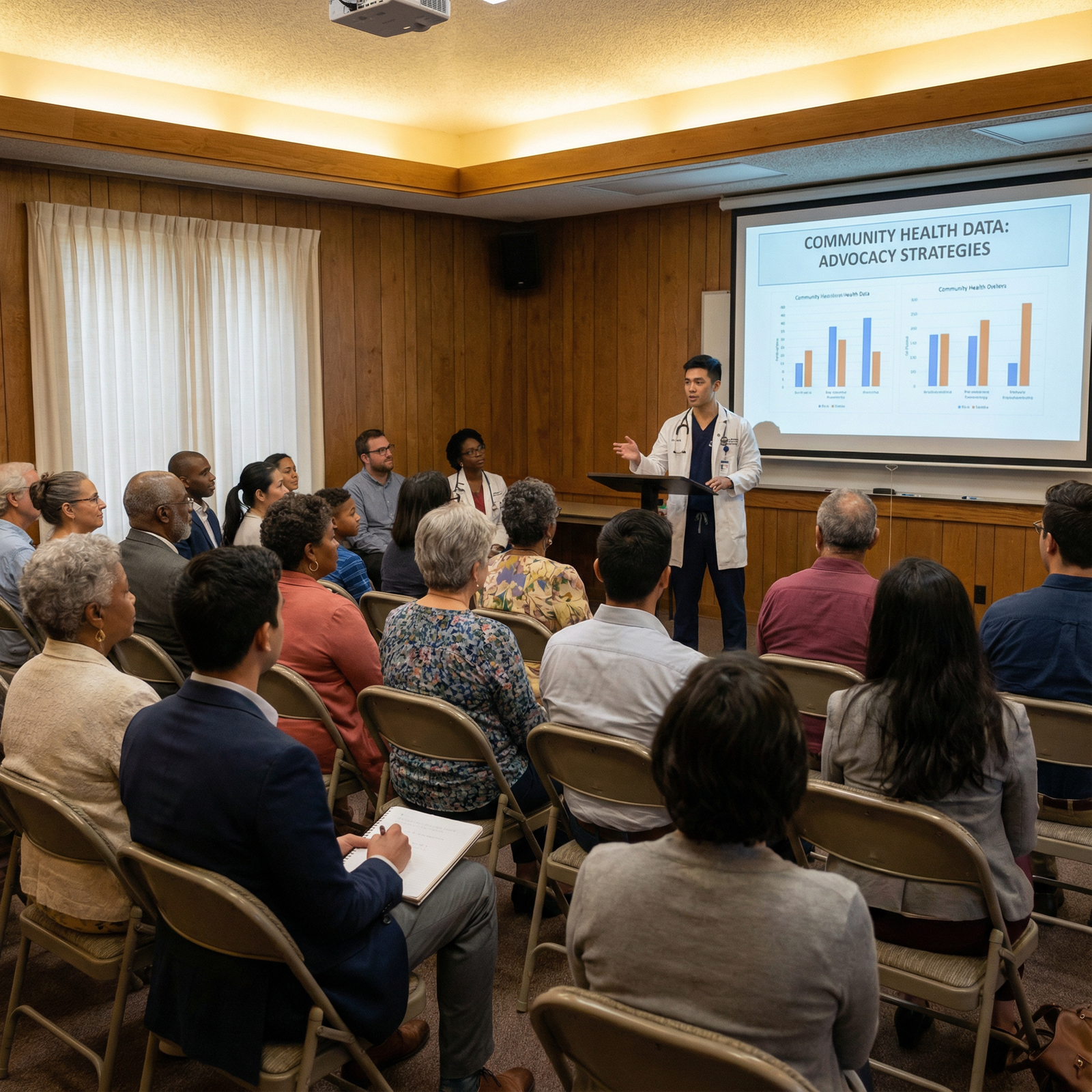
Advocating for Change: How to Effectively Communicate Public Health Issues
Introduction: Why Communication Is Central to Public Health Advocacy
Public health is as much about changing minds and systems as it is about treating disease. Whether you are a medical student, resident, public health professional, or community leader, your ability to communicate clearly and persuasively can determine whether a critical initiative succeeds or fails.
From global pandemics and vaccine hesitancy to chronic diseases, mental health, environmental threats, and health inequities, the most urgent public health challenges require more than good science—they require strategic communication, advocacy, and community engagement.
This article explores:
- What effective Public Health advocacy looks like in practice
- Why Communication Strategies are essential for influencing policy and behavior
- How to design messages that increase Health Awareness and build trust
- Practical tools and examples to help you advocate effectively in your own setting
The goal is not only to inform, but to equip you with actionable skills you can start using today—whether you’re speaking to a policymaker, designing a social media campaign, or counseling a patient one-on-one.
Understanding Public Health Advocacy and Your Role in It
Public health advocacy is more than slogans or social media posts. It is a deliberate, evidence-informed effort to influence decisions, policies, and norms that affect population health.
What Is Public Health Advocacy?
At its core, public health advocacy involves:
- Raising awareness about a health issue or inequity
- Influencing decision-makers (e.g., legislators, hospital leadership, school boards)
- Mobilizing communities to support healthier environments and policies
- Challenging structural barriers to health, such as discrimination or lack of access
Advocacy can be policy-focused (e.g., smoke-free laws, funding for mental health services) or practice-focused (e.g., changing hospital discharge processes, improving language access in clinics).
How Clinicians and Trainees Fit Into Advocacy
Even if you do not see yourself as an “advocate,” your clinical role gives you unique credibility and insight:
Medical students and residents
- Can participate in campus advocacy groups, write op-eds, present data to local officials
- Can bring patient stories (with appropriate de-identification and consent) into policy conversations
Clinicians and allied health professionals
- Are trusted messengers in high-stakes conversations like vaccination, screening, or addiction treatment
- Can identify patterns of inequity (e.g., repeated lack of interpreter services) and bring them to leadership
Public health professionals and researchers
- Translate data into clear, compelling narratives for the public and policymakers
- Design and evaluate Communication Strategies and community-based interventions
Effective advocacy is not limited to large national campaigns. A resident who persuades a hospital to add culturally appropriate educational materials or a student who organizes a naloxone training event is engaging in impactful Public Health advocacy.
Why Effective Communication Is the Engine of Public Health Change
Communication is not an optional “soft skill”—it is the mechanism by which evidence becomes action. Done well, it can shift norms, build trust, and support sustainable policy change.

1. Influencing Policy and Decision-Making
For policymakers, clarity, evidence, and relevance are critical. They often have:
- Limited time
- Competing priorities
- Variable familiarity with medical or epidemiologic concepts
Effective Public Health communication can:
- Explain why an issue is urgent now (e.g., rising overdose deaths in a specific district)
- Quantify the health and economic impact (e.g., cost savings from vaccination, productivity gains from mental health support)
- Offer clear, feasible policy options (e.g., implementing smoke-free areas, expanding Medicaid, investing in walkable infrastructure)
Example:
Advocating for a sugar-sweetened beverage tax might involve presenting:
- Local obesity and diabetes prevalence data
- Projected healthcare cost savings
- Evidence from other cities that implemented similar policies
- Stories from clinicians seeing early-onset diabetes in adolescents
2. Raising Health Awareness and Correcting Misinformation
Many Public Health efforts fail because target populations:
- Do not recognize their risk
- Do not see the relevance to their own lives
- Are exposed to misinformation or distrust in institutions
Well-designed awareness campaigns:
- Use clear, non-judgmental language
- Offer specific, actionable steps (e.g., where to get vaccinated, how to access free screening)
- Address common myths directly and respectfully
Example:
A cervical cancer screening campaign might highlight:
- That HPV and cervical cancer affect people of all backgrounds
- That screening and HPV vaccination can dramatically reduce risk
- Exactly where low-cost or free Pap tests are available locally
3. Building and Sustaining Trust
Trust is a prerequisite for effective Public Health. People are far more likely to act on recommendations if they trust:
- The source of the information
- The motives of the messenger
- The systems responsible for implementing change
Key trust-building practices:
- Transparency about what is known, what is uncertain, and how decisions are made
- Consistency across platforms and messengers
- Responsiveness to concerns, including acknowledging historical and ongoing injustices
During the COVID-19 pandemic, for instance, trust was strengthened when health systems:
- Partnered with local faith leaders and community organizations
- Provided information in multiple languages
- Acknowledged legitimate fears related to historical medical abuses
4. Engaging Communities as Partners, Not Targets
Community Engagement is not simply “delivering messages” to a passive audience. It is co-creating solutions with communities.
Effective engagement means:
- Listening before speaking—using focus groups, listening sessions, or surveys
- Sharing power in decision-making (e.g., advisory boards, community co-investigators)
- Valuing lived experience alongside clinical and epidemiologic expertise
Example:
A successful opioid harm reduction program might:
- Be co-designed with people who use drugs
- Use peer recovery coaches as front-line advocates
- Incorporate feedback to shape services (e.g., clinic hours, location, confidentiality practices)
Core Strategies for Effective Communication in Public Health Advocacy
Translating complex Public Health issues into clear, persuasive advocacy requires an intentional strategy. Below are high-yield, practical approaches you can adapt in almost any context.
1. Know Your Audience: Tailoring Messages for Impact
Different audiences require different framing, language, and channels. A one-size-fits-all message is rarely effective.
Segment Your Audience
Consider segmenting by:
- Role: Policymakers, clinicians, patients, community leaders, media
- Values and priorities: Economic, ethical, spiritual, environmental
- Communication preferences: Social media, emails, community radio, in-person forums
Example Approaches by Audience
Policymakers
- Emphasize: cost-effectiveness, public safety, economic growth, voter concerns
- Tools: policy briefs, testimony, concise data visualizations, one-page summaries
- Example: For a naloxone access bill, show local overdose trends, potential lives saved, and cost savings in emergency care
Health Professionals
- Emphasize: evidence quality, clinical relevance, workflow feasibility
- Tools: grand rounds talks, journal clubs, clinical protocols, EMR prompts
- Example: Educate clinicians on new screening guidelines with clear algorithms and quick-reference tools
General Public / Patients
- Emphasize: personal relevance, safety, practicality, family well-being
- Tools: social media, community events, short videos, flyers in clinics and schools
- Example: Use simple language and relatable stories to encourage colon cancer screening
2. Use Storytelling to Humanize Data
Data alone rarely moves people. Narratives—when ethical and respectful—give Public Health issues a face and a voice.
Key principles of effective storytelling:
- Center real people (with consent and de-identification as needed)
- Connect their story to broader structural or policy issues
- Avoid victim-blaming; highlight resilience and systemic barriers
- Pair the story with clear calls to action
Example:
Instead of saying “20% of children in this district are food insecure,” you might share:
“In clinic last week, we met a 9-year-old who said she often skips dinner so her younger siblings can eat. Her school’s meal program and a local pantry are the only stable sources of food. Policies that expand access to free school meals and support local food banks directly affect children like her.”
3. Leverage Visuals and Multimedia for Better Comprehension
Visual communication is often more accessible and memorable than dense text.
Effective Visual Tools
- Infographics to summarize complex statistics (e.g., vaccine safety data)
- Short videos (30–90 seconds) with key messages and subtitles
- Interactive dashboards for real-time local health data
- Simple charts and diagrams in presentations or patient education materials
Tips:
- Use plain language and clean design (avoid clutter)
- Test visuals with a small sample of your audience
- Consider accessibility (color contrast, alt-text, readable fonts)
4. Simplify Language Without Oversimplifying the Science
Health literacy varies widely, and jargon can alienate audiences.
Strategies:
- Replace technical terms with everyday words when possible
- “Myocardial infarction” → “heart attack”
- “Morbidity and mortality” → “illness and death”
- Break complex ideas into short, clear sentences
- Use teach-back methods in clinical settings: ask people to repeat information in their own words
- When jargon is necessary, define it once in straightforward language
Clear communication is a patient safety issue—misunderstandings can lead to missed screening, medication errors, or poor follow-up.
5. Anchor Your Message in Evidence—and Explain It
Evidence-based messaging is a hallmark of credible Public Health advocacy, but the way evidence is presented matters.
Best practices:
- Use up-to-date, high-quality sources (e.g., peer-reviewed studies, national guidelines, systematic reviews)
- Be transparent about uncertainty and limitations
- Contextualize numbers:
- Instead of “0.001% risk,” say “about 1 in 100,000 people”
- Compare risks to something familiar when appropriate
Example:
When advocating for vaccination:
- Present data on effectiveness and side effects
- Address common myths explicitly (e.g., “The evidence shows that vaccines do not cause autism”)
- Explain the concept of herd immunity in plain terms
6. Foster Collaboration and Build Coalitions
Public Health advocacy is far more powerful when done through coalitions and partnerships.
Potential partners include:
- Community-based organizations and faith groups
- Schools and universities
- Professional societies and specialty organizations
- Patient advocacy groups
- Local businesses and media outlets
Benefits of collaboration:
- Greater reach and credibility
- Access to diverse skills (e.g., communications, legal, logistics)
- Increased legitimacy in the eyes of policymakers and the public
Example:
A citywide campaign to improve Health Awareness around hypertension might unite:
- Local clinics and hospitals
- Barbershops and salons offering blood pressure checks
- Churches hosting health fairs
- Media outlets running educational segments
7. Adapt, Evaluate, and Respond in Real Time
Public Health issues and public sentiment can shift quickly. Effective advocates:
- Monitor engagement: website traffic, event attendance, social media analytics
- Collect feedback: surveys, interviews, community meetings
- Adjust messaging or channels based on what is and isn’t working
Example metrics:
- Changes in screening rates or vaccination uptake
- Policy changes or budget allocations
- Shifts in community attitudes measured through surveys
Evaluation is not just bureaucratic—it helps you learn, iterate, and sustain impact.
Real-World Examples of Effective Communication in Public Health Advocacy
1. The Truth Initiative: Youth-Led Tobacco and Vaping Control
The Truth Initiative is a classic example of using youth-driven messaging, bold visuals, and social media to shift norms around tobacco use.
Key strategies:
- Spoke in the language and style of young people, not institutions
- Exposed manipulative tactics of tobacco companies
- Used storytelling and peer voices rather than top-down lectures
Impact:
- Contributed to significant declines in youth smoking rates in the U.S.
- More recently, adapted messaging to tackle e-cigarettes and vaping
2. The ALS Ice Bucket Challenge: Viral Health Awareness
The ALS Ice Bucket Challenge showed how simple, participatory actions can massively increase Health Awareness.
What worked:
- Clear, fun call to action (pour a bucket of ice water, donate, nominate others)
- Highly shareable video format
- Peer pressure and social recognition as motivators
Outcomes:
- Over $100 million raised for ALS research in a few months
- Global surge in awareness of a previously lesser-known condition
3. CDC and Community Partners: COVID-19 Vaccination Outreach
During the COVID-19 pandemic, the CDC and local health departments used layered Communication Strategies:
- Partnered with trusted community messengers (faith leaders, barbers, local influencers)
- Created resources in multiple languages
- Tailored messages to specific populations (e.g., pregnant people, older adults, essential workers)
Lessons:
- National messages must be adapted at the local level
- Community Engagement is critical to reach populations historically marginalized by healthcare systems

Practical Tips for Students and Residents: Putting Advocacy into Action
For trainees, advocacy can feel intimidating—but you can start small and build over time.
1. Start With Your Immediate Environment
- Identify a gap: e.g., no translated discharge instructions, limited contraception information, lack of naloxone education
- Collect a few data points or stories that illustrate the problem
- Propose a specific, feasible change (e.g., adding a patient handout to discharge packets, creating a one-hour teaching session for colleagues)
2. Practice Micro-Advocacy in Clinical Encounters
- Use plain language when discussing diagnoses and treatment
- Ask about social determinants of health (e.g., housing, food security, transportation)
- Help patients navigate resources: social work, community programs, financial counseling
Each clinical encounter can be a moment of Health Awareness and empowerment.
3. Write and Speak Publicly
- Draft op-eds on local Public Health issues (e.g., heat waves, air quality, school nutrition)
- Present at hospital committees or local Board of Health meetings
- Join or form a student or resident advocacy group focused on specific issues (e.g., climate and health, reproductive rights, gun violence prevention)
4. Maintain Ethical and Professional Standards
- Protect patient privacy (de-identify stories, obtain any needed permissions)
- Be transparent about your role and training level
- Avoid overstating evidence; acknowledge uncertainties
- Respect community autonomy and expertise
Advocacy is an extension of professional ethics: promoting justice, beneficence, and respect for persons.
FAQs: Communicating Public Health Issues and Advocacy
1. What are the key elements of effective Public Health communication?
Effective Public Health communication typically includes:
- Audience-centered design: Messages tailored to specific groups’ needs, values, and literacy levels
- Clarity and simplicity: Minimal jargon, plain language, and clear calls to action
- Evidence-based content: Accurate, up-to-date data and guidelines
- Emotional and narrative appeal: Ethical use of stories that humanize statistics
- Cultural and linguistic sensitivity: Materials adapted to local languages, norms, and contexts
- Mechanisms for feedback: Opportunities to hear from the community and adjust accordingly
2. How can I engage communities in Public Health advocacy?
You can enhance Community Engagement by:
- Partnering with local organizations (faith groups, schools, neighborhood associations)
- Holding listening sessions or focus groups to understand priorities and concerns
- Involving community members in planning and implementation, not just as recipients
- Providing tangible benefits (e.g., health screenings, food, childcare) at events
- Sharing back results and progress in ways that are accessible and actionable
3. Why is storytelling so powerful in Public Health advocacy?
Storytelling:
- Helps people see themselves or someone they love in the issue
- Transforms abstract statistics into real-world consequences
- Engages emotions, which are key drivers of behavior and decision-making
- Can highlight structural barriers and injustices more vividly than data alone
For maximum impact, stories should be authentic, respectful, and paired with solutions (e.g., policy changes, available services, concrete steps).
4. How can I measure whether my communication strategies are effective?
Potential evaluation methods include:
- Process metrics: number of people reached, event attendance, social media engagement (shares, comments, click-through rates)
- Knowledge and attitude changes: pre/post surveys, interviews, focus groups
- Behavioral outcomes: changes in screening rates, vaccination uptake, program enrollment
- Policy or systems changes: new policies adopted, funding secured, programs expanded
Try to define success before launching your effort and choose metrics that are realistic for your resources.
5. Where can I find additional training and resources on Public Health advocacy and communication?
Useful resources include:
- CDC, WHO, and local health departments – toolkits on risk communication and community engagement
- Professional organizations (e.g., APHA, AMA, specialty societies) – policy statements, advocacy guides, webinars
- Academic Public Health programs – courses in Health Communication and Public Health Policy
- Non-profit advocacy groups – campaign examples and communication templates
- Online platforms and MOOCs – courses on science communication, media engagement, and policy advocacy
Many institutions also offer media training or mentorship in advocacy; ask faculty, program directors, or Public Health departments about opportunities.
By integrating thoughtful Communication Strategies, ethical storytelling, robust evidence, and genuine Community Engagement, you can transform your clinical and academic knowledge into meaningful Public Health advocacy. Whether you are influencing a single patient or a national policy, how you communicate can be the difference between information and real, sustained change.