The biggest mistake clinicians make is treating a QI project like a quick checkbox instead of the foundation for publishable policy work.
You want a policy paper, not just a run chart in a forgotten committee report. That means you need a timeline. On purpose. From the moment you sketch the QI idea, you should be thinking: “How does this become a publishable policy argument?”
Below is a structured, chronological guide: what to do month-by-month, week-by-week, and sometimes day-by-day. Follow the sequence and you will have, by the end, not just a completed QI project, but a policy‑relevant manuscript that is actually submission‑ready.
Month 0–1: Before You Touch Data – Position Your QI as Policy
At this point you should not be running PDSA cycles. You should be designing a policy paper that happens to use QI data.
Week 1: Frame the Policy Question, Not Just the QI Problem
Sit down and write three sentences:
The system failure:
“In our safety‑net ED, 40% of discharged asthmatic children leave without a written action plan despite national guidelines.”The policy‑relevant “why it matters”:
“This gap reflects failures in institutional policy and workflow design, not individual clinician behavior.”The thesis you eventually want for a paper:
“A standardized policy requiring EMR‑integrated action plans at discharge can reduce inequities and improve adherence to evidence‑based care.”
If you cannot do this, you do not have a policy paper yet. You just have a QI project idea.
Now map your idea to a policy domain:
- Payment / reimbursement
- Regulation / accreditation (e.g., Joint Commission, CMS)
- Institutional policy / governance
- Workforce / scope of practice
- Data reporting / transparency
Pick one primary domain. That will anchor your eventual discussion and recommendations.
Week 2: Literature Scan and Journal Targeting
At this point you should:
- Block 2–3 hours and search:
- PubMed
- Health Affairs, Milbank Quarterly, BMJ Quality & Safety, Journal of Patient Safety, JAMA Health Forum, etc.
- Look specifically for:
- QI projects that changed institutional policy
- Papers that move from micro‑level intervention to meso/macro policy implications
Create a rough reading matrix:
| Journal | Typical QI Focus | Policy Angle Strength |
|---|---|---|
| BMJ Quality & Safety | Clinical microsystems | Moderate–High |
| Health Affairs | Systems & payment | Very High |
| The Joint Commission JQPS | Accreditation & safety | High |
| Implementation Science | Adoption & scale‑up | High |
| American Journal of Public Health | Population health | Moderate–High |
Do not overread. You are not writing a thesis. You are checking:
- What outcomes journals seem to care about
- How authors connect local QI to broader policy levers
- Word limits and article types (policy analysis, innovation reports, QI reports)
Pick 1–2 realistic target journals now. That decision shapes your methods, level of rigor, and how strongly you lean into policy vs. operational detail.
Month 1–2: Design the QI Project with Publication in Mind
At this point you should be locking down design, ethics, and data structure. Not improvising.
Week 3–4: Clarify Aim, Measures, and Policy Relevance
Write a formal aim statement that already sounds like a publishable abstract:
Aim:
“To increase the proportion of heart failure patients discharged with a 7‑day follow‑up appointment from 50% to 80% within 6 months through implementation of a standardized discharge scheduling policy.”Policy hook embedded: discharge scheduling policy, not random “workflow tweak.”
Define measures in three buckets:
- Outcome measures – errors, readmissions, patient outcomes, inequities.
- Process measures – compliance with the new policy (e.g., % of charts with documented action plan).
- Balancing measures – clinic workload, patient wait time, staff morale.
You want at least one measure that clearly links to:
- An external benchmark (CMS Core Measures, HEDIS, national guidelines), or
- A regulatory or equity priority (e.g., disparities by race or insurance status).
That is how you make policy editors pay attention.
Week 4–5: Ethics, IRB, and Data Permissions
At this point you should be talking to your IRB, not guessing.
- Prepare a 1–2 page summary:
- Background, aims, intervention
- Data elements, time frame, data sources
- Plan for dissemination (explicitly: publication of deidentified aggregate data)
Typical path:
- Many QI projects qualify as “non‑human subjects research” or “quality improvement not requiring IRB review.”
- You still want a letter/documentation from the IRB. Editors and reviewers ask for it. A lot.
Ask explicitly:
- Can I compare pre/post cohorts and publish subgroup analyses?
- Any constraints on using these data for external publication?
If the IRB wants this treated as research (sometimes happens when you are altering standard care), build that into your timeline: add 3–6 weeks.
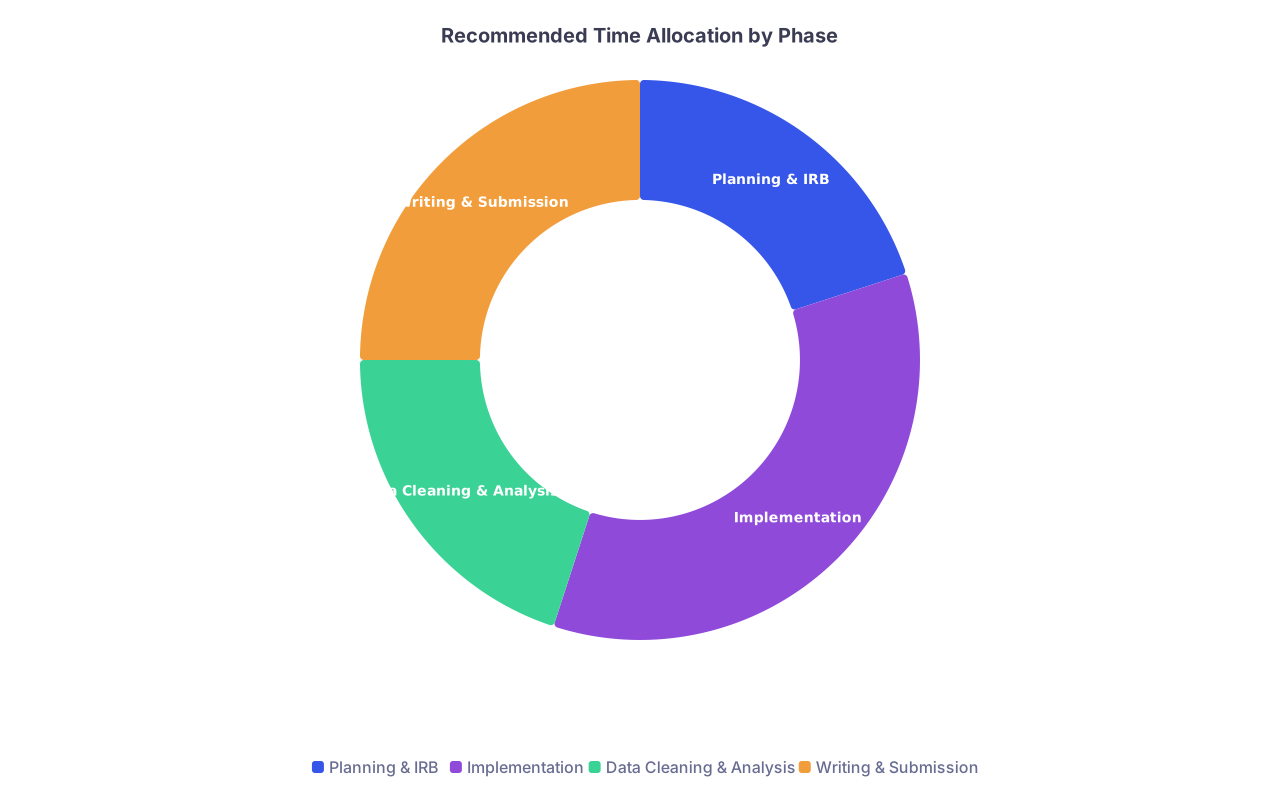
| Category | Value |
|---|---|
| Planning & IRB | 20 |
| Implementation | 35 |
| Data Cleaning & Analysis | 20 |
| Writing & Submission | 25 |
Month 2–5: Run the QI Project – While Drafting the Policy Narrative
Most people blow this phase. They run the QI project, then months later try to remember what happened. Do both in parallel.
Month 2: Baseline Data and Policy Context
At this point you should:
- Extract 3–6 months of baseline data, if possible.
- Stratify by at least one equity‑relevant variable (race, language, insurance, neighborhood deprivation index if available).
- Document current “policy reality”:
- Is there an existing institutional policy that is being ignored?
- Are clinicians following individual habits instead of standardized processes?
Start a running “policy log” document:
- Notes from meetings where someone says, “We have no rule about…”
- Quotes from staff: “We used to do X before the last admin change.”
- Observations about where policy is ambiguous or contradictory.
These become paragraphs in your introduction and discussion.
Month 3–4: First PDSA Cycles and Policy Prototype
Run your initial PDSA cycles, but design them as policy tests, not just workflow experiments.
Example:
- Instead of “reminding nurses to do med rec,” implement:
- A written unit‑level policy requiring med rec completion and sign‑off before discharge.
- EMR hard stop or checklist tied to this policy.
- Staff training referencing this as “new unit policy.”
At this point you should:
- Pre‑write a draft “Intervention and Policy Change” section with:
- Policy elements (who is required to do what, when, and under whose authority)
- Supporting tools (EMR changes, checklists, templates)
- Governance and accountability (who audits compliance, what happens with non‑compliance)
During Month 3–4, jot down:
- Barriers that are clearly policy‑related: misaligned incentives, conflicting departmental policies, ambiguous responsibility.
- Unintended consequences (these make your policy analysis more credible).
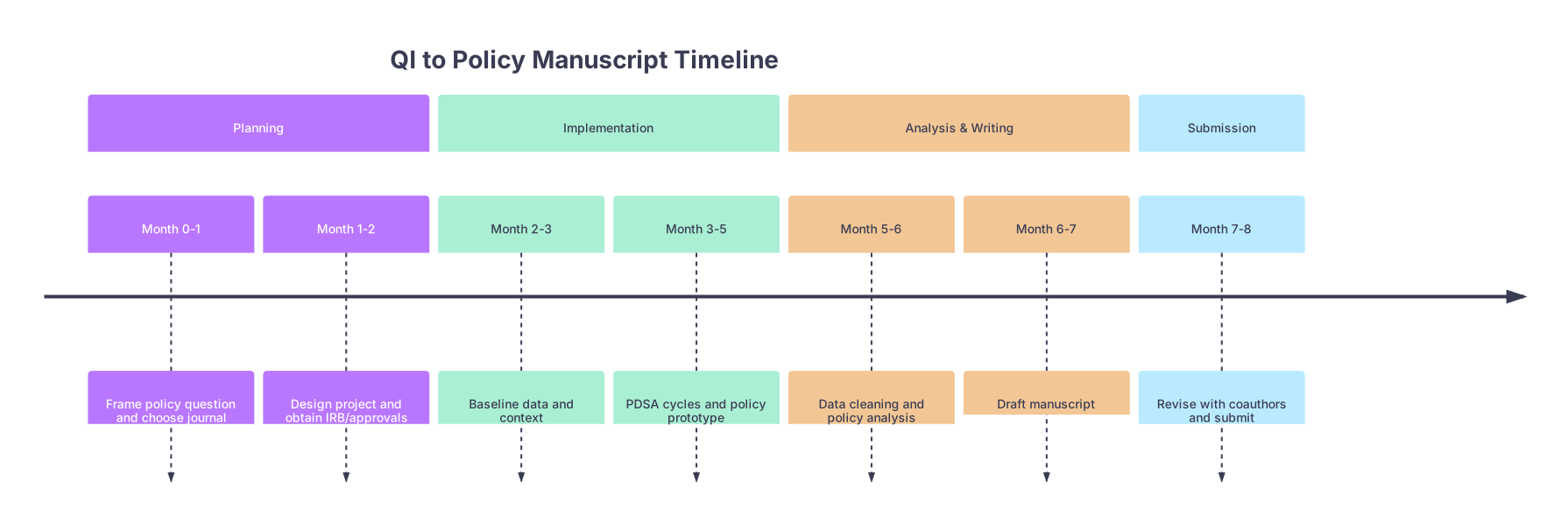
| Period | Event |
|---|---|
| Planning - Month 0-1 | Frame policy question and choose journal |
| Planning - Month 1-2 | Design project and obtain IRB/approvals |
| Implementation - Month 2-3 | Baseline data and context |
| Implementation - Month 3-5 | PDSA cycles and policy prototype |
| Analysis & Writing - Month 5-6 | Data cleaning and policy analysis |
| Analysis & Writing - Month 6-7 | Draft manuscript |
| Submission - Month 7-8 | Revise with coauthors and submit |
Month 5–6: Lock the Data, Analyze, and Build the Policy Argument
At this point you should be saying, “We have enough data for a coherent story.” Do not chase infinite cycles.
Week 1 of Month 5: Decide the End of the Observation Window
Be explicit:
- Preperiod: 3–6 months before intervention
- Intervention and ramp‑up: 1–2 months
- Postperiod: minimum 3 months of stable policy implementation
Avoid the trap of waiting “until the data look better.” Reviewers can smell that.
Week 2–3 of Month 5: Data Cleaning and Descriptive Stats
You do not need heroic statistics for most QI‑policy papers. You do need clean, credible data.
At this point you should:
- Create a data dictionary: variable names, definitions, and coding rules.
- Run:
- Basic descriptive stats
- Time‑series plots (run charts, control charts if appropriate)
- Subgroup analyses that speak to policy questions (e.g., did the policy narrow disparities?).
If you have access to a statistician, involve them here, not three days before submission.
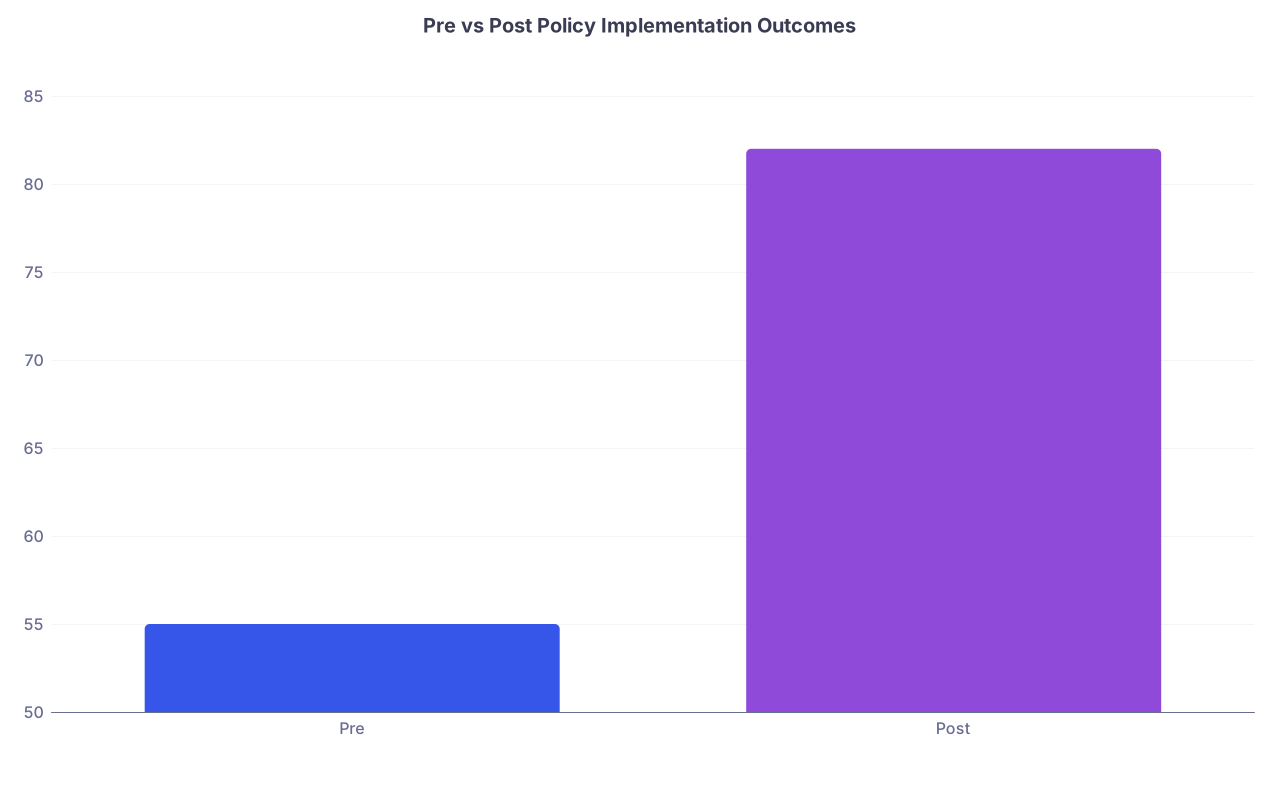
| Category | Value |
|---|---|
| Pre | 55 |
| Post | 82 |
Week 4 of Month 5 – Week 1 of Month 6: Translate Results into Policy Language
Now you pivot hard from “QI report” to “policy paper.”
Take your main quantitative results and answer three questions on paper:
- If another hospital adopted the same policy, what would realistically change?
- What higher‑level levers does this intersect with?
- Accreditation standards
- Payment models
- Public reporting requirements
- Where did the policy hit friction? Staffing rules, union rules, EMR vendor constraints, legal or compliance concerns?
Start drafting the Discussion section first. Yes, before the introduction. Because the policy argument drives the rest.
Structure it:
Key finding in plain policy language
“Implementing a unit‑wide discharge scheduling policy, linked to EMR workflows and leadership oversight, increased timely follow‑up appointments for heart failure patients from 55% to 82%.”Why this matters beyond your hospital
Tie to readmission penalties, guideline adherence, or public health implications.What specific policy levers are implicated
- “Our findings support making 7‑day follow‑up a reportable quality metric.”
- “Payment incentives that reward timely follow‑up could reinforce this institutional policy.”
Barriers and ethical concerns
- Did the policy unintentionally burden staff on night shifts?
- Did it disadvantage non‑English‑speaking patients if interpreter access was not built in?

Month 6–7: Draft the Manuscript – Week-by-Week
At this point you should stop tinkering with the intervention and start writing like you intend to submit in 4–6 weeks.
Week 1: Build the Skeleton Before Wordsmithing
Outline sections as they would appear in a policy‑oriented QI article:
- Abstract (structured or not, depending on journal)
- Introduction
- Methods
- Results
- Policy Analysis / Discussion
- Conclusions and Policy Recommendations
Drop bullet‑point placeholders into each:
Introduction:
- Burden of problem
- Gap between guidelines and practice
- Policy context (national or institutional)
- Specific aim
Methods:
- Setting
- Population
- Baseline data sources
- QI design and PDSA cycles
- Policy elements of the intervention
- Analysis plan
- Ethics/IRB statement
Week 2: Write Methods and Results First
At this point you should be aiming for clarity, not elegance.
Methods:
- Be concrete. “We implemented a mandatory EMR discharge checklist requiring…”
- Describe governance: who approved the policy, who enforced it, how exceptions were handled.
Results:
- Tables and figures first, text second.
- Keep QI‑style clutter out of the main paper. Focus on:
- Key outcome measure over time
- Critical process measure(s)
- Any equity‑relevant stratification
- Policy‑relevant balancing measures (clinician time, visit capacity)
You can include supplemental material for granular PDSA details if the journal allows.

Week 3: Write Introduction and Policy Discussion
Use the “funnel” approach for your Introduction:
- Global or national problem
- Policy backdrop (guidelines, payment, regulation)
- Local gap at your institution
- Aim statement that clearly implies a policy intervention
For the Discussion, avoid generic QI language. You are writing a policy paper. Use headings like:
- Implications for Institutional Policy
- Alignment with National Quality Programs
- Ethical and Equity Considerations
- Scalability and Generalizability
Be specific:
- “Our findings support including X in Joint Commission standards.”
- “State Medicaid programs could incorporate this measure in pay‑for‑performance contracts.”
Tie in medical ethics and professional responsibility:
- Autonomy vs. standardization (e.g., does the policy constrain clinician judgment?)
- Justice (who benefits; who might be left behind)
- Professional duty to advocate for system‑level change, not just better individual behavior
Week 4: Coauthor Review and Refinement
At this point you should:
- Circulate the full draft to all key stakeholders:
- Project lead
- Data/analytics support
- Policy/administration partner
- Ethicist or public health mentor if you have one
Give them a hard deadline: 7–10 days.
Ask for targeted feedback:
- Is the policy argument convincing?
- Does the interpretation overstate what the data support?
- Are institutional politics correctly (and safely) represented?
Clean up authorship order and contribution statements now. Do not wait for the submission portal to force the conversation.

Month 7–8: Finalize, Submit, and Plan the Next Policy Step
At this point you should be moving from private draft to public argument.
Week 1: Align With Journal Requirements
Before you touch another sentence:
- Recheck:
- Word limits
- Table/figure limits
- Required sections (ethical approval, funding, conflict of interest)
- Reference style
Trim or expand accordingly.
Add a 1–2 sentence “Policy Implications” box or bullet list if the journal allows. Editors like that.
Week 2: Strengthen the Ethical and Professional Development Angle
You are in the “Personal Development and Medical Ethics” phase, so make that explicit:
- Reflect briefly on:
- How clinicians involved evolved from “fix my unit” thinking to “advocate for policy change.”
- The professional duty to document and share system changes, not just implement them.
- Any ethical conflicts faced:
- Pressure to under‑report problems
- Tension between throughput and thoroughness
- Concerns about burdening already‑stretched staff
A short, sharp paragraph on this in the Discussion or Conclusion separates a mature policy paper from a bland QI report.
Week 3: Submission and Immediate Next Steps
Submit. Then, before you exhale:
- Draft a one‑page internal brief summarizing:
- Problem
- Intervention (policy change)
- Results
- Recommended institutional next steps
Share it with:
- Your QI committee
- Relevant department leadership
- Anyone who can help institutionalize or scale the policy
This keeps the work from becoming purely academic. It also gives you material for future “scale‑up” or multi‑site policy manuscripts.
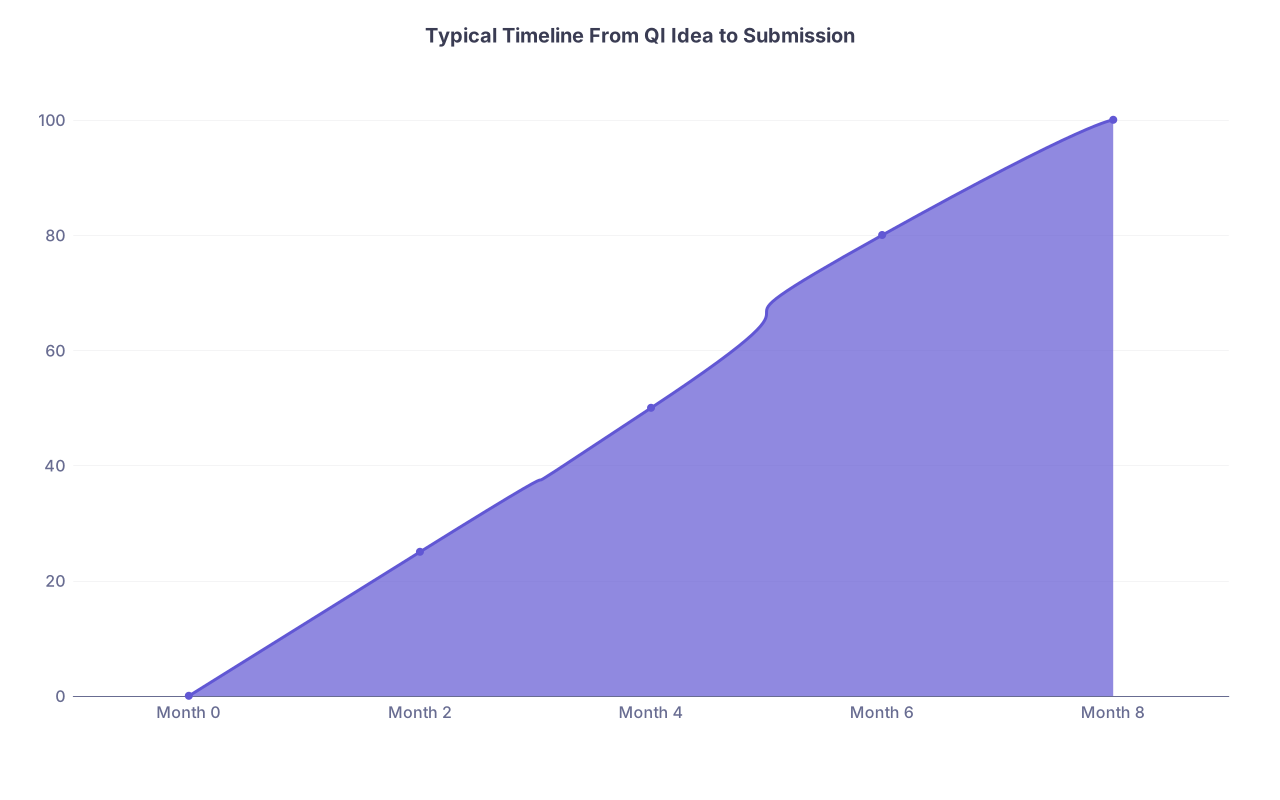
| Category | Value |
|---|---|
| Month 0 | 0 |
| Month 2 | 25 |
| Month 4 | 50 |
| Month 6 | 80 |
| Month 8 | 100 |
Common Timeline Pitfalls and How to Avoid Them
You will be tempted to:
Treat writing as an afterthought.
Fix: Start the “policy log” and draft sections during implementation, not after.Chase a perfect run chart for months.
Fix: Decide early on a reasonable observation window and stick to it.Ignore equity and ethics until reviewers ask.
Fix: Build equity‑relevant stratification and ethical reflection into your analysis from Month 2.Assume your IRB “does not care” because this is QI.
Fix: Get written confirmation. Reviewers will ask. Sometimes editors too.
Final Takeaways
- If you want a publishable policy paper, you must frame the policy question in Month 0, not after the QI project is “done.”
- Run the QI project and build the manuscript in parallel, with a written timeline for baseline data, PDSA cycles, analysis, and drafting.
- Anchor the paper in concrete policy levers, ethical reflection, and equity implications, so it reads as serious public health policy work, not just another internal improvement story.