The belief that only academic physicians can shape public health policy is wrong. Worse than wrong—it lets a lot of smart, ethically grounded clinicians and trainees opt out of the arena where decisions are made.
Let me be blunt: if you wait until you have a faculty title and an NIH grant before you think you’re “allowed” to influence policy, you’ve already ceded the field to lobbyists, think-tank generalists, and the loudest people in the room.
Where This Myth Comes From (And Why It’s Convenient)
You probably know the script.
Policy panels stacked with “Dr. So-and-So, Professor of X at Famous University.” Journals filled with “policy recommendations” authored by people with multiple advanced degrees, miles from the chaos of an ED on a Saturday night. Medical students get the message early: real policy work is for academics. You? Go memorize the sepsis bundle.
There’s a reason this myth persists:
Institutions like clear hierarchy. It’s very comfortable—for deans and department chairs—if “policy” stays in the hands of senior, tenured people who already know the rules of the game and won’t rock the boat too hard.
Academics control the narrative. Who gives the grand rounds on “health policy”? The health services researcher, not the community internist who fought their state Medicaid office for coverage of a medication. The system amplifies one type of expertise and erases the other.
Clinicians are busy and exhausted. It’s easier to tell yourself “policy isn’t my lane” than to acknowledge that you’re watching ethically dubious decisions filter down to patients and doing nothing beyond venting in the workroom.
But here’s the twist: when you actually look at who shapes public health policy—even big-ticket items—it’s a mix of academic physicians, community clinicians, nurses, lawyers, patient groups, and yes, sometimes people with no health degree at all. The data do not support this “only academic physicians matter” fantasy.
What The Evidence Actually Shows About Who Shapes Policy
Let’s talk receipts instead of vibes.
1. Major public health wins rarely come from academics alone
Take smoking policy. The big shifts—warning labels, taxes, smoke-free laws—didn’t materialize because a few professors wrote op-eds.
They came from coalitions: local clinicians seeing COPD and MI every week, public health departments, teachers’ unions, advocacy organizations like the American Cancer Society, and yes, some academics providing data.
Same with:
- HIV policy in the 80s and 90s
- Harm reduction and naloxone access
- Injury prevention (seatbelts, drunk driving laws)
You see the pattern. The research matters. But the pressure, the narrative, the testimonies—those often come from front-line clinicians and communities, not R01-funded policy scholars.
2. Legislators don’t primarily hear from academic physicians
Look at hearing transcripts from US Congressional committees on health topics over the last decade. The panels are a mix:
- Academic physicians and researchers
- Representatives of medical societies
- Hospital or health system leaders
- Front-line clinicians with compelling stories
- Advocacy group reps and patients
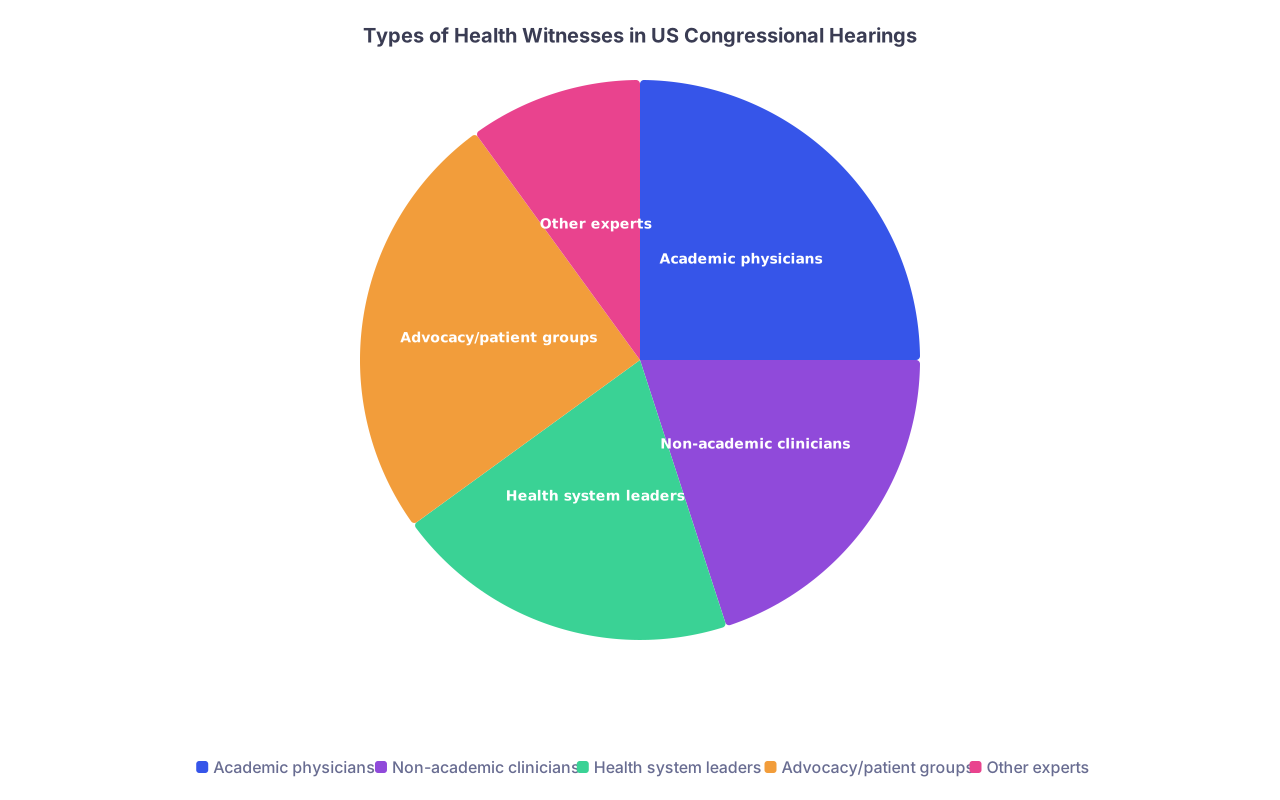
| Category | Value |
|---|---|
| Academic physicians | 25 |
| Non-academic clinicians | 20 |
| Health system leaders | 20 |
| Advocacy/patient groups | 25 |
| Other experts | 10 |
The proportions shift by topic, but the picture is clear: academia has a seat, not a monopoly. When state legislatures debate scope-of-practice, reproductive health restrictions, or Medicaid reimbursement, they’re often more influenced by local practitioners and organized professional societies than by a lone professor from a distant medical school.
3. Policy often follows organized practice, not papers
I’ve sat in meetings where hospitalists quietly changed discharge practices long before any policy statement caught up. Where ED directors implemented buprenorphine initiation despite lukewarm institutional enthusiasm. Eventually, those changes get noticed, measured, and written up. Then someone slaps the “policy innovation” label on them.
Real sequence:
Clinicians change practice → Data accumulates → Policy bodies bless it.
Not the other way around.

| Step | Description |
|---|---|
| Step 1 | Frontline clinicians change practice |
| Step 2 | Local outcomes improve |
| Step 3 | Data collected and shared |
| Step 4 | Professional society takes notice |
| Step 5 | Guideline or statement issued |
| Step 6 | Lawmakers and payers adopt policy |
The idea that only an academic policy specialist can move the needle is just false. They often formalize and translate what clinicians are already doing.
The Ethical Trap: Delegating Policy to “Experts”
Here’s where this moves from annoying myth to ethical problem.
If you’re a clinician—or training to be one—you’re not neutral in public health policy. You’re either exerting some influence or someone else is doing it for you, and you’re complicit in the outcome.
1. Clinical ethics doesn’t stop at the clinic door
Medical ethics courses love four principles: autonomy, beneficence, nonmaleficence, justice. Then they confine them to individual encounters. Do you get consent properly? Do you avoid overt harm? That’s the sandbox you’re kept in.
But those same principles, applied up a level, scream for policy engagement:
- You watch a state slash Medicaid reimbursement so low that clinics close in poor neighborhoods. Justice? Broken.
- You treat endless uncontrolled diabetes because healthy food is unaffordable and insulin copays are absurd. Nonmaleficence? You’re watching harm you can’t fix with prescriptions.
- You see laws that criminalize pregnancy outcomes or substance use, driving patients underground. Autonomy? Gone.
Saying “policy isn’t my lane” in that context isn’t neutral. It’s a choice to let less-informed or less-ethical actors define the environment your patients live in.
2. “I’m not trained in policy” is often an excuse, not a reality
Nobody is born understanding how prior authorization works either, yet clinicians master that mess out of necessity. Policy isn’t some mystical discipline requiring a PhD. Yes, there’s technical depth, but the baseline—how a bill moves, how regulations are written, how payment incentives distort care—that’s all learnable.
And plenty of non-academics have learned it well enough to be dangerous (in a good way). Community physicians who chair state Medicaid committees. Residents who sit on hospital quality councils that influence regional practice. Nurses leading harm reduction programs that end up codified in city ordinances.
You don’t need perfect expertise to participate. You need enough understanding to not be manipulated—and enough courage to speak.
Where Non-Academic Clinicians Actually Drive Policy
Let’s be concrete. This isn’t some aspirational “you could make a difference someday” speech. It’s already happening.
Hospital and system-level policy that trickles up
Hospital policies turn into “standard practice.” Standard practice turns into regional norms. Regional norms influence guidelines, payer policies, and eventually statutes.
Common examples:
- ED-based naloxone distribution or buprenorphine induction programs
- Universal screening for IPV, food insecurity, or housing status
- Gun safety counseling integrated into well-child visits
Many of these were started by motivated clinicians, not academic policy centers. Once the outcomes look good and the workflows stabilize, administrators and payers take notice. Policy follows.
Professional societies and specialty boards
Policy statements from professional societies often matter more than academic op-eds. Why? Because payers, regulators, and legislators use them as cover.
Those statements aren’t all written by ivory-tower academics. Committees are stacked with:
- Community clinicians with decades of practical experience
- Mid-career physicians in non-academic group practices
- Public health practitioners and nurses
| Channel | Typical Policy Impact |
|---|---|
| Hospital committees | Institutional standards, protocols |
| State medical societies | Scope, reimbursement, liability |
| Specialty society committees | Guidelines, position statements |
| Local health department boards | Community-level ordinances, regs |
| Advocacy nonprofits | State and national legislation |
None of those roles require an academic appointment. They require time, interest, and a willingness to read boring documents and then say “no, this doesn’t match reality.”
Local boards and commissions
City and county boards of health, zoning commissions (yes, zoning), school health advisory councils. These are wildly under-populated with people who actually understand health. They don’t care if you’re an assistant professor. They care that you show up and can explain why, for instance, putting another liquor store next to an elementary school might be a bad idea.
I’ve watched a single pediatrician completely change the direction of a city-level vaping ordinance because they walked in with concrete clinic stories and a basic grasp of evidence. No med school letterhead. No policy title.
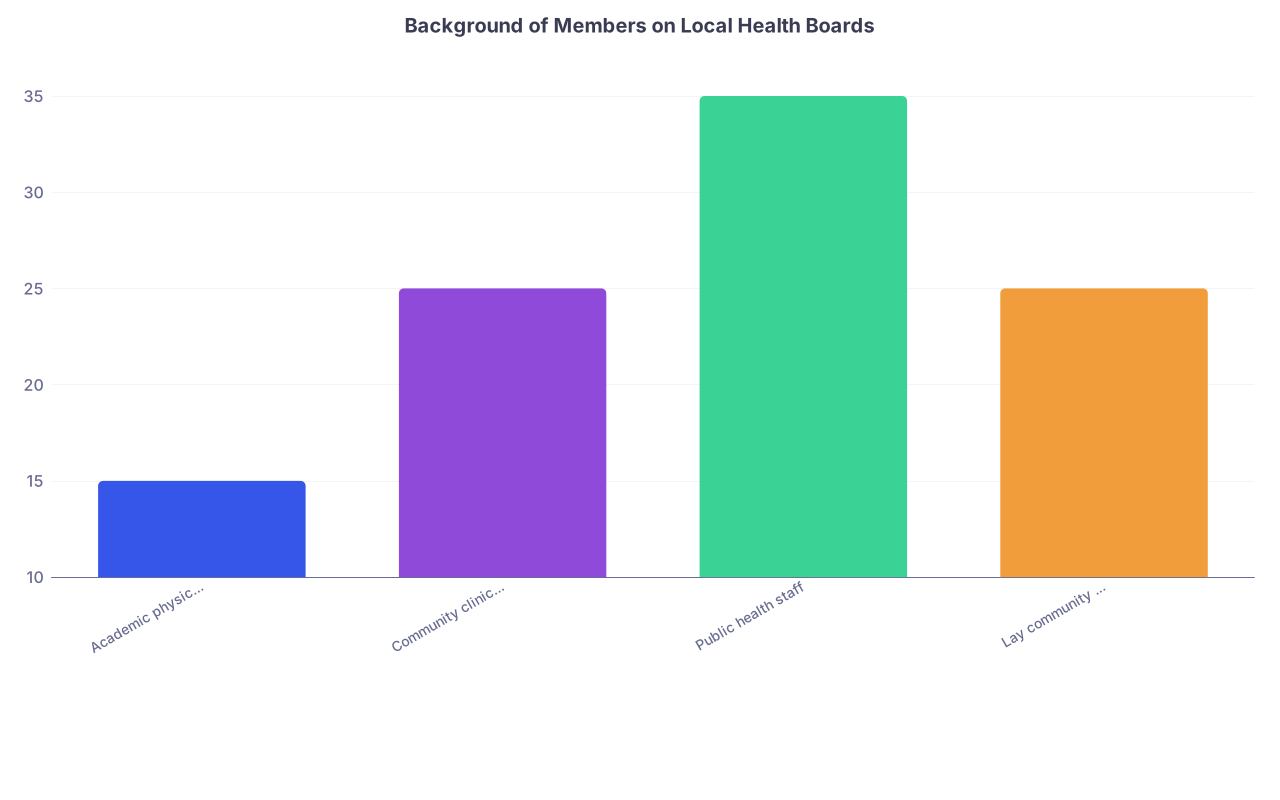
| Category | Value |
|---|---|
| Academic physicians | 15 |
| Community clinicians | 25 |
| Public health staff | 35 |
| Lay community members | 25 |
Those numbers come from surveys of local boards: academia is a minority, not a prerequisite.
How To Engage Ethically Before You’re “Important”
This is where the personal development piece comes in. You’re not going to wake up one day as “Dr. Policy Person” with the skills magically installed. You build them now, in small, unglamorous ways.
Start where your signature already matters
If you’re:
A medical student: You can speak through student orgs, write for local outlets, attend public meetings, help collect data for QI projects that will feed policy conversations. You’re more “on the ground” than half the people quoted in policy briefs.
A resident: You can sit on hospital committees, residency councils, morbidity and mortality groups that deal with systems problems. You can testify to what scheduling rules or staffing policies actually do to patient safety and burnout.
An attending in community practice: You might have more real-world leverage than a tenure-track researcher. You can talk reimbursement, access, and outcomes in plain language policymakers understand.

Develop three specific skills, not a new identity
You don’t need to become a “policy expert.” You need three practical capabilities:
Translate clinical reality into policy language.
Turning “our discharge process is a mess” into “here’s how current regulations and billing structures create perverse incentives that increase readmissions.”Read basic policy documents without glazing over.
Things like proposed regulations, payer policies, and board minutes. Not thrilling, but learnable. Skim for what touches your patients.Communicate succinctly to non-clinical audiences.
Two-minute testimony. A one-page letter. A short email that isn’t a rant. Policymakers have limited bandwidth; you must compress without losing the point.
Those are habits, not titles. You can start building them as an MS2 or PGY-1.

| Step | Description |
|---|---|
| Step 1 | Notice recurring patient harm |
| Step 2 | Find root causes beyond clinic |
| Step 3 | Identify existing policy or rule |
| Step 4 | Join relevant committee or board |
| Step 5 | Provide concise, evidence based input |
| Step 6 | Monitor impact and iterate |
The Professional Identity Problem: “I’m Just a Clinician”
The last obstacle here is psychological.
I’ve lost count of how many residents have said some version of: “I’m just going to be a community doc, I’m not into policy.” Usually after telling me a story that is intrinsically about policy—the pharmacy that refuses a medication, the county that closed the only detox facility, the insurer denying postpartum visits.
Here’s the uncomfortable truth: that “just a clinician” identity is a luxury. Because someone else will happily make policy for you: hospital chains optimizing margins, legislators with zero understanding of physiology, or advocacy groups whose “health” agenda mostly helps shareholders.
You have two honest options:
- Admit you’re okay practicing inside systems you know are ethically compromised, without trying to change them.
- Or accept that part of being an ethical clinician today is engaging, at some level, with the structures that create those compromises.
You don’t need a faculty contract to choose the second path. You need a spine.
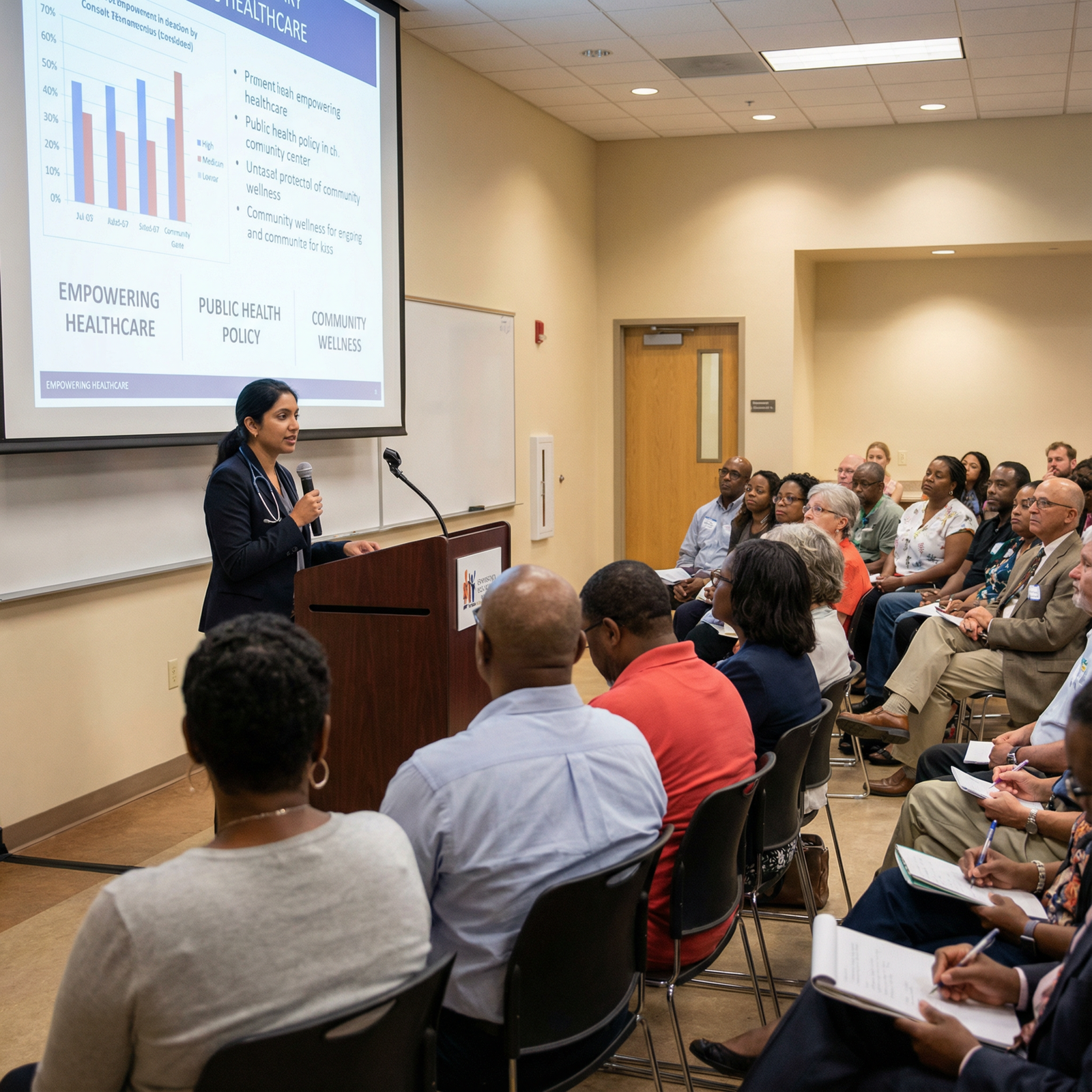
The Bottom Line: Busting The Myth
Let’s strip this down.
First: public health policy is shaped by a web of actors. Academic physicians are one strand. Influential, yes. Exclusive, no.
Second: non-academic clinicians already drive meaningful policy through hospital rules, professional societies, local boards, and public testimony. The data on who actually sits in these rooms makes that obvious.
Third: ethically, you don’t get to hide behind “I’m not a policy person” while watching structural harms play out in your clinic. That might be comfortable, but it’s not morally neutral.
If you care about patients, you’re already in the policy game. The only question is whether you’re playing consciously and competently—or letting everyone else write the rules while you clean up the fallout.