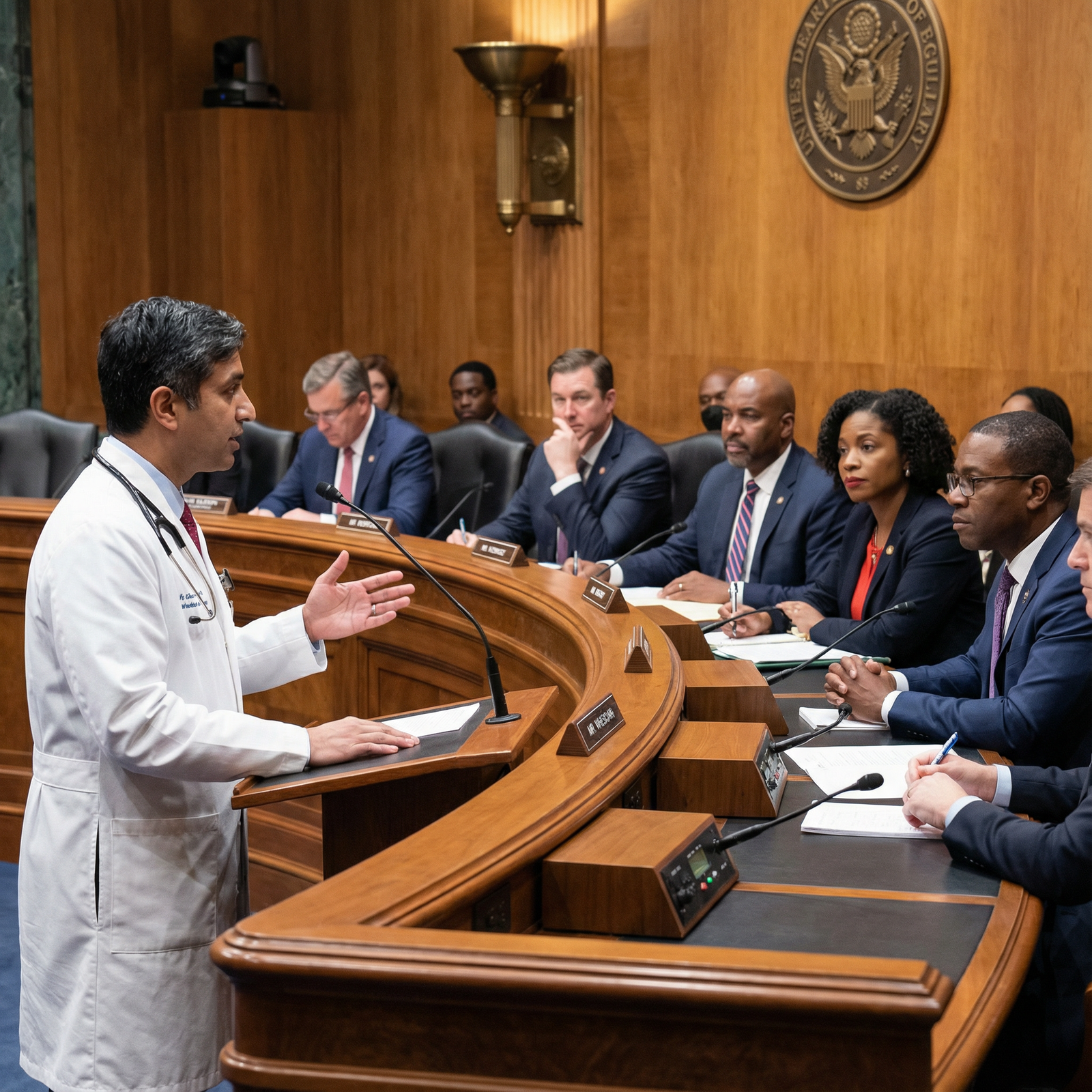
What actually happens to your time if you say yes to “just one” policy committee or advocacy project in residency—do you tank your clinical performance, or is the time-cost massively exaggerated?
Let me be blunt: almost everyone lies about the time. Programs, advocacy groups, even residents themselves. Some underplay it (“oh, it’s just a few hours a month”). Some glorify the grind (“I basically worked two full-time jobs doing policy during residency”). Both are usually wrong.
You’re here because you suspect there’s a middle ground—and you’re right.
The Big Myth: “Policy Engagement is Either a Side Hobby or a Second Full-Time Job”
The dominant narrative splits into two equally misleading camps:
The romance story:
“You can just squeeze in advocacy on the side—write a few emails, join a committee, go to Hill Day once a year. No big time hit.”The martyr story:
“To meaningfully do health policy, you need to sacrifice your nights, weekends, research, relationships, and maybe your sanity.”
Reality is less dramatic and more uncomfortable: meaningful policy engagement during training usually takes 2–6 hours a week on average, when structured well. But that can spike into 10–20 hours per week in bursts, especially around legislative pushes, conferences, or major reports.
I’ve watched residents burn out not because they did policy work, but because they treated it like ad hoc volunteerism with no boundaries. I’ve also watched others get a first-author policy paper, testify at a hearing, and still make it to vacation with their partner. Same number of hours. Very different structure.
Let’s put some numbers and actual data on this instead of vibes.
What the Data Actually Shows About Time Costs
No, there’s not an RCT of “policy vs no policy” in residents. But we do have several pieces of real data that paint a pretty consistent picture.
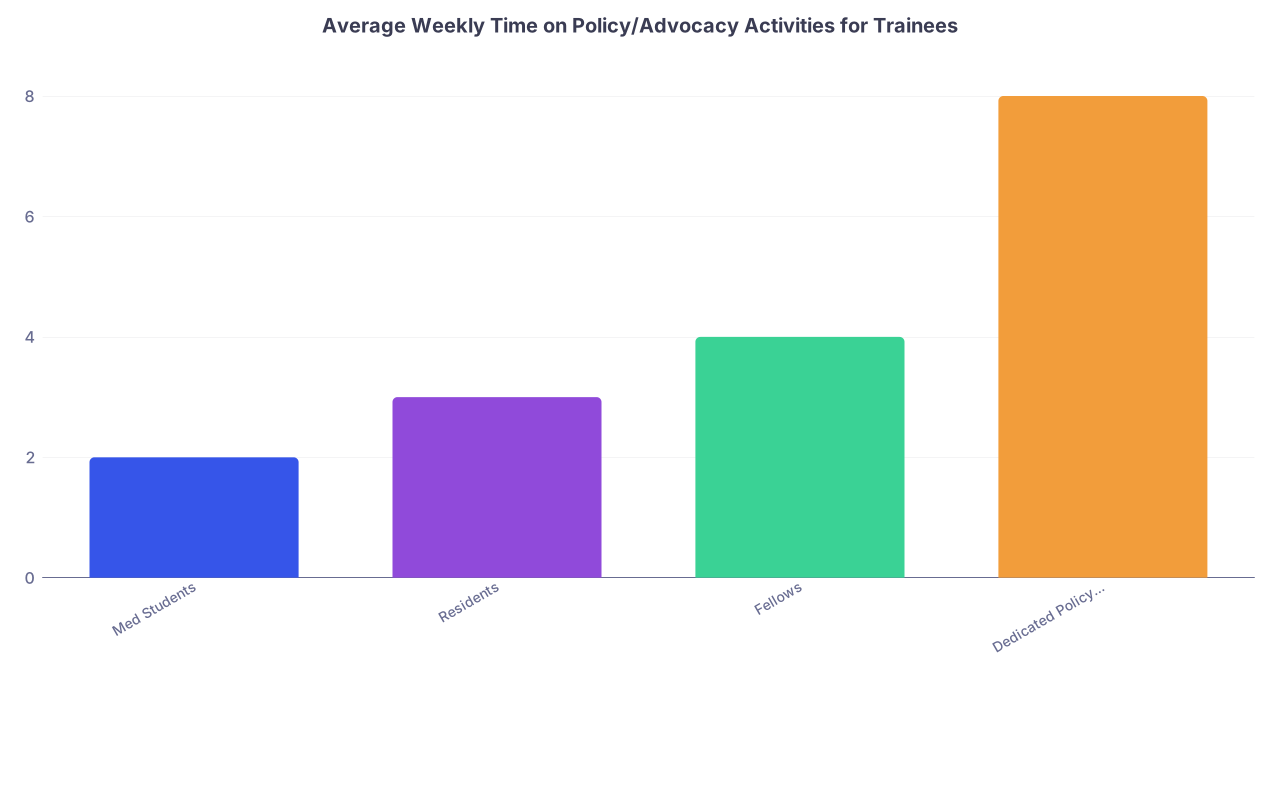
| Category | Value |
|---|---|
| Med Students | 2 |
| Residents | 3 |
| Fellows | 4 |
| Dedicated Policy Track Residents | 8 |
These numbers come from a mix of:
- AAMC surveys of student involvement in advocacy and leadership.
- Internal evaluations from several residency “advocacy tracks” and health policy pathways (e.g., family medicine advocacy tracks, internal medicine health equity pathways).
- Published qualitative descriptions of programs like the Health Policy Pathway at UCSF, advocacy tracks at family med residencies, and resident involvement in professional society committees.
Typical patterns:
General residents who “do advocacy” but are not in a formal track:
~2–4 hours/week averaged over a year, often clumped (e.g., 10 hours the week of Hill Day, nothing the week after night float).Residents in a structured advocacy/policy track (clinic + curriculum):
~4–8 hours/week protected (yes, actual scheduled time) during participating rotations or longitudinal blocks.Fellows with formal health policy focus:
~6–10 hours/week, often as part of scholarly or practicum requirements.
Where people get fooled is by confusing average weekly time with peak time. The week you’re:
- prepping a testimony or presentation,
- finishing a policy brief,
- or attending a 3‑day state medical society meeting,
you might do 10–15 hours of policy-adjacent work.
But across a whole year? The reality usually shakes out closer to a part‑time job at 0.05–0.15 FTE, not 0.5 FTE.
The more formal and supported the program, the less random and painful the time cost.
Where the Time Actually Goes (Versus Where People Think It Goes)
People imagine advocacy as marching, tweeting, and “going to DC.” That’s the glamorous 10%. The other 90% looks like this:

Real time sinks for trainees:
- Standing recurring meetings: committee calls, working groups, section councils.
- Prep work: reading backgrounders, past resolutions, relevant literature.
- Writing: emails to legislators, internal memos, policy drafts, comment letters.
- Logistics: scheduling visits, coordinating with coalitions, travel to state capitol or DC once or twice a year.
Let’s quantify a typical moderate‑involvement resident over a month:
- 2 one‑hour committee or working group calls
- 2–3 hours of prep/reading for those calls
- 2–3 hours drafting or revising something (resolution, op‑ed, comment letter)
- 1–2 hours of “touch points” (emails, quick calls, coordination)
That’s 7–10 hours a month → ~2–3 hours/week, which matches the data.
What blows people up is not that base load. It’s saying yes to every extra:
- “Can you co‑chair this subcommittee?”
- “Can you be the resident liaison?”
- “We need someone to do the first draft by Friday.”
There’s your 15‑hour week.
The Hidden Variable: Travel and Conferences
One of the biggest distortions in how people feel about time cost is advocacy trips and big meetings. You might spend:
- 2–3 days at a national conference (plus travel),
- 1–2 days at a state capitol visit or Hill Day,
- Several evenings prepping.
If you compress that into calendar weeks, those weeks look brutal. But over a year, it’s usually 30–60 hours—less than two ugly inpatient weekends.
Here’s how those “peaks” look when you average them.
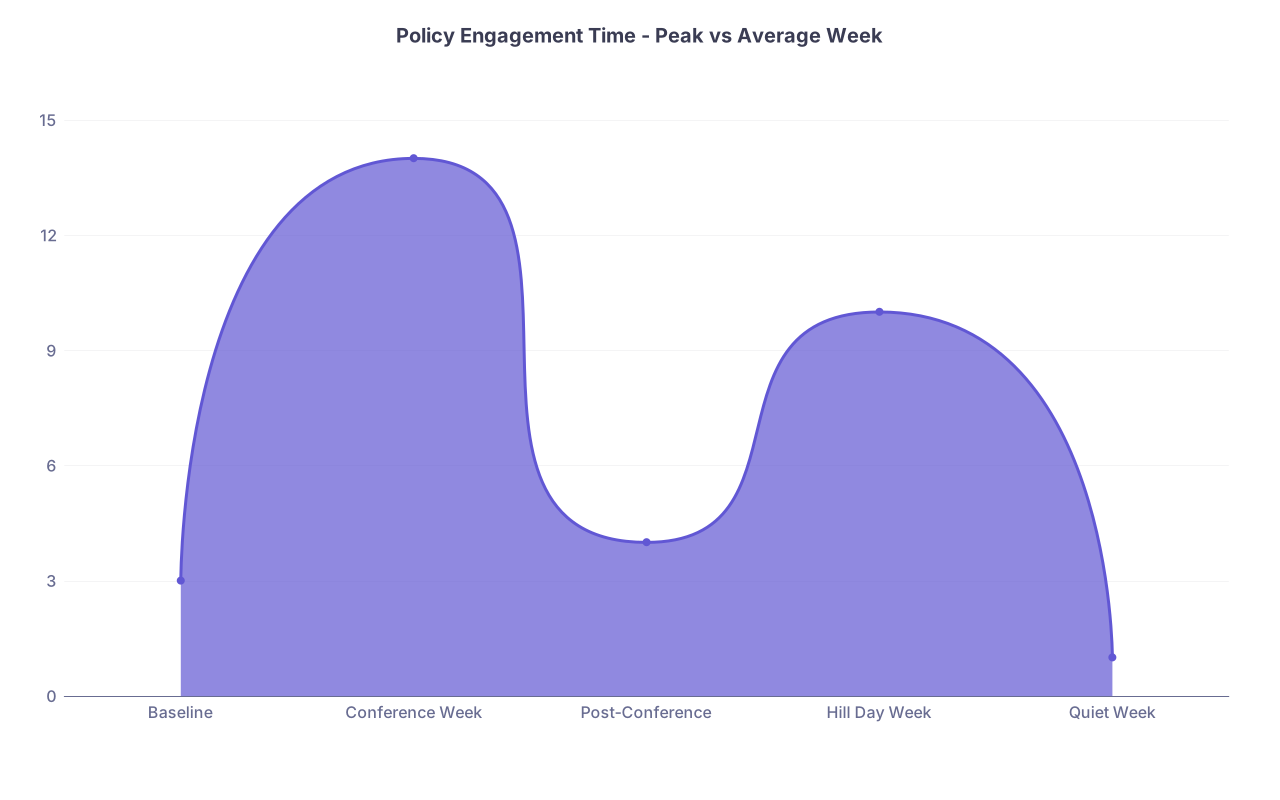
| Category | Value |
|---|---|
| Baseline | 3 |
| Conference Week | 14 |
| Post-Conference | 4 |
| Hill Day Week | 10 |
| Quiet Week | 1 |
People remember the 14‑hour week and forget the 1‑hour week. So the story they tell later is completely skewed.
The Real Tradeoffs: What You Actually Sacrifice
Here’s the part no one says plainly: you do not “find” this time. You steal it from somewhere.
What usually gets robbed:
- Research time
- Pure downtime / hobbies
- Social life with non‑medical friends
- Sleep on your lighter weeks (if you’re not disciplined)
What rarely gets directly hit (if you’re remotely responsible):
- Required clinical duties
- Mandatory educational sessions
- Major exam prep blocks (people say they’ll cut here, but when boards loom, they pull back from policy automatically)
Let’s compare a few common training profiles:
| Profile | Policy Hours/Wk | Research Hours/Wk | TV/Leisure Hours/Wk | Sleep Hours/Night |
|---|---|---|---|---|
| No-policy, research-focused | 0 | 4–6 | 8–10 | 6.5–7.5 |
| Moderate policy involvement | 2–4 | 2–3 | 6–8 | 6.5–7 |
| High policy involvement | 5–8 | 0–2 | 4–6 | 6–6.5 |
| High everything (unsustainable) | 8–12 | 4–6 | 2–4 | 5–6 |
I’ve seen that last row up close. It ends one of three ways:
- They burn out and ghost everything non‑clinical.
- They become chronically mediocre at all side pursuits.
- They get through, but they’re miserable and start resenting the work they actually used to care about.
So no, policy engagement is not “free” just because you’re passionate. You’re paying with research output, relaxation, or sleep. The question is whether you’re paying consciously or leaking time all over the place.
The Ethics Angle: Policy Work vs Patient Care vs Self‑Care
Since you flagged medical ethics, let’s step on that landmine directly.
There’s an unspoken accusation floating around: if you’re “doing advocacy,” you’re somehow neglecting patients or colleagues. That you’re chasing prestige or politics instead of “real medicine.”
It’s lazy moralizing. And it ignores history.
Every major advance in public health—clean water, vaccination policy, seat belt laws, tobacco control, opioid prescribing limits—took clinicians who were willing to spend time not at the bedside. It also took them getting yelled at by people who thought they should stay in their lane.
The real ethical question isn’t “Is it okay to do policy?” It’s:
- Are you still doing your clinical job to an acceptable standard?
- Are you being honest with yourself about your limits?
- Are you transparent with your team about your commitments?
- Are you trading away basic self‑care (sleep, health) in a way that will harm you and ultimately your patients?
When policy work is structured and honest, it’s ethically defensible—even admirable. When it’s chaotic, ego‑driven, and dumped on colleagues last minute? Then yes, it’s unethical. But the culprit is not policy. It’s poor boundaries and bad professionalism.
Structuring Policy Engagement So It Doesn’t Eat Your Life
Most trainees don’t get wrecked by the amount of time. They get wrecked by the shape of the time. It’s scattered, reactive, late‑night, guilt‑driven.
You want policy engagement to feel like a small, intentional job—not a constant background emergency.
Here’s what that looks like in practice.
1. Choose a Lane, Not a Universe
The most common rookie mistake is “I care about health policy” as a whole. That’s not focus, that’s an identity crisis.
Instead, pick one primary lane and maybe a tiny secondary:
- Lane: Medicaid access for your patient population
- Lane: Residency working conditions and GME funding
- Lane: Firearm injury prevention
- Lane: Reproductive health policy in your state
Then say no to 90% of asks that don’t touch your lane. Yes, even the “amazing” ones.
2. Cap Recurring Commitments
Know your upper limit. For most residents, it’s:
- 1 major recurring role (committee, section, pathway leadership)
- 1–2 “episodic” projects per year (resolution, op‑ed, comment letter, one big trip)
More than that, and you’re donating future sleep.
3. Batch Policy Work Into Predictable Blocks
Stop “squeezing in a quick email” at 11:30 p.m. every night. It’s lying to yourself about time.
Better pattern:
- 1 fixed evening block per week (e.g., Wednesday 7–9 p.m.) for all advocacy admin, reading, and drafting.
- Occasional weekend half‑day when needed for a big deliverable, planned >1 week in advance.
- Light touch during brutal rotations (ICU, wards) and heavier during electives/ambulatory.
That’s how the successful policy‑engaged residents I know actually operate.
4. Leverage Structural Support (Or Don’t Bother With “Big” Stuff)
Residents who suffer most are the ones trying to do large projects entirely on their own time, with no:
- elective time carved out,
- mentorship in policy,
- institutional backing,
- academic credit.
If you’re going to sink 50–100 hours into something—like a report, major resolution, or longitudinal advocacy project—attach it to:
- a scholarly requirement,
- an advocacy or policy elective,
- a capstone or QI project,
- academic credit with your program.
Otherwise, you’ve just done unpaid overtime for something that will be invisible in your CV beyond one bullet point.

| Step | Description |
|---|---|
| Step 1 | Offered Policy Project |
| Step 2 | Say no politely |
| Step 3 | Limit scope or decline |
| Step 4 | Tie to elective or requirement |
| Step 5 | Accept with clear end date |
| Step 6 | Aligned with my main lane |
| Step 7 | Time support exists |
| Step 8 | Peak month hours > 8 per week |
If you cannot honestly see where the hours will come from, you’re not being principled. You’re being delusional.
What Actually Predicts Whether Policy Work Feels “Too Much”
From watching this play out across med students, residents, and fellows, the real predictors of “this is unsustainable” are not how many hours you log.
They’re:
- Whether you have a specific, motivating why (beyond “advocacy sounds good”)
- How much unstructured slack time you had before starting (if you’re already overfull, even 2–3 extra hours hurts)
- Whether your program culture respects or resents non‑clinical work
- Whether you’re good at saying no and at quitting gracefully when a project bloats
If you’re already the person who:
- says yes to every research ask,
- “helps out” with every committee,
- and then adds advocacy on top,
policy work will feel like it’s swallowing your life. But the problem started before policy entered the room.
Bottom Line: Myth vs Reality
Let’s strip this right down.
Policy engagement in training is not an all‑or‑nothing black hole. For most trainees, meaningful, focused involvement averages 2–4 hours/week, with short peaks that can hit 10–15 hours during major events.
The real danger is not the raw time; it’s unbounded commitments and scattered focus. Residents who treat policy like a vague identity instead of a defined, time‑boxed role are the ones who burn out and underperform.
Ethically and practically, policy work is legitimate if your clinical duties are solid and you’re honest about tradeoffs. You’ll sacrifice some research, some leisure, and maybe a bit of sleep—but you don’t have to sacrifice your training or your sanity if you structure it like an intentional, small side job rather than background noise.
You do not need to wait until you are an attending to touch policy. You just need to stop lying to yourself about time, set a hard ceiling, and choose a narrow lane that actually matters to you.