
Creating Healthier Communities: How Policy Shapes Public Health and Community Well-Being
Public Health and Health Policy are inseparable. For medical students, residents, and early-career clinicians, understanding this relationship is no longer optional—it is central to practicing effective, ethical medicine. The clinical decisions you make every day are profoundly influenced by laws, regulations, and systems that exist far beyond the exam room.
From vaccine mandates and smoke-free laws to housing codes and paid leave policies, health policy determines who gets care, what care they receive, and whether their environment supports or undermines their health. These decisions shape Community Well-Being, drive or mitigate Health Disparities, and determine how effectively we can deliver Preventive Care.
This expanded guide explains how policy drives Public Health outcomes, illustrates concrete examples across sectors, and offers practical ways for trainees and clinicians to engage in health policy while upholding professional ethics.
Why Public Health Policy Matters in Modern Healthcare
Public health policy encompasses the laws, regulations, institutional rules, and funding priorities that influence health at the population level. Unlike individual clinical decisions, policy operates “upstream”—it shapes the conditions that produce health or disease before patients ever reach the clinic.
Defining Public Health Policy in Practice
Public health policy can operate at many levels:
- International: WHO treaties (e.g., International Health Regulations).
- National: Health insurance laws, clean air standards, drug safety regulations.
- State/Provincial: Scope-of-practice rules, vaccine requirements, Medicaid expansion.
- Local/City: Zoning, housing codes, school nutrition standards, mask or smoking ordinances.
- Institutional: Hospital charity care policies, language access standards, infection control policies.
All of these influence:
- Who has access to care
- What services are covered or prioritized
- How resources are distributed
- Which communities bear the greatest burden of disease
For trainees, this means that many of your most challenging clinical encounters (e.g., patients unable to afford medications or lacking safe housing) are direct manifestations of upstream policy decisions.
1. Addressing Health Disparities Through Policy
Health Disparities are systematic, avoidable differences in health outcomes linked to social, economic, and structural factors—often rooted in racism, poverty, and marginalization.
Policy is one of the most powerful tools for reducing (or worsening) these disparities.
Examples of Policy Interventions That Reduce Disparities
Insurance coverage expansions
- Medicaid expansion in the United States has been associated with:
- Reduced uninsured rates among low-income adults
- Improved access to primary and Preventive Care
- Earlier detection of cancer and chronic diseases
- Policy impact at the bedside: you see more patients who can afford follow-up visits and medications.
- Medicaid expansion in the United States has been associated with:
Language access and cultural competency regulations
- Requirements for interpreter services in hospitals and clinics improve safety and adherence.
- Culturally tailored public health campaigns (e.g., COVID-19 outreach in multiple languages) increase vaccine uptake and screening participation.
Equity-focused funding formulas
- Allocating more resources to high-need communities (e.g., areas with high infant mortality or uncontrolled diabetes) can:
- Support community health worker programs
- Expand mobile clinics and screening campaigns
- Improve chronic disease management
- Allocating more resources to high-need communities (e.g., areas with high infant mortality or uncontrolled diabetes) can:
For clinicians and trainees, recognizing how policy can either narrow or widen Health Disparities is essential for ethical practice and effective advocacy.
2. Promoting Preventive Care at Scale
Preventive Care—immunizations, screenings, counseling, and early intervention—can dramatically reduce morbidity, mortality, and healthcare costs. But without supportive policies, preventive services are often underused.
Policy Tools That Strengthen Prevention
Coverage mandates for preventive services
- Policies like the Affordable Care Act (ACA) in the U.S. require many insurers to cover recommended vaccines and screenings without cost-sharing.
- This removes a major barrier for low-income patients and improves community immunity and early detection.
School-based health and immunization policies
- School-entry vaccination requirements increase coverage, protecting vulnerable populations.
- School health centers offer mental health, reproductive health, and nutrition counseling to adolescents who might not otherwise access care.
Taxation and regulation of harmful products
- Tobacco taxes, minimum alcohol pricing, and sugar-sweetened beverage taxes can:
- Reduce consumption
- Generate revenue for Public Health programs
- Combined with public education, these measures support healthier population-level behaviors.
- Tobacco taxes, minimum alcohol pricing, and sugar-sweetened beverage taxes can:
For residents and students, engaging with preventive health policy means not only recommending vaccines or screenings but also understanding (and advocating for) the system-level supports that make these services accessible.
3. Regulating Environmental Health for Safer Communities
Environmental conditions—air quality, water safety, toxic exposures, climate risks—are major determinants of health. Environmental Health Policy directly shapes these exposures.
Critical Areas of Environmental Health Policy
Air and water quality regulations
- Clean Air Acts and emissions standards decrease:
- Asthma exacerbations
- COPD hospitalizations
- Cardiovascular events
- Safe drinking water regulations prevent outbreaks of waterborne disease and chronic toxin exposure (e.g., lead, arsenic).
- Clean Air Acts and emissions standards decrease:
Occupational safety standards
- Enforced workplace safety rules reduce injuries, hearing loss, chemical exposures, and long-term disability.
- Example: Policies protecting healthcare workers from needlestick injuries and airborne pathogens not only protect staff but also maintain system capacity.
Climate change and disaster preparedness policies
- Heat action plans, wildfire smoke advisories, and flood resilience planning protect vulnerable populations (e.g., older adults, people experiencing homelessness).
- As climate-related events increase, clinicians must understand how policies influence preparedness and response in their communities.
For trainees, knowing the environmental context of your patients—and the policies governing it—helps you interpret disease patterns and target your advocacy efforts.
4. Elevating Health Education Through Thoughtful Policy
Health education policy determines what people learn about health in schools, workplaces, and communities.
Comprehensive school health education
- Evidence-based sex education reduces:
- Unintended pregnancies
- Sexually transmitted infections
- Nutrition and physical activity curricula support lifelong healthy habits and obesity prevention.
- Evidence-based sex education reduces:
Public information campaigns
- Policy-backed campaigns (e.g., anti-tobacco messaging, COVID-19 risk communication, mental health awareness) can:
- Normalize help-seeking behavior
- Reduce stigma
- Improve uptake of preventive services
- Policy-backed campaigns (e.g., anti-tobacco messaging, COVID-19 risk communication, mental health awareness) can:
Digital and media literacy initiatives
- As misinformation spreads rapidly, policies supporting health literacy and media literacy programs help communities critically evaluate health information.
Clinicians can play a key role by partnering with schools and community organizations and by ensuring that public messages align with scientific evidence.
5. Supporting Mental Health Through Policy and Systems Change
Mental health is fundamental to Community Well-Being, yet mental health care has historically been underfunded and fragmented.
Policy Levers for Mental Health Integration
Parity laws
- Mental health parity regulations require insurers to cover mental health and substance use services on par with physical health services.
- This can improve access to therapy, medication management, and inpatient care.
Crisis response and community support
- Policies establishing crisis hotlines, mobile crisis teams, and alternatives to law enforcement-led responses reduce harm and improve linkage to care.
- Community-based programs funded through policy—such as peer support centers or youth mental health services—provide upstream support before crises occur.
Workplace mental health standards
- Policies that require or incentivize employee assistance programs, anti-harassment protections, and reasonable accommodations support population-level mental health.
Residents and trainees in psychiatry, primary care, emergency medicine, and other specialties see the downstream effects of these policies daily—and are well-positioned to advocate for humane, evidence-based mental health systems.
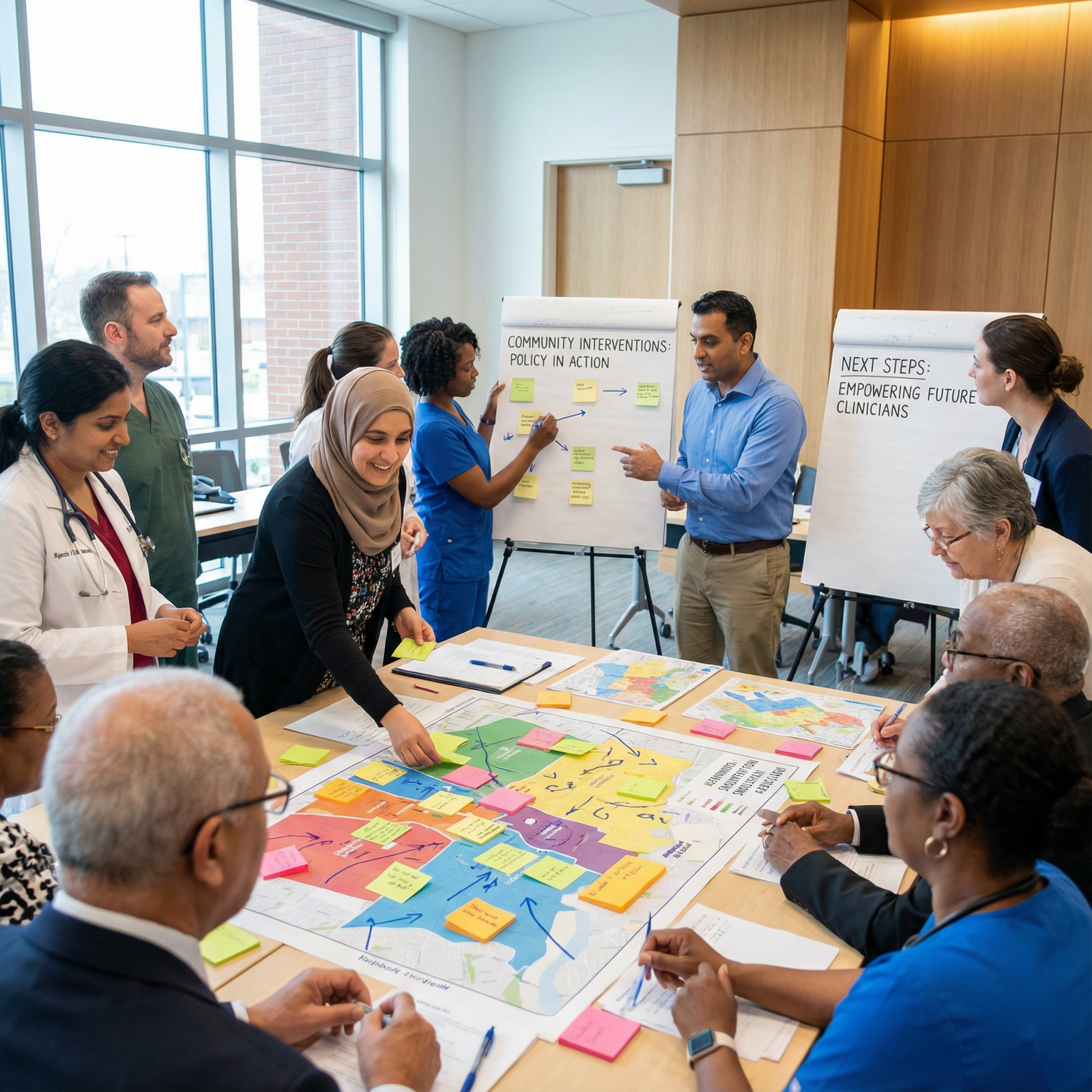
How Health Policy Shapes Key Determinants of Community Well-Being
The impact of Health Policy is most visible when viewed through the lens of the Social Determinants of Health—the conditions in which people are born, grow, live, work, and age. Thoughtful policy can turn adverse conditions into health-promoting environments.
1. Housing Policy as a Health Intervention
Safe, stable housing is as critical to health as any medication.
Health-Promoting Housing Policies
Affordable housing initiatives
- Housing vouchers, rent control, and inclusionary zoning can:
- Reduce homelessness and housing instability
- Decrease stress-related conditions, hospitalizations, and emergency visits
- For patients with chronic illness, stable housing improves adherence to treatment.
- Housing vouchers, rent control, and inclusionary zoning can:
Healthy housing standards
- Building codes that address mold, ventilation, lead paint, pests, and injury hazards:
- Reduce asthma exacerbations
- Prevent childhood lead poisoning
- Lower injury rates (e.g., falls, burns)
- Building codes that address mold, ventilation, lead paint, pests, and injury hazards:
Supportive housing models
- “Housing First” programs for individuals with serious mental illness or substance use disorders show:
- Reduced emergency department use
- Improved treatment engagement
- Lower overall healthcare costs
- “Housing First” programs for individuals with serious mental illness or substance use disorders show:
Clinicians frequently see the impact of poor housing in pediatric asthma, uncontrolled diabetes, chronic pain, and mental health crises. Knowing local housing policies can guide more effective social prescriptions and advocacy efforts.
2. Transportation Policy and Access to Care
Transportation is a silent but powerful determinant of health.
Public transit and health services
- Policies that expand affordable, reliable transit routes to hospitals, clinics, and pharmacies:
- Reduce missed appointments
- Improve continuity of care
- Support independent living for older adults and people with disabilities
- Policies that expand affordable, reliable transit routes to hospitals, clinics, and pharmacies:
Active transportation infrastructure
- Investments in sidewalks, bike lanes, and safe crossings promote:
- Physical activity
- Lower rates of obesity, diabetes, and cardiovascular disease
- Safe routes to school policies protect children and promote healthy routines.
- Investments in sidewalks, bike lanes, and safe crossings promote:
Non-emergency medical transportation (NEMT) benefits
- Insurance-covered rides to appointments help patients without cars or those with mobility limitations keep critical visits.
For residents, a patient’s “no-shows” may not be a matter of motivation—it may be a product of transportation policy. Incorporating questions about transit access into social histories can reveal opportunities for targeted intervention.
3. Food and Nutrition Policy to Combat Health Disparities
Access to healthy food is shaped more by zoning laws, subsidies, and economic policy than by individual choice.
Key Policy Domains
Addressing food deserts and food insecurity
- Incentives for grocery stores and farmers’ markets in underserved neighborhoods
- Subsidized produce boxes or mobile markets
- Expanded eligibility and benefits for food assistance programs
Nutrition standards in schools and public institutions
- School meal programs that meet strong nutrition standards:
- Improve diet quality
- Support cognitive development and academic performance
- Hospital and government building food policies can model healthy eating norms.
- School meal programs that meet strong nutrition standards:
Food labeling and marketing regulations
- Clear nutrition labels and restrictions on marketing unhealthy foods to children can:
- Support informed decision-making
- Reduce childhood obesity and related chronic disease risk
- Clear nutrition labels and restrictions on marketing unhealthy foods to children can:
Clinicians who routinely counsel on diet may find their efforts undermined if patients live in environments with limited healthy options. Policy engagement is a way to make those conversations realistic and actionable.
4. Workplace Health Policy and Community Well-Being
Because adults spend much of their waking life at work, workplace policy has enormous health implications.
Occupational health and safety rules
- Regulation of exposure to chemicals, noise, and physical strain prevents chronic disease and disability.
- Healthcare-specific policies (e.g., safe staffing levels, limits on resident work hours) directly affect patient safety and provider well-being.
Paid sick leave and family leave
- Policies that allow people to stay home when ill:
- Reduce spread of infectious diseases
- Support recovery
- Paid family leave improves maternal and infant health outcomes and supports caregivers.
- Policies that allow people to stay home when ill:
Workplace wellness programs
- Evidence-based wellness initiatives (when voluntary and designed to avoid discrimination) can support:
- Smoking cessation
- Physical activity
- Stress management
- Evidence-based wellness initiatives (when voluntary and designed to avoid discrimination) can support:
For trainees experiencing burnout or witnessing unsafe staffing, understanding workplace health policy is both a professional and personal necessity.
Strategies for Developing and Implementing Effective Public Health Policy
Transforming Health Policy from concept to reality requires coordinated action, ethical reflection, and sustained effort. Clinicians and trainees can be powerful contributors at every stage.
1. Engaging Stakeholders in Policy Design
Policies work best when they reflect the lived experiences of those they affect.
Key stakeholder groups
- Patients and families
- Community and faith-based organizations
- Frontline clinicians, nurses, and allied health professionals
- Public health departments and local government
- Educators, social workers, and legal advocates
Practical engagement strategies for trainees
- Attend community health board or city council meetings.
- Participate in hospital or residency quality improvement and policy committees.
- Collaborate with patient advisory councils to ensure policies address real barriers.
Involving diverse voices helps ensure that policies do not unintentionally worsen Health Disparities.
2. Using Data-Driven Approaches Ethically and Effectively
Data is central to modern Public Health and Health Policy—but it must be collected, interpreted, and applied with care.
Sources of policy-relevant data
- Electronic health records and registries
- Public health surveillance systems
- Community health needs assessments
- Census and socioeconomic data
How clinicians can engage with data
- Participate in or lead quality improvement projects.
- Use disaggregated data (by race, ethnicity, language, geography) to identify inequities.
- Collaborate with epidemiologists and biostatisticians to interpret findings.
Ethically, trainees should be aware of privacy concerns, data bias, and the risk of reinforcing stereotypes if data is misused.
3. Advocacy: Turning Clinical Experience Into Policy Change
Clinicians are highly trusted—and when they speak about health impacts, policymakers listen.
Levels of advocacy
- Micro: Writing detailed documentation on social determinants (e.g., letters supporting housing or work accommodations).
- Meso: Working within your institution to change policies (e.g., charity care, language access, trauma-informed care).
- Macro: Engaging with professional societies, testifying at hearings, or writing op-eds about Public Health issues.
Actionable steps for students and residents
- Join your specialty society’s advocacy or health policy committee.
- Participate in legislative days or advocacy training through medical schools or residency programs.
- Partner with community organizations already working on Health Policy initiatives.
Advocacy should always be grounded in evidence, transparency, respect for community priorities, and professional ethics.
4. Fostering Education and Awareness Within Communities and the Profession
Effective policy depends on informed communities and informed clinicians.
Educating the public
- Host or support workshops on topics such as vaccination, chronic disease prevention, or navigating health insurance.
- Collaborate with local media or social media campaigns to communicate accurate, accessible information.
Educating clinicians and trainees
- Integrate health policy and Public Health coursework into medical and residency curricula.
- Encourage electives in Health Policy, community health, or governmental public health.
- Discuss policy implications during morbidity and mortality (M&M) conferences and case reviews.
Equipping clinicians with policy literacy helps bridge the gap between clinical care and systemic change.
5. Ensuring Sustainable Funding and Infrastructure
Even the best-designed policy fails without sustained resources.
- Core funding principles
- Multi-year, predictable funding streams instead of short-term grants.
- Investments in Public Health workforce development, including epidemiologists, community health workers, and behavioral health professionals.
- Robust evaluation budgets to measure impact and adjust programs.
Clinicians can support sustainable funding by educating policymakers about the cost of preventable disease and the return on investment from strong Public Health systems.

Frequently Asked Questions: Public Health Policy, Preventive Care, and Health Equity
Q1: What is the difference between clinical medicine and public health policy?
Clinical medicine focuses on diagnosing and treating illness in individual patients. Public Health Policy focuses on creating conditions that prevent disease and promote health across entire populations. While clinicians treat the patient in front of them, policy aims to reduce risk and improve outcomes for communities—often by addressing upstream factors like housing, education, environment, and access to care. Both are complementary and essential for improving Community Well-Being.
Q2: How can policy effectively reduce Health Disparities?
Policy can reduce Health Disparities by:
- Expanding access to affordable, high-quality care (e.g., insurance coverage, community clinics).
- Directing resources to historically marginalized communities.
- Mandating language access and culturally competent care.
- Addressing social determinants such as housing, transportation, and education.
- Collecting and using disaggregated data to monitor gaps and evaluate interventions.
When designed with community input and an equity lens, policies can help ensure that health gains are shared across all groups.
Q3: As a medical student or resident, how can I realistically get involved in Health Policy?
You can:
- Join your institution’s quality improvement, ethics, or community health committees.
- Work with faculty on research or projects related to Public Health or Health Policy.
- Participate in advocacy training or legislative days through student or specialty organizations.
- Volunteer with local public health departments or community groups.
- Document social determinants of health and barriers to care systematically to generate data that supports policy change.
Even small contributions—such as providing clinical stories that illustrate policy impacts—can be powerful.
Q4: What role does Preventive Care play in Public Health Policy?
Preventive Care is a cornerstone of Public Health Policy. Policies that support prevention—such as vaccine mandates, screening coverage, school health programs, and regulation of tobacco and unhealthy foods—reduce the incidence and severity of disease, lower healthcare costs, and improve quality of life. For clinicians, policy-backed prevention means your recommendations are more affordable, accessible, and effective at the population level.
Q5: How do ethical principles guide clinician involvement in health policy and advocacy?
Ethical practice in health policy engagement is guided by core principles:
- Beneficence and nonmaleficence: Advocate for policies that improve health and avoid causing harm.
- Justice: Focus on fairness, particularly for marginalized populations experiencing Health Disparities.
- Respect for persons: Center community voices and preferences; avoid paternalism.
- Professional integrity: Base advocacy on sound evidence, transparency, and avoidance of conflicts of interest.
Clinicians should be clear when speaking from evidence, when reflecting clinical experience, and when expressing personal or professional values.
Public Health Policy is not abstract—it shows up in every clinic visit, every emergency department shift, and every community health outcome. For future and current physicians, understanding and engaging with policy is part of delivering ethical, effective, and equitable care. By viewing your work through a Public Health lens and collaborating with communities and policymakers, you contribute not only to individual patient recovery, but to the creation of healthier, more just communities for all.