
Most residents blow their interviews not with bad answers—but with bad questions.
You’re judged just as hard on what you ask as on how you respond. If you treat the “Do you have any questions for us?” part like a throwaway, you’re already behind.
I’ve watched applicants talk themselves from “top of the rank list” to “do not rank” in under five minutes. Not because they were weird or rude. Because their questions screamed: wrong priorities, poor judgment, or zero preparation.
Let’s make sure you’re not that person.
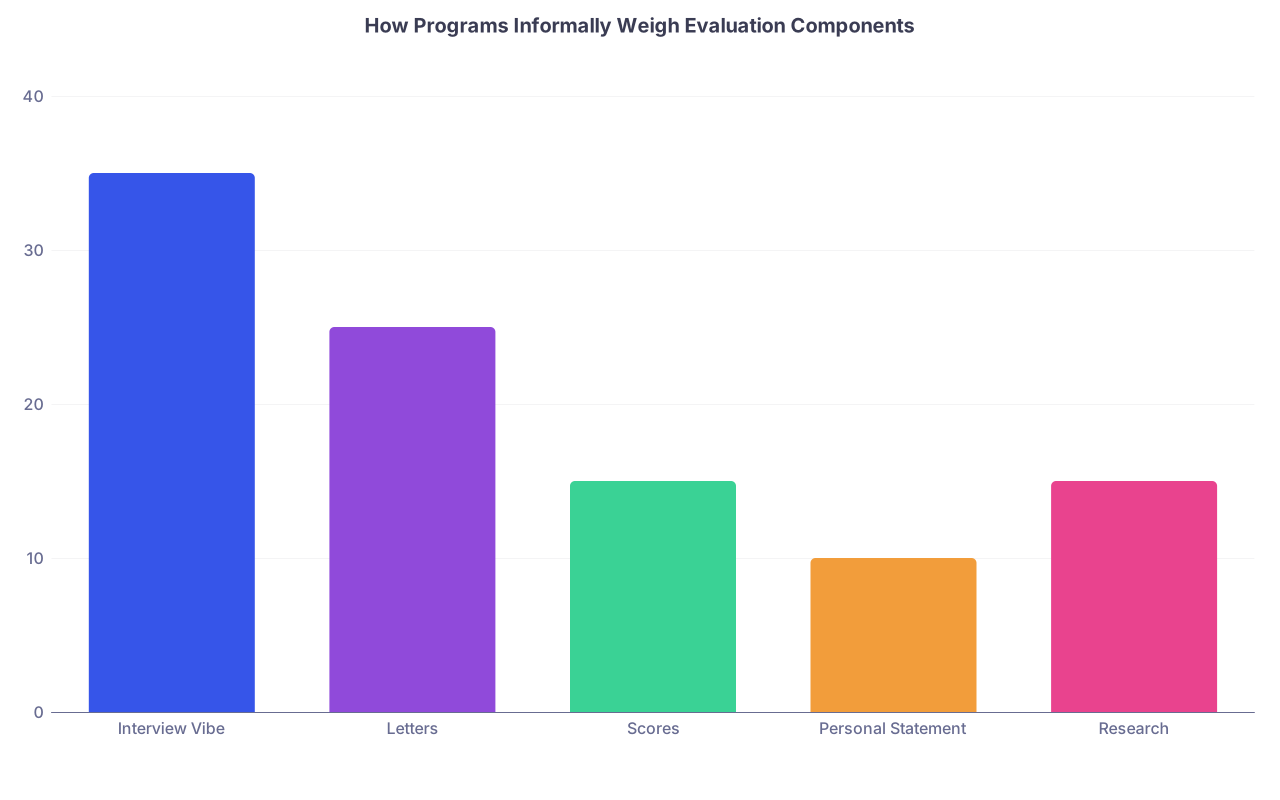
| Category | Value |
|---|---|
| Interview Vibe | 35 |
| Letters | 25 |
| Scores | 15 |
| Personal Statement | 10 |
| Research | 15 |
1. The “What’s In It for Me?” Money-and-Lifestyle Landmines
You absolutely need to know about salary, call schedule, and vacation. You’d be reckless not to. But there are right ways and terrible ways to ask.
The terrible way is to sound like you’re shopping for the cushiest job with the least work.
Salary, Bonuses, and “How Much Do You Pay?”
Red-flag versions:
- “How much do residents make here?”
- “Do you guys give bonuses or moonlighting from PGY1?”
- “Is there a way to negotiate salary?”
Why this hurts you:
- Compensation info is public and standardized. If it’s on the website or FREIDA and you’re asking anyway, you look lazy at best, entitled at worst.
- Leading with money makes you look transactional. Programs want to believe you care about training and patients more than your paycheck (even if we all know the paycheck matters).
- It reads as “I didn’t do basic homework.”
Better approach:
If you genuinely need clarification, phrase it like this with residents, not faculty:
- “I saw the salary and benefits on the website—has anything changed recently or anything that’s different in practice from what’s listed?”
Short. Informed. Not grabby.
Vacation, Time Off, and “How Little Can I Work?”
Red-flag versions:
- “How easy is it to get time off for weddings/vacations?”
- “Can I take extra days if I have a conference in another city?”
- “Will it be a problem if I need to travel a lot during residency?”
The subtext they hear: I plan to be gone. A lot.
You do need to understand the system. But if you sound like you’re gaming it or looking for loopholes, that’s a hard no for many PDs.
Better phrasing with residents:
- “How predictable is vacation scheduling in practice? Are people usually able to get at least one of their preferred blocks?”
- “If someone has a big life event (wedding, new baby, etc.), how does the program typically work with them on scheduling?”
Same topic. Completely different impression.

2. Questions You Should Already Know the Answer To
This is the category that silently kills candidates. You walk in saying you’re “very interested in your program,” then ask something that proves you glanced at the website for 30 seconds while waiting for DoorDash.
Examples I’ve heard:
- “Do you have a night float system?” (It’s clearly laid out in the curriculum section.)
- “Are there any fellowship opportunities here?” (The program boasts six fellowships on the homepage.)
- “How many residents do you take per year?” (It’s in the first line of the ERAS description.)
Why this is such a bad look:
- It screams poor preparation. Programs expect you to at least skim their material.
- It hints at how you’ll function as a resident—needing hand-feeding instead of looking things up.
- It tells them they’re one of 60 programs you’re treating interchangeably.
If you must clarify, upgrade your question:
Instead of: “Do you have a night float system?”
Try: “I saw you use a night float system on wards—how has that affected continuity of care and resident fatigue in practice?”
That signals: “I read. I thought. Now I’m asking at a higher level.”

| Step | Description |
|---|---|
| Step 1 | Question in your head |
| Step 2 | Do not ask. Read later. |
| Step 3 | Skip. Ask something else. |
| Step 4 | Ask refined question. |
| Step 5 | Is the answer online? |
| Step 6 | Did you read it already? |
| Step 7 | Can you ask a deeper follow-up? |
3. “So… How Malignant Are You?” and Other Culture Traps
Everybody wants to know: is this program malignant? Toxic? Do the seniors eat the interns for breakfast?
You should absolutely probe culture. But you can do it clumsily or surgically. Most people choose clumsy.
Questions that tank you:
- “Is this a malignant program?”
- “Do attendings yell at residents here?”
- “Will I get crushed with scut work as an intern?”
- “Are the nurses difficult here?”
Why this backfires:
- You sound gossipy and negative. Programs worry you’ll stir drama or be high-maintenance.
- It puts the interviewer in a no-win spot. What do you expect them to say on record—“Yes, we’re awful”?
- It frames you as a victim before you even start residency.
Better ways to get the same information from residents:
- “When something goes wrong—an error, a bad outcome—how does the program typically respond? Is it more blame-focused or more learning-focused?”
- “Can you give me an example of a time you felt really supported here? And maybe a time it felt harder to get support?”
- “How approachable are attendings when you’re unsure about a plan at 2 AM?”
Listen closely to tone, hesitation, and side comments. Residents will tell you the truth between the lines. They always do.
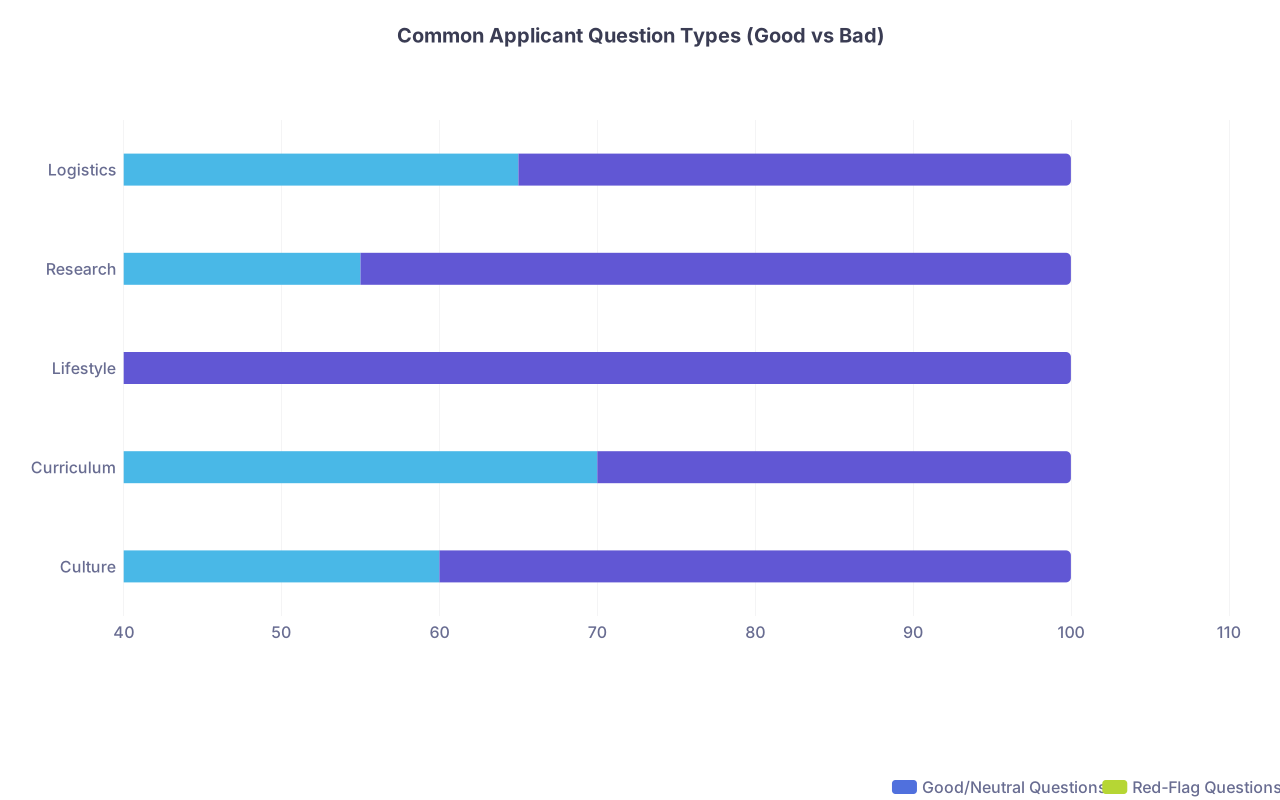
| Category | Good/Neutral Questions | Red-Flag Questions |
|---|---|---|
| Culture | 60 | 40 |
| Curriculum | 70 | 30 |
| Lifestyle | 40 | 60 |
| Research | 55 | 45 |
| Logistics | 65 | 35 |
4. Questions That Question Their Competence
There’s a subtle line between thoughtful critical thinking and “I think I can fix your program.” You don’t want to cross it. Many do.
Risky versions:
- “Why don’t you do X like other programs?”
- “Why don’t you have more elective time? That seems like a weakness.”
- “Have you considered changing your ICU schedule? I’ve heard other places are moving away from that model.”
- “Your board pass rate dropped a few years ago—what went wrong?”
The problem isn’t the content—it’s the framing. You come across as condescending, especially as a medical student telling a seasoned PD how to run their shop.
You should ask about weaknesses and change. Just do it with some humility:
- “Where do you see the biggest opportunities for improvement in the program over the next few years?”
- “I noticed some schedule changes mentioned on your website—what prompted those, and how have they worked out in practice?”
- “How does the program support residents who may be struggling with board prep or clinical performance?”
This still shows you’re analytical. Just not arrogant.

5. Oversharing Personal Life and Boundary Problems
Some applicants treat interview day like therapy. Do not be that person.
Questions that cross the line:
- “How does the program feel about residents dating each other? Or dating attendings?”
- “If I plan to have a baby during residency, which year would be best?”
- “Will it be a problem if my partner lives in another state and I need to travel most weekends?”
- “Is it okay to call out if I’m having mental health issues and just can’t come in?”
None of these make you look mature or resilient, even if the underlying concerns are valid.
A better strategy:
Ask about systems, not your specific life situation.
- “How does the program handle parental leave in terms of coverage and schedule adjustments?”
- “If a resident develops a significant health or mental health issue, what kind of support structures are in place?”
- “How flexible is scheduling when residents have major life events or family responsibilities?”
Later, if you match, you can have more personal conversations with chiefs or GME. Interview day is not confession day.
6. The “Are You My Backup?” Rank-List and Match-Day Questions
Programs hate when applicants try to game the Match with cute questions. They’ve seen every trick.
Questions that trigger eye-rolls (or worse):
- “Where would I realistically fall on your rank list?”
- “How many people do you usually rank to fill your spots?”
- “If I rank you #1, what are my chances of matching here?”
- “Do you think I’ll match here?”
Why it’s a mistake:
- It’s illegal for them to answer honestly in the way you want. NRMP rules are clear about coercive statements and interrogating rank lists.
- It shows poor professionalism and awareness of the Match process.
- It makes you look insecure and self-centered.
Instead, focus on fit. That’s what actually influences their rank list.
Aligning questions:
- “What qualities do your most successful residents tend to share?”
- “If you think about residents who’ve struggled here, was there anything about their fit that, in hindsight, didn’t match what this program needs?”
This helps you decide if you should rank them, which is the only part you control.

| Step | Description |
|---|---|
| Step 1 | Morning welcome |
| Step 2 | Program overview |
| Step 3 | Interviews with faculty |
| Step 4 | Breakout with residents |
| Step 5 | Q&A panel |
| Step 6 | Closing session |
| Step 7 | Post-interview email follow-up |
7. Complaining About Your School, Other Programs, or Specialty
Residency is stressful. Everyone knows it. But if you use your questions to vent, you’re telling them how you’ll behave as a tired PGY-2 at 3 AM.
Dangerous moves:
- “My med school didn’t really prepare us well for clinical work—how much hand-holding do you give interns?”
- “I’ve heard [other program in town] is super toxic—what do you guys think of them?”
- “I’m honestly not sure I even like medicine sometimes—how burned out are people here?”
They hear: blamer, gossip, potential burnout problem.
If you want to talk about burnout or support, fine. Just don’t center it around complaining.
Better questions:
- “What does the program do proactively to prevent resident burnout?”
- “How comfortable do residents feel speaking up when they’re overwhelmed, and what does that response usually look like?”
- “Have there been any specific wellness initiatives that residents found actually useful rather than just checking a box?”
You’re looking for honest answers without sounding like you’re already half out the door.

8. Hyper-Specific, Niche, or Self-Centered Career Questions
You’re allowed to have specific dreams: a particular fellowship at one institution, a niche research interest, a city you must end up in. But your questions shouldn’t suggest the program is just a stepping stone you’re mildly tolerating until the “real” thing.
Risky examples:
- “How many residents from here match into cardiology at [one very specific institution] each year?”
- “If I’m only interested in outpatient and never want to do inpatient after training, can I avoid ICU and night rotations?”
- “I’m planning on doing an MBA during residency—will you protect my schedule enough to make that work?”
You’re telling them: I expect special treatment. I might not buy into your core training.
Better approach:
- “How have residents with strong interest in [subspecialty] been supported in terms of mentorship and research?”
- “Can you share an example of a resident who had a very specific career goal and how the program helped them reach it?”
- “What kind of flexibility do residents have in tailoring electives to their long-term career plans?”
You still get what you need without announcing that you’re trying to minimize core work or expecting the world to rearrange for you.
| Topic | Bad Question Example | Better Question Example |
|---|---|---|
| Call/Vacation | “How easy is it to get time off?” | “How predictable is vacation scheduling in practice for residents?” |
| Malignancy | “Is this a malignant program?” | “How does the program respond when a resident makes a mistake?” |
| Curriculum | “Do you have night float?” | “How has your night float system affected resident fatigue and continuity?” |
| Rank List | “What are my chances of matching here?” | “What qualities do you value most when you rank applicants?” |
| Burnout | “Are residents really burned out here?” | “What concrete things does the program do to protect resident well-being?” |
9. Trick Questions That Make You Sound Inauthentic
Some applicants read “Top 50 Questions to Ask in Residency Interviews” and then parrot them verbatim. Interviewers can tell when a question is coming from Google and not from your brain.
Overused, hollow questions:
- “What’s your favorite thing about this program?” (every third applicant asks this)
- “If you could change one thing about this program, what would it be?” (looks clever, actually just canned)
- “Where do you see the program in five years?” (corporate interview nonsense)
If you genuinely care about something, anchor it in what you’ve seen that day:
- “On rounds this morning, I noticed the intern was really leading the discussion. Is that typical of how autonomy is structured across rotations?”
- “You mentioned earlier that you’re expanding your clinic space—how do you see that affecting resident education on the ambulatory side?”
These show you’re engaged with this program, not generic programs.
10. How to Pressure-Test a Question Before You Ask It
Run every potential question through three filters in your head:
Can I Google this?
If yes, don’t ask it unless you’re asking a deeper follow-up.Does this make me sound lazy, entitled, or negative?
If there’s even a hint of that, reframe it or kill it.Does this reveal something meaningful about fit—for them and for me?
If it doesn’t change your rank list or help them see you more clearly, it’s probably a filler question. You can do better.
FAQ: Questions You Should Never Ask in a Residency Interview
1. Is it ever okay to ask about salary, call, and vacation directly?
Yes, but only after you’ve already demonstrated genuine interest in education and culture, and ideally to residents rather than the PD. Phrase it as clarification of what you’ve already read, not as your top priority: “I saw the call schedule structure online—how does that feel workload-wise in reality?”
2. What if I accidentally ask something that’s on the website—am I doomed?
No, you’re not doomed. But it’s a small strike. Recover by building on what you do know: “I saw on your site you have X, and I was wondering specifically how that impacts Y.” Show that you’re thinking, not just fishing.
3. Can I ask residents off the record about malignancy or bad attendings?
You can, but be smart. Instead of “Who are the worst attendings?” try “Are there particular rotations or services that tend to be more challenging, and how do residents get through them?” You’ll still get the truth without sounding like a gossip columnist.
4. Should I prepare a list of questions in advance or just wing it?
Prepare a list. Then be flexible. Go in with 8–10 solid questions tailored to that program. Use what you hear during the day to decide which 3–5 are best for each interviewer. Don’t robotically read from your list; ask like a human who’s been paying attention.
5. What’s one question that almost always lands well?
This one: “If you could design the ideal resident for this program—someone who thrives here—what would they be like?” It tells you exactly what they value and lets you respond by highlighting matching strengths, without sounding like you’re begging them to predict your rank.
Remember:
- Your questions are part of the interview, not a bonus round. They reveal your priorities and judgment.
- Anything that sounds lazy, entitled, negative, or overly self-centered will hurt you more than silence.
- Ask like a future colleague, not a customer—and you’ll avoid 90% of the mistakes other applicants make.