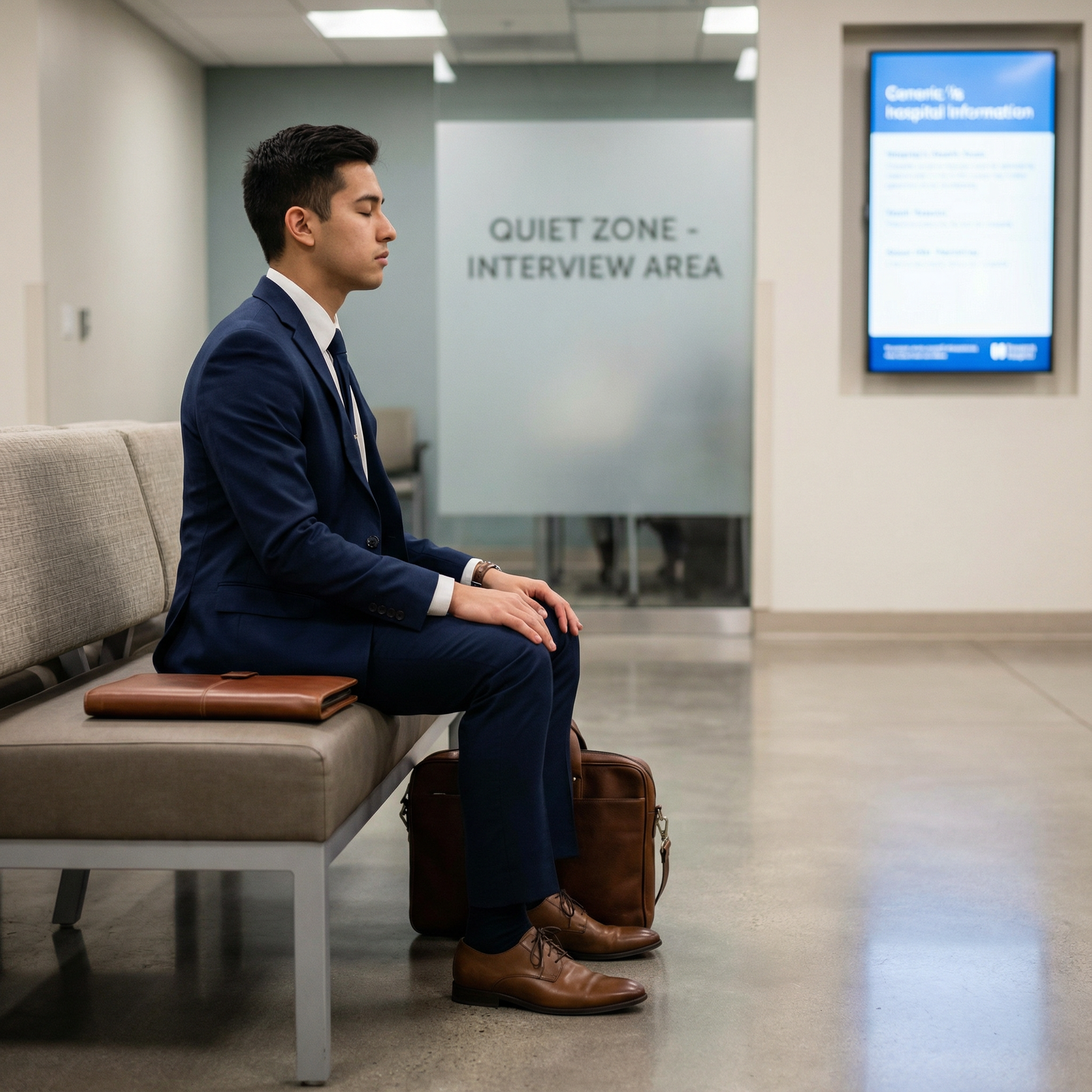
The biggest threat to your residency interview isn’t a bad answer. It’s your body language silently screaming the wrong story while you think you’re doing fine.
You’re obsessing over how to explain that research gap and how to talk about your Step score. Meanwhile, your crossed arms, darting eyes, and weird half-smile are quietly tanking your chances.
Let’s fix that before you walk into an interview room and blow an otherwise solid application.
The Silent Killers: First 30 Seconds
You don’t have 10 minutes to “warm up.” Programs form an impression of you in under a minute. I’ve seen it happen in real time: interviewer glances at the applicant walking toward the room and their face already says, “This is going to be awkward.”
Mistake #1: The “Too Small” Entrance
You shuffle in. Shoulders slightly hunched. Bag clutched tight. Voice soft, “Hi… I’m, uh, Alex.”
You think you’re being humble and non-threatening. You’re actually broadcasting: “I’m unsure, I’m not ready to own this role.”
Red flags attendings pick up unconsciously:
- Light, hesitant knock that sounds like you hope no one answers
- Opening the door just enough to squeeze through
- Standing right next to the chair before realizing you haven’t actually greeted anyone
- Perching on the edge of the seat like you’re ready to bolt
Fix it:
- Knock firmly. Then wait. No rapid-fire tapping like you’re afraid.
- Open the door fully and walk in at a normal pace, not a rushed scurry.
- Make eye contact immediately with the first person you see and say clearly, “Hi, I’m [Name], nice to meet you.”
- Sit all the way back in the chair, feet flat on the floor, shoulders relaxed. Not rigid, not slumped.
Mistake #2: The Fake Confidence Performance
Other extreme. You watched a “how to be confident” YouTube video the night before and now you’re performing.
You walk in too fast. Overly wide stance. Exaggerated handshake. Locked eye contact that feels like a staring contest.
They’re not thinking “wow, leadership.” They’re thinking “this is forced” or worse “this person is going to be exhausting on rounds.”
Tell-tale signs:
- Overly firm, knuckle-crushing handshake
- Sitting with elbows spread wide, taking up way too much space
- Nodding aggressively at every sentence
- Smiling constantly, even when discussing serious topics
Fix it:
- Aim for “comfortable colleague,” not “TED Talk speaker.”
- Mirror the interviewer’s energy a notch, not five notches.
- Let your posture be upright but not rigid. Back against the chair, shoulders down, hands visible on your lap or on the table, not clenched.
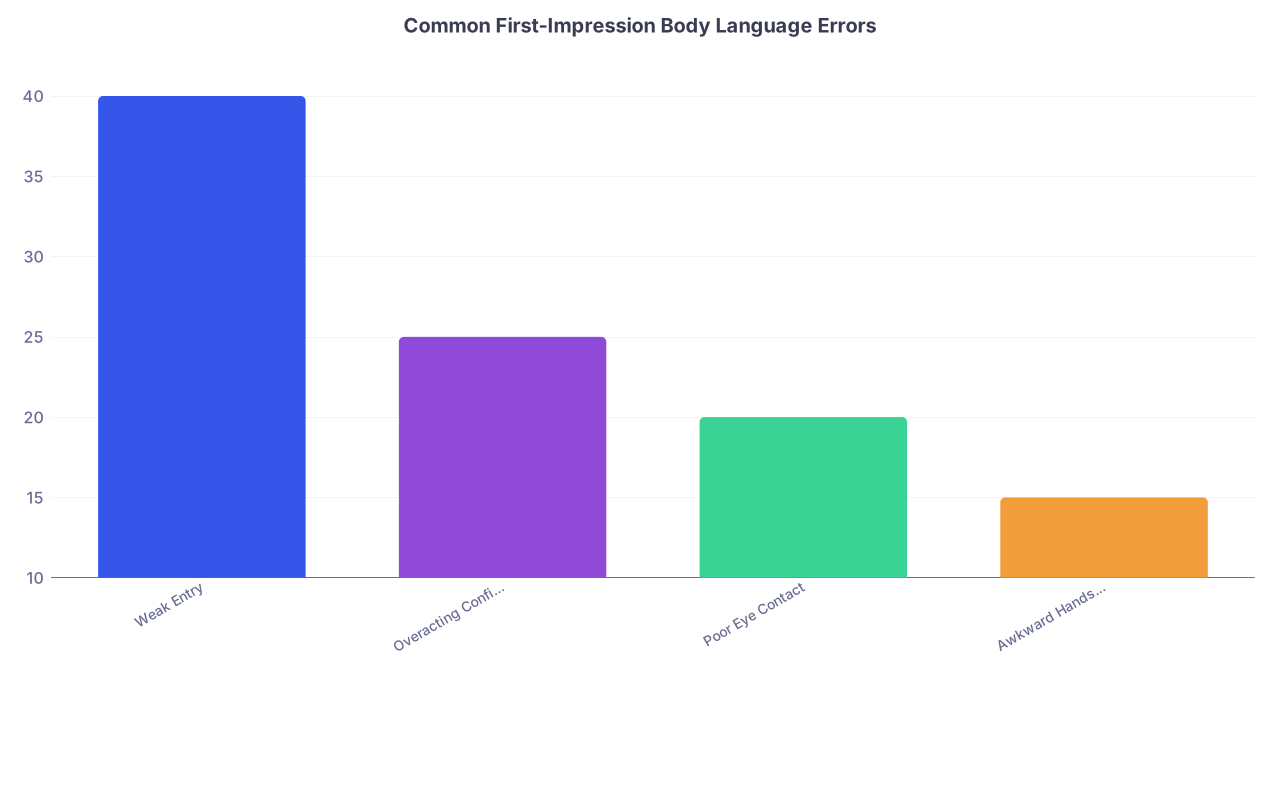
| Category | Value |
|---|---|
| Weak Entry | 40 |
| Overacting Confidence | 25 |
| Poor Eye Contact | 20 |
| Awkward Handshake | 15 |
The Handshake and Greeting Trap
You can destroy an otherwise good first impression with 3 seconds of bad contact. Yes, your handshake still matters. No, it doesn’t need to be “alpha” or “dominant.” It needs to not be weird.
Mistake #3: The Dead-Fish or Bone-Crusher
Both are bad, just in different flavors.
Dead-fish: fingertips only, limp, barely any movement. That reads as anxious, passive, or disengaged. I’ve heard attendings literally say after an interview, “The handshake told me everything.”
Bone-crusher: overcompensating. You’re anxious, afraid of seeming weak, so you squeeze. That reads as insecure and performative.
Fix it:
- Aim for firm, not painful. Web-to-web contact (the space between thumb and index finger), light squeeze, 1–2 pumps, then let go.
- Make eye contact during the handshake and say their title + last name clearly: “Nice to meet you, Dr. Smith.” Then release. Don’t cling.
Mistake #4: Awkward Doorway Hover
You walk in, see multiple interviewers, and your body freaks out. Do you shake everyone’s hand? Just nod? Wave? Weird half-waving, half-nodding thing happens.
Programs remember this. Not because they’re mean, but because it makes them uncomfortable, and discomfort sticks.
Fix it:
- If you’re unsure, err on simplicity: a polite smile, small nod, and a verbal greeting to the room: “Good morning, everyone.”
- If one interviewer clearly steps forward or extends their hand, meet that. Don’t lunge across the table to reach someone still sitting.
Sitting Posture That Sabotages You
You spend 90% of the interview sitting. Most applicants blow it here without realizing.
Mistake #5: The Perch of Doom
You sit on the front 10% of the chair. Knees together, back hunched slightly forward, hands squeezed in your lap.
You think: “This makes me look engaged.”
They see: “This person is high-strung and will crumble on a busy service.”
What it communicates:
- Chronic anxiety
- People-pleasing energy
- Low physical presence
Fix it:
- Sit fully back in the chair so your back touches the backrest.
- Feet grounded, flat. Not wrapped around the chair legs. Not halfway out into the hallway.
- Lean very slightly forward when engaged, but keep contact with the back of the chair most of the time. Controlled, not twitchy.
Mistake #6: The Collapse
Opposite problem. Long interview day, you’re tired. You start okay, then sink lower and lower into the chair.
Slouching doesn’t just look lazy. It makes your voice weaker, your breathing shallow, and your mental energy worse. Interviewers notice the energy dip.
Fix it:
- Pretend there’s a string gently lifting your sternum up. Not military posture. Just tall and open.
- If you feel yourself slumping, use the next question as a reset moment: quick inhale, small posture reset, then answer.

Eye Contact and Facial Expressions: Where Most People Get Weird
You can have solid answers and still come off as evasive, arrogant, or fake because your face is telling a different story.
Mistake #7: The Staring Contest
You heard that “good eye contact is essential,” so you overcorrect. You lock onto one interviewer’s eyes and barely blink.
That feels aggressive. People unconsciously lean back or look down at their notes just to escape it.
Fix it:
- Think “eye contact in phrases,” not “eye contact forever.” Look at the person as you start answering, glance away briefly while you think, come back to them to finish your point.
- If there are multiple interviewers, shift your gaze naturally between them, especially when you’re giving a bigger-picture or “why this specialty” answer.
Mistake #8: The Disappearing Face
Your face goes blank under stress. You’re internally engaged, but externally you look flat, bored, or even mildly annoyed.
This happens a lot with very analytical applicants. They’re thinking deeply, but their neutral thinking face looks cold.
Red flags:
- No change in expression while talking about “why this field excites me”
- Same tone when describing a meaningful patient experience and your daily commute
- Micro-frown lines or tight lips when concentrating
Fix it:
- Practice actually letting yourself react while telling stories. A slight smile when you describe a mentor. A softer expression when you discuss a challenging patient.
- Record yourself answering “Tell me about a meaningful patient experience.” If your face barely moves, you’ve got work to do.
Hands, Fidgeting, and the Nervous Tick Problem
Your hands can either reinforce your message or completely distract from it.
Mistake #9: The Invisible Hands
You hide your hands under the table, in your pockets, or clenched between your knees. That reads as defensive or closed-off, even if you’re just nervous.
Fix it:
- Keep hands visible, resting lightly on the table or in your lap.
- Use small, natural gestures near your torso—not wild arm swings, not T-Rex hands glued to your chest.
Mistake #10: The Fidget Factory
If your pen, ID badge, water bottle, or watch becomes a toy, you’re in trouble. Interviewers will remember “the one who kept spinning their ring” more than your “strong interest in academic medicine.”
Common culprits:
- Clicking pen
- Twisting your ring
- Tapping foot constantly
- Spinning your badge
- Playing with your hair, watch, or tie
Fix it:
- Remove rings you habitually twist.
- Use a pen without a clicker if you must bring one.
- Plant both feet on the ground. If you must move, occasionally shift your weight rather than rapid tapping.
- Hair: tie it back if you tend to tuck or play with it when nervous.
| Fidget Habit | Simple Fix |
|---|---|
| Pen clicking | Use non-click pen |
| Ring twisting | Remove ring that day |
| Leg bouncing | Feet flat, shift weight |
| Badge spinning | Clip badge out of reach |
| Hair playing | Secure hair back |
Voice, Pace, and Breathing: Body Language You Can Hear
Your voice is part of your body language. Interviewers aren’t just hearing your words; they’re hearing your nerves, your confidence, your burnout.
Mistake #11: Machine-Gun Answers
You race through every response. No pauses. Words piled on words.
This screams anxiety and lack of self-monitoring. Programs think: “How will this person handle family meetings? Will they overwhelm everyone on rounds?”
Fix it:
- Answer. Then stop. Let the silence exist for a beat. You’re not on a game show.
- Practice deliberately inserting a short pause before answering complex questions: inhale, one-second pause, then talk.
Mistake #12: The Fading Voice
Your voice trails off at the end of sentences. Volume drops. Last words get swallowed.
That comes across as insecurity or lack of conviction, especially when you’re talking about strengths or leadership.
Fix it:
- Record yourself. If your sentences die at the end, practice finishing with the same volume you started with.
- Breathe from your diaphragm, not your throat. If you run out of breath mid-sentence regularly, you’re talking too fast or not breathing deeply enough between thoughts.
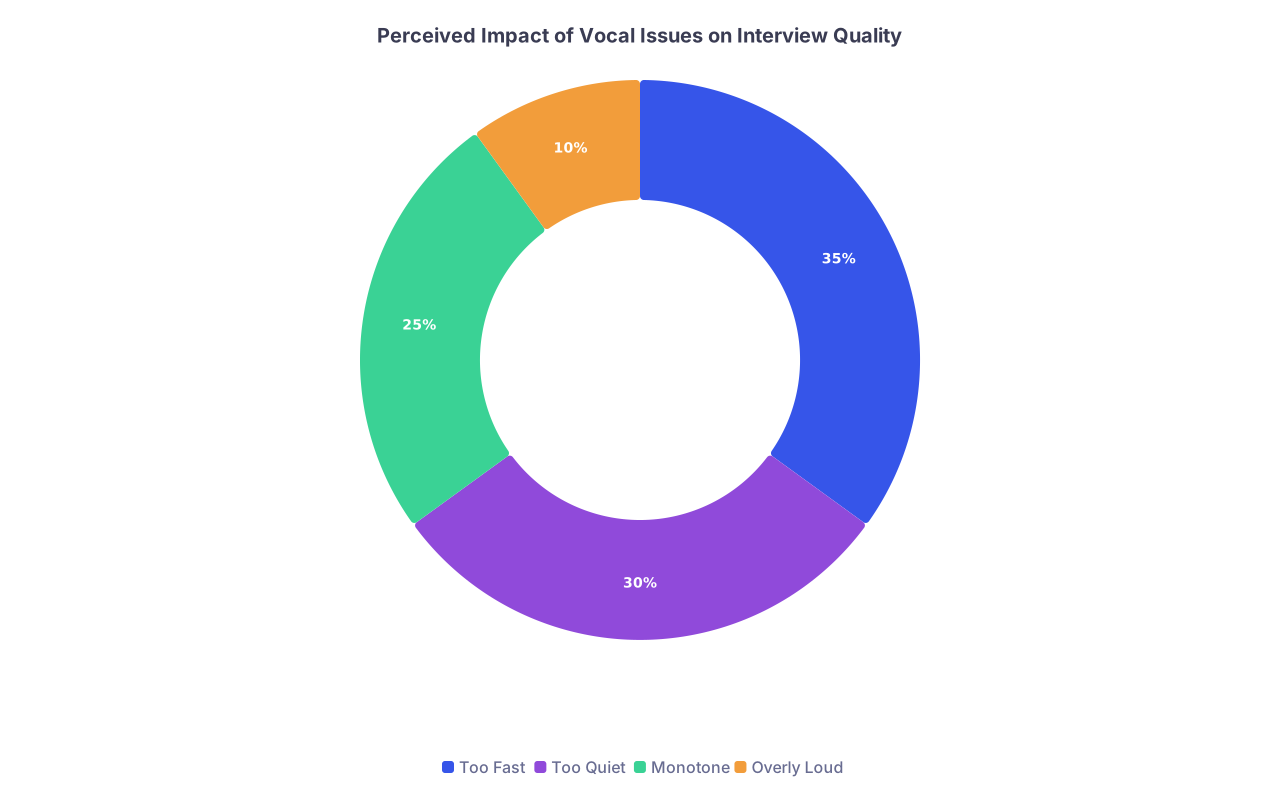
| Category | Value |
|---|---|
| Too Fast | 35 |
| Too Quiet | 30 |
| Monotone | 25 |
| Overly Loud | 10 |
Zoom / Virtual Interview Body Language Disasters
Virtual interviews are not easier. They’re just a different minefield.
Mistake #13: Looking at the Screen, Never the Camera
On Zoom, if you stare at the interviewer’s face on your screen, it looks to them like you’re constantly looking slightly down or off to the side. Feels like poor eye contact.
Fix it:
- When you’re making an important point, look directly at the camera for a sentence or two. Then glance back to the screen to read their reactions.
- Drag the Zoom window as close to your camera as possible so the difference is subtle.
Mistake #14: Slouching Off-Center in Frame
Camera angle from below + slumped posture = you look tired, checked out, and less professional than you are.
Fix it:
- Camera at or slightly above eye level. No under-chin angles.
- Sit close enough so your upper torso and hands are visible. Just a floating head looks stiff and disconnected.

| Step | Description |
|---|---|
| Step 1 | Before Interview |
| Step 2 | Set camera at eye level |
| Step 3 | Position light in front |
| Step 4 | Frame upper torso and hands |
| Step 5 | Test posture on screen |
| Step 6 | Practice looking at camera |
The “Tough Question” Tell: How You React Under Stress
Interviewers care less about your polished “biggest weakness” script and more about your micro-reactions when you’re pushed.
Mistake #15: Physically Flinching at Hard Questions
You get a question about a failure, a low Step score, or a professionalism concern. Your body snaps back. Eyes widen. Shoulders tense. You look like a deer in headlights for two seconds before you start your carefully rehearsed answer.
They notice that two seconds. That’s what undermines all the “I took responsibility and grew from the experience” language.
Fix it:
- Expect the hard questions. They aren’t a surprise; they’re a guarantee.
- When one comes, your only job for the first second is stillness: small inhale, slight nod acknowledging the question, then answer.
- Drop your shoulders consciously as you start: this signals “I can handle this” more than any words.
Mistake #16: Defensive Lean-Back
You disagree with a premise. Or feel misunderstood. Without realizing it, you lean back, cross your arms, or pull your head away.
Even if your words are polite, your body is saying: “I’m not open to this.”
Fix it:
- When you feel that defensive surge, do the opposite physically: lean in slightly, keep your hands open or resting on the table, and nod once before you respond.
- Start with a bridge phrase that buys you half a second to reset your body: “That’s a fair question,” or “I see why you’re asking that.”
How to Actually Practice (So You Don’t Just Read This and Forget)
Reading about body language does nothing if you don’t see yourself as others see you.
Step 1: Brutal Video Reality
You’re going to hate this, but it works.
Record yourself (phone is fine) answering:
- “Tell me about yourself.”
- “Why this specialty?”
- “Tell me about a time you made a mistake in patient care.”
Watch with this checklist:
- Are you perched on the edge of the seat?
- Do your hands vanish or fidget constantly?
- Does your face move when you talk about things you claim to care about?
- Are you staring without blinking or looking away every half second?
Don’t nitpick everything. Look for 2–3 patterns. Change those.
Step 2: Get One Honest Human
Not your parent who thinks you’re perfect. Not a friend who will just say “you’re fine.”
Ask a harshly honest friend, resident, or advisor: “Can you watch this 5-minute clip and tell me what feels off about my body language?”
Then shut up and listen. Don’t defend. Don’t explain. Just note the patterns they see.
Step 3: Reps With Intentional Constraints
Practice short, focused reps rather than repeating full interviews endlessly.
For example:
- 5 minutes where your only goals are: hands visible, feet flat, no pen in hand.
- 5 minutes where you keep your back fully against the chair while answering.
- 5 minutes of practicing hard questions with the rule: one-second pause before answering, no physical flinch.
You’re training your nervous system, not just your brain.