
The most charismatic people do not “win” group residency interviews. The mindful, prepared ones do.
That’s the part nobody tells you when you’re lying awake at 2 a.m. replaying imaginary scenarios where you’re silently nodding while a louder applicant steals all the air in the room and the program director forgets you exist.
Let’s name the actual fears, because I know them by heart:
- “What if I barely speak and they think I’m passive or boring?”
- “What if I talk too much and come off as arrogant?”
- “What if someone smarter/funnier/flashier makes me look useless?”
- “What if I get interrupted and just sit there like an idiot?”
- “What if they’re secretly comparing us in real time and I’m obviously the worst one?”
You’re not crazy. Group interviews are uniquely stressful. They’re designed to put you in a room with your competition and then see who you become under social pressure.
But here’s the thing: programs aren’t looking for “the loudest.” They’re looking for “the person I’d actually want to be on my team for 28-hour calls.”
And that’s something you can absolutely prepare for.
What Group Interviews Are Really Testing (Not What You Think)
Most anxious applicants assume group interviews are about “standing out.” That word is poison. It makes you think you have to perform.
From the faculty side, here’s what they’re actually tracking during those group sessions:
- Do you notice other people, or are you just waiting to talk?
- Can you share airtime like a decent colleague?
- Do you listen and respond, or just monologue?
- Do you build on others’ ideas or quietly undercut them?
- If someone is quieter, do you help bring them in or ignore them?
They’re watching how you operate in a team under mild stress. Not whether you can be the star.
I’ve seen it play out. In a group of six:
- One super polished guy dominated, answered first every time, interrupted twice. Everyone assumed he’d crush it. He got labeled “bulldozer, not teachable.”
- One quieter woman spoke maybe 4–5 times. Each time her answer was clear, specific, and she referenced something another applicant said (“To build on what Alex mentioned…”). She was on the final rank list.
- One person barely spoke and looked terrified. Smart on paper, but the feedback was “Will struggle in team dynamics and with patients.”
So no, you don’t have to be the talkative one. But you do have to be present, responsive, and visible.
Not invisible. Not overbearing. That middle zone is what you’re aiming for.
The “I Won’t Get a Word In” Panic: How to Actually Be Heard
The core fear: “Everyone will talk over me and I’ll disappear.”
You can’t control other people’s personalities. You can control a few critical behaviors that give you space without being aggressive.
1. Have 2–3 go‑to phrases ready
You don’t want to be inventing social strategies on the spot while your heart is pounding. Script a few phrases now so your mouth has something to grab onto.
Examples that work in group interviews:
- “I can start us off if that’s okay with everyone.”
- “I can jump in next after you.”
- “I’d love to add something to what Sarah just said.”
- “I agree with that, and I’d also consider…”
- “We haven’t heard from everyone yet—does anyone else want to weigh in?”
That last one is gold. It shows awareness, leadership, and generosity. Faculty notice.
2. Claim a turn early without hijacking
You don’t have to speak first, but don’t wait until the final minute of the question either.
Pattern that works well:
- First person answers.
- Second person shares briefly.
- You say: “I can go next,” then give a concise answer.
You’ve now demonstrated:
- Comfort entering the conversation
- Respect for others
- Initiative
That’s already a solid impression.
3. Use body language to signal “I’m about to speak”
This sounds small, but it’s how humans coordinate conversation:
- Slightly lean forward when you’re preparing to talk
- Make eye contact with whoever just finished speaking
- Inhale like you’re about to start a sentence (yes, people unconsciously respond to this)
You’re not fighting for dominance. You’re quietly signaling intention. This reduces people accidentally cutting you off.

How to Avoid Being Overshadowed by Strong Personalities
The worst nightmare: You end up in a group with an Olympics-level talker. Your brain goes, “Well, that’s it, I’m done.”
You’re not. You just need a different playbook.
1. Don’t compete on volume; compete on quality and awareness
Programs don’t want six versions of the same extrovert. When someone is obviously trying to dominate, that actually gives you an opening to look better.
Things evaluators love seeing:
- “Those are great points. One thing I’d add is…”
- “I really like what he said about communication; in my experience on my sub‑I…”
- “We’ve brought up a lot of good ideas. If I had to prioritize, I’d probably start with…”
You’re framing yourself as the person who organizes the chaos. That’s leadership.
2. Gently guard your space if you get interrupted
You’re terrified of sounding rude. Reasonable. But there’s a way to hold ground without being a jerk.
Try:
If someone jumps in a beat too early:
“I’ll finish this thought really quickly and then I’d love to hear what you were going to say.”If it keeps happening:
“I just want to finish that last point, then I’m done.”
Short. Calm. Not apologetic.
You are allowed to complete a sentence. That’s basic self‑respect, not aggression.
3. Use names—people remember that
Almost nobody does this, and it instantly makes you seem more engaged and socially competent:
- “Like Maria mentioned about communication…”
- “I agree with James about setting expectations with families…”
Faculty think: “This person actually listens and remembers their peers, not just the attendings.”

| Step | Description |
|---|---|
| Step 1 | Question Asked |
| Step 2 | Listen Actively |
| Step 3 | Offer to Start |
| Step 4 | Wait 1-2 Speakers |
| Step 5 | Use Phrase: I can go next |
| Step 6 | Give Concise Answer |
| Step 7 | Add to Previous Points |
| Step 8 | Others Start Speaking? |
Talking Enough but Not Too Much: Finding That Sweet Spot
Another voice in your head: “What if I ramble and they all wish I’d stop talking?”
Here’s a simple structure that keeps your answers tight and clear in a group setting.
Use the 30–60 second answer rule
In a group of 5–8 people, if you talk for more than ~60–75 seconds, you’re hogging oxygen.
Aim for:
- 1–2 sentences of direct answer
- 1 quick example or detail
- 1–2 sentences to connect back to the question or group
Concrete example:
Question: “How do you handle conflict on a team?”
Good group‑length answer:
“I try to address conflict early and directly, but respectfully. On my surgery sub‑I, there was tension between a junior resident and a nurse about post‑op orders. I asked the resident privately if we could clarify the plan together, then went with him to speak with the nurse so they could both share their concerns. That approach—clarifying, then bringing people together—usually prevents small issues from escalating and keeps patient care at the center.”
That’s under a minute. Solid, specific, and done.
Stop yourself before you start spiraling
Your anxious brain will want to keep adding qualifiers and side notes because you’re scared you haven’t said enough.
Train one internal rule:
“When I feel the urge to tack on ‘one more thing,’ I’ll stop instead.”
Half the time, that “one more thing” is where you start rambling. Ending cleanly makes you look more confident than stuffing every possible nuance into your answer.
Practicing for Group Interviews (Without Making It Weird)
You can absolutely simulate this. It just feels awkward at first.
Here’s how to do it in a way that won’t make your friends hate you.
1. Run 20‑minute mock groups with 2–3 classmates
You don’t need eight people. Three is fine. Ask someone to be “time keeper/evaluator” and rotate.
Set a timer for 20 minutes and go through 4–5 questions like:
- “What makes a good intern?”
- “Tell us about a time your team failed.”
- “How do you handle a colleague who isn’t pulling their weight?”
- “As a group, prioritize these four tasks…”
Afterward, have them give specific feedback:
- Did you talk enough? Too much?
- Did you cut anyone off?
- Did you reference others’ points?
- Was there a moment you looked especially strong or especially uncomfortable?
And yeah, this is mildly painful. But it moves your anxiety from imaginary horror stories to concrete, fixable behaviors.

2. Record yourself once. Just once.
I know. This sounds like torture. But one 10–15 minute recording can show you:
- Do you stare at the table?
- Do you nod too much and never enter?
- Do you smile at weird times?
- Do you talk in one long breath?
Then fix one thing at a time. Not everything. You’re not rebuilding your personality, you’re sanding down the rough edges.
What Interviewers Actually Remember After Group Sessions
You’re terrified they’re making some live ranking spreadsheet in their heads as you talk.
Reality: after a long interview day, what sticks from group interviews is surprisingly simple:
- “That was the one who brought the quiet person in.”
- “She gave that great example about owning a mistake on her sub‑I.”
- “He kept interrupting.”
- “They seemed disengaged and barely talked.”
- “She was thoughtful and connected well with others.”
They remember patterns, not every sentence.
| Applicant Behavior | Typical Faculty Reaction |
|---|---|
| Talks nonstop, interrupts | Pushy, poor team fit |
| Rarely speaks, avoids eye contact | Disengaged, might struggle on team |
| Speaks 3–5 times, concise | Balanced, professional |
| Builds on others' ideas | Collaborative, mature |
| Invites quieter peers to speak | Natural leadership |
You don’t need to be unforgettable. You need to be clearly in the positive column and not giving them red flags.
That’s a lower bar than your anxiety is telling you.
Quick Mental Reframes for the Night-Before Panic
If your brain spins out before bed, use these reframes. They’re blunt, but they work.
“They’re not looking for the valedictorian of talking.”
They’re looking for someone they can trust at 3 a.m. with a crashing patient and a stressed team.“If someone is obnoxiously dominant, that’s their red flag, not my failure.”
You don’t “lose” because someone is louder. They lose if they steamroll.“I don’t have to be impressive on every question.”
If you blank on one prompt or give a meh answer, fine. Reset on the next one.“I only need to do three things: speak, listen, and not be a jerk.”
Everything else is extra.
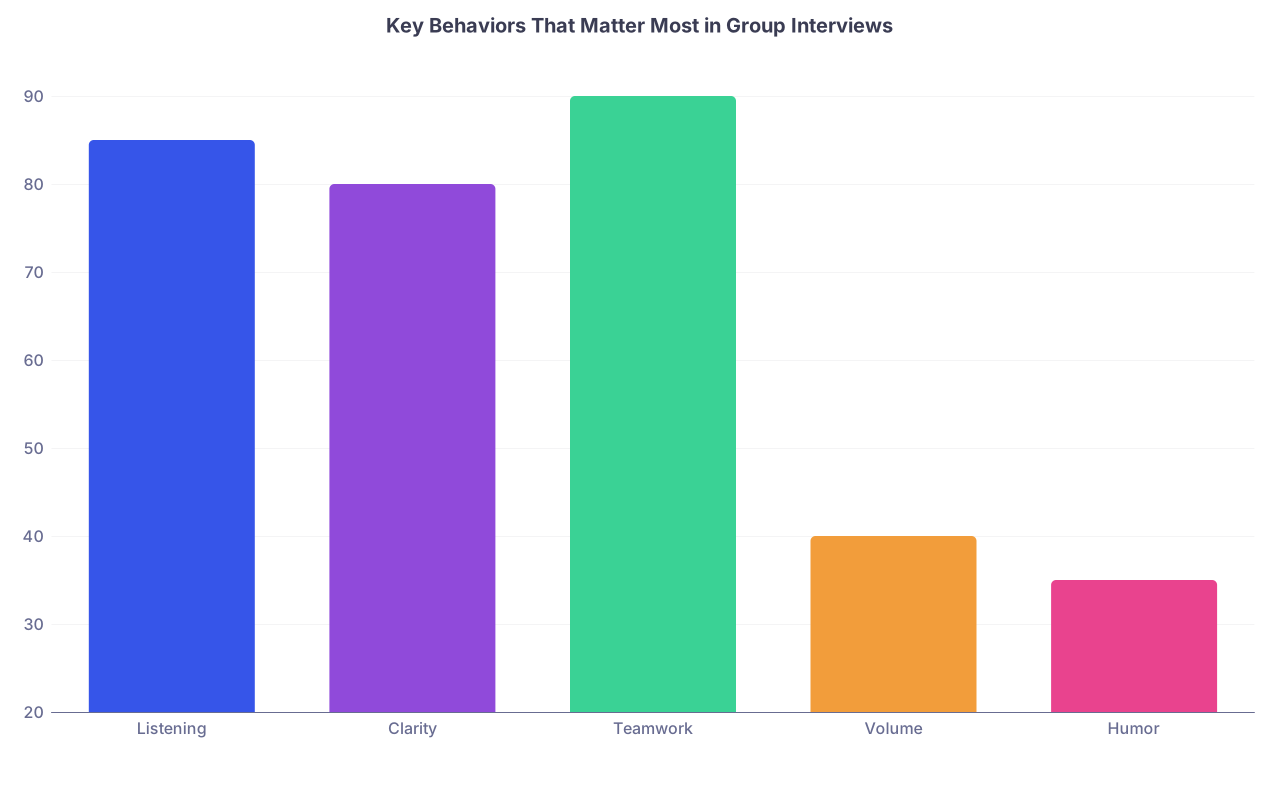
| Category | Value |
|---|---|
| Listening | 85 |
| Clarity | 80 |
| Teamwork | 90 |
| Volume | 40 |
| Humor | 35 |
Day-Of Strategy: How to Survive the Actual Group Session
Let’s walk through what you can literally do on the day.
Before it starts (5 minutes)
- Pick one simple goal: “I will speak in the first two questions” or “I will reference another person at least twice.”
- Take 10 slow breaths. In for 4, out for 6. Yes, it’s cliché. Yes, it calms your nervous system.
- Remind yourself: “I’m not auditioning to be a TED speaker. I’m auditioning to be a resident.”
During the interview
- On the first question, if no one jumps in, say: “I can start us off.” Get the first rep out of the way early.
- On the second or third question, explicitly build on someone else’s answer: “Like John mentioned…”
- Once during the session, consciously invite someone else: “We haven’t heard from you yet—want to add anything?”
Those three behaviors alone put you in a very good category for most programs.
After it ends
Your brain will immediately start dissecting: “That one answer was stupid. I forgot to mention X. I sounded fake.”
You’re going to feel that. Let it pass. Then ask yourself:
- Did I show basic collegiality?
- Did I speak multiple times?
- Did I avoid obvious rudeness?
If yes, then you did your job. Perfection isn’t the metric here—safety and team fit are.
If You’re Extremely Introverted or Socially Anxious
Let’s not pretend this is easy if you’re already terrified of group dynamics. But you’re not doomed.
Here’s the harsh truth that’s also good news: residency itself is basically one long group interaction. Sign‑out, rounds, consults, interdisciplinary huddles. Programs know this. They’re not trying to select only extroverts, but they need to see you can function.
So your goal isn’t to become someone you’re not. Your goal is to show:
- You can speak up when patient care or team function needs it.
- You’re not so shut down in groups that you disappear.
- Your quietness comes with thoughtfulness, not disengagement.
Own it calmly if needed:
“I tend to be more on the quiet side in large groups, but I’m very engaged and I make sure to speak up when it’s important for the team or for patient care.”
Then your behavior needs to match that: a few clear, intentional contributions.
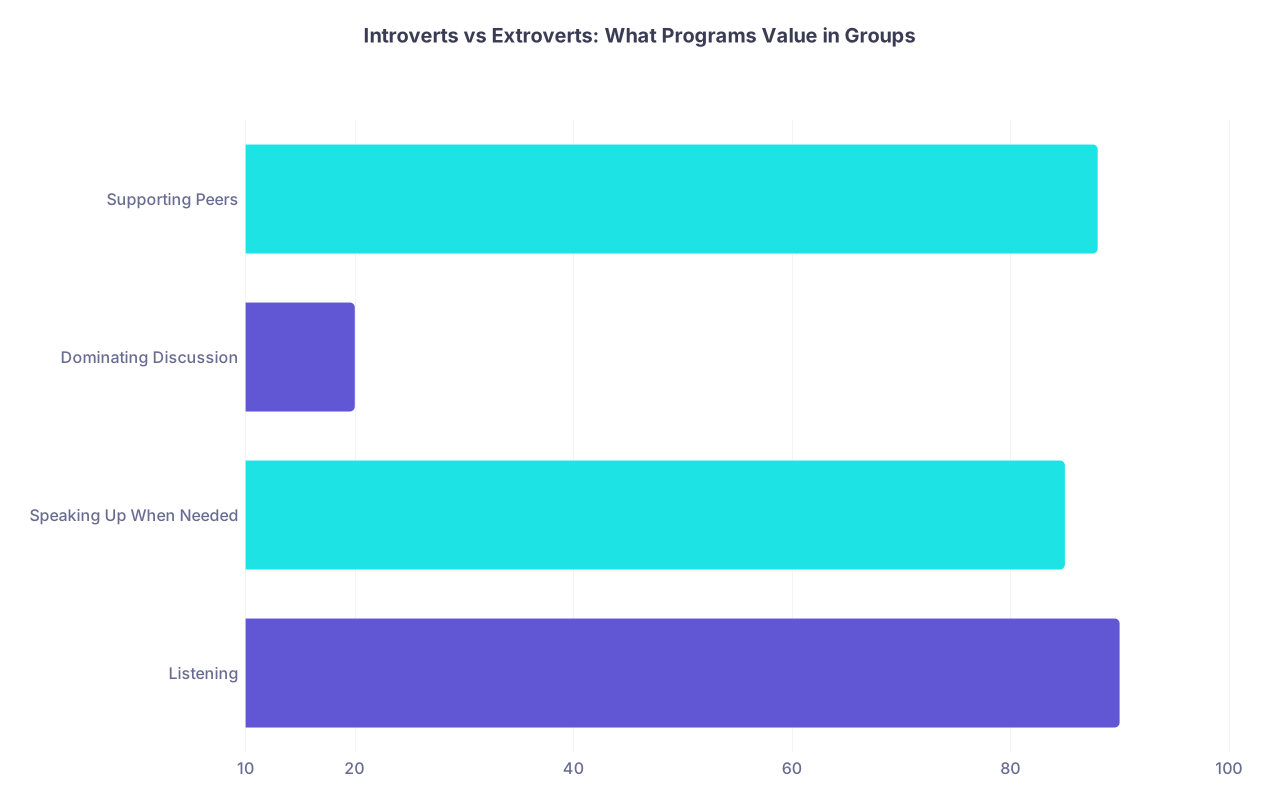
| Category | Value |
|---|---|
| Listening | 90 |
| Speaking Up When Needed | 85 |
| Dominating Discussion | 20 |
| Supporting Peers | 88 |
FAQ: Group Residency Interview Panic Edition
1. What if I barely get to talk because the group is huge?
Then your job is to make the few times you do speak count. Aim for 3–4 solid contributions in a 30–40 minute session. If it’s really crowded or dominated, you can even name it gently:
“I know we’re a big group, but one thing I’d add is…”
Programs can tell when the format itself is constraining airtime. They’re not stupid. They’re looking at how you participate, not your raw word count.
2. Should I try to be funny so I’m memorable?
No. Forced humor under stress is usually cringe, not charming. If you naturally have a dry one‑liner and the vibe is light, fine. But being “the funny one” is not the goal. Being the reliable, thoughtful, not‑socially‑oblivious one is.
If you’re asking, “Should I use humor to stand out?”—don’t.
3. Can one bad answer in the group interview sink me?
Almost never by itself. People fumble questions all the time. What sinks applicants is a pattern: consistently negative body language, repeated interrupting, always off‑topic, or basically silent the entire time.
If you gave one awkward or overlong answer, that’s normal. Reset on the next question. Interviewers forget specifics way faster than you think.
4. How do I know if I talked too much?
If you realize you answered first on 3+ questions and your answers ran long, that’s a sign you might be overshadowing others. A simple internal rule: if you went first two times, intentionally go near the end next time and say, “Most of what I was thinking has already been said, but I’ll add…”
If you’re worried enough to even ask this question, you’re probably already more self‑aware than the true over‑talkers.
Open your notes app right now and write down three phrases you’ll actually use in your next group interview: one for starting an answer, one for building on someone else, and one for inviting a quieter person in. Those three sentences alone can keep you from being overshadowed.