Interview dinners move rank lists. A lot more than programs openly admit—and a lot more than applicants want to believe.
The idea that “the dinner doesn’t really matter, it’s just a chance to relax” is one of the most persistent and dangerous myths in the residency interview process. It makes applicants sloppy. It makes them underestimate what’s actually being evaluated. And it ignores what faculty and residents say to each other once you go home.
I’ve sat in those post‑interview meetings. I’ve heard the exact phrases:
- “Everyone seemed fine… except that one guy at dinner.”
- “She really came alive at dinner—way better impression than during her interview.”
- “Residents loved him. Let’s move him up.”
Let’s tear this apart properly.
What Programs Actually Use Interview Dinners For
Programs do not spend thousands of dollars, resident time, and administrative hassle on something that “doesn’t matter.”
They use the dinner to assess things that are hard to measure in a 30‑minute faculty interview sitting across from a desk.
Here’s what’s really going on.
Culture fit and likeability.
Programs will not call it “likeability” on paper, but that is exactly what residents and faculty are rating informally:- Would I want to be on night float with this person?
- Would I trust them with my patients at 3 a.m.?
- Do they seem normal, collaborative, non-toxic?
Authenticity vs. Interview Persona.
They know you can put on your best “polished applicant” face in a formal interview. Dinner lets them see your default mode. Are you:- Polite to servers?
- Engaging only with PD/associate PD?
- Kind to quieter applicants?
- The same person when you think nobody important is listening?
Resident veto power.
This is the part applicants chronically underestimate. At many programs, residents have explicit or de facto veto power:- “If the residents hate someone, we don’t rank them” is something I have heard word-for-word from chiefs and PDs.
- Residents’ summary comments go straight into the decision meeting.
And residents are forming those impressions mostly from the dinner and the pre‑interview day interactions, not from the three minutes they bump into you in the hallway.
What the Data Shows (Not the Stories You Hear on Reddit)
Let’s talk evidence, not anecdotes.
There are surveys of program directors and residents, across multiple specialties, asking what influences rank lists. The wording changes, but the theme is the same:
- “Interactions with residents”
- “Interactions outside of formal interview”
- “Perceived fit with program culture”
These routinely score near the top of rank factors—often above things like Step scores and sometimes even LORs, once you’re in the interview pool.
Do we have a randomized controlled trial of interview dinners? Of course not. But we have patterns:
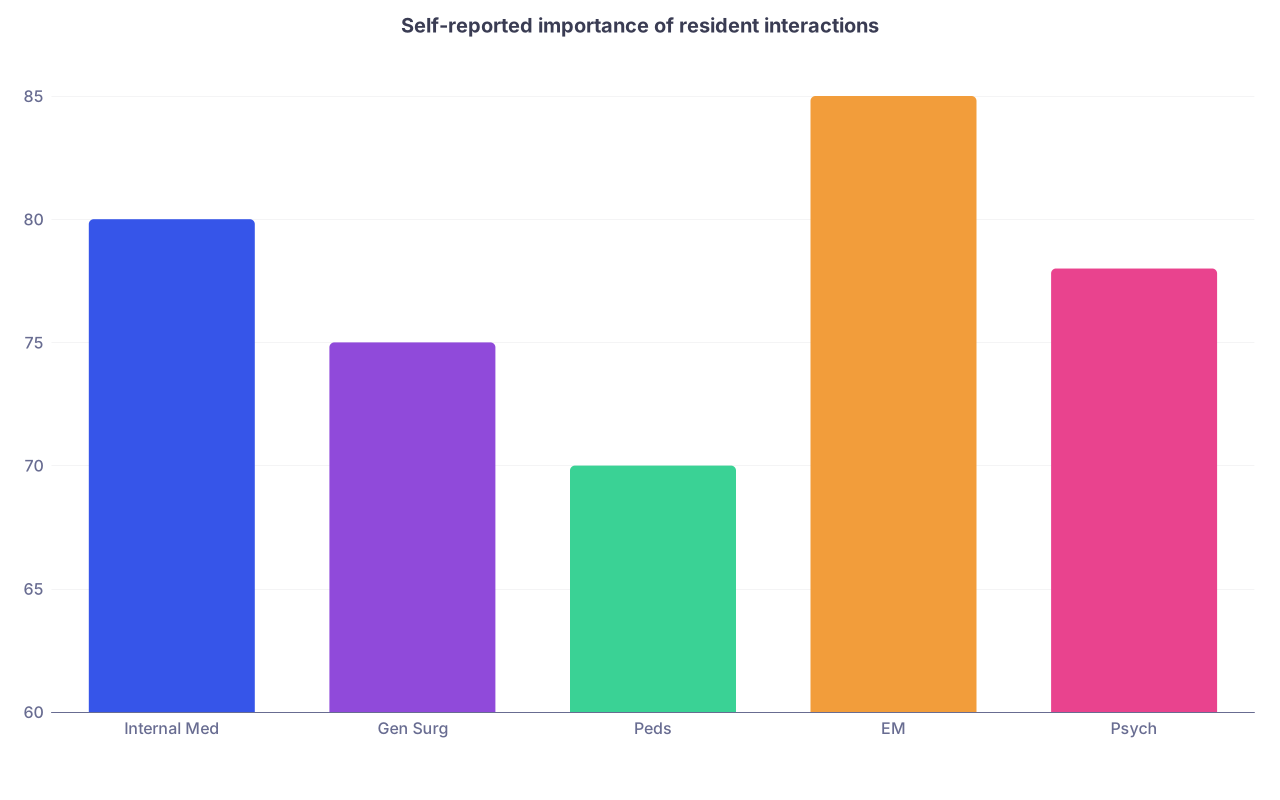
| Category | Value |
|---|---|
| Internal Med | 80 |
| Gen Surg | 75 |
| Peds | 70 |
| EM | 85 |
| Psych | 78 |
Those numbers are representative of what multiple NRMP Program Director surveys show: a large majority of PDs rate “interactions with residents during interview and visit” as an important or very important factor in ranking. Not a nice-to-have. Not a tie-breaker. A core input.
Now ask yourself: where do most of those “interactions with residents” actually happen?
Not the formal faculty interviews.
They happen:
- At the pre‑interview dinner
- On the morning tour
- In the resident work room between interviews
- Walking between conference and lunch
You can believe the myth that “the dinner doesn’t matter.” Or you can believe the PDs and residents who admit they use precisely those encounters to decide who they want on their team.
Why This Myth Exists (And Why People Keep Repeating It)
So if the dinner clearly matters, why does everyone keep saying it doesn’t?
Because it’s comforting. And because programs want to avoid obvious legal landmines.
Here’s the breakdown.
1. Programs are legally cautious
No PD in their right mind is going to stand up at pre‑interview orientation and say:
“By the way, tonight’s dinner is a huge part of our rank decisions, please perform appropriately.”
They want you relaxed. They want plausible deniability. They know if they officially state that informal social events determine rank, they court bias complaints and legal scrutiny.
So they say the same line every year:
“Dinner is optional, no pressure, just a chance to get to know the residents.”
That’s technically true. It’s optional. You won’t be auto‑rejected for skipping. But “optional” and “no impact” are not the same thing.
2. Older residents soothe anxiety
Residents often tell applicants “don’t stress, it doesn’t really count” because:
- They remember how stressed they were.
- They don’t want to be the villain who makes you more anxious.
- They may not have sat in the ranking meeting themselves.
But talk to a chief resident who’s been in those meetings. You’ll see the shift:
- “We remember the applicants who were great at dinner.”
- “We absolutely flagged the ones who were rude / drunk / weirdly competitive.”
3. Survivorship bias
Matched residents love to retroactively downplay things that went well for them.
“If I matched here, that must mean the dinner wasn’t a big deal—I wasn’t even trying.”
Maybe. Or maybe they were likeable and normal without thinking about it, so they never saw the knife that almost never fell on them but does fall on other people.
People who were quietly tanked by a bad dinner? They don’t know. They just matched lower on their list and assume it was Step 1 or their personal statement.
How Interview Dinners Actually Change Rank Lists
Let me be very clear: the dinner is not usually about turning a terrible paper applicant into a superstar. It’s about sorting the cluster in the middle and avoiding landmines.
Most programs have a stack of applicants that look nearly identical on paper:
- Step scores within 5–10 points
- Similar grades, passes, maybe one or two honors
- Solid letters, standard research, nothing insane
That’s where the dinner carries disproportionate weight.
Here’s how it usually plays out.

| Step | Description |
|---|---|
| Step 1 | Application reviewed |
| Step 2 | Formal interview day |
| Step 3 | Pre-interview dinner |
| Step 4 | Resident feedback compiled |
| Step 5 | Move down or do not rank |
| Step 6 | Move up within similar tier |
| Step 7 | Stay near original slot |
| Step 8 | Invite to interview? |
| Step 9 | Any flags or strong positives? |
Three main effects:
The silent demotion.
You weren’t awful. Just slightly off:- You ignored quieter residents and only talked to the chief.
- You made a low-key sexist or condescending joke.
- You were oddly negative about your med school or classmates.
Result: “Bad vibe at dinner” gets written down. When time comes to sort the middle group, you slide down. You’ll never know why.
The quiet promotion.
You were fine on paper but came across as:- Genuinely kind to other applicants
- Curious about the program in a non‑performative way
- Self-aware, with normal hobbies and interests
Result: “Residents really liked her” gets mentioned. You move up in a group of otherwise similar applicants.
The hard no.
This is rare but real:- You got drunk or sloppy
- You were rude to staff
- You trash‑talked other programs or your home institution
- You said something blatantly discriminatory
Result: “Residents strongly recommend DNR” and the PD complies, or at least moves you way down.
| Pre‑interview Tier | Dinner Impression | Likely Rank Impact |
|---|---|---|
| Top 10% | Big red flag | Drop to bottom or DNR |
| Top 10–30% | Strong positive | Move into top 10–20% |
| Middle 40–60% | Strong positive | Jump ahead of similar candidates |
| Middle 40–60% | Mildly negative | Slide to lower middle |
| Bottom 30% | Neutral/positive | Small improvement at best |
The dinner doesn’t rewrite your CV. But it absolutely reshuffles people with similar paper stats.
What Programs Are Subtly Scanning For At Dinner
Since you’re myth‑busting with me, let’s drop the fluff and name the actual checklist most residents are running subconsciously.
Basic social competence.
Not charisma. Just normal, functioning‑adult behavior:- Can you hold a back‑and‑forth conversation?
- Do you dominate the table or disappear completely?
- Do you make eye contact or stare at your phone?
Non-toxic vibes.
Residents are allergic to red flags because they live with the fallout for years. They watch for:- Constant complaining about med school, classmates, “idiot” attendings
- Competitive one‑upmanship with other applicants
- Weird need to prove how smart or hardcore you are
Respect for staff and service workers.
This is a bigger deal than applicants think. Residents notice:- Do you say please/thank you to servers?
- Do you act annoyed if food is slow or wrong?
- Do you leave your trash everywhere or help tidy?
Reality check on your persona.
Your ERAS says “team player,” “collaborative,” “great communication skills.” Dinner is where they test if that’s real or just template fluff.
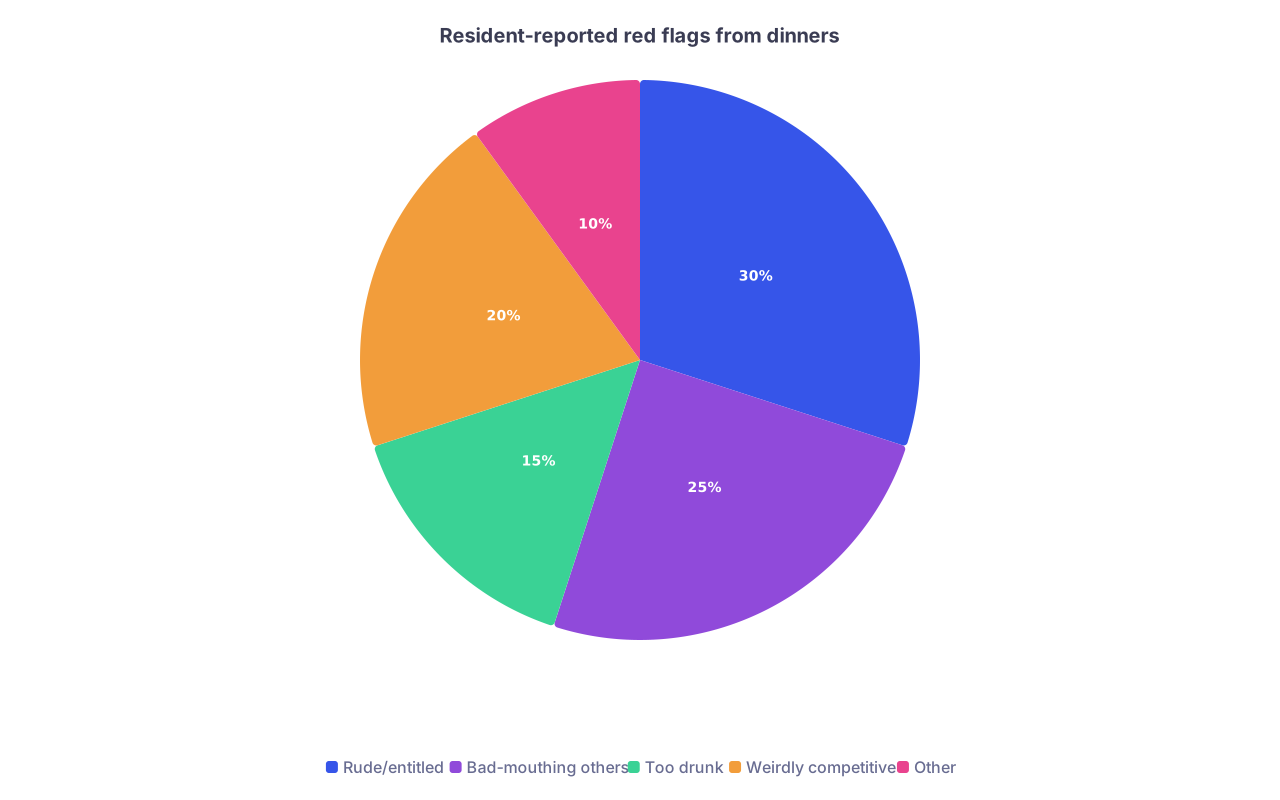
| Category | Value |
|---|---|
| Rude/entitled | 30 |
| Bad-mouthing others | 25 |
| Too drunk | 15 |
| Weirdly competitive | 20 |
| Other | 10 |
I’ve seen residents push to DNR someone solely because they were condescending to waitstaff and constantly interrupted other applicants. No one cared about their 260 Step score at that point.
How You Should Actually Approach Interview Dinners
Now the practical part. If the dinner matters, how do you treat it?
You don’t turn it into a staged performance. You also don’t treat it like an unmonitored social hour. You do something in between: normal human on job audition.
1. Assume everyone is “on the record”
Do not fall for the “this is totally off the record” line. Residents say that to relax you. But:
- Their impressions will be shared.
- Their comments will influence your rank.
Assume:
- Anything you say can show up in a resident’s summary comment.
- The most offhand dumb joke will be the thing people remember.
That does not mean be paranoid. It means don’t say things you wouldn’t be comfortable having paraphrased in a room of attendings the next day.
2. Calibrate your alcohol use
You know this intellectually. Then you show up and:
- Everyone has a drink.
- The senior resident offers another.
- You’re nervous and your glass keeps emptying.
Set your rule before you walk in:
- 0–1 drink, max.
- If you’re small, tired, jet-lagged, on an empty stomach: 0.
I’ve watched people go from “fine” to “sloppy speech and oversharing” in 30 minutes because they forgot they hadn’t really eaten all day.
3. Talk like a future colleague, not an applicant robot
Here’s where most people overcorrect. They either:
- Turn it into a second interview and grill residents with scripted questions; or
- Say nothing useful and just smile and nod.
Better:
- Ask real questions you actually care about: “What surprised you about intern year?” “What do people do post‑residency from here?”
- Share bits of your own life that aren’t all medicine: hobbies, family, what you do to decompress.
The goal isn’t to prove you’re impressive. It’s to prove you’re not going to be a problem.

4. Handle awkward moments like a grown adult
Someone will say something weird. Or politically charged. Or borderline inappropriate.
You’re not there to start a crusade. But you are being watched for how you handle discomfort:
- You do not pile on.
- You change the subject gracefully.
- If pressed, you can offer a neutral, non-escalating response.
Residents later remember:
- Who laughed uncomfortably and moved on.
- Who doubled down on the bad take.
Guess which one they don’t want on their team.
What If You Can’t Attend The Dinner?
Yes, skipping dinner can hurt you in marginal ways. No, it’s not always fatal.
Life happens:
- Flight delays
- Family emergencies
- Religious reasons
- Financial or travel constraints on back‑to‑back interviews
Be an adult about it:
- Email the coordinator beforehand if you know you’ll miss it.
- Briefly explain (“flight timing,” “family obligation”) without a long story.
- Express genuine regret and interest in meeting residents the next day.
Some programs are decent about this and will:
- Have residents available for a lunch Q&A
- Offer a virtual meet‑and‑greet
- Encourage you to talk to residents during interview day breaks
Where applicants get themselves in trouble:
- No‑showing the dinner without notice.
- Seeming casual, like they just couldn’t be bothered.
Skipping dinner is like not coming to office hours when the professor said “come if you can”—you’re not punished automatically, but you do miss a chance to distinguish yourself.
The Real Risk: Underperforming, Not Overthinking
The real danger isn’t that you’ll “try too hard” at dinner.
The real danger is believing the myth that it doesn’t matter and therefore:
- Drinking like it’s a post‑exam bar night.
- Treating residents like peers at a med school social, not future colleagues evaluating you.
- Letting your filter drop because “this part isn’t being scored.”
It is. It just doesn’t show up as a line item. It shows up as:
- “Seemed awkward but fine.”
- “We loved her.”
- “Residents strongly recommended against ranking.”
Those are the quiet phrases that move your name up or down on the final list.
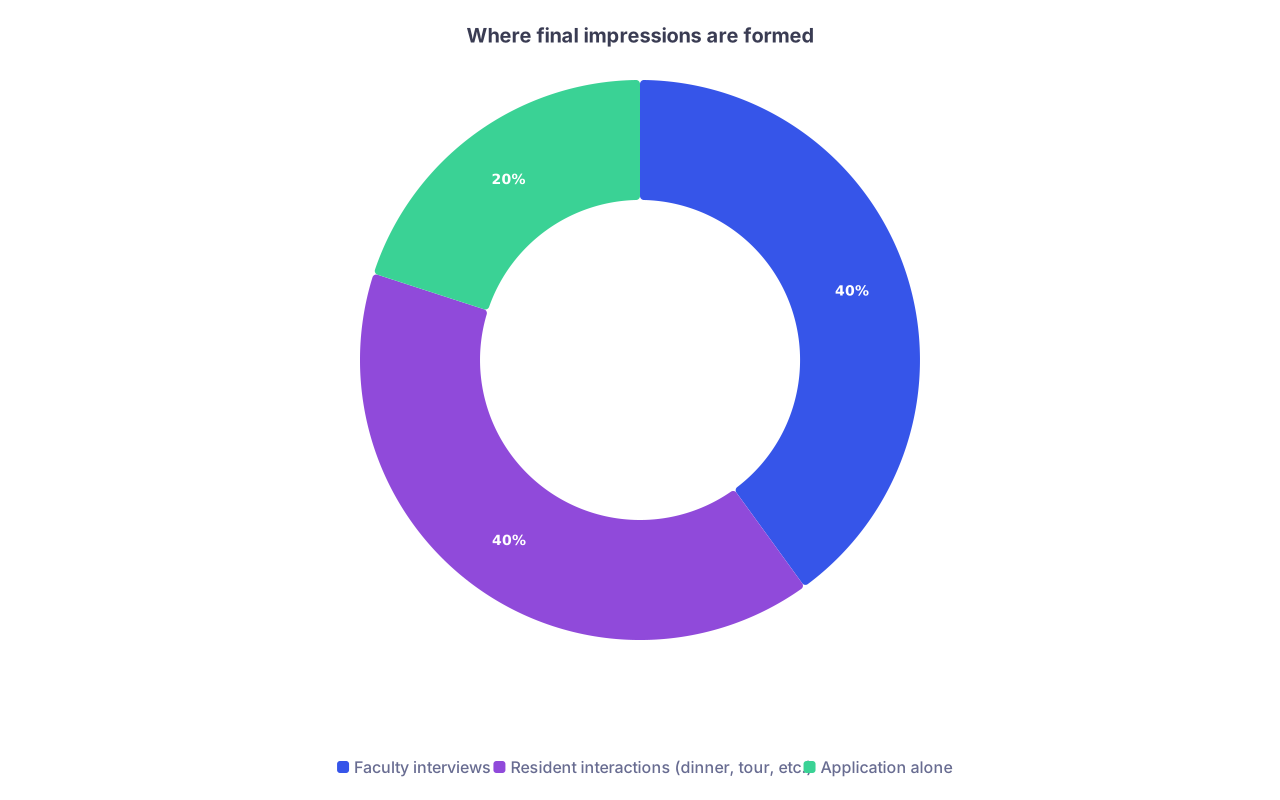
| Category | Value |
|---|---|
| Faculty interviews | 40 |
| Resident interactions (dinner, tour, etc.) | 40 |
| Application alone | 20 |
How to Use This Knowledge Without Driving Yourself Crazy
You don’t need to script your dinner persona. You don’t need to memorize “Top 20 Questions To Impress Residents.”
You just need to operate under three assumptions:
- Your behavior around residents counts as much as your behavior in front of attendings.
- Middling applicants are often sorted by vibe, not scores.
- The dinner is a professional event wearing casual clothes.
Treat it like a second interview in jeans and you’ll be fine.
You will forget the specific dinners. You’ll forget which restaurant had the good appetizers and which resident overshared about their divorce. What will stick with you, years later, is not whether the dinner “mattered” in some abstract way, but whether you walked into those rooms acting like the colleague you hoped to become.