
The worst ethical interview question isn’t the one you don’t know the answer to. It’s the one where you know your answer—and you’re terrified they’ll hate it.
You’re not scared of being clueless. You’re scared of being judged.
You’re imagining it already: some loaded ethics scenario, your stomach dropping halfway through the prompt, realizing, “Oh no. I completely disagree with where this is going. If I answer honestly, I’m done.”
Let me tell you the ugly truth first: you will eventually face ethical situations in medicine where your instinct doesn’t match someone else’s—an attending, a policy, a family, another resident. Interview questions are just the practice round.
The good news? Disagreeing with the premise of an ethical question does not tank your interview—if you handle it like a grown physician instead of a panicked applicant.
Let’s walk through how to do that without self-destructing.
The Nightmare You’re Afraid Of (And What’s Actually Going On)
You’re probably playing some version of this in your head:
- They give you a scenario that feels morally wrong to you.
- Or the “expected” answer (in your mind) clashes with your values, politics, religion, whatever.
- You either:
- Tell the truth and they silently label you as “not a fit”
- Or you fake it and they somehow know you’re lying and punish you for it
Here’s the part you’re overestimating: interviewers aren’t actually expecting one “correct” ethical answer 99% of the time.
I’ve sat in on the debriefs. What they actually care about is whether you can:
- Stay calm and think under pressure
- Recognize complexity instead of giving some rigid, black‑and‑white take
- Prioritize patient safety and autonomy
- Show you can work in a team where people disagree
- Avoid sounding reckless, cruel, or totally unaware of real-world constraints
They’re not reading your soul. They’re reading your process.
So no, getting a question you strongly disagree with is not a death sentence. But you do need a script for how to walk through it.
First Rule: Buy Time Before You Blow Up
The second you feel your chest tighten and your brain go “Absolutely not,” you’re at risk of doing one of three things that actually do hurt you:
- Getting defensive
- Getting flustered and incoherent
- Giving a short, rigid answer that sounds judgmental
You need a buffer. Use language that slows you down without sounding fake.
Example phrases to keep in your pocket:
- “That’s a really challenging scenario—can I take a moment to think it through out loud?”
- “I see a couple of different values in tension here. Let me lay out how I’d approach it.”
- “I might interpret this situation a bit differently; I’ll explain my thinking.”
You’re not stalling because you’re clueless. You’re framing your response as thoughtful instead of reactive.
That alone already separates you from the “uhhh I guess I’d…?” answers that interviewers forget in 10 seconds.
How To Disagree Without Setting Off Alarm Bells
Let’s say you get something like:
“You’re told to discharge a patient you think is unsafe to go home because the team ‘needs the bed.’ What do you do?”
And in your head you’re screaming, “That’s insane. I would never send them home. This is everything wrong with the system.”
You can’t just blurt that out. But you also don’t have to cave.
Here’s a structure that works when you disagree with the whole setup:
Name the core ethical conflict.
“This pits patient safety and beneficence against system pressures like bed availability and resource constraints.”State your primary duty clearly.
“My first obligation is to the patient’s safety.”Acknowledge the system reality without endorsing it.
“I understand hospitals face capacity issues, but that doesn’t override unsafe medical decisions.”Walk through your steps, not just your opinion.
- Reassess and document your concerns
- Discuss with senior resident/attending
- Explore alternatives (observation, different unit, social supports)
- Escalate if needed using institutional pathways
Show you can disagree professionally with authority.
“If I still felt discharge was unsafe after discussing it, I’d respectfully but firmly express that and involve appropriate channels rather than quietly going along.”
Same content as “That’s wrong,” but instead of sounding rebellious or naive, you sound like… a responsible physician.
That’s what they’re scanning for.
What If the Question Clashes With Your Personal Values?
This is the one that really twists people up.
You’re thinking about stuff like:
- Reproductive care
- End-of-life decisions
- Conscientious objection
- Gender-affirming care
- Resource allocation to patients whose behavior you disapprove of
You’re afraid the interviewer is silently asking:
“Do your values align with mine politically and morally?”
Sometimes they are. Most of the time, they aren’t. They’re asking:
“Can this person care for patients respectfully, even when their personal values are triggered?”
Here’s the line you cannot cross in an interview:
Anything that suggests you’d abandon, punish, or shame a patient because you disagree with their choices or identity.
If you hold a belief that might limit what you personally can do (for religious or moral reasons), the safest way to frame it:
- You respect patient autonomy
- You don’t block access to legal, standard-of-care treatments
- You’re willing to transfer care appropriately if you can’t in good conscience participate
- You don’t judge or mistreat the patient
For example:
“Personally, I might struggle to directly participate in [X], but patients deserve unbiased information and access to appropriate care. In that situation, I’d be transparent with my attending, ensure the patient gets timely care from another team member, and treat the patient with the same compassion and respect as anyone else.”
If your answer sounds like, “I’ll force my views on the patient” or “I’ll subtly sabotage their options,” that’s where you’re in trouble.
You can disagree ethically. You can’t violate patient autonomy and dignity and expect programs to be excited.
How Honest Should You Be, Really?
Let’s cut through the noise: you’re wondering if you should just give them what they want to hear.
Harsh truth: everyone “rounds off” their answers a bit. No one is giving their entire inner monologue in 2 minutes.
But there’s a line between framing and faking.
Ask yourself:
- Would I actually behave this way on the wards?
- If an attending watched me do this, would I be okay defending it?
- If this exact quote showed up in my file, would I feel sick or relieved?
If you’re completely inventing a value system just to look “correct,” you’re not just being inauthentic. You’re setting yourself up to match somewhere whose culture will make you miserable.
So aim for this:
- 80–90% genuine belief
- 10–20% polished, professional framing
You can soften edges without lying about who you are.
The Landmines That Do Hurt You
Here’s what actually makes ethical disagreement dangerous in an interview—not your core position, but how you carry it.
Red flags interviewers really do talk about:
- “They were very rigid—like there was only one right answer and everyone else was wrong.”
- “They seemed more focused on being morally superior than on helping the patient.”
- “They never mentioned working with the team or asking for help.”
- “They got weirdly emotional/angry about the scenario.”
- “They ignored policy and law completely and just ‘went with their gut.’”
Compare two responses to a tricky question about a patient refusing life-saving treatment:
Bad vibe:
“Well, it’s obvious—of course I’d convince them. Letting them die would be wrong. I’d do whatever it takes to make them accept treatment.”
Better vibe:
“I’d want to understand why they’re refusing—fear, mistrust, misunderstanding, cultural or religious reasons. I’d explore those first, involve appropriate team members like social work or chaplaincy, and make sure they truly understand the risks. But if a competent patient continues to refuse after all that, I have to respect their autonomy, even if it’s really hard emotionally.”
Same basic belief: you want them to live. But the second one sounds like someone I’d actually trust with patients.
A Simple Framework You Can Use For Almost Any Ethical Question
When everything feels like it’s spinning, fall back on structure. Here’s one that works even when you hate the premise of the question:
Identify the conflict.
“This scenario pits X vs Y—like patient autonomy vs beneficence, or fairness vs resource limitations.”Prioritize safety and autonomy.
Show that patient safety and respect for their informed choices are your anchor.Consider stakeholders.
Who’s involved? Patient, family, team, hospital, society. Not just you and the attending.Describe what you’d do step by step.
Not just what you believe. Actual actions: who you’d talk to, what you’d clarify, how you’d document.Acknowledge uncertainty.
“This is complex. I’d also seek guidance from my attending/ethics consult/policy.”
This works even when the question is framed in a way you dislike, because you’re not arguing with the hypothetical. You’re showing how you’d operate in real life.
Practice With Stuff You Don’t Agree With (On Purpose)
If you only practice with ethics questions where you already feel comfortable, you’re going to freeze the second you hit one that pokes your values.
Do this instead:
- Grab lists of “tough interview ethics questions” online
- Specifically pick the ones that make you uncomfortable, roll your eyes, or feel cornered
- For each one, force yourself to:
- Identify the ethical principles involved (autonomy, beneficence, justice, non-maleficence)
- Write a first-draft gut reaction answer
- Then rewrite it with the framework above: calmer, structured, team-based, less judgey
You’re basically rehearsing worst-case scenarios so nothing on interview day feels like a total ambush.
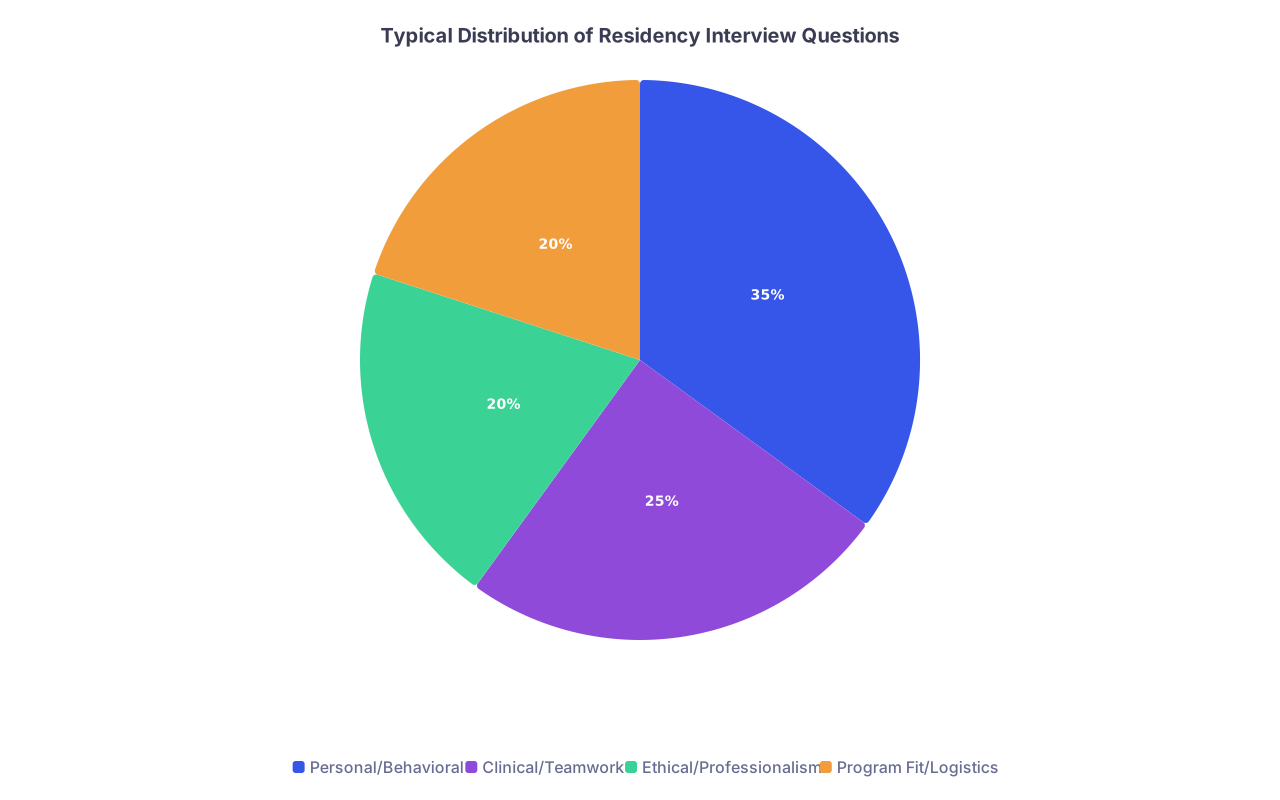
| Category | Value |
|---|---|
| Personal/Behavioral | 35 |
| Clinical/Teamwork | 25 |
| Ethical/Professionalism | 20 |
| Program Fit/Logistics | 20 |
Look at that rough breakdown. Ethics questions are maybe 1 out of 5. Not your whole interview. Just one piece. Don’t give them more power in your head than they actually have.

How Programs Actually Judge Your Answer (The Boring Reality)
Programs aren’t running your answer through some secret political filter. They’re asking three boring questions:
Can this person be trusted with vulnerable patients?
Do they sound safe? Do they understand basic ethics principles? Do they respect autonomy?Can this person function on a medical team?
Do they escalate concerns appropriately? Are they capable of disagreement without turning it into drama or rebellion?Is this person rigid or reflective?
Do they acknowledge nuance? Are they willing to say “I’d ask for help” instead of playing hero?
If your answer hits those three, even if you disagree with how the question was framed, you’ll be fine.

| Step | Description |
|---|---|
| Step 1 | Hear Scenario |
| Step 2 | Pause & Name Conflict |
| Step 3 | State Core Duties: Safety & Autonomy |
| Step 4 | Lay Out Stepwise Plan |
| Step 5 | Involve Team/Ask for Help |
| Step 6 | Acknowledge Complexity |

A Quick Reality Check Before You Spiral
You’re catastrophizing something that, in most interviews, is:
- A small part of the total evaluation
- Graded more on tone and reasoning than exact position
- Often remembered only if it was extremely good or extremely bad
You’re not going to fail an entire interview because you said, “I’d ask my attending and ethics for guidance” instead of delivering a perfect mini-bioethics lecture.
You could hurt yourself if you:
- Sounded dismissive of patients
- Sounded like you don’t respect laws or policies at all
- Sounded like you’d pick fights with attendings instead of escalating properly
- Or gave a flippant, unserious answer
But the fact that you’re anxious about this already puts you miles away from the people who answer ethics questions like they’re doing stand-up.
You care too much, not too little. That’s fixable.

| Scenario Type | Weak Response | Stronger Response |
|---|---|---|
| Unsafe discharge for bed space | “I’d refuse and never discharge them.” | “I’d reassess, document concerns, discuss with attending, and escalate through proper channels if needed.” |
| Patient refusing life-saving care | “I’d convince them no matter what.” | “I’d explore reasons, ensure understanding, involve team, and ultimately respect a competent refusal.” |
| Personal moral conflict | “I just wouldn’t participate in that.” | “I’d disclose my limits, ensure patient access to unbiased care via another provider, and treat them respectfully.” |
| Limited organ availability | “Give it to the one who deserves it more.” | “I’d follow established allocation criteria to ensure fairness and transparency, not my personal judgment.” |
FAQs (The Stuff You’re Still Stressing About)
1. What if I completely freeze and can’t think of anything “ethical” to say?
Then say that. Not literally “I froze,” but:
“I’m thinking through a couple of different angles here—let me walk through my thought process.”
Then start with basics: safety, autonomy, team, policy. You don’t need fancy ethics jargon. You need a calm, logical sequence.
2. What if my answer is the total opposite of what the interviewer personally believes?
Sometimes that happens. Your safety net is how you say it. If you’re respectful, thoughtful, and emphasize patient rights and team-based care, most decent interviewers will respect you even if they disagree. If someone dings you for calmly held, patient-respecting beliefs… that’s probably not a program you’d thrive in anyway.
3. Can I admit “I don’t know” in an ethical question?
You can’t just say “I don’t know” and stop. You can say:
“I don’t know the exact policy or legal standard off the top of my head, but here’s how I’d approach it…”
Then show you’d ask for help, involve seniors, check guidelines, and not wing it.
4. What if my real answer is kind of harsh and I’m afraid to say it?
Ask yourself: is it actually harsh, or are you just scared to be honest? If your real answer involves judging patients, ignoring autonomy, or “teaching them a lesson,” then yes—that’s a problem, not just a framing issue. You need to examine that, not just hide it. But if your instinct is just blunt, you can keep your core stance and add empathy and structure around it.
5. Are they secretly testing my politics with these questions?
They’re testing your professionalism and how you treat patients, not your party affiliation. If your beliefs translate into denying care, shaming patients, or refusing to respect legal rights, that’s a problem anywhere. If your beliefs coexist with respect, access, and compassion? You’re likely fine even in a politically mixed environment.
6. How do I practice without just memorizing fake-sounding answers?
Record yourself answering 5–10 real ethics questions. Then listen back and ask:
- Do I sound rigid or open-minded?
- Do I mention the team, policy, or asking for help?
- Do I clearly protect patient safety and autonomy?
Rewrite the ones that feel off, then re‑record. You’re not memorizing scripts—you’re building reflexes and phrasing you can lean on under stress.
Open a blank document right now and write out two ethical questions you strongly disagree with—either in framing or content. Then force yourself to answer each using the five-step framework (conflict, safety/autonomy, stakeholders, steps, ask for help). Don’t wait for interview day to find out how you react when a question hits a nerve.