
The way most applicants use Step 2 CK in ERAS is lazy and wasteful. A high score just sits there as a number. A low score gets buried and ignored. Both are mistakes.
If you treat Step 2 CK like a static line on your application instead of a strategic tool, you are leaving interviews on the table.
Let me walk you through how to weaponize your Step 2 CK in ERAS and in the interview room—whether your score is stellar, average, or shaky.
1. Understand What Programs Actually Use Step 2 CK For
Programs are not staring at your score wondering if you know renal phys. They use Step 2 CK for three main things:
- Screening and risk assessment
- Prediction of board passage
- Signal of trajectory and professionalism
You need to speak to all three.
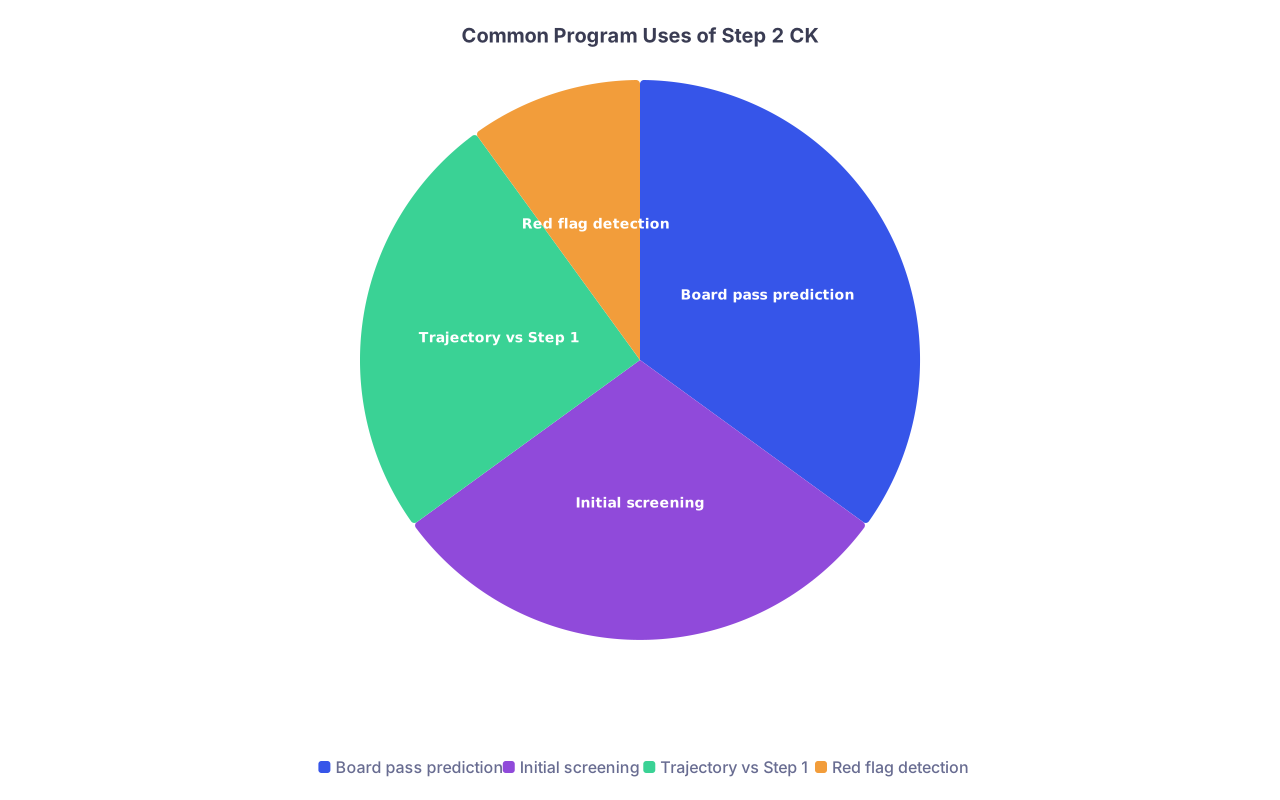
| Category | Value |
|---|---|
| Board pass prediction | 35 |
| Initial screening | 30 |
| Trajectory vs Step 1 | 25 |
| Red flag detection | 10 |
Here is how it plays out in real life:
- The coordinator pulls Step scores into a spreadsheet. Filters by a cutoff (sometimes hard, sometimes soft).
- Faculty skim for:
- Consistency with Step 1
- Timing (late score release, failures, big jumps or drops)
- Any obvious risk of failing specialty boards later
So your job is not just “have a good score.” Your job is:
- If the score is strong → Make sure it is impossible to miss and directly tied to your strengths.
- If the score is average → Contextualize it and then move the conversation quickly to your clinical performance and fit.
- If the score is weak → Get ahead of the concern, show improvement, and shift focus to everything else that proves you are safe and trainable.
You cannot control the number anymore. You can absolutely control the narrative around it.
2. Decide Your Step 2 CK Strategy Based on Your Situation
Different scores demand different tactics. Use this as your decision tree.

| Step | Description |
|---|---|
| Step 1 | Know your Step 2 score |
| Step 2 | Leverage as major asset |
| Step 3 | Use as clear strength |
| Step 4 | Support other strengths |
| Step 5 | Need mitigation strategy |
| Step 6 | Unusual situation |
| Step 7 | Score 250 or higher? |
| Step 8 | Score 240-249? |
| Step 9 | Score 230-239? |
| Step 10 | Below 230 or Fail? |
If Step 2 CK is 250+
Your strategy: Make it a marquee asset.
Most applicants with 250+ bury it in a bullet point. Wrong.
You should:
- Mention it explicitly in your personal statement or experiences when relevant.
- Tie it to your work ethic, consistency, and readiness for a competitive specialty.
- Use it to offset a weaker Step 1, lower GPA, or non-traditional background.
Phrase you might use in an ERAS experience description:
“While balancing a full sub-internship schedule, I maintained a dedicated, structured study plan for Step 2 CK, ultimately scoring a 255, reflecting both my stamina and my comfort with complex clinical reasoning.”
Short, not braggy, but clearly points the reader to that number.
If Step 2 CK is 240–249
Your strategy: Clear strength, not the whole story.
You have a solid, competitive score. Programs see you as likely to pass boards. Now you need to show you can also:
- Work in a team
- Handle clinical volume
- Communicate like a normal human
Use Step 2 CK as one data point in a theme of “reliable and consistent.”
Example line in the MSPE or letter (what you hope your writers echo):
“Her strong performance on Step 2 CK (243) is consistent with her clinical evaluations and the initiative she showed on our medicine clerkship.”
You reinforce consistency, not one-off scoring talent.
If Step 2 CK is 230–239
Your strategy: Solid, supportive, but not your headline.
This range will not get you filtered out of most programs in IM, Peds, FM, Psych, Neuro, etc. For highly competitive specialties, it is middle of the pack but workable with other strengths.
Focus on:
- Strong clinical comments
- Honors on core rotations
- Thoughtful letters
Do not oversell the score. Use language like:
“My Step 2 CK performance (233) aligned with my clinical strengths in problem-based reasoning, particularly on medicine and neurology.”
You acknowledge it, tie it to clinical skills, and move on.
If Step 2 CK < 230 or you had a fail
Your strategy: Mitigate and redirect.
Hiding a low score is a fantasy. They will see it. Your choice is:
- Let them create their own negative story
- Or you get in front of it and show exactly how you responded
You need three things:
Evidence of improvement or stability
- Shelf scores improving over time
- Strong sub-I evals
- Any later standardized exam that went better (COMLEX Level 2, in-service later)
Concrete behavior change
- Different study approach
- Seeking help early
- Time management corrections
Direct, concise ownership
- One or two sentences MAX in personal statement or interview. No long excuses.
Sample framing in a personal statement paragraph (tucked in the middle, not the opening):
“My Step 2 CK score does not reflect the level of preparation and performance I have since demonstrated clinically. After underperforming relative to my Step 1 practice scores, I met with our learning specialist, changed my study structure, and focused intensely on my weaker systems. The same disciplined approach contributed to honors on my medicine and surgery sub-internships and strong shelf performance in the months that followed.”
You show ownership, adjustment, and recovery. Then stop talking about it unless asked.
3. How To Highlight Step 2 CK Correctly in ERAS
Most people think “It is already entered in ERAS, what else can I do?” A lot, actually.
Your goal: Make Step 2 CK reinforce the story you want them to see.
3.1 The ERAS Sections Where You Can Use Step 2 CK
There are four main levers:
- Scores section – automatic, but the interpretation is up to you
- Education / Medical school – timing and explanation if delayed
- Experiences – short, contextual mentions when relevant
- Personal Statement – strategic framing, not score dumping
Let us go piece by piece.
Scores Section
You cannot “spin” this part, but you can plan around it.
If you are applying with:
Only Step 1 (pass/fail) and Step 2 CK pending
- For competitive specialties: you are at a disadvantage if everyone else already has Step 2 CK in. Your strategy should be to:
- Take Step 2 as early as reasonably possible.
- Tell letter writers your target timeline and performance (so they can reference your strong clinical reasoning without exact numbers).
- Update programs as soon as the score posts.
- For competitive specialties: you are at a disadvantage if everyone else already has Step 2 CK in. Your strategy should be to:
Both scores in
- Check for obvious questions they will have:
- Big jump (e.g., Step 1 barely passed, Step 2 is 245)
- Big drop (e.g., 250 → 230)
- Very late Step 2 date (after sub-I season)
- Check for obvious questions they will have:
Any irregular pattern needs a short, honest internal script ready for interviews.
Education / Medical School Section
If Step 2 CK was delayed or you had a leave, remediation, or fail, this section plus the MSPE will flag it.
Your move:
- Put the accurate dates.
- Do not over-explain here. Save the explanation for:
- Personal statement (if central to your story)
- Or, more commonly, the interview.
Experiences Section
This is where thoughtful applicants separate themselves.
You do not write: “Scored a 257 on Step 2 CK” under some random research entry. That looks insecure.
You do use Step 2 CK like this:
Under a tutoring, TA, or peer teaching role:
“Developed and taught review sessions for MS2 students preparing for clinical clerkships and Step 2 CK, using my own preparation (Step 2 CK 249) to design high-yield cases and question-based discussions.”
Under a study group leader or curriculum committee experience:
“Coordinated weekly case-based review sessions that helped our group improve our internal medicine shelf and Step 2 CK performance; my own score (243) reflected the strength of this structured, collaborative approach.”
Key principles:
- Step 2 CK mentioned only where it is obviously relevant
- The focus is on behavior and contribution, not just the number
Personal Statement
This is where most people either gush about their score or pretend it does not exist. Both are clumsy.
Use these rules:
- If 250+ and competitive specialty (Derm, Ortho, ENT, etc.):
- One, maybe two sentences connecting your score to your preparation and commitment.
- If solid but not eye-popping (230–249):
- Optional to mention. Focus more on clinical comments, sub-Is, and specific patient encounters.
- If lower or with a fail:
- Brief, direct context. Clear pivot to what you changed and how you performed afterward.
Never open your personal statement with a test score. That screams misplaced priorities.
4. Specialty-Specific Step 2 CK Positioning
Different specialties read Step 2 CK through different lenses. You should match your emphasis accordingly.
| Specialty Type | Typical Step 2 Focus |
|---|---|
| Highly Competitive (Derm, Ortho, ENT, Plastics) | Score as screening and ranking tool |
| Moderately Competitive (EM, Anesthesia, Neuro) | Score plus clerkship performance |
| Less Competitive (FM, Psych, Peds) | Score as safety check, then fit |
| Medicine/Prelim Surgery | Balanced: score plus work ethic |
Competitive Surgical and Procedural Specialties
- 250+ → Push this as a major asset in:
- ERAS experiences (where relevant)
- Interview answers about preparation and work ethic
- 240–249 → Solid but you need:
- Strong letters from surgeons / specialty faculty
- Honors in relevant rotations
- Below that → You must:
- Dominate on sub-Is
- Get faculty champions
- Apply broadly and realistically
In interviews, if they mention your score, respond with confident, brief ownership:
“I treated Step 2 CK like a dry run for boards—dedicated schedule, lots of questions, balanced with my surgery sub-I. I was happy with the 252 and felt it reflected the way I like to approach complex clinical problems.”
You make it sound planned, not lucky.
Core Care Specialties (IM, Peds, FM, Psych)
They care about:
- Can you pass boards? (your Step 2 answers that)
- Are you reliable in the hospital/clinic? (your evals and letters answer that)
- Can we stand being on call with you? (interview answers and vibe)
If your Step 2 is:
240 → It helps for academic or top programs. Mention selectively.
- 220–239 → Usually fine. Emphasize:
- Fit with their patient population
- Longitudinal experiences
- Continuity of care, communication skills
- <220 → You must show:
- Clear improvement trend
- No pattern of failing standardized tests
- Proactive professionalism around growth
5. How To Talk About Step 2 CK in Interviews Without Sounding Awkward
You need two scripts:
- If your score is a strength
- If your score is a concern
And you need both in two formats:
- 1–2 sentence “quick mention”
- 30–45 second explanation for deeper questions
When Step 2 CK Is a Strength
Quick mention example (in answer to “Tell me about a challenge” or “How do you handle workload?”):
“During my medicine sub-I, I was balancing full clinical days with Step 2 CK prep. Creating a rigid weekly schedule and sticking to daily question blocks let me give patients my full attention while still scoring a 248 on Step 2. That experience convinced me I can sustain that kind of structured effort during residency.”
You casually insert the score in a story about your process.
Longer explanation (if they directly bring it up):
“I approached Step 2 CK as a test of consistency rather than cramming. I started four months out, did 40–80 UWorld questions most days, and focused heavily on missed questions and weak systems. By the final month I was simulating full days – rounds, notes, then questions at night – which is similar to how I expect to study during residency. The 252 felt less like a surprise and more like a reflection of that routine.”
You emphasize habits, not luck or innate brilliance.
When Step 2 CK Is a Weakness or Question Mark
Your structure here:
- Acknowledge
- Explain briefly (no drama)
- Show what you changed
- Show new evidence of success
- Pivot back to your strengths
Example, short version:
“I was disappointed in my Step 2 CK score. I realized my approach was too passive—too much reading, not enough timed practice. Since then I have changed how I prepare: heavy question usage, earlier review of weaknesses, and closer work with our learning specialist. That shift contributed to my strongest clinical evaluations on medicine and my sub-I, and I intend to bring the same structure to in-service exams in residency.”
Longer version if they push:
“My Step 2 CK score is below what I expect of myself. I made two key mistakes: I underestimated how much clinical time would cut into my study hours, and I did not start timed blocks early enough. After that experience, I sat down with our learning specialist, mapped out my schedule, and started doing 40–60 timed questions on clinic days and 80–100 on lighter days. I also created a simple error log that I reviewed weekly. The result was a clear upward trend in my shelf exams and strong feedback on sub-I about my clinical reasoning. I know I will need that same level of structure for in-service training exams here.”
You do not grovel. You explain like an adult who adjusted and improved.
6. Use Step 2 CK to Show Trajectory, Not Just a Snapshot
Program directors care about trajectory. They want to know: Are you on an upward path or a downward slide?
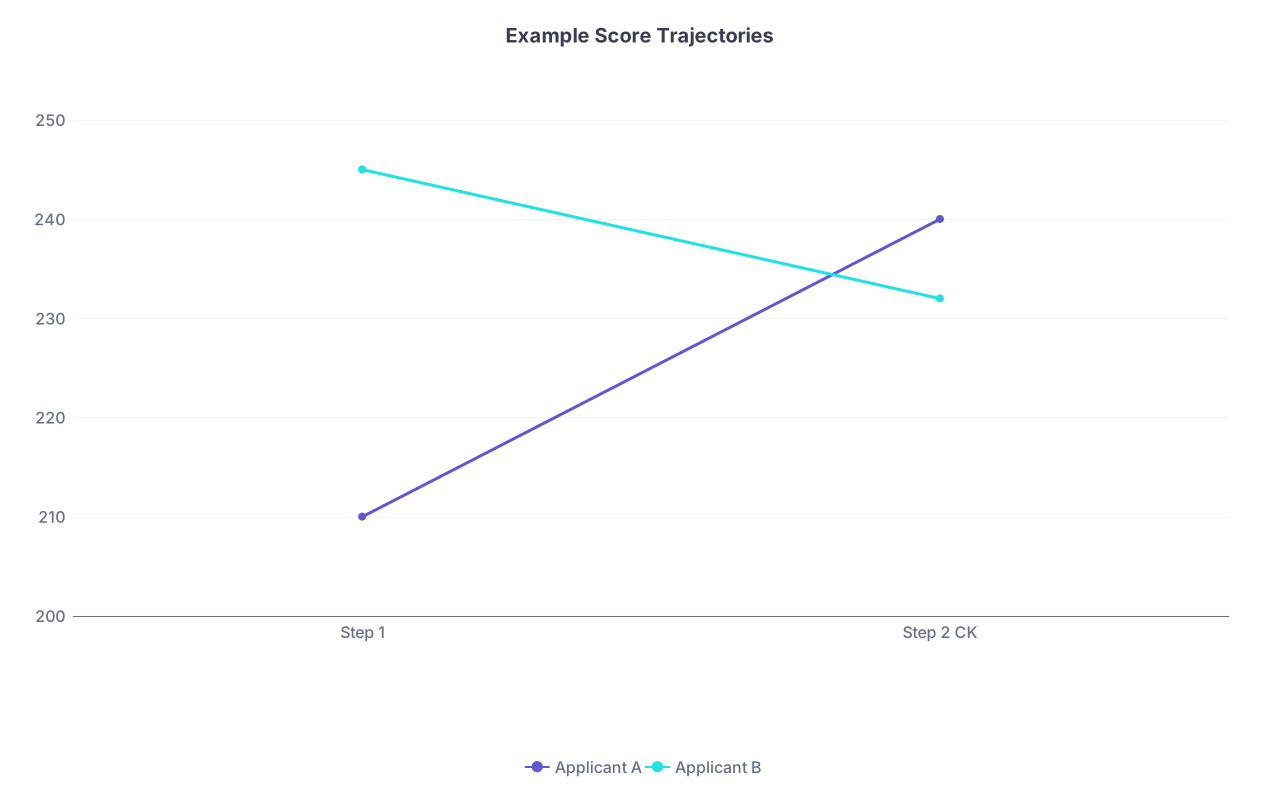
| Category | Applicant A | Applicant B |
|---|---|---|
| Step 1 | 210 | 245 |
| Step 2 CK | 240 | 232 |
If you improved from Step 1 to Step 2:
- Mention it directly but modestly:
“My Step 2 CK score represented a significant improvement from Step 1 and reflected the clinical reasoning strengths I developed on rotations.”
- Have a concrete reason for the improvement:
- Better time management
- More question-focused
- Matured clinically
If you dropped:
- Do not panic. Many strong applicants do.
- Your explanation should:
- Avoid blaming external factors only (boards do not care if you had a cold).
- Emphasize what you learned about your limits and how you will prepare for actual specialty boards.
Model answer:
“My Step 1 performance was stronger than my Step 2 CK, which initially frustrated me. Looking back, I overloaded my schedule during Step 2—too many extracurricular commitments on top of rotations and prep. The main lesson for me was that I need to guard dedicated study time more carefully. For specialty boards I plan to build in earlier, protected prep time rather than trying to layer studying on top of everything else at the last minute.”
You turn a drop into a lesson in judgment and planning.
7. Tactical Moves You Can Take Right Now
You want concrete steps. Here is what you should actually do this week.

Step 1: Classify Your Score
Put yourself into one of these categories:
- 250+
- 240–249
- 230–239
- <230 or fail
Then decide:
- Am I going to spotlight this score?
- Just let it be a supporting detail?
- Or do I need a mitigation plan?
Step 2: Edit Two ERAS Experiences
Pick two experiences where Step 2 CK is legitimately relevant:
- Tutoring
- Study groups
- Curriculum work
- Leadership roles related to academics
Add one concise line to each that:
- Mentions your role
- Connects to performance or preparation
- Optionally mentions the score, if it helps your narrative
Step 3: Rewrite One Paragraph of Your Personal Statement
Look at your current draft and:
- If your score is a strength:
- Add a single sentence that links Step 2 CK to your habits, not your ego.
- If your score is a weakness:
- Add a 2–3 sentence acknowledgment + correction + evidence paragraph in the middle, not at the beginning or end.
Step 4: Script and Practice Two Interview Answers
Out loud. Not in your head.
- “How did you prepare for Step 2 CK?”
- “Can you talk about your Step scores?” (especially if there is an issue)
Record yourself once on your phone, listen, and cut any rambling, excuses, or repeated phrases.

Step 5: Align Your Letter Writers
If you have a strong Step 2 CK:
- Tell your letter writers your score and what you hope it reflects:
- Consistency
- Work ethic
- Clinical reasoning
If you have a weaker Step 2 CK:
- Ask them to highlight:
- Your clinical reliability
- Growth trajectory
- Capacity to handle complex patients safely
Their narrative should support the way you are framing your score, not contradict it.

Open your ERAS draft right now and find the last place you mention exams or studying. Ask a hard question: does that sentence make your Step 2 CK an asset with a clear story, or is it just a number sitting in a box? Then change one sentence today so that your score actively works for you instead of just existing on the page.