
The idea that you must switch specialties because of one Step 2 CK score is flat-out wrong.
I know that’s not what your brain is saying right now. Your brain is doing the full disaster movie: “Score below ortho/derm/ENT/EM target → no interview → no match → forced into a random backup specialty → life ruined.”
Let’s slow that spiral down and actually talk about what “below target” means, how programs actually look at these scores, and when switching fields is smart vs premature self-sabotage.
First: “Below Target” Does Not Mean “No Chance”
Here’s the ugly truth nobody puts on Reddit: those “target” Step 2 scores you see floating around are usually:
- Applicants flexing their 260+ and pretending it’s “average”
- Program reputation + cherry-picked data
- Old data from pre-pass/fail Step 1 era
You’re probably comparing your real, imperfect human score to someone’s decontextualized brag.
To ground this a bit:
| Specialty | Typical Competitive Range | Still Interviewed Around* |
|---|---|---|
| Dermatology | 255+ | 240–250 |
| Orthopedic Surgery | 250+ | 235–245 |
| ENT | 250+ | 235–245 |
| EM | 240+ | 225–235 |
| Internal Med (Acad) | 240+ | 225–235 |
*Interview ranges assume strong other parts of the app: letters, clinical grades, research, school reputation, etc.
So if you’re sitting there with, say, a 238 when you thought you “needed” a 250 for EM, your brain goes: “Game over.” That’s not how PDs think. They think in tradeoffs:
- Lower Step 2 but honors in core clerkships?
- Lower Step 2 but strong home EM letter?
- Lower Step 2 but tons of research, leadership, or life experience?
I’ve watched people match EM with 225–230. I’ve seen people match ortho with scores slightly below “targets” because they had killer letters, away rotations, and were clearly someone attendings wanted around at 3 a.m.
Not common. But not fantasy.
How Programs Actually Use a “Below Target” Step 2
Let me be blunt: a low-ish Step 2 hurts. It just doesn’t hurt in the cartoon way your brain is imagining.
Here’s the rough flow in many programs’ heads:
First pass:
They auto-screen based on some Step 2 cut (often 220–230-ish for competitive fields, sometimes higher). If you’re above that: you’re in the pile. If you’re below: it’s rough.Second pass (the real one):
Now they look at:- Clinical grades (especially in the specialty and medicine/surgery)
- Narrative comments: “top 5% student I’ve worked with in 10 years”
- Home/away rotation performance
- Research and commitment to the field
- Personal statement coherence
- Red flags (fails, professionalism issues, major gaps)
Context step: A 232 at a place known for tough grading/hard exams + honors everywhere might be more impressive than a 248 with mediocre clinical comments.
Programs don’t think: “Below 245? Trash.” They think: “Score is a little soft for this specialty. Does the rest of the app scream ‘we should look past it’?”
So no, a single sub-target Step 2 does not mean “switch fields or you’re delusional.” It means: the rest of your application suddenly matters a lot more.
When Switching Specialties Is Rational (Not Panic-Driven)
There are times where pivoting is actually the smart, grown-up move. The trick is figuring out whether you’re:
- Making a strategic adjustment
or - Panic-quitting your dream before anyone even judges your actual file
I’d say switching fields starts making sense if:
You’re below most programs’ hard cutoffs.
Not “Reddit cutoffs.” Actual cutoffs. That usually means:- Sub-220 for many competitive fields
- Sub-230 + also weak clinical grades and no research in that field
You have nothing else in that specialty to compensate.
No aways. No strong letters. No research. No consistent story of interest. Just vibes.You realize you kinda liked the idea of the prestige more than the day-to-day reality.
Common with derm, plastics, ENT. If you’re honest and realize you don’t actually care about the work as much as you thought, then yes—this may be a good moment to course-correct.Your advisors—plural, not just one—are clearly worried.
Not “eh, it’ll be tight but you can try.” I mean:- “I really think you should consider dual applying”
- “I’d be uncomfortable telling you to go all-in only on this specialty”
What I don’t want is you switching based solely on vibes:
“I saw someone on SDN say you need 255 for EM now, I have a 236, so I guess I’m doomed.”
No. That’s not a data point. That’s a panic grenade.
If you’re on the edge, there’s a middle path that almost nobody explains well: dual applying.
Dual Applying: Not Selling Out, Just Being Strategic
Let’s talk about the uncomfortable but very real strategy a lot of people use: applying to your dream specialty and a more reachable one.
A lot of people feel weird about this. Like it means they “didn’t believe in themselves.” What it actually means is they understood risk.
Here’s the basic logic:
- Primary specialty: the one you actually want (even if it’s competitive)
- Secondary: something you can live with, where your score is less of an issue

| Step | Description |
|---|---|
| Step 1 | Step 2 CK Below Target |
| Step 2 | Strongly Consider Switching Fields |
| Step 3 | Apply Primary + Consider Dual Apply |
| Step 4 | Dual Apply or Switch |
| Step 5 | Talk to Advisors |
| Step 6 | Above Hard Cutoff? |
| Step 7 | Other Application Strengths? |
If your Step 2 is below “ideal” but above most cutoffs, dual applying gives you:
- A real shot at your top choice
- A safety net if the interview season goes badly
- A way to sleep at night when you’re refreshing your email 40 times/day in November
Does it add work? Yes. More personal statements, more interviews, more mental gymnastics about how to rank. But it’s often better than nuking your dream specialty on day one out of fear.
How to Patch a “Soft” Step 2 CK in Your Application
You can’t change the number. But you can change the story around it.
Here’s where the anxious brain usually goes: “My score is low, I’m cursed, nothing matters.” The people who match with “meh” scores do the exact opposite. They get surgical about strengthening every other piece.
Focus hard on:
Clinical performance and letters
If your Step 2 is below the specialty’s typical range, your clinical story needs to scream:- “This person is legit on the wards”
- “I would trust them with my patients”
- “They show up, they learn fast, they don’t crumble”
That means on rotations—especially in your specialty—you treat every day like an extended interview. Be early. Stay late. Ask for feedback and actually implement it. Let attendings see you improve.
Away rotations (for competitive fields)
If you’re going for EM, ortho, ENT, surg, etc., a strong away can override a softer score. I’ve heard PDs literally say:“Yeah their score isn’t great, but everyone here loved them. We know exactly what we’re getting.”
Personal statement and narrative coherence
With a weaker score, you can’t afford a generic, “I like helping people” statement. You need a clear story:- Why this field
- What you’ve actually done in it
- What kind of resident you’ll be
- Why your application—with all its bumps—still predicts success there
Program list strategy
Overcompensate with volume and spread:- Don’t just apply to Top 10 Name-Brand Places™
- Lean heavily on mid-tier, community, and newer programs
- Like… heavier than your ego wants
Your pride says “but I go to a good med school.” Your match list doesn’t care. Cast the net.
Honest but not self-sabotaging explanation (if needed)
If your score is way out of line with the rest of your record, some brief context can help. The key word is brief.
Not a page of excuses. A line or two. Maybe in your dean’s letter. Maybe in an advisor call to PDs. But don’t write a Step 2 apology essay in your personal statement.
The Psychological Part: Living With a Number That Feels Like a Verdict
Here’s the part that’s not on any official website: the emotional hangover of a “disappointing” score is brutal.
You’re not just worried about matching. You’re grieving this imagined version of yourself:
- The you who was going to casually drop a 260
- The you who would walk into interview season feeling invincible
- The you who would never have to justify anything
Now you’re stuck thinking, “Programs will see that number and immediately toss me.” Or: “I’m lying to myself thinking I’m competitive.” Or the big one: “I blew my dream because I choked on one exam.”
I’ve watched people let that feeling push them into terrible decisions:
- Abandoning specialties they genuinely loved
- Under-applying “just to save money” because they already assumed they’d fail
- Half-assing Step 2 prep because “what’s the point” (then getting exactly the worse score they feared)
If any of that sounds like you: pause. Don’t make a permanent specialty decision in the first 2–3 weeks after seeing your score. Your brain is not a safe place then.
Instead:
Get 2–3 real data points:
Talk to your school’s dean, a specialty advisor, and a resident/fellow in the field if you can. Ask them straight: “With this score and my record, do you think I should go for it, dual apply, or pivot?”Ask for numbers, not vibes:
“Have you seen someone with a similar profile match this specialty from our school?”
“If I apply here, about how many interviews would you expect me to get if things go okay?”Give yourself permission to grieve and still try:
You can be mad/sad about your score and still build a good strategy around it. Those aren’t mutually exclusive.
You’re Not the First Person Under the “Target” Line
I’ve seen:
- A student with a 225 Step 2 match EM at a strong mid-tier program because they were a rockstar on rotation and had two home letters that basically said “we’d take them in a heartbeat.”
- An ortho applicant with a Step 2 under 240 match after doing three aways and getting “top 10% student” written all over their evals.
- A derm hopeful with a Step 2 “too low” for most academic places pivot smartly into IM with a strong research portfolio, then match derm later through a non-traditional pathway.
Were these people the norm? No. But they were absolutely real.
The consistent pattern: the ones who match with “below target” scores don’t decide their story is over. They decide the test is one annoying but survivable line of their story.
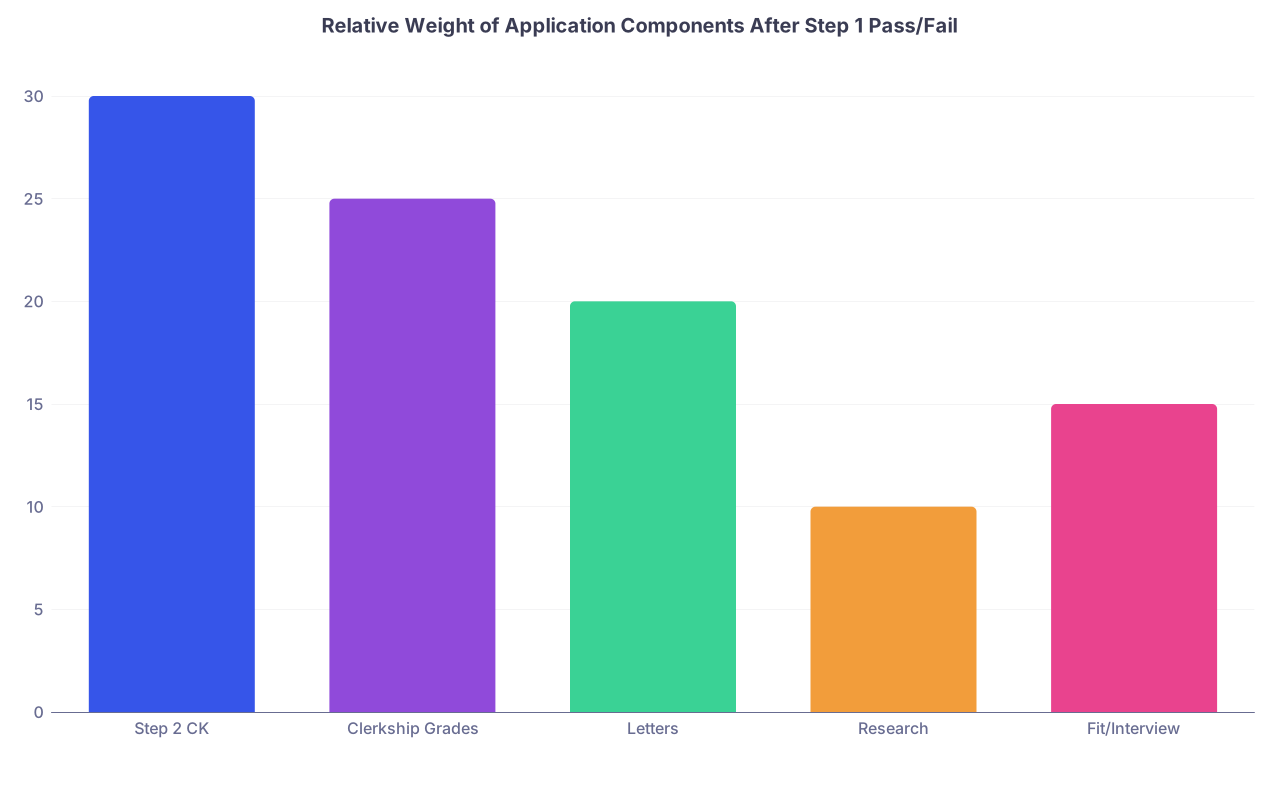
| Category | Value |
|---|---|
| Step 2 CK | 30 |
| Clerkship Grades | 25 |
| Letters | 20 |
| Research | 10 |
| Fit/Interview | 15 |
This is roughly how a lot of PDs describe things now. Step 2 is big. It’s just not everything.
FAQ: Step 2 CK Below Target, Now What?
Is it dishonest to still apply to a competitive specialty if my Step 2 is below their usual range?
No. Dishonesty would be lying about your score. Applying with a weaker score is just reality; programs can always say no. Your job is to give them the chance to say yes if you’d actually want to train there. The key is not to apply only to long-shot programs and call it a “try.”Should I delay graduation to retake Step 2 CK?
Usually no, unless your score is very low (near fail or big red flag range) or you failed. Most programs don’t love delayed timelines unless there’s a strong reason. A jump from, say, 232 to 242 is nice, but it may not justify redoing a year and explaining that forever. Talk to your dean before even considering this.Do programs care more about Step 2 CK than clerkship grades now?
Not universally. Some do, because it’s standardized. But I’ve heard a lot of PDs say: “If their Step 2 is okay enough and their clinical comments are amazing, I care more about how they actually function on the wards.” If your Step 2 isn’t perfect, your mission is to make your clinical evals impossible to ignore.If I dual apply, will programs find out and judge me?
Mostly no. People dual apply all the time. The risk is when your story is completely inconsistent. If your EM personal statement says “I’ve always wanted to be EM and nothing else fits,” and your IM application says the same thing about IM, that’s sloppy. Keep your story honest and specific to each field, and most PDs will just assume you’re being practical.What if I apply, don’t match, and then regret not switching specialties earlier?
Then you regroup with more information. SOAP exists. Reapplication exists. Transitional years exist. It’s not fun, but it’s not the end of the road. I’d rather see you take a real shot at something you care about and adjust with reality than kill the dream based entirely on your own worst-case imagination.
Bottom line, because your brain is probably tired:
- A Step 2 CK below “target” is a problem, not a verdict.
- Switching specialties is one option, but not the automatic or only smart one. Dual applying and strengthening the rest of your app are often better first moves.
- Don’t let anonymous score flexes decide your career. Talk to real humans with real match data, and build a strategy that matches your actual profile—not your anxiety’s version of it.