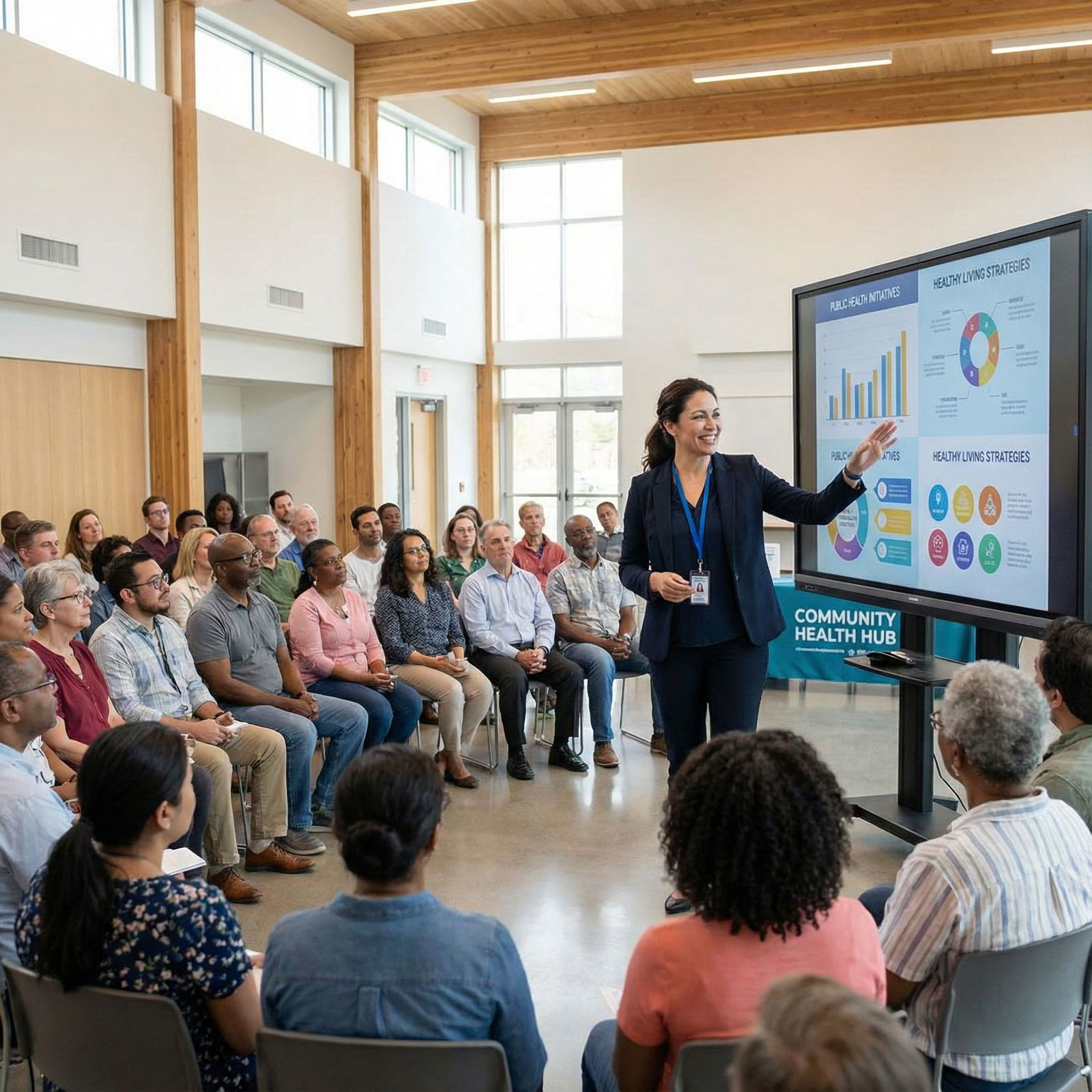
Introduction: Turning Complex Science into Practical Health Knowledge
Health education sits at the intersection of science, Public Health, and everyday life. It is the process of translating dense research findings, clinical guidelines, and epidemiological data into information that real people can understand, trust, and use to protect their health.
For medical students, residents, and early-career professionals, health education and Health Communication offer rich alternative and complementary Career Paths—whether within clinical environments, public health agencies, nonprofits, tech companies, or media organizations. As scientific discovery accelerates and misinformation spreads easily, the need for skilled communicators who can bridge the gap between evidence and behavior has never been greater.
This article explores major career routes in Health Education, outlines the skills and training needed, and shows how these roles drive Community Engagement and improve population health. It is designed for those considering non‑traditional or blended careers that still leverage a strong medical or scientific background.
Why Health Education and Health Communication Matter
Health education is more than patient handouts and school health classes. At its core, it is a strategic approach to behavior change and population health improvement.
The Impact of Health Education on Public Health
Effective health education:
Improves health literacy
People who understand basic health information are better at navigating the healthcare system, adhering to treatments, and recognizing early warning signs of disease.Prevents disease and reduces complications
Programs on vaccination, nutrition, physical activity, and mental health can reduce the incidence and severity of chronic conditions like diabetes, hypertension, and depression.Supports equity and access
Tailored communication helps reach marginalized populations who may distrust healthcare systems, face language barriers, or lack access to preventive care.Combats misinformation
During crises—such as pandemics, natural disasters, or outbreaks of vaccine-preventable diseases—clear, credible health communication can literally save lives.
Who Contributes to Health Education?
Health education and Health Communication are inherently interdisciplinary. Professionals may come from:
- Medicine, nursing, and allied health
- Public Health and epidemiology
- Psychology and behavioral sciences
- Journalism, communications, and media
- Education and instructional design
- Social work and community organizing
Whether your strengths lie in teaching, writing, data analysis, content creation, or direct Community Engagement, there is likely a role that aligns with your interests and training.
Core Career Paths in Health Education and Public Health Communication
Below are several major career tracks that focus on translating science for the public. Many professionals blend roles or move between them over the course of their careers.

1. Health Educator: Direct Teaching and Program Delivery
Health educators work in schools, hospitals, clinics, nonprofits, corporations, and local health departments. They design and deliver educational programs that help individuals and communities adopt healthier behaviors.
Typical Responsibilities
Developing educational programs and curricula
- Designing lesson plans for school-based health classes (e.g., sexual health, substance use prevention)
- Creating workplace wellness programs on topics like stress management or ergonomic safety
- Developing patient education group classes (e.g., diabetes self-management, cardiac rehab)
Delivering workshops, classes, and seminars
- Leading in-person or virtual sessions
- Using interactive strategies like role-play, case discussions, or small-group activities
- Adapting content for different literacy levels and cultural backgrounds
Conducting community outreach
- Organizing health fairs, screening events, or vaccination drives
- Partnering with faith-based groups, schools, or local businesses to reach specific populations
- Collecting feedback from participants to refine programs
Skills and Qualifications
Educational Background
- Typically a bachelor’s degree in Public Health, health education, health promotion, or a related field
- Some roles (e.g., in academic medical centers) may prefer or require a master’s degree
Certifications
- CHES (Certified Health Education Specialist) or MCHES (Master Certified Health Education Specialist) through the National Commission for Health Education Credentialing
- These credentials demonstrate competence and can improve hiring potential and salary
Key Skills
- Strong teaching and facilitation abilities
- Culturally competent communication
- Basic data collection and program evaluation skills
- Comfort using digital platforms (e.g., webinars, learning management systems)
Example Career Settings
- Hospital-based patient educator
- School district health education coordinator
- Corporate wellness program specialist
- Nonprofit health program coordinator
2. Public Health Educator: Population-Level Impact
Public health educators zoom out from individual encounters to focus on communities, regions, or entire populations. They often work in government, NGOs, or large healthcare systems.
Core Responsibilities
Assessing community health needs
- Analyzing epidemiologic data, surveillance reports, and community surveys
- Identifying health disparities and priority issues (e.g., obesity, substance use, maternal mortality)
Designing large-scale public health campaigns
- Developing campaigns on vaccination, tobacco control, reproductive health, road safety, or mental health awareness
- Planning messaging across multiple channels: social media, local radio, billboards, community workshops
Building partnerships and coalitions
- Collaborating with schools, local government, advocacy groups, and healthcare providers
- Facilitating community advisory boards to ensure programs are relevant and acceptable
Evaluating impact
- Measuring changes in knowledge, attitudes, behaviors, or health outcomes
- Using evaluation findings to refine or scale programs
Skills and Qualifications
Educational Background
- A master’s degree in Public Health (MPH) or a closely related field is highly valued, especially for leadership or policy-influencing roles
- Concentrations in health promotion, epidemiology, or health policy are especially relevant
Key Skills
- Data literacy: interpreting epidemiological data, survey results, and dashboards
- Policy awareness: understanding how laws and regulations influence health
- Strong written and verbal communication tailored to diverse stakeholders
- Project management and grant writing
Example Career Settings
- City or state health departments
- Ministries of health or international health agencies
- NGOs focused on HIV/AIDS, maternal-child health, or noncommunicable diseases
- Health systems’ population health departments
3. Medical Writer: Translating Science Across Media
Medical writing is an attractive path for those who enjoy distilling complex research into clear, accurate narratives. Medical writers work with clinicians, researchers, pharmaceutical companies, medical education firms, and patient advocacy organizations.
Types of Medical Writing
Scientific and academic writing
- Manuscripts for peer-reviewed journals
- Abstracts, posters, and conference presentations
- Grant proposals and research summaries
Patient and public education materials
- Hospital handouts, discharge instructions, and decision aids
- Web articles, blogs, and FAQs for health systems or public health websites
- Scripts for educational videos or podcasts
Regulatory and pharmaceutical writing
- Clinical trial protocols, investigator brochures, and informed consent forms
- Regulatory submissions for drug and device approvals
- Risk management plans and safety reports
Medical communications and continuing education
- Content for continuing medical education (CME) modules
- Slide decks for conference talks
- Evidence summaries for guideline committees
Skills and Qualifications
Educational Background
- Degrees in medicine, nursing, pharmacy, biomedical sciences, or communications
- Advanced degrees (MD, DO, PhD, MPH, MSc) can be especially helpful for technical or academic writing
Key Skills
- Excellent writing and editing ability, with attention to accuracy and clarity
- Understanding of research methods, statistics, and evidence grading
- Ability to adapt tone and technical depth to audiences (specialists vs. the public)
- Familiarity with style guides (e.g., AMA Manual of Style, APA)
Getting Started
- Build a portfolio: write blog posts, patient leaflets, or summaries of journal articles
- Consider entry-level roles or freelance projects through medical communications agencies
- Join professional associations like the American Medical Writers Association (AMWA)
4. Health Communication Specialist: Strategy, Media, and Messaging
Health communication specialists focus on how information is crafted, delivered, and received. They combine communication theory, marketing techniques, and Public Health principles to shape behavior and attitudes at scale.
Key Responsibilities
Message and content development
- Crafting clear, evidence-based messages tailored to different demographics and platforms
- Ensuring consistency of messaging across campaigns and channels
Managing communication campaigns
- Designing comprehensive campaigns using social media, TV, radio, print, and community events
- Running A/B tests or using analytics to refine messages and formats
- Coordinating with graphic designers, videographers, and influencers
Crisis and risk communication
- Preparing communication plans for disease outbreaks, disasters, or product recalls
- Responding rapidly with accurate, transparent updates
- Addressing public concerns, rumors, and misinformation
Digital engagement and media relations
- Managing social media accounts, blogs, or newsletters for health organizations
- Drafting press releases and media briefs
- Acting as liaison between health experts and journalists
Skills and Qualifications
Educational Background
- Bachelor’s or master’s degree in health communication, Public Health, journalism, marketing, or related fields
- Courses or training in social marketing, behavioral science, and communication theory are useful
Key Skills
- Strategic thinking and campaign planning
- Data-driven decision-making using web and social analytics
- Strong writing and visual literacy (understanding what makes effective infographics, videos, and posts)
- Comfort working in fast-paced environments, especially during crises
Example Career Settings
- Government health agencies (e.g., CDC, local health authorities)
- International organizations (WHO, UNICEF)
- Large hospital systems and academic medical centers
- Health-focused nonprofits and advocacy groups
- Health-tech startups and app developers
5. Community Health Worker: Trusted Bridge to the Community
Community Health Workers (CHWs) are often the most trusted link between health systems and communities. They typically come from the communities they serve and are uniquely positioned to understand local culture, language, and barriers.
Core Responsibilities
Connecting individuals with services
- Helping patients enroll in insurance, schedule appointments, or find a primary care provider
- Accompanying patients to visits and helping them understand care plans
Promoting health literacy at the grassroots level
- Conducting home visits or neighborhood meetings
- Teaching about chronic disease management, maternal-child health, or preventive care
- Using storytelling, demonstrations, and peer education techniques
Addressing social determinants of health
- Identifying issues such as food insecurity, unstable housing, or transportation challenges
- Linking individuals to social services, legal aid, or community resources
Building trust and cultural competence
- Acting as cultural brokers between communities and formal health systems
- Providing feedback to clinics and Public Health agencies on community needs and perceptions
Skills and Qualifications
Educational Background
- Requirements vary: some roles accept a high school diploma with on-the-job training; others prefer an associate’s or bachelor’s degree in a health-related field
- Many regions now offer formal CHW training and certification programs
Key Skills
- Excellent listening and interpersonal skills
- Cultural humility and respect for community knowledge
- Basic understanding of health conditions and the healthcare system
- Ability to document encounters and communicate with clinical teams
Example Career Settings
- Community health centers and FQHCs
- Public Health departments
- Disease-specific programs (e.g., HIV outreach, maternal-child health initiatives)
- Faith-based or grassroots organizations
Building a Career in Health Education and Public Health Communication
Whether you are a medical student exploring alternative Career Paths, a resident seeking a nonclinical role, or a public health graduate aiming for impact, you can shape a fulfilling career in health education and Health Communication.

Step 1: Clarify Your Strengths and Interests
Ask yourself:
- Do you enjoy direct interaction and teaching, or prefer writing and analysis?
- Are you drawn to individual-level guidance or population-level strategy and policy?
- Do you like structured environments (e.g., government agencies) or more flexible, creative ones (e.g., media, startups)?
This self-assessment can help you decide whether you might thrive as a health educator, medical writer, communication strategist, or CHW program leader.
Step 2: Gain Relevant Experience Early
Volunteer and internships
- Help with local health fairs, vaccination efforts, or school health programs
- Intern with a health department, NGO, or communications office
Student organizations and projects
- Lead campus health promotion campaigns (e.g., mental health awareness week, STI testing drives)
- Develop educational resources or webinars for peers
Create your own portfolio
- Write blog posts translating new research for lay audiences
- Design simple infographics or short videos on health topics
- Develop a mock campaign plan for a health issue you care about
Step 3: Build Skills Deliberately
Across all these roles, employers value:
- Plain-language communication: explaining complex topics clearly and respectfully
- Cultural competence: adapting messages to different communities
- Digital literacy: using online platforms, analytics, and multimedia
- Evaluation and data use: setting measurable objectives and interpreting basic metrics
You can develop these via:
- Short courses in health communication, social marketing, or behavioral science
- Workshops on plain-language writing or patient education
- Online tools for data visualization or infographic design
Step 4: Network and Learn from Professionals
- Attend conferences (e.g., APHA, SOPHE, AMWA)
- Connect with professionals on LinkedIn who have roles you admire
- Ask for informational interviews to understand day-to-day work, required skills, and entry routes
- Join relevant professional associations or special interest groups
Step 5: Consider Advanced Training When Appropriate
- MPH or MS in Public Health, health promotion, or health communication for leadership or policy-oriented roles
- MA/MS in communication, journalism, or digital media for media-focused careers
- Certificates in health communication, patient education, or community health worker training
Advanced training is not always required initially but can accelerate progression or open doors to higher-level roles.
Frequently Asked Questions (FAQ)
1. How does a career in health education differ from a traditional clinical career?
Clinical careers (e.g., physician, nurse, PA) primarily involve diagnosing and treating individual patients. Health education careers focus on prevention, behavior change, and health literacy at individual, community, or population levels.
Many clinicians integrate health education into their practice, but full-time health educators, public health educators, and communication specialists spend most of their time designing programs, campaigns, and resources rather than providing direct clinical care.
2. Can medical students or residents transition into health communication or medical writing?
Yes. Many successful health communication specialists and medical writers started in clinical training. You can:
- Build a writing or communication portfolio during training
- Take electives in Public Health, journalism, or communication
- Contribute to patient education materials, hospital blogs, or institutional social media
- Seek part-time or freelance writing roles to gain experience
Your clinical background is a strong asset, as it ensures scientific accuracy and real-world insight into patient needs.
3. Do I need an MPH to work in Public Health Education or Health Communication?
An MPH is highly advantageous for roles in government, large NGOs, or academic Public Health, and often expected for leadership positions. However:
- Entry-level roles (e.g., health educator, communications assistant, CHW supervisor) may only require a bachelor’s degree plus experience
- Strong experience, a relevant portfolio, and specialized training or certificates can partially substitute for an MPH in some settings
If you aspire to direct programs, influence policy, or conduct research, an MPH or related graduate degree is worth serious consideration.
4. What is the job outlook for careers in health education and community engagement?
Demand for health education and Health Communication professionals is growing, driven by:
- An aging population with complex chronic diseases
- Increased emphasis on prevention and population health
- The need to address misinformation and build public trust
- Expansion of digital health and telehealth platforms
According to many national labor statistics agencies, health education and community health worker roles are projected to grow faster than average for all occupations. Demand may be especially strong in underserved areas and in organizations focused on Community Engagement and health equity.
5. How can I stand out as an applicant for health education–related roles?
To differentiate yourself:
- Demonstrate real-world impact through projects (e.g., improved screening rates, increased event participation)
- Show data literacy: ability to interpret basic Public Health data and evaluate program outcomes
- Present a strong portfolio of educational materials, campaigns, or written content
- Highlight community partnerships and examples of cultural humility in your work
- Emphasize your ability to collaborate with multidisciplinary teams (clinicians, community leaders, media professionals)
Health education and Public Health Communication offer meaningful Career Paths for those who want to apply scientific knowledge beyond the bedside. Whether you choose to teach, write, design campaigns, or work directly with communities, you can play a crucial role in empowering people to make informed decisions and in strengthening the health of entire populations.