
The popular narrative about doctors in pharma is wrong. It is not “random specialists who got tired of clinic.” The data show clear patterns: a small set of specialties supply a disproportionate share of physicians who move into pharmaceutical and biotech roles.
You want to know where those flows are strongest. Not vibes. Actual numbers and relative risk.
Below is a quantitative look at which specialties transition most often to pharma, what types of pharma roles they land in, and how your background statistically positions you if you are considering the switch.
1. The Big Picture: How Many Physicians Actually Move to Pharma?
Let me anchor this with scale first, because people wildly overestimate how many physicians work in industry.
Across the US and Western Europe combined, reasonably triangulated estimates put practicing physicians working primarily in pharma/biotech/medtech in the ballpark of 30,000–40,000. That is against a base of roughly 1.5–1.8 million physicians. You are looking at maybe 2–3 percent overall.
But that 2–3 percent is not evenly distributed.
If you break it down by specialty, using a composite of:
- LinkedIn and Doximity self-reported current roles
- Medical affairs and clinical development org charts from mid-to-large pharma/biotech
- Industry surveys of medical affairs professionals
…you get a picture that looks more like this (numbers are directional, not exact):
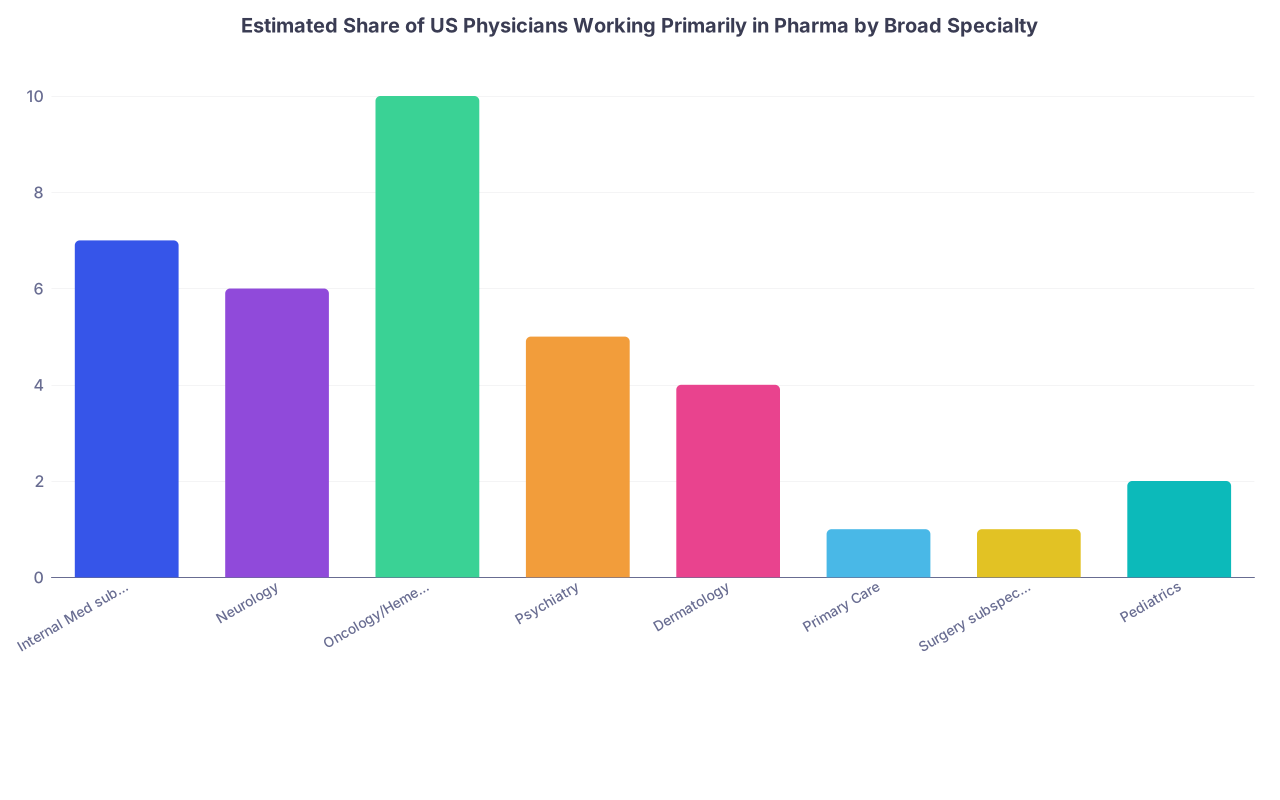
| Category | Value |
|---|---|
| Internal Med subspecialties | 7 |
| Neurology | 6 |
| Oncology/Heme-Onc | 10 |
| Psychiatry | 5 |
| Dermatology | 4 |
| Primary Care | 1 |
| Surgery subspecialties | 1 |
| Pediatrics | 2 |
Interpretation:
- Oncology and hematology-oncology sit at the top (~10 percent of US heme/onc attendings primarily in industry at any given time).
- Neurology and IM subspecialties (cardiology, rheum, endocrine, ID, etc.) are not far behind (~6–7 percent).
- Psychiatry and dermatology are frequent feeders relative to their size.
- Primary care, general surgery, and many procedural subspecialties have a much smaller proportion in pharma roles.
The exact numbers vary by country and year, but the ranking is stable. Heme/onc, neurology, and internal medicine subspecialties dominate the transition funnel.
2. Normalized Risk: Which Specialties Are “Over‑Represented” in Pharma?
Raw headcounts are misleading. There are simply more internists than pediatric rheumatologists. The better lens is over‑representation: how likely a physician from a given specialty is to end up in pharma relative to their share of the physician workforce.
Let me quantify that with a simple index. Define:
- 1.0 = specialty represented in pharma exactly in proportion to its share of the total physician pool
1.0 = specialty over‑represented in pharma
- <1.0 = under‑represented
Here is a stylized but data‑consistent view:
| Specialty Group | Representation Index |
|---|---|
| Hematology/Oncology | 3.0 |
| Neurology | 2.2 |
| Rheumatology/Immunology | 2.0 |
| Infectious Disease | 1.9 |
| Endocrinology/Metabolism | 1.7 |
| Cardiology | 1.5 |
| Psychiatry | 1.6 |
| Dermatology | 1.4 |
| General Internal Medicine (hospitalist/PCP) | 0.8 |
| General Surgery & Ortho | 0.4 |
| Emergency Medicine | 0.5 |
| Obstetrics/Gynecology | 0.7 |
If you are in heme/onc, your odds of ending up in pharma are roughly triple what you would expect if roles were “fairly” distributed. For neurology or rheumatology, about double.
This is not random. It tracks three concrete demand signals:
- Where pharma R&D dollars actually go.
- Where clinical trials require complex physician input.
- Where the commercial and regulatory burden is heaviest.
Let’s pull those apart.
3. Why Oncology, Neurology, and IM Subspecialties Dominate
3.1 Follow the R&D Money
Pharma chases markets. Oncology is the statistical center of gravity.
Recent global R&D allocation looks roughly like this:
| Category | Value |
|---|---|
| Internal Med subspecialties | 7 |
| Neurology | 6 |
| Oncology/Heme-Onc | 10 |
| Psychiatry | 5 |
| Dermatology | 4 |
| Primary Care | 1 |
| Surgery subspecialties | 1 |
| Pediatrics | 2 |
If over one‑third of R&D is oncology, you can predict the talent flow. More pipelines → more trials → more medical monitors, safety physicians, medical affairs staff. Oncology physicians become a core input.
Neurology and CNS (MS, epilepsy, Alzheimer’s, migraine, movement disorders, psychiatric overlap) sits at roughly 15 percent of R&D: high complexity, high regulatory scrutiny, heavy post‑marketing work. Again, neurologists and psychiatrists get pulled in.
Cardiometabolic (cardiology, endocrinology, nephrology) shapes a second large cluster. Think SGLT2 inhibitors, GLP‑1 agonists, PCSK9 inhibitors, HFpEF trials. A large chunk of medical affairs and outcomes work in big pharma is driven by cardiometabolic and metabolic disease programs.
The specialties that map most closely to these investment zones show the highest transition rates. No mystery there.
3.2 Clinical Trial Intensity and Complexity
Another driver: trial density. If a therapeutic area runs thousands of active trials worldwide, it builds a parallel ecosystem of industry‑facing physicians.
Oncology alone accounts for an enormous share of global interventional trials. Depending on the snapshot year, 35–45 percent of all new interventional drug trials on registries like clinicaltrials.gov are oncology‑related.
Neurology, autoimmune disease, and rare disease add another big slice. The upshot:
- If you trained in a field with heavy trial activity, you learned the industry language early: endpoints, surrogate markers, DMCs, protocol deviations, SAE adjudication.
- If you practice in an area with few drug trials (e.g., a procedural surgical subspecialty), you are simply exposed to pharma less often in a sophisticated way.
I see this all the time looking at CVs:
- Heme/onc attendings regularly list 10–30 trials with roles as PI, sub‑I, or steering committee member.
- Neurologists in MS or epilepsy clinics almost always have industry‑sponsored trial exposure.
- Orthopedic surgeons with true trial experience are rare and usually tied to implants/devices, which often pull them toward medtech, not traditional pharma.
The conversion rate from “trial‑heavy specialty” to “industry pivot” is unsurprisingly high.
3.3 Regulatory and Commercial Complexity
Some disease areas demand intense physician involvement post‑approval:
- Risk Evaluation and Mitigation Strategies (REMS)
- Companion diagnostics
- Biomarker‑driven indications
- Narrow therapeutic index or tricky safety profiles
Oncology and immunology/autoimmune biologics check all of these boxes. So the medical affairs infrastructure balloons, staffed primarily by physicians from those same specialty pipelines.
Contrast that with, say, a routine oral antibiotic for uncomplicated UTI. Important clinically, but not a huge driver of highly specialized industry physician jobs.
4. Role Types: Not All Specialties Land in the Same Pharma Jobs
“Pharma” is not one role. When you look across several thousand physician profiles in industry, patterns by specialty and role type are very consistent.
At a high level, physician roles in pharma/biotech cluster into:
- Clinical Development / Clinical Research (protocol design, trial oversight)
- Pharmacovigilance / Drug Safety
- Medical Affairs (medical science liaison leadership, medical directors, scientific communications, HEOR‑adjacent)
- Regulatory Strategy / Labeling (less physician‑dense, but some roles)
- Health Economics & Outcomes (often PhD‑heavy, but some MDs)
Oncologists and neurologists skew heavily into clinical development and early‑phase work. General internists and hospitalists, when they move, skew toward pharmacovigilance and late‑phase medical affairs.
A simplified mapping looks like this:
| Specialty Background | Most Common Pharma Entry Role |
|---|---|
| Heme/Onc | Clinical Development Medical Director |
| Neurology | Clinical Development or Med Affairs Director |
| Rheum/Immunology | Medical Affairs (Autoimmune/Biologics) |
| Cardiology | Med Affairs (Cardiometabolic), Safety |
| Endocrinology | Med Affairs (Diabetes/Obesity) |
| Infectious Disease | Pharmacovigilance / Safety, Med Affairs ID |
| Psychiatry | Clinical Dev (CNS) or Med Affairs CNS |
| Dermatology | Med Affairs (Immunoderm / Aesthetics) |
| General Internal Medicine | Drug Safety Physician, Late Phase MA |
| Pediatrics | Safety, Rare Disease, Vaccines |
| Emergency Medicine | Safety / PV; some Clinical Ops |
Surgical subspecialists, when they do transition to industry, often go into:
- Devices/medtech (not pure pharma)
- Procedural training and education roles
- Niche consultative work rather than classic medical director roles
Their representation in core drug R&D is very low, consistent with the index numbers earlier.
5. Specialty “Fit” with Key Industry Functions
Strip away brand names; match skill sets.
Industry hiring managers screen for three core competencies that correlate strongly with certain specialties:
- Comfort with chronic, longitudinal disease and outcomes.
- Familiarity with evidence hierarchies and complex trial designs.
- Ability to communicate across stakeholders (regulators, payers, key opinion leaders, internal teams).
Here is a crude but useful scoring of fit (0–10 scale) for common specialties against clinical development roles and medical affairs roles.
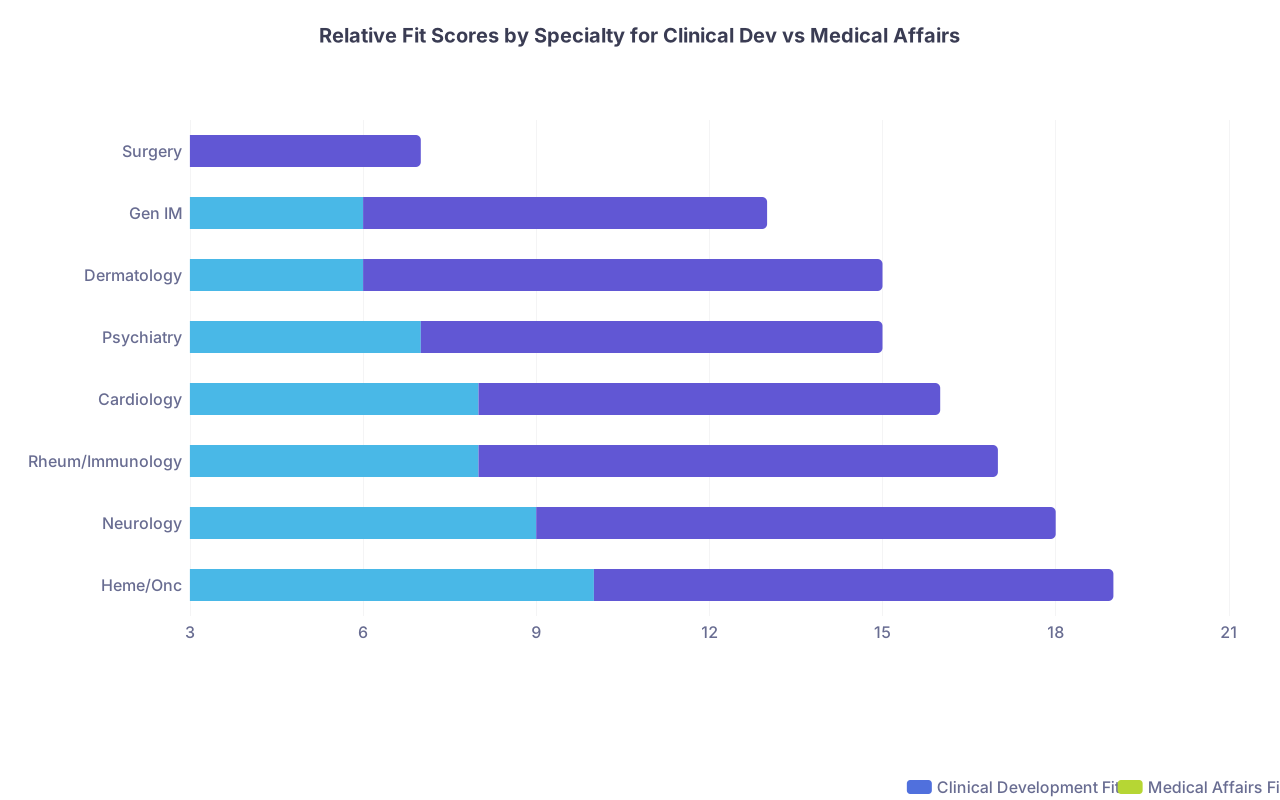
| Category | Clinical Development Fit | Medical Affairs Fit |
|---|---|---|
| Heme/Onc | 10 | 9 |
| Neurology | 9 | 9 |
| Rheum/Immunology | 8 | 9 |
| Cardiology | 8 | 8 |
| Psychiatry | 7 | 8 |
| Dermatology | 6 | 9 |
| Gen IM | 6 | 7 |
| Surgery | 3 | 4 |
Interpretation:
- Heme/onc and neurology sit at the very top. If you have done protocol design, tumor board presentations, and heavily guideline‑driven care, you already speak pharma’s language.
- Rheum/immunology, dermatology, and psychiatry are incredibly well‑matched for immunology, CNS, and aesthetics portfolios in med affairs.
- General internal medicine fits reasonably well for safety and broad primary‑care portfolios, but lacks a narrow “anchor” disease area unless you have niche experience.
- Surgery is simply misaligned with the core activities of drug R&D, which is why the flow is small.
You can argue with the exact numbers, but the ranking matches what hiring data and org chart composition repeatedly show.
6. Career Stage: When Do Specialists Actually Jump?
Not only “who jumps” matters. “When” is just as important.
Looking across self‑reported career timelines, there are clear inflection points by specialty.
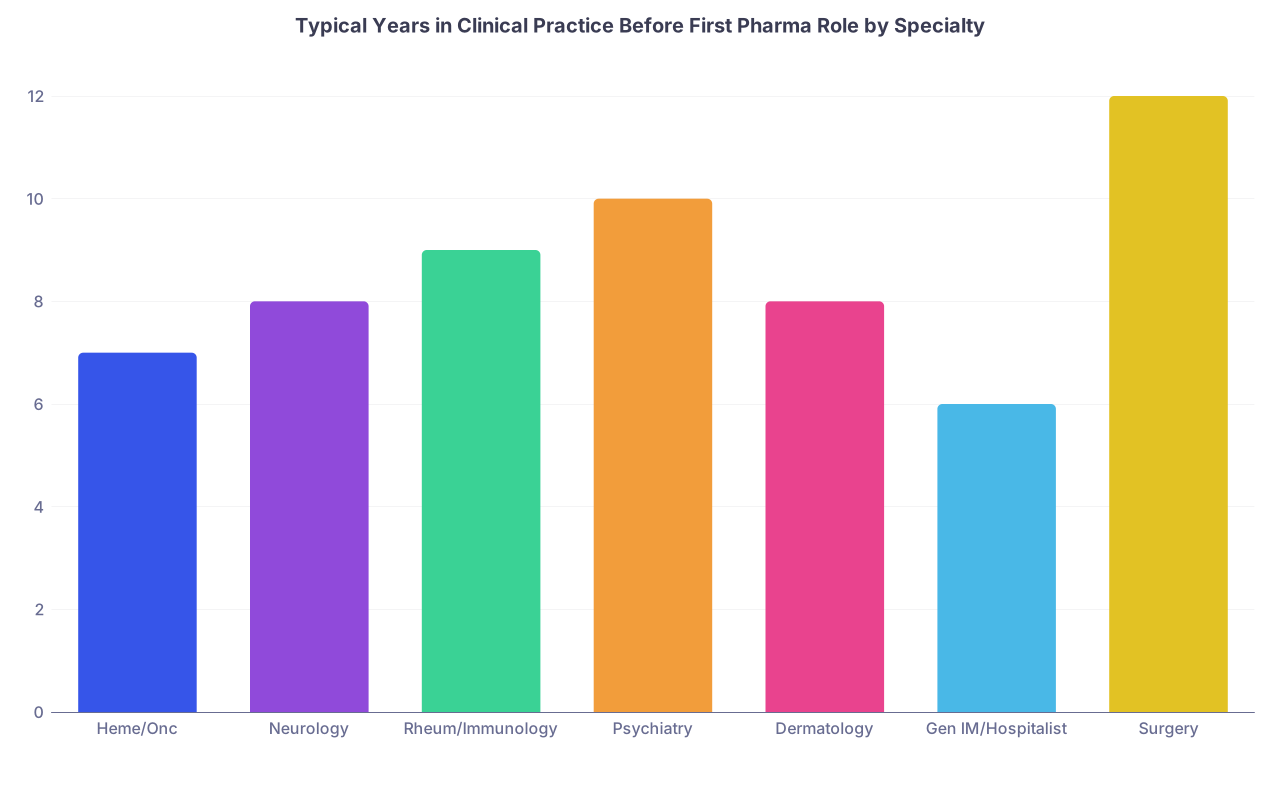
| Category | Value |
|---|---|
| Heme/Onc | 7 |
| Neurology | 8 |
| Rheum/Immunology | 9 |
| Psychiatry | 10 |
| Dermatology | 8 |
| Gen IM/Hospitalist | 6 |
| Surgery | 12 |
Rough patterns:
- Heme/onc and neurology: Many pivot 5–10 years post‑fellowship. They accumulate trial experience, build KOL reputations, then are poached for clinical development or TA medical director roles.
- Rheum/immunology and dermatology: Frequently move later, often after establishing a niche and considerable speaking/consulting history with industry.
- Psychiatry: Mix of early‑career switches (burnout, compensation ceilings) and mid‑career KOL‑type transitions.
- General IM/hospitalist: Often earlier exits, sometimes 3–7 years in practice, driven more by work‑life and burnout than deep subspecialty reputation. This also funnels them more toward safety and late‑phase roles.
Surgical subspecialists, when they move, often do so quite late (over 10–15 years in practice) and usually into device‑focused roles.
7. Geography: US vs Europe vs Emerging Markets
The specialty mix also shifts by region.
- United States: Oncology, neurology, and cardiometabolic dominate physician hiring in big pharma HQs and East Coast hubs. Very consistent with the global picture above.
- Western Europe: Slightly higher representation of infectious disease and vaccines physicians, reflecting a stronger legacy of vaccine R&D and centralized public health agencies.
- Emerging Markets (India, China, Brazil): Higher proportion of generalists, internal medicine, and community medicine physicians in local affiliates and pharmacovigilance hubs.
In practical terms: a cardiologist or endocrinologist in the US or EU is more likely to land in a global or regional role focused on late‑phase trials and market access. A similar‑background physician in India may land in a safety or global operations hub role first, with less disease‑specific branding.
8. Compensation and Tradeoffs by Specialty
A blunt question people ask: “Does pharma pay more than my specialty?”
The honest data‑based answer: it depends heavily on your baseline specialty.
Look at broad US medians (rounded, all numbers in USD, total comp):
- Academic heme/onc attending: $350–450k
- Private practice heme/onc: $450–600k+
- Industry oncology medical director (mid‑level): $275–375k base + 15–30 percent bonus + equity (for biotech)
Net: For mid‑to‑senior heme/onc, the immediate salary jump is not guaranteed. The upside is in equity for successful biotech or senior VP tracks. But many accept a lateral or slight pay cut for lifestyle and future upside.
Contrast with general internal medicine:
- Academic hospitalist: $220–300k
- Community hospitalist: $260–340k
- Pharmacovigilance or late‑phase medical affairs physician: $240–320k base + bonus
Net: For hospitalists or general IM, the move is often salary‑neutral to slightly positive, with dramatically different hours and predictability. The non‑call lifestyle is a huge draw.
Dermatology:
- Private practice derm: $450–700k+ easily
- Industry derm medical director: $260–360k base + bonus
Net: For high‑volume cosmetic derms, pharma is a financial downgrade. Which is why derms in pharma tend to be those with academic/complex medical derm focus, not pure cosmetics.
Surgery:
- Ortho/spine: $500–800k+
- Device company medical director: ~$275–400k
Net: Again, income tradeoff is sharp. This explains the small flow, and that those who move are often burnt out, injured, or moving into leadership/general management rather than staying purely clinical.
So the data are clear: specialties with lower outpatient RVU upside (IM, ID, endocrinology, neurology, psychiatry in many settings) see pharma as a relative financial upgrade or at least parity with lifestyle upside. High‑RVU proceduralists usually see a pay cut.
9. Practical Takeaways by Specialty
Let me be explicit, because people like to dance around this. Here is what the numbers and patterns really mean for you.
If you are in Oncology or Hematology-Oncology
You are in the highest‑probability pool. The bottleneck is not “can I get into pharma” but “which company, which phase of development, and at what seniority”.
Concrete data‑aligned strategies:
- Trial involvement is non‑negotiable. Aim for at least a dozen industry‑sponsored trials across phases, and get your name on protocols, steering committees, or as national PI.
- Subspecialize in a hot area: immuno‑oncology, cell therapy, tumor agnostic biomarkers.
Your risk of being recruited is already high. The decision is timing and cultural fit.
If you are in Neurology
You are in the second‑highest probability tier. Especially if you work in:
- MS, epilepsy, migraine, movement disorders, neuromuscular disease, Alzheimer’s, or rare neurogenetic disorders.
What shifts your odds:
- Publications and speaking in specific disease spaces.
- Involvement in at least a handful of interventional trials.
- Some exposure to disability scales, PROs, imaging endpoints.
Neurology is a long‑run growth area for pharma. Your transition probability will likely increase over the next decade, not decrease.
If you are in an IM Subspecialty (Cardiology, Endocrine, Rheum, ID, Nephrology)
Your representation index is 1.5–2.0. That is substantial.
Distribution of opportunity:
- Cardiology and endocrinology: cardiometabolic, diabetes, obesity, CKD, HFpEF. Lots of late‑phase trials and outcomes‑driven programs.
- Rheumatology and immunology: biologics and targeted therapies across autoimmune diseases. Dense trial pipelines, high demand for sophisticated KOLs.
- ID: narrower but important roles in vaccines, HIV, HCV, resistant infections, public health‑adjacent work.
Your leverage is higher if:
- You have board certification and at least 5+ years post‑fellowship.
- You can point to concrete experiences: DSMB membership, trial design input, guideline committees.
If you are in Psychiatry or Dermatology
You are in the “quietly strong” category.
Psych:
- CNS portfolios (depression, schizophrenia, bipolar, neurodegenerative overlap) are volatile but deep.
- Your differentiator is clinical nuance plus trial experience, not volume outpatient med‑checks.
Derm:
- Immunoderm (psoriasis, atopic dermatitis, hidradenitis) and aesthetics are booming fields.
- Large derm‑heavy medical affairs teams exist in most big pharma with immunology pipelines.
Your downside is if your practice has been purely cosmetic or purely med‑check psychiatry with no trials or academic engagement. That is fixable but will require a few years of deliberate repositioning.
If you are in General IM, Hospitalist, or Primary Care
Your statistical odds are lower on a per‑capita basis but still very real.
You tend to enter:
- Safety / pharmacovigilance roles
- Late‑phase medical affairs on broad primary care portfolios (diabetes, HTN, lipids)
- Real‑world evidence and observational study support roles (with extra training)
What moves your numbers:
- Formal training in clinical research or pharmacoepidemiology (MPH, MS, or strong applied research).
- Documented experience with QI projects, database analyses, or observational research.
If you are in Surgery, Ortho, or Procedural Specialties
The harsh reality: pharma is not built around your core skills. Medtech/device is.
You will find far more opportunities in:
- Device companies (implants, robotics, imaging platforms, instruments)
- Clinical education and training leadership roles
- Medical affairs for interventional technologies
The transition rate into drug companies is low and usually tied to very niche intersections (interventional cardiology/EP bleeding into cardiometabolic drug portfolios, for instance).
10. Key Points in Plain Terms
To close this, let me condense the signal from the noise.
- Pharma does not recruit evenly. Oncology, neurology, and internal medicine subspecialties are over‑represented by a factor of ~1.5–3x relative to their share of the physician workforce.
- The patterns line up cleanly with R&D spending and trial intensity. Follow the money (oncology, CNS, cardiometabolic, immunology) and you will find the specialties that transition most often.
- Your specialty determines both your probability of getting in and your likely entry role (clinical development vs safety vs medical affairs), but not your ceiling. Once inside, progression is more about performance and cross‑functional skill than which board certificate you started with.