
Waiting until fellowship to think about non-clinical careers is a mistake. The real pivot starts in PGY1–PGY3.
If you start “figuring it out later,” you’ll find yourself as a new attending with a mortgage, kids, and zero leverage. By then, every option feels risky. During residency, you have less money but far more freedom to re-position yourself.
Here’s a chronological, year-by-year, quarter-by-quarter guide to exactly when and how to prepare for non-clinical careers from PGY1 through PGY3.
Big Picture: The 3-Year Arc
At this stage, you should be thinking in phases, not in vague “someday I might leave medicine.”
Broadly:
- PGY1 – Awareness and Exposure
- PGY2 – Positioning and Skill-Building
- PGY3 – Execution and Transition Planning
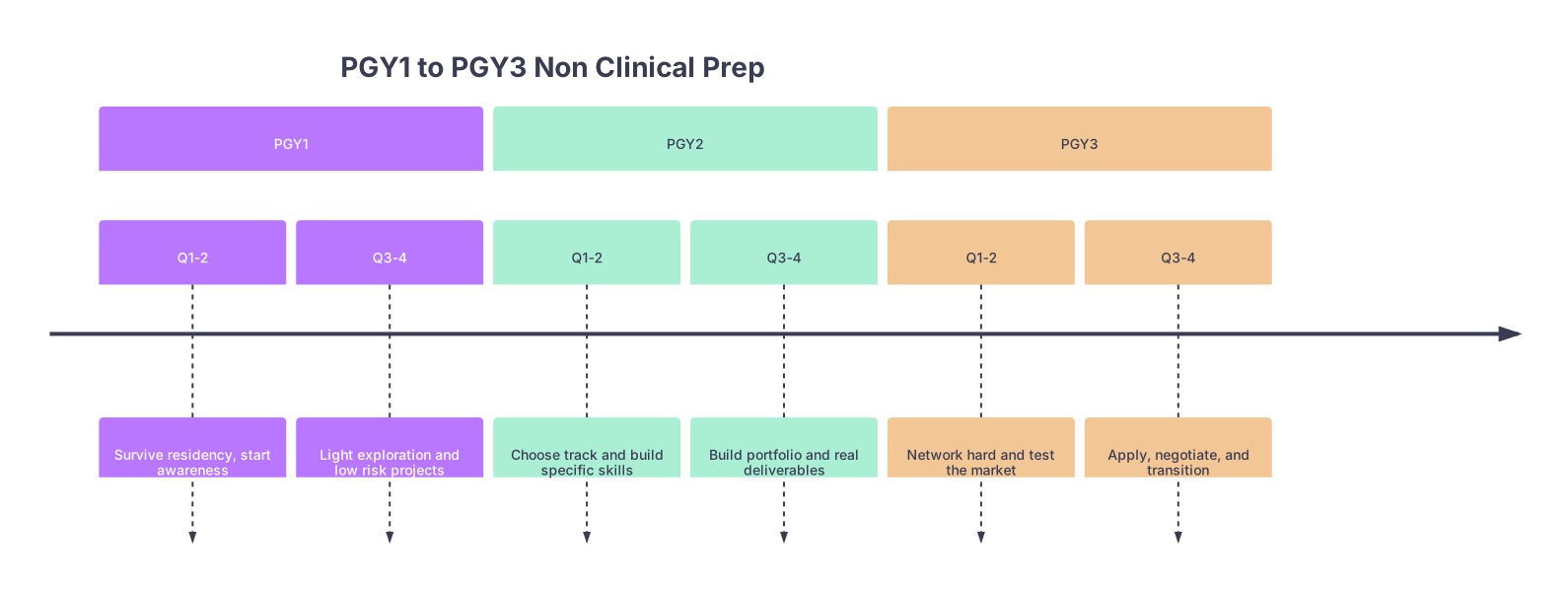
| Period | Event |
|---|---|
| PGY1 - Q1-2 | Survive residency, start awareness |
| PGY1 - Q3-4 | Light exploration and low risk projects |
| PGY2 - Q1-2 | Choose track and build specific skills |
| PGY2 - Q3-4 | Build portfolio and real deliverables |
| PGY3 - Q1-2 | Network hard and test the market |
| PGY3 - Q3-4 | Apply, negotiate, and transition |
At each point, you should know:
- What you’re actually exploring (not “anything non-clinical”).
- What you’re building (specific skills and artifacts).
- Who you’re talking to (real humans in target roles).
If you cannot answer those three clearly, you’re still in the “fantasy phase.”
PGY1: Awareness, Not Panic (Months 1–12)
This is not the year to rage-quit residency and start 14 side hustles. You’re learning to be a doctor, sleeping badly, and drinking too much call-room coffee. That’s fine.
But you can do a structured, low-burden exploration.
PGY1, Months 1–3: Survival First, Observation Second
At this point you should:
Stabilize your life
- Figure out your commute, sleep, meal prep, and basic sanity.
- You can’t think strategically if you’re barely functioning.
Notice what you hate (and what you actually like)
- Pay attention to:
- Do you hate clinical content or just the system?
- Do you enjoy:
- Teaching interns / students?
- Fixing workflow problems?
- Data, dashboards, and QI?
- Talking to families?
- These patterns point to likely non-clinical lanes: education, operations, informatics, medical communications, etc.
- Pay attention to:
Quietly admit your doubts
- Stop gaslighting yourself with “Everyone is burned out, I’ll get used to it.”
- You don’t need to announce anything. But you do need to be honest with yourself.
No big moves here. Just awareness.
PGY1, Months 4–6: Low-Risk Curiosity
Around 6 months in, you’re less constantly terrified. This is when you start structured exploration.
At this point you should:
Carve out 2 hours per week
- Protected time for future-you. Treat it like a mandatory clinic.
- This is for career exploration, not doom scrolling physician Reddit.
Map the realistic non-clinical lanes
Use this as a starting menu:
| Path | Typical Entry Role | Uses Clinical Background Most? |
|---|---|---|
| Pharma/Med Device | Medical Science Liaison | High |
| Health Tech Startups | Clinical Advisor | Medium–High |
| Consulting (HC focus) | Associate/Analyst | Medium |
| Hospital Admin/QI | Physician Advisor | High |
| Medical Writing/Ed | Medical Writer | Medium |
Do targeted, not random, reading
- 1–2 blog posts / podcasts per lane you’re curious about:
- “Day in the life MSL”
- “Physician medical writer income”
- “Physician in health tech role”
- Goal: Cross off things that obviously don’t fit you.
- 1–2 blog posts / podcasts per lane you’re curious about:
Start a tiny “career log”
- Single Google Doc or Notion page:
- Lanes of interest
- Names of people you find on LinkedIn
- Skills you keep seeing (SQL, slide decks, writing, stakeholder communication)
- Single Google Doc or Notion page:
This is quiet groundwork. No one needs to know.
PGY1, Months 7–9: First Conversations, First Experiments
By mid-PGY1, it’s time to move from reading to talking.
At this point you should:
Do your first 2–3 informational interviews
- Script is simple:
- Find physicians on LinkedIn with:
- “MD” + “MSL”
- “MD” + “medical director”
- “MD” + “health tech”
- Message (short, not pathetic):
- “I’m a PGY1 in internal medicine considering long-term options in industry or non-clinical work. I’m not job hunting now, just trying to understand possible paths. Would you be open to a 15-minute call about your transition?”
- Find physicians on LinkedIn with:
- Prepare 3–4 specific questions:
- “What surprised you most after leaving clinical practice?”
- “What do you wish you’d done during residency to prepare?”
- “What keywords should I be searching or skills I should be building now?”
- Script is simple:
Do 1 micro-project
- Examples:
- Help a faculty member with a QI poster or database cleanup.
- Draft patient education material for your program.
- Write one evidence summary for your team and email it out.
- The point isn’t the content. It’s proof you can produce something outside pure clinical work.
- Examples:
Audit your skills gap
- Based on what you’re hearing, highlight:
- Missing hard skills (Excel, SQL, R, writing, public speaking).
- Missing experiences (projects, leadership roles, published work).
- Keep it brutal and specific.
- Based on what you’re hearing, highlight:
PGY1, Months 10–12: Commit to a Direction (Not a Decision)
End of PGY1, you don’t need a final plan. But you do need a working hypothesis.
At this point you should:
Pick 1–2 primary lanes to test in PGY2
- Examples:
- “Pharma / MSL-type medical affairs”
- “Digital health / startup clinical role”
- “Medical writing and content strategy”
- “Consulting or hospital admin / operations”
- Examples:
Choose 1–2 skills to actively build in PGY2
- Concrete, not vague:
- “Intermediate Excel + basic SQL”
- “Portfolio of 6–10 medical articles”
- “Formal QI or data project with measurable results”
- “Basic product thinking via UX/product courses”
- Concrete, not vague:
Set a PGY2 plan checkpoint
- Put a calendar block for month 4 of PGY2:
- “Review non-clinical path progress”
- If it’s not on your calendar, it doesn’t exist.
- Put a calendar block for month 4 of PGY2:
PGY2: Positioning and Real Skill-Building (Months 13–24)
PGY2 is where the pivot can quietly become real. You have more competence, a bit more control, and some seniority. This is when you start building leverage.
PGY2, Months 13–18: Build Your “Non-Clinical Spine”
At this point you should be more focused. No more “I’m open to anything.” That’s code for “I haven’t done my homework.”
- Translate lanes into specific skill sets
Pick your lane and then your “spine skill”:
- If you’re leaning pharma / MSL / medical affairs:
- Great slide decks
- Strong communication (especially explaining data)
- Comfort reading and discussing trials
- If you’re leaning health tech / startups:
- Product sense (what to build, for whom, why)
- UX thinking
- Comfort with metrics and basic analytics
- If you’re leaning medical writing / education:
- Clear, fast writing
- Portfolio pieces aimed at different audiences
- Ability to hit deadlines
- Select 1–2 concrete projects over the next 6 months
Examples:
- QI / Data lane:
- Lead a small QI project on readmissions, throughput, or documentation.
- Use real data. Make a pre/post figure. Present it.
- Writing lane:
- Pitch 2–3 short pieces to Medscape, KevinMD, blogs, or even your hospital newsletter.
- Start a Substack if external pubs are slow. Consistency > flash.
- Tech lane:
- Partner with a local startup or hospital innovation center.
- Offer clinical feedback on a pilot or early product.
- Take 1 practical online course (max)
- Not ten Coursera certs you never finish.
- Example combos:
- Future MSL → “Statistics for medical research” + PowerPoint/slide design.
- Future tech/Product → Intro to product management or UX + basic SQL.
- Future writer → Concise scientific writing or copywriting basics.
PGY2, Months 19–21: Build Visible Artifacts
At this point you should be producing things that exist outside your head.
Create a simple, professional LinkedIn
- Headline: Not “Resident, tired and confused”
- Use something like:
- “Internal Medicine Resident | Interested in Medical Affairs & Evidence Communication”
- “Pediatrics Resident | Focus on QI, Data, and Digital Health”
- Add:
- Your QI projects
- Talks you’ve given
- Articles you’ve published
- Start posting monthly about:
- Summaries of interesting studies (2–3 sentences)
- Brief lessons from your project
- Reflections on workflow and systems
Assemble a small portfolio
- For each lane:
- Pharma/Med Affairs:
- 1–2 slide decks explaining major trials
- A short written “clinical insight” doc
- Writing:
- 3–6 public or PDF pieces
- QI/Admin:
- Project summary: problem, intervention, results
- Before/after metrics and a simple graph
- Pharma/Med Affairs:
- For each lane:
Do 2–4 deeper informational interviews
- Now your questions get more specific:
- “For someone finishing residency, what entry-level titles should I watch for?”
- “What 2–3 bullet points would make my CV stand out for your team?”
- “What mistakes do residents make when they first transition?”
- Now your questions get more specific:
PGY2, Months 22–24: Test the Market, Quietly
No, you’re not applying seriously yet. But you are reality-checking.
At this point you should:
Start reading job descriptions weekly
- Set up LinkedIn/Indeed alerts for:
- “Medical Science Liaison”
- “Medical writer”
- “Clinical informatics”
- “Medical director”
- “Clinical solutions consultant”
- Copy/paste recurring requirements into your career log.
- Set up LinkedIn/Indeed alerts for:
Compare yourself honestly to entry-level roles
Use something like:
| Requirement Example | Do You Have It Now? | Plan to Get It? |
|---|---|---|
| Strong presentation skills | Maybe | Give 2 talks |
| Experience with QI/data | Yes/No | Lead project |
| Published writing | Yes/No | 3–5 articles |
- Present once outside your department
- Hospital committee
- Regional conference
- Grand rounds variant (operations, QI, or education-focused)
- Demonstrates you can stand in front of non-residents and make a point.
You’re building momentum now. PGY3 is where you cash in.
PGY3: Execution, Job Search, and Exit Strategy (Months 25–36)
PGY3 is about timing and leverage. You’ll screw this up if you:
- Start searching too late.
- Or start so early that everyone assumes you’re not serious.
PGY3, Months 25–27: Choose Your Transition Timing
At this point you should decide:
Are you leaving right after residency, or doing a hybrid year?
- Options:
- Immediate non-clinical role (e.g., MSL, writer, tech).
- 0.5–1.0 FTE clinical + small non-clinical contract or part-time role.
- Chief year only if it aligns with admin/leadership goals.
- Options:
Clarify your risk tolerance
- Dependents? Debt? Visa issues? These matter.
- Some residents:
- Take a safer hospital job with protected non-clinical time.
- Then transition fully 1–2 years later with more savings and credibility.
Define your “must-haves” and “nice-to-haves”
- Must-haves: remote vs. on-site, baseline income, visa sponsorship.
- Nice-to-haves: travel expectations, specific industry, title prestige.
PGY3, Months 28–30: Aggressive Networking and CV Conversion
Now you’re moving from “interested” to “candidate.”
At this point you should:
Convert your CV to an industry-style resume
- Translate:
- “Performed 20 admissions per week” → “Managed high-acuity patient panels, coordinated multidisciplinary care, and reduced length of stay by X% in QI project.”
- “Presented at M&M” → “Delivered data-driven presentations to cross-functional audiences and proposed system-level changes.”
- Cut the fluff. No one outside academics cares about every poster.
- Translate:
Line up your references intentionally
- You want:
- 1–2 attendings who will say:
- You’re reliable
- You communicate clearly
- You handle responsibility
- 1 non-clinical-ish person (QI lead, admin, project partner) if possible.
- 1–2 attendings who will say:
- You want:
Do targeted networking sprints
- Each month:
- Message 10–15 people in your target lane.
- Aim for 4–6 conversations.
- Ask explicitly:
- “If you were me, finishing residency in X months, what 2–3 things would you do between now and then to be a competitive candidate?”
- “Are there junior roles at your company that occasionally open to residents?”
- Each month:
PGY3, Months 31–33: Active Applications and Interviews
This is when things actually get real.
At this point you should:
Start applying 3–6 months before graduation
- Pharma/industry often has slow hiring cycles.
- Some roles are open-ended and will wait for your start date if they like you.
Be prepared to explain the transition crisply
- Your story should be:
- Brief
- Honest
- Not a rant about burnout
- Example:
- “I enjoy clinical medicine but I’m most energized by understanding data, explaining evidence, and improving systems. I want to work where my impact scales beyond one patient at a time.”
- Your story should be:
Practice non-clinical interviews
- Residents bomb these by:
- Giving long, rambling clinical case stories.
- Not understanding basic business concepts (stakeholders, metrics, ROI).
- Rehearse:
- A time you influenced others without authority.
- A project where something went wrong and how you handled it.
- Examples of cross-functional teamwork.
- Residents bomb these by:
Decide what you’re willing to accept
- First non-clinical jobs rarely check every box.
- But you shouldn’t take:
- Pure sales roles that want your MD only as window dressing.
- Full-time jobs that pay less than a standard attending + provide no clear skill gain.
- Anything that looks scammy or MLM-adjacent. Yes, they’ll find you.
PGY3, Months 34–36: Signing, Transition, and First-Year Strategy
By now, if you’ve followed this timeline, you should have active leads or offers.
At this point you should:
Negotiate realistically
- You’re not a 10-year industry veteran.
- But you can negotiate:
- Start date
- Title (Associate vs. Junior vs. “Fellow”)
- Professional development budget (courses, conferences)
- Ask about:
- Travel percent
- Reporting structure
- Performance metrics for year one
Plan a clean exit from residency
- Finish strong. Your reputation follows you.
- Do not:
- Check out mentally and dump work on co-residents.
- Torch bridges with faculty. They may be references later.
Set a 6–12 month non-clinical learning plan
- Once in the new role:
- Schedule time with key stakeholders (sales, product, regulatory, ops).
- Learn how decisions actually get made.
- Get fluent in your new world’s language.
- Once in the new role:
Quick Month-by-Month Snapshot
This isn’t perfect, but it’s a decent spine.
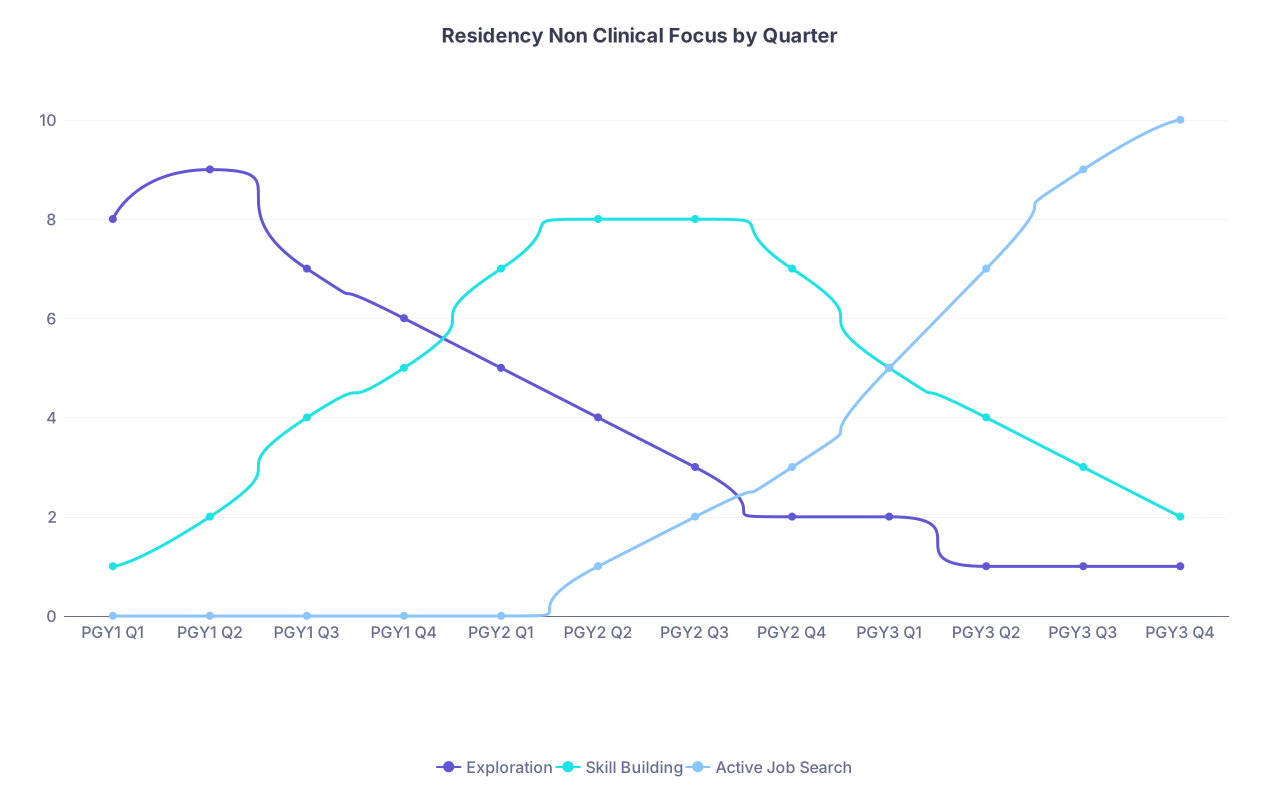
| Category | Exploration | Skill Building | Active Job Search |
|---|---|---|---|
| PGY1 Q1 | 8 | 1 | 0 |
| PGY1 Q2 | 9 | 2 | 0 |
| PGY1 Q3 | 7 | 4 | 0 |
| PGY1 Q4 | 6 | 5 | 0 |
| PGY2 Q1 | 5 | 7 | 0 |
| PGY2 Q2 | 4 | 8 | 1 |
| PGY2 Q3 | 3 | 8 | 2 |
| PGY2 Q4 | 2 | 7 | 3 |
| PGY3 Q1 | 2 | 5 | 5 |
| PGY3 Q2 | 1 | 4 | 7 |
| PGY3 Q3 | 1 | 3 | 9 |
| PGY3 Q4 | 1 | 2 | 10 |
Scale is relative intensity (0–10). The message:
- Early: more exploring.
- Middle: more building.
- Late: more applying.
FAQ (Exactly 2 Questions)
1. Is it “too early” to think about non-clinical careers in PGY1?
No. It’s too early to quit residency impulsively, but not too early to observe and explore. PGY1 is the perfect time for low-stakes curiosity: learning what roles exist, talking to a handful of people, and noticing what parts of your day you love or hate. You’re not locking anything in. You’re avoiding waking up as a new attending with zero optionality.
2. Do I have to finish residency to get a non-clinical job?
You don’t have to, but in most cases you should. Finishing residency gives you credibility, better pay, and more options. Some roles (writing, certain startup gigs, niche consulting) can start earlier, but pharma, hospital leadership, and many “medical director” style roles heavily favor board-eligible or board-certified physicians. Unless your residency is truly toxic or unsafe, use PGY1–PGY3 to set up a planned exit, not an emergency escape.
Key points:
- Start in PGY1 with honest self-observation and light exploration, not panic moves.
- Use PGY2 to build specific, visible skills and artifacts that match a clear non-clinical lane.
- Use PGY3 for focused networking, applications, and a structured transition—not last-minute scrambling.