
It’s 9:47 p.m. The last patient left hours ago. The waiting room is dark, but your office light is still on. You’ve got your EHR open on one screen and your practice management dashboard on the other. The numbers are ugly. Again.
Your accountant has hinted you might not make it another year if trends keep up. Collections are slow, overhead is suffocating, payor mix is trash, and you’re tired of fighting with insurance. You’re starting to think a thought you never wanted to admit:
“I might need to shut this down. Then what?”
You’re not ready to retire. You do not want another employed physician job where you’re just a widget on someone else’s RVU spreadsheet. You keep hearing about “consulting” as a way out, but it feels vague and hand-wavy. Consulting for who? Doing what? How do you actually make money with it?
This is the point where most doctors freeze. They wait too long, burn through their savings, and then panic-sell or walk away with nothing. You’re here now. Let’s not do that.
You’re in a very specific situation: your practice is failing financially, and you’re considering (or being forced into) a transition. I’m going to walk you through how to use what you already know to move into consulting in a way that’s structured, realistic, and financially sane.
Step 1: Get Brutally Honest About Your Runway
Before you start fantasizing about a slick consulting website and “strategy sessions,” you need one number: runway.
How long can you keep the lights on before the practice sinks you financially?
You’re looking at:
- Current cash on hand (business and personal you’re actually willing to burn)
- Average monthly overhead (rent, staff, malpractice, software, loans)
- Realistic revenue (not “if things pick up,” but last 3–6 months’ average)
Then you do the ugly math:
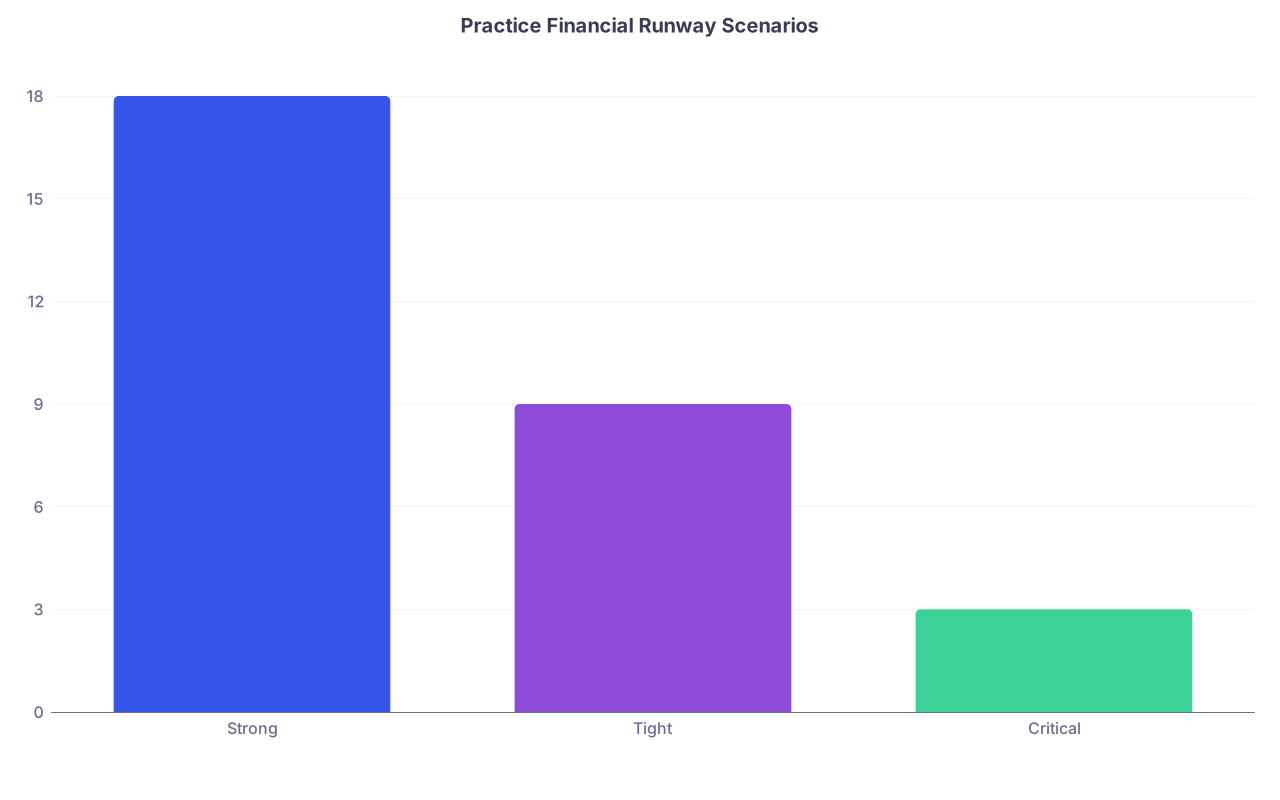
Runway (months) = Cash you’re willing to use ÷ Monthly net burn (overhead minus realistic revenue).
If that number is under 12 months, you cannot treat consulting as a someday project. It needs to be built while you still have income and structure. Not after the doors are chained.
If it’s under 6 months, you need to:
- Freeze all unnecessary practice spending.
- Stop any long-term commitments (new leases, expensive equipment, hiring).
- Block off two half days per week for building your consulting transition. Non-negotiable. That’s your lifeboat time.
| Category | Value |
|---|---|
| Strong | 18 |
| Tight | 9 |
| Critical | 3 |
If you’re already behind on payroll or rent, you’re not in “maybe I’ll consult” territory. You’re in “triage plus exit plan” territory. Still doable. But no more denial.
Step 2: Stop Saying “Consulting” and Start Saying What You Actually Do
Nobody pays “a consultant.” They pay:
- a documentation and workflow expert
- a telehealth implementation advisor
- a clinical operations fixer
- a patient experience specialist
- a prior-auth and revenue cycle nerd (yes, this is a real niche)
- a niche medicolegal expert
- a quality/improvement outcomes consultant for a specific condition
You have to translate your actual experience in practice into commercial language. That’s the piece most physicians skip.
Ask yourself, very specifically:
- What do people already ask me for advice on?
- What have I fixed in my own practice that other practices struggle with?
- Where have I saved money, time, or headaches for staff or colleagues?
- What have I done that could be replicated in other settings?
Concrete examples:
- You redesigned your note templates and slashed documentation time by 30% without sacrificing compliance. That’s a consulting offer.
- You turned around patient satisfaction scores in a tough population by changing scheduling and communication patterns. That’s a consulting offer.
- You’ve been the “IT doc” who actually understands EHR workflows and helps others not hate them. That’s a consulting offer.
- You built a high-functioning chronic pain protocol that reduced unnecessary imaging and kept opioid use under control. That’s a consulting offer.
Write down 10–15 problems you’ve actually solved. Then rewrite them as benefits to someone else:
Instead of:
“I’m good at charting and workflow.”
Use:
“I help small outpatient practices cut documentation time by 25–40% while staying compliant, so clinicians can see more patients without burning out.”
This is the difference between “random doctor” and “consultant people actually pay.”
Step 3: Choose a Starting Niche (Not a ‘Forever Niche’)
You do not need to commit to one identity for the rest of your life. You do need to pick a starting lane so people know what to buy from you.
Think about three possible directions, then pick one to start with:
| Lane Type | Example Focus |
|---|---|
| Practice Operations | Workflow, documentation, staffing, scheduling |
| Digital / Telehealth | Virtual care setup, remote monitoring |
| Industry / Corporate | Pharma advisory, med device strategy |
| Quality / Outcomes | Metrics, pathways, population health |
| Medico-legal / Expert Work | Case review, standards of care |
Good starting rule:
Your starting niche should be something you can explain in one sentence that includes:
- Who you help
- What you help them with
- What business outcome they care about
Examples:
- “I help small independent primary care practices reduce no-shows and increase visit volume without hiring more staff.”
- “I help digital health startups design workflows that clinicians will actually use.”
- “I help SNFs and rehab facilities reduce avoidable hospitalizations in high-risk patients.”
- “I help medtech companies understand what front-line clinicians actually want from their tools.”
Pick one. You can pivot later. But if you can’t say what you do in one breath, nobody will hire you.
Step 4: Decide While-You-Work vs. Burn-and-Shift
Because your practice is failing, you’re in a weird in-between space: you’re not exactly stable, but you’re also not entirely free.
You’ve got two realistic structures:
Parallel build:
Keep the practice running while you slowly grow consulting on the side.Best if:
- You have at least 6–12 months of runway.
- You’re not emotionally fried to the point of collapse.
- You still have some patient volume and income.
Fast exit + structured shift:
Actively wind down, sell, or close the practice in a planned way, while lining up consulting/bridge work.Best if:
- The numbers are obviously unsalvageable.
- You’re drained and staying is just digging the hole deeper.
- You can line up short-term employed or locums work while building consulting.
Do not do “I’ll just see how it goes” without a date. Pick review points:
- “If by [3 months from now] I haven’t increased collections or cut expenses significantly, I start actively winding down.”
- “If by [X date] consulting hasn’t brought in at least $Y, I adjust or add part-time clinical work.”

| Step | Description |
|---|---|
| Step 1 | Struggling Practice |
| Step 2 | Parallel Build Consulting |
| Step 3 | Plan Fast Exit |
| Step 4 | Block Weekly Consulting Time |
| Step 5 | Define Niche and Offer |
| Step 6 | Get 1-2 Pilot Clients |
| Step 7 | Wind Down Practice |
| Step 8 | Secure Bridge Clinical Work |
| Step 9 | Runway 6 months or more |
You’re not choosing between “practice” and “consulting” in one leap. You’re choosing the sequence that doesn’t wreck you financially.
Step 5: Build a Bare-Minimum Consulting Offer and Pricing
This is where most physicians stall and start perfecting logos instead of offers. Avoid that.
You need one concrete starter offer. Not a giant menu.
Example structures:
- A 4–6 week “assessment and action plan” package
- A 3-month implementation package
- A single high-priced strategy day (virtual or in person)
- A monthly advisory retainer (after initial project)
For a failing practice owner, I’d suggest:
- A clear assessment + roadmap offer (short-duration, lower risk for client).
- A follow-on implementation package for those who want help executing.
Example (for practice ops niche):
Assessment package (4–6 weeks)
- 1–2 half-day interviews and shadowing (remote or onsite)
- Review of workflows, schedules, EHR templates, staffing roles, key metrics
- Written action plan with 5–7 specific operational changes and projected impact
Implementation package (2–3 months)
- Weekly calls with leadership
- Change management with staff
- New workflow design and metrics tracking
Pricing? Stop undercharging. You’re not doing $200 Zoom calls.
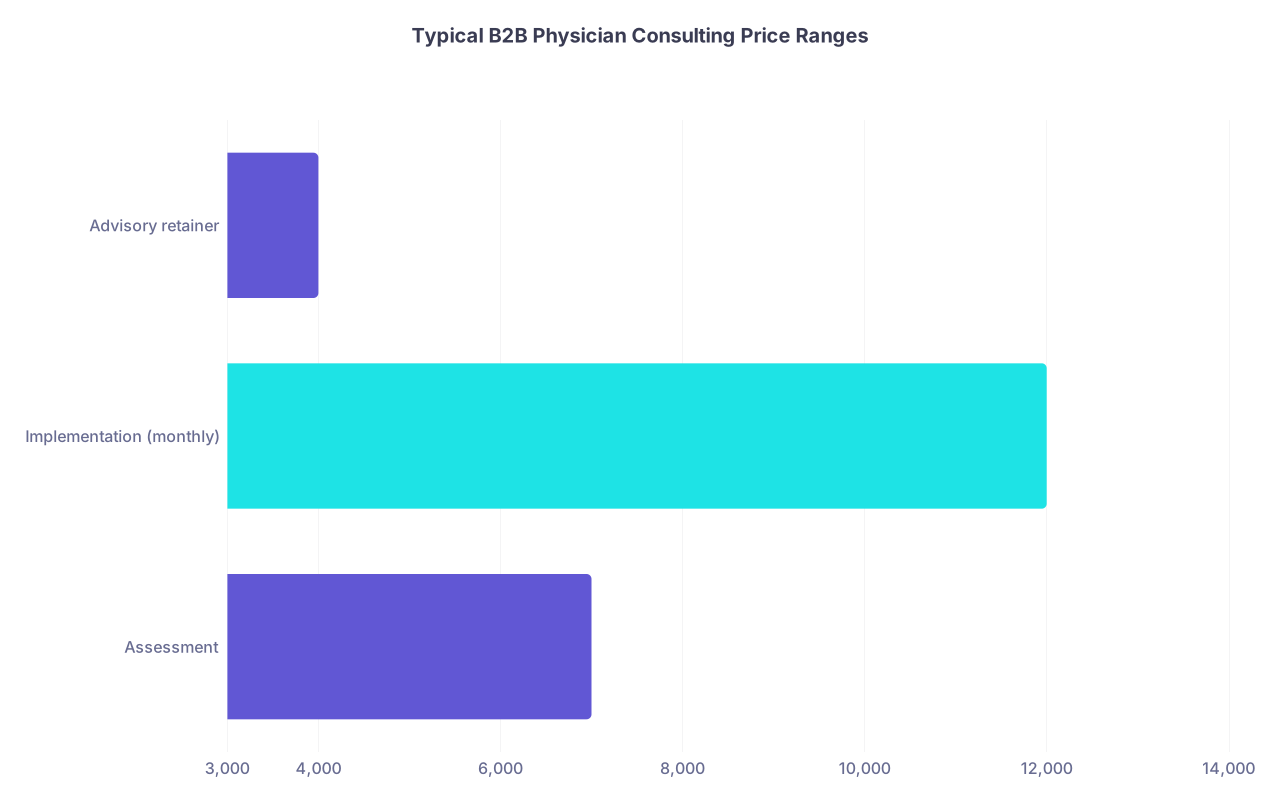
If you’re B2B (helping practices, companies, health systems), starter ranges:
- Assessment package: $3,000–$10,000 depending on complexity and client size
- Implementation: $5,000–$20,000 per month
- Advisory retainer: $2,000–$7,500 per month for a few calls plus email
| Category | Value |
|---|---|
| Assessment | 7000 |
| Implementation (monthly) | 12000 |
| Advisory retainer | 4000 |
Yes, people pay this. Health systems bleed six figures on nonsense every week. A 5–10% change in a key metric is valuable. You’re not selling your time. You’re selling a result.
Step 6: Turn Your Practice Failure into a Selling Point (Not a Secret)
You might be thinking: “Who wants advice from someone whose own practice failed?”
Wrong frame.
Most practices are struggling in some way. Owners know it. Administrators know it. Digital health companies trying to sell to clinicians definitely know it.
You’ve been in the trenches. That’s not a liability. It’s your differentiator. Just don’t lie about it.
You frame it like this:
- “I ran an independent practice through [X changes: EHR transitions, COVID, reimbursement cuts]. We made some smart moves and some mistakes. Now I help other practices avoid the expensive failures and copy what worked.”
- “I tried to be everything for everyone. It nearly killed the business. Now I help practices focus on the 20% of operations that actually move the financial needle.”
- “I know what it feels like to stare at a negative balance and wonder if you can make payroll. I work with owners to avoid ever getting that close to the edge.”
Your credibility comes from scars, not perfection.
Step 7: Get Your First 1–3 Clients the Unsexy Way
Stop thinking you need a podcast, a personal brand, and 10,000 LinkedIn followers. You need a few paying clients who can vouch for you.
Here’s where they usually come from:
- Colleagues in your specialty whose practices you know are a mess
- Former co-residents and med school classmates in leadership roles
- Local clinics or FQHCs who are always drowning in operations chaos
- Vendors or EHR reps who know which clients are struggling
- LinkedIn connections in healthcare ops, medtech, or digital health
You’re going to reach out like a human, not a spam bot.
Example message to a colleague (text or email):
“Hey [Name], I’ve been rethinking my next steps with the practice and started doing focused consulting around [specific niche: e.g., improving documentation and workflow so docs get 1–2 hours of their day back].
I’m looking for 1–2 pilot clients where I can deliver a lot of hands-on help at a discounted ‘beta’ price in exchange for honest feedback and a testimonial if it’s valuable.
If your clinic or someone you know is struggling with [problem], would you be open to a quick 20-min call to see if I can help?”
Nothing fancy. Just clear.
You’ll also want a simple one-page PDF or single web page that says:
- Who you help
- What problems you solve
- What your starter offer includes
- Results you’ve achieved (even from your own practice)
- A way to schedule a call
You do not need a beautiful website to start. A clean Google Doc turned PDF can close a $5,000 project if the problem is real and you’re credible.
Step 8: Handle Logistics: Legal, Malpractice, Structure
Consulting is not just “seeing patients but calling it something else.” You need to formalize a bit.
Basics to lock down:
Business structure:
If you already have an LLC/PLLC for your practice, you can often use or amend that structure for consulting revenue, or create a separate entity. Talk to your accountant. Not your buddy who “did a thing with an S corp once.”Contracts:
Get a simple consulting agreement template reviewed by a lawyer once. Then reuse and tweak. Key points:- Scope of work
- Deliverables
- Payment terms (up front, milestones, or monthly)
- IP ownership (who owns materials you create)
- Liability limitations (you’re not guaranteeing specific outcomes)
Malpractice / liability:
Most pure advisory/strategy work won’t be under clinical malpractice, but do not guess. If you’re giving anything that looks like clinical direction, you need to know where the line is. Talk to your carrier and a healthcare attorney.Conflict of interest:
If you take part-time employed work while consulting, make sure your contract doesn’t ban outside consulting. Many do. Read it.

Step 9: Use Your Remaining Practice Time as a Lab
While you’re still operating your practice, you’re sitting on a huge asset: a live sandbox.
You can:
- Test new workflows or patient communication methods you might later advise on.
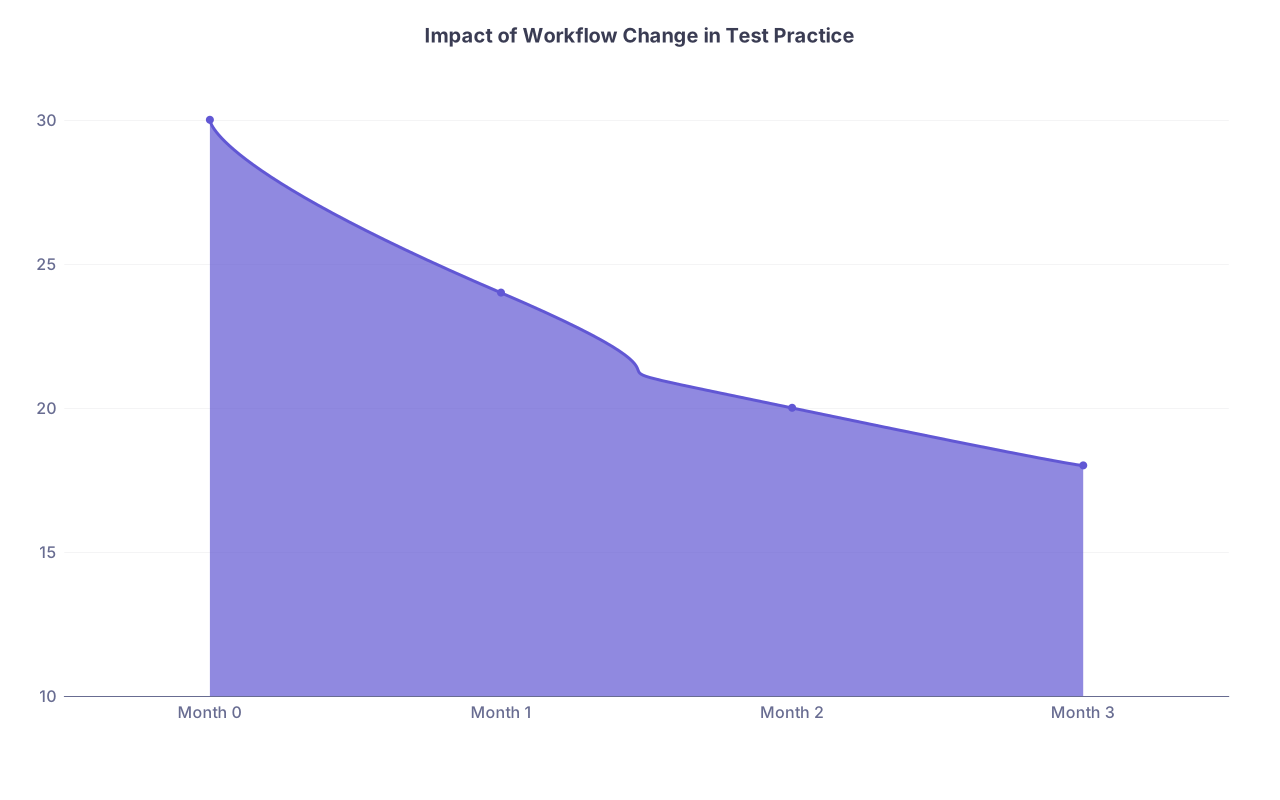
- Track metrics (no-shows, visit length, documentation time, revenue per visit) and use real before/after data in your consulting pitch.
- Develop frameworks, checklists, and templates that will become part of your consulting “toolkit.”
Example:
You create a “3-visit chronic disease management workflow” that reduces unnecessary follow-ups and increases adherence. Track:
- Baseline no-show rate
- Baseline A1c or BP control rates
- Staff satisfaction before/after
Even if your overall practice fails, that specific intervention and its data can be part of a very compelling case study.
| Category | Value |
|---|---|
| Month 0 | 30 |
| Month 1 | 24 |
| Month 2 | 20 |
| Month 3 | 18 |
You’re not “failing.” You’re generating intellectual property in real time. Document it.
Step 10: Protect Your Headspace and Identity
This part doesn’t show up on spreadsheets, but it decides who actually makes the transition.
If your identity is chained to “my practice must succeed or I’m a failure,” you will sabotage this move. Practices fail for a thousand reasons that have nothing to do with clinical skill or worth.
You’re allowed to change vehicles while keeping the same mission: improving patient care, reducing suffering, making healthcare less stupid. Consulting is just another way to do that, often with more leverage.
What you do not need to do:
- Apologize to everyone for closing.
- Write a long public manifesto about your burnout (unless you want to).
- Stay in a financial death spiral out of guilt for your patients.
You inform patients, provide appropriate transition options, and close as ethically as possible. Then you move.

Where Consulting Fits in the Future of Medicine
Let me be blunt: independent practice is going to keep getting squeezed. Administrative complexity is not slowing down. AI, consolidation, and regulation will increase operational pressure.
People who understand both clinical reality and system-level operations are going to be in demand:
- Health systems trying to not lose money on value-based contracts
- Payers trying to design rational programs that clinicians might actually follow
- Startups trying to build tools that clinicians do not immediately reject
- Governments and NGOs trying to implement public health interventions that work in real clinics
Physicians who can step out of the one-clinic, one-patient-at-a-time box and advise across organizations will have leverage.
Your failing practice might be your forced entry ticket into that world—if you treat it as data and experience, not a tombstone.
FAQ (Exactly 5 Questions)
1. I’m drowning in debt. Is consulting still realistic or should I just get a salaried job?
If you need immediate stable income to avoid personal financial collapse, a salaried job (hospital employed, urgent care, telemedicine, or locums) may need to come first. But you can still build consulting on the side. Many physicians do 0.5–0.8 FTE clinical plus 0.2–0.5 consulting. The key is: don’t wait for “free time.” Block a recurring window every week for consult-building and protect it like an OR block.
2. Do I need an MBA or extra degrees to be taken seriously as a consultant?
No. I’ve seen physicians with no formal business training invoice $10k+ per month in consulting work because they solve specific problems well and communicate clearly. If you want structured learning, pick targeted courses (healthcare finance, operations, change management), not full degrees, unless you genuinely want them. Client results > credentials.
3. How long does it realistically take to replace my practice income with consulting?
If you’re starting from zero, expect 6–24 months, depending on:
- Your network strength
- How niche and valuable your offer is
- Your runway and how aggressively you pursue clients
Most physicians can get to a few thousand per month within 3–6 months if they’re focused, then scale beyond that over time. This is why you do not wait until the practice shuts down to start.
4. What if I actually like seeing patients and don’t want to give up clinical work completely?
Good. You’re more credible when you still touch real patients. Many consultants split: 1–3 days a week clinical, rest consulting. You can do locums, telehealth, part-time clinic work, or hospitalist shifts while keeping consulting as a growing parallel track. You’re not choosing between “doctor” and “consultant.” You’re designing a mix that works.
5. How do I avoid getting stuck in low-paid “side gig” consulting forever?
You raise your baseline from the start. No $150 “coaching calls.” Package outcomes, not hours. Focus on problems with clear business impact (revenue, cost, risk, growth) for organizations with money (practices, systems, payers, startups), not just individuals. With each successful project:
- Capture metrics and testimonials
- Increase your prices or narrow your niche
- Move from one-off projects to retainers or larger engagements
Next step for today:
Open a blank document and write three things:
- A one-sentence description of who you could help and what problem you’d solve as a consultant.
- A rough 4–6 week “assessment package” you could offer right now, based on what you know.
- A list of five names (colleagues, former classmates, local leaders) you could reach out to this week for exploratory calls.
That’s your starting point. Not a perfect plan. Just those three concrete items, written down today.