
The data shows a simple, uncomfortable truth: the clinic is bleeding MDs, and burnout is the main accelerant.
This is not vibes. It is not anecdote. It is visible in survey after survey, across specialties, age groups, and practice settings. If you are an MD thinking about leaving clinical medicine, you are not an outlier. Statistically, you are almost boringly typical.
Let me walk through what the numbers actually say, what types of exits MDs are making, and what this implies for “alternative medical careers” and the future of care delivery.
1. The Scale of the Exodus: How Many MDs Are Leaving or Planning To?
Start with prevalence. How common is burnout and how often does it convert into career change?
Across large national surveys, the patterns are consistent:
- Physician burnout rates now typically sit around 50–60% in many reports.
- Intent to reduce clinical effort or leave practice entirely appears in roughly 1 in 4 to 1 in 3 physicians, depending on the study.
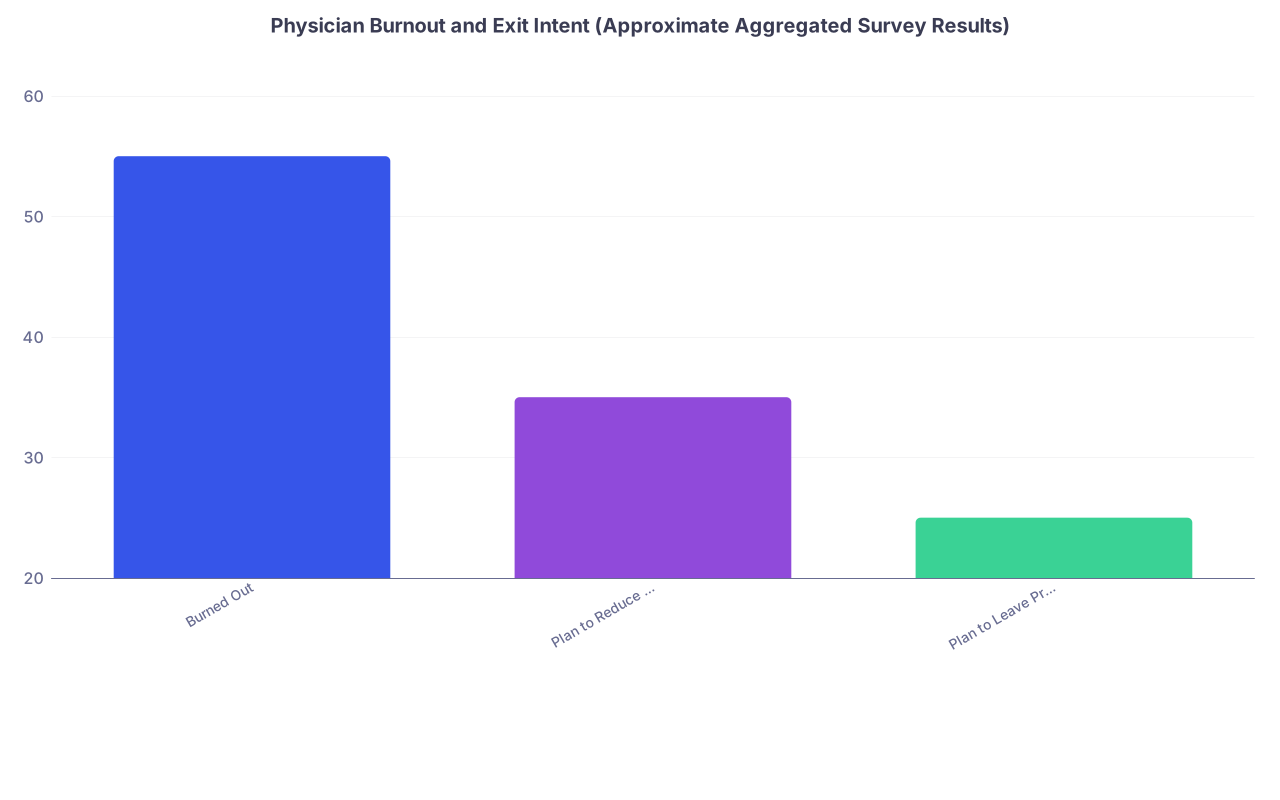
| Category | Value |
|---|---|
| Burned Out | 55 |
| Plan to Reduce Clinical FTE | 35 |
| Plan to Leave Practice in 2–3 yrs | 25 |
Strip away the noise: if you walk into a hospital break room of 12 MDs, odds are:
- 6 are burned out
- 4 are seriously planning to cut back clinical time
- 3 are actively thinking of leaving traditional practice within a few years
Not all will leave, but the “at-risk” group is enormous. And this is not a one-off pandemic artifact; data from before, during, and after COVID show an elevated baseline that never dropped back to pre-2010 levels.
Age makes the numbers starker. Many surveys show:
- Early‑career physicians (under ~40): higher burnout but somewhat lower actual exit intent; more “job hopping” than full exit
- Mid‑career (40–54): highest intent to leave current role; highest sense of “misalignment” with career expectations
- Late‑career (55+): more likely to retire early or shift into part‑time or nonclinical roles
Why does this matter for you? Because the probability that you are alone in wanting out is statistically negligible. The math says your feelings are part of a cohort phenomenon, not a personal failure.
2. What’s Actually Driving Burnout? The Numbers Behind the Complaints
Every burned‑out MD can give you a story: prior auths, EMR clicks, RVU quotas, toxic leadership, endless inbox. That is narrative. Surveys allow us to quantify which drivers dominate.
Across multiple large data sets, the top drivers cluster into five categories:
- Administrative burden
- Loss of autonomy
- Misalignment of values / moral injury
- Workload and staffing
- Compensation structure versus effort
The weights differ by study, but the hierarchy repeats.
| Driver Category | Approx. % of Physicians Citing as 'Major Factor' |
|---|---|
| Administrative burden | 60–75% |
| Loss of autonomy/control | 50–65% |
| Workload / staffing | 45–60% |
| EMR / documentation | 40–55% |
| Compensation / RVUs | 30–45% |
Notice what is missing from the top five: “patient care itself.” Direct patient contact is rarely a top burnout driver. In fact, many MDs report that patient interactions are the only part that still feels meaningful.
Administrative burden is measurable in time. Several time‑motion and self‑report studies converge on numbers like these:
- 1–2 hours of EMR and paperwork per hour of face‑to‑face clinical time
- 1–2 extra hours of documentation daily outside scheduled clinic (nights/weekends)
- 1–2 full workdays per week lost to prior authorizations, messaging, and nonvisit care activities, particularly in some outpatient specialties
So when physicians say, “I spend more time clicking than thinking,” they are not exaggerating; they are approximating measured reality.
Loss of autonomy shows up in responses around:
- Little control over schedule or patient load
- Algorithmic or administrator‑driven care pathways that feel misaligned with clinical judgment
- Pressure to see more patients per hour without added support
If you feel like you are practicing inside a rigid production line rather than a profession, that lines up with how survey respondents describe their environment.
3. From Burnout to Exit: Who Actually Leaves and Where They Go
Not every burned‑out physician leaves clinical work. Many reduce FTE, move geographically, or shift to a different practice model (concierge, DPC, academic, telehealth). But a nontrivial subset exits mainstream clinic altogether.
Rough categories of exits, based on surveys of “career‑transitioned” or “nonclinical” physicians:
- Full nonclinical careers (industry, admin, consulting, informatics, etc.)
- Hybrid roles (clinical 0.2–0.6 FTE plus a nonclinical position)
- Early or phased retirement
- Alternative care models (concierge, DPC, locums‑only, telemedicine‑heavy)
For the “Alternative Medical Careers” lens, the nonclinical and hybrid tracks are the relevant ones. They often break down roughly like this among those who have made a clear shift:
| Destination Area | Approx. Share Among Career-Changers |
|---|---|
| Pharma / biotech / medtech | 25–30% |
| Healthcare administration | 20–25% |
| Health IT / informatics | 10–15% |
| Consulting (healthcare) | 10–15% |
| Education / writing / media | 5–10% |
| Other / entrepreneurial | 10–20% |
These numbers vary by specialty. For example:
- Radiologists, pathologists, and anesthesiologists are overrepresented in informatics and medtech.
- Internists and subspecialists show up frequently in pharma, payers, and administration.
- EM and primary care docs often go into utilization management, telehealth leadership, or consulting.
The data point that surprises many clinicians: surveys of physicians who left traditional practice commonly show post‑transition career satisfaction rates in the 70–85% range. Burnout rates drop dramatically. Income is mixed—some earn more, some less—but subjective quality of life often improves.
This is not rose‑colored; there is selection bias. The ones who manage to land reasonable nonclinical roles are the ones answering these surveys. But still: the “leaving clinic = career failure” narrative is not supported by the available data.
4. Predictors of Leaving: Who Is Statistically Most Likely to Walk?
When researchers model predictors of intent to leave (using logistic regression or similar), certain variables consistently correlate with higher odds.
Broadly, higher risk of exit is associated with:
- High burnout scores (no surprise)
- Low perceived control over schedule and clinical decisions
- Frequent work–home conflict
- Perceived lack of organizational support or poor leadership
- Misalignment between personal values and institutional priorities
Demographics and specialty matter as well, but they are less deterministic than you might think.
Some patterns that show up repeatedly:
- Women physicians often report higher burnout and higher intent to reduce hours, driven heavily by work–family conflict and inequity; however, complete exit from medicine is more complicated and influenced by structural constraints.
- EM, critical care, and primary care show elevated burnout, but some surgical subspecialties also score high, especially where RVU pressures are intense.
- Employed physicians in large systems report more control over income stability but less over practice style, which pushes some toward exit or alternative models.
If you want a blunt summary: the more your job feels like a high‑volume, low‑control production environment with misaligned values, the higher your statistical risk of eventually leaving clinic.
5. Alternative Medical Careers: What Do MDs Actually Do After Clinic?
Step away from aspirational LinkedIn posts and look at data from surveys of transitioned MDs, alumni networks, and nonclinical career communities. A clear pattern emerges.
The most common “alternative” paths for MDs leaving clinic fall into six buckets:
5.1 Industry (Pharma, Biotech, Medtech)
This is the single largest destination cluster.
Roles include:
- Medical director / associate medical director
- Clinical development lead
- Safety / pharmacovigilance
- Medical affairs (MSL, scientific liaison, publications)
Why it attracts physicians:
- Predictable hours compared with inpatient call
- Use of clinical knowledge without direct patient volume pressure
- Team‑based work with defined career ladders
Compensation: Median is often comparable to or higher than many clinical roles, especially at mid‑ to senior levels. Entry-level industry roles may be flat or slightly below some high‑earning clinical specialties but usually competitive with general IM or peds.
5.2 Healthcare Administration and Leadership
Physicians move into:
- Chief Medical Officer (CMO), VP Medical Affairs
- Service line leadership
- Quality, safety, or population health roles
- Payer medical director or utilization management
This path tends to correlate with those who already held leadership positions inside their systems. Burnout surveys consistently show that physicians who trust leadership and feel heard are less likely to leave, and those dissatisfied with leadership are more likely to either exit or become leadership themselves somewhere else.
5.3 Health IT, Analytics, and Informatics
If you find yourself rewriting EMR templates or arguing about clinical decision support logic in meetings, you are statistically a good candidate here.
Roles:
- Clinical informaticist
- Product manager or clinical lead at health‑tech companies
- EHR implementation leadership
- Data science / analytics roles where clinical context is crucial
The data show increased demand: health systems and vendors both report shortages of clinicians who can bridge technical and clinical languages. Burned‑out MDs who hate EMRs as end users sometimes become the people designing better ones.
5.4 Consulting
Mostly:
- Healthcare strategy consulting (large firms and boutique shops)
- Independent consulting for payers, startups, law firms (expert witness, due diligence)
The hours can be brutal at big firms, but the burnout is qualitatively different: travel, PowerPoint, and client pressure rather than prior auth and inboxes. Some physicians like the change of stressor.
5.5 Education, Media, and Writing
Smaller slice, but visible:
- Medical education companies, exam prep, curriculum design
- Health journalism, medical communications, medical writing
- Content and thought leadership roles for health companies
Income spread is wide here. Some physicians do this as a hybrid side career first, then ramp up.
5.6 Entrepreneurship
Startups in:
- Digital health platforms
- Direct‑to‑consumer health products
- Niche clinical services or coaching businesses
Data show a survivorship bias; the visible success stories distort perception. But even failed attempts sometimes function as stepping stones to other nonclinical roles.
6. What Surveys Reveal About Those Who Stay—but Restructure
Not everyone who is at the edge of quitting needs to leave medicine to survive. Survey data from organizations that track physician wellbeing show that certain interventions materially reduce burnout and exit intent.
Patterns:
- Reducing clerical burden (scribes, better EMR workflows) is strongly associated with improved satisfaction.
- True schedule flexibility (not cosmetic) reduces work–home conflict and makes mid‑career physicians more likely to stay.
- Involving physicians in decision‑making and giving them real local autonomy is consistently linked to lower burnout and greater retention.
There is also a rising subset of physicians shifting into:
- Concierge or direct primary care (lower panel sizes, higher per‑patient revenue)
- Locums‑only work to control schedule and avoid permanent institutional politics
- Telemedicine‑heavy practices (sometimes from lower cost‑of‑living regions)
Some surveys of DPC and concierge physicians report dramatically lower burnout and higher career satisfaction, though these are self‑selected groups and not directly comparable to the general physician population.
Still, the signal is clear: control, autonomy, and manageable workloads matter more to retention than one‑time wellness programs or pizza parties. The numbers for “burnout reduction” from yoga sessions and resilience trainings are laughably small compared with structural changes.
7. Future of Medicine: What Does This Mass Discontent Signal?
This is not just your personal career issue. The aggregate data on burnout and exit are reshaping the workforce.
Three big implications:
Access and capacity. As more MDs cut back hours or leave, systems rely more heavily on NPs, PAs, and protocols. That reality is already reflected in workforce planning reports projecting physician shortages in primary care and some specialties.
Shift of clinical expertise into nonclinical domains. The rise of clinician leaders in industry, tech, and payers is not random. It is an economic reallocation of scarce expertise. Clinical knowledge is being re‑priced away from bedside and toward design, oversight, and risk management roles.
Normalization of nonclinical careers. Thirty years ago, leaving clinic was framed as failure or “burning out.” Modern data show a growing minority of physicians intentionally planning nontraditional or portfolio careers from early training. Surveys of medical students now show a meaningful slice interested in entrepreneurship, health tech, or policy from the outset.
Here is the career trajectory evolution in crude trend form:
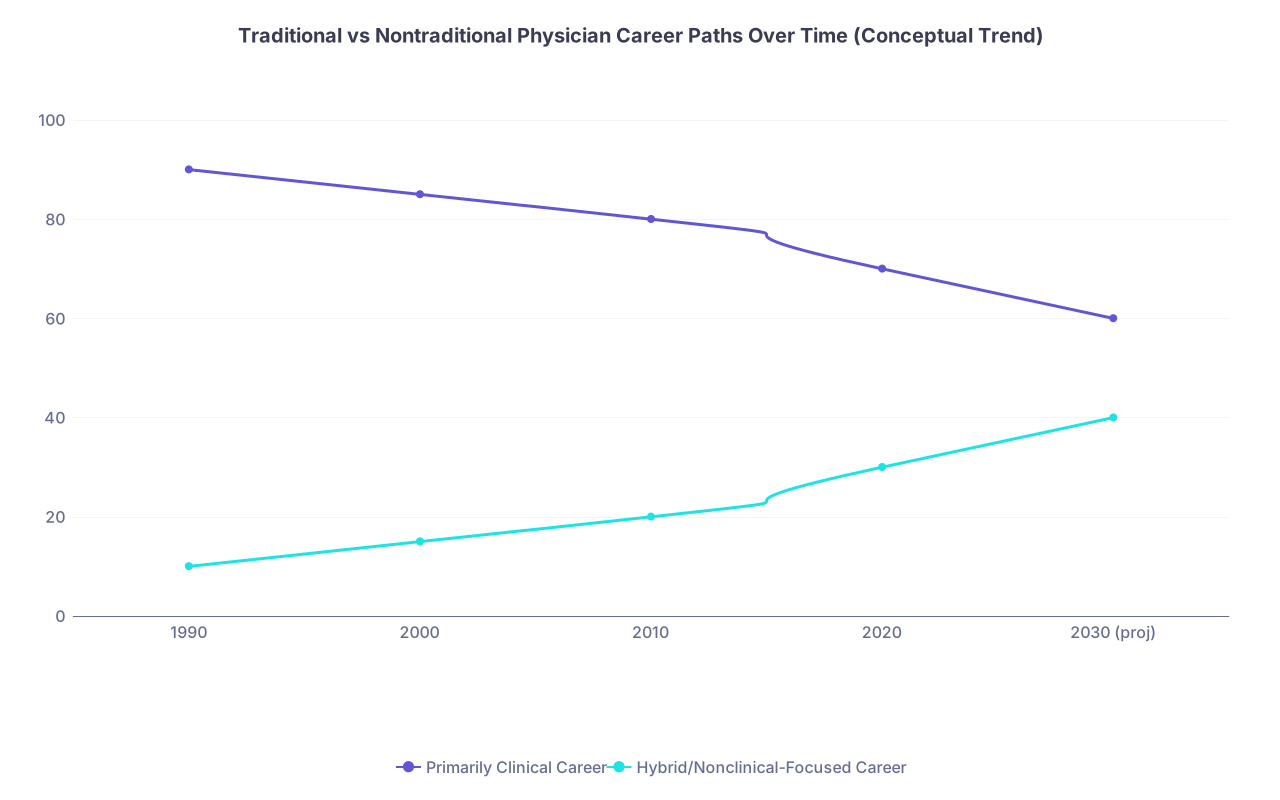
| Category | Primarily Clinical Career | Hybrid/Nonclinical-Focused Career |
|---|---|---|
| 1990 | 90 | 10 |
| 2000 | 85 | 15 |
| 2010 | 80 | 20 |
| 2020 | 70 | 30 |
| 2030 (proj) | 60 | 40 |
The exact numbers are illustrative, but the direction matches survey trends: fewer physicians expect (or desire) a 100% clinical, single‑employer, 30‑year trajectory.
8. If You Are Considering Leaving Clinic: How to Use the Data
You do not need pep talks; you need decision inputs.
Here is how I would use this data if I were sitting in your chair:
Benchmark your burnout.
Use a validated tool (like the Maslach Burnout Inventory or shorter derivatives available in many surveys). If you are hitting high scores on emotional exhaustion and depersonalization, statistically you are in the group with elevated exit risk. That is a signal, not a verdict.Quantify your drivers.
Write down and literally rank your top five stressors. Compare them to the survey drivers: admin, autonomy, workload, EMR, compensation. If your list matches the population pattern, you know this is structural. That pushes you toward either changing system or leaving system, not “trying harder.”Choose your target archetype.
Based on where physicians actually land (industry, admin, informatics, consulting, education, entrepreneurship), decide which two or three fit your skills and personality. Do not chase vague ideas like “something in pharma” without mapping it to known role types.Pilot nonclinical skill acquisition.
Career‑transitioned physicians in surveys often report they underestimated how long the shift would take. Many spent 6–24 months building skills, networks, or side projects before securing a full nonclinical role. You can start while still practicing, in small steps.Decide whether to go hybrid or full exit.
The data show many MDs are happiest with portfolio careers: some clinical work plus nonclinical roles. That can preserve meaning from patient care while reducing burnout drivers. Not everyone needs a binary “clinical vs nonclinical” decision.
9. The Bottom Line
The aggregate picture from surveys is blunt:
- Burnout is widespread, not rare. Around half of practicing physicians meet criteria.
- A sizable minority—roughly a quarter—are actively planning to leave or significantly reduce clinical work in the short to medium term.
- Those who do leave clinic tend to cluster into a handful of alternative medical careers: industry, administration, informatics, consulting, education, and entrepreneurship.
- Structural factors (admin burden, autonomy, workload) predict exit far more than personal “resilience.”
If you are an MD sitting in clinic thinking, “I cannot do this for another 20 years,” the data say you are not misreading reality. You are observing a system that is burning through its workforce at a measurable, unsustainable rate—and a professional culture that is slowly admitting there are valid paths outside the exam room.