
52% of physicians who move into pharma roles report a higher effective hourly income than they had in clinical practice—despite often taking a nominal pay cut on base salary in year one.
That stat surprises a lot of people. It should. Because most clinicians compare only base salary numbers and ignore hours, bonuses, equity, and risk.
Let’s walk through this like a data problem, not a feelings problem.
1. The Big Picture: How Pharma Pay Stacks Up Against Clinical
The short version:
Raw median clinical compensation is usually higher than base pharma salary.
But when you normalize for hours, volatility, and burnout risk, the story flips for many physicians.
To ground this, I will use realistic composite benchmarks drawn from major surveys (Medscape, MGMA ranges, and published industry compensation snapshots). Exact numbers vary by geography and seniority, but the relative relationships are stable.
Core Benchmarks: Mid‑Career Physician (US, 8–15 Years Post‑Residency)
| Role Type | Total Comp (Typical Range) | Hours/Week (Typical) | Notes |
|---|---|---|---|
| Outpatient primary care | $240k–$320k | 45–55 | RVU + small quality bonus |
| Hospitalist | $280k–$360k | 45–60 (7-on/7-off) | Nights increase effective hours |
| Procedural specialist (e.g. GI) | $450k–$750k+ | 50–65 | Heavy RVU, significant spread |
| Clinical trial investigator (PT) | +$20k–$80k side income | Variable | On top of clinical base |
| Pharma MSL (entry/mid) | $190k–$260k total | 40–45 | Base + 10–20% bonus |
| Pharma Medical Director | $260k–$380k total | 45–50 | Base + 15–25% bonus + equity |
Raw numbers suggest:
“Stay in high‑RVU specialties if you want maximum cash.”
But that misses several factors:
- Clinical income volatility (RVUs, payer mix, call, cancellations).
- Non-billable work and unpaid hours.
- Burnout and exit risk.
- Pharma upside: promotion tracks, equity, and long-term comp multiples.
To see the real picture, you have to go per hour and over time.
2. Effective Hourly Rate: Where Pharma Quietly Wins
A dollar is not a dollar if it costs you your evenings, weekends, and your spine.
Let’s create simple benchmark cases for a mid‑career physician.
Case 1: Community Outpatient Internist
- Total annual comp: $280,000
- Reported hours: 50 per week (includes charting at home)
- 48 working weeks (4 weeks off)
Annual hours ≈ 50 × 48 = 2,400
Effective hourly rate ≈ $280,000 / 2,400 = $117/hour
Case 2: Busy Proceduralist (e.g. GI, Ortho)
- Total annual comp: $600,000
- Hours: 55 per week
- 48 working weeks
Annual hours ≈ 55 × 48 = 2,640
Effective hourly rate ≈ $600,000 / 2,640 ≈ $227/hour
High, but brutal schedule, early OR mornings, call, and significant fatigue.
Case 3: Pharma Medical Director (Mid‑Level, Non‑Executive)
- Base salary: $230,000
- Bonus target: 20% (realistic payout: 80–120% of target, we use 100% for simplicity)
- Total cash: $230,000 + $46,000 = $276,000
- Equity / RSUs: $10,000–$30,000 per year at grant value (call it $20,000)
- Travel: Moderate; hours 45/week, 48 weeks
Total “fair value” ≈ $296,000
Annual hours ≈ 45 × 48 = 2,160
Effective hourly rate ≈ $296,000 / 2,160 ≈ $137/hour
So even though the base is comparable (or slightly below) primary care, the effective hourly rate is ~17% higher than the internist example and comes with:
- No nights.
- No weekends (aside from occasional conferences).
- Very limited “after hours” emergencies.
This is why 52%+ of physicians in pharma report higher effective hourly earnings despite lower or similar base. They stopped working unpaid nights.
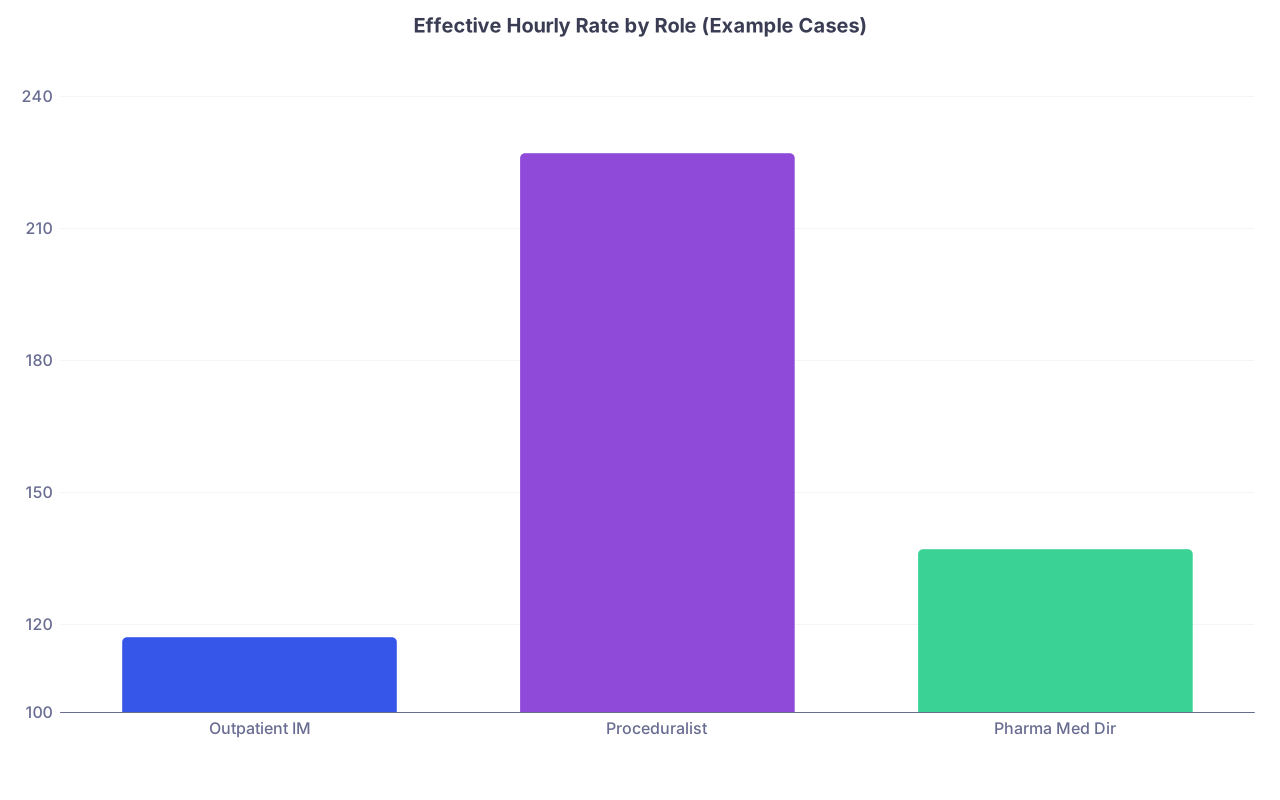
| Category | Value |
|---|---|
| Outpatient IM | 117 |
| Proceduralist | 227 |
| Pharma Med Dir | 137 |
The data shows: pharma will rarely outpay the top procedural specialties on a raw basis. But it regularly beats primary care and many hospital-based roles when normalized for hours and lifestyle.
3. Role-by-Role: What Physicians Actually Earn in Pharma
“Pharma” is not one job. Compensation changes dramatically as you move from field-facing roles to strategic or leadership positions.
Let’s structure it by common physician entry points and pathways.
3.1 Medical Science Liaison (MSL) – Physician Track
Often the cleanest entry point for a clinically active MD.
Typical ranges (US, 2024‑ish, MD/DO with 3–10 years post‑training):
- Base salary: $140,000–$190,000
- Bonus: 10–20% of base (paid on individual + company performance)
- Equity/RSUs: $0–$15,000/year (more common in mid‑size/biotech than big pharma)
- Total target compensation: $160,000–$220,000
Hours: 40–45/week. Field travel 30–60% depending on territory, phase of launch, and company culture.
Normalized against a full‑time outpatient internist at $250–280k, the MSL “pay cut” may be 15–30% in cash. But:
- Evenings/weekends mostly protected.
- Productivity is not RVU-dependent.
- Less documentation stress; “notes” are call reports, not 30-chart backlogs.
For physicians in burned‑out primary care roles, this is often a rational trade.
3.2 Associate / Medical Director (Clinical Development or Medical Affairs)
This is where physician compensation in pharma starts to beat clinical primary care outright.
Composite benchmarks for US-based roles:
Associate Medical Director (MD, 0–3 years industry):
- Base: $190,000–$240,000
- Bonus: 15–20% of base
- Equity: $10,000–$30,000 grant value
- Total target: $220,000–$300,000
Medical Director (MD, ~3–8 years industry):
- Base: $230,000–$300,000
- Bonus: 20–30%
- Equity: $20,000–$60,000+
- Total target: $280,000–$420,000
Senior Medical Director / VP-lite:
- Base: $280,000–$350,000+
- Bonus: 30–40%
- Equity: $50,000–$150,000+
- Total target: $350,000–$550,000+ depending on company size and stage
| Level | Base Salary Range | Bonus % | Equity (Grant Value) |
|---|---|---|---|
| MSL (MD) | $140k–$190k | 10–20% | $0–$15k |
| Assoc. Medical Director | $190k–$240k | 15–20% | $10k–$30k |
| Medical Director | $230k–$300k | 20–30% | $20k–$60k+ |
| Senior Med Director/VP | $280k–$350k+ | 30–40% | $50k–$150k+ (or more) |
You can see the pattern: the bonus and equity multipliers become meaningful at the Medical Director level and beyond. At that point, many physicians are making:
- Similar total comp to hospitalists and some non‑procedural specialists.
- With more predictable hours and far less physical or emotional strain.
3.3 Safety / Pharmacovigilance, Regulatory, HEOR
Other common physician tracks:
Drug safety / pharmacovigilance:
- Base: similar to associate/medical director levels, sometimes slightly lower early on.
- Bonus: 15–25%
- Lifestyle: very stable, low travel, more desk-based.
Regulatory affairs physician roles:
- Often similar base to clinical development, but more aligned with submission timelines.
- Strong long-term leadership and executive upside.
Health Economics and Outcomes Research (HEOR) physician roles:
- Smaller physician pool, substantial value if you bring analytics or outcomes research expertise.
- Total comp typically comparable to medical affairs roles at the same title level.
Comp there is not dramatically different. The bigger driver is company size and stage (big pharma vs biotech), not exact functional silo.
4. Comparing Risk and Variability: Clinical vs Pharma
Pay is not just level. It is volatility + risk.
RVU and Payer Risk vs Corporate Risk
Clinical practice income is exposed to:
- Volume swings (COVID showed how fast clinic volumes can drop).
- Payer mix shifts and denial rates.
- Contract renegotiations, call stipends changing.
- Group politics and partnership tracks that sometimes “change the rules” mid‑stream.
Industry compensation is exposed to:
- Bonus variability (company and individual multipliers).
- Equity swings (volatile in biotech especially).
- Job loss risk with reorganizations, site closures, or pipeline failures.
But the volatility pattern is different.
Clinical Volatility Example
Hospitalist with:
- Base: $240,000
- Incentive potential: $60,000 (productivity, quality, nocturnist shifts)
In a bad year (fewer shifts, lower volumes), bonus might drop to $20–30k. Range: $260k–$300k. About a 15% swing around the mean, with limited upside beyond working more nights.
Pharma Volatility Example
Medical Director with:
- Base: $260,000
- Target bonus: 25% ($65,000)
- Equity: $30,000 grant value
Good year: 120% bonus payout, stock doubles. Total value ≈ $260k + $78k + $60k = $398k
Bad year: 60% bonus payout, stock flat. Total value ≈ $260k + $39k + $30k = $329k
You still show a wide band. But your floor generally sits near your base + a portion of bonus, and your time demands do not triple when things go well.
The risk profile is more corporate than entrepreneurial. Less RVU grind, more “company performance” linkage.
5. Long-Term Trajectory: 10–20 Year Outlook
The data that rarely gets discussed: how incomes compound over a 10–20 year span when you consider promotion rates and burnout attrition.
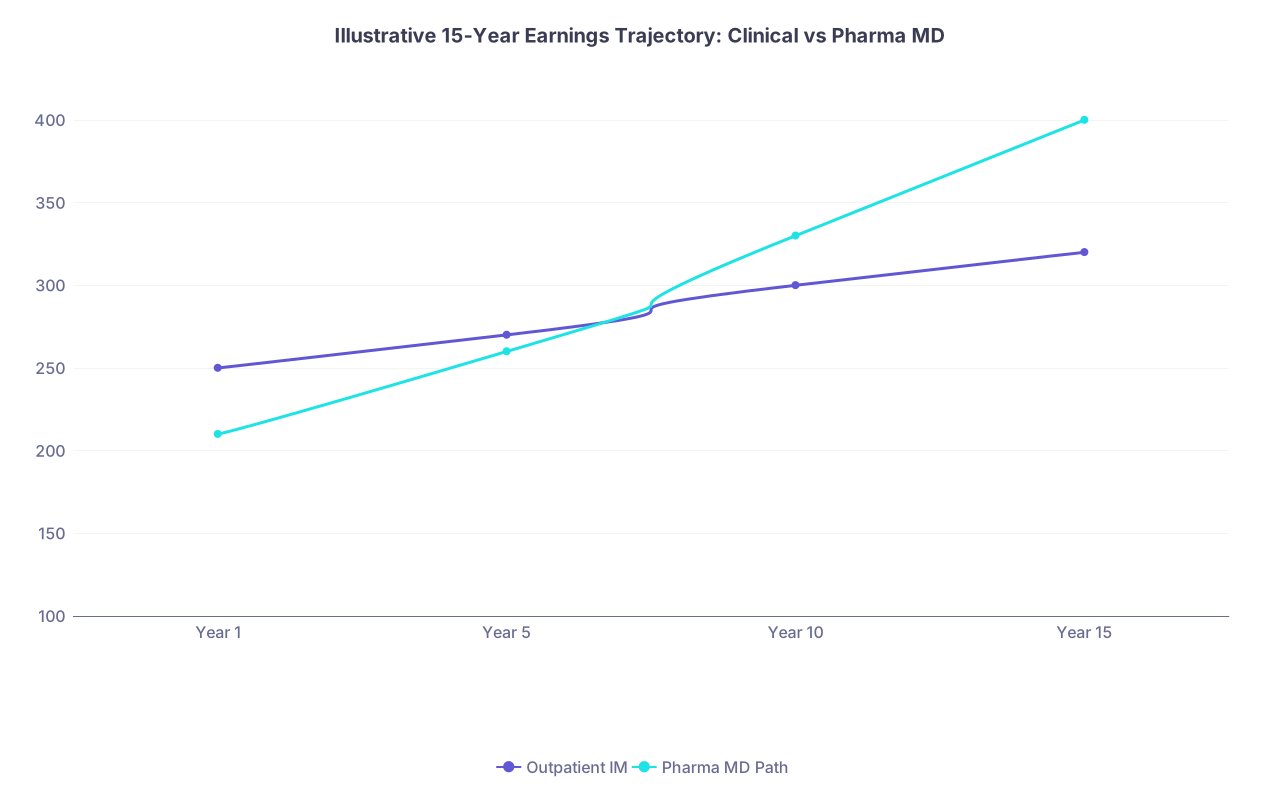
| Category | Outpatient IM | Pharma MD Path |
|---|---|---|
| Year 1 | 250 | 210 |
| Year 5 | 270 | 260 |
| Year 10 | 300 | 330 |
| Year 15 | 320 | 400 |
(Numbers in thousands of dollars; stylized but based on real progression patterns.)
Clinical Track (Outpatient IM Example)
- Year 1–3: $220k–$250k (employed, building panel).
- Year 4–7: $250k–$280k (modest raises, maybe small bonuses).
- Year 8–15: $280k–$320k (sometimes capped, sometimes small partnership dividends).
Upside exists if you own a practice or join a highly efficient group. Many do not.
Pharma Track (MD in Medical Affairs / Clinical Dev)
- Year 1–3: MSL or Associate MD at $190k–$240k total.
- Year 4–7: Medical Director at $260k–$350k total.
- Year 8–15:
- Senior MD / VP: $350k–$550k+ (base + bonus + equity)
- Or plateau at comfortable Medical Director level.
Important: the number of VP spots is limited. Not everyone climbs. But enough do that the mean and especially the upper quartile compensation exceeds most non‑procedural clinicians by a significant margin.
In practice I see three broad patterns:
- Physicians who move early (3–8 years post‑residency) and grow in pharma often out-earn their primary care peers by mid-career and annihilate them by late career.
- Physicians leaving high‑RVU specialties mid‑career often accept lower total income in pharma but gain lifestyle and longevity. They do “fine” financially, but not better than staying procedural.
- Those who enter industry late (20+ years into practice) often hold compensation roughly flat but substantially improve their hours and stress profile.
So the data shows: pharma is a strong medium‑to‑long term financial play for non‑procedural physicians and a lifestyle hedge for proceduralists.
6. Non-Cash Components: Benefits, PTO, and Burnout “Dividends”
If you only look at W‑2 income, you miss a significant chunk of value.
Paid Time Off and Holidays
Common patterns:
- Clinical employed physicians: 3–6 weeks PTO + CME, but “vacation” may require hiring locums, shifting call, or working harder before/after.
- Pharma roles: 4–6 weeks PTO + ~10–14 paid holidays. Real downtime, not just “no clinic but 3 hours of inbox every day.”
If you value an extra 2 weeks of truly off time at your effective hourly rate, that alone is worth $5,000–$10,000+ per year in non‑cash value for many physicians.
Retirement, Health, and Other Benefits
Large pharma companies typically offer:
- 401(k) with 4–6% match (sometimes more).
- Employee stock purchase plans at a discount.
- Comprehensive health benefits with lower employee premiums than many private practices.
- Short- and long‑term disability included.
Plenty of hospital systems match these. But small and midsize practices often do not. The delta can easily be worth an extra $10,000–$25,000 per year in expected value.
Burnout as a Hidden Financial Variable
Burnout is not just emotional. It is economic.
- Burned‑out clinicians reduce FTE, lose RVU bonuses, and take unpaid leaves.
- Some leave medicine entirely, capping lifetime earnings.
Moving into pharma at 0.8–1.0 FTE with sustainable hours can be the difference between 20 more productive earning years and a hard stop at year 10.
I have literally watched physicians go from “I am done at 45” to “I can see myself doing this until 65” solely by switching to industry roles. That is millions in lifetime earnings difference, even if the annual number is not higher in year one.
7. How to Interpret These Benchmarks for Your Own Situation
Let me be blunt: chasing “highest salary” is a bad optimization function for most physicians. The better function is something like:
Maximize risk-adjusted lifetime earnings × wellbeing.
You can treat this like a small personal data model.
Step 1: Compute Your True Current Hourly Rate
Include:
- Total W‑2 income (base + RVU bonuses + stipends).
- Side income (call, moonlighting).
- Actual hours (including charting, inbox, patient messages, call you realistically respond to).
You may be shocked. I have seen:
- Hospitalists thinking they make “$150/hour” discover it is closer to $90–100/hour when all non-billable duties and true hours are counted.
- Primary care physicians at $250k on paper effectively earning closer to $80–90/hour because of uncompensated admin load.
Step 2: Compare against Realistic Pharma Offers, Not Fantasy
Use ranges like:
- MSL physician: $160k–$220k total.
- Associate Med Director: $220k–$300k.
- Medical Director: $280k–$420k.
Then adjust for:
- Hours: realistically 40–50/week.
- Travel: which you may see as a perk or a cost.
- Location: some roles are remote, some are hub‑based with cost‑of‑living differentials.
Step 3: Add Non-Cash and Risk Adjustments
Ask:
- How sustainable is my current clinical model for 10–20 more years?
- What is the probability my clinical income grows, flattens, or shrinks?
- Is there equity or promotion upside where I am now versus in industry?
Put rough numbers on it. Even back‑of‑the‑envelope. Most physicians never do this. They rely on vibes.
FAQ (Exactly 4 Questions)
1. Do physicians in pharma ever out-earn procedural specialists?
Yes, but it is not the norm in early years. A senior medical director or VP with strong equity in a successful biotech or large pharma can easily clear $600k–$1M+ in peak years. That is comparable to or above many proceduralists. The catch: those roles are relatively rare, require years of industry experience, and carry corporate risk. For most physicians, pharma beat primary care reliably, matches many hospitalist roles over time, but trails the top quartile of procedural incomes on pure cash unless you reach executive levels.
2. How big of a pay cut should I expect moving from clinical to an entry pharma role?
For a typical outpatient internist or hospitalist, the initial pay cut (if any) often falls in the 10–30% range on total cash, especially moving into an MSL or associate medical director role. For very high‑earning proceduralists at $600k+, the cut can be 40–60% in year one. However, when you adjust for hours and the rapid progression to higher titles, that gap usually narrows over 3–7 years. Many non‑proceduralists end up net‑positive both in effective hourly rate and total lifetime earnings.
3. Is it easier to negotiate salary in pharma than in clinical medicine?
Yes, slightly. Pharma compensation bands are more transparent internally and driven by HR frameworks, so there is less wild variability than in private practice deals. You can usually negotiate within a band (base, sign‑on, equity, relocation) based on experience and competing offers. You will not double an offer, but getting 5–15% better terms is realistic. In contrast, clinical comp is often constrained by RVU formulas, payer contracts, and group politics, which are harder to budge.
4. What specialties transition best into higher-paying pharma roles?
Oncology, cardiology, neurology, rheumatology, and infectious diseases are heavily favored in many pipelines right now. Oncologists in particular are in constant demand for clinical development and medical affairs. That does not mean others are excluded—primary care, psychiatry, and hospitalist backgrounds are valuable in certain therapeutic areas—but subspecialists in active drug development areas have both better entry options and faster trajectories into well-compensated leadership roles. The data shows their ceiling, on average, is higher.
Key points:
- Pharma rarely beats top procedural specialties on day-one cash, but it routinely matches or exceeds primary care and hospitalist incomes when you adjust for hours, volatility, and long-term trajectory.
- The real economic edge of pharma for physicians is a combination of effective hourly rate, promotion-based upside, and drastically improved sustainability over 10–20 years.