
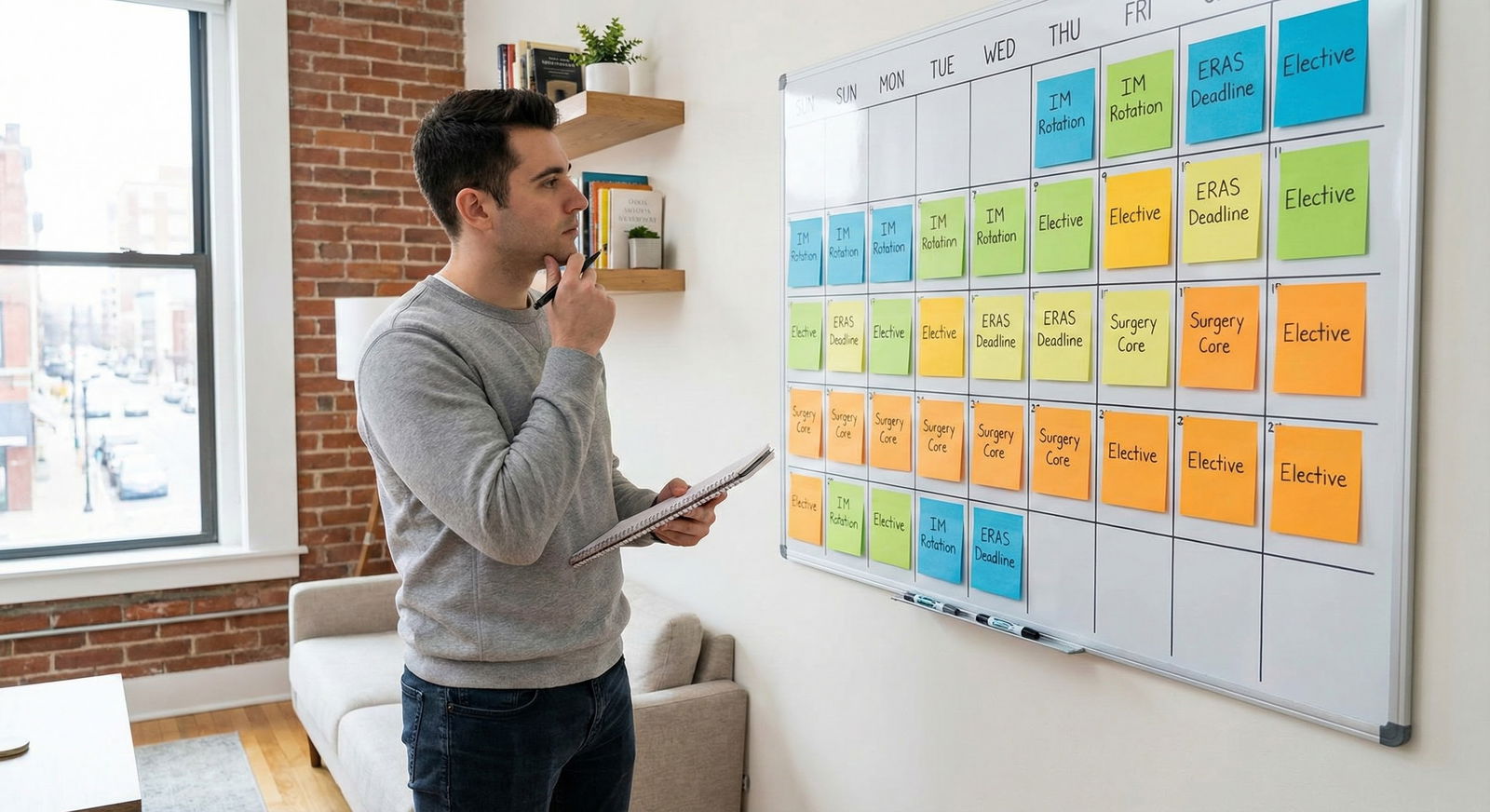
The way you handle your first few rotations after a leave of absence will matter more than whatever caused the leave.
If you’re coming back from time away—burnout, illness, remediation, mental health, family crisis, professionalism issue—your core job now isn’t “get through rotations.” It’s rebuild trust. Quietly, consistently, and strategically.
Let me walk you through exactly how to use your clerkships to do that.
Step 1: Understand What People Are Really Worried About
No one is going to say this out loud in exactly these words, but here’s what’s in the air when a student returns from a leave:
- “Will they show up consistently?”
- “Are they safe with patients?”
- “Can they handle stress without falling apart?”
- “Are they reliable enough that I’d rank them for residency?”
You’re not just fighting whatever’s in your file. You’re fighting the story people imagine when they hear “took a leave.”
So you need to target those exact fears with your behavior on rotations.
I want you to keep four pillars in your head. Every attending, every resident, every clerkship director is unconsciously grading you on these:
- Reliability
- Stability
- Capacity (can you do the work)
- Insight (do you understand what went wrong and what’s different now)
We’re going to build your rotation strategy around those.
Step 2: Pick Rotations Intentionally, Not Just What Fits the Schedule
If you’re still early enough in scheduling, stop thinking “What do I like?” for a second. Think “Where can I rebuild my reputation fastest and most visibly?”
You want:
- Rotations with structured evaluation
- Attendings who actually write detailed comments
- Settings where you interact with multiple levels of supervision (interns, seniors, attendings, fellows)
Because you need documented, credible people saying: this student is solid.
Here’s a simple priority list if you’re heading toward residency applications within 12–18 months:
| Priority | Rotation Type | Why It Helps |
|---|---|---|
| 1 | Core IM or Surgery Sub-I | Shows reliability and stamina in high-visibility setting |
| 2 | Away rotation in target specialty | Fresh observers, new narrative, strong letters |
| 3 | Home institution acting internship | Direct access to program leadership |
| 4 | Outpatient continuity clinic block | Demonstrates follow-through and organization |
| 5 | Short, focused electives with known good teachers | Easier to shine, get detailed evals |
If you already have a specialty in mind, your first high-stakes “trust rebuild” rotation should be adjacent to that specialty, but not necessarily the most cutthroat version of it. For example:
- Aiming for ortho? A strong general surgery or trauma surgery month where you can be relentlessly reliable.
- Aiming for psych? Crush inpatient internal medicine or family medicine—show you can handle medically complex patients and systems.
You’re trying to show: “I function like a resident already, in real-world settings.”
Step 3: Control the Story Before Others Fill in the Blanks
You can’t undo the leave. But you can absolutely shape how it’s understood.
You need two versions of your story:
- The short professional version for residents/attendings you work with:
- One or two sentences, no oversharing, focused on what’s changed.
- The detailed, reflective version for:
- Your dean’s letter (MSPE) meeting
- Your specialty advisor
- Program directors, if it comes up at interviews
Example of the short version (adjust details to your situation):
Mental health leave:
“I took a medical leave last year to address a mental health issue. I worked closely with my physician, made some real changes in how I manage stress, and I’m fully cleared and glad to be back.”Family crisis:
“I stepped away for a defined leave to handle a significant family situation. That’s resolved, my responsibilities are stable now, and I’ve been able to re-focus fully on my training.”Academic/professionalism remediation:
“I had a leave related to academic performance/professionalism. I completed a structured remediation plan, got mentoring, and I’m using this year to show consistent growth and reliability.”
You are not on the witness stand. You do not have to give details of your diagnosis or your family’s business. Keep it steady, factual, forward-looking.
If someone pushes uncomfortably:
- “I’d prefer not to go into more personal detail, but I’m happy to talk about how I’ve adjusted my approach to clinical work.”
Say it calmly and move on. If they’re someone with influence (clerkship director, specialty adviser), pivot to what supports your case: new habits, systems, feedback you’ve already gotten since returning.
Step 4: Set Up Your First Rotation Back So You Don’t Get Steamrolled
Your first rotation back is the most dangerous one. Not because you’ll fail, but because you’re rusty and emotionally revved up. That’s a great combo for missteps.
You want to do three very specific things before Day 1:
- Email the attending or clerkship director 3–5 days before
- Briefly reintroduce yourself.
- Acknowledge you’re returning from time away.
- Signal you want feedback early and often.
Example:
“Dr. Smith,
I’m looking forward to starting on Internal Medicine next week. I’m returning from a leave of absence and am eager to get back into clinical work. In my first week, I’d appreciate any early feedback on my performance so I can make adjustments quickly.
Best,
[Name]”
This does two things: it shows maturity, and it makes it much harder for them to complain later that you were “unaware of your gaps.”
Lower your ego about day 1–3
- Assume your first few presentations will be rough.
- Assume your time management will feel off.
- That’s okay. What matters is how coachable you look.
Front-load structure
- Print or download the rotation expectations.
- Build a simple daily checklist: pre-rounding start time, who you pre-round with, typical note deadlines, etc.
- Ask a senior on day 1: “What does an excellent student look like on this rotation? What do they actually do differently?”
You can’t “wing it” your way out of a leave. You need structure.
Step 5: Behave Like Someone Who Has Nothing to Hide
The instinct after a leave is often to lay low. Blend in. Don’t draw attention. That’s exactly backward.
You don’t have to stand on a chair and announce your situation. But your behavior should scream: “I am not fragile. I am not hiding. I am here to work.”
Concrete behaviors that rebuild trust very fast:
- Show up a little earlier than everyone else. Not two hours. Fifteen to twenty minutes. Use it to review your patients and check overnight events.
- Volunteer for unglamorous tasks: calling families, chasing labs, updating discharge summaries.
- Own your screwups out loud and quickly:
“I should have checked that again before rounds. I’ve corrected it and updated the note.” - Ask 1–2 high-quality questions daily. Not constant peppering. Just enough to show your brain is on.
What kills trust fastest is avoidance and defensiveness. People will forgive a clunky SOAP note. They do not forgive a vibe of “You can’t touch me; I’ve had issues.”
Step 6: Use Mid-Rotation Feedback as Your Weapon, Not a Threat
Students returning from leave often dread mid-rotation feedback. That’s a mistake. Mid-rotation feedback is where you prove you’re not the same person who needed the leave.
You should actively force this conversation if they try to skip it.
On day 5–7, ask your attending or senior:
“Could we take 5–10 minutes this week for mid-rotation feedback? I especially want to know if there are any concerns about my reliability, communication, or clinical reasoning.”
Yes, use those three words. Reliability, communication, clinical reasoning. That’s what people are afraid of.
When they give feedback, do three things:
Repeat back concretely what you heard
“So I’m doing well with patient rapport, but I need to tighten my presentations and be more concise on plans.”State one specific change you’ll make
“I’ll start timing my presentations and limit myself to 3 key problems per patient with clear bullet plans.”Document it privately
Write a quick summary for yourself the same day: date, who gave feedback, what they said, and what you changed. This becomes gold for your dean’s letter prep and personal statement: “Since returning from my leave, I’ve sought early feedback on each rotation and adjusted by doing X, Y, Z.”
Step 7: Targeted Performance on Key Rotations Before Residency Applications
For residency, not all rotations are equal. Some carry far more weight in reassuring programs you’re a safe bet.
Here’s how I’d sequence your “trust rebuilding” if you’re within one application cycle:
One strong core medicine or surgery rotation
- Goal: Show stamina, team function, and that you can carry a reasonable patient load.
- What to prioritize: Perfect attendance, timely notes, taking ownership of 3–5 patients reliably.
One rotation in or adjacent to your desired specialty with a clear letter writer
- Goal: Get a letter that explicitly addresses your growth and reliability post-leave.
- Before the last week, ask for the letter directly and honestly: “I’m applying to EM, and as you know I returned from a leave. Do you feel you’ve seen enough of my work to write a strong letter that speaks to how I’ve handled that and performed since returning?”
If they hesitate? Believe them. Do not force that letter. Find someone else.
One acting internship (sub-I) where your performance looks like an intern
- Goal: Show that if a program ranks you, you’ll function like a PGY-1 on July 1.
- This is where you want comments on:
- “Functions at or near intern level”
- “Independent but knows when to ask”
- “Consistently reliable and calm under pressure”
Use those comments in your ERAS experiences descriptions and personal statement strategically.
Step 8: Make Your Evaluations Explicitly Address the Leave (When Possible)
Here’s the move almost no one does, but you should: where you have a good relationship with an attending, ask them to speak directly—but briefly—about your return from leave in their evaluation or letter.
Something like:
“Dr. Lee,
As you know, I returned from a leave of absence before this rotation. Program directors may wonder how I’ve done since coming back. If you’re comfortable, it would be very helpful if your evaluation/letter could comment specifically on my reliability, growth, and how I handled feedback during this month.”
Most decent attendings understand the game. Many will appreciate that you’re not pretending the leave never happened. You’re reframing it: “Yes, that’s in my file. And here’s what I did with it.”
Step 9: Strategically Use Away Rotations (Without Letting Them Wreck You)
If you’re applying to a competitive specialty or trying to escape a home institution that mostly knows you by your leave, away rotations can be powerful. Or disastrous.
Use aways to:
- Get fresh eyes on you from people who don’t know your history.
- Earn letters from programs that might be more objective about your actual performance.
- Prove that in a totally new system, you still show up reliable and safe.
Do not use aways to:
- “Hide” your leave. They’ll see the gap on your CV.
- Overextend yourself to the point of relapse or new problems.
- String together three aways back-to-back with no rest if you just recovered from burnout or illness.
On an away, you need to be especially deliberate the first week:
- Have your short version of the leave story ready. They’ll ask what you did during that extra time.
- Show that you’ve thought about how that time made you a better clinician now: more empathetic, stronger at boundary-setting, better with stress.
Step 10: Tie It All Together in Your Application Narrative
By the time ERAS opens, you want three kinds of evidence that you’ve rebuilt trust:
Concrete performance data
- Recent clerkship grades, especially on demanding rotations
- Comments that mention:
- “On time”
- “Prepared”
- “Dependable”
- “Responds well to feedback”
- “Steady under pressure”
Letters that quietly but clearly neutralize the leave
- Phrases like:
- “Since returning from time away, [Name] has been one of our most reliable students.”
- “Any prior concerns about [X] were not evident during this rotation.”
- “I would have no hesitation having [Name] as an intern on my service.”
- Phrases like:
Your own reflection
- Personal statement: 2–4 sentences, not a memoir.
- MSPE addendum or dean’s note: work with your dean to make it factual and forward-focused.
You do not need a long confession. Any personal statement that turns into “my leave and I” for a full page is going to hurt you. Focus on:
- What changed in your habits
- How it shaped the kind of physician you want to be
- How your recent rotations show this isn’t just talk
Step 11: Protect Yourself From Making the Same Mistakes Again
There’s a dark pattern I’ve seen too many times:
Student returns from leave. Overcompensates. Says yes to everything. Crushes first rotation. Crashes midway through the second. New professionalism or performance issue. Now we’re in deep trouble.
You have to treat your own stability as a patient safety issue. Because it is.
Concrete guardrails:
- Hard stop time at night unless something is truly urgent. If everyone stays until 7, you leave at 7:15, not 9:30 “to prove yourself.”
- One day off per week is non-negotiable. Do not let FOMO or guilt push you into “just coming in to help.”
- Simple stress checks twice a week:
- Sleep: under 5 hours more than twice/week?
- Appetite: skipping multiple meals?
- Mood: daily dread, tears in the call room, or wishing you’d get sick just to rest?
If those are happening, you talk to someone: student health, your therapist, a trusted faculty member. Early. Before you start missing deadlines or snapping at people.
Remember: the worst thing for your residency chances isn’t the old leave. It’s a new, fresh incident during this supposed “comeback” period.
Step 12: If You Already Had a Rough Rotation After Coming Back
If you’re reading this after you’ve already stumbled on your first rotation back, it’s not game over. But now you have to be blunt and strategic.
Here’s the play:
Request a meeting with the clerkship director
- “I know my performance this month wasn’t where it needs to be, and I want to understand specifically what I need to change.”
Ask three questions directly
- “Are there concerns about my reliability?”
- “Are there concerns about my professionalism?”
- “What would you need to see from me on future rotations to be confident writing a positive evaluation?”
Loop your dean or student affairs in immediately
- You want them aware before there’s a pattern, not after.
Then, on the next rotation, over-communicate your commitment to improving. And get mid-rotation feedback in writing if you can (even just an email recap you send: “Just to confirm what we discussed…”).
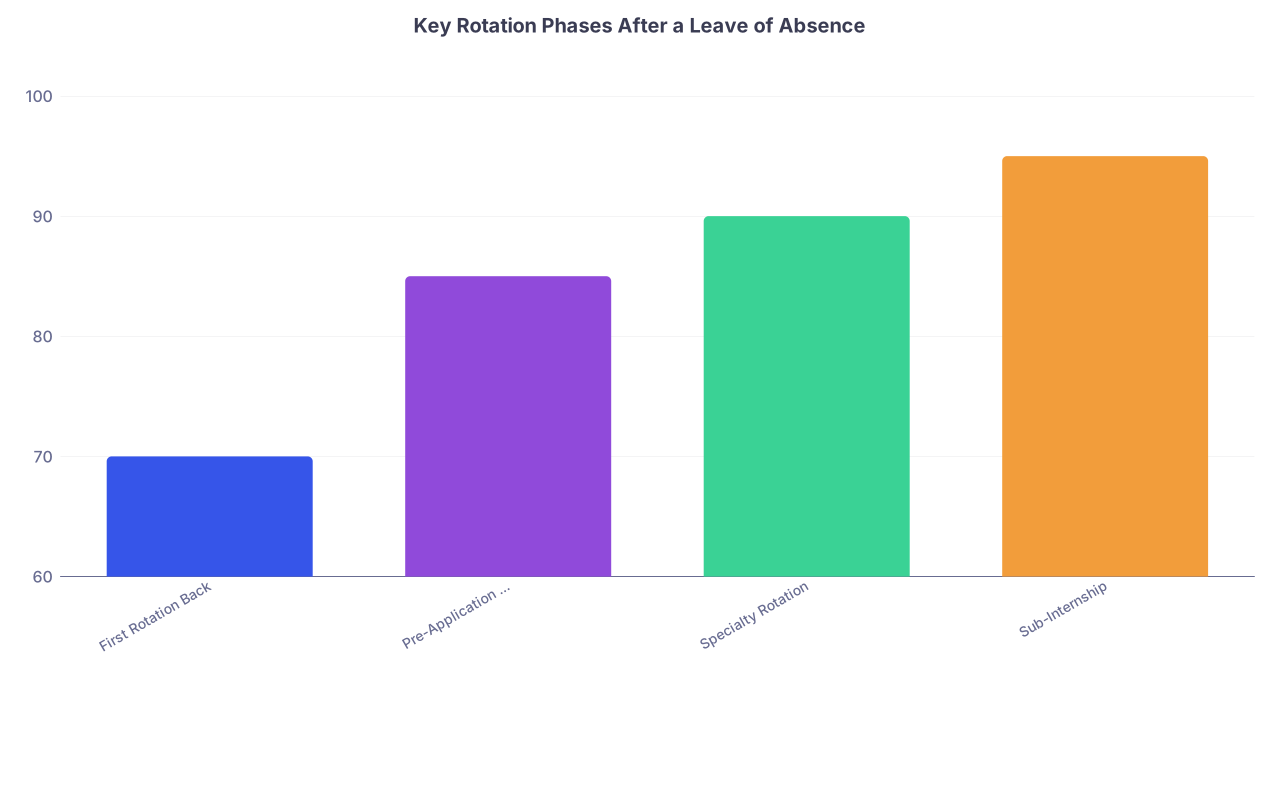
| Category | Value |
|---|---|
| First Rotation Back | 70 |
| Pre-Application Core Rotation | 85 |
| Specialty Rotation | 90 |
| Sub-Internship | 95 |

| Step | Description |
|---|---|
| Step 1 | Return from Leave |
| Step 2 | Plan Rotation Order |
| Step 3 | First Core Rotation |
| Step 4 | Mid-Rotation Feedback |
| Step 5 | Adjust Performance |
| Step 6 | Specialty Rotation for Letter |
| Step 7 | Acting Internship |
| Step 8 | Compile Strong Evaluations |
| Step 9 | Prepare Residency Application |
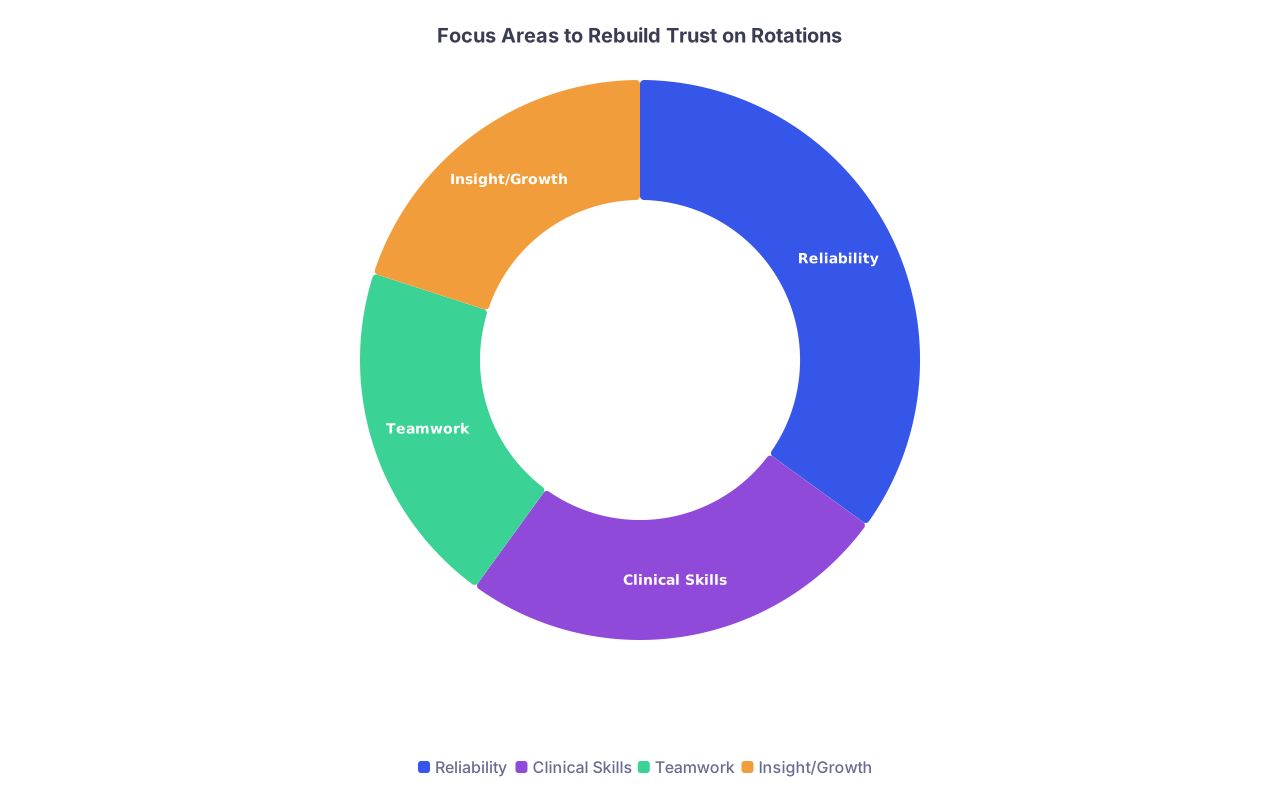
| Category | Value |
|---|---|
| Reliability | 35 |
| Clinical Skills | 25 |
| Teamwork | 20 |
| Insight/Growth | 20 |



Open your next rotation schedule right now and identify the first attending or clerkship director you’ll work with. Draft a three-sentence email asking for early feedback and mentioning you’re focused on reliability and growth since your leave. Send it before the day ends. That’s how your comeback starts—on purpose, not by accident.


