
The fastest way to sabotage your sub‑internships is to stumble into them exhausted. Most students do. You are not going to.
You’re going to build buffer rotations on purpose—months, weeks, and even days that are designed to lower your cognitive load so you can peak when it actually matters.
Below is a concrete, time‑anchored plan: what to do 9 months out, 6 months out, 3 months out, and then week‑by‑week as you approach your critical sub‑Is and away rotations.
Big Picture: Where Buffer Rotations Fit in the 4th-Year Timeline
At this point, zoom out first.
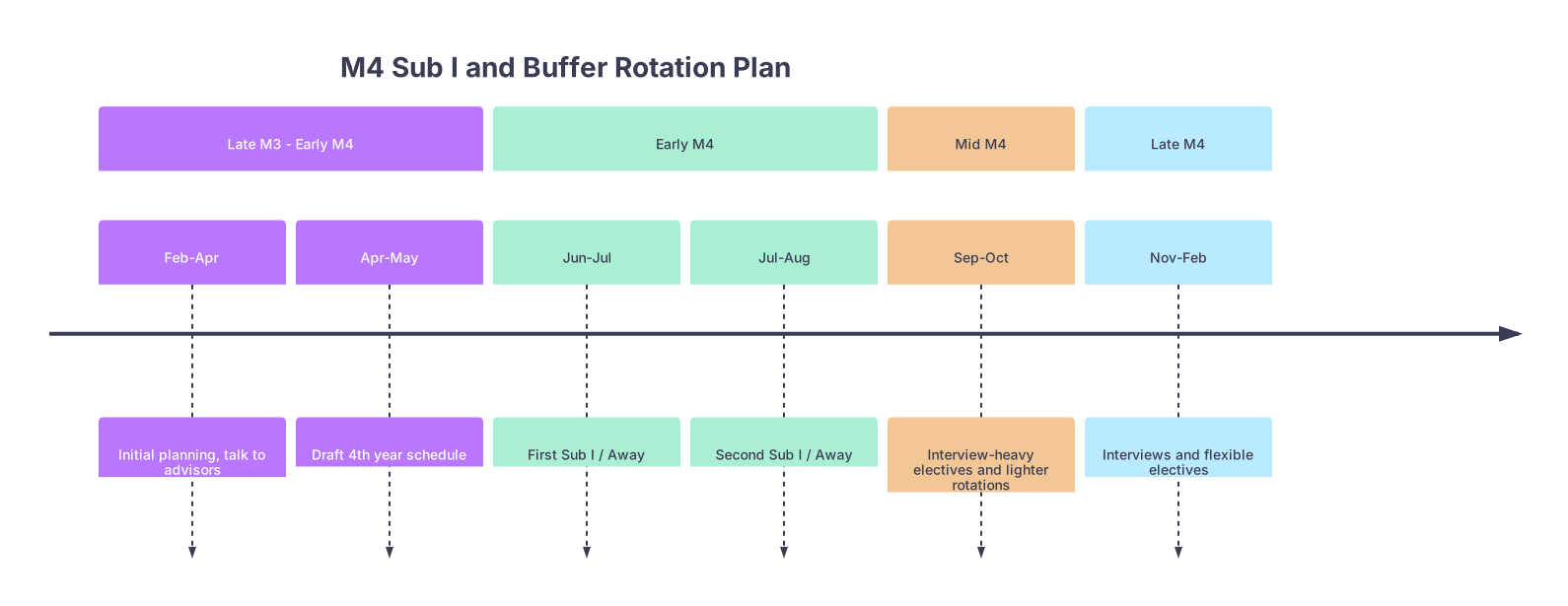
For most US MD/DO students aiming for a competitive or moderately competitive specialty, 4th year roughly looks like this:
| Period | Event |
|---|---|
| Late M3 - Early M4 - Feb-Apr | Initial planning, talk to advisors |
| Late M3 - Early M4 - Apr-May | Draft 4th year schedule |
| Early M4 - Jun-Jul | First Sub I / Away |
| Early M4 - Jul-Aug | Second Sub I / Away |
| Mid M4 - Sep-Oct | Interview-heavy electives and lighter rotations |
| Late M4 - Nov-Feb | Interviews and flexible electives |
You want your most important sub‑Is and away rotations during:
- June–October, after you’ve shaken off Step fatigue
- And not after a soul‑crushing, 80‑hour surgery block
The buffers are the rotations immediately before and after these sub‑Is that prevent you from entering them fried and leaving them so wrecked that you cannot function for ERAS and interviews.
Think in three layers:
- Macro‑buffer (month‑level): Which month‑long rotations go right before and right after your critical sub‑Is?
- Meso‑buffer (week‑level): How are your call schedules, weekends, and days off stacked in the 2–3 weeks leading up to a sub‑I?
- Micro‑buffer (day‑level): What do you protect in the 3–5 days before Day 1 of that high‑stakes rotation?
We’ll walk this chronologically from late M3 through the end of sub‑I season.
6–9 Months Before Sub‑Is: Setting the Framework (Late M3 – Early M4)
At this point you should be in late M3, finishing core clerkships, maybe studying for Step 2.
This is your architect phase. You are not tired yet from sub‑Is. You’re tired from clerkships and exams, which is different. Use this window to design your year instead of letting your school’s default template chew you up.
Step 1: Identify Your “Critical” Rotations
“Critical” means:
- Any sub‑I or acting internship in your chosen specialty
- Any away/audition rotation where you’d be thrilled to match
- For some specialties (e.g., EM), home EM + key aways function as sub‑Is
Make a list with target months.
Example for internal medicine hopeful:
- July: Home IM sub‑I
- August: IM away rotation #1
- September: IM away rotation #2 (stretch goal)
These three are your anchor points. Everything else orbits around them.
Step 2: Know Which Rotations Cannot Be Buffers
These destroy you right before a sub‑I:
- General surgery with heavy call
- OB/GYN nights or L&D stretches
- ICU where you’re basically an intern
- Any 4th‑year sub‑I in another field
- Time‑intensive research with strict deliverables
If your school tries to lock you into one of these directly before a critical sub‑I, you push back now, not later.
Step 3: Collect Your “Low‑Load” Options
At this point you should ask seniors what was actually chill, not what looks chill on paper.
Typical good buffers:
- Radiology
- Pathology
- Anesthesiology (at some programs)
- Outpatient electives (derm clinic, allergy, PM&R, neuro clinic)
- Palliative care (often emotionally heavy but schedule‑friendly)
- Non‑clinical electives (QI, teaching, advocacy) with flexible hours
Build a short list of 4–6 genuine buffer rotations.
| Rotation Type | Typical Load Level |
|---|---|
| Radiology Elective | Low |
| Outpatient Derm | Low |
| Palliative Care | Moderate |
| ICU Sub-I | Very High |
| General Surgery | Very High |
| OB/GYN L&D Nights | Very High |
You’ll deploy these just before and after your key sub‑Is.
3–6 Months Before: Build the Month‑Level Buffers
Now you’re in early M4 or late M3 signing forms and finalizing VSLO/away applications.
At this point you should anchor your sub‑Is, then pad them.
Step 4: Place Sub‑Is and Aways First
Decide:
- Which months are best for your specialty?
- When do programs like to see you? (e.g., EM prefers June–September, surgical specialties often want early)
- When will Step 2 be done?
Then commit.
Example schedule skeleton for IM:
- June: Step 2 + light elective
- July: Home IM sub‑I
- August: IM away #1
- September: IM away #2
Step 5: Install Macro‑Buffers Around Each Anchor
Now you add one buffer block before and ideally one buffer after each critical month.
For the example above:
- May: Radiology (buffer before June Step 2 + ramp up to sub‑Is)
- June: Step 2 + light outpatient elective
- July: Home IM sub‑I
- August: IM away #1
- September: IM away #2
- October: Outpatient elective (buffer after away run)
If you’re forced into a tougher rotation near a sub‑I, stagger:
Bad pattern:
- June: Surgery
- July: IM sub‑I
- August: IM away
Better pattern:
- June: Surgery
- July: Chill elective (buffer)
- August: IM sub‑I
- September: IM away
Yes, that might push your aways a month later. Being human and functional in August is more valuable than being technically “earlier” but half‑dead in July.
1–3 Months Before: Fine‑Tune Weeks and Call
Once the month blocks are set, the next layer is week‑by‑week.
At this point you should have:
- Sub‑Is scheduled
- At least some notion of where you’ll be physically (home vs away city)
- Access to draft call schedules or at least typical patterns
Step 6: Engineer a 7–10 Day Glide Path
Your goal for the 7–10 days before each critical sub‑I:
- No 28‑hour calls
- No night float
- No major exam scheduled in that window
- At least one real weekend day where you can sleep in and reset
How to do that in practice:
Talk to the clerkship/elective director early.
“I have a sub‑I starting July 1. Is it possible to avoid being on call the last weekend of June?”
People say yes more than you think—if you ask in April, not June 28.Trade call smartly.
If you must take a rough call day, front‑load it:- Week 1–2 of current rotation: take heavier call
- Week 3–4: protect at least the last 3–4 days
Avoid exams in that last week.
If the elective has a presentation or exam, get it done mid‑rotation.
Example 4‑week elective before an away sub‑I:
- Week 1–2: Normal participation, any call
- Week 3: Finish presentation, take one extra afternoon
- Week 4: No call last 5 days, leave hospital by 3–4 pm when possible
This is not laziness. This is peaking at the right time.
2–4 Weeks Before Each Sub‑I: Job‑Specific Prep, Not Volume Cramming
At this point you should stop trying to “re‑learn all of medicine” before each sub‑I. You won’t. You’ll just crank up anxiety.
The last 2–4 weeks are for targeted, low‑stress prep.
Step 7: Tighten Content in 20–30 Minute Blocks
While you’re on your buffer rotation:
- 3–4 evenings a week:
- 20–30 minutes of specialty‑specific questions (e.g., UWorld IM, Rosh for EM)
- 10–15 minutes of key protocols (admission orders, common consult reasons, call scripts)
Focus on:
- How to write an H&P in that specialty
- How to present on rounds in < 5 minutes
- Typical call issues and first steps
This is skill prep, not exhaustion prep.
Step 8: Use Light Days to Build Logistics
For away rotations especially, use your buffer month to:
- Book housing that’s walking distance or quick transit
- Confirm parking, badge pickup, orientation time
- Map grocery stores and gyms near where you’ll stay
Logistical chaos is hidden burnout. If you land in a new city on Sunday night, with no food, no idea where to park, and a 5:30 a.m. start Monday, you burned your buffer for no reason.
7 Days Before: Switch from “More” to “Protect”
Now you’re one week out.
At this point you should stop adding things and start removing them.
Step 9: The 7‑Day Checklist
During the final week of your buffer rotation:
Sleep:
- Aim for three nights of 7–8 hours, not heroic but consistent
- Start adjusting your sleep/wake to match anticipated sub‑I hours
Schedule:
- Block off the evening before Day 1 (no dinners, no events)
- Confirm start time, location, dress code, call schedule
Mental load:
- Wrap up any lingering tasks on your buffer rotation by Day −3 or −4
- Send any required emails (to coordinators, mentors) by mid‑week
This is when you say no to things.
If a co‑student asks you to pick up their call two days before your sub‑I starts, the answer is no. You’ve done “yes” enough for three years.
72 Hours Before: Micro‑Buffer the Final Stretch
The last 3 days matter more than people admit. You cannot fix chronic sleep debt, but you can make it less awful.
Step 10: 3‑Day Micro‑Plan
Day −3: “Tidy Up” Day
- Finish all documentation or projects for your current rotation
- Confirm with attending/resident when your last “real” day is
- Do 20–30 minutes of focused reading on common admissions in your specialty
Day −2: “Systems” Day
- Layout:
- Scrubs or outfits for first 3 days
- Notebook, pens, badge clips, pocket references you actually use
- Check transit/parking in real time (Google maps at your expected commute hour)
- Review:
- How to write admission orders in that hospital’s EMR (if home)
- Basic sign‑out format for that service
Day −1: “Nothing Heroic” Day
- Half‑day on current rotation if at all possible (many attendings will approve this if asked in advance)
- Light exercise, early dinner, no new studying after 8–9 p.m.
- Pack bag, set alarms, double‑check directions
You’ll be nervous. Good. Use it to be prepared, not to scroll guidelines until 1 a.m.
After Each Sub‑I: Build a Recovery Block, Not Just Another Grind
Avoid the classic trap: three brutal sub‑Is in a row. Looks “hard‑working” on ERAS. Feels like setting yourself on fire.
At this point, when sub‑I #1 ends, you should have a soft landing already planned.
Step 11: The 3–5 Day Decompression Plan
If the calendar allows, build in at least 3–5 lighter days between sub‑I and the next heavy rotation:
- One day: sleep until you wake up
- One day: mundane life (laundry, groceries, appointments)
- One day: Step 2/ERAS work or light prep for the next rotation
If the next month must start immediately (1st of the month), create your buffer at the back end of the next rotation by negotiating:
- A late orientation
- A lighter first call week
- No immediate weekend call
Step 12: Post Sub‑I Reflection (1 Hour, Max)
During the first week after each sub‑I:
- Take 30–60 minutes to jot down:
- What feedback you got (explicit or implied)
- What went well you want to repeat next time
- What you need to fix before the next audition
This matters for residency match because your second and third sub‑Is depend on your growth curve, not just raw work hours. Burnout flattens that curve fast.
Special Situations: EM, Surgery, and Step 2 Timing
Some fields and timelines are trickier. You can still build buffers; you just have less margin.
Emergency Medicine
EM aways are intense but shift‑based.
- At this point (when planning) you should:
- Avoid a night‑float month ending the day before EM away starts
- Use an outpatient month or radiology before EM away
- During the 2 weeks prior:
- Start shifting your sleep schedule toward your expected shifts
- Keep one “off‑call” day 72 hours pre‑rotation if possible
Surgical Specialties
Burnout risk is highest here. Students love stacking 3 surgical sub‑Is in a row. It’s a flex. It’s also unnecessary.
Try for:
- 1 heavy surgical sub‑I
- Then 1 lighter (clinic‑heavy or niche) surgical elective
- Then a second sub‑I or away
Rotate your buffers:
- Before your very first surgical sub‑I: something low load
- Before later ones: at least clinic‑heavy weeks, not ICU
Step 2 CK Timing
Many students wedge Step 2 in the same zone as sub‑Is. Doing both at 100% is impossible.
My rule of thumb:
- At least 2 weeks between Step 2 test date and Day 1 of your first critical sub‑I
- Make the 2–3 weeks before Step 2 lighter rotations as well
- Do not finish Step 2 on Friday and start a sub‑I Monday. That’s how you show up with a test hangover, not ambition.
Use your buffer rotations to prep for Step 2 or sub‑Is, but not both at once.
Putting It All Together: Sample 6‑Month Build
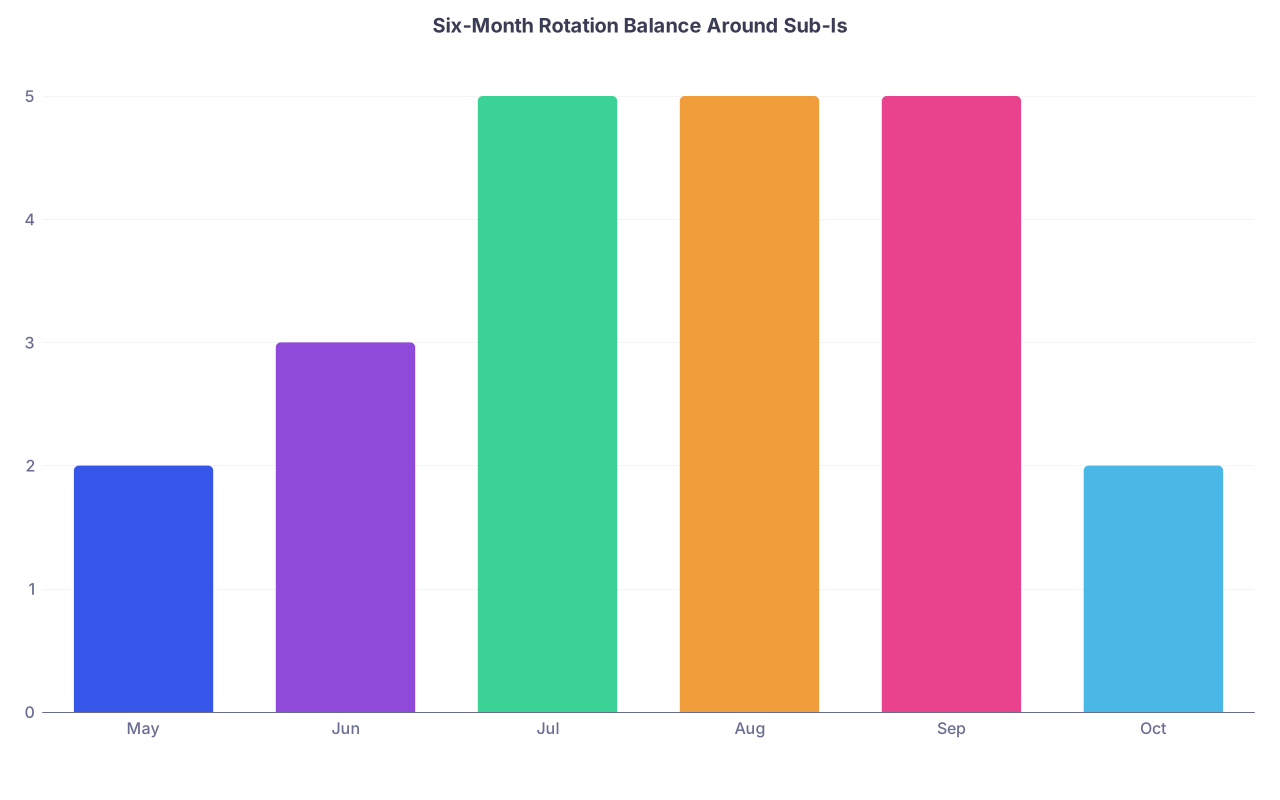
Here’s what a sane schedule might look like for an IM applicant:
| Category | Value |
|---|---|
| May | 2 |
| Jun | 3 |
| Jul | 5 |
| Aug | 5 |
| Sep | 5 |
| Oct | 2 |
(Lower number = lighter month; higher = heavier. This is the feel, not hours exactly.)
May (2 – Light Buffer Month)
- Radiology elective
- No calls last week
- 30 min/day Step 2 prep
June (3 – Moderate)
- Step 2 CK mid‑month
- Outpatient IM elective
- Evenings: light prep for July sub‑I
July (5 – Heavy)
- Home IM sub‑I
- Full call schedule
- No major life events planned
August (5 – Heavy)
- IM away #1
- Shift to impress mode
- Protect 1 day off mid‑month (if possible)
September (5 – Heavy)
- IM away #2
- Ask for non‑brutal last weekend
- Start ERAS polishing in evenings
October (2 – Light Recovery)
- Palliative care outpatient
- ERAS submissions/interviews
- Sleep, exercise, normal human activity reintroduced
Notice how every heavy cluster has a buffer before and after. That’s the point.

Final Checkpoints: What You Should Have in Place
By the time you’re a month from your first big sub‑I, you should be able to answer “yes” to these:
- The month before each critical sub‑I is lighter than the sub‑I itself.
- You’ve protected at least one real weekend day in the 7–10 days before each sub‑I.
- You know your Day 1 start time, location, parking, and dress code.
- Your Step 2 date is not within 2 weeks prior to a critical away/sub‑I.
- You have at least one light month after your heaviest sub‑I run.
If any answer is no, fix it now. Swap an elective. Email a coordinator. Trade a call. The system will not protect your energy; you have to.
Key points:
- Plan sub‑Is first, then deliberately wrap them in lighter buffer rotations so you don’t arrive burned out.
- Protect the 7–10 days before each critical month at the week and day level: fewer calls, one real rest day, logistics locked down.
- Build recovery blocks after heavy sub‑Is so you can actually show up for ERAS, interviews, and the rest of your life like a functioning human, not a zombie in short white.