
It’s June 20th. Your ERAS token just dropped. Your classmates are guessing how many programs to apply to. You’re staring at one thing: a half-finished core surgery clerkship, a just-started medicine sub-I, and a big question.
“When do these evaluations actually need to be done so they show up on my MSPE and help my residency application?”
Let’s walk the calendar. Month by month, then week by week as ERAS season hits, then down to what has to be in before key hard stops: MSPE freeze, ERAS certification, and rank list submission.
Because yes—there are real cutoffs where “it’ll probably come through” becomes “too late to matter this cycle.”
Big Picture: What Needs to Be In, and By When
Before we zoom into dates, you need the key anchors.
For most MD schools, a “key clerkship evaluation” that impacts residency includes:
- Core clerkships (IM, Surgery, Pediatrics, OB/Gyn, Psych, Family)
- At least one medicine sub-I (or equivalent inpatient heavy rotation for other specialties)
- Any specialty-defining rotation (EM rotation for EM, Neuro for Neurology, etc.)
And there are three main deadlines that affect how useful these are:
| Milestone | Typical Timing | What Must Be In |
|---|---|---|
| ERAS Opens to Applicants | Early June | Grades to inform program list & specialty choice |
| ERAS Submission Opens | Early–Mid September | Core evals & sub-Is you want in MSPE & transcript |
| MSPE Release | October 1 | Any evals you want seen at most interviews |
Now, the rub: your school, not ERAS, controls when evals get locked into:
- Your transcript (rotation grades).
- Your MSPE (narrative quotes and performance summaries).
Most schools have an internal “MSPE freeze” date. After that, new clerkship evals might:
- Not get quoted in the MSPE at all, or
- Only appear as a late-added grade on a transcript that programs may or may not re-download.
So at this point you should be thinking in three layers:
- Pre-ERAS submission – ideal world; evals are in, quoted, on your transcript.
- Pre-MSPE freeze – still very useful; shows up in MSPE and transcript when programs read it.
- Post-MSPE – mostly just for late-season updates or SOAP. Not useless, but not prime.
Third Year: Setting Yourself Up (January–May)
Let’s assume a fairly standard schedule where you’re finishing M3 in May/June.
January–March (M3 Winter)
At this point you should:
- Have at least half your core clerkships graded.
- Know your likely specialty or narrow it to 1–2.
Your job here isn’t to micromanage ERAS yet. It’s to avoid late, missing evaluations that choke your MSPE later.
Weekly checklist (yes, this early):
- Check your school’s evaluation turnaround standard.
Typical: 2–4 weeks after rotation ends. - Log any clerkship with evaluations pending >4–6 weeks.
- Once a month: politely nudge your clerkship coordinator if something is missing.
Because what kills you in August isn’t the clerkship you do in August. It’s the IM rotation from February that still doesn’t have an attending evaluation entered.
April–May (End of M3)
By late spring:
- You should have almost all core clerkships completed or scheduled to finish by July.
- You should know which sub-I(s) you’re taking and roughly when.
At this point you should:
- Confirm your school’s MSPE freeze date
- Ask your dean’s office: “By what date must clerkship evaluations be in to be included in the MSPE text?”
- Confirm how late grades can be posted and still show on your official transcript sent with ERAS.
Write those dates down. They are not theoretical. They are hard walls.
Summer Before ERAS: Month-by-Month (June–August)
June: ERAS Token + Planning
ERAS opens to applicants in early June.
At this point you should:
Know your critical rotations that absolutely must be in by early fall:
- IM core (for basically any specialty).
- One sub-I in your chosen field (or inpatient-heavy rotation if IM/FM/Neuro/Peds).
- Core rotation in the specialty you’re applying into (e.g., EM, Neuro, Psych).
Look at your upcoming schedule and label each rotation:
- “Must be in MSPE”
- “Nice but optional for MSPE”
- “Probably post-MSPE; bonus only”
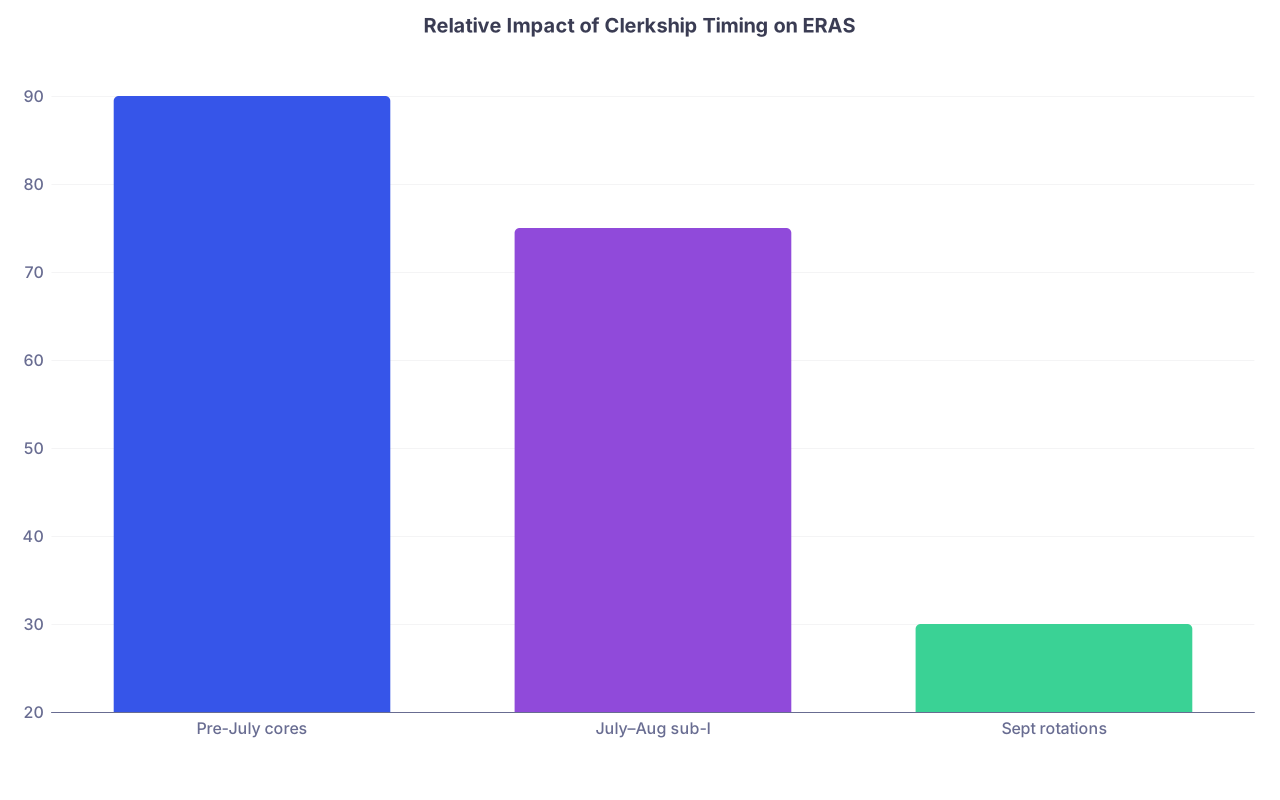
| Category | Value |
|---|---|
| Pre-July cores | 90 |
| July–Aug sub-I | 75 |
| Sept rotations | 30 |
Quick rule of thumb:
- Pre-July core clerkships – high chance of full inclusion in both grade + MSPE narrative.
- July–August sub-I – often included in MSPE if evaluations are turned in quickly.
- September rotations – very hit or miss for MSPE; mostly shows up later.
July: High-Stakes Rotations Start
This is where many schools pack:
- Medicine sub-Is
- EM audition rotations
- Advanced rotations in your chosen field
At this point you should:
- Treat July rotations as “need rapid eval” rotations.
- At the start of the rotation, tell your attending or site director:
- “I’m applying this cycle; if possible, I’d be very grateful if evaluations could be completed quickly so they’re in my MSPE.”
Not begging. Just clear.
Also:
- Keep your performance tight. This is the rotation that often ends up quoted verbatim in your MSPE and letters.
- Mid-July: re-check your spring rotation evaluations. Anything still missing is now a red flag and needs targeted follow-up.
August: The Crunch Month
Several forces collide in August:
- You may be on your first or second audition rotation (especially EM, Ortho, ENT, Derm).
- You’re also working on your personal statement and program list.
- ERAS submission opens in early–mid September.
At this point you should:
Know which evaluations are still missing that matter for ERAS.
- Any core clerkship grade still pending from earlier in the year? That’s a problem.
- Any July sub-I eval missing? You want that turned in quickly.
Ask your dean’s office directly:
- “What’s the latest date for a July/August evaluation to be included in the MSPE?”
- “Do September clerkship grades ever make it into MSPE?”
This is usually where you’ll get the real answer:
- “If it’s not in by early September, it won’t be quoted.”
- “Grades after X date won’t be reflected in the MSPE copy that programs see on October 1.”
ERAS Application Window: Week-by-Week (September–October)
Here’s the real ERAS season. Things stop being theoretical here.
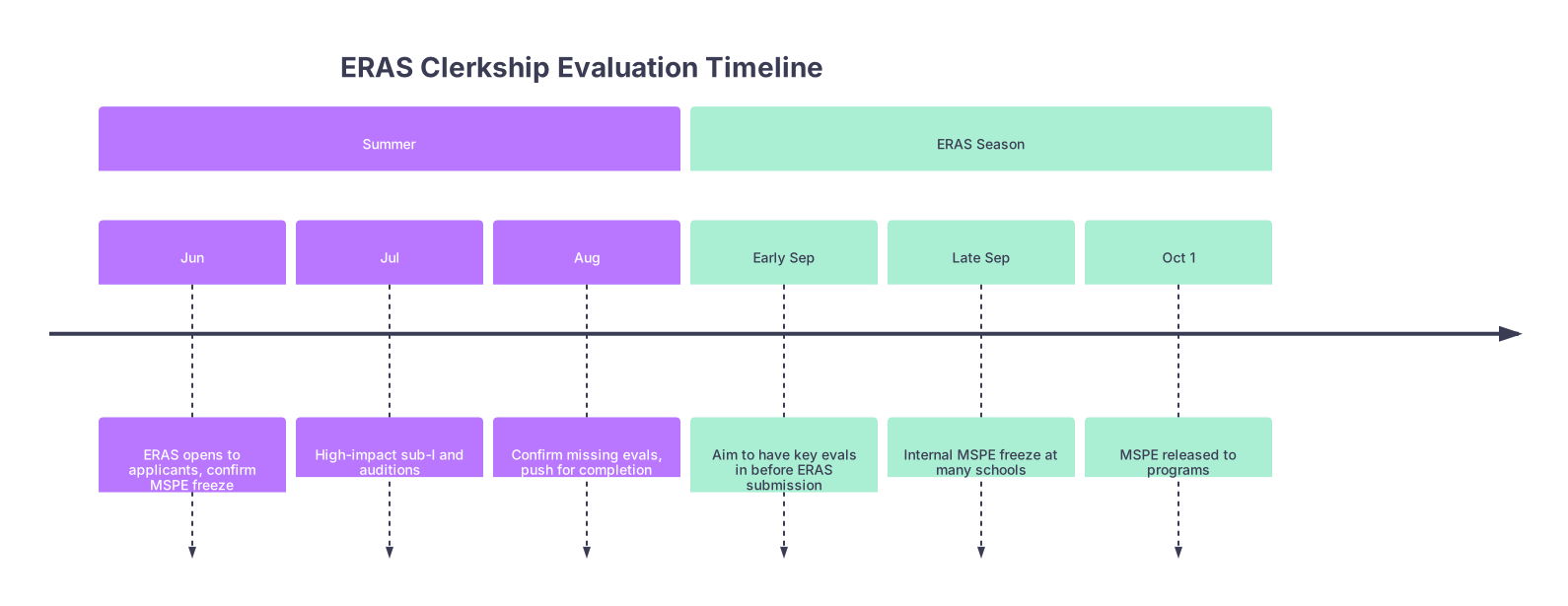
| Period | Event |
|---|---|
| Summer - Jun | ERAS opens to applicants, confirm MSPE freeze |
| Summer - Jul | High-impact sub-I and auditions |
| Summer - Aug | Confirm missing evals, push for completion |
| ERAS Season - Early Sep | Aim to have key evals in before ERAS submission |
| ERAS Season - Late Sep | Internal MSPE freeze at many schools |
| ERAS Season - Oct 1 | MSPE released to programs |
Early September (Week 1–2)
ERAS opens for submission in early–mid September.
At this point you should:
- Have submitted or be ready to submit ERAS as close to opening as possible.
- Accept that some evaluations will still be pending. That’s normal. Focus on:
Which evaluations truly matter for this exact week?
- Anything that affects your class ranking or honors designation on the transcript.
- A July or early August sub-I in your field that:
- Could upgrade you from Pass to Honors overall.
- Shows your performance in that specialty on your transcript.
You should:
- Email your clerkship coordinator(s) for any missing key grades:
- Short, polite: “I’m submitting my ERAS application this week and was wondering if there’s an updated timeline for when my [Rotation] grade and evaluation will be finalized. Thank you.”
Your goal is not perfection. It’s to avoid:
- An ERAS transcript that makes it look like you never completed IM.
- A missing key sub-I in your application’s first impression.
Mid–Late September: The MSPE Freeze
Most schools lock the MSPE content in mid- to late-September. They have to prep and upload all MSPEs before the October 1 release.
At this point you should:
- Assume this is your real clerkship evaluation deadline for MSPE impact.
Meaning:
- Any evaluation not in by now is unlikely to be fully quoted in your MSPE.
- It may show as “IP” (in progress) or be left off the narrative entirely.
This week’s checklist:
- Confirm with your dean’s office: “Has my MSPE been finalized?”
- If not finalized yet and a key eval is still missing:
- Ask: “If the [July Sub-I] evaluation posts this week, can it still be incorporated?”
Some offices say yes up until a hard cutoff. Others say no. You need that answer.
After October 1: What Still Matters?
MSPEs are released to programs on October 1.
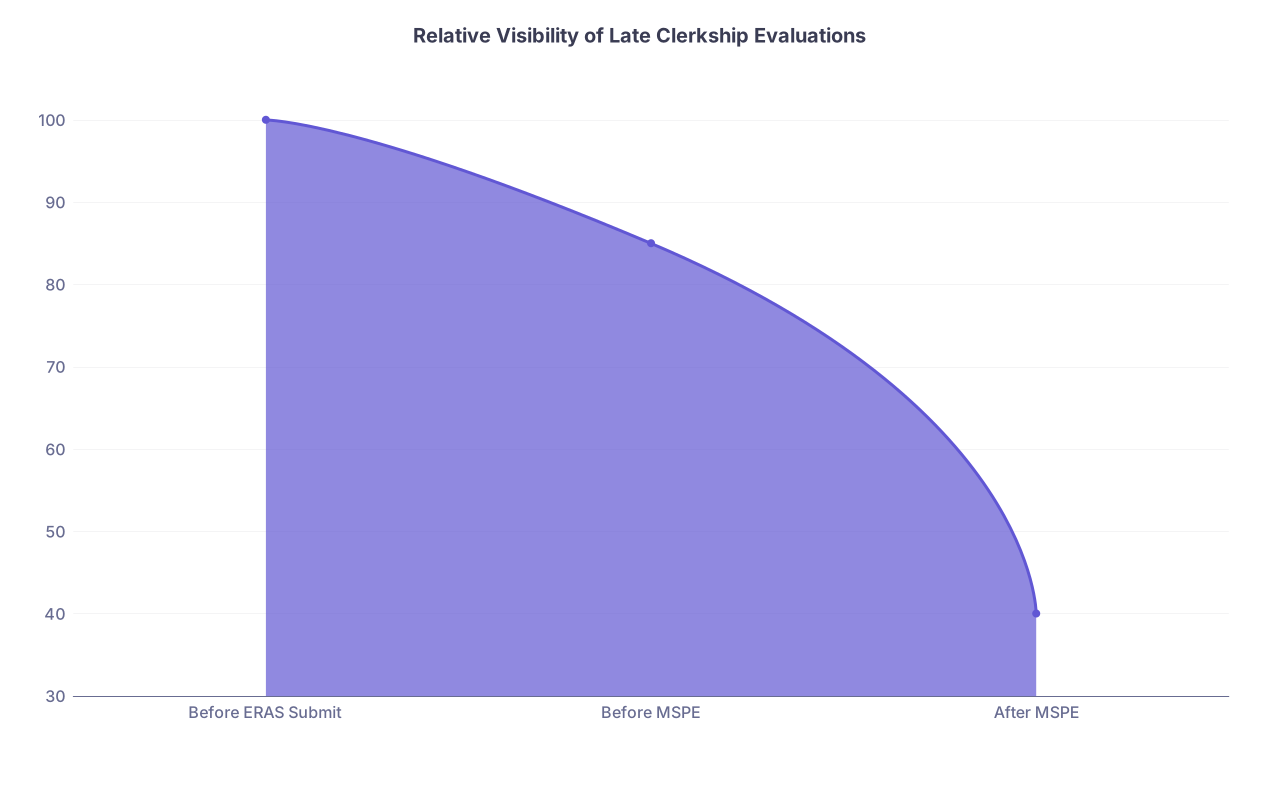
| Category | Value |
|---|---|
| Before ERAS Submit | 100 |
| Before MSPE | 85 |
| After MSPE | 40 |
Once MSPEs go out:
- Many programs download your entire application bundle once.
- Some will never re-download your transcript unless they’re doing a deeper dive later.
At this point you should understand:
- A rotation that finishes in October or November this same year:
- Might update your transcript.
- Will not change your MSPE for this cycle.
- Could still matter if:
- Programs specifically re-download transcripts later.
- You send an update email to a program about a major promotion/honor.
In practice:
- Most core clinical narrative impressions that matter were formed from rotations you completed by July/August.
- September–December rotations this cycle are mostly:
- For your own learning.
- For letters of recommendation (if attendings are fast and you planned ahead).
- For safety net if you end up in SOAP.
Specialty-Specific Timing Traps
Not all specialties are equal when it comes to when your key clerkship evaluations must be in.
Emergency Medicine
You live and die by:
- EM rotations (home and away)
- SLOEs (Standardized Letters of Evaluation)
Timing reality:
- Ideal: At least one SLOE uploaded by late September.
- Strong: Two SLOEs by October 15.
At this point you should:
- Schedule at least one EM rotation by August if you’re applying EM this year.
- Make sure that rotation’s evaluation and SLOE are requested immediately.
Competitive Surgical Subspecialties (Ortho, ENT, Plastics, etc.)
Here, audition rotations and sub-Is define your application.
You should:
- Plan at least one sub-I or away rotation in your field by July or August.
- Push hard for those evaluations to be completed by the MSPE freeze.
Late September/October away rotation?
- Great for experience.
- Often too late to meaningfully impact MSPE or early interview decisions this cycle.
Internal Medicine, Pediatrics, Family, Psych
These are a bit more forgiving.
At minimum, you want in by MSPE freeze:
- IM core evaluation and grade
- At least one inpatient-heavy rotation or sub-I, ideally in your chosen field
A September sub-I in IM or Peds?
- Might still help if:
- You get a strong letter from it.
- The letter writer submits quickly.
- But don’t count on the evaluation narrative making it into MSPE.
Micro-Timeline: If You’re Reading This Late
Let’s say it’s:
Scenario A: It’s August 25
At this point you should:
- Make a list of:
- All completed core rotations.
- Which ones have posted grades + evaluations.
- Identify any missing heavy hitters:
- IM, Surgery, sub-I in your intended specialty.
Action steps this week:
- Email coordinators for any rotation >6 weeks out without an eval.
- Tell your dean’s office:
- “I’m applying to [specialty]; the [IM core from May] evaluation is still missing. Will a delayed grade affect my MSPE?”
Scenario B: It’s September 10
You’re about to submit ERAS.
At this point you should:
- Accept that the MSPE freeze is almost here.
- Focus on damage control, not perfection.
Checklist for the next 7 days:
- Submit ERAS with your best available transcript.
- Confirm with your dean’s office:
- “Will any grades posting in the next 1–2 weeks still be reflected in my MSPE?”
- If yes:
- Push politely for any July/August key evals to be done now.
Scenario C: It’s October 5
MSPEs are out.
At this point you should:
- Stop worrying about MSPE content. It’s done.
- Start thinking differently: “What can I still influence?”
What still matters:
- Performance on current rotations for:
- Letters of recommendation (if they can be turned around quickly).
- Skills and confidence for interviews.
- Showing a consistent uptrend if programs re-check transcripts later.
How to Keep Evaluations from Lagging Behind
You can’t control every attending. You can control your system.
Practical habits:
- End-of-rotation check – On the last 2–3 days of each key rotation:
- Confirm your attending knows there’s an evaluation pending.
- Ask if there’s anything you should do on your end (sometimes it’s a form in your school’s system you didn’t complete).
- Monthly transcript check from January–September – You’re looking for:
- “IP” rotations that should be graded.
- Missing grades for cores.
- For any eval older than 6 weeks:
- First: email your clerkship coordinator, not the attending.
- Only if the coordinator suggests, then gently remind your attending.
You’re not being annoying. You’re trying to make sure your professional record for the rest of your career doesn’t hinge on someone forgetting to log in.
Visual Summary: Clerkship Timing vs. Application Impact
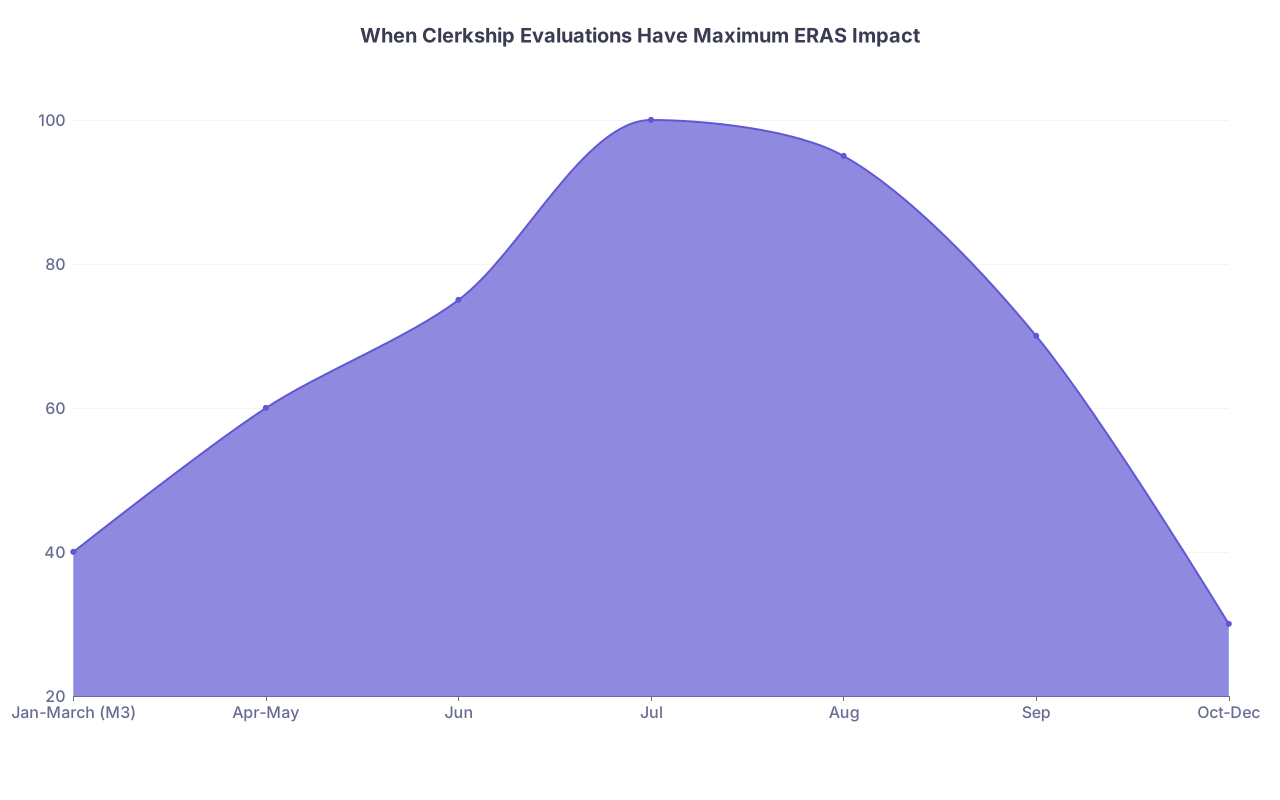
| Category | Value |
|---|---|
| Jan-March (M3) | 40 |
| Apr-May | 60 |
| Jun | 75 |
| Jul | 100 |
| Aug | 95 |
| Sep | 70 |
| Oct-Dec | 30 |

Putting It All Together: A Simple Rule Set
If you remember nothing else, use this:
Core clerkships
- Aim to have all core clerkship evaluations and grades finalized by early August.
- Anything older than 6 weeks without a grade gets active follow-up.
Key sub-I / audition rotation in your specialty
- Schedule no later than August if possible.
- Tell attendings early that you’re applying this cycle.
- Push for evaluations to be completed by your school’s MSPE freeze (usually mid–late September).
After MSPE release (October 1)
- Stop obsessing over late clerkship evals.
- Use ongoing rotations for strong letters, better stories for interviews, and clinical growth.
You can’t control every delay in the system. But you absolutely can control whether the most important clerkships for your specialty are done, graded, and visible when programs first open your file.