
The worst-designed MS4 year looks productive on paper and quietly wrecks your residency application.
The best-designed MS4 year looks almost… calm. Strategic. Front‑loaded with the right rotations, buffered with breathing room, and timed so your peak performance lines up exactly when programs are watching.
I’m going to walk you month‑by‑month through how to design that second version.
Big Picture: What Your MS4 Year Actually Has To Do
Before we get granular, you need the constraints on the table. Fourth year isn’t a victory lap; it’s a timed puzzle.
At this point, you should be clear on four competing demands MS4 has to balance:
- Show programs you can function as an intern (sub‑Is)
- Get eyes on you at target programs (aways, if your specialty uses them)
- Protect time for Step 2 CK, ERAS, and interviews
- Graduate on time (school requirements, credits, required rotations)
Here’s the usual reality:
| Requirement | Typical Amount |
|---|---|
| Sub‑internships | 1–2 blocks |
| Away rotations | 0–3 blocks |
| Required rotations | 2–4 blocks |
| Electives | 3–6 blocks |
| Interview time | 1–2 blocks equivalent |
If you’re in:
- Competitive fields (ortho, derm, ENT, plastics, neurosurg): away rotations and timing are critical.
- Moderately competitive (EM, anesthesia, radiology, OB/GYN): aways help, but you can get by with fewer if home is strong.
- Broad fields (IM, peds, FM, psych): sub‑I performance, letters, and Step 2 carry more weight than aways.
Now let’s build an actual timeline.
M3 Winter–Spring: Lay the Groundwork
At this point (about January–March of M3), you’re not “planning fourth year” in theory anymore. You’re locking in the pieces that will decide your Match options.
Step 1: Clarify Specialty and Competitiveness (Jan–Feb M3)
By January of M3, you should:
- Have a probable specialty (or two close options)
- Know your Step 1 / shelf performance
- Have at least one faculty mentor in the field
If you’re still between two specialties in January, decide by March. Late indecision screws up away timing and letters.
At this point you should:
- Schedule a meeting with:
- Your specialty advisor
- Your dean’s or career advising office
- Ask very specific questions:
- “How many aways are typical for our applicants in this field?”
- “When do programs in X specialty usually want to see sub‑Is done by?”
- “Who are the strongest letter writers in our department?”
Step 2: Draft a Year Skeleton (Feb–Mar M3)
You’re not filling every slot yet. You’re blocking the functions of each block.
Assume 4‑week blocks. Here’s the rough structure you’re aiming for:
Early MS4 (May–July):
- Home sub‑I in your chosen field
- Possibly 1st away rotation
- Step 2 CK somewhere in this window
Mid MS4 (Aug–Oct):
- More aways / advanced electives
- Letters finalized
- ERAS submitted (September)
Late MS4 (Nov–Feb):
- Interviews
- Lighter electives, maybe a second required rotation
Final MS4 (Mar–Apr):
- Finish graduation requirements
- One “this will keep me sane” elective
Block it roughly like this:
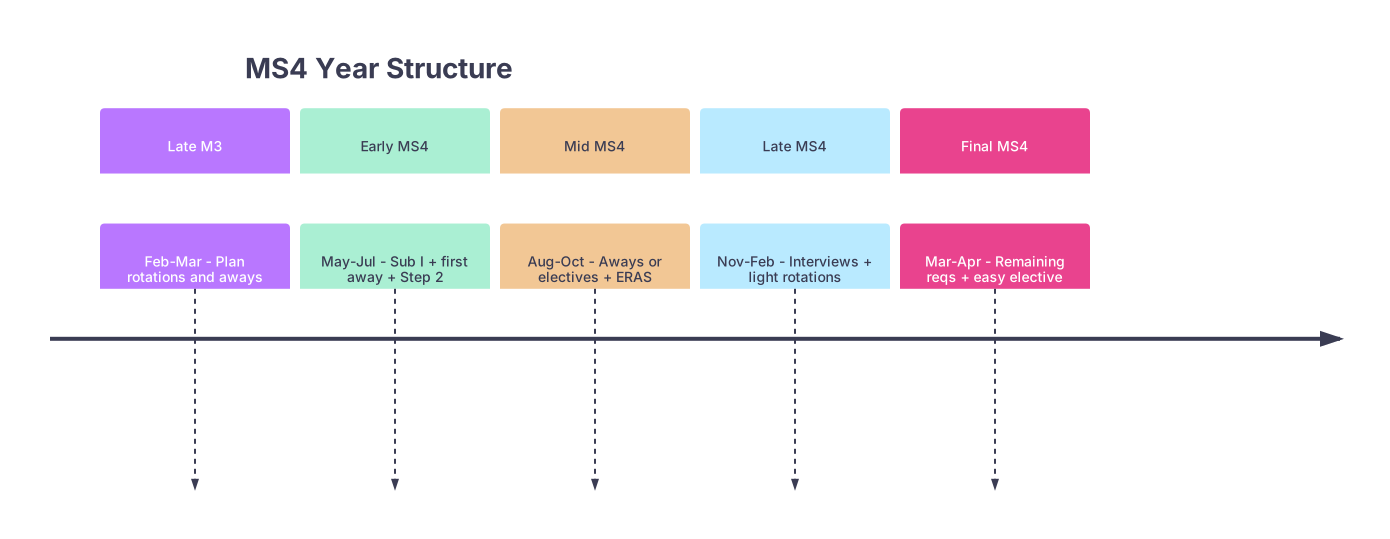
Do not let your school assign you a random MS4 schedule before you’ve done this thinking. Fight for the early sub‑I and protected interview blocks now, while slots are still movable.
March–June M3: Away Rotations and Sub‑I Logistics
This is the part people chronically underestimate. VSLO/VLSO (or whatever your institution uses) is its own part‑time job.
Step 3: Decide If You Actually Need Away Rotations (Mar M3)
You should be brutally honest here.
You probably need aways if:
- You’re going into:
- Ortho, neurosurg, ENT, plastics, urology, derm, radiation oncology
- Your home program is weak, tiny, or nonexistent in your field
- You’re targeting specific geographic areas or elite programs
You can usually do 0–1 away (or skip them) if:
- You’re applying IM, peds, FM, psych
- Your home department is strong and knows how to advocate for you
- You have geographic flexibility
Once you decide yes/no, set a target:
- Competitive surgical: 2 aways
- EM: 1–2 aways, depending on home ED strength
- Others: 0–1 away, often more for exploration than make‑or‑break
Step 4: Application Windows and Timing (Mar–May M3)
At this point you should:
- List 10–15 potential away sites and their application open dates.
- Identify:
- Which want Step 1 scores only
- Which require Step 2 CK by start date
- Which need immunizations / background checks / drug screens early
Many away portals open March–May for rotations starting July–October. Miss that window, and you’re scrambling for leftovers.
Create a mini timeline:
By March 15 (M3):
- CV cleaned up
- Personal statement draft #1 (even if rough)
- Transcript and Step 1 ready to upload
-
- All away applications submitted for July–September starts
- Faculty letter writers for aways confirmed
By May 15:
- Backup away applications submitted
- Travel housing planning started for early aways
Building the Month‑By‑Month MS4 Schedule
Now we get to the part you actually came for: what goes where.
I’ll assume a July–June academic year. Adjust if your school runs differently.
Month 0: Late M3 → Early MS4 Transition (April–June)
At this point you should:
Finish core clerkships without tanking your final evals.
You still need strong letters from M3.Schedule Step 2 CK:
- Target late June–early July if possible.
- You want your score back by early August to help borderline apps.
Negotiate with your registrar/scheduling office:
- Push sub‑I into May/June/July if allowed
- Identify which blocks you can mark as “interview heavy” (usually Nov–Jan)
Ideal MS4 Layout: Month‑By‑Month
I’ll give you a general plan and then specialty‑specific tweaks.
To visualize your overall load through the year:
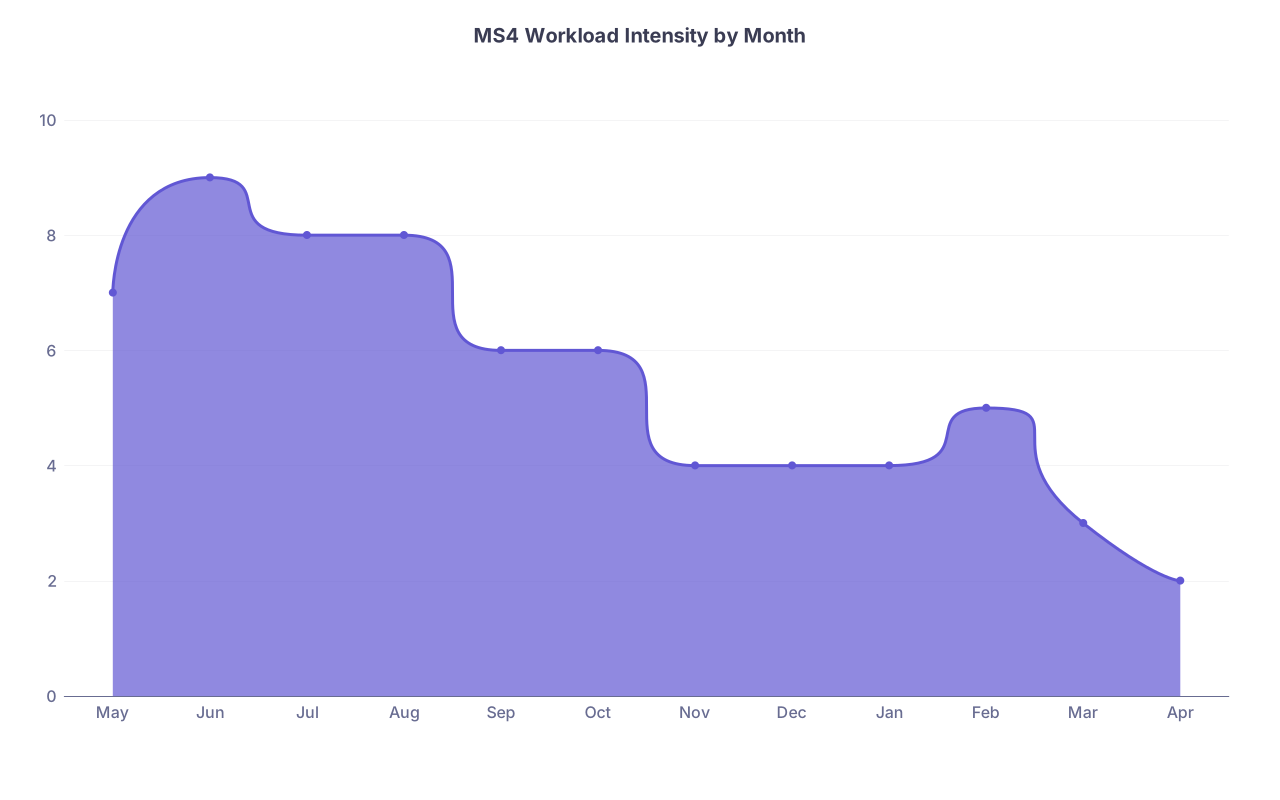
| Category | Value |
|---|---|
| May | 7 |
| Jun | 9 |
| Jul | 8 |
| Aug | 8 |
| Sep | 6 |
| Oct | 6 |
| Nov | 4 |
| Dec | 4 |
| Jan | 4 |
| Feb | 5 |
| Mar | 3 |
| Apr | 2 |
(10 = heaviest, 1 = lightest)
May–June: First Sub‑I + Step 2 CK
Goal of this phase: Prove you can function as an intern at home, and get Step 2 done before chaos hits.
At this point you should:
Do your first sub‑I at your home institution in your target field.
- Internal med: General medicine ward sub‑I
- Surgery: General surgery or subspecialty closely aligned with your interest
- EM: EM sub‑I or senior ED rotation
- Others: Whatever your field considers “acting intern” level
Approach this sub‑I like a month‑long interview:
- On time every day (for real, not “med student on time”)
- Pre‑rounds thorough, notes done early
- Volunteer for admissions and procedures
- Ask directly at the end: “Would you feel comfortable writing a strong letter on my behalf?”
Step 2 CK:
- Ideally taken in a slightly lighter block, but many people do it right after or between blocks.
- Do not place Step 2 in the middle of an away. That’s amateur hour.
July–August: Away Rotations + Second Sub‑I
This is where your performance has maximum impact on interviews and rank lists.
At this point you should:
Do Away #1 in July (if doing aways):
- Go to a realistic target program, not your fantasy halo institution unless your numbers match theirs.
- Aim to secure 1–2 letters here if they really know you.
Slot Away #2 or Home Sub‑I #2 in August:
- By end of August, you want:
- 1 strong home letter in your specialty
- 1 away letter (if you did an away)
- 1–2 other strong clinical letters (M3 or MS4)
- By end of August, you want:
Make it explicit you’re looking for letters:
- Tell attendings in week 2: “I’m applying to X this year. I’d love feedback on how I’m doing, and I’m hoping to ask for a letter if I’m performing at the level you’d expect from a strong applicant.”
If you’re not doing aways, use July/August for:
- A second sub‑I in your field
- A high‑yield elective (ICU, consult service, key subspecialty that matches your interest)
September–October: ERAS, Breather Block, and “Signal” Electives
These two months make or break your sanity. Overload them, and everything frays.
September: ERAS Month + Lighter Rotation
ERAS usually opens for submission mid‑September.
At this point you should:
Be on a lighter, humane rotation:
- Outpatient elective
- Research elective with flexible hours
- “Senior selective” known to be chill at your school
ERAS tasks this month:
- Final personal statement polished
- Program list finalized (with your advisor sanity‑checking it)
- Letters all uploaded (or you’re politely chasing them)
- Application submitted the day it opens for your specialty
Do not schedule:
- Sub‑I
- Heavy inpatient elective
- New away rotation
You will be distracted. Your performance will suffer, and it will show.
October: Last Chance Signal + Start of Interview Wave
October is your last “look at me” month for programs still forming impressions before invites go out in full.
At this point you should:
Do a home elective that aligns with your stated interests:
- Cardiology for IM applicant interested in cards
- High‑risk OB for OB/GYN applicant
- Child psych for psych applicant
Or slot a final away here only if:
- You needed backup because earlier aways fell through
- You’re targeting a very specific program/region that still matters
This is also when:
- Early interview invites start trickling in
- You begin to see where your application is landing
Have a flexible rotation or at least a sane attending who understands you’ll need a few half‑days off.
November–January: Interview Season + Breather Blocks
This is where people either burn out or glide. The difference is what you scheduled here.
At this point you should:
- Design one of these patterns, depending on your school:
Option A: Interview‑Heavy Blocks
- November: Light outpatient elective
- December: “Interview month” or vacation (if your school allows)
- January: Another light elective or research block
Option B: Spread‑Out Interviews
- November: Flexible elective (research, outpatient)
- December: Required but sane rotation (no q4 28‑hour calls)
- January: Vacation or elective
The key:
Don’t be on ICU or a second major sub‑I while you’re flying twice a week, living on hotel coffee, and pretending to be charming on Zoom.
February–April: Finish Requirements + Real Breathing Room
By February, interview season winds down and rank lists are due.
At this point you should:
Schedule:
- Remaining required rotations for graduation
- One completely chill elective you’ll remember fondly:
- Away in a fun city just for experience
- Teaching elective with M1/M2s
- Palliative care, radiology, or other reliably humane service
Use this time for:
- Actually reading about your chosen field for fun
- Re‑connecting with hobbies and family before residency
- Completing any research/writing projects that could still get accepted before July
You want to enter intern year rested, not crawling.
Specialty‑Specific Tweaks (Rapid‑Fire)

Surgical (Ortho, Gen Surg, ENT, Plastics, Urology, Neurosurg)
Sub‑I timing:
- Home sub‑I: May/June
- Key subspecialty or away: July/August
Aways:
- 2 aways max, usually July and August
- Treat them like month‑long interviews:
- Be present on weekend rounds
- Respect residents’ time and workflow
- Don’t disappear post‑call
Breather blocks:
- Absolutely protect September and November or December with lighter electives
EM
Sub‑Is:
- Home EM sub‑I: June/July
- Away EM rotations: 1–2 in July–September
Special twist:
- SLOEs (Standardized Letters) are king. You need:
- Home SLOE
- 1–2 away SLOEs
- SLOEs (Standardized Letters) are king. You need:
Interviews:
- EM interview season can be early and intense. Build flexibility into October–December.
IM / Peds / FM / Psych
Sub‑Is:
- One strong home sub‑I early (May–July)
- Consider ICU sub‑I if valued by your programs
Aways:
- Optional unless geography or niche interest demands them
Emphasis:
- Solid Step 2 CK
- Thoughtful program list
- Good fit and narrative
Where to Put Your True “Breather Blocks”
This phrase gets abused. A “breather” during MS4 still needs to check some box—credit, graduation requirement, CV relevance.
Strategically, breather blocks belong in three spots:
Right after Step 2 CK
- Short decompression
- Easy outpatient or research elective
During ERAS + early interview invite chaos (September/October)
- Light elective so you can edit, email, and respond to invites quickly.
Core interview window (November–January)
- Flexible rotations that allow time off without tanking evaluations.
Breather blocks are not laziness. They’re how you keep your performance high when people are actually watching.
Practical Weekly/Daily Planning During Key Blocks
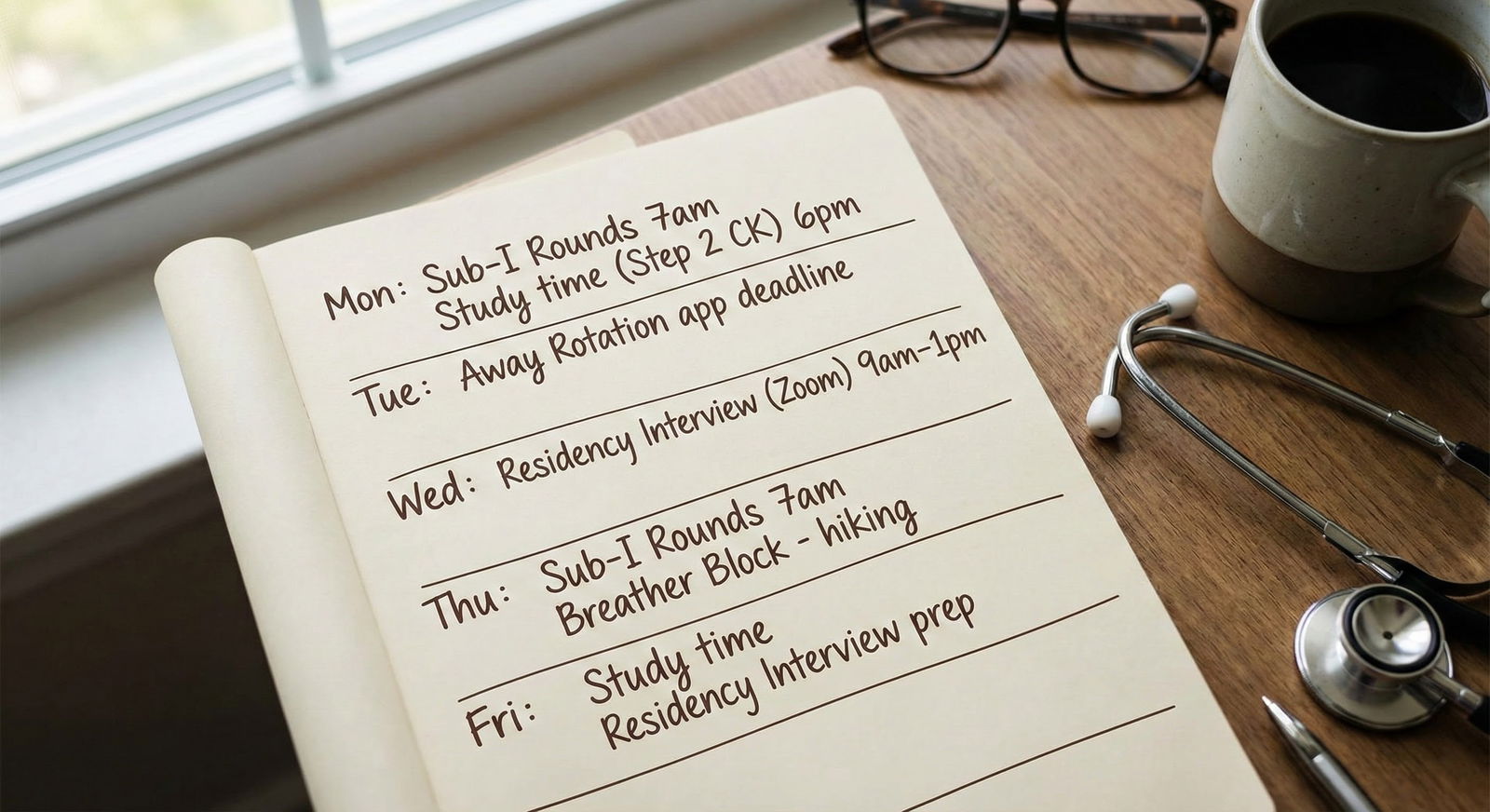
During a Sub‑I (Any Month)
Week‑by‑week focus:
Week 1:
- Learn the system: order entry, note templates, team expectations
- Pick 2–3 patients to know absolutely cold
Week 2:
- Increase responsibility:
- Volunteer for cross‑cover tasks (within supervision)
- Start doing more of the discharges
- Increase responsibility:
Week 3:
- Ask for mid‑rotation feedback
- Correct aggressively and visibly
Week 4:
- Solidify letter writers
- Demonstrate consistency more than heroics
During an Away
Daily mindset:
- Day 1–2: Learn names, workflow, how this place differs from home
- Day 3–7: Show you’re coachable, not perfect
- After Week 1: Identify who your potential letter writer is and stick to their service when possible
Final Checkpoint Before You Lock Your Schedule
Before you hit “submit” on your school’s scheduling portal, run this checklist:
Do I have:
- At least 1 home sub‑I in my chosen field finished by August?
- If needed, 1–2 aways in July–September?
- Step 2 CK scheduled before ERAS submission or with enough buffer for a score to return?
- At least 3–4 potential letter writers lined up (home + away)?
Are my breather blocks placed in:
- September (ERAS month)?
- One of November–January (interviews)?
- A late‑year “true rest” block?
Am I avoiding:
- Back‑to‑back brutal inpatient months during interviews?
- Taking Step 2 CK in the middle of an away?
- Doing my first sub‑I after September?
If the answer to any of those is no, fix it now. It’s much harder once everything is “set.”
Three Things To Remember
- Design MS4 around when people are evaluating you, not when it’s most convenient for the registrar.
- Front‑load your sub‑I and (if needed) aways into May–August, then deliberately insert lighter blocks around ERAS and interview months.
- Breather blocks are not fluff; they’re fuel. Used at the right times, they’re the difference between a solid Match and a slow-motion collapse halfway through interview season.