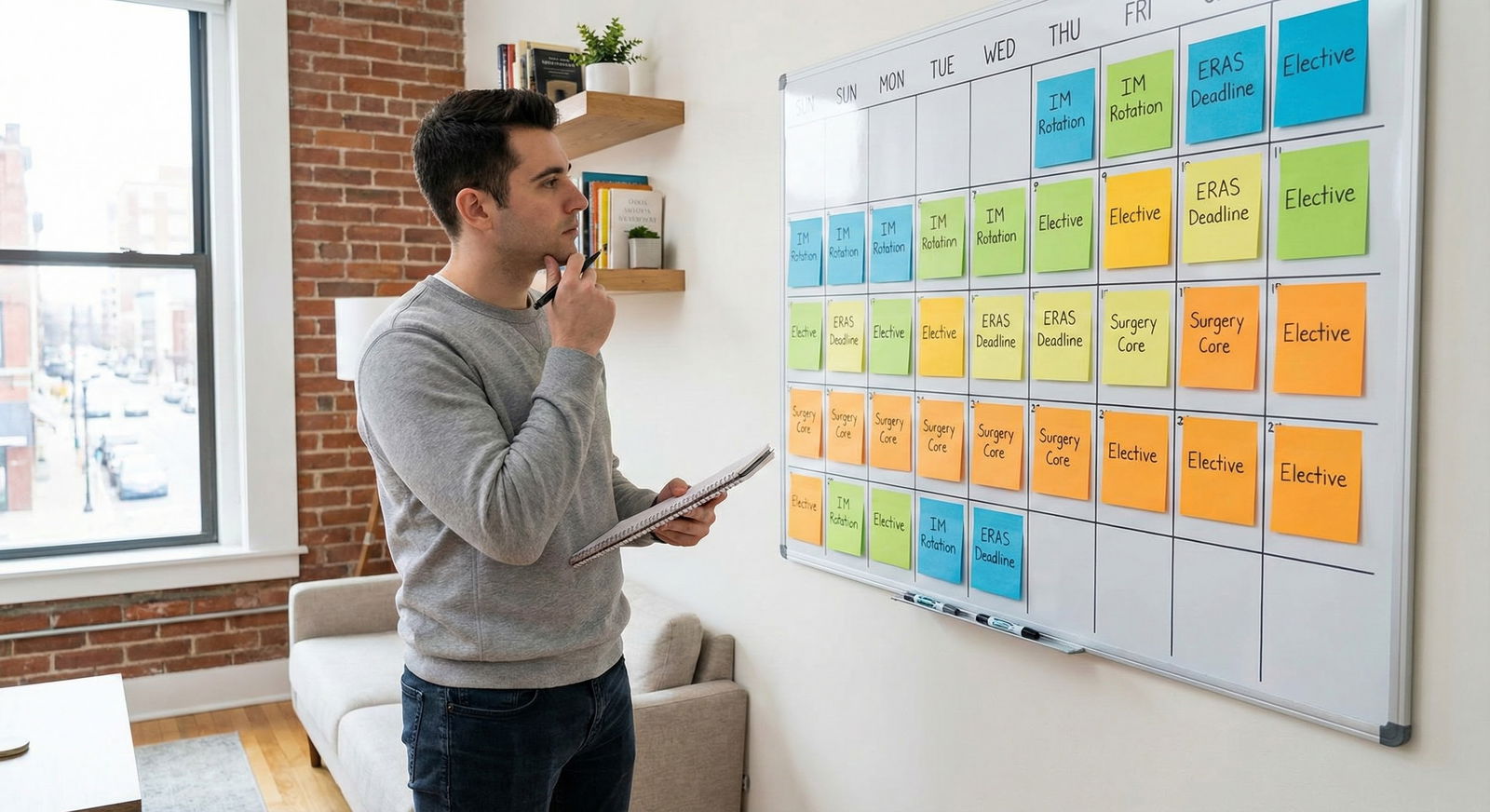
The biggest mistake students make with clerkship scheduling is pretending the sequence does not matter. It does. A bad order can cost you letters, confidence, and interview invites. A smart order quietly boosts all three.
You are not just “doing rotations.” You are building a year-long runway for residency applications. ICU, inpatient wards, and clinic are your main levers. Sequence them correctly, and your sub‑I, letters, and ERAS timing line up. Sequence them poorly, and you are scrambling.
Below is a practical, chronological guide: what to do month by month, how to slot ICU vs wards vs clinic, and what to demand from your schedule office or dean at each point.
First: Know Your Targets and Constraints (3–4 Months Before Scheduling Opens)
At this point you should stop thinking like a third‑year and start thinking like an applicant.
You need three things clear before you touch a scheduling form:
Target specialty tier
- Competitive (dermatology, plastics, ortho, ENT, neurosurgery)
- Mid‑competitive (EM, anesthesia, rads, urology, GI/IR tracks)
- Broad‑entry (IM, FM, peds, psych, OB‑GYN)
Home program vs away rotations
- Do you have a strong home program in your specialty?
- Are you planning 0, 1, or 2+ away/audition rotations?
Timeline anchors you cannot move
- ERAS opens and submission: mid‑June–Sept
- Letters realistically due: by early September
- VSLO/away rotations usually: start May–July for many fields
At this planning stage (often January–March of the calendar year before your application), you should:
- List your school’s required rotations and months available:
- Medicine wards
- Surgery
- ICU/CCU
- Outpatient/ambulatory/clinic
- Sub‑internship (sub‑I or acting internship)
- Find out from your school:
- Which blocks can be used as sub‑I?
- Which months ICU is offered and how often students can take it?
- Any rules (e.g., “ICU must follow medicine wards,” “no ICU in Block 1”)?
Build a simple grid with months vs rotation types.
| Block (4 wks) | Typical Months | Notes |
|---|---|---|
| Block 1 | June | Early clinical start |
| Block 2 | July | High teaching, many new interns |
| Block 3 | August | Strong letters possible |
| Block 4 | September | Last good letter month |
| Block 5 | October | After ERAS, good for skill growth |
| Block 6 | November | Interview conflicts begin |
You are going to place ICU, wards, and clinic into this grid with one goal: by August–September, you should have:
- At least one senior‑level rotation (sub‑I or high‑intensity wards or ICU) in your chosen specialty or a closely related one
- Two strong letter writers who have seen you function like an intern
- Enough outpatient or continuity exposure to talk intelligently about the specialty in your personal statement and interviews
Global Rules for Sequencing ICU, Wards, and Clinic
Before I go month‑by‑month, here are the rules that actually matter:
Do not open your year with ICU.
First real rotation in an ICU is a confidence shredder. You do not know the EMR, you barely know “normal” vitals, and now you are writing ventilator notes at 2 a.m. You will be slow, tired, and forgettable.Put a solid inpatient wards block early.
This is where you learn:- How to preround
- How to present
- How to put together an assessment and plan
You want this skillset before anything high‑stakes.
Schedule ICU after at least one strong medicine‑type block.
ICU rewards students who already know:- Common meds and doses
- Hospital workflows
- How to manage tasks and pages
Put ICU too early and you are a note‑taker, not a functioning team member.
Get at least one clinic block early in the year.
Preferably in or adjacent to your chosen field. It:- Fills your personal statement with real stories
- Improves your differential thinking
- Shows programs you know what outpatient looks like
Place your sub‑I in your specialty before ERAS opens.
For most people, that means June–August. Your sub‑I is where your best letter(s) come from. ICU can support this, but it should not replace a sub‑I in your target field.
Strategy by Specialty Type
Highly Competitive Fields
At this point (still pre‑scheduling) if you want derm, ortho, neurosurg, etc.:
- Your priority stack:
- Home sub‑I in your specialty before July/August
- Away rotation(s) in peak months (often July–September)
- ICU or heavy wards in adjacent fields (e.g., trauma ICU for ortho, neuro ICU for neurosurg) before or between these
ICU is a bonus credibility marker (“this student can handle sick patients”), but not more important than being seen on‑service.
Broad‑entry / Medicine‑heavy Fields (IM, FM, Peds, Psych)
For these, ICU and wards are central. The best pattern:
- Early: general wards to build basic inpatient skills
- Middle: ICU to sharpen acuity and management
- Pre‑ERAS: sub‑I in your desired field or a strong general medicine/wards month for letters
- Clinic sprinkled throughout; at least one block before ERAS
Month‑By‑Month: Ideal Sequence Template
Assume a standard academic year starting in June and that you are applying that same fall.
I will walk you through a strong general template, then adjust for specific priorities.
Block 1 (June): Foundation Inpatient Wards
At this point you should be on: general medicine or general surgery wards.
Why:
- You need a baseline:
- Pre‑rounding
- Writing notes
- Giving a 5‑minute patient presentation
- Nurses, residents, and attendings will teach heavily in June. New interns are also learning; it is a forgiving environment.
Checklist for this block:
- Learn your hospital EMR cold.
- Get fast at:
- Problem lists
- Orders (even if students do not place them, draft them)
- One‑liner patient summaries
- Identify 1–2 attendings who see your work consistently and could eventually write a letter if needed.
Do not obsess over letters here. This is prep.
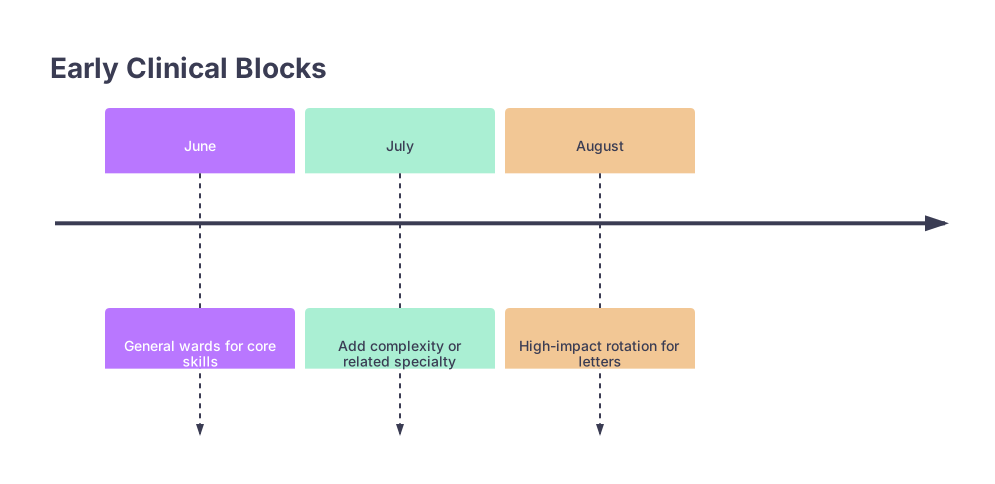
| Period | Event |
|---|---|
| June | General wards for core skills |
| July | Add complexity or related specialty |
| August | High-impact rotation for letters |
Block 2 (July): Clinic in or Near Your Target Field
At this point you should be in a meaningful clinic rotation.
Examples:
- Applying IM → general medicine clinic or subspecialty clinic (cardiology, heme/onc)
- Applying FM → continuity family medicine clinic
- Applying EM → urgent care, ED observation, or EM clinic equivalent
- Applying surgery → surgical subspecialty clinic
Why July for clinic:
- You just learned inpatient thinking. Now you contrast it with outpatient.
- You begin collecting specific patient stories for:
- Personal statement
- “Tell me about a patient who changed you” questions
- Compared to ICU or wards, clinic leaves you with more mental bandwidth for ERAS prep drafts if needed.
Your goals this block:
- Build a relationship with 1 attending who:
- Sees you interact with patients
- Can comment on your communication and longitudinal thinking
- Take notes each week on:
- A challenging communication moment
- A diagnostic puzzle
- A time you saw good or bad systems‑based care
These become essay gold later.
Block 3 (August): ICU or High‑Intensity Wards
At this point you should be ready for ICU.
You now have:
- Basic inpatient workflow from June
- Some outpatient maturity from July
ICU in August is ideal because:
- You still have time for letters (many programs will write by mid‑September).
- You show progression: “By late summer I was functioning at near‑intern level in the ICU.”
What kind of ICU?
- Internal medicine → medical ICU (MICU) or cardiac ICU (CICU/CCU)
- Surgery/EM → surgical ICU (SICU) or trauma ICU
- Neuro → neuro ICU (NICU)
Pick the one most aligned with your field.
Your goals:
- Take ownership of 1–2 patients as fully as your team allows.
- Push to:
- Write full notes
- Present plans
- Follow labs and imaging yourself
- Ask one attending midway through:
“I am applying in X this fall. What specific things could I improve over the next two weeks to function more like an intern on this team?”
Then do them. That question alone often flips a passive evaluation into an active mentorship.
You want at least one letter from ICU if:
- You performed strongly, and
- The attending knows you are applying soon and is comfortable speaking to your work ethic and clinical reasoning.
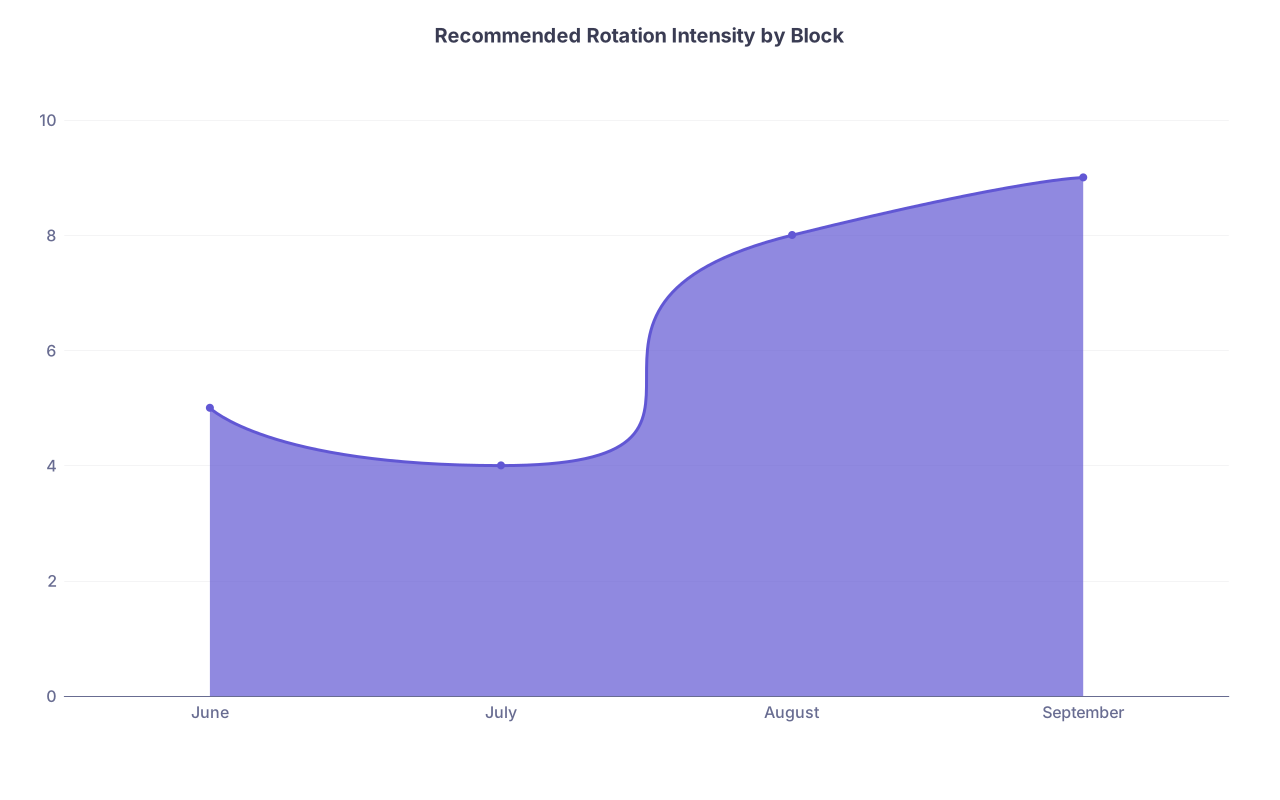
| Category | Value |
|---|---|
| June | 5 |
| July | 4 |
| August | 8 |
| September | 9 |
(Scale 1–10: August and September should be your highest‑intensity, highest‑impact months.)
Block 4 (September): Sub‑I (Acting Internship) in Your Target Field
At this point you should be on your sub‑I or the closest thing to it.
This is your main letter‑generating block for the application cycle.
Typical choices:
- Applying IM → Medicine sub‑I on a teaching service
- Applying FM → Inpatient FM or heavy outpatient block with call
- Applying Peds → Pediatrics sub‑I
- Applying surgery → Surgical sub‑I or equivalent service (trauma, vascular, etc.)
ICU immediately before this (August) does two things:
- You already know how to:
- Handle cross‑cover‑style thinking
- Talk through sick patient scenarios
- Your confidence is higher. That shows on rounds.
During September:
- Identify 2 attendings who see you consistently.
- Ask for letters by the end of week 2–3, not at the final hour:
- “I have really enjoyed working with you. I am applying in X this cycle. Would you feel comfortable writing a strong letter of recommendation based on my performance here?”
- Give them:
- Draft CV
- Personal statement (even if rough)
- Short bullet list of specific patients or tasks you felt proud of on this rotation
Letters from a sub‑I carry weight because programs know you were treated closer to an intern.
If Your School’s Calendar Is Different
Some schools start core rotations in March or April. The principles stay the same; only the labels shift.
At that point you should:
- Put a general inpatient block first (March/April).
- Place clinic second.
- Place ICU in the 3rd or 4th block before your sub‑I.
- Ensure your sub‑I is still in the last block or two before ERAS opening.
You can map “Block 1–4” to your specific months, but the internal order should look like:
- Wards →
- Clinic →
- ICU →
- Sub‑I
Adjustments Based on Specific Scenarios
If You Are Late Deciding Your Specialty (Spring Realization)
Let us say you drift through fall unsure, then in January you decide: “It is internal medicine.”
At this point you should:
- Slot:
- A medicine wards block as soon as you can.
- ICU in the following 1–2 blocks.
- A medicine sub‑I in the block immediately before ERAS.
- Use any remaining clinic time for:
- Cardiology
- Pulm/ID
- Endocrine
Anything that shows coherent interest.
The key is compressing the sequence (wards → ICU → sub‑I) into the last 4–6 months before application without over‑stacking fatigue. Avoid doing heavy ICU and sub‑I back‑to‑back during interview season (Nov–Jan).
If You Need Time for Step 2 CK
Many students need a dedicated 4–6 week Step 2 study block.
Best placement relative to ICU/wards:
- Place Step 2 study:
- Immediately after a medicine‑heavy block (wards or ICU) when clinical knowledge is fresh.
- Before your sub‑I if possible.
Bad option: ICU → Step 2 → sub‑I all within three months. You will be exhausted.
Stronger option:
Clinic (lighter) → Step 2 study → ICU → sub‑I.
You rest your body a bit, hammer Step 2, then ramp intensity.
How Program Directors Read Your Sequence
Program directors do not just scan your grades; they look at when you did what.
What they like to see:
- A clear ramp:
- Early: broad exposure and core skills.
- Middle: complex care (ICU) and specialty‑relevant clinic.
- Late (pre‑ERAS): sub‑I with strong evaluations.
- No glaring gaps:
- Not a full year without any meaningful outpatient if you are applying FM.
- Not zero ICU/critical care exposure for EM/IM applicants.
What they dislike:
- ICU as your only evidence of inpatient ownership.
- Super late foundational rotations:
- Doing medicine wards for the first time in October while applying IM.
- Completely random pattern:
- ICU in June
- Research in July–August
- Light electives in September
- Then your first sub‑I in January
That sequence says you were not thinking like an applicant.
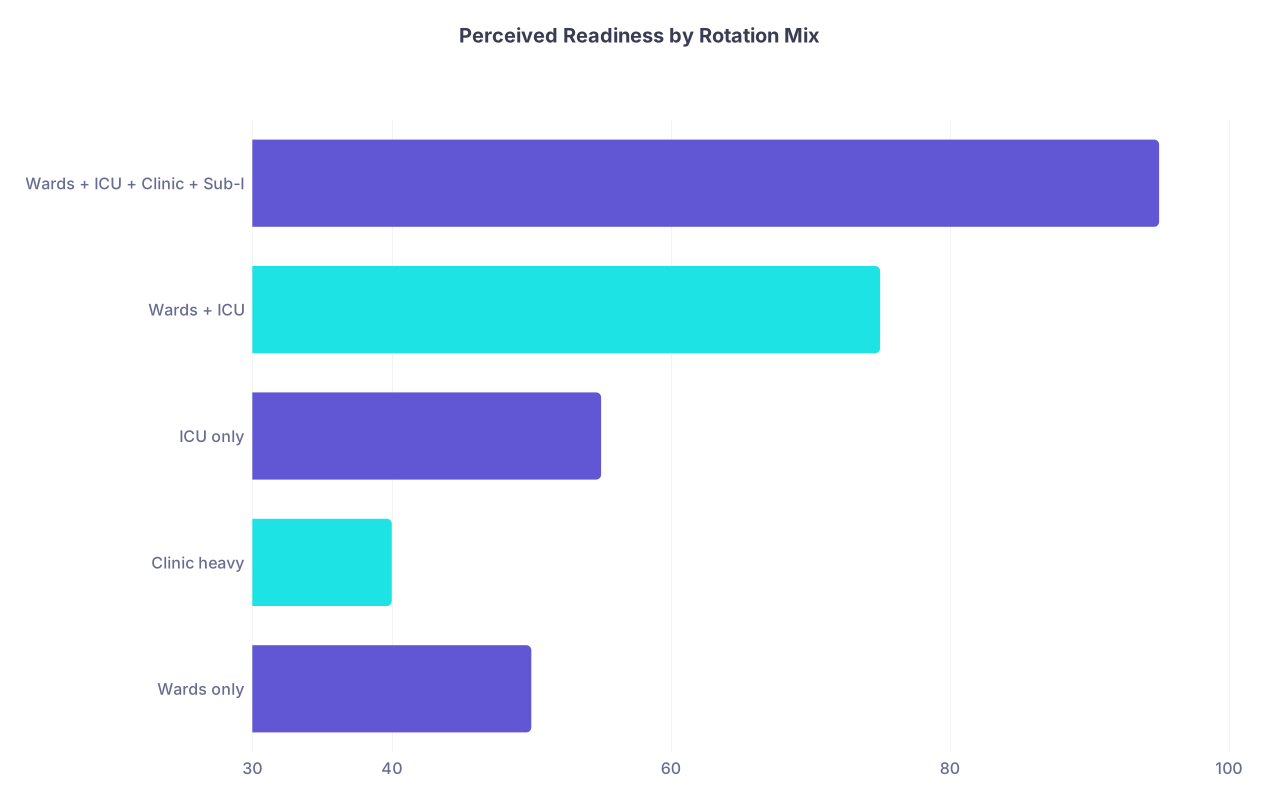
| Category | Value |
|---|---|
| Wards only | 50 |
| Clinic heavy | 40 |
| ICU only | 55 |
| Wards + ICU | 75 |
| Wards + ICU + Clinic + Sub-I | 95 |
(Out of 100 – rough sense of how complete your preparation looks on paper.)
Practical Scheduling Tactics (What To Ask For, When)
When your scheduling portal opens or you meet with the clerkship office:
At this point you should come in with:
- A printed grid of the year with your ideal pattern:
- Block 1: Wards
- Block 2: Clinic
- Block 3: ICU
- Block 4: Sub‑I
- Remaining: electives, research, interviews
- A clear explanation:
- “I am applying in X. I need my sub‑I by August for letters. I also want ICU before that so I am more prepared and competitive.”
Ask specifically:
- “Is there a reason I cannot have ICU in August and sub‑I in September?” (If those are your targets.)
- “If I have to move something, which blocks are most flexible for ICU vs clinic?”
If they push ICU earlier than you like:
- Try to swap:
- ICU with a lighter inpatient block later
- Or ask, “Can I at least do medicine wards first? I want to be functional in the ICU and not just shadow.”
You do not need to be rude. But you also do not need to be passive. Schedulers usually respond better to a student with a clear, reasonable plan.
The 2‑Week Fine‑Tuning Windows
Within each block, you still have micro‑timing decisions that matter:
- Week 1–2 of ICU or wards:
- Push hard to learn workflows.
- Get feedback early (from residents and at least one attending).
- Week 3–4:
- Shift into “letter mode”:
- Make sure the attendings know your name and career plans.
- Volunteer for one or two extra tasks (family meeting notes, discharge summary, teaching short talk).
- Shift into “letter mode”:
For a September sub‑I or August ICU where you want letters, your mid‑rotation conversation is critical. Do not wait until the last day with a rushed “Could you maybe write something?”
Quick Example Templates
Two concrete sequences to copy or adapt.
Example A: Internal Medicine Applicant
- June – Medicine wards
- July – IM clinic / subspecialty clinic
- August – MICU
- September – IM sub‑I
- October – Elective (cards, GI, etc.)
- November–January – Mix of electives + interview‑friendly lighter rotations
Example B: EM Applicant
- June – Medicine wards
- July – EM clinic / urgent care or EM elective
- August – SICU or MICU
- September – EM sub‑I / ED sub‑I
- October – Away rotation in EM
- November–January – EM electives or related (toxicology, ultrasound) with room for interviews

What To Do If Your Sequence Is Already “Sub‑optimal”
Maybe you are reading this with half your year already booked in a questionable order.
At this point you should:
Identify the non‑negotiables:
- Do you have a sub‑I before ERAS?
- Do you have at least one clinic in or near your field?
- Do you have at least one heavy inpatient block (ICU or wards) prior to sub‑I?
Fix what you can:
- Trade a late elective for an earlier ICU.
- Move a clinic block earlier in the year.
- Convert a generic wards block to a sub‑I if your school allows it.
Compensate in your application:
- Use your personal statement and experiences sections to:
- Highlight ICU/wards cases that show advanced responsibility.
- Show outpatient understanding if your formal clinic time is limited.
- Use your personal statement and experiences sections to:
Do not waste time regretting the perfect schedule you did not get. Use the blocks you do have as intentionally as possible.
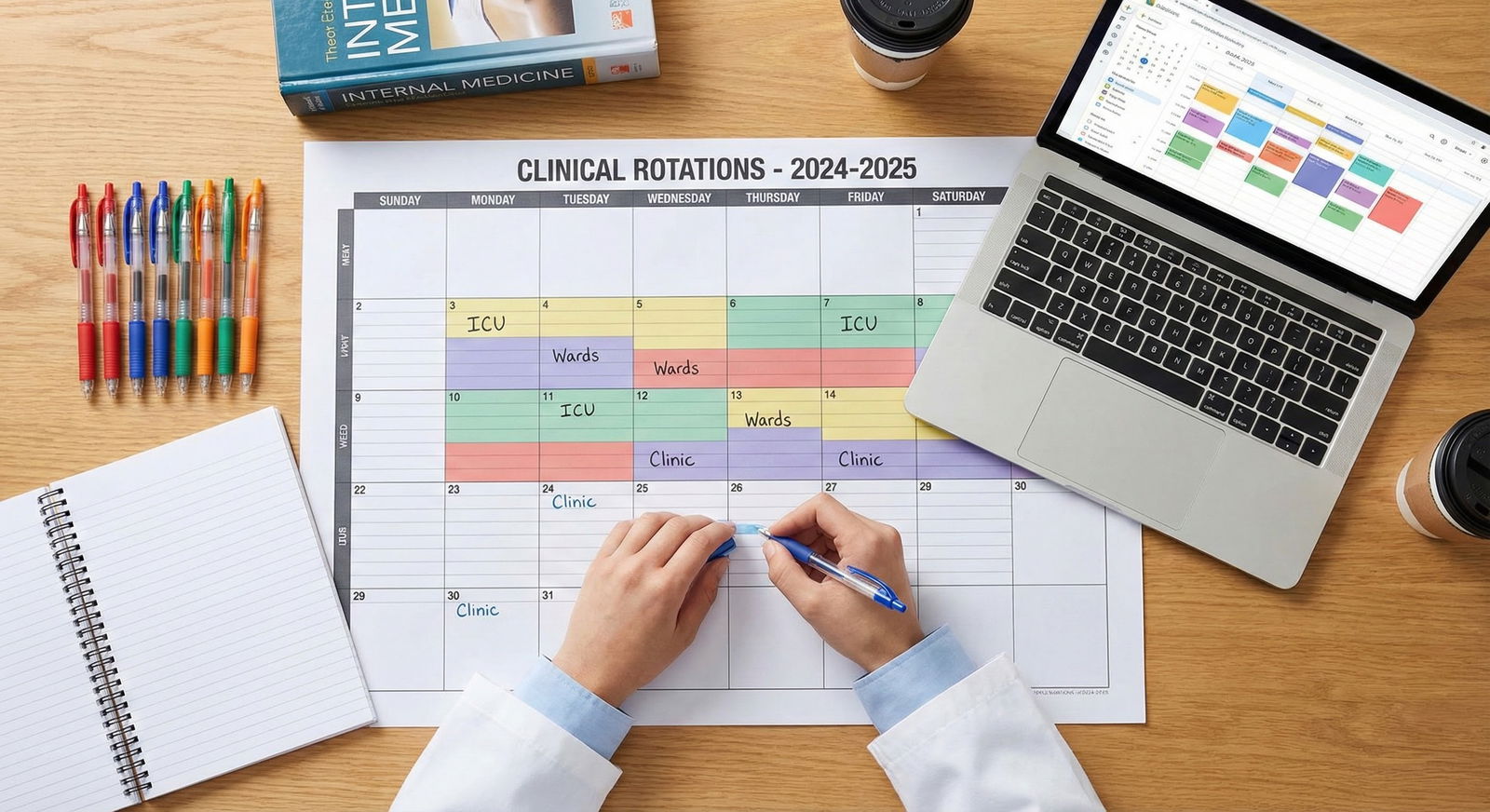
Core Takeaways
- Sequence matters. You want: wards → clinic → ICU → sub‑I leading into ERAS.
- ICU should not be your first real rotation; it should build on prior inpatient skills and support, not replace, a sub‑I in your specialty.
- By August–September of your application year, you should be on (or have just completed) a high‑impact rotation—ideally a sub‑I—poised to generate strong, specific letters for your residency match.