
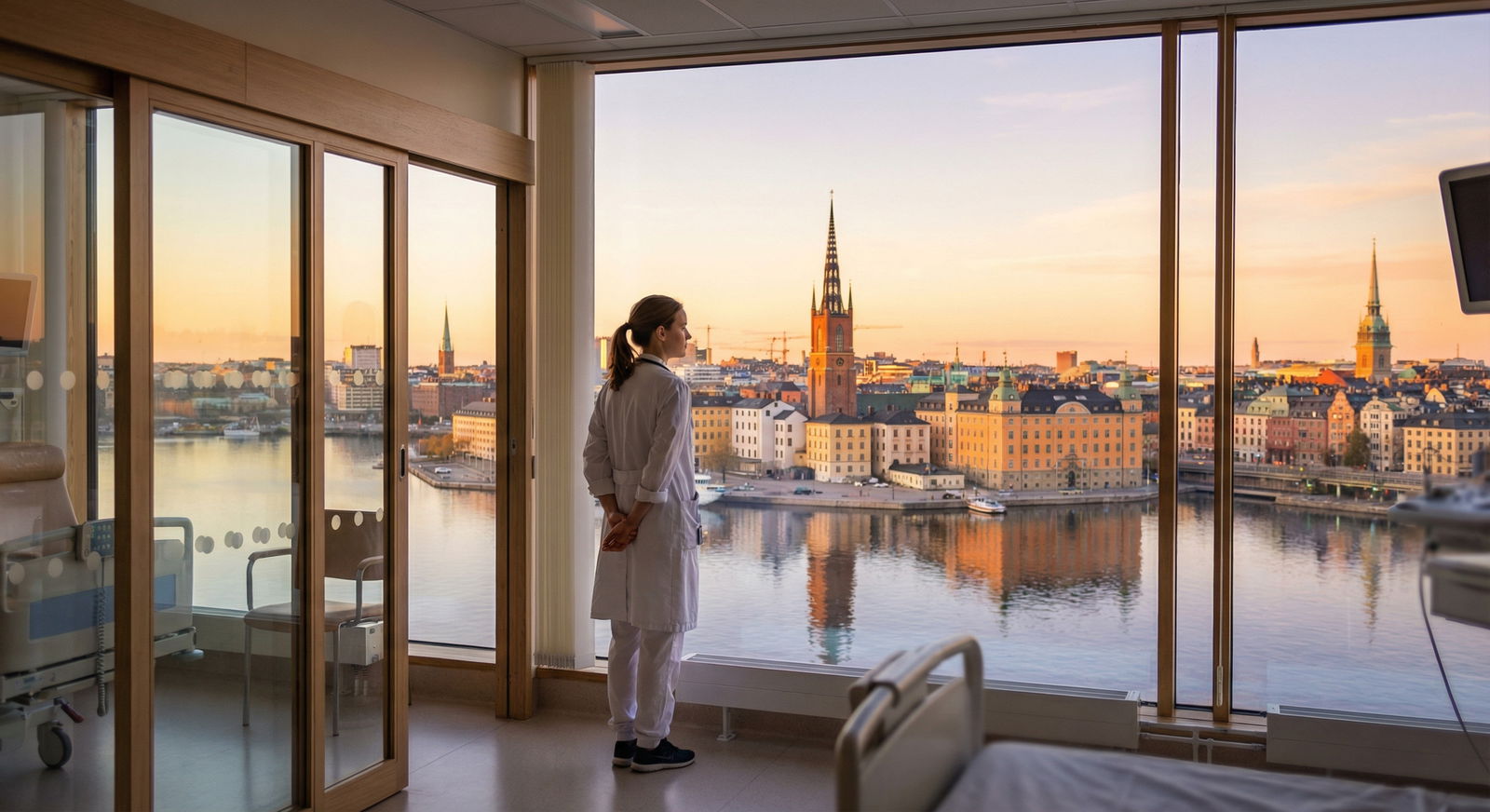
Sweden has become a benchmark for what a fulfilling medical career can look like—where Healthcare excellence, professional growth, and genuine Work-Life Balance coexist. For medical students, residents, and practicing physicians considering medical careers abroad, Sweden consistently ranks near the top of “best places to work as a doctor” lists.
Below is an in-depth, residency-focused look at why Sweden is so attractive for doctors, what daily life and practice really look like, and how this Nordic model of Universal Healthcare supports both patients and physicians.
Why Sweden Stands Out for Medical Careers
Sweden combines a high-functioning, tax-funded Universal Healthcare system with strong labor protections, egalitarian culture, and generous social benefits. For doctors, this translates into:
- Predictable work hours and protected time off
- Competitive, stable compensation and benefits
- Less administrative burden than in many insurance-based systems
- An environment that values safety, teamwork, and continuous learning
For residents and early-career physicians, Sweden offers a structured training pathway, opportunities for research, and a lifestyle that makes long-term career sustainability a realistic goal rather than a distant ideal.
1. Work-Life Balance: The Core of Swedish Medical Practice
Work-life balance is not just a slogan in Sweden; it is built into legislation, institutional policies, and workplace culture. For a profession known for long hours and burnout, this is a major differentiator.
A. Reasonable and Regulated Working Hours
Most full-time doctors in Sweden work around 40 hours per week, often scheduled as 8-hour days. While on-call duties and night shifts still exist, they are regulated and compensated, and most hospitals actively monitor workload and fatigue.
Key features of working hours in Sweden:
- Standard full-time: Typically 38–42 hours per week, depending on the region and contract
- Protected rest periods: Legal requirements for minimum rest between shifts
- Paid overtime and on-call: Extra work is generally compensated, not simply “expected”
- Part-time options: Many physicians, especially with young families, negotiate 75–90% positions without stigma
For residents and specialists alike, this predictability allows actual planning of life outside the hospital—something often missing in other healthcare systems.
B. Generous Leave: Parental, Vacation, and Sick Leave
Sweden is internationally recognized for its generous parental leave and annual vacation policies.
- Parental leave: Parents can share up to 480 days of paid parental leave per child. A portion is reserved for each parent to encourage gender equality.
- Annual vacation: Full-time employees receive at least 25 days of paid vacation per year (often more with age or collective agreements).
- Sick leave: The system allows for sick leave with income protection, reducing pressure to work while unwell.
For doctors, this means it is entirely normal—and expected—to step away from clinical work for family or health needs without jeopardizing your career progression.
C. Collaborative, Low-Hierarchy Work Culture
Swedish workplace culture is famously egalitarian. In healthcare, this shows up as:
- Flat hierarchies: Attending physicians, residents, nurses, and allied health professionals generally interact on a first-name basis.
- Team-based care: Decisions are commonly discussed in multidisciplinary meetings; shared responsibility is standard.
- Psychological safety: Staff are encouraged to report errors and near-misses without fear of punishment, fostering a strong patient safety culture.
This collaborative atmosphere reduces the intense competitiveness some doctors experience elsewhere and supports open learning and feedback.

2. Compensation and Benefits: Competitive and Sustainable
While Swedish salaries may not always top global charts when compared purely in gross numbers, they are competitive within Europe and are coupled with low out-of-pocket costs for essentials like healthcare, education, and childcare.
A. Salary Ranges for Physicians in Sweden
Exact figures vary by region (urban vs rural), sector (public vs private), and specialty, but in broad terms:
- General practitioners (allmänläkare): Approximately $60,000–$80,000 USD per year
- Hospital specialists: Commonly $80,000–$120,000+ USD annually
- Highly experienced or in-demand specialists: Can reach or exceed $120,000–$150,000 USD
Important context:
- Salaries are typically negotiated within collective agreements between employer organizations and unions (such as the Swedish Medical Association).
- The cost of medical malpractice insurance is low and often employer-covered, unlike in some countries where it is a major personal expense.
- Income tax rates are higher than in some regions, but they fund extensive social services that significantly reduce private costs.
B. Comprehensive Social and Employment Benefits
Beyond salary, Sweden offers robust benefits that contribute to long-term financial and personal security:
- Publicly funded healthcare: As a doctor, your own personal Healthcare costs are modest due to the Universal Healthcare system, with annual caps on out-of-pocket payments.
- Pension system: Doctors participate in the national pension scheme plus occupational pensions negotiated through collective agreements.
- Occupational health services: Many employers provide preventive care, mental health support, and ergonomic assessments to staff.
- Unemployment and disability protections: The social safety net provides income support if health or employment circumstances change.
For physicians planning long-term medical careers, this level of security helps reduce the anxiety often associated with career transitions, illness, or family changes.
3. Sweden’s Universal Healthcare System: Designed for Patients and Providers
Sweden’s Universal Healthcare system is publicly funded, regionally organized, and designed to guarantee equitable access while maintaining high quality of care. For doctors, this system shifts focus from billing and insurance to clinical decision-making and patient outcomes.
A. Tax-Funded, Universal Access
Key characteristics of the Swedish model:
- Universal coverage: All residents are covered, with care primarily financed through regional taxes and national funding.
- Low patient fees: Patients pay small, regulated co-payments for visits and medications, with annual caps to prevent financial hardship.
- Minimal billing responsibilities for doctors: Administrative staff and digital systems handle most logistics; clinicians focus on care rather than coding for reimbursement.
This reduces a major source of burnout for many physicians working in complex insurance-based systems and creates a more straightforward, ethically aligned patient-physician relationship.
B. Focus on Primary and Preventive Care
Sweden invests heavily in primary care and population health:
- Strong primary care network: General practitioners and district nurses are the first point of contact, managing chronic disease and coordinating care.
- Preventive programs: Regular screening for conditions like cervical cancer, breast cancer, and cardiovascular risk; extensive vaccination programs; and public health campaigns targeting lifestyle risk factors.
- Data-driven population health: National registries track outcomes for a wide variety of conditions, informing both research and quality improvement.
For physicians, this means greater opportunity to practice proactive, prevention-oriented medicine rather than crisis-driven care. It can be especially appealing for those interested in public health or system-level impact.
C. Research, Innovation, and Digital Health Leadership
Sweden consistently ranks among global leaders in medical research and innovation:
- Academic centers: Universities such as Karolinska Institutet, Lund University, and Uppsala University are internationally renowned.
- Research integration: Many hospitals, especially university hospitals, integrate clinical practice with active research and teaching.
- Digital health: Sweden has advanced electronic health record integration and is at the forefront of telemedicine and digital patient portals.
For residents and early-career doctors, this environment offers:
- Opportunities to combine clinical work with PhDs or research fellowships
- Access to cutting-edge diagnostics and treatment protocols
- Involvement in quality improvement projects and national registries
4. Professional Development and Support for Doctors
Sweden places a strong emphasis on lifelong learning and professional support, recognizing that medicine evolves rapidly and physicians need structured opportunities to grow.
A. Structured Training and Continuing Education
From residency onward, Swedish doctors benefit from a culture that normalizes education as part of work rather than an optional extra:
- Specialist training (ST): After medical school and a mandatory internship (AT), doctors enter specialist training with clear competency frameworks and supervised practice.
- Protected time for learning: Many contracts include time for attending courses, conferences, and educational activities.
- Funded CPD: Continuing Professional Development (CPD) courses and conferences are often funded or subsidized by employers and regional authorities.
This environment suits physicians who value continuous improvement and want to stay aligned with international best practices.
B. Support from Professional Organizations
Organizations like the Swedish Medical Association (Sveriges Läkarförbund) and specialty societies play a central role:
- Advocacy and labor rights: They negotiate salaries, working conditions, and professional standards.
- Networking: Conferences, regional meetings, and committees connect residents and specialists with peers and mentors.
- Resources for international doctors: Guidance on licensing, language requirements, and integration into the Swedish healthcare system.
For international medical graduates (IMGs), this support is particularly valuable when navigating licensing and adapting to the Swedish work environment.
C. Emphasis on Well-Being and Burnout Prevention
Swedish healthcare systems increasingly recognize physician well-being as a key quality metric:
- Workload monitoring: Many departments track workload indicators and staffing levels.
- Access to psychological support: Occupational health services often include counseling and mental health support for staff.
- Cultural acceptance of saying “no”: It is more culturally acceptable in Sweden to set boundaries around work than in some more hierarchical or productivity-driven environments.
All of this contributes to Sweden’s reputation as one of the best places to work as a doctor if you’re seeking a sustainable, long-term career.
5. High Quality of Life Beyond the Hospital
Sweden’s appeal extends far beyond the hospital walls. For doctors and their families, the overall lifestyle is a major part of the decision to relocate or stay long-term.
A. Safety, Stability, and Social Cohesion
Sweden is known for:
- Low violent crime rates compared to many countries
- Political and economic stability with strong rule of law
- Extensive social support systems for families, children, and the elderly
This stable environment allows physicians to plan their lives with confidence—whether that means pursuing academic careers, starting a family, or exploring rural practice.
B. Cities, Nature, and Everyday Lifestyle
Swedish life is deeply intertwined with nature and outdoor activities:
- Urban centers like Stockholm, Gothenburg, and Malmö offer modern infrastructure, cultural events, and international communities.
- Access to nature: Lakes, forests, archipelagos, and mountains are easily reached, even from major cities. Hiking, skiing, kayaking, and cycling are part of everyday life.
- Scandinavian design and sustainability: Clean urban planning, extensive public transportation, and bike-friendly infrastructure make daily life efficient and eco-conscious.
For doctors used to long commutes and crowded cities, Sweden’s urban planning can be a refreshing change—shorter travel times, more green spaces, and cleaner air.
C. Education and Healthcare for Doctors’ Families
For those with children or planning a family, Sweden is particularly attractive:
- Public education: Free, high-quality public schools, including options for bilingual and international programs in many cities.
- Childcare: Subsidized daycare with capped fees, making dual-career households feasible.
- Children’s healthcare: Comprehensive pediatric care within the universal system, including vaccinations, developmental checks, and specialist access when needed.
This creates an environment where doctors can pursue demanding medical careers without sacrificing their family’s well-being.

6. Practical Considerations for International Doctors
For medical students, residents, or practicing physicians considering Sweden, understanding the pathway and potential challenges is essential.
A. Licensing and Language
To practice independently in Sweden, you will generally need:
- Recognized medical degree and training: EU/EEA graduates have a more streamlined process; non-EU graduates may require additional steps or assessments.
- Swedish Medical License (legitimation): Issued by the National Board of Health and Welfare (Socialstyrelsen).
- Language proficiency: Swedish language skills at a high level (often equivalent to C1) are typically required, as most clinical communication and documentation are in Swedish.
Many regions support language training for recruited doctors, but it’s wise to start early and plan for language acquisition as part of your move.
B. Integration into the System
Common pathways for foreign-trained doctors include:
- locum (temporary) positions in underserved regions after licensing, which can help you gain local experience
- structured adaptation programs in some regions that combine language, cultural orientation, and supervised clinical work
- research or academic positions for those coming from highly research-oriented backgrounds
While Sweden offers many advantages, the integration process can be lengthy and requires persistence—especially for non-EU physicians.
C. Balancing Expectations: Pros and Cons
Sweden is not a perfect system, and realistic expectations are important:
Potential challenges:
- High taxes (offset by strong social services)
- Wait times for some elective procedures due to resource constraints
- Language barrier and cultural adaptation period
- More modest salary growth compared to some high-income, private-market countries
Compensating strengths:
- Stable, predictable work environment
- Low administrative burden on clinicians
- Strong safety net and protections for staff
- Authentic work-life integration rather than burnout culture
For many physicians, the trade-offs are well worth it—particularly those who prioritize sustainable careers, family life, and ethical alignment with Universal Healthcare values.
Conclusion: Sweden as a Model for Sustainable Medical Careers
Sweden’s combination of Universal Healthcare, structured professional development, reasonable working hours, and a strong social safety net makes it one of the most compelling destinations for doctors in the world.
For residents and early-career physicians, Sweden offers:
- Excellent training environments
- Opportunities for research and innovation
- Genuine work-life balance and family-friendly policies
For mid-career and senior doctors, it provides:
- Stable and respectful working conditions
- Opportunities to shape systems-level improvements
- A high quality of life, in and out of the hospital
If your vision of a fulfilling medical career includes practicing high-quality medicine, contributing to an equitable healthcare system, and still having time and energy for life beyond the hospital, Sweden deserves a very close look.
Frequently Asked Questions About Working as a Doctor in Sweden
Q1: What is the typical salary range for doctors in Sweden, and how does it compare after taxes?
A1: Most physicians earn roughly $60,000–$150,000 USD annually, depending on specialty, experience, and region. After taxes, take-home pay is lower than in some low-tax countries, but major expenses—healthcare, education, and parts of childcare—are heavily subsidized or free. When adjusted for cost of living and social benefits, many doctors find the overall package competitive and more stable than systems with higher gross salaries but fewer protections.
Q2: How does Work-Life Balance for Swedish doctors compare to other countries?
A2: Swedish doctors typically work around 40 hours per week, with regulated on-call schedules, generous vacation (at least 25 days per year), and substantial parental leave. Combined with a collaborative work culture and strong labor protections, this creates significantly better work-life balance than in many countries where 60–80-hour weeks and unpaid overtime are common.
Q3: Does Sweden really have Universal Healthcare, and how does that affect daily practice for doctors?
A3: Yes. Sweden operates a tax-funded Universal Healthcare system, ensuring all residents access essential care. For doctors, this means less time spent on billing, pre-authorizations, and insurance disputes and more time focused on clinical decision-making. It also reduces ethical tensions around patients’ ability to pay, as care decisions are not primarily driven by insurance status.
Q4: What support is available for continuing education and career development?
A4: Continuing Professional Development is built into Swedish medical careers. Employers often provide protected time and funding for courses, conferences, and certifications. National bodies and the Swedish Medical Association offer educational resources, specialty-specific training, and career guidance. Many hospitals support physicians who wish to pursue PhDs, research projects, or academic careers alongside clinical work.
Q5: What kind of lifestyle can a doctor in Sweden realistically expect?
A5: Doctors in Sweden generally enjoy a high quality of life: safe communities, clean environments, reliable public transportation, access to nature, and rich cultural activities. With predictable schedules and comprehensive family benefits, many physicians find they can maintain hobbies, spend meaningful time with their families, and still pursue professional goals—making Sweden a compelling choice for those seeking a balanced, sustainable medical career.


