

The myth that “doctors go wherever the best job is” is wrong. The data shows most physicians stay exactly where they train—if the geography and specialty incentives line up.
Let me walk through where doctors actually stay, with numbers, not folklore.
The Core Pattern: Training Location Predicts Practice Location
Across multiple studies and AAMC reports, one statistic dominates physician retention discussions: the proportion of residents who stay in the state where they trained.
Depending on the state, that in‑state retention rate ranges from roughly 30% on the low end to over 75% on the high end. That is not noise. That is structural.
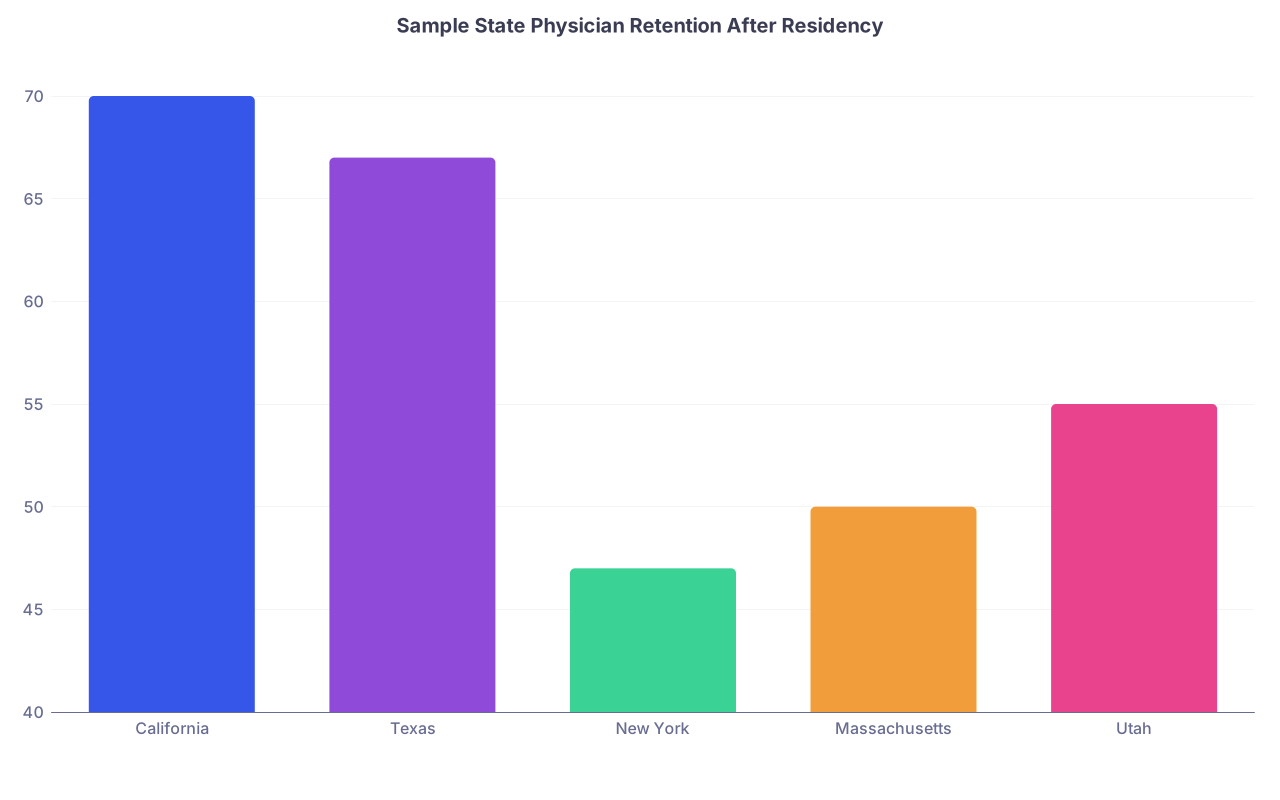
| Category | Value |
|---|---|
| California | 70 |
| Texas | 67 |
| New York | 47 |
| Massachusetts | 50 |
| Utah | 55 |
Those numbers are consistent with several AAMC and state workforce reports over the last decade:
- Large, population-heavy, training-dense states (California, Texas) sit in the ~65–75% range.
- Traditional exporting states (New York, Pennsylvania) cluster closer to ~45–55%.
- Some smaller states with fewer residency slots and aggressive recruitment (Utah, Minnesota) also hit ~55–65%.
The implication is blunt: if you do residency in a state that wants to keep you, there is at least a coin-flip chance you never leave.
I have watched this play out in real time. A PGY-3 in internal medicine swears they will “go back home to the Midwest” after training in Houston. Then they meet their partner, get used to the pay differential, and suddenly that hypothetical move evaporates.
So when people ask “What are the best places to work as a doctor?” the data-driven answer is: look at where physicians are choosing to stay after they have seen both the system and the geography up close. That is your real revealed preference.
States With High Retention: Where Doctors Actually Stick Around
You can rank states by a lot of physician metrics—salary, malpractice climate, cost of living. But if you want to know where doctors actually stay, in-state retention after residency is the cleanest behavioral signal.
Here is a simplified comparison illustrating the pattern.
| State | In-State Retention After Residency (%) | Active Physicians per 100k Population | Relative Physician Pay Index* |
|---|---|---|---|
| California | 70 | 290 | 0.95 |
| Texas | 67 | 240 | 1.05 |
| New York | 47 | 320 | 0.90 |
| Massachusetts | 50 | 350 | 0.92 |
| Utah | 55 | 230 | 1.00 |
*Pay index roughly normalized to U.S. average = 1.0 (illustrative)
Notice something counterintuitive: New York and Massachusetts have very high physician density per 100,000 residents, but lower in‑state retention. They are training hubs and exporters. They produce far more residents than their local systems can or will absorb.
Texas and California, on the other hand, have:
- Large and growing populations
- Expanding health systems and hospital networks
- Strong GME capacity but still unmet demand in many regions
They keep a high proportion of residents by necessity. The market pulls them in.
If you are thinking about where it is good to work as a doctor, states with:
- Moderate to high in‑state retention
- Not-yet-saturated physician density
- Pay at or above national average
…tend to combine lifestyle, opportunity, and job security.
That short list often includes:
- Texas
- Florida
- North Carolina
- Georgia
- Colorado
- Utah
- Arizona
Not just because they are “nice places,” but because their demographic and workforce numbers force systems to compete for physicians and retain trainees aggressively.
Specialty Matters: Some Fields Stay Put, Others Wander
Geography is only half of the story. The other half is specialty. Retention patterns change dramatically once you slice by field.
Procedure-heavy, high-income specialties behave differently from primary care or psychiatry. The data shows a few consistent trends:
- Primary care (family medicine, general internal medicine, pediatrics) tends to have the highest in-state retention.
- Hospital-based and shift-based fields (emergency medicine, anesthesiology, radiology) show more willingness to cross state lines.
- Competitive surgical subspecialties go where the jobs and referral patterns are—highly concentrated metro areas, academic hubs, large referral centers.
Here is a simplified snapshot of typical in‑state retention behavior by specialty:
| Specialty Group | In-State Retention After Residency (%) | Mobility Tendency |
|---|---|---|
| Family Medicine | 60–70 | Stays local |
| General Internal Medicine | 55–65 | Moderately local |
| Pediatrics | 55–65 | Moderately local |
| Psychiatry | 55–70 | Stays local or regional |
| Emergency Medicine | 45–55 | Highly mobile |
| Anesthesiology | 45–55 | Highly mobile |
| Radiology | 40–50 | Highly mobile |
| General Surgery | 45–55 | Mobile, regional |
| Subspecialty Surgery | 35–50 | Goes to major centers |
None of these numbers should shock anyone who has actually watched a graduating class decide on jobs.
Family medicine residents tend to put down roots during training. They start families. They connect with community clinics. They often sign contracts with systems they rotated through. I have seen FM programs where 60–70% of graduates are within a one‑hour drive five years later.
Compare that with radiology or EM graduates. I have watched them fan out nationally: “I want to be near mountains,” “I want no state income tax,” “I want a 7-on/14-off schedule with locums possibilities.” Their jobs are portable. The patients find them through systems, not long-standing panel relationships.
The Urban–Rural Divide: Not Just About Preference
Everyone loves to talk about the “rural physician shortage.” Fewer talk about the retention math driving it.
The basic quantitative reality:
- Rural counties account for about 15–20% of the U.S. population but a far smaller fraction of physicians—often under 10%.
- Within many rural states, a single metro area (e.g., Denver in Colorado, Salt Lake City in Utah) captures a majority of residency graduates.
- When states measure “in‑state retention,” those numbers hide a painful truth: “in‑metro retention” is very high; rural retention is often low unless there are loan repayment or targeted incentives.
You see this clearly when you contrast where residents train vs. where they ultimately practice.
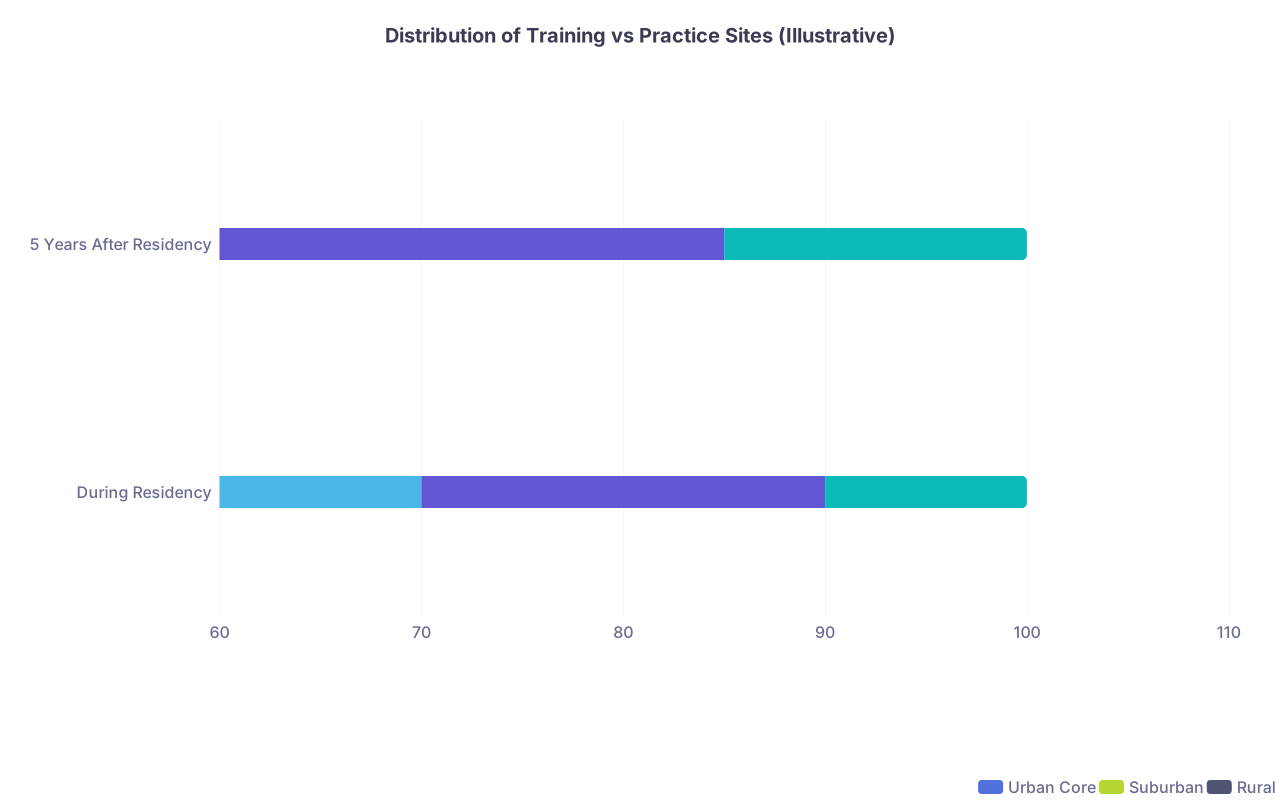
| Category | Urban Core | Suburban | Rural |
|---|---|---|---|
| During Residency | 70 | 20 | 10 |
| 5 Years After Residency | 60 | 25 | 15 |
Two things stand out in that type of pattern:
- Rural training exposure is small but not zero.
- Rural practice representation usually grows somewhat after residency but rarely enough to close the gap.
Specialties like family medicine and general surgery carry most of the rural burden. If you look at state workforce reports, you often see that:
- A majority of rural primary care is provided by family physicians.
- General surgeons in rural areas act as de facto subspecialists for a wide range of procedures.
- Emergency physicians in rural areas may be EM‑trained or FM/IM with EM focus, reflecting pipeline limitations.
So when you hear high rural “retention” in a state report, ask a more precise question: retention where within the state? Cities or counties that actually need people?
Compensation vs Retention: The Trade-Off Curve
A lot of doctors assume higher pay will always attract and retain physicians. The data does not fully support that. There is a classic three-way tension across:
- Compensation
- Lifestyle (hours, call, schedule variability)
- Geography (family ties, climate, amenities)
Most physicians are solving a multi-objective optimization problem, not just maximizing salary. The pattern I see in compensation versus retention looks like this:
- Very high salary, low-desirability locales:
Reasonable recruitment, poor long-term retention, high burnout. - Moderate salary, high-desirability metros:
Strong recruitment and strong retention; people accept lower pay to live there. - High salary, moderate lifestyle, moderate-cost states:
The sweet spot—Texas, parts of the Southeast, Intermountain West.
Here is a simple high-level comparison of “pull factors” by rough region.
| Region | Typical Comp vs National | Cost of Living | Retention Pull |
|---|---|---|---|
| Coastal Northeast | Slightly lower | High | Training hub, exports many |
| West Coast | Slightly lower | Very high | Retains many, but affordability limits |
| Southeast | Higher | Low–moderate | Strong pull for many specialties |
| Midwest | Average–higher | Low | Solid retention, moderate inflow |
| Mountain West | Average–higher | Moderate | High lifestyle pull, growing retention |
If I map the real decision-making conversations I have heard in resident lounges onto this table, they line up almost suspiciously well.
The hardest combination to beat in pure retention terms is:
- Above-average pay
- Reasonable housing costs
- Growing metro or suburban area
- Strong local residency programs feeding the pipeline
Which is exactly why places like Dallas, Houston, Raleigh-Durham, Denver suburbs, and Salt Lake County soak up so many graduates and keep them.
Where Retention Is Weak: States Training for Others
On the other side you have states that function as national training factories. They pull in students and residents from everywhere, but their local markets do not absorb them at scale.
You know the names:
- New York
- Pennsylvania
- Massachusetts
- Illinois
A lot of graduates want to leave for cost-of-living, tax, or lifestyle reasons. Others have no viable local options in their subspecialty because the market is saturated. When you see in‑state retention figures creeping down into the 40% range, the story is almost always one of:
- Oversupply in certain specialties (e.g., North Boston for academic subspecialty fields)
- Poor alignment between GME training slots and population distribution
- Trainees who always planned to return to their home region after “big city training”
From a “best place to work” perspective, that cuts both ways:
- If you like those states and can secure a job there, your colleagues may be more fungible. Markets with oversupply reduce bargaining power.
- If you want leverage, you are usually better off in a state that is openly struggling to staff its health systems, where retention is a priority metric and leadership knows it.
How Future Trends Will Reshape Retention
This is not static. Several forces are already bending retention curves at both the state and specialty level.
1. Telemedicine and Distributed Care
Telehealth has created a strange decoupling between where a physician lives and where patients are. But only up to a point.
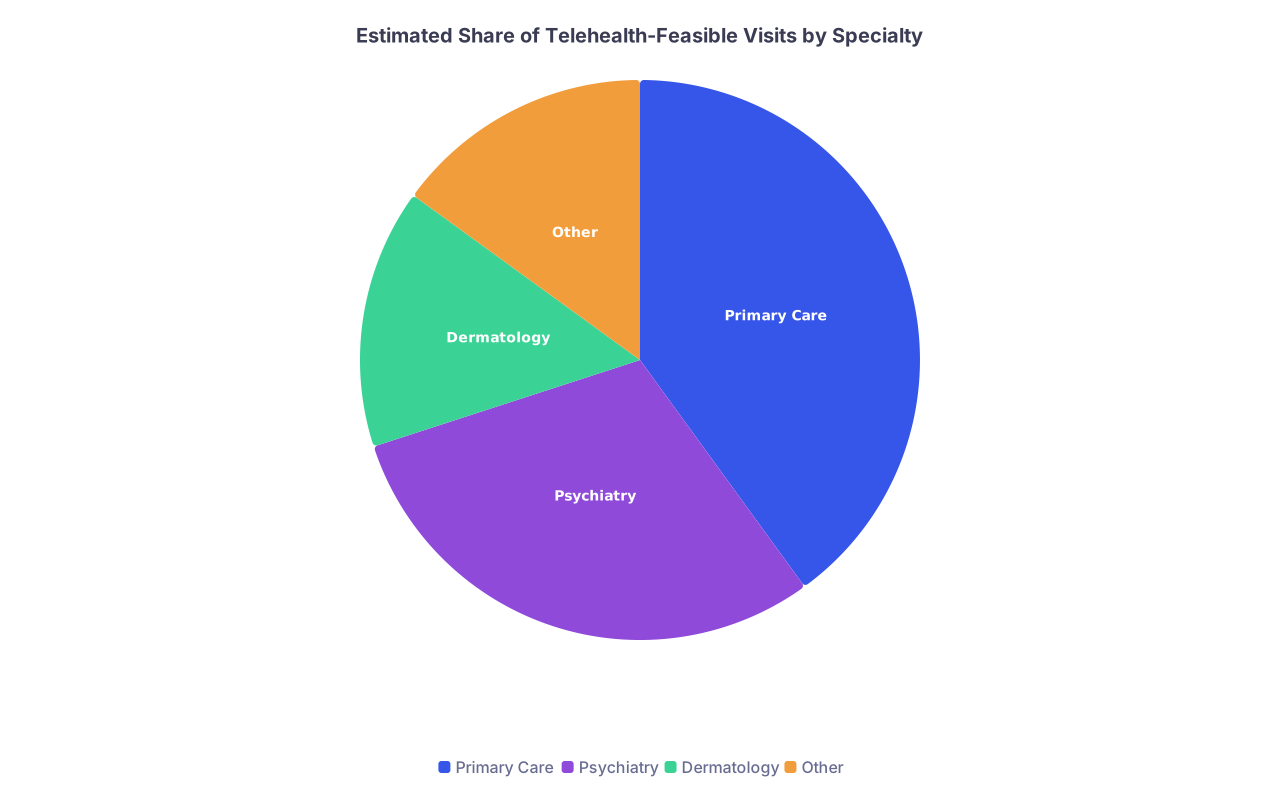
| Category | Value |
|---|---|
| Primary Care | 40 |
| Psychiatry | 30 |
| Dermatology | 15 |
| Other | 15 |
Fields like psychiatry and some primary care are now much more flexible geographically. I have seen psychiatrists living in one state, licensed in three, and seeing patients across a multi-state telehealth network with minimal physical presence.
That changes “state retention” dynamics. A psychiatrist might complete residency in one state, physically move to another, but most of their clinical volume comes from a different region altogether.
Over time, expect:
- High telehealth-compatible specialties (psychiatry, endocrinology, some IM, dermatology) to fracture traditional state retention statistics.
- States dealing with shortages to aggressively subsidize multi-state licensing, compacts, and telehealth networks rather than trying to physically import more doctors.
2. Aging Physician Workforce and Replacement Pressure
A large proportion of U.S. physicians are approaching retirement within 10–15 years. The replacement need is not evenly distributed.
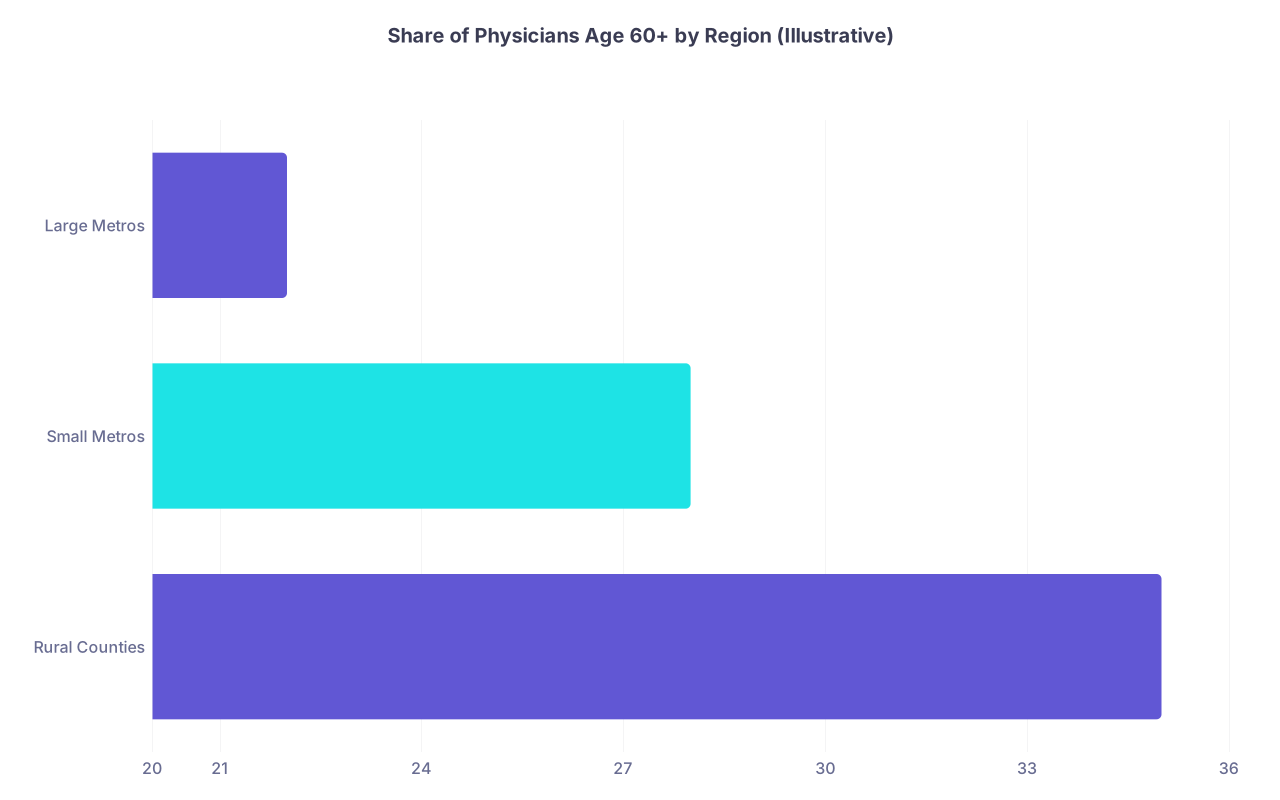
| Category | Value |
|---|---|
| Rural Counties | 35 |
| Small Metros | 28 |
| Large Metros | 22 |
Rural regions have an older physician workforce. That means retention for younger physicians will become even more strategically important. Systems will:
- Offer partnership tracks, sign-on bonuses, and lifestyle accommodations to keep whoever they can.
- Coordinate with residency programs to funnel applicants into areas with huge replacement gaps.
If you are choosing a state and specialty now, the regions with the highest percentage of older physicians in your field are often where future bargaining power and retention incentives will spike.
3. Burnout, Schedule Control, and Partial Exit
This one does not show in simple retention tables. A physician can technically “stay in state” while functionally exiting full-time practice. Shift cuts. Part-time. Administration. Industry roles.
Anecdotally and in early survey data:
- Emergency medicine and primary care show high burnout and early schedule reduction.
- Certain high-intensity surgical specialties see earlier retirement if financial independence is reached quickly.
So the traditional “where are doctors practicing?” question is being replaced with “where are full-time, clinically active doctors practicing—and for how long?”
The best places to work will not just be the states you stay in, but the states where you choose to stay at full intensity beyond your early 50s. That is a different metric than current retention reports.
How To Use This Data If You Are Planning Your Career
You are not a statistic. But you are absolutely subject to the same forces that produced these numbers.
Here is how to use them strategically:
When ranking residency programs, treat location as destiny.
If a state has a 65–70% in‑state retention rate for your specialty, assume there is a real chance you will stay. Ask yourself if you are actually comfortable with that outcome.Match specialty mobility with your personality.
If you know you want to keep geographic options open, fields like EM, anesthesiology, radiology, or some surgical subspecialties give you more cross-state mobility. If you crave rootedness and community practice, primary care or psychiatry adjusted to a region you like will align with the high in-state retention pattern.Look at emerging growth markets, not legacy prestige hubs.
Boston, New York, Chicago are great training ecosystems, but their retention metrics signal oversupply in many niches. For stable, long-term leverage, the data continuously points toward growing Sun Belt and Mountain West metros, select Midwestern cities, and states with deliberate workforce planning.Interrogate “state retention” down to the metro vs rural level.
If you are considering rural practice, state-wide retention figures will mislead you. Ask specifically: what percentage of residents end up in rural counties, and what incentives are tied to that?Bet on flexibility-heavy specialties for the telehealth era.
Psychiatry, certain IM subfields, and dermatology will increasingly decouple from strict geography. That will give you more power to choose where you live, independent from where your patients are.
Key Takeaways
- Doctors do not scatter randomly; most cluster near where they train, especially in primary care, psychiatry, and less mobile specialties.
- States that combine reasonable cost of living, expanding health systems, and solid GME pipelines—think Texas, parts of the Southeast, Mountain West—show the strongest real-world physician retention and work-life upside.
- The future of “best places to work” will be shaped less by prestige and more by data: demographic demand, telehealth compatibility, aging workforce gaps, and your specialty’s built-in mobility.


