
It’s 10:30 p.m. You’re on some hospital portal looking at job postings, and every “good” job looks like it’s in a massive city you don’t actually want to live in. New York. Chicago. LA. Houston. Dense traffic, high rent, noise at 2 a.m., your “backyard” is a fire escape.
And you’re sitting there thinking:
“Do I have to sacrifice my sanity and force myself into a lifestyle I hate just to have a solid career in medicine? Are all the high-quality jobs basically big academic centers in giant cities? If I don’t want that… am I already limiting myself?”
Your brain goes straight to:
What if private practice dies out? What if all the stable jobs are urban hospital-employed positions? What if I end up in a tiny town with no support and burn out alone?
Let’s walk through this like someone who is not a natural optimist. Because I’m not going to pretend the system is perfect. But I will tell you, very bluntly: not being a big‑city person does not doom your career. It changes your strategy. It does not close the door.
The Myth: “Real” Medicine Only Happens in Big Cities
You know the script.
Attendings talk about “the big academic centers” like they’re the only real game: Mass General, Mayo, UCSF, Penn, Hopkins. The conferences highlight research from massive institutions. Residency PDs flex their “tertiary quaternary referral center” status like a badge of honor.
So it’s easy to start thinking: if I’m not in a major city academic center, I’m somehow… lesser. Like I’m wasting my training. Or I’ll stagnate. Or it’ll look bad if I ever want to move.
I’ve watched this play out. Interns whispering in call rooms, “Yeah, but if you go to some random community place in the middle of nowhere, you’re done. You’ll never get back into academics.”
Here’s the reality that nobody says loudly because it’s less glamorous: a ton of really good medicine happens outside of big cities. And a lot of really miserable medicine happens inside them.
The big city doesn’t magically guarantee better:
- Schedules
- Colleagues
- Culture
- Pay
- Or even clinical experience
Sometimes it’s the opposite. The city gives you prestige and density. It also gives you traffic, cost of living, and faculty fighting over committee seats like it’s a blood sport.
Where the Jobs Actually Are (That Aren’t Big-City)
Let’s be concrete. Because vague “you can work anywhere” reassurance doesn’t calm anxiety.
There are three zones you should think about, instead of just “city vs rural”:
- True rural (tiny town, distant from major metro)
- Micropolitan / small city (think 30k–150k people)
- Suburban / exurban near a big city (45–90 minutes out, but not “urban”)
All three have serious physician demand. But they feel very different to live in.
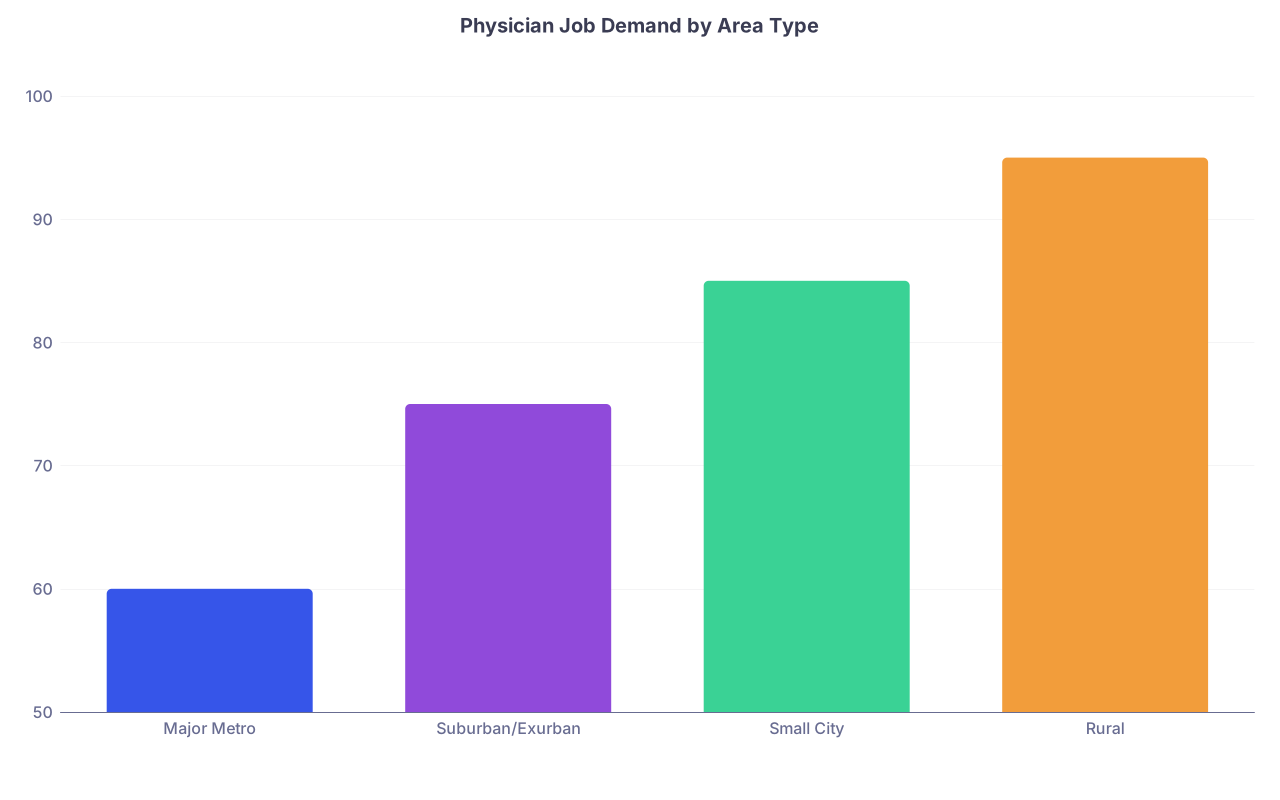
| Category | Value |
|---|---|
| Major Metro | 60 |
| Suburban/Exurban | 75 |
| Small City | 85 |
| Rural | 95 |
Numbers aren’t exact, but the pattern is real: smaller and more remote = more desperate for doctors. Desperate can be good for you.
Here’s how it plays out:
True rural
This is the “one hospital for 60 miles” setup. You might be the only specialist in your field for counties. Lots of autonomy, sometimes heavier call, often very high compensation and a big signing bonus. Lifestyle can be amazing if you like land, quiet, and knowing every cop, teacher, and pharmacist by first name. Lonelier if you crave peers your age or non‑chain restaurants.Small city / micropolitan
Think places like Missoula, MT; Bloomington, IN; Fayetteville, AR; Spokane, WA (borderline, but you get the idea). Regional hospitals, maybe a medical school satellite campus, usually a couple of decent coffee shops and a Costco. This is the sweet spot for many non–big‑city people: real medicine, decent resources, not chokingly crowded.Suburban / exurban near a big city
This is when you work in “not-quite-urban” but you’re in a system anchored to a big city hospital. You live in a quieter area, maybe have a yard, but you’re employed by a large health system. Job stability can be strong, though commute and system bureaucracy can still follow you.
So yes, there are jobs. Tons of them. And they’re not all “hero rural doc with no backup doing midnight C‑sections by headlamp.” That image you have of rural medicine is 30% truth and 70% legend.
What Actually Gets Better Outside Big Cities (And What Can Get Worse)
You’re probably not worried about whether jobs exist. You’re worried they’ll all be bad tradeoffs. Like: “Sure you can have a small town, but you’ll work 1:2 call until you die.”
Let’s be honest about upsides and downsides.

Things that often get better outside big cities:
Pay.
Smaller places usually pay more. Period. They need you more than you need them. I’ve seen outpatient family docs in rural Midwest making more than subspecialists in coastal cities, with less overhead and lower taxes.
Cost of living.
Rent or mortgage goes down. Your yard goes up. You’re not competing with tech bros and hedge fund people for a 600 sq ft apartment.
Autonomy.
In some small and mid-sized systems, you can actually change things. Start a clinic. Push a new care pathway. People know your name instead of treating you as Provider #183.
Patient relationships.
You don’t just see a name on a chart. You see the patient at the grocery store. Their kid plays soccer with your kid. That’s heavy sometimes, but it’s also grounding.
Commute and daily stress.
No one should have to factor a 75‑minute commute into call nights. In smaller places, sometimes your “commute” is literally 7 minutes and three stoplights.
Things that can be worse (or at least tricky):
Backup and subspecialty access.
If you’re the only GI doc in a 100‑mile radius, guess what: every weird case finds you. If your hospital doesn’t have IR after 5 p.m., transfers and late-night stress become your problem.
Call burden.
If there are three of you instead of twenty, call feels heavier. Some places deal with this well. Some just shrug and say, “That’s rural life.” You have to read contracts with a microscope.
Professional isolation.
If you like journal clubs, niche subspecialty conferences, or just being surrounded by other people in your field, small settings can feel thin. It's better now with virtual everything, but it’s still a factor.
Family and partner needs.
Does your partner need a specific kind of job? Will your kids be okay in a small school system? Are there cultural or religious communities you want nearby? This is where the anxiety is legitimate: the town might be great for you as a doctor but not for your non-physician life.
The point is: it’s not this clean, moral choice between “big-city = success” and “small town = sacrifice.” It’s a preference stack. You get some things. You give some things. But there are great jobs at every size—if you’re intentional.
Private Practice, Employed Jobs, and the “Am I Doomed?” Question
Here’s the fear I hear all the time:
“I don’t want huge-city academics, but I’m also terrified that private practice is dying and that everything in smaller places is either poorly run or going to be swallowed by a big system. Am I walking into a dead model?”
You’re not wrong that the landscape is shifting. But it’s not a binary apocalypse.
| Practice Type | How Common? | Main Tradeoff |
|---|---|---|
| Hospital-employed | Very common | Stability vs bureaucracy |
| Private group | Common | Autonomy vs business risk |
| Federally Qualified HC (FQHC) | Common in rural | Loan help vs lower pay ceiling |
| Academic-affiliate | Less common | Teaching vs limited research |
In small and mid-sized communities, I see a mix of:
- Hospital-employed positions (with decent salaries, RVU or salary‑plus‑bonus structures, and benefits)
- Stable private groups that have been around for decades (especially in ortho, GI, anesthesia, cards, derm)
- FQHCs and rural health clinics (especially for primary care and psychiatry)
- “Community teaching” hospitals with residents but not giant-city prestige
Is private practice pressured? Yes. Is it dead? No. In fact, in some smaller cities it’s hanging on better because overhead is lower and competition isn’t as brutal.
If you want flexibility and aren’t allergic to the concept of business, small-city private practice or partnership-track groups can be fantastic. If you want a predictable paycheck and to never think about HR or rent, hospital employment is safer. Both exist outside major metros.
How To Actually Find These Jobs (Beyond the Glamorous Postings)
Here’s the part people screw up: they only look on the obvious job boards and see the shiniest postings from the biggest systems in the biggest cities.
Smaller and mid-sized places often:
- Rely on recruiters
- Use state medical society postings
- Recruit through word of mouth, locums, or residency contacts
So if you want a non–big‑city job, you need a slightly different strategy.

| Step | Description |
|---|---|
| Step 1 | Decide city size you want |
| Step 2 | Pick 2 to 4 regions |
| Step 3 | Search state medical societies |
| Step 4 | Email smaller hospital HR directly |
| Step 5 | Ask attendings about alumni contacts |
| Step 6 | Consider short locums to test area |
The move that anxious applicants rarely consider: target locations first, then job.
Instead of “What jobs are open?” ask, “What kind of life do I want?” Mountain town? College town? Coastal but not urban? Near family? Then work backward.
Because the truth is: lots of these places will make a job for you if you’re in a needed specialty and willing to commit.
Will I Be “Less” of a Doctor if I Don’t Work in a Big City?
This is the quieter fear. The pride thing. You’ve killed yourself for years, and now it feels like everyone is chasing big-name centers, big-brand hospitals, big-coastal lifestyles. And you’re like, “I want a backyard and not to sit in traffic for two hours a day—am I wimping out?”
No. You’re choosing a different metric for success.
Some of the sharpest, most clinically solid physicians I’ve met are in:
- Random Midwestern small cities
- Mountain towns
- Mixed rural-suburban health systems that don’t show up on Top 10 lists
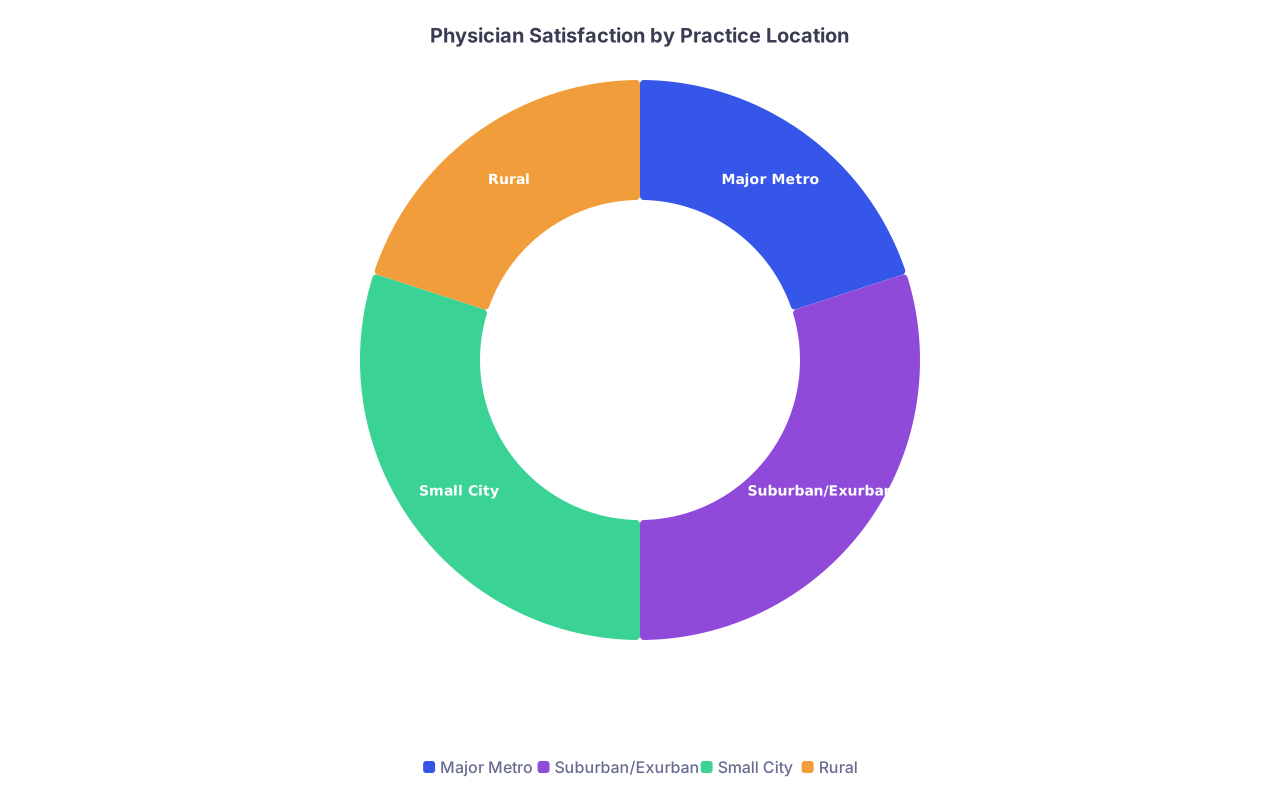
| Category | Value |
|---|---|
| Major Metro | 20 |
| Suburban/Exurban | 30 |
| Small City | 30 |
| Rural | 20 |
Rough pattern I’ve seen again and again: small city and suburban/exurban docs are often the happiest. Big city sometimes wins for intellectually restless academic types or people who love city life. Rural sometimes wins for people who truly want space and independence.
You’re not “less ambitious” if your brain and nervous system function better with less noise and more sky. You’re just being honest about your wiring.
And clinically? You’ll probably see more breadth in smaller places. When I hear small-city internists talk about their panels, it’s a mix of complex multi-morbidity and long-term continuity that some city hospitalists never see.
Concrete Steps If You Know You’re Not a Big-City Person
Let’s kill the vague anxiety with specific actions.

Say it out loud to yourself now: “I don’t want to live in a huge city long-term.”
Not “maybe.” Not “we’ll see.” Just admit it to yourself. That clarity matters.During training, pay attention to:
- Where attendings and alumni actually end up, not just the loudest few
- People who seem genuinely content and where they practice
- Which environments you feel calmer in: dense urban vs more open
Start a short list of regions or “vibes” you’d consider.
Mountain town. College town. Suburban near family. Coastal small city. Don’t worry about jobs yet. Just get the map in your head.Ask very specific questions on interviews or when talking with recruiters:
- What’s the call schedule really like?
- How many physicians in this specialty? Any plans to recruit more?
- What happens when there's something you can’t handle locally?
- What’s the turnover been in the last 5 years? Why did people leave?
Consider doing a locums or short-term stint in a smaller place before signing long-term.
Try on the life. Don’t guess. The fantasy of “quiet small town” can be very different from reality. Sometimes it’s better than you imagined; sometimes you realize you need at least a Target and an airport.Do not assume you can’t move later.
Is it harder to go from tiny rural hospital to elite academic center in NYC? Sure. But going from small/mid-sized to another small/mid-sized, or even big community in a bigger city? Completely doable if you keep your skills sharp.
What About the Future of Medicine—Is This All Going to Get Worse?
You might be thinking, “Okay, maybe it works now, but what about in 10–20 years? Will everything be corporate hospital chains in giant metros, and will small places just hollow out?”
I’m not going to sugarcoat the corporatization and consolidation trend. It’s real. But it’s hitting big cities harder in some ways. High overhead, thinner margins, more competition, more physician churn.
Smaller and mid-sized communities, on the other hand:
- Still desperately need clinicians
- Are experimenting more with flexible arrangements (part‑time, hybrid telehealth + in‑person, creative call structures)
- Are often where health systems expand to, not abandon
And telemedicine changes the landscape. You can live in a smaller place and still:
- Do subspecialty consults regionally
- Join virtual academic conferences
- Teach remotely
- Even structure a partially remote practice in some fields (psych, derm, endocrine, sleep, etc.)
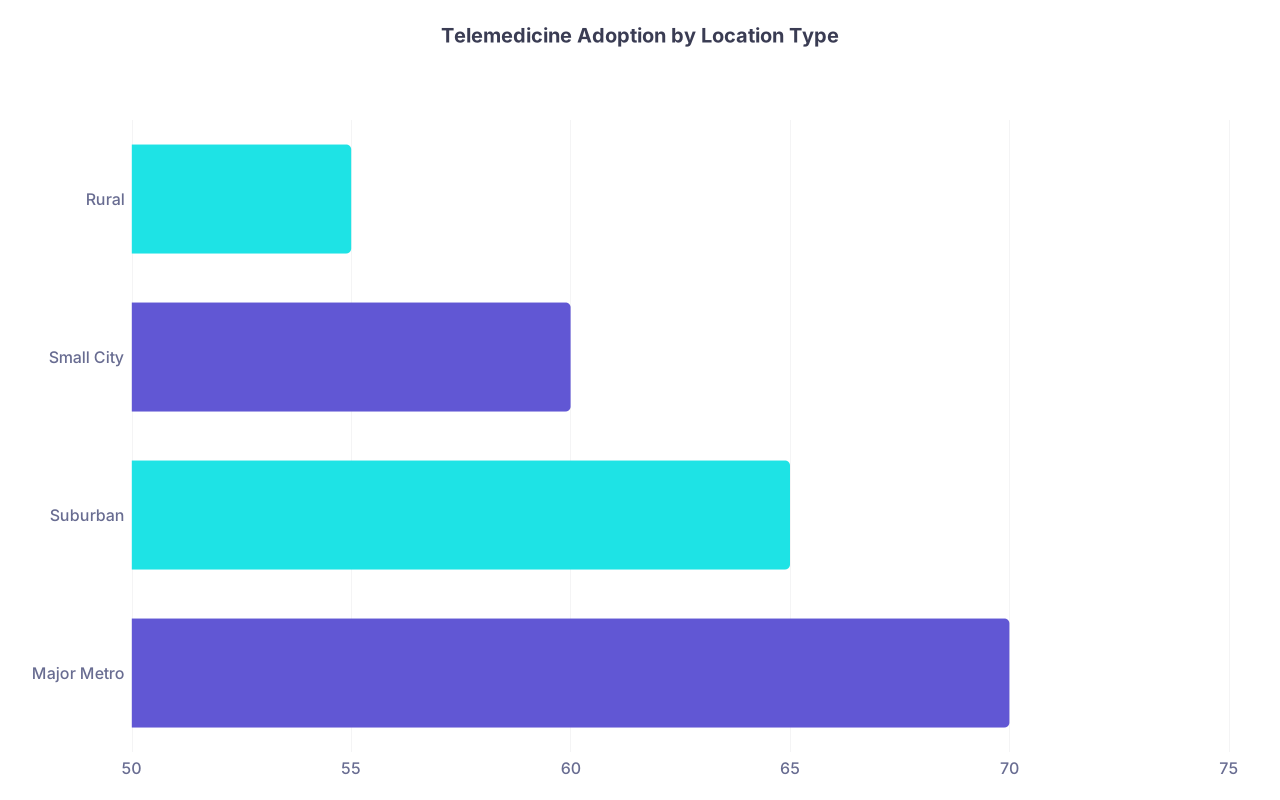
| Category | Value |
|---|---|
| Major Metro | 70 |
| Suburban | 65 |
| Small City | 60 |
| Rural | 55 |
Honestly, the future risk isn’t “no jobs outside big cities.” It’s “jobs that look cushy on paper but quietly erode your autonomy and time.” That’s a risk everywhere.
But if I had to bet where you can still carve out a sane, human life in medicine as things evolve? I’d put a lot of chips on small and mid-sized communities. They need you too much to treat you as expendable.
FAQ (Exactly 4 Questions)
1. If I start in a small town or small city, am I stuck there forever?
No. You’re not signing a blood pact. If you do solid clinical work, keep up with CME, maybe stay connected through societies or conferences, you can move. I’ve seen people go from small community hospitals to bigger regional centers, and from mid-sized cities to academic-affiliated roles. The longer you’re in an ultra-rural, ultra-niche setup, the more deliberate you’ll have to be about your next move—but you’re not trapped.
2. Will residency programs or future employers judge me for wanting a non–big-city path?
Some academic people quietly look down on it. That’s their issue, not yours. Plenty of PDs and department chairs love applicants who want to serve smaller communities; it reads as grounded and realistic. When you explain it as, “I function better in smaller environments and I care about continuity and community,” that’s not a red flag. It’s clarity.
3. Are small-town or small-city jobs just code for endless call and burnout?
Sometimes. There are horror stories of 1:2 call for years with no plan to recruit more help. But it’s not automatic. I’ve seen small-city setups with very humane call, robust hospitalist coverage, and realistic outpatient volumes. The trick is to interrogate the job: ask about how often they transfer, how many docs share call, what the actual wRVUs look like, and why the last person left. If they get vague, that’s your answer.
4. What if my partner absolutely needs a big-city job, but I don’t want to live there?
This is where it gets messy. Sometimes the compromise is living in a suburb or small city within commuting distance of a big metro. Sometimes your partner can work partially remote or in a regional satellite office. Sometimes you decide to prioritize one career for a few years and then rebalance. There isn’t a single clean answer, but don’t assume “partner needs city = I must love urban life.” There are a lot of couples making hybrid setups work—one person anchored to the city, the other to a quieter town on the edge.
Bottom line:
You don’t have to be a big‑city person to have a great, interesting, well‑paid, real job as a doctor. Smaller and mid-sized places are not where careers go to die—they’re where a lot of doctors quietly build lives they actually like.
Your job isn’t to follow the prestige noise. It’s to be brutally honest about the kind of life you want, then hunt for the pockets of medicine that fit that life—because they’re out there.


