

The biggest relocation mistake doctors make isn’t about money. It’s about assuming “a job is a job” and every state is basically the same. That assumption has wrecked careers, marriages, and finances.
You’re not moving across town. You’re changing legal environments, payer mixes, malpractice risk, call expectations, cost of living, even how your kids will grow up. States don’t treat physicians equally, and pretending they do is how smart doctors end up trapped.
Let’s walk through the seven relocation mistakes I see over and over—and how to not be the next cautionary story.
1. Choosing a State for Salary Alone and Ignoring Take‑Home Reality
The offer letter says $400,000. Your brain lights up. You start mentally upgrading your house and car.
This is where people blow it.
That $400k in one state is not remotely the same as $400k in another. If you don’t run the numbers, you’re basically gambling your next decade on assumptions.
Here’s what doctors routinely ignore:
- State income tax (or lack of it)
- Local cost of living (housing, childcare, insurance, property tax)
- Call intensity / RVU pressure needed to “hit” the quoted income
- Cost of malpractice and tail coverage
- Hidden “mandatory” expenses (unpaid admin time, CME caps, licensing fees, parking)
A quick reality check:
| State | Base Salary | State Income Tax | Approx Take-Home Impact* |
|---|---|---|---|
| California | $400,000 | High | Feels like ~$260k–$280k |
| New York | $400,000 | High | Feels like ~$260k–$280k |
| Texas | $400,000 | None | Feels like ~$300k–$320k |
| Florida | $400,000 | None | Feels like ~$300k–$320k |
| Washington | $400,000 | None (but others) | Feels like ~$290k–$310k |
*Very rough ballpark for comparison only, assuming similar federal tax, basic deductions, and ignoring big individual variables.
Now layer cost of living on top. Some cities basically tax you through housing instead of income tax.
The common mistake: choosing the $400k job in a coastal, high‑tax, high‑cost state over a $350k job in a low‑tax, lower‑cost state—without modeling what you’ll actually keep after everything. I’ve seen doctors take an apparent $50k “raise” and end up with less spendable money and more burnout.
How to avoid it:
- Use a cost‑of‑living + tax calculator. Plug in specific cities, not just states.
- Look at rent/mortgage, property tax, daycare, and health insurance in that zip code.
- Ask how bonuses are realistically achieved. If the “$400k” assumes you’re doing 1.5 FTE volume, you don’t make $400k—you pay for it with your spine and your sanity.
Do not trust your gut on money. Trust math.
2. Ignoring Malpractice Climate and Legal Risk in That State
Treating malpractice like an afterthought is how you end up losing sleep—and sometimes much more.
States vary wildly in:
- Malpractice caps (or lack of them)
- Frequency and size of plaintiff verdicts
- Attorney friendliness to medical lawsuits
- Reporting rules and board culture
I’ve watched good physicians move from a relatively sane malpractice state to a high‑litigation environment and suddenly practice terrified. Ordering defensive tests, avoiding higher‑risk procedures, documenting like a medicolegal robot. It changes how you practice and how you sleep.
Some examples of what you need to look at:
- Does the state have caps on non‑economic damages?
- Are there pre‑suit screening panels or certificate‑of‑merit requirements?
- How aggressive is the state medical board historically?
- Are there specialty‑specific malpractice hot spots? (OB, neurosurgery, EM especially feel this.)
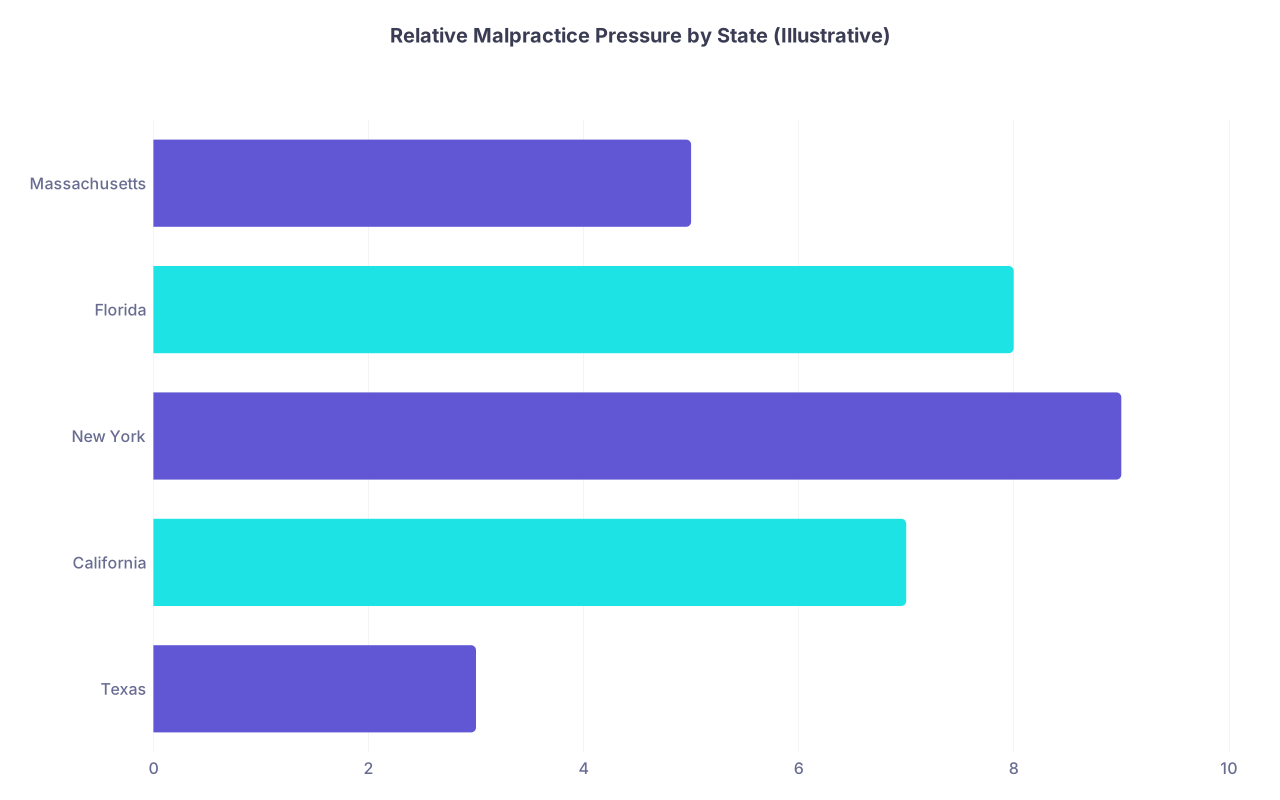
| Category | Value |
|---|---|
| Texas | 3 |
| California | 7 |
| New York | 9 |
| Florida | 8 |
| Massachusetts | 5 |
(Scale 1–10, very rough, just to make the point: the climate is not uniform.)
The mistake: choosing a high‑pay, slightly urban position in a litigation‑happy state without ever calling a malpractice carrier or local colleagues to ask, “What’s it actually like to be sued here?”
How to avoid it:
- Call at least one malpractice carrier that writes in that state and your specialty. Ask about claims frequency and severity.
- Ask potential partners about recent lawsuits in the group—how often, how they play out.
- Look at whether your contract includes occurrence vs claims‑made coverage, who pays tail, and how long you’re exposed after leaving.
Money is irrelevant if you can’t sleep at night.
3. Underestimating Licensing, Credentialing, and Timeline Nightmares
Doctors consistently underestimate how much their life will be held hostage by licensing boards, credentialing committees, and payers when they change states.
You think: “I’ll sign this contract, move in July, start in August.”
Reality I’ve watched:
- State medical license delayed by 3–6+ months because of backlog or nitpicky paperwork
- Hospital credentialing and payer enrollment dragging out, leaving you unable to bill
- You sitting in a new city, not working, burning savings, arguing with HR and credentialing
The ugly part: salary often doesn’t start until you’re fully credentialed and seeing patients, or there’s a “ramp‑up” clause that pays far less initially. I’ve seen people lose $50k–$100k because they didn’t appreciate how long the pipeline is.
Typical timeline if things go well:
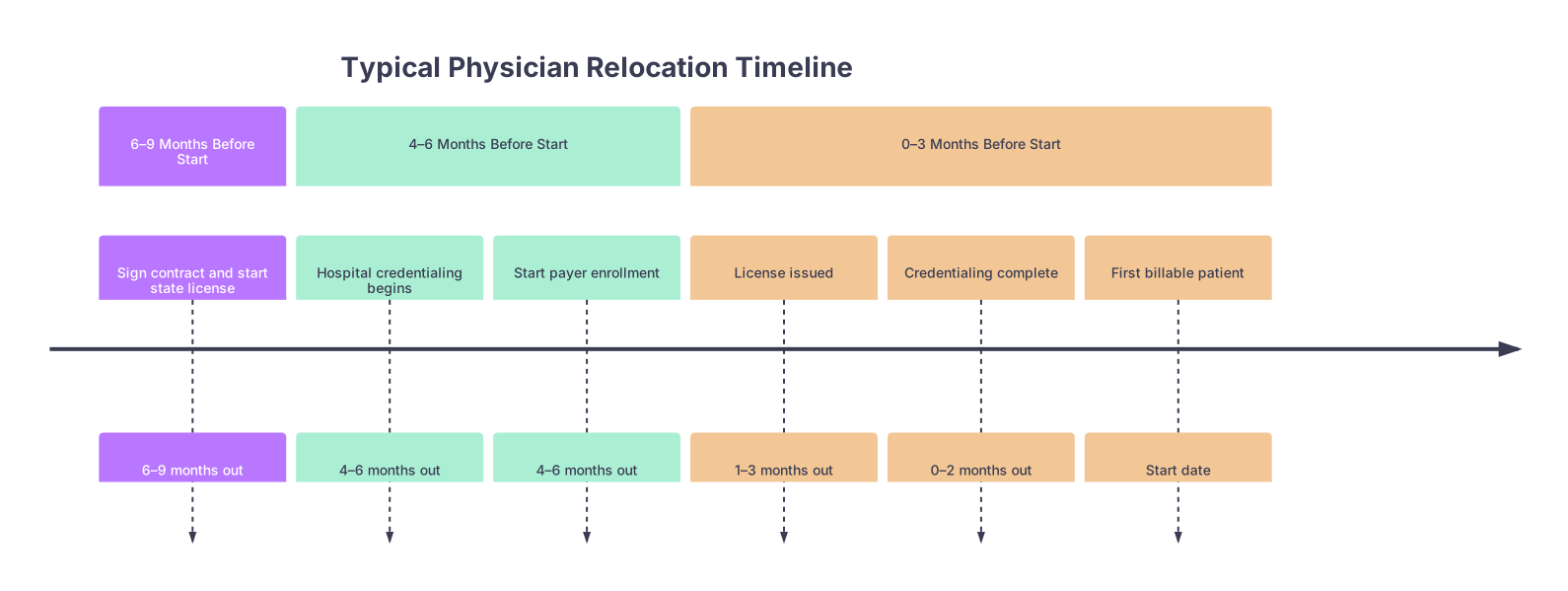
| Period | Event |
|---|---|
| 6–9 Months Before Start - Sign contract and start state license | 6–9 months out |
| 4–6 Months Before Start - Hospital credentialing begins | 4–6 months out |
| 4–6 Months Before Start - Start payer enrollment | 4–6 months out |
| 0–3 Months Before Start - License issued | 1–3 months out |
| 0–3 Months Before Start - Credentialing complete | 0–2 months out |
| 0–3 Months Before Start - First billable patient | Start date |
The big mistake: resigning from your current job before you have:
- A clear written timeline from HR/medical staff office
- State license application submitted and in progress
- Confirmation that the group has successfully onboarded other new docs on a similar timeline
How to avoid it:
- Ask the practice or hospital: “How long did it take your last 3 hired physicians to be license‑ready and fully credentialed?”
- Do not assume your current license history will speed things up. Some states are black boxes.
- Consider the Interstate Medical Licensure Compact if applicable—but don’t assume it fixes everything.
Do not voluntarily create a gap with no income just because someone says “we usually get it done in 90 days.” Get receipts.
4. Romanticizing “Lifestyle States” and Ignoring Call, Coverage, and Workload
States like Colorado, Arizona, Florida, the Carolina coast—people get starry‑eyed. Sun, mountains, beaches, golf.
Then they discover the trap: every other doctor wanted that lifestyle too, so the area is saturated, reimbursement is worse, and call is brutal because the hospital runs lean.
Common setup:
- Beautiful mid‑sized city or resort‑adjacent town
- High patient demand but staffing gaps
- Hospital and admin happy to market “great lifestyle” while everyone is quietly drowning
I’ve seen “lifestyle” jobs where:
- One hospitalist covers 30–40+ patients and admits all night
- EM docs do frequent double coverage gaps
- OB call is 1:3 for an insanely busy unit
- Specialty backup is nonexistent after 5 p.m., so you’re improvising care you wouldn’t be doing elsewhere

The mistake: assuming “nice place to live” means “nice place to work.”
How to avoid it:
Ask brutally specific questions before you sign:
- What is average daily census per physician? Peak census?
- Exact call schedule. Not “about one weekend a month.” I want it written out.
- Backup coverage—who’s on, what happens when multiple emergencies hit at once.
- Are locums or advanced practice providers helping or is it always you?
If they dodge specifics and keep saying “great work‑life balance,” that’s not a selling point. That’s a red flag.
5. Ignoring Spouse/Partner Career and Family Life Logistics
This one blows up more relocations than bad contracts.
You might think you’re moving for “better quality of life.” But if your spouse’s career dies in the process, or your kids hate the schools, or your extended family support disappears, the move will not feel like an upgrade.
Common misses I see:
- Small towns with one hospital but zero real career options for a professional spouse
- Great job in a rural state but the nearest decent school is 45 minutes each way
- Moving to a state with nightmare childcare waitlists and no extended family nearby
- Assuming a trailing spouse can “just get licensed” in their own field quickly (teachers, lawyers, nurses, therapists often hit state‑specific barriers)
Look at total family wellbeing, not just your RVUs.

| Category | Value |
|---|---|
| Spouse career | 25 |
| Schools | 25 |
| Childcare | 20 |
| Family proximity | 15 |
| Community fit | 15 |
The predictable story:
You move to State X for a strong job. Six months later your spouse is isolated, underemployed, and miserable. Your kids are struggling at a worse school than before. Suddenly that “dream job” is the enemy because it locked you into the wrong place.
How to avoid it:
- Have your partner research their job market in that specific city before you sign anything.
- Look up school ratings, but don’t stop there. Call or visit. Some “good” schools are pressure cookers; some “average” ones are better fits.
- Price out daycare or nannies with real quotes, not national averages.
- Be honest about your needs for family support. If you rely on grandparents now, losing them is a cost—not just emotional, but practical.
Do not sacrifice your family’s life on the altar of a slightly better contract.
6. Not Understanding Payer Mix and Reimbursement in That State
A state can be “great for doctors” in theory but terrible for your specific specialty based on payer mix.
If your revenue depends heavily on commercial insurance, you’re going to feel very different in:
- A state with a high proportion of Medicare/Medicaid
- A state where a single dominant insurer pays poorly and plays hardball
- A region with aggressive value‑based contracts you didn’t see coming
Different specialties are hit differently:
- Pediatrics in a Medicaid‑heavy state vs wealthier suburbs
- Psych in a state that underpays for mental health vs one with better parity
- Surgery or procedural specialties where commercial vs government mix drives everything
| Market Example | Medicare | Medicaid | Commercial |
|---|---|---|---|
| Rust Belt city | 40% | 20% | 40% |
| Sunbelt retiree area | 55% | 10% | 35% |
| Urban safety-net area | 20% | 60% | 20% |
| Affluent suburb | 15% | 10% | 75% |
You can guess which one will feel tighter financially if your group is still operating on old assumptions.
Common mistake: believing the recruiter’s line “the pay is competitive for the region” without asking what drives revenue in that region.
How to avoid it:
- Ask directly about payer mix for the group: % Medicare, Medicaid, commercial, self‑pay.
- Ask if there are any capitated or risk‑based contracts you’ll be part of.
- Talk to a physician not chosen by the recruiter and ask, “Has your income been stable here over the last 5 years? Any surprises?”
Reimbursement is not federally uniform in practice. States and even individual markets within states can feel like different countries.
7. Getting Trapped by Restrictive Covenants and Overlooking Exit Routes
The last mistake is the one that makes all the earlier ones permanent: moving to a new state and signing a contract that cages you there.
The problem isn’t just non‑competes, although those are bad enough. It’s:
- Broad non‑compete radius that covers the entire metro area or multiple counties
- Non‑solicit clauses that effectively prevent you from practicing with any local group
- Repayment obligations for sign‑on bonuses, relocation funds, or loan forgiveness that can total six figures if you leave “early”
- State laws that are very friendly to enforcing those restrictions
Some states have started cracking down on non‑competes, especially for employed physicians. Others still let hospitals stretch them to absurd limits.

Here’s the horror story I’ve seen more than once:
- Doctor moves to a new state, signs a nice‑looking contract with a 50‑mile non‑compete.
- Within a year it’s clear the job is toxic—call abuse, unsafe staffing, broken promises.
- They want to leave, but every reasonable alternative job is inside that 50‑mile radius.
- The hospital is absolutely willing to enforce the clause.
Now you have to choose between:
- Moving your family again to some random part of the state beyond the radius
- Completely leaving the state you just uprooted yourself for
- Staying in a job that’s burning you out, maybe compromising your ethics, because you’re cornered
The mistake: assuming “they would never enforce that” because the recruiter or chair seemed nice.
How to avoid it:
- Before you even look at houses, have a physician‑side contract attorney review your agreement. Someone who actually knows that state’s employment law.
- Negotiate limits up front: smaller radius, shorter duration, or removing the covenant entirely if possible.
- Be careful with repayment clauses for sign‑on bonuses and relocation. If you must accept them, understand the exact formula and timeline.
You’re not planning to leave. I get it. Nobody signs a contract expecting disaster. But I’ve watched too many people learn the hard way that you always, always plan your escape route before you need it.
Quick State‑Selection Reality Check
Let me be blunt: there is no “best state for doctors” in some generic ranking sense. There is only “best for your specialty, your family, and your tolerance for risk and bureaucracy.”
Some states shine for income but crush you with malpractice anxiety. Others pay modestly but give you actual weekends and time with your kids. Some are fantastic early career launchpads but poor long‑term homes for your spouse’s ambitions or your children’s education.
Before you decide where to go, prioritize with clear eyes. Here’s a simple priority snapshot to avoid “shiny object” mistakes:
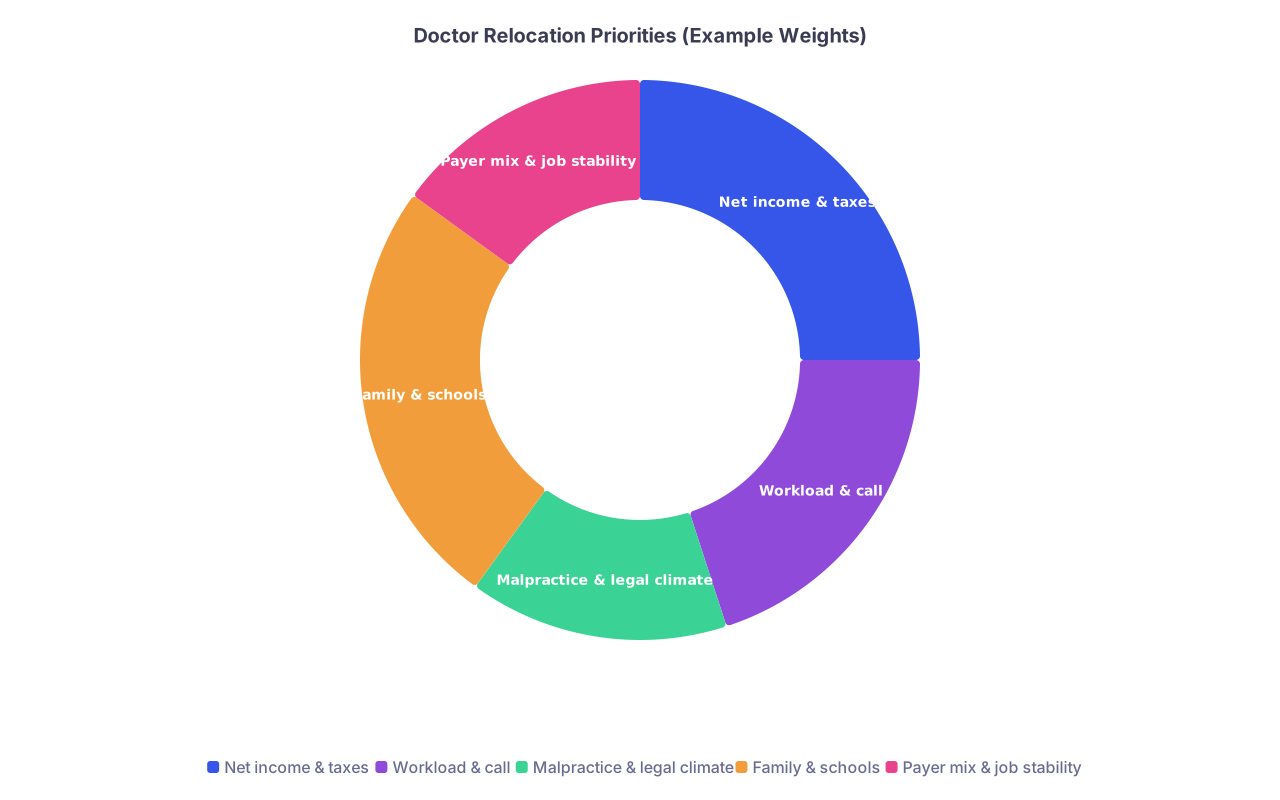
| Category | Value |
|---|---|
| Net income & taxes | 25 |
| Workload & call | 20 |
| Malpractice & legal climate | 15 |
| Family & schools | 25 |
| Payer mix & job stability | 15 |
Your numbers will differ. The point is you should have numbers—conscious priorities—before you let a recruiter sell you on a zip code.
Final Takeaways
Keep it simple. If you remember nothing else:
- Do not chase headline salary. Chase net life: after tax, after call, after malpractice stress, with your family’s reality included.
- Do not sign anything that can trap you—legally, financially, or emotionally—in a bad fit. Understand malpractice climate, payer mix, and restrictive covenants before you move.
- Do not relocate blind. Talk to real local physicians, run the numbers, and plan your exit routes before you pack a single box.
Do that, and you’ll actually choose a state that’s a great place to work as a doctor—for you. Not just on paper, but in your day‑to‑day life.


