
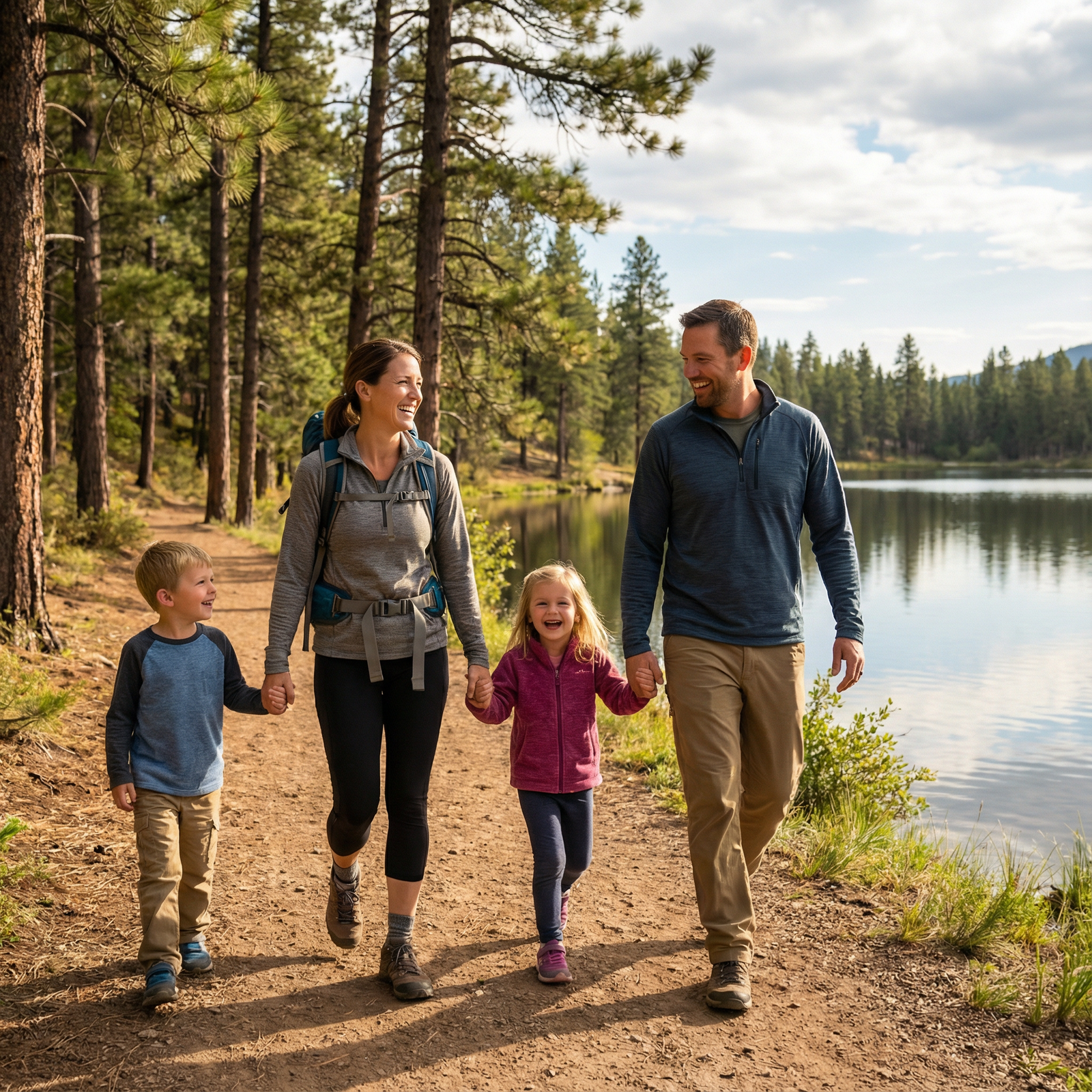
You have just finished another 12‑hour shift in a windowless hospital. It is 9:30 p.m. You walked in before sunrise, you are leaving after sunset, and your only glimpse of the outside world was a parking lot through a stairwell window between consults. Your WHOOP band is screaming about your HRV, your therapist has politely suggested “more time outdoors,” and the only “nature” you have seen this week is the mountain background on your Epic login screen.
If that feels uncomfortably familiar, you are the audience for this.
Let me be blunt: many American physicians are practicing in places that are absolutely hostile to long‑term mental health. Sprawl, bad air quality, no access to trails, commutes that eat your life. You will not fix burnout just by switching jobs if you keep choosing concrete.
So let’s talk about something residency programs never teach you: which mountain and outdoor cities actually work for physicians who need nature therapy without blowing up their career.
I will not give you a fluffy list of “pretty places.” I will walk through how I evaluate cities as a physician: hospital ecosystem, call realities, cost of living, airport access, and how fast you can get from your last discharge to an actual trailhead.
How to Evaluate a “Nature City” as a Working Physician
Before we name names, you need a framework. Otherwise you get seduced by a single Instagram view and end up in a place that wrecks your career.
Here is the short list of variables that matter:
-
- Number and type of hospitals (academic vs community vs critical access)
- Breadth of specialties (do you have a job in your niche or not?)
- Call intensity and schedule flexibility
- Compensation relative to cost of living
Outdoor access
- Time from hospital to real trailhead / ski area / water access
- Season length (do you get outdoor time year‑round, or 3 months only?)
- Crowd and traffic patterns (can you actually use weekends, or is I‑70‑style gridlock your reality?)
Logistics of a real life
- Airport quality and hub access (especially if you do conferences, locums, or have family out‑of‑state)
- School quality and spouse job market
- Housing prices, property taxes, and short‑term rental insanity
Your specialty‑specific reality
- Radiology vs EM vs ortho vs outpatient psych: very different constraints
- Are you tethered to a beeper within 20–30 minutes? That drastically changes where you can live.
You want cities that score reasonably across all four, not just “great skiing.”
To make this less abstract:
| Factor | Ideal Target |
|---|---|
| Commute to Nature | < 30 minutes from hospital to real trail |
| Hospital Density | ≥ 2 hospital systems within 45 minutes |
| Cost of Living | 0.8–1.1 × national average (except big metros) |
| Airport Access | Nonstop to ≥ 3 major hubs |
| Call Radius | Can live in or near a true outdoor corridor |
Now, the cities.
Tier 1: Major Mountain Hubs Where You Can Still Have a Career
These are places where you can be a serious clinician and a serious mountain person at the same time. Not fantasy. Real jobs, real hospitals.
1. Salt Lake City, Utah
Salt Lake is probably the single best “nature therapy” city for physicians in the US right now.
Here is why.
Clinical ecosystem:
Multiple robust systems: University of Utah (academic), Intermountain (huge nonprofit), HCA, VA. Strong in almost every specialty: trauma, transplant, advanced cardiology, oncology, ortho, neurosurgery, you name it. Competitive but not absurd like SF or Boston.
Outdoor access:
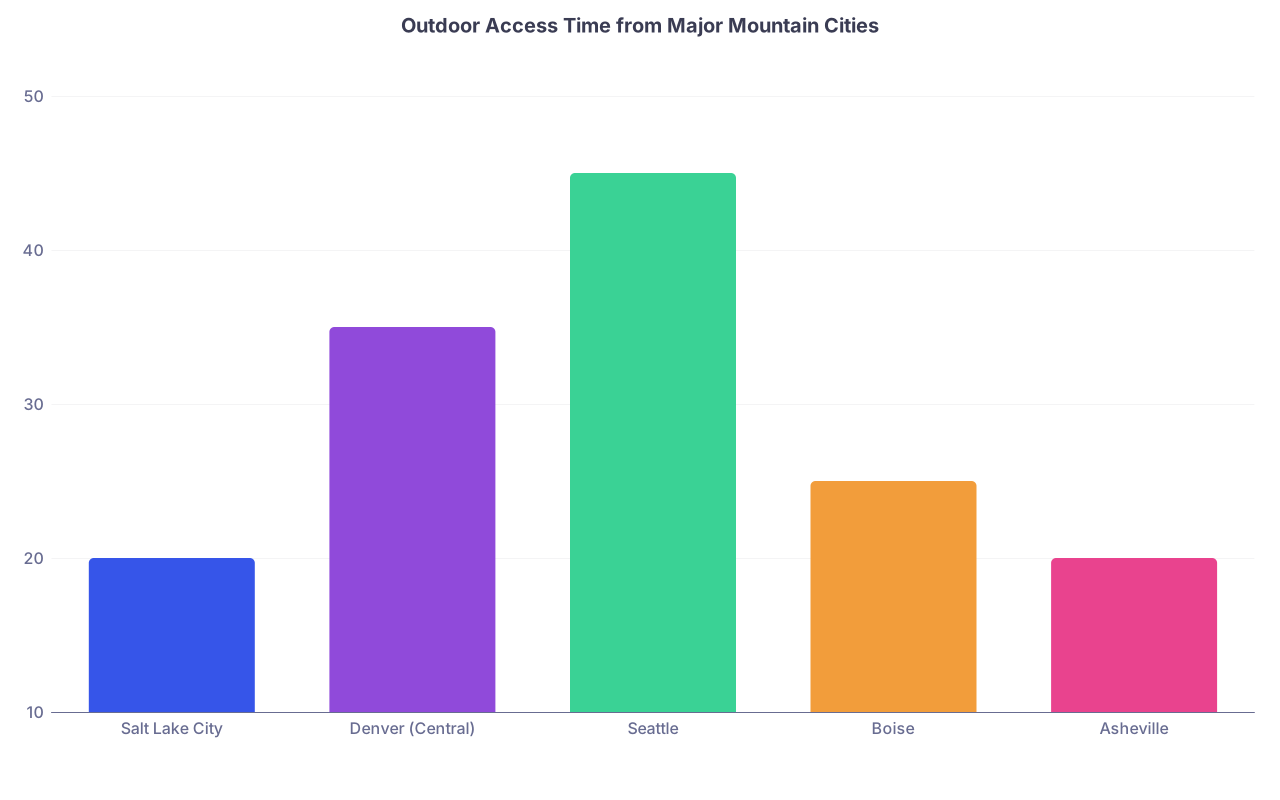
From University Hospital to actual Wasatch trailheads: about 20 minutes with sane traffic. To world‑class skiing (Snowbird, Alta): 35–45 minutes from many hospitals. You can legitimately:
- Finish post‑call at 11 a.m.
- Be on a skin track or a lift by noon.
- Be home for dinner.
The hiking, climbing, biking, trail running, backcountry skiing, and canyoneering (down south) are stupidly good. And you can actually park.
Lifestyle and logistics:
- Airport: SLC is a Delta hub with nonstop to almost everywhere. Easy for conferences, locums, or family.
- Cost of living: Rising, but still reasonable compared to Denver/Boulder or West Coast. Housing is the pinch point.
- Schools: Generally solid suburban districts (e.g., Park City if you can afford it; some east bench areas).
Downsides:
- Air quality inversions in winter are not trivial. If you have asthma or are sensitive, that matters.
- Cultural mismatch for some. Very LDS‑heavy in certain areas, though SLC proper is more mixed.
- Increasing crowds on the canyons and trailheads.
My view: If you are an outdoor‑driven doctor and can get a good contract here, it is hard to beat.
2. Denver / Front Range, Colorado (with caveats)
People assume Denver is outdoor heaven for doctors. Parts of that are true; parts are fantasy.
Clinical ecosystem:
Huge and diverse: UCHealth, Denver Health, Kaiser, SCL, VA, Children’s. Subspecialists can practice at a high level and still have a fairly normal life. The downside: competition is stiff, and wages are often compressed relative to secondary markets in the plains or Midwest.
Outdoor access reality check:
- From hospitals in central Denver to actual foothill trailheads: 25–40 minutes when roads are clear.
- To “dream Instagram” mountains (Summit County, Vail, Aspen): you are in I‑70 traffic hell on peak weekends.
The smart play: live and work in the west or northwest suburbs (Golden, Lakewood, Broomfield, Louisville, Longmont) or in Fort Collins. This keeps you in range for call while cutting your distance to real trails.
Crowding is the main downside here. Everything gets busier every year, especially in summer and on powder days.
Lifestyle and logistics:
- Airport: DEN is enormous, with excellent national and international connectivity.
- Schools: Front Range suburbs have plenty of excellent districts.
- Housing: Expensive, though less absurd in some outlying areas (e.g., north of Denver).
Best use cases:
- You are in a specialty that needs big‑city volume or academic affiliation.
- You want weekday dawn patrols, afternoon trail runs, and accept that weekends in the high country may require 4 a.m. starts.
If you need “empty” nature and hate crowds, you will eventually get resentful here. If you can use weekdays aggressively and are tactically smart, it can work extremely well.
3. Seattle, Washington (for hybrid mountain / water people)
Not a classic “mountain town” in the ski‑bro sense, but if your nature therapy is a mix of alpine, forest, and water, Seattle is elite.
Clinical ecosystem:
As robust as it gets outside the northeast corridor:
- University of Washington / Harborview (high‑level academic, Level I trauma)
- Virginia Mason, Swedish, Kaiser, multi‑hospital systems
- Strong for almost every subspecialty
If you are a complex proceduralist or academic, this is one of the few true “nature cities” where your career will not feel compromised.
Outdoor access:
From central Seattle:
- 30–60 minutes to excellent trail systems in the Cascades’ foothills
- 60–90 minutes to serious alpine terrain (Snoqualmie Pass and beyond)
- Ferries and short drives to world‑class sea kayaking, sailing, and coastal hikes
The difference from Denver: you get deep forests, water, alpine, and four‑season access with less freeze‑thaw brutality. Winter is wet and gray though; that seasonal affective component is real.
Lifestyle and logistics:
- Airport: SEA is a major hub with broad domestic and international service.
- Housing: Expensive. Similar to other tech‑driven metros.
- Traffic: Annoying. You need to plan your escape times carefully.
- Culture: More progressive, good for dual‑career households in tech/biotech.
If you need sun to be happy, think hard. If green and cool and watery is your reset button, Seattle is serious nature therapy with little career compromise.
| Category | Value |
|---|---|
| Salt Lake City | 20 |
| Denver (Central) | 35 |
| Seattle | 45 |
| Boise | 25 |
| Asheville | 20 |
Tier 2: Mid‑Sized Outdoor Cities With Healthier Pace
These places have fewer giant academic centers but often better balance. You trade some prestige and complexity for easier daily living and more realistic outdoor time.
4. Boise, Idaho
Boise used to be a secret. Those days are gone, but it still hits a nice balance.
Clinical ecosystem:
- St. Luke’s and Saint Alphonsus anchor the region
- Solid for general IM, FM, EM, anesthesia, hospitalist, general surgery, ortho
- Subspecialists in ultra‑narrow fields may feel limited, but bread‑and‑butter work is plentiful
Outdoor access:
The big Boise advantage: the outdoors start in town.
- From downtown hospitals to trailheads in the foothills: 10–20 minutes.
- Bogus Basin ski area: 45–60 minutes.
- Rivers, whitewater, backpacking in central Idaho: a few hours, manageable for weekends and post‑call.
This is one of those rare places where you can do a legit trail run or mountain bike ride before clinic and not be rushed.
Lifestyle and logistics:
- Airport: BOI is small but functional. You will connect through a hub, but flights are reasonable.
- Housing: Rapidly more expensive, but still less than Front Range or PNW metros.
- Culture: More conservative overall, with a “small‑big‑city” feel. Outdoor‑oriented population.
If you are a hospitalist, EM doc, anesthesiologist, or primary care physician who loves day‑to‑day trail access more than academic prestige, Boise is very high yield.
5. Asheville, North Carolina
Not western mountains, but for East‑Coast physicians who need trees and hills without abandoning civilization, Asheville is the move.
Clinical ecosystem:
- Mission Health (HCA‑owned) dominates the landscape. Mixed reviews on corporate culture, but substantial volume.
- VA and some smaller systems / clinics in the region.
- Generally better for hospitalist, EM, IM, FM, and outpatient specialties than for ultra‑niche subspecialty work.
Outdoor access:
This is about forests, ridges, rivers, and the Blue Ridge Parkway, not glaciers and big peaks.
- Blue Ridge Parkway access: 10–20 minutes from most of town.
- Pisgah National Forest: easy day‑trip territory.
- Excellent mountain biking, trail running, fly fishing, paddling.
- Four seasons, manageable winters.
What changes here: you get very fast access to calming, green, wooded environments. For stress physiology, that is powerful. You do not need 14ers to reharmonize your nervous system; two hours in a hardwood forest does the job.
Lifestyle and logistics:
- Airport: AVL is small, with limited direct flights; ATL and CLT are your big connectors (via car or short hop).
- Housing: Gentrification is real. In‑town properties are not cheap. Surrounding rural areas are more reasonable but watch your call radius.
- Culture: Progressive enclave in a conservative state. Good for many younger physicians and dual‑career couples in remote‑capable jobs.
I have seen multiple burned‑out internists move here, drop to 0.7–0.8 FTE, and add ten years to their career. This is a classic “life extension” move.
6. Burlington, Vermont
Underappreciated, mostly because people on the coasts underestimate how important “quiet” is.
Clinical ecosystem:
- University of Vermont Medical Center is the flagship.
- Academic‑community hybrid, with solid training programs and subspecialty representation, though not as deep as Boston.
- Regional referral center, so you get interesting pathology without Boston‑level chaos.
Outdoor access:
- Lake Champlain for water therapy.
- Green Mountains for skiing, hiking, and biking.
- Trailheads: often within 20–30 minutes.
- Stowe, Sugarbush, and Mad River Glen within weekend or frequent‑day‑trip range.
Winters are real. Cold, snowy, and long. If you tolerate winter well and like nordic skiing, snowshoeing, or just cold crisp air, this is restorative. If you are a sun‑chaser, maybe not.
Lifestyle and logistics:
- Airport: Small, but functional. Direct flights limited. Boston and Montreal are realistic car options for bigger travel.
- Housing: Growing problem. Supply is constrained and prices reflect that.
- Culture: Progressive, outdoorsy, slower‑paced. Feels safe, community‑oriented.
This is a good match for physicians who value academic affiliation and low‑noise living more than maximum salary.
Tier 3: Classic Mountain Towns – Brutal Tradeoffs, High Reward
Now we are in fantasy‑land for many students and residents: the “live in a ski town” dream. It can be done. The tradeoffs are stark.
7. Bend, Oregon
Probably the most famous “doctor in a mountain town” success story template.
Clinical ecosystem:
- St. Charles is the main system. Large for a mountain town but small compared to metro systems.
- Excellent for: EM, anesthesia, hospitalist, IM, FM, ortho, sports med, outpatient specialties.
- Limited for: hyper‑subspecialized academic work. You are not doing a ton of LVADs or complex oncologic surgery here.
Outdoor access:
You live in your playground. That is the point.
- Mountain biking and trails: start essentially in town.
- Skiing at Mt. Bachelor: ~30 minutes.
- Climbing at Smith Rock: ~45 minutes.
- Rivers and lakes: everywhere.
You can finish your last clinic patient at 4:30 p.m. and still get quality light on a trail. Repeatedly. For your entire career.
Lifestyle and logistics:
- Airport: RDM is small; expect connections or long drives for big trips.
- Housing: Extremely expensive, driven by remote workers and retirees.
- Culture: Very outdoor‑forward, but also very white and increasingly upscale.
- Schools: Decent, but do your homework if you have specific needs.
The bottleneck: jobs. Everyone wants to be here. Hospitalist and EM positions get flooded with applicants. If you can land and tolerate smaller‑system politics, it is one of the best nature‑therapy lives out there.
8. Jackson Hole, Wyoming (and similar high‑end ski towns)
I am including Jackson not because it is broadly practical, but to illustrate the pattern of ultra‑desirable ski towns.
Clinical ecosystem:
- Small hospital, limited scope, heavy dependence on flight transfers for complex cases.
- Very limited spots for physicians, particularly full‑time.
- Realistically best for: EM, primary care, anesthesia, ortho, some hospitalist work. Many docs piece together multiple roles or work part‑time.
Outdoor access and lifestyle:
- World‑class skiing, climbing, trail running, wildlife.
- Essentially instant access to mountains.
- Winters are serious; altitude is real.
Housing and cost of living:
- Astronomically expensive. Think “wealthy investors and celebrities” prices.
- Many physicians who work here full‑time had a previous high‑income phase or dual‑income scenario that made it possible.
For most doctors early or mid‑career, these ultra‑high‑end towns make more sense as second‑home or locums bases than primary homes. Locums in Jackson or similar places can be a clever “dose of mountain therapy” without trying to jam your whole career into a tiny job market.
9. Missoula / Bozeman, Montana; Flagstaff, Arizona; Similar “Lite Academic” Towns
I will group these because the pattern is similar.
Clinical ecosystem:
- Regional hospitals with some academic or teaching flavor (FM residencies, maybe IM, EM).
- Sufficient volume for good bread‑and‑butter practice. Limited for tertiary/quaternary subspecialties.
Outdoor access:
- Trails, rivers, and mountains usually within 10–30 minutes.
- Skiing within day‑trip distance.
- High quality of “routine daily nature” rather than purely epic weekend missions.
Lifestyle and logistics:
- Airports: small, mostly connecting.
- Housing: all have seen sharp price escalation. Expect “more than you think for less house than you want.”
- Culture: strongly outdoor, with a mix of locals, college‑adjacent culture, and in‑migrants.
These towns work best for physicians in generalist or regionally‑in‑demand fields who deeply value community and pace of life over maximum salary or national prestige.
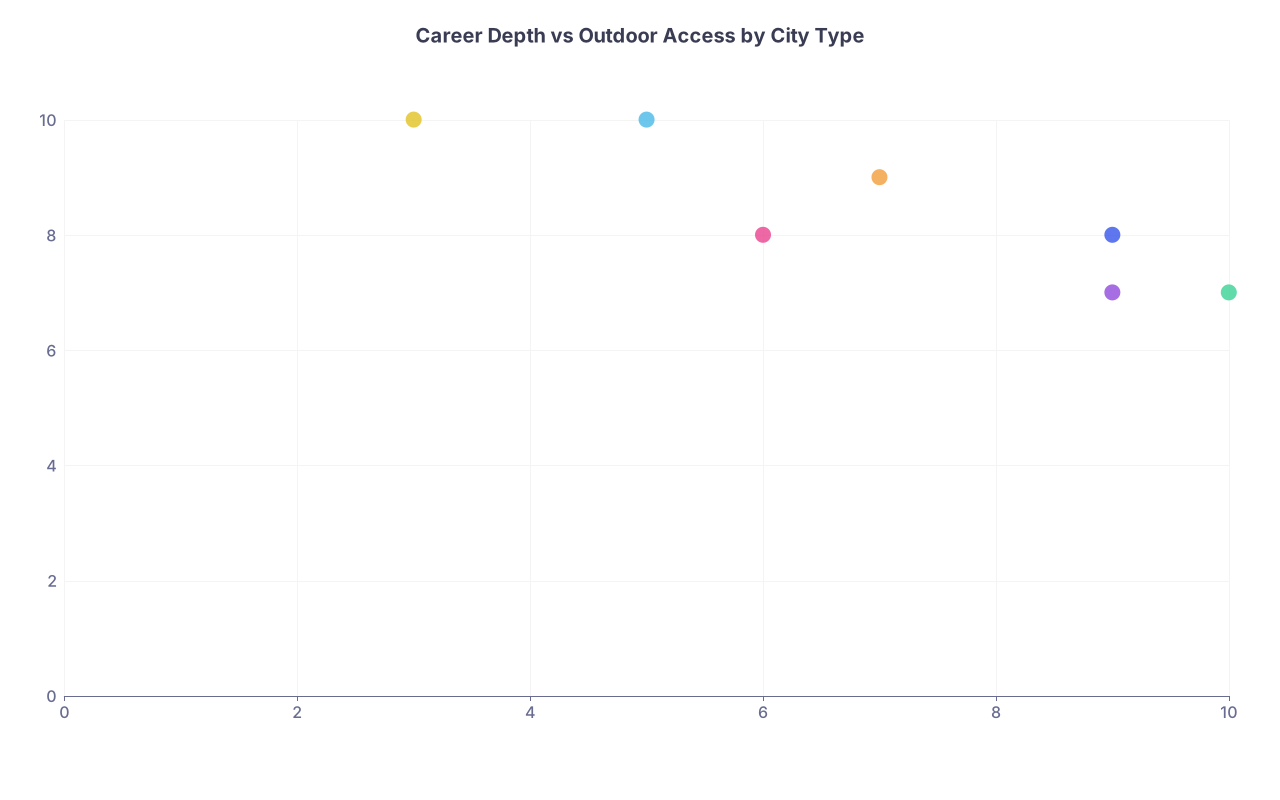
| Category | Value |
|---|---|
| Salt Lake City | 9,8 |
| Denver | 9,7 |
| Seattle | 10,7 |
| Boise | 7,9 |
| Asheville | 6,8 |
| Bend | 5,10 |
| Jackson Hole | 3,10 |
(X‑axis: Career complexity opportunities 1–10; Y‑axis: Outdoor access quality 1–10)
How Your Specialty Changes the Equation
You cannot seriously evaluate cities without running them through your specialty filter. The same city is a dream for one doctor and a slow‑motion disaster for another.
Let me break it down specifically.
Procedural Subspecialists (Cardiology, GI, Ortho, Neurosurgery, IR)
You are tied to:
- Cath labs.
- ORs or procedure suites.
- Large volume to maintain skills and justify your existence.
You need:
- Multi‑hospital systems or strong regional referral centers.
- Robust support services (ICU, anesthesia, interventional backup).
Best bets:
- Tier 1 cities (Salt Lake, Denver, Seattle) and some Tier 2 regional centers (Boise, maybe Burlington).
- Pure ski towns will almost always feel small and professionally stifling unless you accept part‑time or significant scope narrowing.
Hospitalists and EM Physicians
You have the most flexibility. You are the backbone of care everywhere.
Hospitalists:
- Can work in everything from critical access hospitals to large teaching centers.
- Often have block schedules (7‑on/7‑off) that pair beautifully with outdoor lives.
EM:
- EDs even in small mountain towns need you.
- Night shifts can actually make weekday outdoor time easier, if you structure your life correctly.
You can credibly consider:
- Boise, Asheville, Burlington, Missoula, Bend, Flagstaff, and even some serious ski towns if you land the job.
- Do not underrate 7‑on/7‑off plus a trailhead out your back door. That is life‑changing.
Outpatient IM, FM, Psych, and Other Clinic‑Heavy Fields
You are tied to continuity more than acute call, which is both blessing and curse.
Pros:
- You can often choose your exact clinic location and live very close to it.
- Nature access after clinic is very realistic if your city supports it.
Cons:
- RVUs and clinic culture can vary wildly; burnout is driven more by panel size and administration than location.
- In small markets, practice ownership and negotiation require more savvy.
Best fits:
- Mid‑sized nature cities (Boise, Asheville, Burlington) where outpatient work is valued and you can live 10–15 minutes from both clinic and trail.
- Smaller mountain towns where primary care is deeply needed—if you are comfortable with some isolation and long‑term commitment.
Radiology, Pathology, and Tele‑Friendly Specialties
You have a cheat code: the ability to separate “where the images are” from “where your body is,” at least part‑time.
Hybrid approach:
- Maintain a contract or partnership with a larger system for volume and complexity.
- Negotiate partial or full remote work.
- Base yourself in a smaller mountain town (e.g., Steamboat, Whitefish, small Colorado or Utah ski areas) if your call obligations can be structured safely.
This is not trivial, but I have seen radiologists living in legitimate mountain towns reading for groups in entirely different states.
Strategy: How to Actually Move Toward a Nature‑Heavy Life
Hand‑waving about cities is nice. Here is how you operationalize this as a medical student, resident, or attending.
Step 1: Decide which lever matters most
You cannot max out everything at once. Pick your priority:
- Lever A: Maximal career upside (academic prestige, rare subspecialty)
- Lever B: Daily nature access
- Lever C: Cost of living / financial independence
Then accept tradeoffs in a conscious, adult way.
If Lever A is non‑negotiable, you are looking at places like Seattle, Denver, or Salt Lake City proper. If Lever B is non‑negotiable, you are looking more at Boise, Asheville, Bend, or true mountain towns. If Lever C dominates, you might be in smaller regional centers adjacent to nature, not the most famous hubs.
Step 2: Map call radius to real geography
Do not just look at “city names.” Plot:
- Hospital location
- Max acceptable door‑to‑door call time (20–30 minutes for many fields)
- Actual traffic patterns at likely call‑times
Then overlay trailheads.
You will be surprised how often the “perfect” suburb looks much worse when you account for Friday traffic or canyon choke points.
Step 3: Interview like an adult, not just a recruit
When you interview in these cities, explicitly ask:
- “How many of your physicians live within 20 minutes of trail access?”
- “How flexible are your schedules for early or late shifts?”
- “What proportion of your docs are 0.8 FTE or less?”
- “What is your vacation culture – do people actually use their time?”
You are not asking permission to ski. You are assessing whether this system structurally supports a life outside the hospital.

| Step | Description |
|---|---|
| Step 1 | Start - Need Nature Therapy |
| Step 2 | Focus on Tier 1 hubs |
| Step 3 | Consider Tier 2 and 3 cities |
| Step 4 | Choose large academic city |
| Step 5 | Pick mid-sized hub with good nature |
| Step 6 | Target mid-sized or true mountain town |
| Step 7 | Map call radius to trailheads |
| Step 8 | Evaluate cost of living and housing |
| Step 9 | Negotiate schedule and FTE |
| Step 10 | Maximize career or lifestyle |
| Step 11 | Need rare subspecialty? |
| Step 12 | Comfortable with smaller systems? |
A Few Underrated Plays
Let me throw out some patterns I have seen work very well that are not on glossy lists:
Live just outside mountain cities in “unsexy” adjacent towns.
Example: North of Denver, small towns outside Asheville, bedroom communities outside Boise. You still get trail access with lower costs.Use locums in mountain regions as a recurring reset instead of nuking your life to move.
Take 2–3 locums blocks per year in Montana, Alaska, rural Colorado, or the PNW. You get paid to be in nature while testing if long‑term life there is realistic.Commit to one major “nature season” each year.
If your job cannot be moved yet, structure one 3–4 week block (sabbatical, parental leave, between jobs) in a place like Bend, Burlington, or a ski town. Treat it as a dress rehearsal.
Key Takeaways
“Nature therapy” for physicians is not a luxury; it is a structural burnout intervention. Choose cities where a real trail, forest, or water source is within 20–30 minutes of your hospital, not 2 hours.
Your specialty dictates your map. Procedural subspecialists need big hubs like Salt Lake, Denver, or Seattle. Hospitalists, EM, and outpatient generalists can seriously consider Boise, Asheville, Burlington, Bend, and similar mid‑sized or mountain towns.
The smartest move is intentional tradeoffs, not fantasy. Decide whether career prestige, daily outdoor access, or financial freedom is your top lever, then pick a city—and a job—whose reality, not brochure, matches that priority.


