

The usual “best cities for doctors” lists are useless for physician couples. They ignore the single biggest variable in your life: two careers that both need to work, in the same place, at the same time.
Let me be blunt: a city can have great salaries, no income tax, and low malpractice rates and still be a disaster if your partner cannot find a viable role within driving distance. Dual-physician planning is a different game.
This is about where physician couples actually thrive. Not “where one of you thrives while the other cobbles together locums and PRN work.”
I will walk you through specific hotspots, the structural reasons they work for couples, and the traps that look good from far away but fall apart once you start sending CVs.
The Core Problem: Two CVs, One Zip Code
Most single-physician job searches are a one-variable optimization problem: scope of practice, comp, call, lifestyle.
Physician couples are solving a three-body problem:
- Job quality and security for Physician A
- Job quality and security for Physician B
- Long‑term stability in a single geographic region
Those three rarely line up by accident. You need a region with:
- Multiple independent employers, not just one dominant system
- A mix of academic and community settings
- Enough population density to sustain subspecialty work
- Reasonable spousal job options if one partner is non-clinical (administration, research, tech, biotech, etc.)
Where this fails, you see the same pattern:
- One partner lands a “unicorn” job (dream specialty, dream group)
- The other takes a compromise role (“temporary” locums, low‑volume clinic, misaligned practice style)
- Five years later, resentment, burnout, and another disruptive move
The fix is not hoping that both of you get lucky. It is choosing markets structurally built for dual‑career physician couples.
What Actually Makes a “Dual‑Career Hotspot”?
Forget glossy chamber-of-commerce brochures. There are six structural features that matter for physician couples.
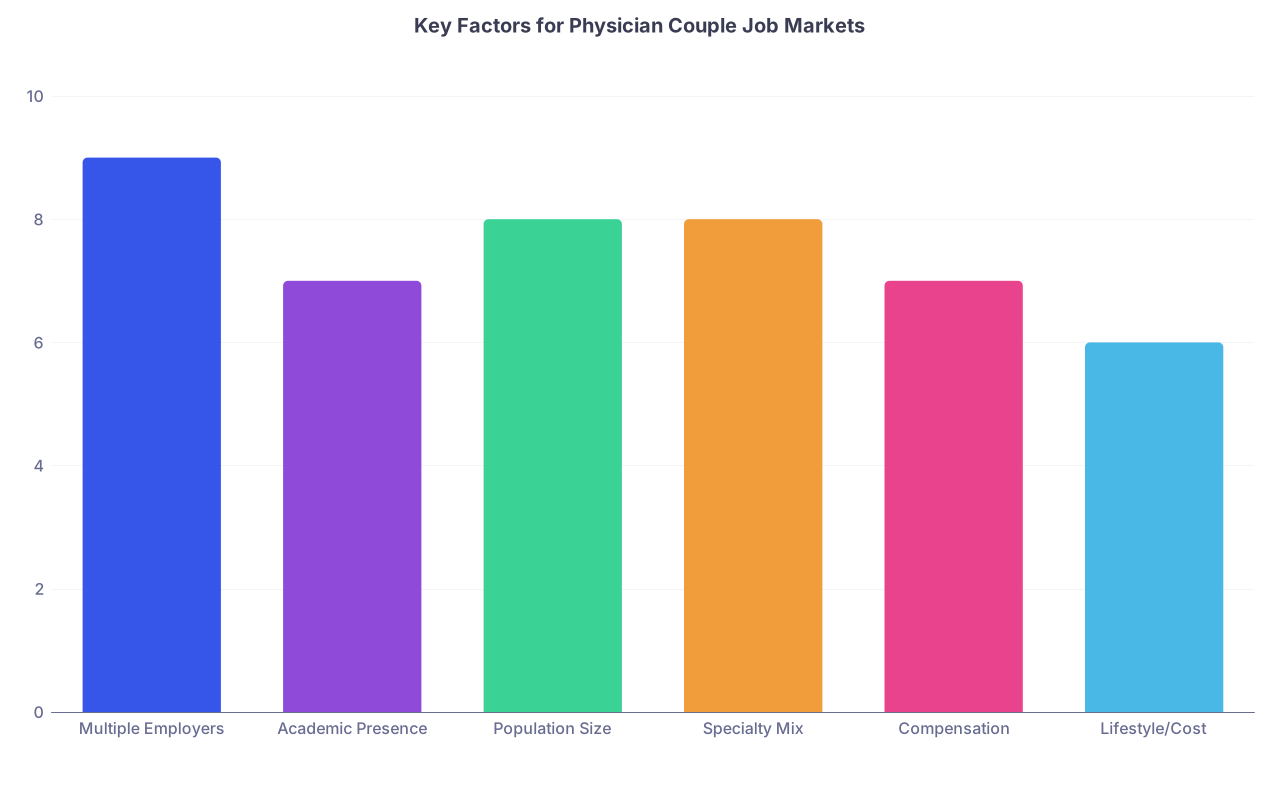
| Category | Value |
|---|---|
| Multiple Employers | 9 |
| Academic Presence | 7 |
| Population Size | 8 |
| Specialty Mix | 8 |
| Compensation | 7 |
| Lifestyle/Cost | 6 |
1. Multiple independent health systems
If there is only one flagship system in a 75‑mile radius, you are exposed. You both work there, and a leadership change or service line reorg can destabilize your entire household.
Ideal markets have:
- 2–4 large competing systems (each with their own hospitals and clinics)
- A serious independent multispecialty group presence
- At least one academic or hybrid academic community program
This redundancy is your safety net. It gives ongoing lateral options if one of you needs to move groups without uprooting the family.
2. Strong academic center plus robust community ecosystem
Purely academic towns (think single large university hospital and not much else) can be deceptively limited. Yes, academics can often place spouses, but positions in niche subspecialties or procedural fields can be scarce, slow to open, and trapped by low turnover.
On the other end, purely community markets may not support the more specialized partner.
Where couples win is the academic+community blend:
- One partner can be at the university (protected time, research, complex cases)
- The other in high‑volume community practice (better pay, less bureaucracy, more autonomy)
- Or both in community but with an academic affiliation for teaching
3. Regional population size and catchment
Subspecialists and narrow fields (rheumatology, child psych, gyn onc, pediatric subspecialties, interventional cardiology, complex neurosurgery) need a big-enough catchment to justify more than one FTE.
That does not always mean a single huge city. Sometimes it is a regional hub drawing from a multi‑state area.
Typical sweet spots:
- Metro population ≥ 1–1.5 million
- Or smaller city that functions as a referral center for a large rural/Regional catchment
4. Specialty complementarity
Couples where both are in extremely competitive, geographically constrained specialties (two pediatric neurosurgeons, two gyn oncs, two transplant surgeons) almost always need:
- Major academic hubs, or
- National‑level transplant / quaternary centers
But many couples have one “flexible” specialty (IM, FM, EM, hospitalist, general peds, anesthesia) and one “narrow” subspecialty (interventional, peds subspecialty, complex surgical subspecialty). The flexible partner’s job is structurally easier to place—and more negotiable.
The smart move is picking regions that can support the narrow specialty first, then solving for the flexible one from a position of bargaining strength.
5. Economic and regulatory environment
You know the basics: state taxes, malpractice climate, payer mix. For couples, these amplify:
- Two high earners in a no‑income‑tax state can create dramatic long‑term financial margin
- Two high earners in a high‑cost coastal city with state income tax and high housing can feel surprisingly tight
- States hostile to your field (OB/GYN, pain, psych) increase tail‑risk for both of you
6. Non‑clinical ecosystem
One of you may eventually want to pivot partially out of direct clinical work: admin, industry, pharma, biotech, health IT, policy.
Markets with:
- Biotech / pharma (Boston, RTP, Bay Area, San Diego)
- Health‑tech / payer HQ (Seattle, Minneapolis, Nashville)
- State capitals and policy centers (Sacramento, DC, Raleigh, Austin)
…gives you optionality if one partner wants to transition into a CMO role, industry medical affairs, or digital health.
Top Dual‑Career Hotspots: Where Physician Couples Actually Do Well
This is where we stop talking in theory and get specific. These are regions where I have seen physician couples repeatedly land workable, sometimes excellent, two‑career setups.
Is this exhaustive? No. But these are high‑yield starting points.

1. Boston–Cambridge, MA
If you are an academic couple or subspecialty‑heavy duo, Boston is one of the most forgiving ecosystems on the planet.
Why it works:
- Multiple world‑class systems: Mass General Brigham (MGH, Brigham), Beth Israel Lahey, Boston Medical Center, Tufts, plus major pediatric (Boston Children’s)
- Immense subspecialty density; almost any niche field has at least one program
- Cross‑appointments, part‑time clinical with research, and spousal hires are routine currency
Trade‑offs:
- Cost of living and housing are punishing, especially with kids
- High competition for “better” tracks; clinical productivity expectations have steadily crept up
- State income tax takes a bite out of dual high incomes
Best for:
- Academic + academic couples
- Subspecialists in rare fields needing quaternary centers
- Those eyeing long‑term transitions to biotech, device, or pharma leadership
2. Houston, TX
If Boston is the archetypal academic hub, Houston is the poster child for sheer volume. The Texas Medical Center is a small city.
Why it works:
- Massive, diverse ecosystem: MD Anderson, Houston Methodist, Baylor, UTHealth, Texas Children’s, CHI St. Luke’s, and more
- Insane case mix: transplant, oncology, rare diseases, complex surgery, tertiary and quaternary everything
- Texas: no state income tax, relatively favorable malpractice climate
Trade‑offs:
- Summers are brutal; this is not a minor lifestyle factor
- Urban sprawl and traffic can eat your life if you choose poorly on where to live
- Some systems are politically and culturally rigid; fit matters
Best for:
- High‑acuity subspecialty couples (oncology, transplant, complex surgery, peds subspecialties)
- One academic / one community setups (e.g., heme‑onc + hospitalist, transplant + anesthesia, etc.)
- Couples wanting strong long‑term financial upside
3. Minneapolis–St. Paul, MN
Under‑marketed, over‑performing. I see a lot of physician couples quietly winning here.
Why it works:
- Multiple strong systems: Mayo (Rochester, 1.5 hours away but functionally same region), M Health Fairview, Allina, HealthPartners, Regions, North Memorial
- Excellent primary care and specialty infrastructure; nice balance of academic and community
- Reasonable cost of living, high quality of life, strong schools
Trade‑offs:
- Winters are not a joke
- If both of you require extremely rare subspecialties, you may be more constrained than in Boston/Houston
- Not much in the way of “big city glamour” if that is part of your identity
Best for:
- IM + subspecialty combos
- Anesthesia / radiology / EM plus almost anything
- Couples wanting stable W‑2 employment with decent comp and family‑friendly infrastructure
4. Seattle–Tacoma, WA
A strong mix of systems and industry, especially for those who want tech or digital health links.
Why it works:
- Multi‑system market: UW Medicine, Swedish, Virginia Mason Franciscan, MultiCare, Kaiser, plus robust independent groups
- Serious tech and health‑IT presence (Amazon, Microsoft, numerous health startups)
- Strong peds (Seattle Children’s) and quaternary services
Trade‑offs:
- Cost of living and housing continue to climb
- State politics and regulatory climate may clash with some physicians’ preferences
- Commuting can be ugly; geographic constraints (water, bridges) amplify traffic issues
Best for:
- Academic + community pairings
- Clinician + future health‑tech / digital health transitions
- Couples who can tolerate high housing costs in exchange for lifestyle and outdoor access
5. Research Triangle (Raleigh–Durham–Chapel Hill), NC
One of the best “Goldilocks” regions for physician couples who want academia, industry, and a livable city.
Why it works:
- Three major universities: Duke, UNC, NC State, plus associated health systems and community partners
- Strong life sciences and pharma footprint (GlaxoSmithKline, Biogen, IQVIA, many more)
- Reasonable cost of living, good schools, and increasingly sophisticated urban amenities
Trade‑offs:
- You still have some geographic limitation to those core systems; if you burn a bridge at one, options are fewer than in Boston or Houston
- Salaries are often slightly lower than coastal megacities, though housing offsets this for couples
- Rapid growth means infrastructure sometimes lags (traffic, schools in some districts)
Best for:
- Physician + physician‑scientist couples
- Those with one eye on academic promotion and the other on potential biotech / pharma pivots
- Peds subspecialty + adult medicine combinations
6. Denver–Front Range, CO
For couples who care as much about the mountains as their CVs, this is the realistic version of the “lifestyle city” dream.
Why it works:
- Multiple systems: UCHealth, Kaiser, SCL Health, Centura, Children’s Colorado, various independents
- Nicely developed hospitalist, EM, anesthesia, and primary care markets
- Strong draw for young families; schools and neighborhoods have grown around that demographic
Trade‑offs:
- Compensation often lags coasts and Texas, while housing keeps rising
- Subspecialty saturation is real in some fields; you will see “openings” used as evergreen recruitment rather than true growth
- If one partner is niche subspecialty, options may narrow to a single system
Best for:
- Hospitalist / FM / EM + pretty much any common specialty
- Couples prioritizing outdoor lifestyle who can accept slightly lower financial upside
- Those willing to live slightly outside the core city to gain better housing costs
7. Nashville, TN
Healthcare HQ disguised as a “music city.” A lot of physician couples underestimate this region.
Why it works:
- HCA’s corporate presence plus Vanderbilt, Ascension Saint Thomas, TriStar, and others
- Health‑care business ecosystem: revenue cycle, hospital management, health‑IT, private equity backed groups
- No state income tax; relatively physician‑friendly malpractice environment
Trade‑offs:
- Rapid growth has pushed housing prices up
- Some service lines are heavily corporatized; autonomy can be patchy
- Academic options are mostly concentrated at Vanderbilt
Best for:
- One pure clinician + one admin / leadership / business‑minded partner
- Couples comfortable in a Southern cultural context
- Those who want long‑term paths into MSO/DSO leadership, CMO roles, or health‑care entrepreneurship
8. Second‑Tier Regional Hubs: Quietly Powerful
There is a class of cities that are not glamorous but are quietly excellent for physician couples because they punch above their size as referral centers:
- Rochester, MN (Mayo)
- Cleveland, OH (Cleveland Clinic, UH, MetroHealth)
- Pittsburgh, PA (UPMC, AHN)
- Indianapolis, IN (IU Health, Ascension, Community, Franciscan)
- Salt Lake City, UT (Intermountain, University of Utah)
Pattern you see:
- One anchoring academic / quaternary system
- 2–3 competing large systems
- Regional draw from rural and smaller cities in surrounding states
- Lower cost of living, reasonable schools, more manageable traffic
These markets can be phenomenal for couples where:
- One partner is a subspecialist needing tertiary volume
- The other is flexible and open to high‑volume community roles
- The family wants stability and financial margin over coastal glamour
How Different Couple Types Should Think About Location
Not all physician couples have the same constraints. Let me break down a few archetypes and what markets tend to work.
| Couple Type | Best Market Tier |
|---|---|
| Academic + Academic | Major coastal / quaternary |
| Academic + Community | Large regional hubs |
| Two Community Generalists | Mid-size cities / suburbs |
| Subspecialist + Generalist | Regional referral centers |
| Two Narrow Subspecialists | Top academic megacenters |
1. Academic + Academic
You are both chasing grants, promotions, or niche procedural/research roles.
You need:
- Multiple academic departments willing to coordinate spousal hiring
- Enough divisions that conflicts of interest (same section, awkward hierarchies) can be mitigated
- Realistic start‑up packages for both, or at least for the more research‑heavy partner
Best bets:
- Boston, New York, Philadelphia, Houston, Chicago
- Research Triangle, Seattle, San Diego, Bay Area (with cost caveats)
Strategy tip: Expect one of you to compromise slightly on protected time, title, or track. Dual full‑on, R01‑chasing positions in the same city are limited outside the top 4–5 markets.
2. Academic + Community
This is probably the most successful long‑term configuration I see.
You need:
- Academic hub plus surrounding community systems within 30–60 minutes
- Good school districts and housing within commuting distance to both
- Tolerance for somewhat asymmetric daily lives (clinic + OR vs irregular academic schedule)
Best bets:
- Houston (TMC + surrounding suburbs)
- Minneapolis–St. Paul (plus Mayo if you stretch geography)
- Research Triangle
- Pittsburgh, Cleveland, Indianapolis, Salt Lake City
Strategy tip: Build around the more constrained partner (often the academic subspecialist) first, then negotiate a high‑quality community role for the flexible partner.
3. Two Community‑Oriented Generalists
Think FM + FM, IM + hospitalist, EM + FM, anesthesia + EM.
You have the most geographic and structural flexibility. Almost every mid‑to‑large city will want you. That can be a trap, because you may under‑optimize.
You need:
- Enough systems that you do not both have to work for the same employer
- Alignment on call, nights, weekends, and shift work—this is a lifestyle and relationship issue, not just a job one
- A region with stable or growing population rather than slow decay
Best bets:
- Mid‑size metros with 2–3 hospital systems: Kansas City, Columbus, Charlotte, Phoenix, Tampa, Milwaukee, etc.
- Regional hubs with good suburbs and school systems
Strategy tip: Do not both sign with the same group immediately “for convenience.” Keep at least one of you structurally mobile during your first 3–5 years while you learn the politics of the region.
4. Subspecialist + Generalist
Common variants: cardiology + hospitalist, rheum + FM, peds heme‑onc + EM, gyn onc + anesthesia.
You need:
- A market that can support the subspecialist at or near FTE
- Enough demand and employer diversity for the generalist to negotiate for schedule and compensation
- Realistic expectations about the subspecialist’s call and lifestyle burden
Best bets:
- Regional referral centers and above; avoid small standalone community hospitals with no tertiary backup
- Cities where the subspecialty is under‑supplied (watch for signal: long wait times, one retiring doc, community physicians complaining about lack of access)
Strategy tip: Let the subspecialty partner drive the city shortlist. Then examine that city through the lens of the generalist’s schedule, autonomy, and income—not just “will there be a job.”
5. Two Narrow Subspecialists
This is the hardest category. Think two peds subspecialists, two transplant surgeons, two gyn oncs, two advanced heart failure cardiologists.
You need:
- Major academic megacenters with multiple FTEs in each of your fields
- Leadership that is explicitly willing to consider couple hiring to lock in two hard‑to‑replace specialists
- A plausible Plan B if one specialty’s volume drops or leadership changes
Best bets:
- Boston, New York, Houston, Chicago, maybe LA or SF depending on field
- Rarely, a smaller city with a huge quaternary center (Cleveland Clinic, Mayo, etc.)
Strategy tip: Start networking early. These positions often never hit public job boards. Your careers will be partially shaped by division chiefs’ willingness to create or hold lines to recruit you as a pair.
How to Evaluate a City as a Dual‑Career Market
Even within a “good” city, execution matters. Two practical tools.

| Step | Description |
|---|---|
| Step 1 | Shortlist City |
| Step 2 | Map Employers |
| Step 3 | Assess Specialty Fit |
| Step 4 | Drop City |
| Step 5 | Probe Stability |
| Step 6 | Talk to Incognito Locals |
| Step 7 | Assess Schools and Commute |
| Step 8 | Rank City for Visits |
| Step 9 | Both Viable? |
Employer map
Literally make a list:
- Every major health system
- Every academic center / VA
- Major independent multispecialty groups
- Large single‑specialty groups in your fields
Then for each of you, mark:
- Realistic primary options
- Backup options if the first fails / sours
- Off‑ramps (urgent care, telehealth, admin roles, industry options)
If either of you has only one realistic employer in a 50‑mile radius, flag that city as high risk.
Stress‑test scenarios
Ask: “What happens if…”
- One of you wants to cut to 0.7 FTE for childcare or aging parents
- A new chair or service line director comes in and “restructures”
- The hospital loses a contract and your private group gets replaced
- You want to pivot into partial non‑clinical work
Good dual‑career markets give you at least two plausible answers to each of these questions without moving states.
Long‑Term Strategy: Building Optionality as a Couple
Where you start is not where you must end. The smartest physician couples design for optionality.
Some high‑leverage moves:
- Diversify your employer risk. If one of you is in a big system, the other being in a different system or independent group buffers shocks.
- Let at least one of you cultivate portable skills. Telemedicine expertise, quality / safety leadership, informatics, clinical trials operations, or medical education can travel across employers and even states.
- Think beyond the first contract. Your first roles are about getting into the right city and proving yourselves. The second contracts are where you really shape lifestyle and financial future.
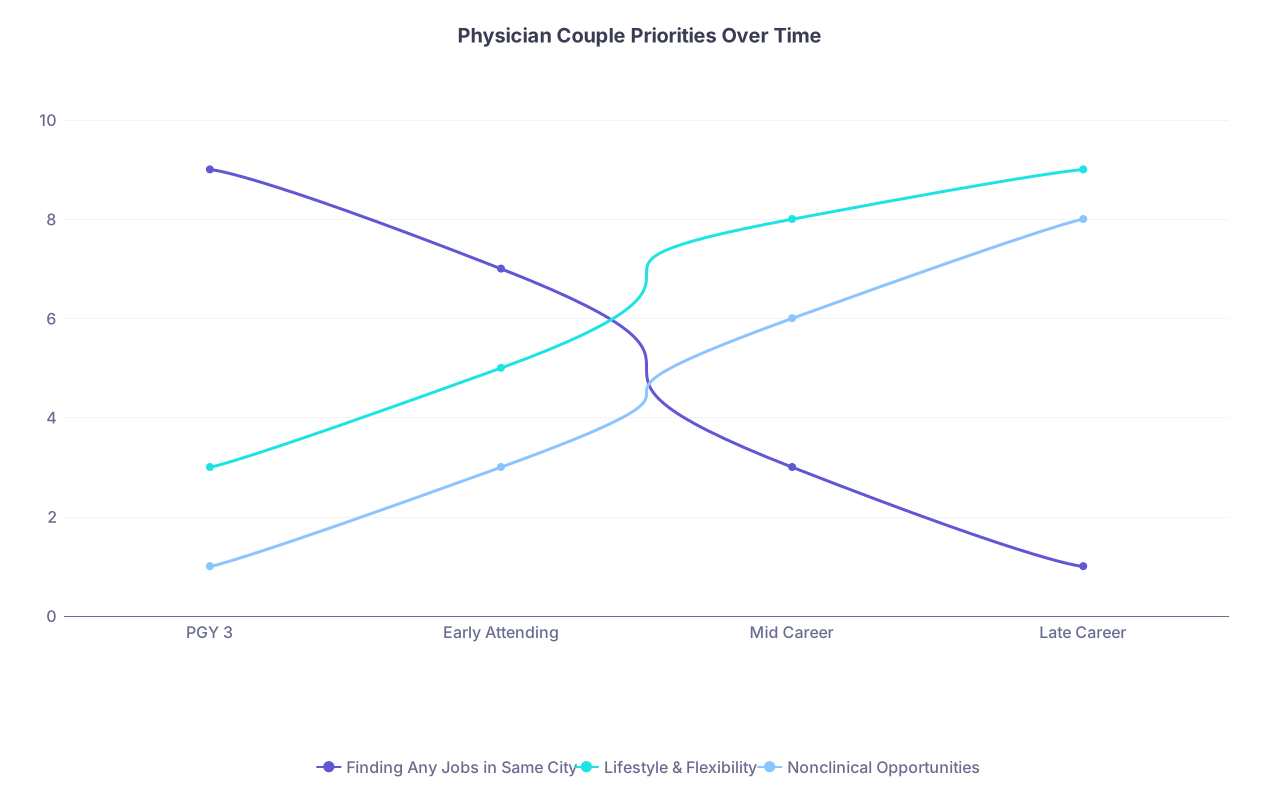
| Category | Finding Any Jobs in Same City | Lifestyle & Flexibility | Nonclinical Opportunities |
|---|---|---|---|
| PGY 3 | 9 | 3 | 1 |
| Early Attending | 7 | 5 | 3 |
| Mid Career | 3 | 8 | 6 |
| Late Career | 1 | 9 | 8 |
You will care far more about call, flexibility, and non‑clinical opportunities at 45 than you do at 30. Choose regions that will still work when kids, aging parents, burnout, or career pivots enter the picture.
FAQ: Physician Couples and Job Hotspots
1. Is it a bad idea for both of us to work for the same health system?
Not inherently, but it increases correlated risk. If that system cuts benefits, restructures service lines, or implodes financially, both your careers take the hit. If you do choose the same system, try to work in different divisions or hospitals, and keep at least one of you actively networked with outside groups as a backup.
2. How early in training should we start planning geographically as a couple?
By the end of the first year of fellowship for the more constrained partner, ideally. For generic hospitalist / primary care paths, you have more leeway, but serious subspecialists should start mapping realistic cities 18–24 months before finishing so that networking and timing match actual job openings.
3. What if one of us is much more geographically constrained than the other for family reasons?
Then the constrained partner’s geographic radius becomes non‑negotiable, and the other partner maximizes flexibility: be open to multiple practice models (employed, private, locums), broaden acceptable specialties (e.g., outpatient vs inpatient mix), and consider telemedicine or partial remote work to stitch together a credible role.
4. Are “physician shortage” rural areas good for couples, since everyone needs doctors?
Usually not for dual‑physician careers long‑term. Rural areas often have only one hospital and one sizable group. That can work well for one physician but leaves the second with limited options, especially if their specialty is niche. Great for solo‑physician households; riskier for dual‑physician couples unless one partner is part‑time or non‑clinical.
5. How much should we let cost of living drive our decision as a physician couple?
It matters, but it is not everything. Two high earners can absolutely live in Boston or Seattle and do well financially, but the margin will be tighter and dependent on both maintaining high incomes. In lower‑cost regional hubs, one partner can cut back hours or pursue academic/administrative work without sinking the household. If you care about long‑term flexibility, lean toward markets where a single physician salary can cover core expenses.


