

The most dangerous cities for doctors are not the ones with obvious crime or bad hospitals. They are the ones that look perfect on interview day and quietly crush your life by year two.
You are not just choosing a job. You are choosing a daily operating environment for your future self. And most physicians underestimate how brutal a mismatch between city and lifestyle can be. By the time you realize it, you have a mortgage, kids in school, a non-compete, and a schedule that leaves no oxygen for change.
Let me walk you through the red‑flag cities and patterns that I have seen physicians regret repeatedly. The problem is not one single city. It is the trap structure. Once you see the pattern, you will stop falling for glossy recruitment brochures and “top 10 best places to live” lists.
The “Fake Lifestyle Upgrade” City
These are the cities that sell you on lifestyle, but the math does not work. On paper: “Great restaurants, outdoor activities, growing metro, vibrant downtown.” In reality: your earnings barely cover housing and basic life.
The classic traps:
- High cost of housing relative to physician salary
- Commute times that eat any “lifestyle perks”
- Underestimated child care and school costs
- Hidden local tax burdens or fees
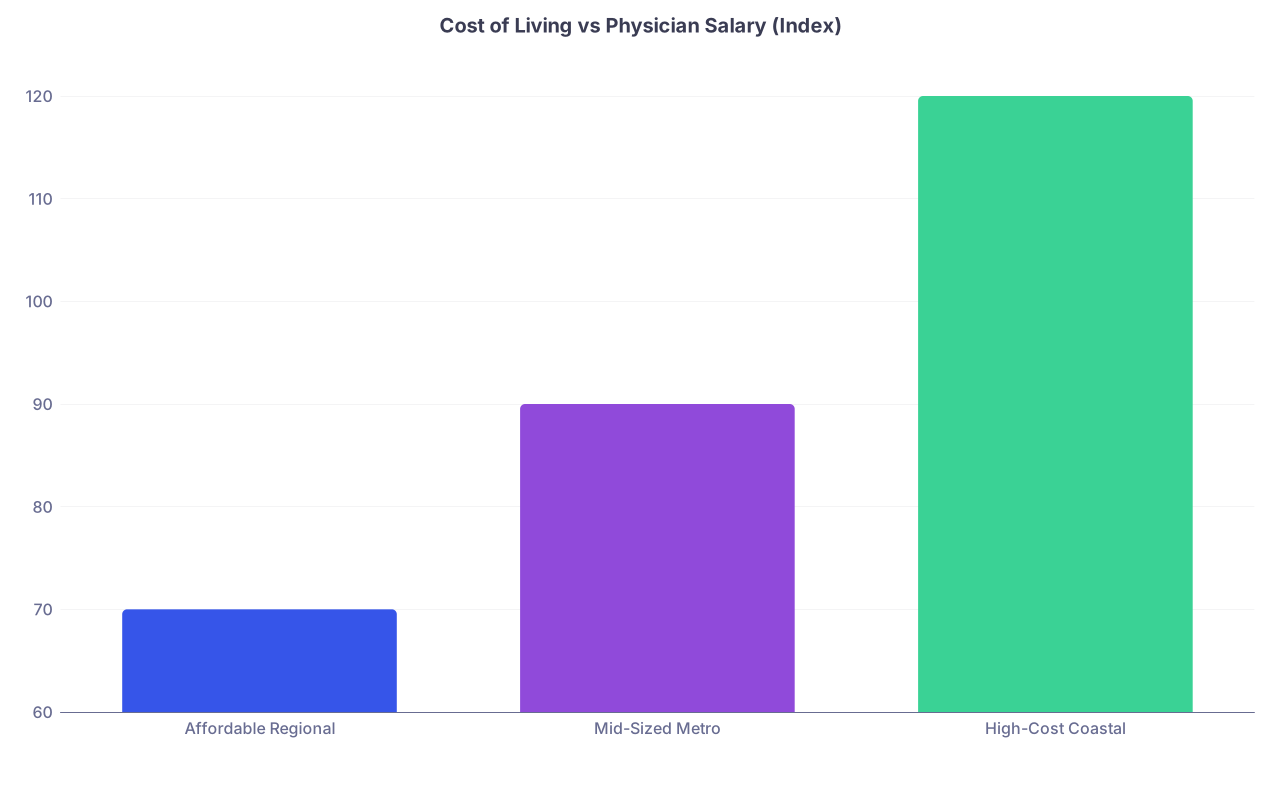
| Category | Value |
|---|---|
| Affordable Regional | 70 |
| Mid-Sized Metro | 90 |
| High-Cost Coastal | 120 |
I have seen this play out in places like Austin, Denver, Nashville, and certain “up‑and‑coming” Sun Belt metros. Residents rotate there and think: “This is amazing. Hiking, good food, music scene. I could live here.” Then they sign a contract without doing the arithmetic.
Here is the mistake: assuming “physician income” automatically outruns local costs.
Red flags you ignore at your own risk:
- Median home price more than 3–4× your real expected salary (not the recruiter's fantasy number)
- Rent for a modest 2‑bedroom apartment > 25–30% of your net take‑home
- A 30–45 minute one‑way commute being described as “normal”
- Multiple physicians in the group quietly living 45–60 minutes away “for the schools”
If your “lifestyle city” forces you into:
- A long commute
- A house you can barely afford
- Schools you stress over daily
…then you did not upgrade your lifestyle. You upgraded your Instagram backdrop and downgraded your actual life.
Mistake to avoid: Choosing a city because it feels fun on a conference weekend, without building a real monthly budget at your post‑tax income level.
Your safeguard: Before you fall in love with a “cool” city, do these three things:
- Pull actual physician salary data for your specialty in that region (not national averages).
- Look at median rents and home prices in the specific school zones you would actually want to live in.
- Calculate your net monthly income and simulate 3 versions: renting modestly, buying modestly, and “stretch” buying. If you are barely positive cash flow in all three, run.
The Commute and Call Trap City
If you choose wrong geographically, the city itself will own your sleep, safety, and sanity.
There are metro areas where the only way to live near decent schools and not get crushed by housing costs is to move out to the ring suburbs. Sounds fine. Until you are:
- On in‑house call every third night
- Driving 35–50 minutes each way to the hospital
- Crossing high‑congestion routes at 6:30 AM and 6:30 PM
- Getting called back to the hospital at 2 AM from 25 miles away
By year two, these physicians look 10 years older. I have heard the same line: “I underestimated how much the driving and call would wear me down.”

| Step | Description |
|---|---|
| Step 1 | Sign Contract |
| Step 2 | Move to Affordable Suburb |
| Step 3 | Commute 35 to 45 min Each Way |
| Step 4 | Q3 or Q4 Call Nights |
| Step 5 | Multiple Night Call Backs |
| Step 6 | Chronic Sleep Debt |
| Step 7 | Burnout and Safety Concerns |
| Step 8 | Consider Leaving or Cutting Hours |
Red‑flag cities in this category:
- Metro areas with chronic traffic congestion and limited alternate routes
- Regions where hospitals are concentrated downtown but schools and safety are better far out
- Cities with poorly integrated public transit, making driving mandatory
The subtle trap: Everyone tells you, “You get used to the commute.” That might be true for a 9‑to‑5 office worker. Not for a hospital‑based physician doing irregular hours, in‑house nights, and emergency call.
Pay attention to:
- How many of your potential partners actually live close enough to walk or bike. If the answer is “none,” ask why.
- Whether anyone in the group has been in a serious car accident driving tired. If they say “more than one,” that is not normal.
- Whether outreach clinics or satellite hospitals are part of your job. Some “40‑minute” commutes turn into multiple sites and 2–3 hours a day in a car.
Mistake to avoid: Believing you can “tough out” a brutal commute combined with call.
Your safeguard: Map every hospital, clinic, and call site you would cover. Draw realistic drive‑time circles at rush hour, late night, and bad weather. If you cannot find a safe, affordable, reasonable‑commute place to live inside those circles, this is a red‑flag city for you.
The Social Isolation City
There is a type of city that looks safe because the salary is good, the housing is cheap, and the commute is short. But four physicians in a row have told me the same thing about these areas: “I did not realize how lonely I would be.”
This often happens in:
- Smaller cities with weak professional diversity
- Regions with a very tight dominant culture (religious, political, or ethnic) that you do not share
- Cities built around one industry or one hospital system
- Towns where physicians are socially separated from the rest of the community
At year one, you are busy. New job, new EMR, figuring out workflows. You barely notice the isolation. Year two is when it hits. You look up and realize:
- You have not made a single close non‑work friend
- Your social interactions are 90% hospital‑based
- Dating feels impossible or deeply constrained
- Your spouse or partner is miserable and trapped

Physicians often ignore this risk because residency trains you to tolerate social deprivation. You think, “I will be fine. I will work, go home, maybe join a gym.” That works at age 27. It breaks down at 35 when you want real community, partner, kids, or just normal human connection.
Red flags:
- Locals describing the place as a “great place to raise a family” but saying nothing about single life, friendships, or culture
- You cannot name any meaningful hobbies or interests that the city obviously supports
- You notice that most of the physicians you meet have spouses who do not work outside the home and rely heavily on family nearby
I have watched smart, capable physicians spiral into depression or leave good jobs because they underestimated social isolation. Not because they were weak. Because they misread the city.
Mistake to avoid: Assuming that because the cost‑of‑living and salary look favorable, the overall lifestyle will feel sustainable.
Your safeguard: Spend at least one evening and one weekend day in the city doing what you actually like to do. Not hospital‑sponsored dinners. Not realtor tours. Go where people your age and life stage go. If you cannot picture a realistic social life there, do not assume it will magically appear.
The “Golden Handcuffs” High‑Pay City
Some cities scream money. Oil boom towns. Isolated metros with massive hospital monopolies paying “above market.” Border cities. Remote regional hubs. Recruiters pitch them hard: “You will be the highest‑paid in your graduating class.”
And they might be right. For the first year.
Then the handcuffs tighten.
The pattern looks like this:
- You sign a contract with a huge salary or RVU potential, big sign‑on bonus.
- You buy the very nice house because “I am finally out of training.”
- You take on student loan and consumer debt assuming your income is stable.
- You realize the work intensity, call load, or toxic culture is unsustainable.
- You look around and see: there are almost no comparable jobs within a 1–2 hour radius.
Now you are stuck. You cannot easily leave without:
- Selling the house (in a market that might be thin or volatile)
- Losing loan repayment or bonus money (if there are clawback clauses)
- Taking a 20–40% pay cut to move back to a more normal market
I have seen physicians in parts of Texas, North Dakota, certain interior West states, and even parts of the Southeast walk straight into this trap.
| Factor | Year 1 | Year 3–4 |
|---|---|---|
| Base salary | Extremely high | Same or lower with more work |
| Call burden | "Manageable" on tour | Feels relentless |
| Job alternatives | Several on paper | One or two realistic options |
| Financial obligations | Rent, loans | Big mortgage, lifestyle creep |
Key red flags:
- The recruiter emphasizes money constantly but says very little about long‑term physician retention.
- Most physicians in the group are relatively new; very few >10 years in practice there.
- The city has limited industries outside healthcare, making partner employment hard.
- The geographic location is such that moving to a comparable job means relocating far away, not just across town.
Mistake to avoid: Evaluating the city only for financial upside and ignoring exit options.
Your safeguard: Assume there is at least a 30–40% chance you will want to change jobs within 3–5 years. Then ask yourself:
- If I had to leave this job, how hard would it be to stay in this city and work elsewhere?
- If I had to leave this city, how painful would it be to unwind my life here?
- Am I comfortable with a large pay cut if this job turns toxic?
If you answer “very hard,” “extremely painful,” and “no,” then a high‑pay red‑flag city is about to lock you in.
The Politically and Legally Hostile City
Physicians like to pretend health policy is abstract. Until their malpractice risk, reproductive care options, or prescribing rules blow up mid‑contract.
Certain cities sit in states or regions where the legal environment for practicing medicine is shifting rapidly. You might not care much on day one. By year two, it can define your daily stress level.
Examples of what I have watched colleagues deal with:
- Drastically shifting abortion and reproductive health laws making routine OB/GYN work legally risky
- Aggressive malpractice climates with frequent frivolous suits and high premiums
- State medical boards that are punitive, slow, or politically motivated
- Harsh non‑compete enforcement environments that trap physicians regionally
- Prescribing regulations that make pain management, addiction treatment, or psychiatry miserable
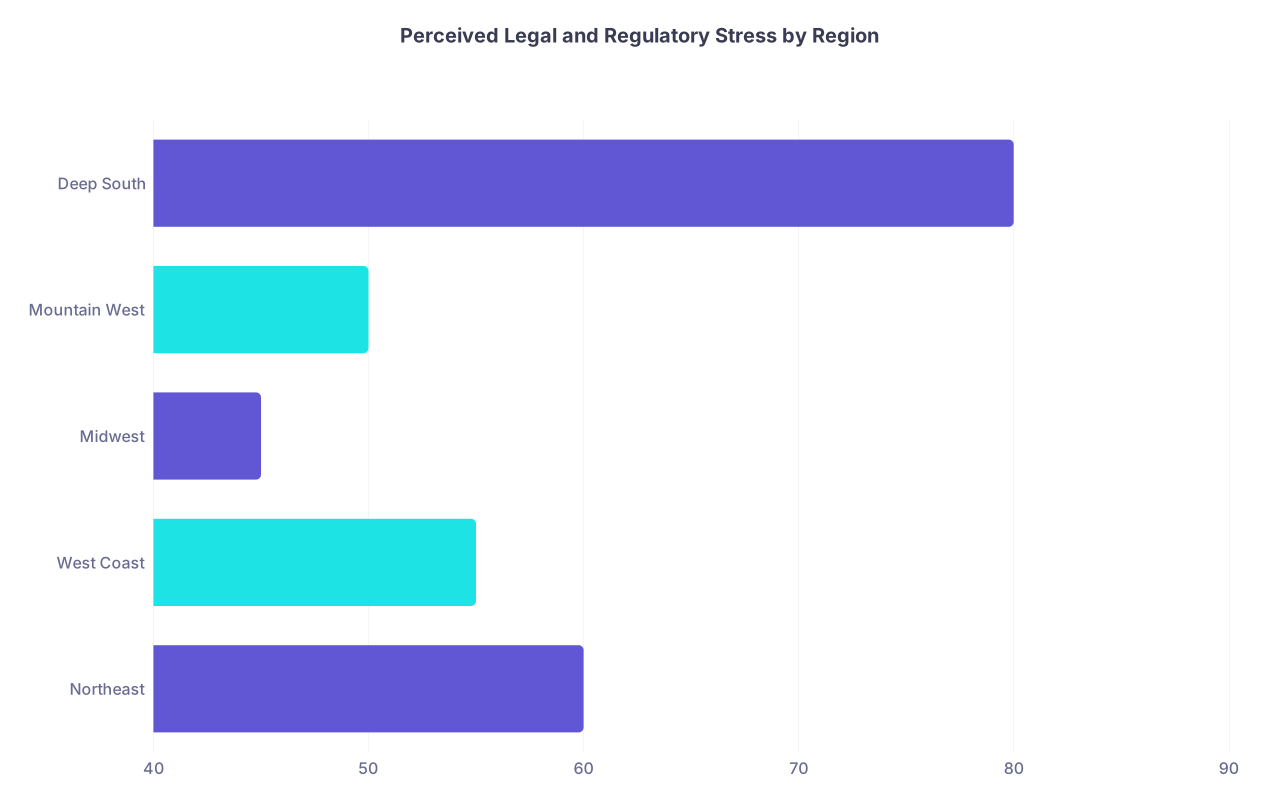
| Category | Value |
|---|---|
| Northeast | 60 |
| West Coast | 55 |
| Midwest | 45 |
| Mountain West | 50 |
| Deep South | 80 |
You do not want to be surprised by this. Laws change, yes. But some states and metro areas have a long‑standing pattern: antagonistic toward physicians, especially in certain specialties.
Red flags:
- Multiple colleagues saying, “Document everything. This is a sue‑happy area.”
- Recruiters glossing over questions about malpractice premiums and coverage details.
- State political climate directly targeting aspects of your practice (reproductive care, gender‑affirming care, pain management, etc.).
- Hospitals or large employers aggressively using non‑compete clauses and winning.
Mistake to avoid: Treating state‑level legal and political climate as background noise rather than a core part of “city fit.”
Your safeguard: Before committing to a city:
- Look up the state’s non‑compete laws for physicians.
- Ask for actual malpractice premium numbers and claim histories in your specialty.
- Talk to 2–3 physicians who left that city or state and ask why. The answers are usually candid.
The “Great for Work, Terrible for Family” City
Here is another painful pattern: a city that works brilliantly for your job but slowly destroys your partner’s career and your family’s stability.
You see this a lot in:
- One‑industry cities (energy, tech, tourism) that do not match your partner’s field
- Smaller metros with shallow job markets for non‑medical professionals
- Cities with school systems that are sharply unequal or underfunded
- Areas far from extended family with expensive or low‑quality childcare
The first year, everyone is in “transition mode.” It feels temporary, adventurous. By year two:
- Your partner is either underemployed, unemployed, or commuting long distances.
- Your children are in schools you are deeply unhappy with, but your alternatives are limited or expensive.
- You realize you cannot easily move neighborhoods without impacting your call radius or finances.

Red flags you will be tempted to ignore:
- Recruiter says, “There are some good schools,” but cannot name specific districts confidently.
- People give vague answers about job markets for non‑medical professionals.
- Every attending you meet has a partner working remotely for a company in another city or staying home.
Mistake to avoid: Focusing on whether the city works for you as a physician and not whether it works for the people you claim to care about.
Your safeguard:
- Have your partner independently research their job prospects in that city and rate them honestly.
- Look at school district data with the same seriousness you use for compensation data.
- Ask to speak with physicians in your group who have school‑aged kids and working partners; listen closely to what they complain about.
The Subtle Burnout City: All Convenience, No Meaning
There is a final category that is harder to see but very real: the city that makes everything easy except purpose.
Imagine: short commute, high salary, low taxes, big house, safe suburb, great grocery stores, newer hospital. On paper, perfection. But the work is cookie‑cutter. The community is transactional. The cultural life is thin. Professional growth feels limited.
Years one and two fly by. You are recovering from training, enjoying the lack of chaos. Then one morning, you realize your days feel identical and empty. You are not learning, not building anything, not connected deeply to colleagues or community.
This shows up often in newer exurbs, rapidly built satellite cities, or master‑planned communities around giant healthcare systems. Efficiency everywhere. Soul, not so much.

Red flags:
- The city has endless chain restaurants and big box stores but few independent cultural institutions.
- Physicians describe the job as “easy” or “chill” but rarely as “fulfilling,” “engaging,” or “meaningful.”
- Professional societies, academic connections, or research opportunities are distant or weak.
Mistake to avoid: Assuming that comfort and convenience automatically equal long‑term happiness.
Your safeguard: Ask yourself bluntly:
- What do I actually want my work to feel like in five years?
- Do I want to teach, lead, innovate, build programs, or work with complex populations?
- Does this city offer that, or does it offer a very well‑paid autopilot?
If the honest answer is “autopilot,” that might be fine for a while. Just do not confuse it with a sustainable 20‑year plan.
How to Test a City Before You Commit Your Life To It
You are not powerless here. The mistake most physicians make is evaluating cities at brochure depth. You need to pressure‑test them.

| Step | Description |
|---|---|
| Step 1 | Identify Target City |
| Step 2 | Run Financial Reality Check |
| Step 3 | Map Commute and Call Radius |
| Step 4 | Assess Social and Family Fit |
| Step 5 | Review Legal and Political Climate |
| Step 6 | Talk to Current and Former Physicians |
| Step 7 | Reconsider City or Negotiate Changes |
| Step 8 | Short Trial Visit With Realistic Schedule |
| Step 9 | Major Red Flags? |
One more thing. Do not just talk to the cheerful recruit‑approved people. Hunt down:
- Physicians who left that city or system in the last 3–5 years
- Nurses, techs, and staff who have worked there long‑term
- People whose lives look like what you want yours to look like in 10 years
You are not looking for perfection. That does not exist. You are looking for patterns of regret you can avoid.
Your Next Step
Pull up the top three cities you have been considering. Right now. For each one, write down:
- One financial red flag.
- One commute/call red flag.
- One social/family or legal red flag.
If you cannot identify them, you do not understand that city well enough to commit years of your life to it. Fix that before you sign anything.


