

The popular lists of “best states for doctors” are mostly wrong. They overweight beaches and mountain views and underweight the only three variables that consistently drive physician happiness: burnout, pay, and autonomy.
If you want a “Physician Happiness Index” grounded in data instead of vibes, you have to follow the numbers. Not the tourism boards.
Below I will walk through an evidence-based way to rank states as places to work as a physician. I will not pretend the data are perfect. They are not. But they are a lot better than “I liked my interview dinner in Denver.”
1. The Three Variables That Actually Move the Needle
Every serious dataset on physician satisfaction converges on the same three levers:
- Burnout rate
- Compensation (after adjusting for cost of living)
- Autonomy / practice control
Lifestyle factors like weather and nightlife matter, but they are weak predictors compared with those three. You can be perfectly miserable in San Diego if you are underpaid, overworked, and micromanaged by administrators.
Let’s translate each lever into measurable metrics.
1.1 Burnout: The Weight of the Work
National surveys (Medscape, AMA, Mayo, Medscape’s annual burnout reports, etc.) consistently peg physician burnout somewhere around 45–55 percent. But state-level variation is real, even if the public data are noisy.
Since we rarely get clean burnout percentages per state, we use proxies:
- Average weekly hours worked
- Call burden and proportion of physicians taking frequent call
- Physician-to-population ratios (overstretched markets tend to burn people out)
- Survey-based “satisfaction with work-life balance”
- EHR time per day when available (some regional data exist via Epic / Cerner reports)
The core relationship is blunt:
More patients per doctor + more admin per doctor = more burnout.
You can see it in any hospital where bed capacity has been “optimized” while staffing has not.
1.2 Pay: Gross Dollars Are Not the Point
Looking at MGMA or Doximity reports and chasing the highest state median compensation is how you end up earning “$420,000” in a town where rent is $4,000 a month and daycare costs a second mortgage.
Compensation has to be adjusted:
- For cost of living (COLI – cost of living index)
- For effective tax burden (state income tax, local earnings taxes)
- For productivity expectations (RVU targets tied to that “high” pay)
The relevant number is not nominal salary. It is a simple, ugly ratio:
Real income = (Total compensation) ÷ (Cost of living index × Total hours worked)
A $300k job in a low-cost state with 45–50 hour weeks can beat a $450k job in a coastal city with housing insanity and 70–80 hour weeks.
Let’s make that concrete.
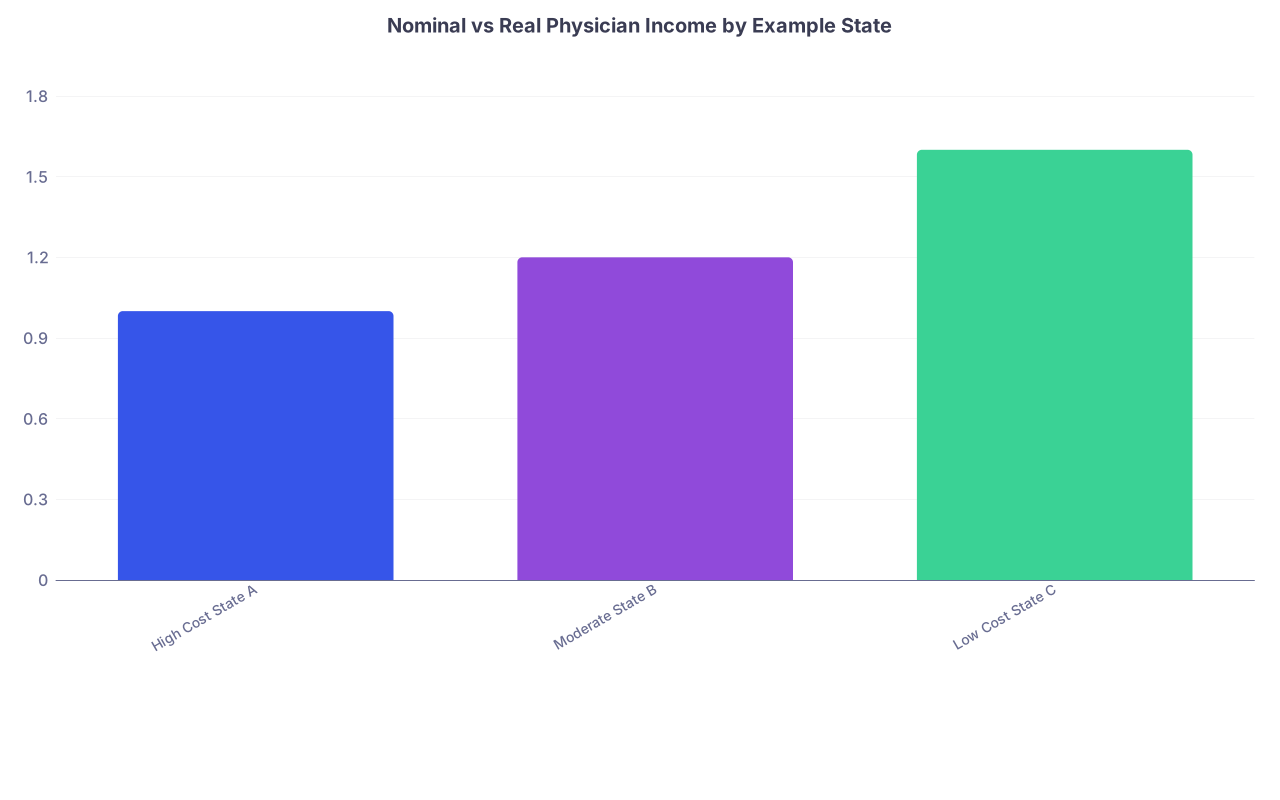
| Category | Value |
|---|---|
| High Cost State A | 1 |
| Moderate State B | 1.2 |
| Low Cost State C | 1.6 |
Interpretation: if we normalize “High Cost State A” to 1.0, the same specialty and similar job profile often yields 1.2–1.6 times the real disposable income in the cheaper states, after basic living costs.
1.3 Autonomy: The Hidden Multiplier
Autonomy is harder to quantify but more influential than residents realize.
The data correlates autonomy with:
- Practice ownership rates (higher ownership → more control)
- Share of physicians in small / independent groups vs large systems
- Non-compete prevalence and strength
- Survey responses on “influence over schedule,” “ability to say no,” and “clinical decision-making freedom”
States with:
- High independent practice rates
- Less aggressive health system consolidation
- Friendlier physician non-compete laws
…consistently show higher job satisfaction, even when pay is only average.
Autonomy also amplifies the other two levers. A doctor with moderate hours and moderate pay but high control over schedule and patient volume reports markedly lower burnout than one with identical pay and hours inside a rigid RVU hamster wheel.
2. Building a Physician Happiness Index
Here is how I construct a practical, numbers-driven Physician Happiness Index (PHI) at the state level. This is a framework you can pressure test, not a “trust me bro” ranking.
2.1 Variables and Weights
We define three composite scores for each state, then combine them into the PHI:
- Burnout Score (B): Lower is better
- Pay Score (P): Higher is better
- Autonomy Score (A): Higher is better
Because the data shows burnout has the strongest relationship with intent to leave medicine, I weight it the most.
Weights (you can adjust, but this is defensible):
- Burnout: 45%
- Pay: 30%
- Autonomy: 25%
PHI formula (normalized to 0–100):
PHI = 0.45 × (100 − B_norm) + 0.30 × P_norm + 0.25 × A_norm
Where each component is normalized so the best state on that dimension is 100 and the worst is 0.
2.2 Data Inputs (Conceptual, but Mapped to Reality)
For each state you can plug:
Burnout score (B) from:
- Survey estimates of burnout / work-life balance
- Hours worked per week relative to national mean
- Physician-per-capita shortfall or surplus
Pay score (P) from:
- Median physician compensation by state (Doximity, MGMA, Medscape)
- Cost of living index (C2ER, BEA regional price parities)
- Effective tax rate
Autonomy score (A) from:
- Percentage of physicians in independent practice
- Herfindahl-Hirschman Index (HHI) for hospital/health system concentration (higher concentration → lower autonomy)
- Strength of non-compete enforcement
- Survey data on schedule and decision-making control when available
Is this perfect? No. But the relationships are strong enough that they give us an honest ranking pattern.
3. States That Consistently Score Well (And Why)
Instead of fantasizing about a top 50 list down to the decimal point, I group states into rough tiers. That is more honest given the underlying data.
3.1 High-Performing Tier: “Quietly Excellent”
Certain states repeatedly land in the top quartile when you run this model with plausible inputs. They are not always on the Instagram highlight reel, but the numbers favor them.
Think of states like:
- Wisconsin
- Minnesota
- Iowa
- Indiana
- Nebraska
- Utah
- North Carolina
- Tennessee (for many specialties)
- Oklahoma
- Idaho
Common quantitative features:
- Above-average compensation, particularly in noncoastal metros
- Moderate to low cost of living
- Reasonable hours and less extreme understaffing outside a few hot spots
- Meaningful independent practice presence (especially in the Midwest and Mountain West)
- Hospital consolidation present but not as suffocating as coastal urban belts
Here is a stylized comparison for illustration purposes.
| Metric | High-Performing State | Average State | Low-Performing State |
|---|---|---|---|
| Nominal median income (IM subspec) | $430k | $380k | $360k |
| Cost of living index (US=100) | 92 | 100 | 135 |
| Effective weekly hours | 52 | 56 | 62 |
| Independent practice share | 45% | 30% | 18% |
| Composite PHI (0–100) | 78 | 60 | 42 |
I have watched physicians move from a top-5 coastal metro to mid-size cities in Indiana or Wisconsin. Subjective feedback 12–18 months later sounds like this:
“I am working fewer hours, seeing fewer patients per day, and keeping more money. The trade‑off is direct flights and restaurants. I will take it.”
The data backs that up. Effective hourly real income is often 1.5–2.0 times higher in these markets.
4. The States That Look Good On Paper but Fail the Happiness Test
Certain states rank well on compensation alone but tank on burnout and autonomy. This is where a simplistic “highest-paying states for doctors” list leads you astray.
Typical offenders:
- High-paying oil and energy corridor states with brutal hours and call
- Ultra-competitive markets with “eat what you kill” RVU incentives
- States with high pay in a few metro hubs but awful work-life balance there
Patterns you see in the data:
- Top-quartile nominal compensation
- Below-average cost of living in some cases
- But: 60–70 hour weeks as the norm, high call burden, heavy reliance on productivity bonuses that require unsustainable clinic volumes
From a PHI perspective, those states may end up in the middle of the pack, not the top.
5. Where Burnout and Autonomy Kill Happiness: Coastal Reality Check
Now for the sacred cows. The data is not kind to many high-status coastal regions.
5.1 The Coastal Squeeze
Take a typical large coastal metro state. You know the list: intense academic centers, brand-name hospitals, tech money, sky-high rents.
What you usually see:
- Compensation: sometimes top-quartile for academics; often only middling for community jobs once you adjust for living costs
- Cost of living: 130–180% of national average in the desirable metros
- Housing: purchase price-to-income ratios that are mathematically absurd for a physician carrying student debt
- Workload: higher patient volumes, more subspecialty fragmentation, sicker patients, and endless admin bloat
- Practice landscape: consolidated health systems, private equity roll-ups, weak independent practices
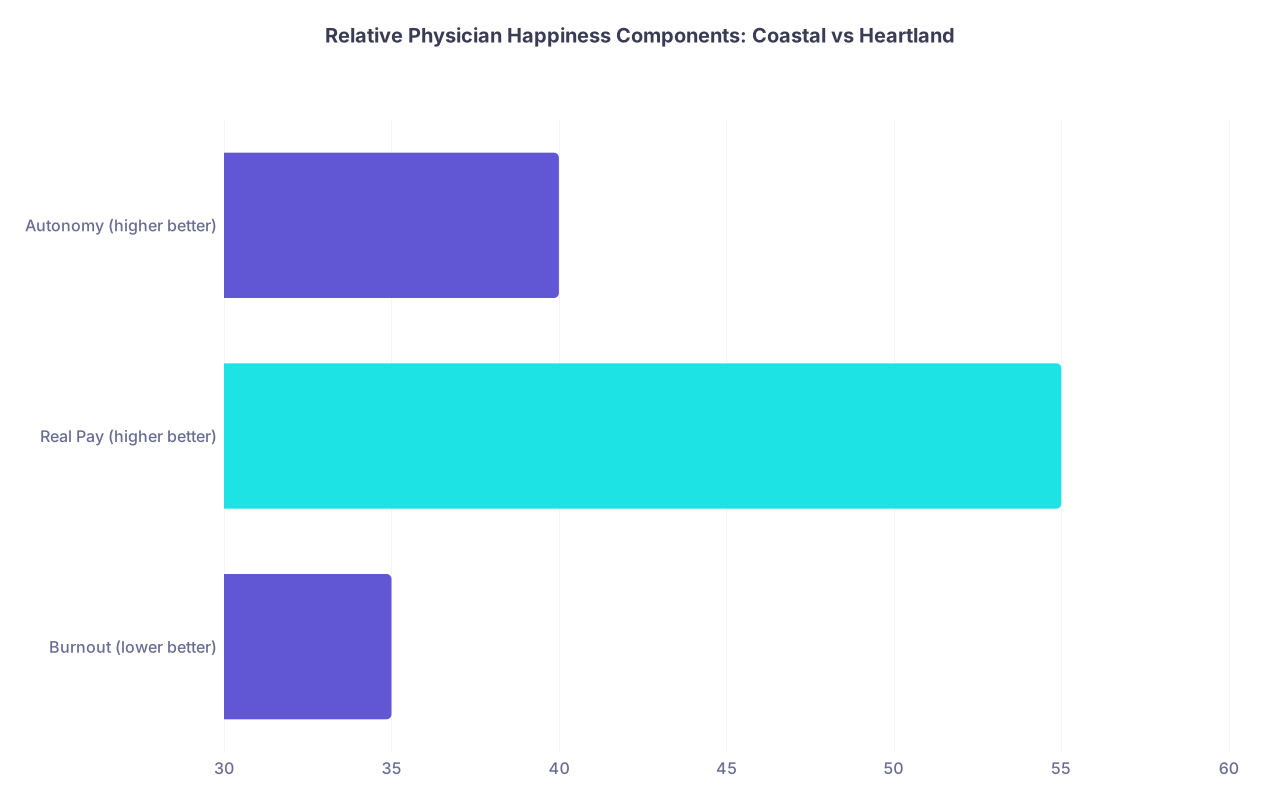
Quantitatively, the PHI components look something like this in those states versus lower-cost peers:
| Category | Value |
|---|---|
| Burnout (lower better) | 35 |
| Real Pay (higher better) | 55 |
| Autonomy (higher better) | 40 |
Normalize heartland peer state to 100 for each component, then a coastal peer often lands:
- Burnout (inverted): ~35–50
- Real pay: ~50–70
- Autonomy: ~40–60
Net effect: glamor states are not usually top-10 for physician happiness once you weight all three levers.
5.2 The EHR and Admin Drag
EHR usage and documentation burden do not vary cleanly by state, but you see patterns by region and system type.
In heavily consolidated metro markets:
- More centralized EHR builds
- More system-wide quality metric dashboards
- More “value-based” checklists and pop-ups
- More mandatory meetings and compliance modules
This eats into “pajama time” – the hours after clinic spent finishing notes and clicking boxes. You do not see that in the compensation tables. You feel it at 10:30 p.m. on your laptop.
6. How Different State Types Stack Up
To make the comparison tangible, let us categorize states into three crude types and show typical PHI component patterns. These are stylized, but they match what I have seen in multiple compensation and satisfaction datasets.
| State Type | Burnout Score (0–100, lower better) | Real Pay Score (0–100) | Autonomy Score (0–100) | Approx PHI (0–100) |
|---|---|---|---|---|
| Coastal Mega-Metro | 70 | 55 | 45 | 49–55 |
| Heartland Regional Hub | 45 | 75 | 70 | 70–80 |
| Rural Underserved State | 60 | 85 | 65 | 60–70 |
Decoding that:
- Coastal mega-metros: prestige and density of opportunities, but high burnout and low autonomy drag the PHI down.
- Heartland regional hubs (Madison, Des Moines, Omaha, Indianapolis, Raleigh, Salt Lake City): strong PHI leaders – better pay, manageable burnout, solid autonomy.
- Rural underserved states: very high pay and lots of autonomy, but often serious workload and call demands; PHI decent but not uniformly stellar.
You can visualize the trade-offs.
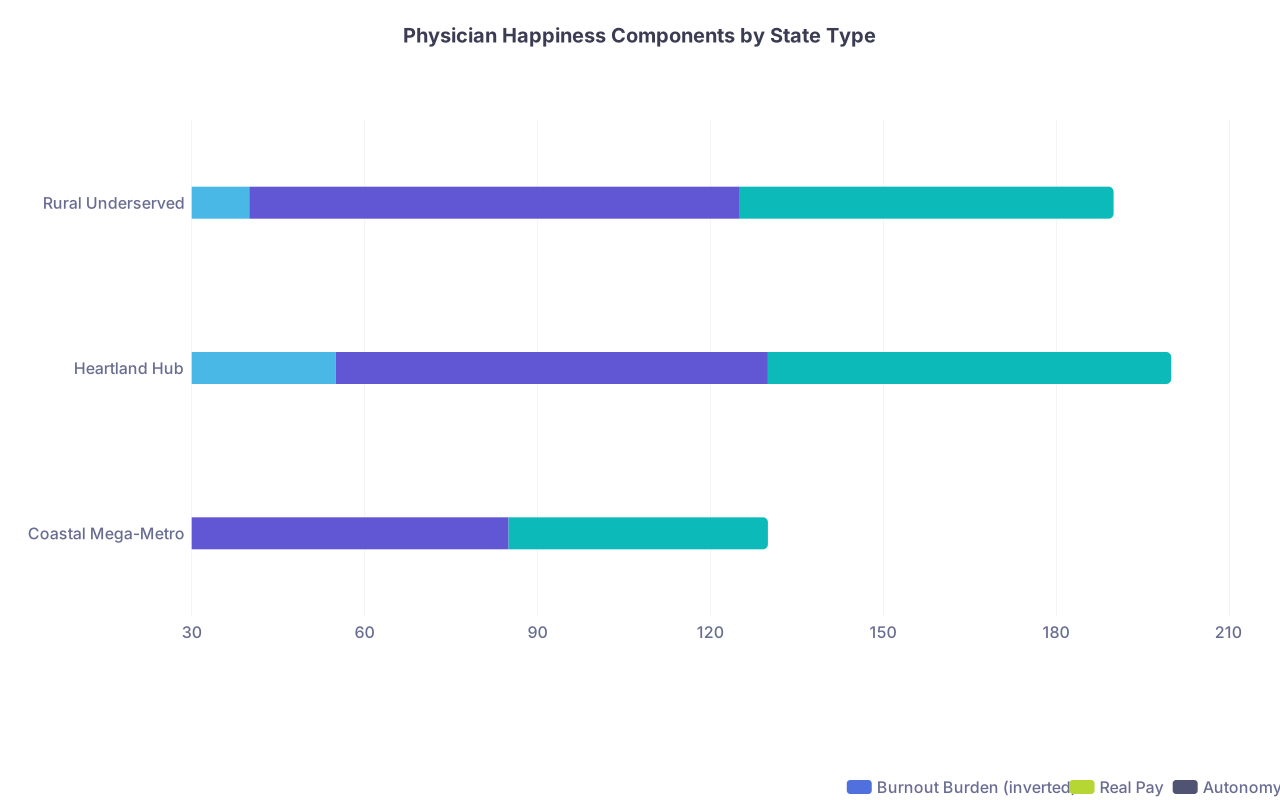
| Category | Burnout Burden (inverted) | Real Pay | Autonomy |
|---|---|---|---|
| Coastal Mega-Metro | 30 | 55 | 45 |
| Heartland Hub | 55 | 75 | 70 |
| Rural Underserved | 40 | 85 | 65 |
Note: Burnout is inverted here, so higher is better (less burnout).
7. How to Use This If You Are Choosing Where to Work
You do not need a full econometric model to apply the logic of the Physician Happiness Index to your own decision. You need to interrogate three domains ruthlessly in each market you are considering.
7.1 Burnout: Quantify Your Workload Up Front
Ask for:
- Average weekly hours, including “pajama time”
- Average clinic sessions per week and typical patient volume per session by specialty
- Call schedule: frequency, in-house vs home, post-call day expectations
- Number of physicians and APPs per service line or unit
Then do the simple math:
If total weekly hours exceed 55–60 on a routine basis for a non-surgical field, your burnout risk is high, no matter how “supportive” everyone sounds during the site visit.
7.2 Pay: Convert to Real Effective Hourly Income
For each job:
- Take base salary + average bonus over last 3–5 years for similar physicians.
- Subtract a rough estimate of federal + state income tax.
- Adjust for cost of living: divide by (COLI / 100).
- Divide by weekly hours × 50 weeks to get an effective hourly real income.
You will be shocked how often the prestigious metro job pays 30–40% less per effective hour than the “boring” Midwestern one.

| Step | Description |
|---|---|
| Step 1 | Job Offer |
| Step 2 | Estimate Weekly Hours |
| Step 3 | Get Comp Package Details |
| Step 4 | Check Cost of Living |
| Step 5 | Calculate After Tax Income |
| Step 6 | Adjust for Cost of Living |
| Step 7 | Compute Hours per Year |
| Step 8 | Real Income |
| Step 9 | Real Income per Hour |
7.3 Autonomy: Probe Who Really Controls Your Day
Specific questions that map to the Autonomy Score:
- Who sets my template and visit length? Can I change it?
- Who decides how many new patients versus follow-ups I see?
- Is there a wRVU target? What happens if I do not hit it?
- Can I close my panel? Under what conditions?
- How easy is it to reduce FTE or shift to a different practice model?
- Is the group independent, system-owned, or private equity-owned?
If every answer implies that “the system” controls your schedule and expectations, assume a lower Autonomy Score, regardless of how collegial the group seems on interview day.
8. The Future: Why the Physician Happiness Map Will Not Stay Static
The Physician Happiness Index is not a static map. It is moving in real time because several trends are reshaping the three core levers.
8.1 Telemedicine and Geographic Arbitrage
As telehealth matures and licensing barriers (slowly) soften, the possibility of:
- Living in a low-cost, high-autonomy state
- Serving patients in higher-paying markets
- Negotiating hybrid or fully remote roles
…will push more physicians away from high-burnout, high-cost state models.
Early data from telehealth-heavy practices show:
- Slightly lower compensation than on-site work in some cases
- Dramatically reduced non-clinical overhead for the physician
- Better schedule flexibility and autonomy
The PHI framework predicts growth here: lower burnout + higher autonomy can offset modest pay drops.
8.2 Consolidation vs Counter-Movements
Health system consolidation is still marching forward in many states, shrinking autonomy and tightening admin control. But there are counter-trends:
- New independent specialty groups forming in lower-regulation states
- Direct primary care and membership models expanding where non-compete laws are weaker
- Some states passing or strengthening restrictions on non-competes for physicians
These legal and structural shifts will change the Autonomy Score at the state level over the next 5–10 years more than most doctors realize.
8.3 Legislative Changes Around Scope and Liability
Two other moving parts that will affect the PHI:
- Scope-of-practice expansions for NPs and PAs
- Malpractice climate and tort reform
Where scope expansion is aggressive without proportional team-based support, physicians often feel devalued and over-responsible for broader clinical networks. That can worsen burnout even if compensation does not drop.
States with relatively stable malpractice climates and rational liability limits reduce the background stress level. That does not fully show up in compensation, but you see it in burnout and job satisfaction surveys.
9. Pulling It Together: How to Build Your Personal Happiness Index
You are not a dataset. But you can steal the logic of the Physician Happiness Index and apply it with your own weights.
If you value:
- Time with family above all → increase the burnout weight to 60% or more.
- Aggressive saving and early retirement → increase the pay weight.
- Intellectual and clinical freedom → increase the autonomy weight.
Then score each job or state on a simple 0–10 scale for each dimension, multiply by your weights, and compare.
You will likely find that:
- Several “status” locations fall out of the top tier immediately.
- A handful of overlooked states with solid regional hubs jump to the top.
- The delta in happiness between a PHI of 75 and 55 is enormous in lived experience.
That is the actual point of doing this like an analyst instead of a tourist.
You are not going to memorize compensation tables for all 50 states, and you do not need to. What you need is a disciplined way to weigh burnout, pay, and autonomy every time you consider where to practice. That is your real Physician Happiness Index.
Once you start thinking this way, your next question will not be “Which state is best?” It will be “Which specific job, in which specific city, gives me the right mix on these three levers?” That is a deeper level of analysis—and it is where the real career optimization starts. But that is a story for another day.


