

The way big systems rank “desirable” doctor hires has very little to do with what you were told in medical school.
You were sold a story about clinical excellence, compassion, maybe research. They were building something else. An internal scoring system for you as a revenue-generating, risk-bearing, reputation-sensitive asset.
Let me walk you through what actually happens in those closed-door hiring and workforce planning meetings—because I’ve been in them, I’ve heard the language, and I’ve watched physicians get sorted into piles long before anyone pretends to “get to know you as a person.”
The Hidden Scorecard: How You’re Really Labeled
In large health systems—think HCA, Kaiser, Optum, major academic centers, and the “vertically integrated” mega-groups—physician hiring isn’t just some chief of service deciding they “like your vibe.”
There’s a scorecard. Sometimes literally in Excel. Sometimes embedded in an applicant tracking system that spits out green/yellow/red flags. The names differ—“provider profile,” “fit index,” “strategic value score”—but the variables are eerily similar.
Here’s what quietly goes into that composite judgment.
1. Revenue Predictability > Brilliance
They do not say, “Will this person be a great doctor?”
They say, “What does a full panel for this specialty at this location generate, and how quickly will this candidate get there?”
So they look at:
- Your training and subspecialty: not for prestige, but for procedure codes, payer mix, and throughput potential.
- Prior productivity: RVUs per FTE from previous job, if they can get it. (Yes, recruiters absolutely ask for this informally.)
- Referral patterns: are you likely to keep care in-system, or do you have a history of sending patients to some out-of-network colleague you like?
If you’re an outpatient cardiologist who consistently hit 8,000+ RVUs at your last job? You are instantly more “desirable” than the genius academic who sees 5 complicated zebras a day and bills terribly.
They won’t tell you that. But that’s how your file gets tagged.
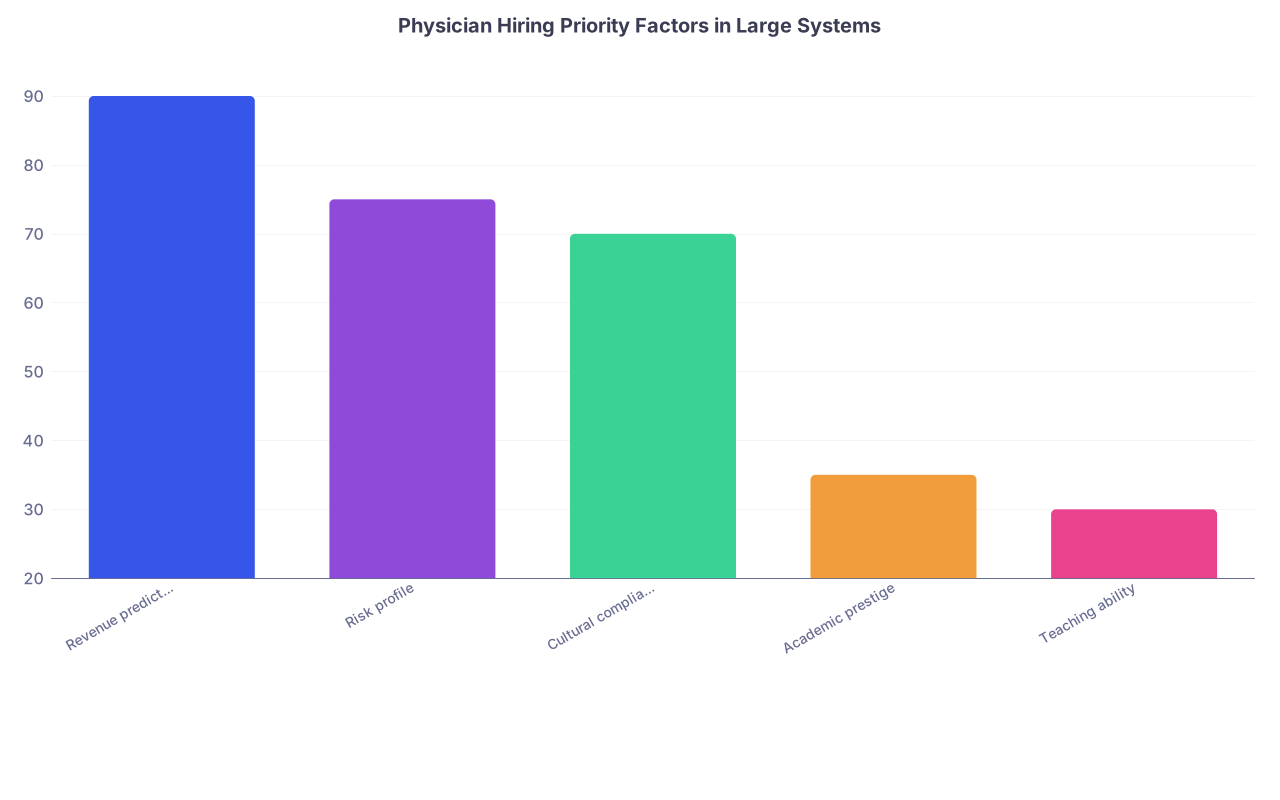
| Category | Value |
|---|---|
| Revenue predictability | 90 |
| Risk profile | 75 |
| Cultural compliance | 70 |
| Academic prestige | 35 |
| Teaching ability | 30 |
2. Risk Profile: Malpractice, Complaints, and Drama
Big systems hate risk far more than they love excellence.
When HR and legal are in the room, they’re not listening for your research passion. They’re screening for: “Will this person explode in our face?”
Your risk profile is a mix of:
- Malpractice history: Not just number of suits, but type. A single high-profile obstetric catastrophe is weighted differently than three nuisance derm claims.
- Board or state medical board issues: Anything reportable, even if resolved, gets whispered about.
- HR flags from prior organizations: Yes, people talk. Department chairs text each other. Physician leaders at one system will call their counterpart at another: “Anything I should know about Dr. X?”
- Social media footprint: If you’re loud, political, or publicly combative, you get moved from “desirable” to “handle with care.” Quickly.
I’ve watched hiring committees pass on clinically outstanding candidates because someone said, “Brilliant, but can be difficult” in a backchannel call.
They’d rather have a B+ clinician with zero noise than an A+ rockstar who might end up on the news.
The Unspoken Tiers: How You’re Quietly Ranked
Nobody will show you this framework, but it’s there. In some form. I’ve seen versions on slides with sanitized titles like “Talent Segmentation.”
Let’s make it explicit.
| Tier | Internal Label (Unofficial) | How You’re Treated |
|---|---|---|
| 1 | Strategic Anchor | Courted, over-incentivized, leadership tracked |
| 2 | Reliable Workhorse | Hired quickly, standard package, protected but not promoted |
| 3 | Gap Filler | Used to plug holes, disposable, easy to non-renew |
| 4 | Risky High-End | Debated endlessly, sometimes hired with tight leash |
| 5 | Administrative Headache | Quietly blocked, interviews for show only |
Tier 1: “Strategic Anchor”
These are the hires that change a service line’s financials or reputation.
Think: a high-volume interventional cardiologist with a local following, a transplant surgeon who brings a whole program, or a well-known oncologist who pulls in referrals from three counties.
What makes you Tier 1 isn’t just skill. It’s leverage.
- You control a referral base.
- You can shift market share.
- You’re rare in the region (e.g., epilepsy surgeon in a market with zero).
- You fit a highly reimbursed, system-priority line (cardiology, ortho, oncology, GI, spine).
Behind closed doors, you’ll hear:
“We need to land this one. Do what it takes.”
They’ll bend on compensation, call, support staff, clinic location. They might even create a new title and promise leadership before you sign.
Tier 2: “Reliable Workhorse”
Honestly? This is the group most systems love the most. Because you quietly make money and almost never make trouble.
Primary care who reliably see 18–22 patients a day, hospitalists who do the shifts no one complains about, bread-and-butter surgeons who fill block time without demanding political capital.
In meetings, they say things like:
“Solid. Good culture fit. Let’s move quickly.”
You get a fair but not extravagant offer. Decent support. Enough respect to keep you around. You’re the backbone of the system, and they know it, but they’re never going to say that out loud.
Tier 3: “Gap Filler”
This is harsher than you think, but it’s real.
These are hires made because the schedule is on fire. Chronic vacancies. Locums bills exploding. Patients walking.
The psychology in the room shifts.
- “We just need someone.”
- “If it doesn’t work out, we can reassess in 2–3 years.”
- “Can we get a visa candidate or new grad who’ll accept lower comp?”
You’re not treated cruelly. Just transactionally. You fill a spreadsheet cell. If the market shifts and a “more desirable” candidate appears? Your contract quietly becomes negotiable.
Tier 4: “Risky High-End”
This one’s fascinating. The controversial but talented surgeon. The famous but combative academic. The sub-sub-specialist whose volume is uncertain but could upgrade the brand.
They’ll argue about you for months.
Medical leadership: “We need this level of quality.”
Legal/HR: “Their past behavior worries us.”
Finance: “Will this actually net positive, or just cost us in politics and overhead?”
Sometimes you get hired with a very specific leash: clear metrics, short initial contract, watchful leadership. Other times, the risk-averse voices win and you never hear why the trail went cold.
Tier 5: “Administrative Headache”
This is the category no one tells you you’re in. Once you’re here, it is almost impossible to get hired into that system.
Reasons? Could be:
- Known disruptive behavior
- Patterns of patient complaints
- Serious board or legal issues
- Past HR investigations (substantiated, or just recorded)
I’ve literally heard: “We’ll interview to be polite, but we’re not moving forward under any circumstance.”
You walk out thinking, “That went okay.” The decision was made before you walked in.
What Big Systems Actually Track About You
Your “desirability” doesn’t end with hiring. Once you’re in, the system keeps scoring you. Quietly. Continuously.
A lot of future opportunity—raises, leadership roles, even whether they fight to retain you—depends on this ongoing, somewhat invisible report card.
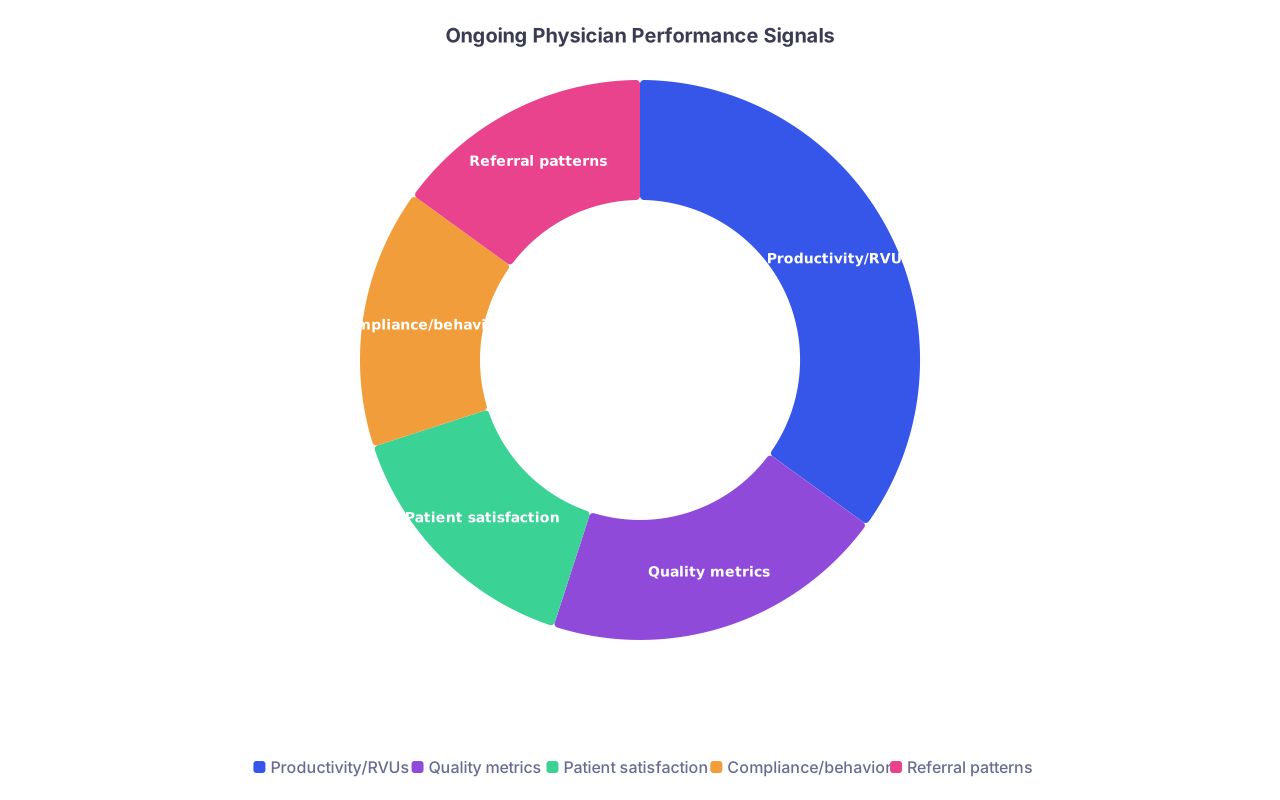
| Category | Value |
|---|---|
| Productivity/RVUs | 35 |
| Quality metrics | 20 |
| Patient satisfaction | 15 |
| Compliance/behavior | 15 |
| Referral patterns | 15 |
Productivity and Panel Growth
Every quarter, someone in finance or operations runs a report. That report categorizes you as:
- Below, at, or above benchmark RVUs for your specialty
- Panel size growth: stagnant, healthy, or exceptional
- Utilization of resources: are you “expensive” in terms of imaging, labs, referrals
Then behind closed doors, they say things like:
- “Dr. A is at 120% of benchmark. We should lock them in before competitors call.”
- “Dr. B is stagnant after 2 years. Maybe not someone we build a new clinic around.”
You think you’re just doing your job. They’re deciding whether to open doors or quietly cap your trajectory.
Quality, Safety, and “Cost per Episode”
In integrated and value-based systems especially, you’re scored on:
- Readmissions
- Length of stay
- Complication rates
- Adherence to system pathways
The language gets sharp:
“High cost outlier.”
“Doesn’t follow the pathway.”
“Great clinician, but expensive.”
You might genuinely be doing the right thing clinically. But if your numbers put you on the wrong side of the finance slide, your “desirable” ranking drops.
Culture Fit = Obedience + Non-Disruption
Large systems talk a lot about “culture.” On paper, that means collaboration, patient-centeredness, professionalism.
In actual meetings, it often means:
- You don’t challenge leadership publicly.
- You adapt to new EMR workflows without open revolt.
- You don’t ignite staff turnover or constant complaints.
There is a mental list of “easy” physicians and “hard” physicians. Even if both are clinically excellent, the “easy” one gets invited into opportunities first.
How Different Systems Rank You: Academic vs Corporate vs Integrated
Not all big systems weigh the same variables. The flavor changes with who ultimately controls the money.

| System Type | Top Priorities | Who Rises Fastest |
|---|---|---|
| Academic Center | Grants, publications, reputation, patient volume | Researchers with funding + tolerable clinicians |
| Corporate Hospital Chain | RVUs, case mix, payer mix, low drama | High-volume, compliant clinicians |
| Integrated/Value-Based (Kaiser, Geisinger) | Panel management, cost, quality metrics | Efficient, guideline-driven, team players |
Academic Medical Centers
Everyone pretends the hierarchy is built on brilliance and teaching. The internal rank list, however, is heavily impacted by money and prestige:
- Grant funding and indirects flowing to the institution
- High-profile trials that make the center look cutting-edge
- National reputation that pulls in complex cases (and attendant billing)
As for clinical ability? It matters. Up to a point. But if you’re a researcher who brings in R01s, they will tolerate more “quirks” than they’d ever tolerate in a community hospital doc.
In closed meetings:
“Clinically, they’re average, but their lab basically funds half the department.”
That person is “very desirable.”
Corporate Hospital Chains
Here, the spreadsheet runs the show.
You’re ranked based on:
- RVUs
- Case mix index
- Payer mix (commercial vs Medicaid/Medicare)
- Willingness to take more call, more procedures, more shifts
The “desirable” hires are those who keep service lines humming and keep the surgical robot occupied.
They talk in service line terms: “We need another spine surgeon,” not “We need another thoughtful surgeon who really listens.”
Integrated, Value-Based Systems
Think Kaiser, Geisinger, Intermountain, large ACO-based groups.
Here, being desirable means:
- You manage large panels without burning resources.
- Your patients hit quality metrics (A1c, BP, screenings).
- You’re not an outlier in imaging and specialty referrals.
- You play nice in multidisciplinary teams.
The language:
“Dr. C’s cost per risk-adjusted member is significantly lower with similar outcomes.”
That’s gold in these systems. They’ll fast-track that person to leadership.
The Darker Filters: Age, Training, and “Baggage”
You won’t hear this in public statements, but behind closed doors, certain patterns absolutely show up in decision-making.
Age and Career Stage
No one writes this in an email. They say it in the hallway.
- “Late-career hire—how many years will we get?”
- “Younger docs are more flexible with EMR and protocols.”
- “Do we really want to invest in onboarding someone who might retire in 5–7 years?”
If you’re senior, you may still be very desirable, but the bar goes up. You need to bring something impressive—reputation, immediate volume, niche skills—to offset their fear of a short runway.
Training Pedigree
Is a top-tier program a guarantee? No. But in risk-averse committees, brand names are shortcuts.
“Cleveland Clinic,” “Mayo,” “MGH,” “Stanford” take edge off uncertainty. Especially if the decision-makers are not physicians. It becomes an easy justification: “They trained at X, so we’re comfortable signing off.”
Community-trained, foreign-trained, or nontraditional candidates get scrutinized harder. Not always fairly.
How to Make Yourself “More Desirable” Without Selling Your Soul
You can’t control every variable, but you have more agency than you think.

| Step | Description |
|---|---|
| Step 1 | Early Career |
| Step 2 | Choose Practice Setting |
| Step 3 | Build Clinical Volume |
| Step 4 | Develop Niche or Skill |
| Step 5 | Protect Reputation |
| Step 6 | Align With System Priorities |
| Step 7 | Negotiate From Strength |
Control the Numbers That Travel With You
Wherever you are now, you’re building the data trail future systems will see:
- Hit or slightly exceed realistic RVU benchmarks without burning out.
- Keep clean quality metrics and minimal avoidable complications.
- Don’t be the high-cost outlier. If you are, document why.
When recruiters or medical directors ask about your “productivity,” you want concrete, credible numbers—not vague hand-waving.
Build Something That’s Hard to Ignore
Desirable physicians don’t just fill shifts. They bring something with them.
That might be:
- A clearly defined clinical niche with regional demand (e.g. advanced heart failure, complex IBD, epilepsy surgery).
- A following of patients who’d follow you if you moved.
- A reputation for cleaning up broken programs—stabilizing hospitalist groups, rebuilding an underperforming clinic.
I’ve seen systems court physicians not because they were “the best,” but because they were known as the ones who could fix chaos.
Guard Your Reputation Like It’s Currency
Because it is. You are always one toxic pattern away from quietly landing on that Tier 5 list.
Things that haunt you later:
- Repeated interpersonal blowups that get formally documented
- Chronic staff complaints about your behavior
- Loose social media commentary about your employer or colleagues
- Sloppy documentation that forces compliance audits
You can be assertive without being radioactive. You can advocate without threatening or humiliating people. Systems absolutely notice the difference.
Reading Between the Lines When You’re the Candidate
Here’s the twist: while they’re ranking you, you should be ranking them.

Watch for these tells during your process:
- Speed and flexibility of offers → suggests your tier. If they move lightning-fast, give ground on terms, and keep escalating to “make it work,” you’re higher on their list than they admit.
- Who you actually meet → If they bring in service line directors, CMO, or CFO to woo you, you’re strategic. If you only meet an office manager and someone from HR, you’re a gap filler.
- How they talk about other physicians → If leadership repeatedly complains about “difficult doctors,” expect a culture where compliance is prized over independence.
Ask blunt questions—not in a hostile way, but with clarity:
- “What does success look like for this role in 2 years—specifically?”
- “What are the top 3 metrics physicians here are evaluated on?”
- “Why is this position open, and for how long has it been vacant?”
Their answers will tell you exactly how they’re thinking about you.
Where Are the Best Places to Work If You Understand All This?
“Best place to work” isn’t the system with the shinest brochure. It’s the place where their internal ranking system aligns with what you actually want to be valued for.
If you’re a:
- High-volume, efficient clinician who likes structured pathways → You’ll do well in integrated systems and corporate chains that reward throughput and reliability.
- Academic at heart with grant ambition → You’ll tolerate the politics of academic centers because their “desirability” scale includes the things you care about—papers, funding, national profile.
- Independent-minded, relationship-driven doc → You might be happier in strong regional groups, smaller systems, or well-run private practices, where intangible reputation and loyalty matter more than centralized dashboards.
The trick is simple: do not walk into a mega-system expecting them to reward what they do not track.
Ask yourself, honestly:
- Do I want to be evaluated primarily on RVUs and cost?
- Do I want to tie my fate to quality metrics and pathway adherence?
- Do I want promotion paths to run through grant committees and citation counts?
If the answer is no, then those places are not “bad.” They’re just not built for you.
The Part No One Tells You Early Enough
By the time you’re a few years out of residency, your file—formal and informal—is already thick. Systems have an idea of “your type” long before you ever see the inside of their HR portal.
You cannot control every whisper or metric. Some of it will be unfair. Some of it will be flat wrong.
But you can decide how intentional you’re going to be about the story the data tells.
You can choose a practice style that matches the kind of system you eventually want to work in. You can protect your name in ways your future self will be deeply grateful for. You can stop pretending that being a “good doctor” in the training sense is the same as being a “desirable hire” in the corporate sense.
Those two circles overlap. But not nearly as much as you were led to believe.
And years from now, you won’t remember every detail of the recruiting calls or the compensation tables. You’ll remember which systems treated you like a replaceable cog, and which ones saw you as a long-term partner—and whether you knew enough, early enough, to tell the difference.


