

The public story about why some states fast‑track physician visas and licensure is only half true. The real drivers are money, politics, and quiet desperation.
Let me walk you through what program directors, hospital executives, and state boards actually say when the microphones are off.
The Hidden Agenda Behind “Fast-Track” States
On paper, states that accelerate physician visas and licensure talk about “improving access,” “health equity,” and “meeting workforce needs.” Those words show up in press releases and governor talking points.
Inside committee rooms, the phrases are different:
- “We’re going to lose this service line if we do not keep this recruit.”
- “We cannot staff the call schedule next month.”
- “If we don’t fill these FTEs, we close obstetrics in this region.”
That’s what really drives fast‑track behavior.
Some states have quietly built an entire competitive strategy around three things:
- Make licensure as easy and fast as possible.
- Make immigration sponsorship frictionless for hospitals.
- Look the other way on minor red flags if it fills a critical vacancy.
They won’t say that publicly. But I’ve seen those conversations around credentialing tables, medical staff meetings, and residency recruitment huddles.
Here’s the blunt truth: states don’t fast‑track physician visas because they’re enlightened. They do it because they’re bleeding coverage and revenue, and they’ve realized international physicians are the only realistic patch.
Why These States Move Fast: Follow the Pain Points
States don’t wake up one day and decide, “Let’s be kind to IMGs and visa docs.” They move when the pain crosses a threshold.
Three pressure points decide who fast‑tracks and who drags their feet.
1. Rural Hospital Collapse Threat
When you see a state suddenly “modernize” its medical licensure and visa processes, go look at its rural hospital map. It usually looks like a minefield.
You’ll see:
- Multiple recent rural hospital closures
- OB units shutting down quietly
- Critical access hospitals trying to cover ED with locums at ridiculous rates
Behind closed doors, here’s what rural CEOs tell state officials:
- “Our ED would be dark without J‑1 waiver docs.”
- “We cannot recruit US grads at our pay scale.”
- “If you don’t help us sponsor and license these physicians quickly, we will close.”
And that’s where the state suddenly discovers “innovation” and “flexibility” in its licensure processing and J‑1 waiver policies.
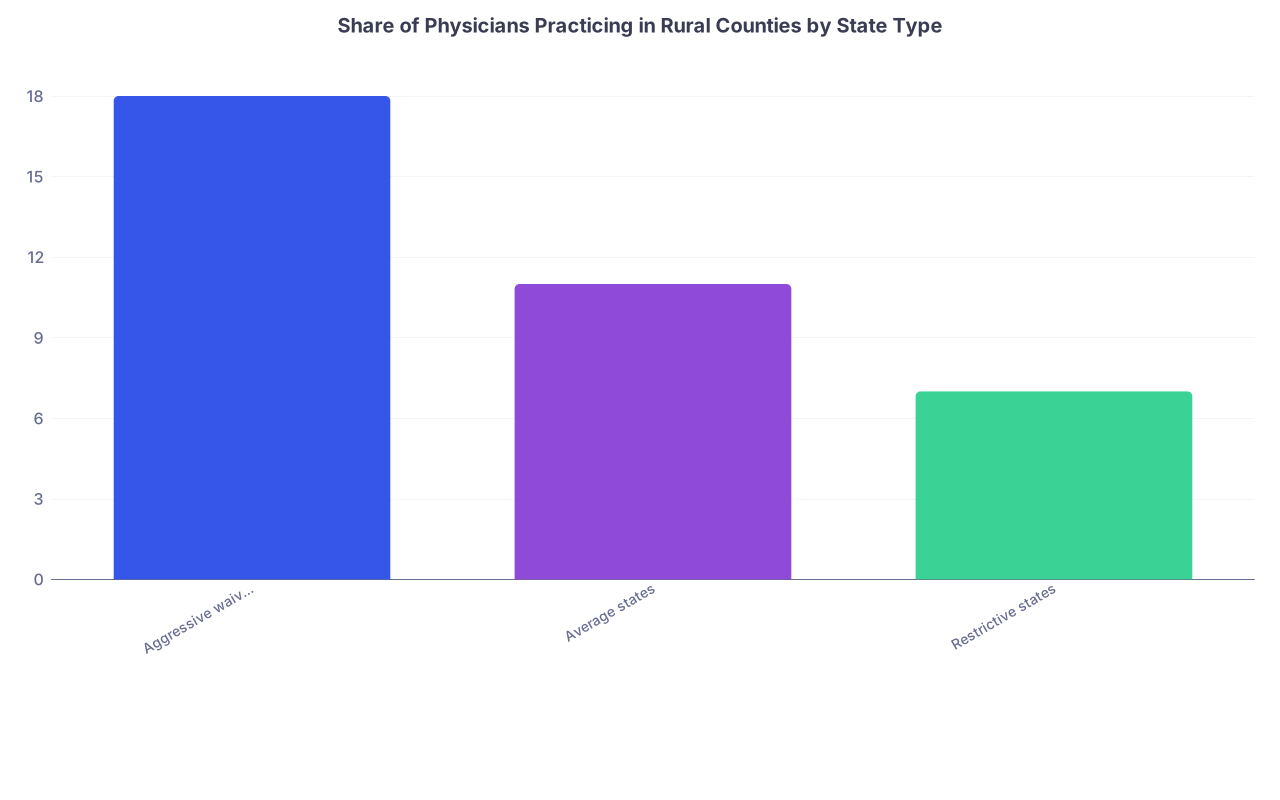
| Category | Value |
|---|---|
| Aggressive waiver states | 18 |
| Average states | 11 |
| Restrictive states | 7 |
States that are aggressive with visas and fast licensure generally have a higher proportion of their workforce in rural or underserved areas—and they know that workforce is fragile.
2. Dominant Health Systems Running the Show
In some states, one or two health systems practically are the healthcare market.
When those systems decide they need faster licensure and visa processing, the state listens. Quickly.
I’ve seen it play out like this:
- System A can’t staff its trauma call.
- They’ve got a pipeline of foreign‑trained surgeons, hospitalists, anesthesiologists.
- HR and legal teams walk into a closed‑door meeting with legislators and board staff.
- A year later, new statutes and “task forces” magically appear, designed to “streamline physician licensing.”
The goal is not abstract fairness. It’s “How do we get Dr. X from Country Y into our OR in the next 60 days without losing $2M/quarter in diverted cases?”
States with one or two huge nonprofit “charitable” systems? They’re often the ones pushing hardest to accelerate exam verification, accept more foreign training, and grease the wheels for visas.
3. Match Day Panic and Workforce Data
Watch what happens a few years after a state expands med school matriculation without proportionally expanding residency slots. Or after a wave of retirements.
State medical workforce reports start showing ugly trends:
- Aging physician population
- Large swaths of counties with no practicing psychiatrist, no OB, no rheumatologist
- Long wait times for primary care and mental health
That’s when the language changes from, “We must protect standards” to “We must balance access with quality.”
Translation: “We’re going to make it easier for foreign physicians to come and practice here, but we need a politically safe narrative.”
The fast‑track policies are the result.
The Quiet Hierarchy of “Welcome” States vs. “You’ll Suffer Here” States
This part nobody tells you when you’re comparing “best states to work as a doctor.”
There’s a silent two‑axis system:
- How friendly is the licensure process?
- How friendly is the visa environment?
Combine them and you get four rough categories of states.
| State Type | Licensure Speed | Visa Attitude | Real Message to Physicians |
|---|---|---|---|
| Fast + Friendly | Fast | Pro-sponsorship, aggressive J-1 waivers | "We need you yesterday." |
| Fast + Cold | Fast | Minimal waivers, reluctant sponsorship | "We like speed, not visas." |
| Slow + Friendly | Slow | Open to waivers but bogged down | "We want you, but bureaucracy wins." |
| Slow + Hostile | Slow | Resistant, limited waivers | "Go somewhere else unless you’re exceptional." |
States rarely say this out loud. But you see it in:
- How long it really takes to get a license (not the advertised time).
- How many J‑1 waivers they actually use every year vs. their maximum.
- How willing health systems are to talk openly about sponsoring H‑1Bs and green cards.
Off the record, recruiters will tell you straight:
“We can have you licensed here in 6–8 weeks” versus “Honestly, expect 6–9 months minimum.”
Same with visas:
“We have a dedicated immigration team; we do this all the time” versus “We’ve never sponsored before; we’ll have to figure it out.”
That’s not random. That’s state culture plus years of quiet policy choices.
What Really Gets Fast-Tracked: Not What You Think
Here’s another insider secret: when a state “fast‑tracks” physician licensure, it’s not usually for everyone equally.
Certain profiles get quietly greenlit.
1. Hospitalists and Primary Care in Underserved Areas
If you’re FM, IM, hospitalist, rural EM, or psych—especially willing to work in a federally designated shortage area—you’re the currency of desperation.
I’ve sat in staffing meetings where someone says:
- “We’ve got an H‑1B candidate ready to sign for a 1.0 FTE rural primary care role.”
- The response from admin: “We’ll do whatever it takes to push this through.”
Visa sponsorship? Suddenly not a barrier. Licensure paperwork? Magically prioritized. The board “finds a way.”
2. Revenue-Critical Specialists
There’s a brutal calculus here. Some specialties are worth more to hospitals on paper. Cath lab, ortho, spine, GI, neurosurgery. You know the list.
If the state thinks a specialist is:
- Hard to recruit domestically
- Directly tied to high-margin procedures
- Key to keeping a trauma or cardiac designation
That specialist gets every possible administrative advantage.
I’ve literally seen credentialing fast‑tracked because, “We’re losing cases to the competitor down the road while this physician sits in limbo.”
3. Academic “Brand Builders”
Academic centers are a special case. States love to brag about “world-class institutions.” Boards and legislatures will stretch for big-name recruits:
- Internationally known researcher in oncology?
- Niche subspecialist who puts the state on the map in a rare field?
Those applications suddenly “rise to the top of the pile.”
Visa complexity gets handled behind the scenes with institutional lawyers. The message from leadership: “Make this happen.”
Why Some States Stay Slow and Hostile
So why do a few states still make life miserable for visa physicians and slow for everyone?
Three reasons, none of them flattering.
1. Protectionism Disguised as “Quality”
There are states where the unspoken attitude among parts of the physician lobby is:
“We have enough of our own grads. We don’t need more competition.”
Publicly, they talk about “guarding standards” and “ensuring adequate US training.” Privately, the attitude is, “The more hurdles for outsiders, the better.”
These states tend to:
- Drag out primary source verification.
- Be hyper‑picky with foreign training equivalence.
- Avoid investing in digital systems that would speed things up.
They’re not accidentally slow. They’re comfortably slow.
2. Bureaucratic Inertia and Underfunded Boards
Some states aren’t malicious. They’re just stuck in 1998.
Paper‑heavy workflows. Understaffed medical boards. Month‑long backlogs to check simple documents. No real pressure from legislators to change anything.
I’ve heard board staff say openly:
“We’re doing the best we can. We were not funded for this volume.”
Meanwhile, hospitals are begging for physicians, and candidates wait six months to touch a patient.
3. Political Aversion to Immigration
In some places, the word “visa” is politically radioactive. It doesn’t matter that these are highly trained physicians filling critical shortages.
So what do states do? They invoke “caution,” “comprehensive review,” “national security,” or “maintaining public confidence” to justify moving glacially.
The result is predictable:
Visa-dependent specialties avoid them. Rural areas in those states suffer quietly. Locums agencies make a killing.
The Future: Why You’ll See More Fast-Track States (Not Fewer)
Here’s the uncomfortable reality: the US cannot staff its healthcare system without international physicians. Full stop.
And the boards, legislators, and health system CEOs know it.
Look at the trajectories:
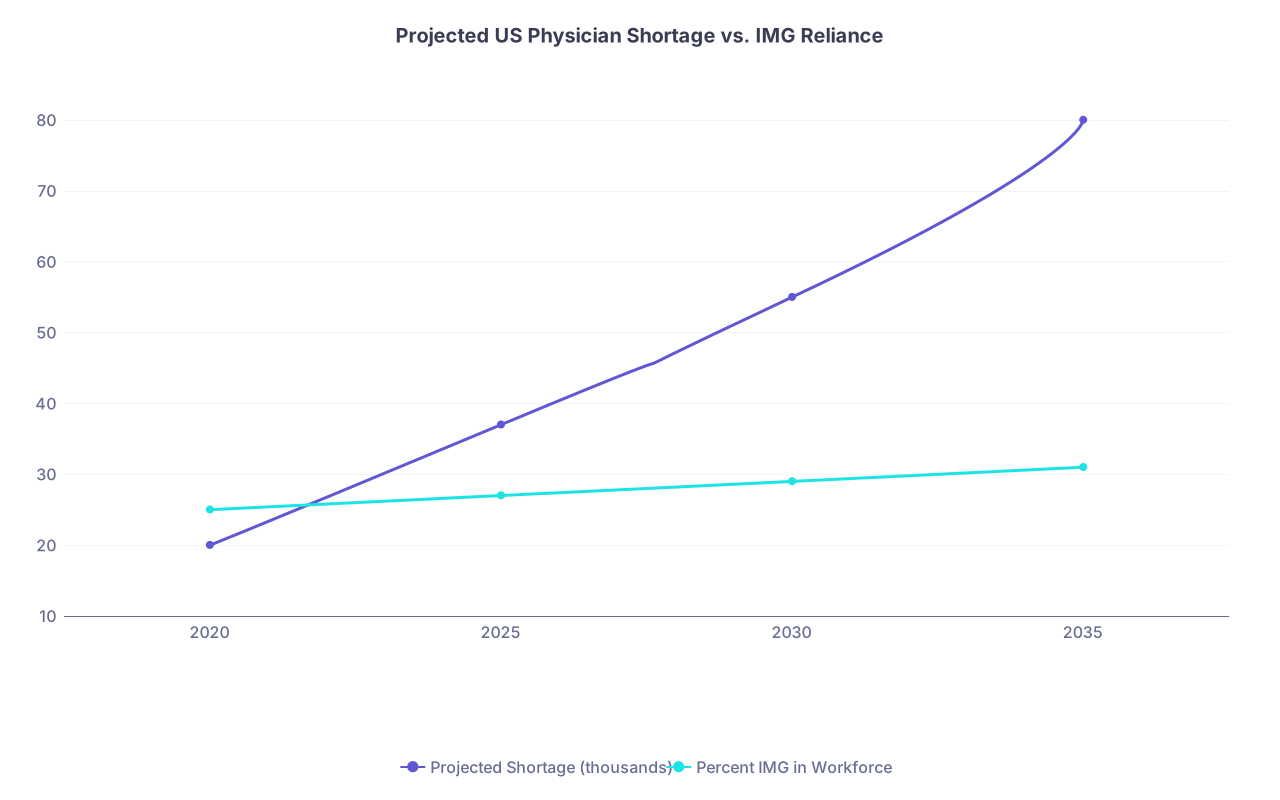
| Category | Projected Shortage (thousands) | Percent IMG in Workforce |
|---|---|---|
| 2020 | 20 | 25 |
| 2025 | 37 | 27 |
| 2030 | 55 | 29 |
| 2035 | 80 | 31 |
- Shortages are rising.
- The percentage of IMGs and visa physicians is creeping upward every year.
- Domestic training capacity isn’t catching up.
So what’s going to happen?
1. More States Competing Quietly for Visa Docs
You’ll see more states:
- Expanding their Conrad 30 J‑1 waiver usage, or trying to.
- Removing silly barriers like notarized copies that could be automated.
- Creating “expedited” pathways for shortage specialties or shortage areas.
Public messaging: “Addressing rural health crises.”
Reality: “We have no other viable staffing solution.”
2. Interstate Licensure Will Matter More, but Won’t Save Everyone
The Interstate Medical Licensure Compact is supposed to help with speed. And for some physicians, it does.
But here’s what faculty and admin quietly know:
- It mainly helps US‑trained physicians who already meet very specific criteria.
- It does not magically fix visa complexities or state-specific politics.
- Boards still retain discretion to drag their feet if they want to.
So yes, it helps. But if you’re an IMG or on a visa, you’re still dealing with a second layer of complexity.
3. New “Global Physician” Pipelines
Forward‑thinking systems and states are already mapping this out:
- Partnerships with foreign medical schools and governments.
- Visa pathways tied directly to long‑term service in shortage areas.
- Structured assimilation programs for foreign-trained physicians.
They’ll present it as “innovative global health integration.” It’s also a survival strategy.

| Step | Description |
|---|---|
| Step 1 | Foreign Med School |
| Step 2 | US Residency or Fellowship |
| Step 3 | H-1B or J-1 Status |
| Step 4 | Fast-Track State License |
| Step 5 | Standard License Timeline |
| Step 6 | State-Supported Waiver or Green Card Plan |
| Step 7 | Shortage Area Job? |
The states that lean into this will quietly become magnets for international physicians. The others will keep pretending they can solve shortages with slogans and in‑state recruitment alone. They will lose.
How You Should Use This as a Physician
You are not powerless in this. You just haven’t been told how the game is actually played.
If you’re on a visa (or an IMG without one yet)
You should be screening states and employers with precision.
Ask recruiters and department chairs direct questions:
- “How many active visa physicians do you currently employ?”
- “How many J‑1 waivers did you use last year?”
- “Do you have in‑house immigration counsel?”
- “What’s the average time from signed contract to full licensure for your recent hires?”
If they hesitate, deflect, or cannot give specifics, that’s your answer. They are not a fast‑track environment.
If you’re US‑trained, no visa issues
You still care, because states that know how to fast‑track visas and licensure usually:
- Have more efficient boards.
- Use more modern verification systems.
- Understand that physicians are scarce and treat them as such.
You also get leverage. If a state is desperate to recruit, you negotiate from strength—call, schedule, salary, protected time.
If you’re deciding where to build a long-term career
The “best place to work as a doctor” in the next decade will often be:
- A state that has embraced international physicians pragmatically.
- A state whose health systems have stopped pretending they can run on domestic supply alone.
- A state where the medical board sees itself as a safety body—not a gatekeeping club.
Watch for actual behavior:
- Do they publish clear, realistic licensure timelines?
- Do they use near 100% of their J‑1 waiver quota?
- Do major systems openly recruit abroad and mention visa support in job posts?
That tells you far more than any glossy “Top 10 States for Doctors” article.
One Last Thing the Brochures Never Mention
There’s an ethical edge to all of this.
When states fast‑track visas and licensure only for shortage areas, they’re effectively building a two‑tier system:
- International/visa physicians carrying the heaviest shortage burdens in rural and underserved communities.
- Domestically trained physicians clustering in metro, high-resource environments.
Hospitals and boards rarely talk honestly about the inequity baked into that structure. But it’s there.
I’ve seen brilliant IMG physicians stuck for years in high‑need, low-resource jobs because their entire immigration status is chained to that role. US grads in the same departments come and go freely.
That dynamic is baked into the very “fast‑track” policies some states brag about.
So when you hear, “We’re proud to welcome international physicians and streamline licensure,” understand what’s really underneath:
- Economic survival
- Political pressure
- Workforce desperation
Wrapped in a friendly narrative.


