

It’s July 1st. You’re a brand‑new attending. You finally landed the “dream” job: coastal town, reasonable salary, glossy brochure with mountain or ocean views. You’re unpacking boxes in your cute rental, thinking, “I did it.”
Then your first full call schedule drops into your inbox.
You scroll.
And scroll.
And your stomach sinks as you realize: you are on call. Constantly. That “1:4 call” you breezily accepted in the offer letter? Turns out it means something very different here than it did at your academic program. The pager never sleeps. The backups are theoretical. The partners are burned out. And that dreamy town starts to feel like a very expensive prison.
This is exactly the trap I want you to avoid.
New attendings consistently underestimate, misread, or flat‑out ignore call burden when chasing “best places to work” and “lifestyle jobs.” The location seduces them. The real workload ambushes them.
Let’s walk through the specific ways smart, capable people get this wrong—and how you can protect yourself before you sign anything.
Mistake #1: Believing “1:X Call” Means the Same Everywhere
Everyone thinks they know what “1:4” or “q5” means. That’s cute. Programs, groups, and hospitals all weaponize the same numbers to mean wildly different things.
Here’s where new attendings blow it: they compare the raw ratio and ignore the hidden variables.

Some of the big ways “1:4 call” can be totally different from place to place:
- In‑house vs home call
- True home call vs “home call that functionally is in‑house”
- Average call volume (1–2 calls a night vs 30+)
- Post‑call protections (or lack of them)
- Level of backup: is anyone else actually available?
To make this painfully clear:
| Job | Call Type | Typical Night Volume | Post‑Call Day | Backup |
|---|---|---|---|---|
| A | 1:4 in‑house | 10–14 patient contacts | Guaranteed post‑call off | On‑site second person |
| B | 1:4 home | 2–3 calls, few admits | Post‑call clinic at 1 pm | Partner backup available |
| C | 1:4 home (rural) | 20+ calls, constant admits, procedures | Full clinic next day | “Call me if you are dying” partner |
| D | 1:4 home (suburban, no residents) | Frequent admissions, no midlevels at night | No change to schedule | No realistic backup |
On paper, they’re all “1:4.” In real life, Job C and D will chew you up.
The mistake is thinking: “I did q4 in residency, I can handle q4 as an attending.” No. You had residents. Seniors. Night float. Actual post‑call days. People screening pages. And you were not the final legal and moral stop.
As an attending, that “1:4” is you being the responsible adult for everything.
How to avoid this mistake today:
For every call ratio a recruiter quotes you, ask:
- Is this in‑house, home call, or “hybrid”?
- Over the last 6 months, what is the average number of calls, messages, and admissions per call shift? (Ask for data, not vibes.)
- What does a post‑call workday actually look like for people? (Exact clinic/OR times.)
- Who else is on the schedule that same night? (Residents? Midlevels? Another attending?)
If they can’t answer with specifics, assume the worst.
Mistake #2: Falling for “Dream Location” Blindness
The phrase “great lifestyle job in a beautiful area” should trigger the same suspicion in your brain as a Craigslist ad promising a luxury apartment for $400/month. Something is off.
Here’s the pattern I’ve watched play out:
- Small mountain town “close to skiing”
- Beach community “with great schools”
- Charming college town “with vibrant culture”
Then you get there and realize: there are 4 of you covering what should be a 10‑physician service. Every ER visit boomerangs to your pager. You’re the only sub‑specialist in a 200‑mile radius. Transfers are impossible. And the hospital realized years ago they could attract doctors by selling the location while quietly burying the workload in vague language.
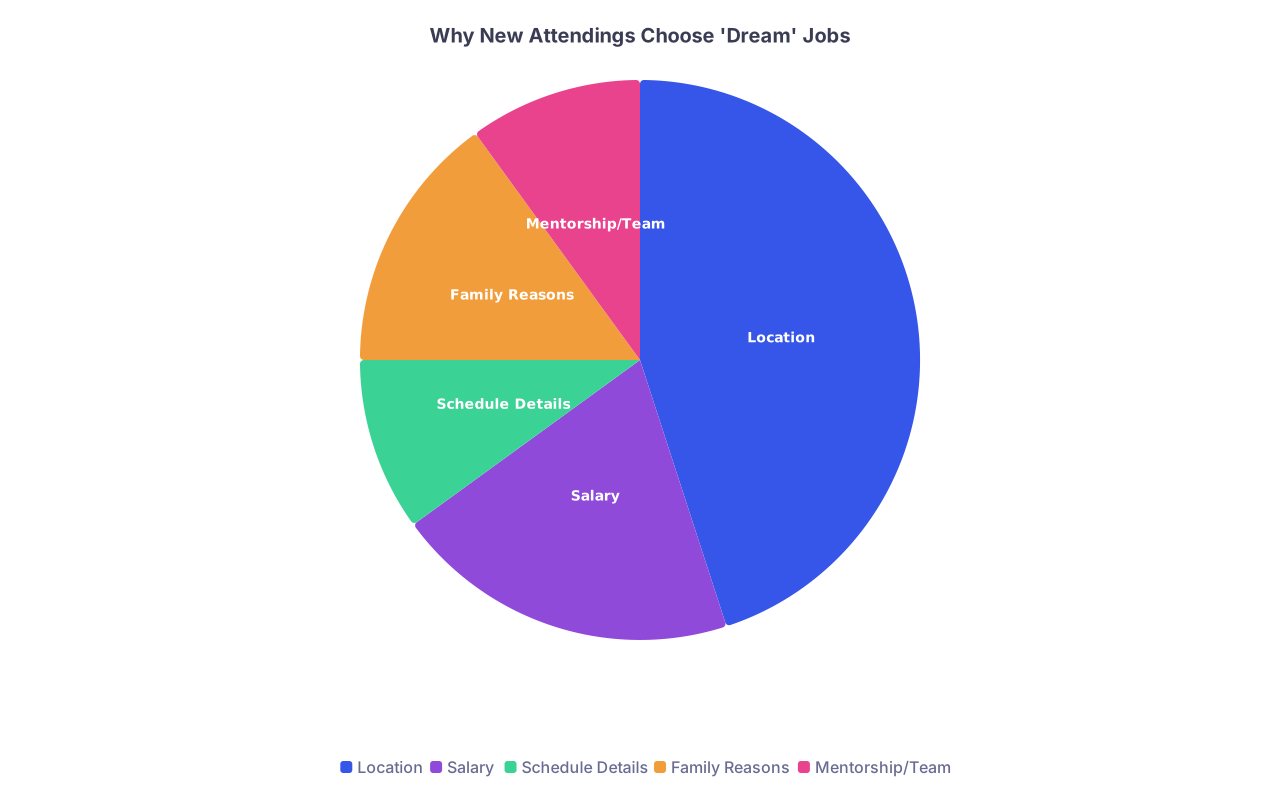
| Category | Value |
|---|---|
| Location | 45 |
| Salary | 20 |
| Schedule Details | 10 |
| Family Reasons | 15 |
| Mentorship/Team | 10 |
Location hypnotizes people. They ignore the red flags buried in the call description:
- “We all pitch in” = there is no real boundary around your time
- “We’re a tight‑knit community” = we cover everything because no one else will
- “Patients are very grateful” = high acuity, low resources, lots of guilt‑driven overwork
- “We’re recruiting more help soon” = we’ve been saying that for years
I’ve watched new attendings pick a job near Denver because “skiing” and then discover they’re working every other weekend, every other holiday, and charting at midnight between trauma pages. You don’t ski. You drive by mountains on the way home from 28‑hour call.
How to avoid this mistake today:
Force yourself to write down, in one place:
- What does a “good” call schedule mean to you in concrete terms? (Max nights/month, weekends, holidays)
- How many nights a month are you realistically willing to sleep with a pager?
- How many post‑call clinic days are you willing to accept?
If the job’s call expectations do not match your written limits, the mountains/ocean/urban nightlife are not going to fix that.
Mistake #3: Trusting Vague Language in Contracts and Interviews
When I see a contract that says “call shared equitably among partners” with no numbers, my first thought is: they are hiding something.
New attendings get burned because they:
- Accept “equitable” without asking, “What is equitable here—spell it out.”
- Don’t demand that call expectations be written into the contract.
- Take verbal reassurances like “it will get better” as if that’s legally binding.
If the partners are ducking specifics in the interview—“we’ll work it out,” “we’re flexible,” “it varies”—they are not going to magically become precise and generous after you sign.

| Step | Description |
|---|---|
| Step 1 | Initial Interview |
| Step 2 | Loose verbal description of call |
| Step 3 | Offer Letter with vague call language |
| Step 4 | Contract says equitable call only |
| Step 5 | You start - cover extra for vacancy |
| Step 6 | New hires delayed or never arrive |
| Step 7 | Call burden becomes de facto permanent |
Here’s a classic setup:
You: “So what does call look like?”
Them: “Right now it’s about 1:5, but we’re recruiting more, so it’ll probably go to 1:7 soon. And honestly it’s very light.”
You: “Okay, sounds reasonable.”
Contract: “Call to be shared equitably among physicians as determined by the group.”
Reality: The “recruiting more” takes 3 years. Two people leave. You are effectively 1:3 for the foreseeable future.
How to avoid this mistake today:
Do not let them wiggle on these questions:
- “How many nights of call did each physician take in the last 12 months? Give me the range and the average.”
- “How many weekends?”
- “How many holidays, and how are holidays defined?”
- “If someone leaves and we’re short, what is the maximum temporary call burden? For how long?”
Then say the hard thing: “I’d like the call expectations and caps written explicitly into the contract.”
If they balk or say “we never do that,” you just learned something about how they view your time.
Mistake #4: Ignoring System Support (Or Lack Thereof)
Too many new attendings only ask, “How often am I on call?” Not, “What support exists during my call?”
That’s how you end up as the only adult in the building at 2 a.m. with:
- No resident coverage
- No nocturnist hospitalist
- No advanced practice provider
- No in‑house anesthesia, radiology, or surgery
- Nursing staff texting you for every minor issue because “you’re the only one here”
Two calls nights can be harder than five, depending on support.

Ask the right questions about:
- Who is physically in the hospital overnight (by role)?
- Who answers routine nurse calls—always you, or is there triage?
- Are there cross‑coverage systems or is everything your responsibility?
- How easy is it to transfer out critical patients at night?
Here’s where people really underestimate the misery: nurse call culture. In some places, nurses are well‑supported, autonomous, and escalate appropriately. In others, administration has terrified them into calling for every Tylenol dose. You’ll learn that at 1:47 a.m. on your third “light” call night in a row.
How to avoid this mistake today:
On your site visit, talk to:
- Night nurses (without leadership hovering)
- The nocturnist (if one exists)
- Residents (if any) about who really gets called overnight
Ask, “When do you call the on‑call attending?” and shut up. Listen to the stories they volunteer.
Mistake #5: Believing “We’re Hiring More” Will Save You
I have never seen a new attending say, “Call is rough now, but we’re hiring more people and it’ll get better” and have that play out exactly as described. Not once.
Recruitment is slower than you think. People leave. Volumes climb. Administration moves the goalposts.
By the time the cavalry arrives—if it ever does—you’ve already normalized your life around a crushing call load. And your “dream job” has quietly become a sunk cost.
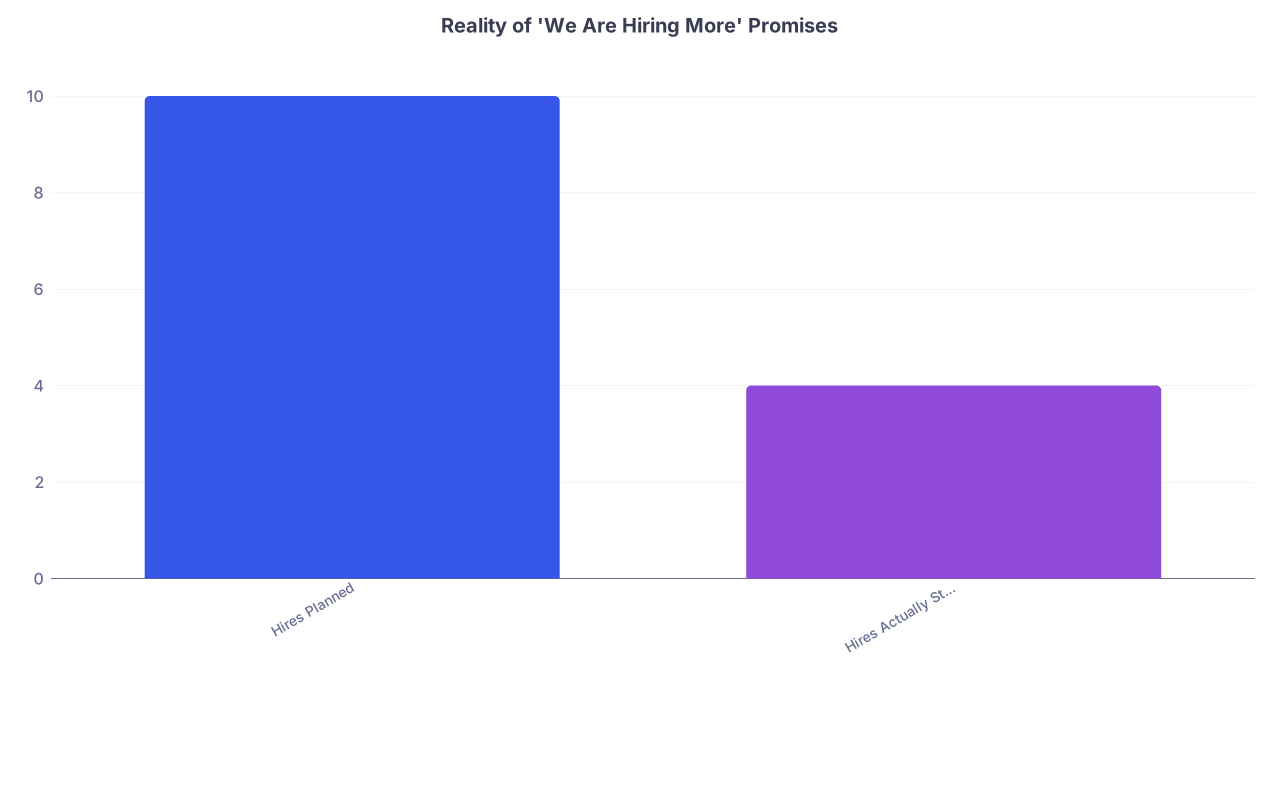
| Category | Value |
|---|---|
| Hires Planned | 10 |
| Hires Actually Started in 2 Years | 4 |
The standard bait:
- “We’re budgeted for 6, we’re at 4 now, so for a little while call will be 1:4, then it’ll drop to 1:6. It’s temporary.”
- Translation: we have approval on paper. That does not mean humans will appear.
How to avoid this mistake today:
Ask specific, time‑bound questions:
- “How many open positions have you had in the last 5 years in this department?”
- “What is your average time‑to‑hire for a physician?”
- “How many offers were declined last year?”
- “How long have you already been recruiting for the current openings?”
If they’ve been “recruiting” for 18 months and still have holes, assume this is stable reality, not a brief transition. Negotiate call based on current staffing, not fantasy future staffing.
And again—if “temporary increased call” is expected, cap it in the contract. With time limits and tangible remedies (extra compensation, extra PTO, or both).
Mistake #6: Forgetting Your Life Outside the Hospital
A lot of new attendings mentally budget call like they’re still residents. You think, “I’ve done worse,” and you’re not wrong. But the responsibilities are different now.
You might have:
- A partner with a demanding job
- Young kids who still believe you’ll show up when you say you will
- Parents who are aging and need you to be somewhat present
- Your own physical limits after a decade of training abuse
Small call miscalculations have a big impact. Being on call “only” one night a week means:
- You and your partner can’t both be out those nights
- Bedtimes are unpredictable for your kids
- You can’t safely plan early‑morning workouts, flights, or appointments the next day
- Even when the pager is quiet, your brain is not off
I’ve seen people discover that:
- They “live at the lake” but never safely boat because someone is always potentially getting called in
- They “moved for schools” but miss the school events because they drew the short‑straw call
- They’re “close to family” but perpetually exhausted on the few days they’re actually off
How to avoid this mistake today:
Sit down—by yourself or with your partner—and map a real month with the proposed call schedule. Not in your head. On an actual calendar:
- Mark all call nights, post‑call days, and weekends
- Add your kids’ activities, partner’s schedule, or other commitments
- Question: in this scenario, how many evenings could you be truly reliably present?
If that calendar looks miserable on paper, it will feel worse in your body.
Mistake #7: Not Doing Back‑Channel Recon
The official narrative you hear on a site visit is rarely the whole story. New attendings make a huge mistake by relying only on:
- The department chair
- The lead recruiter
- The carefully hand‑picked “young partner who loves it here”
You need the unsanitized version.

Here’s what actually works:
- Find former physicians from that group on Doximity, LinkedIn, or through alumni networks. Ask for a 15‑minute call.
- Ask, “If you were me, what would you want to know about call before signing?” then stop talking.
- Ask staff who don’t report to the group directly—the scrub techs, ED nurses, radiology techs—“Who gets called all night? Who looks the most burned out?”
You will hear things like:
- “Oh, Dr. X is on every other weekend. I don’t know how he does it.”
- “We call the on‑call doc for everything. Admin made a policy about it.”
- “The last two hires left because the call was brutal. They’ll never tell you that.”
If what you hear from back‑channel sources doesn’t match the official story, believe the underground version.
Putting It Together: A Quick Reality Check Framework
When you’re weighing that “dream location” job, run their call claims through this basic filter:
Clarity test
If you asked three people there, “What does call look like?” would you get the same concrete answer? If not, red flag.Data test
Can they show you last year’s actual call schedule and provide averages? If they’re strangely reluctant, assume the numbers are ugly.Support test
Who’s awake with you at night? If the answer is “just you, plus a skeleton crew,” add 30–50% to your mental burden estimate.Honesty test
When you push to put call expectations in writing, do they work with you or get defensive? Defensive usually means you’re about to be exploited.Life test
Does the call pattern, when mapped onto a real month of your life, align with the reasons you wanted that “dream” location? If not, you’re in love with an illusion.
FAQs
1. Is it ever worth taking a heavier call burden for a great location?
Sometimes. But only if you’re doing it with eyes wide open and a clear time horizon.
If you tell yourself, “I’ll grind this out for 2–3 years to pay off loans, then I’m gone,” that can be rational. The mistake is pretending the call is lighter than it is so you feel better signing. If you accept heavy call, price it appropriately: higher salary, extra PTO, or a clear path to reduced call with seniority, all in writing.
2. How can I compare call burden between two very different jobs?
Stop looking at ratios alone. Build a side‑by‑side grid for each job with:
- Nights on call per month
- Weekends and holidays per year
- Average overnight contacts (calls/pages/admissions)
- Post‑call expectations
- On‑site vs home call
- Support staff present
Once that’s on paper, ignore geography and salary for 10 minutes. Pick which call life you’d rather live. Then bring location and money back into the equation.
3. What if I already signed and just realized I misjudged call?
Then the priority shifts to survival and leverage.
Document call volume and workload from day one. Keep a simple log. After a few months, you have data. Use it to negotiate: extra compensation for call, protected post‑call time, or a path to reducing call with additional hires. Start discreetly networking for other jobs early—having options makes you much harder to exploit.
Open your current (or most recent) job offer right now and find every place “call” is mentioned. If it fits on one vague line, you’re in danger. Start a separate document and write down the specific questions from this article you still don’t have answers to—then send those questions before you sign anything else. Your future self at 3 a.m. will thank you.


