
SOAP will not automatically kill your fellowship dreams. But how you handle SOAP absolutely can.
That’s the part nobody says out loud when everyone’s spiraling in group chats on Monday of Match Week.
You’re probably stuck in the same mental loop I’ve watched so many people get trapped in:
“If I SOAP into anything, I’ll never match cards / GI / heme‑onc / whatever ever again. Maybe I should just not SOAP… or reapply… or do research… or just disappear.”
Let’s walk through this like someone who’s actually terrified and not pretending to be “chill.”
First: The Worst-Case Scenario You’re Probably Imagining
Your brain’s probably doing this:
- You don’t match.
- You enter SOAP in a panic.
- You end up in a random program. Maybe not in your preferred location. Maybe community when you wanted university. Maybe prelim when you wanted categorical.
- You’re convinced every future fellowship PD is gonna see “SOAP” in your past and silently toss your application in the trash.
Let me be blunt: that’s not how this works.
Most fellowship directors are not sitting around cackling over your NRMP history. They care about whether, by the time you apply, you’ve become a strong, reliable resident with evidence you can thrive in their field: strong letters, responsibility, some academic productivity, and not being a disaster to work with.
SOAP is a dent. Not a death sentence.
But there are ways to make SOAP hurt your fellowship goals more than it needs to. And that’s where strategy actually matters.
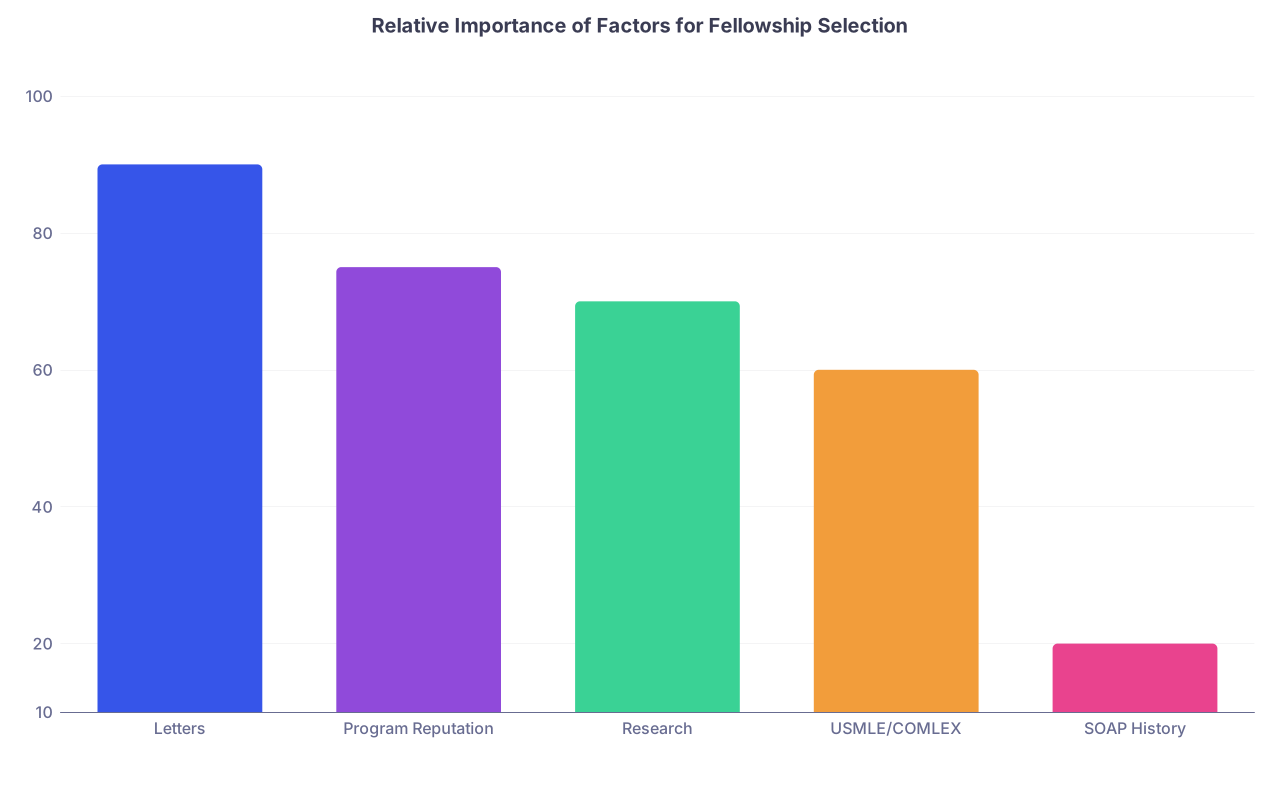
What Fellowship Programs Actually Care About (Not the Fantasy in Your Head)
| Category | Value |
|---|---|
| Letters | 90 |
| Program Reputation | 75 |
| Research | 70 |
| USMLE/COMLEX | 60 |
| SOAP History | 20 |
Let me give you the unvarnished hierarchy I keep seeing from fellows and faculty on selection committees. They don’t all say it this cleanly, but this is how they act:
- Letters of recommendation from people they know or trust
- Your performance as a resident (evaluations, leadership, how your PD writes about you)
- Some academic output: QI, posters, case reports, maybe a paper or two
- The reputation of your residency program (but this is more “helpful bump,” less make-or-break)
- Scores and exams as a rough filter
- All the narrative weird stuff: gap years, SOAP, prior non-match, transferring, etc.
Notice where SOAP is. It’s not nothing. But it’s not top three.
What kills applicants is not “I went through SOAP.”
What kills them is: “I SOAPed, and then never really recovered.” No leadership. No advocacy. PD lukewarm letter. Mediocre performance. No narrative that shows growth.
If SOAP happens and you treat PGY‑1–3 like a holding pattern, that will hurt your fellowship chances. Because there will be people who didn’t.
Should You Prioritize Fellowship Fit During SOAP?
Here’s the brutal tension: you’re panicking about fellowship, but SOAP is often about one question:
“Where can I secure a position that won’t crush my chances later?”
Not: “What’s my dream fit?”
More: “What will keep doors open and not trap me?”
Let’s break this into real scenarios because that’s what your brain is doing anyway.
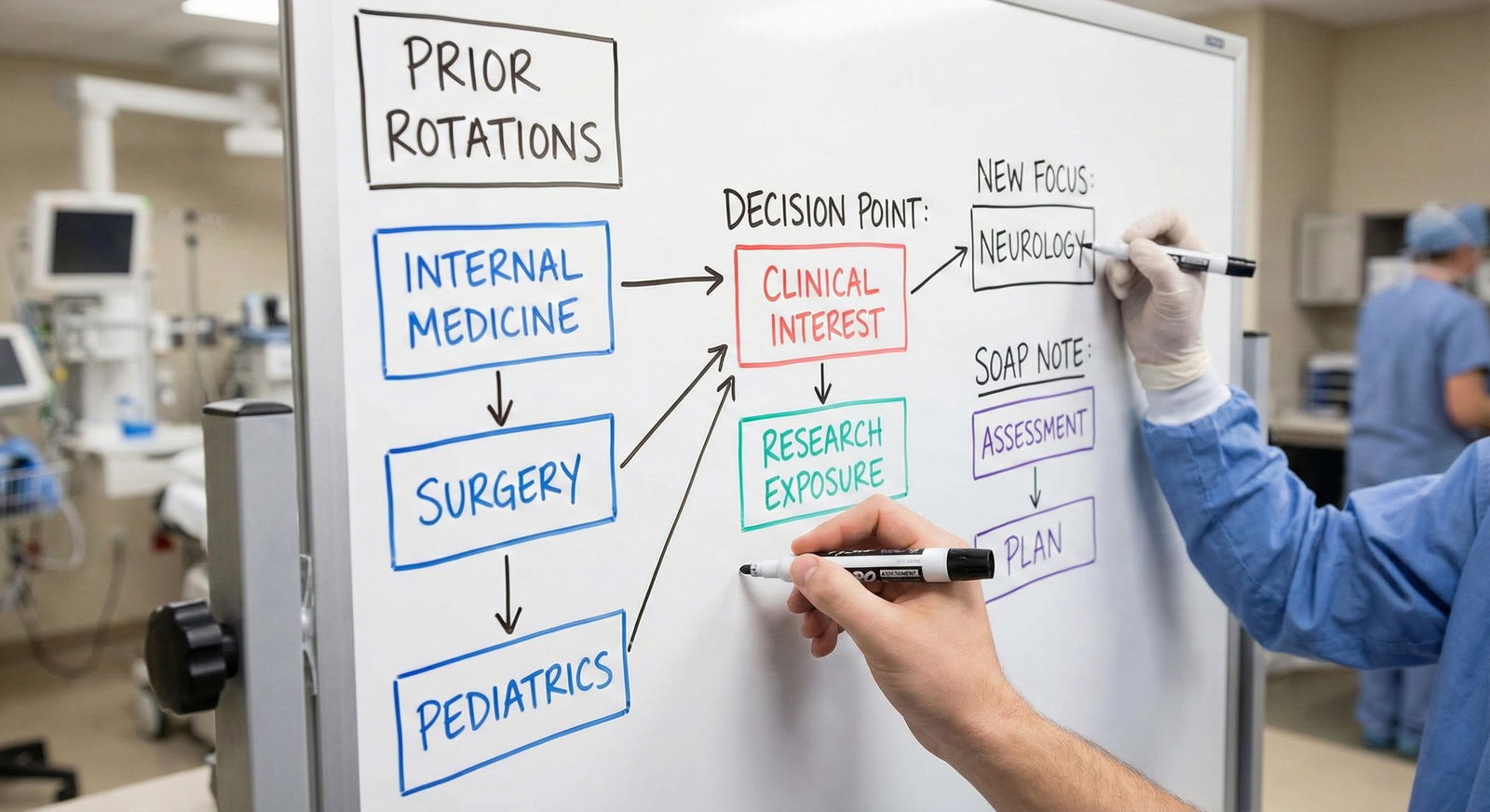
Scenario 1: You Want a Competitive Fellowship (Cards, GI, Heme-Onc, Pulm/CC)
If that’s you, your priorities during SOAP should be:
- Get into an ACGME-accredited categorical spot in IM (or relevant core field) if at all possible.
- If categorical isn’t available: a solid prelim year where you can realistically reapply and not drown.
You don’t need “big name or bust.” That’s a trap.
You do need a place where:
- Somebody does research or QI you can get involved in.
- The culture isn’t toxic to the point you’ll mentally check out.
- They’ve at least occasionally sent people to the fellowships you’re interested in (or could reasonably build toward that).
You don’t have time in SOAP to do deep investigational work on every program. But you can:
- Check program websites quickly for: fellowship placements, faculty interests, any mention of research/QI.
- Search “[Program Name] fellowship match list” or look at residents’ LinkedIn / Doximity.
- Ask your school or mentors: “Do we have anyone there? Anyone know people at this program?”
Is it perfect? No. But it’s better than panic-clicking.
Scenario 2: You SOAP into a Community Program, Not the Academic Place You Wanted
This is where the catastrophizing really kicks in.
I’ve watched people at mid-tier community programs match into:
- Cards at very good university programs
- GI after grinding out multiple abstracts
- Heme-onc, pulm/CC, even some very strong institutions
What made the difference wasn’t the name on the badge. It was:
- They found one or two invested mentors.
- They asked early: “Can I help with any projects?”
- They became the resident everyone trusted to not drop the ball.
Is it harder than coming from a powerhouse university with built-in research infrastructure? Yeah. I won’t sugarcoat that. But is it “game over”? No.
You can absolutely SOAP into a community program and still build a fellowship path if you treat it as a launchpad instead of a consolation prize.
Scenario 3: You Only Get Prelim Offers and You Want a Fellowship-Relevant Specialty
This is the nightmare one, right?
If you only land a prelim:
- Choose a prelim that maximizes your exposure to your target core specialty and gives you time and support to reapply.
- Make it clear to your leadership: “My goal is categorical in X, I’m committed to working hard and reapplying.”
Some people will tell you, “Just take any prelim, it doesn’t matter.” I disagree. If you’re serious about fellowship, the prelim year is your one-year audition and networking sprint.
You want:
- Attendings who will actually know you well enough to write strong letters.
- A program director who doesn’t resent prelims and will advocate.
- Some flexibility in schedule so you can interview/reapply without being punished.
How Much Will SOAP “Follow” You? The Honest Version
Programs will know you didn’t match. They aren’t stupid. The NRMP history exists. Your story is part of your file.
But here’s the important part: they mostly care about whether the story makes sense and whether it looks like you grew.

| Step | Description |
|---|---|
| Step 1 | Unmatched and SOAP |
| Step 2 | PGY1 - Stabilize and Learn |
| Step 3 | PGY2 - Build Trust and Get Involved |
| Step 4 | PGY3 - Produce Output and Network |
| Step 5 | Fellowship Application |
| Step 6 | No Growth After SOAP |
| Step 7 | Weak Application |
Bad version:
- “I didn’t match. SOAPed randomly. Did okay, I guess. No real extra effort. PD letter generic. One poster done reluctantly.”
Better version:
- “I didn’t match initially because my application was weak in X/Y (say it plainly). I SOAPed into [program]. I decided that if I was getting this second chance, I’d treat it like it mattered. Since then, I’ve taken on X leadership roles, helped with Y projects, and my PD can speak to Z specific qualities.”
Fellowship programs are staffed by humans who have seen weird trajectories: couples match chaos, illness, visas, Step failures, family emergencies. SOAP is not some unique scarlet letter.
They do get annoyed by:
- Applicants who seem to blame everyone and everything for their path.
- No evidence of insight or improvement.
- Vague “I learned resilience” statements with nothing concrete behind them.
You don’t need to apologize endlessly for SOAP. You need to own it and then point to everything you’ve done since.
Concrete SOAP Strategies If You Still Care About Fellowship
Let’s move from doom spiral to actual tactics.
| Priority Level | Focus Area |
|---|---|
| High | ACGME-accredited program |
| High | Categorical over prelim |
| Medium | Research/QI opportunity |
| Medium | Culture and mentorship |
| Lower | Geographic preference |
During SOAP:
- Prioritize ACGME-accredited programs in your core specialty first (IM for cards/GI/heme-onc, etc.).
- If no categorical options: aim for prelims where people have successfully re-matched or where there’s a known track of prelims getting categorical spots.
- If you’re stuck choosing between name vs. support: I'd lean support. A “big name” that doesn’t know you and won’t advocate is less helpful than a smaller place where the PD will fight for you.
After you SOAP and start residency:
- Meet with your PD early. Be vulnerable but serious: “I SOAPed in. My long-term goal is [fellowship]. I want to know what it’s going to take from your perspective.”
- Identify one or two faculty in your interest area and show up: “I’m very interested in [X]. If you have any projects I could help with, I’d really appreciate the opportunity.”
- Get your clinical house in order first. No one cares that you did 6 posters if you’re unsafe or disorganized at 2 am.
Throughout PGY1–2:
- Say yes to reasonable opportunities that build your file: QI, teaching interns/med students, case reports, small research.
- Guard against bitterness. The residents who never shake off the SOAP chip on their shoulder end up subtly sabotaging themselves.
When it’s time to apply for fellowship:
- Have at least one recommender explicitly address your growth: “They entered our program after an initial unmatched year and have become one of our strongest residents.”
- Be concise and direct in your personal statement if SOAP comes up: one to two sentences of context, then pivot hard to what you’ve done since.
The Fear About “Program Prestige” and Fellowship
Let me say something that’ll probably annoy some people:
The cult of “I must be at a top 10 IM program or my fellowship career is over” is massively overrated.
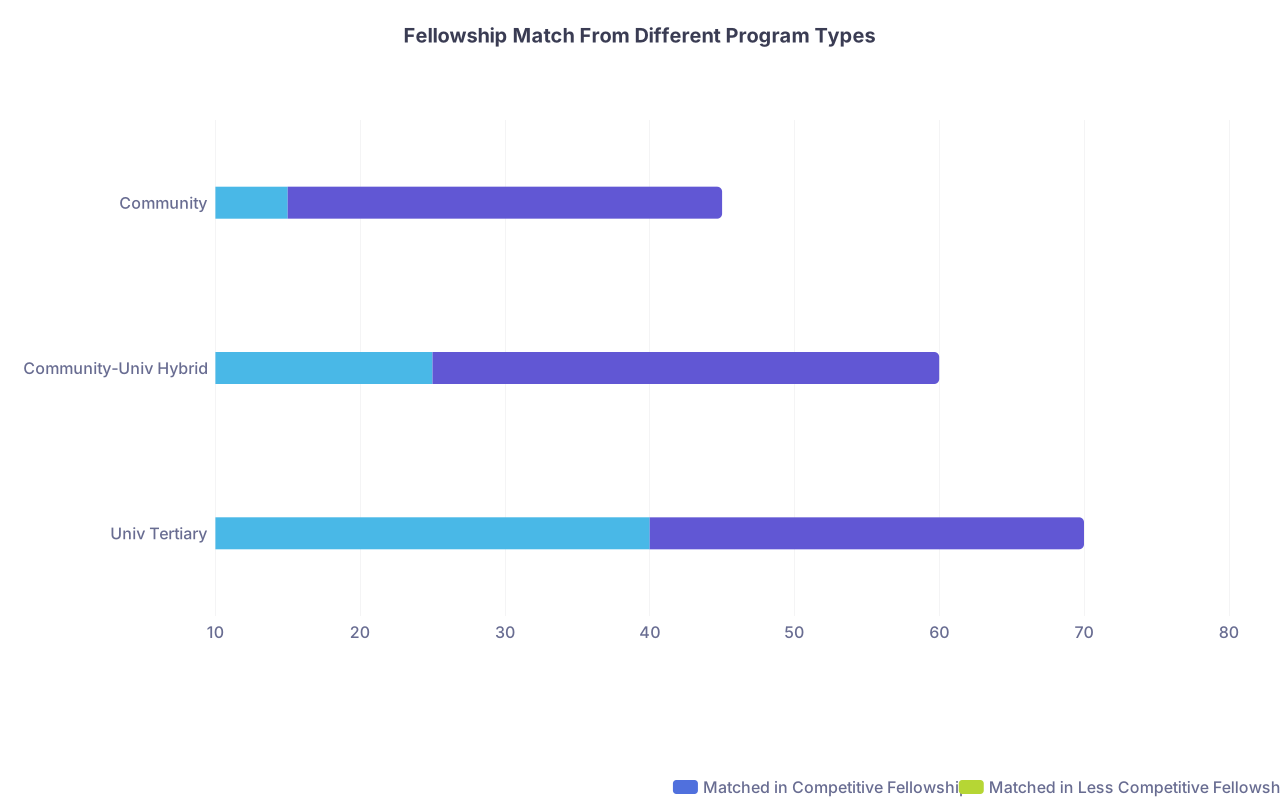
Does it help to be somewhere famous? Sure. You’re swimming in resources, big-name letters, built-in research. But I’ve watched people in no-name programs crush it because they:
- Became the go-to person for something (ECG guru, sepsis QI, teaching wizard).
- Showed up at regional/national conferences and got seen.
- Got one really strong mentor who picked up the phone for them.
| Category | Matched in Competitive Fellowship | Matched in Less Competitive Fellowship |
|---|---|---|
| Univ Tertiary | 40 | 30 |
| Community-Univ Hybrid | 25 | 35 |
| Community | 15 | 30 |
Your trajectory isn’t: “SOAP → community → never get cards GI heme-onc.”
It’s more like: “SOAP → community → need to be more intentional and active to get where you want.”
That’s harder. But it’s not impossible.
How to Keep Your Brain from Self-Sabotaging During SOAP Week
You’re not just fighting the system. You’re fighting your own thoughts.
The most damaging moves I see people make in SOAP:
- Panic-applying to everything with zero thought, then regretting where they end up.
- Refusing to SOAP because “I won’t settle,” then ending up with a gap they can’t explain cleanly.
- Taking a spot, then disengaging out of embarrassment and resentment.

| Step | Description |
|---|---|
| Step 1 | Unmatched Email |
| Step 2 | Catastrophic Thinking |
| Step 3 | Impulsive Decisions |
| Step 4 | Worse Long Term Options |
| Step 5 | Talk to Mentors |
| Step 6 | Targeted SOAP List |
| Step 7 | Intentional Residency Plan |
| Step 8 | Stronger Fellowship Application |
| Step 9 | Reaction |
Here’s a saner version:
- Take a breath. Then another.
- Talk to at least one mentor who understands both residency and fellowship landscapes.
- Make a ranked priority list: what actually matters for your future vs. what’s just ego.
- When you choose a program, mentally commit: “This is my place now. I’m going to squeeze every drop of opportunity out of it.”
SOAP doesn’t define you. How you respond to SOAP absolutely does.
FAQs (You’re Not the Only One Thinking These)
1. Will fellowship programs automatically reject me if they see I SOAPed?
No. They’ll notice it, but it’s rarely the deciding factor by itself. They care far more about your letters, your performance as a resident, and whether there’s a clear story of growth. If SOAP is paired with weak evaluations, no meaningful involvement, and a bland PD letter, that combination hurts. If SOAP is followed by clear progress and strong advocacy, most programs will move on from how you started.
2. Is it better to skip SOAP and try again next year to “protect” my fellowship chances?
Usually, no. Skipping SOAP leaves you with a gap that you now have to explain, while you’re not building clinical credibility or getting residency-level letters. One year of a good residency where you show up, work hard, and start collecting a track record is typically more valuable than sitting out “to reapply stronger.” There are rare exceptions (like very specific visa or specialty situations), but most people overestimate the value of waiting and underestimate the value of starting somewhere decent.
3. If I end up at a small community program, should I give up on competitive fellowships?
Not automatically. You should adjust your expectations and your effort, not abandon your goals on day one. From a small program, you’ll likely need: standout clinical performance, at least a few meaningful projects or presentations, and very strong letters that make you memorable. You may need to cast a wider net geographically and be realistic about program tiers. But I’ve seen people from community programs match into cards, GI, and heme-onc. It’s harder, not impossible.
4. How open should I be about SOAP in my fellowship personal statement or interviews?
Be honest but brief. One or two sentences of context is enough: explain what happened in concrete terms (weak scores, late application, limited interviews, personal circumstances), then pivot quickly to what you’ve done since to address those weaknesses and grow. In interviews, answer directly if asked, without over-apologizing or sounding defensive. The goal is to show insight and maturity, not to re-litigate Match Week from years ago.
Open a document right now and write a 5-sentence “SOAP story” you’d be willing to own in a future fellowship application—what happened, what you learned, what you did after. If you can shape that narrative today, you’ll make much clearer decisions about where to SOAP and how to use whatever residency you land to actually keep your fellowship dreams alive.