
Is It Better to Rank Fewer SOAP Programs I Really Want?
You’re in SOAP, staring at a list of programs, and the clock is screaming at you. The thought hits: “If I only rank the programs I really want, I’ll be more likely to get one of them… right?”
No. That’s not how SOAP works. And that mindset is how people walk out of Match Week completely unmatched.
Let me be direct:
In SOAP, it is almost never better to rank fewer programs you “really want.” The strategy of “I’ll only rank the ones I like” is a bad one for 99% of SOAP applicants.
Here’s what you actually need to know.
How SOAP Matching Actually Works (And Why Your Intuition Is Wrong)
First thing: SOAP ≠ Main Match. But it’s still an algorithm. Your preferences matter. Program preferences matter. There’s structure behind the chaos.
Very short version of the mechanics:
- You apply to programs in rounds.
- If a program is interested, they may reach out, briefly interview, or just quietly decide.
- Programs create preference lists.
- You create a SOAP preference list (like a rank list).
- The algorithm tries to place you into the most preferred program on your list that also prefers you and has a spot.
Crucial part:
Ranking a program lower does not hurt your chances at the programs you rank above it.
SOAP does not punish you for having a longer list. It doesn’t think, “Oh, they ranked 45 programs, they must be desperate.” It just tries to give you the highest option on your list that will take you.
Where people screw this up:
They treat SOAP like:
- “If I only list 5 programs, my chances at those 5 somehow go up.”
- “If I list backup programs, I’ll get ‘pulled down’ into them.”
That’s wrong. Adding more programs to your SOAP list:
- Doesn’t make higher-ranked programs less likely.
- Doesn’t change how those top programs view you.
- Only gives you extra safety nets if the top ones don’t work out.
If you don’t match your #1–#5, the algorithm doesn’t shrug and say, “Oh well, they only ranked 5.” It just stops. And you stay unmatched.
So, Is It Better to Rank Fewer SOAP Programs You Really Want?
No. It’s almost always worse.
Let me phrase it bluntly:
If you’re in SOAP, you’re already in backup mode. SOAP is the backup to your backup. This is not the place to be picky like it’s a dream-school med school application.
Your priority in SOAP:
- Get a residency position.
- Prefer better fits over worse fits.
- But do not sacrifice #1 chasing a fantasy.
The key is tiering, not “fewer vs more.”
You don’t solve SOAP by:
- Ranking 5 “perfect” programs and nothing else. You solve SOAP by:
- Ranking as many acceptable programs as possible, in order of preference.
That “acceptable” word matters. I’m not saying rank every program on earth. I’m saying:
- If you’d rather train somewhere than go unmatched → rank it.
- If you truly would not attend that program even if it’s the only offer → don’t rank it.
But ranking fewer just because they’re your “favorites”? Bad idea.
How Many SOAP Programs Should You Rank?
It depends on:
- Your specialty
- Your competitiveness
- How desperate you are to match this year
But for most SOAP candidates, the number is “as many as reasonably acceptable.”
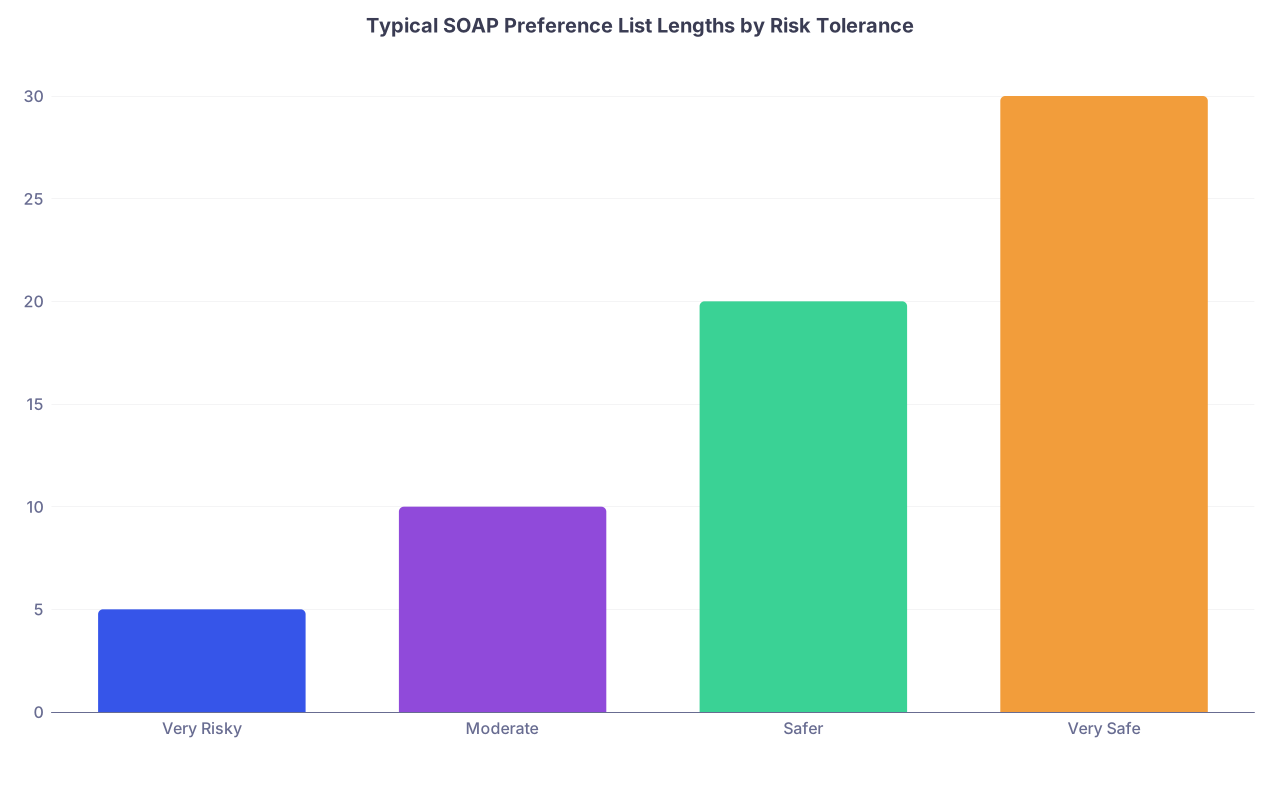
Let’s talk real numbers.
| Category | Value |
|---|---|
| Very Risky | 5 |
| Moderate | 10 |
| Safer | 20 |
| Very Safe | 30 |
Here’s how I’d frame it:
Ranking ~3–5 programs:
Only makes sense if you’re applying to a very uncompetitive specialty and you’re a strong candidate and those 3–5 are truly abundant in unfilled spots. Honestly, even then it’s gutsy to the point of reckless.Ranking ~10–15 programs:
Minimal for most people. This is still on the thin side for SOAP, especially in anything remotely competitive.Ranking ~20–30+ programs:
Much more realistic for most SOAP applicants in primary care, prelim, or less competitive fields. You will not magically get stuck at #27 if #3 was willing to take you.
If there are 40 unfilled programs in your specialty that you’d be okay with attending, ranking 8 because they’re your “favorites” is how you end up back in the same position next year.
The Only Time Fewer SOAP Ranks Might Make Sense
There are narrow situations where a shorter list is rational. But they’re rare, and people love to convince themselves they’re the exception.
It might make sense to rank fewer programs if:
You truly would not go to certain programs
- Unsafe patient ratios, chronic abuse, malignant leadership.
- Horrific reputations backed by multiple sources, not just “I heard.”
- A city or situation that’s an absolute no-go for medical, family, immigration, or safety reasons.
You’re 100% willing to roll the dice and reapply
- You’ve got strong metrics and expect to be competitive next cycle.
- You’d rather spend a year doing research, an MPH, or a prelim year than attend a marginal program.
- You’re consciously choosing “no spot” over “any spot.”
But this is a conscious tradeoff:
- Fewer ranks = higher chance of going unmatched.
- That might be acceptable if you have a real Plan B and strong future options.
For almost everyone else, ranking fewer SOAP programs just because you “don’t love” the others is wishful thinking masquerading as strategy.
How to Build a Smart SOAP Preference List (Step-by-Step)
You’ve probably got an ugly spreadsheet or Notepad mess going already. Clean it up. Here’s the process I recommend.
1. Group programs into tiers
Make three buckets:
Tier 1 – “I’d be happy here”
Good training, decent location, culture seems tolerable, or at least neutral.Tier 2 – “Not ideal, but I’d go”
Maybe location isn’t great, call is heavy, or reputation is mid. But you’d still rather do residency here than not match at all.Tier 3 – “No, even if it’s the only offer”
Truly unacceptable to you: serious red flags, safety issues, or absolutely unworkable life situation.
Your SOAP rank list should be:
- All of Tier 1, then
- All of Tier 2, then
- None of Tier 3
If you’re throwing out Tier 2 because “I’d rather try again next year than go somewhere meh,” fine. But understand that you are choosing a significantly higher chance of no spot.
2. Order within tiers
Within each tier, use concrete factors:
Fit with your long-term goals
Academic vs community, fellowship potential, type of patient population.Training quality
Case volume, board pass rates if you can find them, resident autonomy.Location and life realities
Partner’s job, kids, visas, finances. Not “vibes,” actual constraints.Interview impression (if you spoke with them)
Who sounded organized? Who answered questions directly vs dodged everything?
Put your strongest “yes” at the top of Tier 1. Then work your way down. Same for Tier 2.
Don’t overthink micro-differences. You’re not splitting hairs between Harvard and Hopkins here. This is SOAP.
Common SOAP Ranking Myths That Hurt Applicants
Let’s kill a few popular bad ideas.
“If I rank fewer, programs will think I’m more committed.”
Programs do not see your full rank list. They don’t see where you put them relative to others. They’re not scrolling your preferences and judging how many programs you listed.
They see:
- Did you apply?
- Did you respond?
- How did you come across in any interactions?
- Do they want you?
That’s it. Your list length doesn’t signal anything to them.
“If I add backups, I’ll get pulled into one and lose my shot at better places.”
No. The algorithm tries to give you the highest program on your list that also ranks you and has a spot. If your #3 wants you and your #20 wants you, you match at #3. Always.
You don’t get “forced down” to #20 just because you listed it.
“I should only rank programs I’m excited about.”
In the main match? Maybe. In SOAP? That’s a luxury most people don’t have.
In SOAP, the better statement is:
“I should only rank programs I’d actually attend.”
Very different sentence.
You can very much not be excited about a program and still sensibly choose to rank it as a backup rather than go unmatched.
Balancing Pride, Fear, and Reality
Here’s the uncomfortable truth:
A lot of “I only want to rank programs I really like” is pride talking.
You just got the email that you didn’t match. You feel rejected and bruised. Totally understandable. Your brain wants to reclaim control and dignity by saying, “Well, I only want a good program then.”
But SOAP doesn’t care about your feelings. It’s a numbers game with a harsh bottom line:
- Matched at a less-than-ideal program
- Or unmatched with a year (or more) of uncertainty
I’ve seen:
- People rank 5 programs, not get any, and spend a miserable year trying to claw back into the match.
- Others swallow their pride, match at a mid-tier or rough program, and then grind their way to fellowships and solid careers.
Nobody at your future attending job will care that you SOAPed into a community program in a midwestern city you couldn’t spell before match week.
They will care if you never complete residency.

| Step | Description |
|---|---|
| Step 1 | In SOAP |
| Step 2 | Do not rank |
| Step 3 | Rank somewhere on list |
| Step 4 | Leave off and accept higher risk |
| Step 5 | Is this program truly unacceptable? |
| Step 6 | Would you rather match here than go unmatched? |
A Quick Reality Check by Specialty
Not all SOAP situations are equal. Here’s a rough sense:
| Specialty Type | Typical SOAP Strategy | Rank List Length Target* |
|---|---|---|
| Primary Care (FM, IM) | Cast wide, many acceptable sites | 20–40+ |
| Transitional/Prelim | Very broad, flexible | 20–40+ |
| Psych, Peds | Broad but slightly more selective | 15–30 |
| Competitive (EM, Ortho, Derm) | Few spots, consider switching specialty | As many as exist/are acceptable |
*These are ballpark targets, not hard rules.
If you’re SOAPing into primary care, prelim, or transitional year and you’re only ranking 5–10 programs “you really like,” you’re absolutely playing with fire.

How To Decide What’s Truly “Unacceptable”
You shouldn’t rank programs that are genuine dealbreakers. But be honest about what’s actually a dealbreaker vs what’s just not ideal.
Reasonable dealbreakers:
- Program has credible reports of abuse, discrimination, or chronic unsafe workloads.
- Location where your immigration, legal, or major family responsibilities can’t be handled.
- Program structure that doesn’t align with your minimum career plan (for example, absolutely needing a categorical spot and this is a random one-year dead-end with no path forward).
Not great reasons to exclude:
- “I don’t like that city.”
- “Their website looks outdated.”
- “I heard one negative thing on Reddit.”
- “They’re not very prestigious.”
In SOAP, prestige is way down the list. Survival and training come first.
| Category | Value |
|---|---|
| Very Picky | 20 |
| Moderately Picky | 40 |
| Balanced | 70 |
| Broad List | 90 |
Think of it this way:
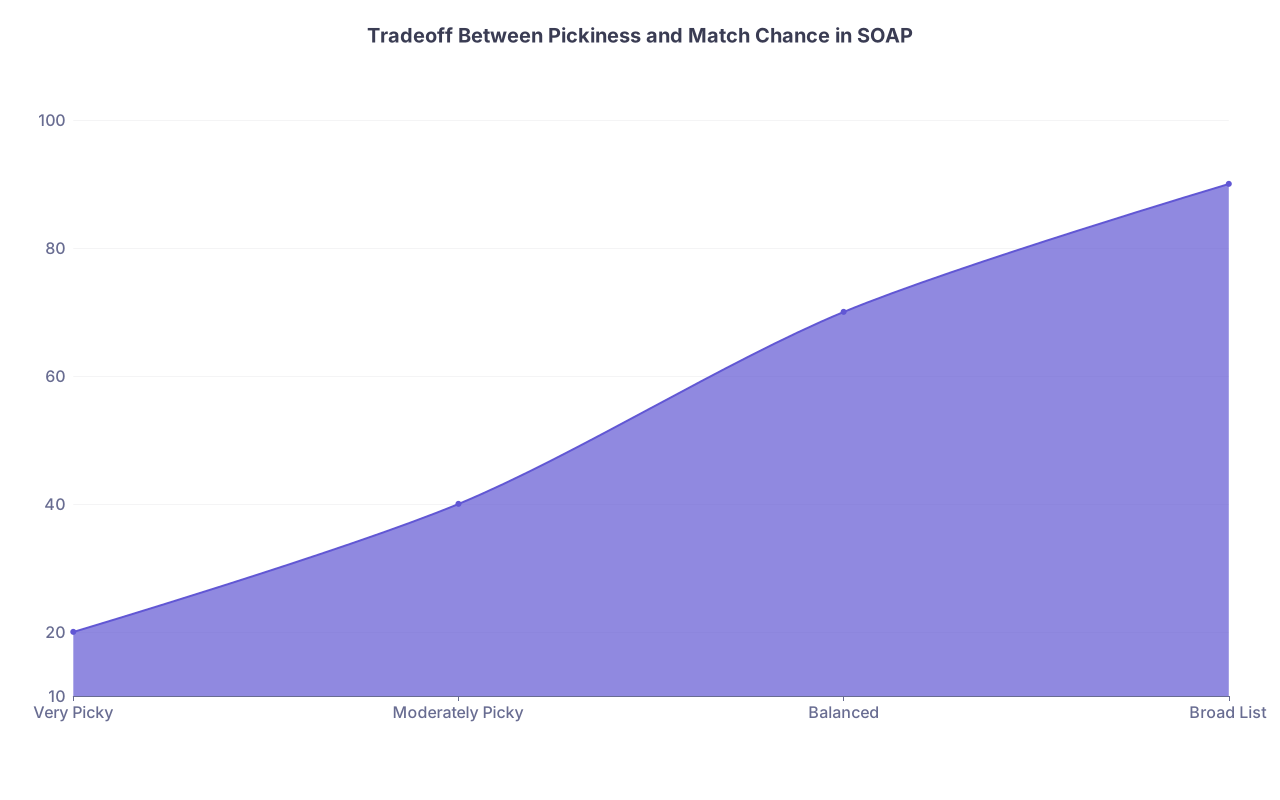
- The pickier you are (fewer ranks), the more your chance of matching plummets.
- You need to decide where that curve crosses your personal “I’d rather go unmatched” threshold.
Most people overestimate how terrible “lesser” programs are and underestimate how bad “unmatched again” feels.

Bottom Line: What You Should Actually Do
If you’re asking, “Is it better to rank fewer SOAP programs I really want?” you’re asking the wrong question.
Ask this instead:
- “Which programs am I truly willing to train at?”
- “In what order do I prefer them?”
- “Am I honestly okay with not matching at all this year?”
Then act like an adult making a hard choice, not a wounded applicant trying to protect their ego.
Three key points to walk away with:
- Ranking fewer programs in SOAP does not make your top choices more likely; it just makes going unmatched more likely.
- Rank every program you’d genuinely attend, in true order of preference. Leave off only those you truly would not go to, even if they’re your only option.
- Unless you have a strong backup plan and are okay reapplying, a longer, well-tiered SOAP list is almost always the smarter move than a short “only programs I really want” list.