
The fear of submitting ERAS “late” ruins more applications than an actually late submission ever will.
Let me say that again, more bluntly: your timing anxiety can tank your whole cycle way faster than submitting on, say, September 19 instead of September 15.
You’re reapplying. You’re already carrying that heavy “what if it happens again” pit in your stomach. You remember watching everyone post their interview invites in October while your inbox stayed empty. So now the clock feels like the enemy. Every day after “opening day” feels like you’re quietly flushing your application down the drain.
Let’s pick this apart before your brain eats you alive.
What “Late” Actually Means in ERAS (Not the Version in Your Head)
There’s the Reddit version of “late” and then there’s the version PDs actually care about. They are not the same.
| Timing Label | Rough Window | How Most Programs See It |
|---|---|---|
| Early / On-time | Opening–first 1–2 weeks | Ideal but not magic |
| Slightly delayed | Weeks 2–4 | Usually totally fine |
| Late-ish | Weeks 4–6 | Depends on competitiveness |
| Truly late | After 6+ weeks | Many spots already filled |
But here’s the nasty trick your brain plays: it lumps anything that’s not “submitted on calendar day 1 at 9:00 AM ET” into the “you’ve already blown it” category.
That’s just not how it works.
Programs don’t all:
- Download apps the second they’re released
- Review them instantly
- Send all their invites in one day
Some do. Lots don’t. Some don’t even finish their filters until weeks later. I’ve seen programs start seriously reviewing applications in early October. Yes, even competitive ones.
Are there programs where a September 18 submission is at a small disadvantage vs September 15? Sure. But here’s the harsh truth: for a reapplicant, your content gap is almost always a bigger problem than a 3–10 day delay.
Why Reapplicants Panic About Timing More Than First-Timers
You’re not just scared of being late. You’re scared of reliving the exact same horror show:
- Submitting “on time” last year and still getting nothing
- Watching classmates match while you pretended you were “still thinking” about specialties
- Hearing, “You’re a strong candidate, I’m sure it’ll work out” from people who then never texted again on Match Week
So this year, your brain grabs onto the one thing that feels controllable: the day you hit submit. It becomes this magical, superstitious line:
“If I submit late again, I’m done.”
“If I don’t apply on day 1, no one will look at me.”
“If I’m not perfect this time, there’s no point.”
That’s your trauma talking, not reality.
Here’s the part no one tells you: for reapplicants, rushing to be early can quietly sabotage your improvements. You’re trying to compress a year’s worth of growth into a deadline that was never meant for people rebuilding their entire application.
The Real Trade-Off: Early vs Strong (Especially for Reapplicants)
Let’s strip the emotion out for a second and look at the actual choice you’re facing:
You’re probably asking yourself something like:
- “Do I submit on day 1 with a ‘good enough’ personal statement and half-baked update letter?”
- “Or do I take 1–3 extra weeks to fix the weak spots and risk being ‘late’… again?”
Here’s the uncomfortable but honest answer:
If your reapplication doesn’t clearly show why you’re different from last year, being perfectly on time won’t save you.
This is the trade-off that matters:
| Option | Pros | Cons |
|---|---|---|
| Day-1 but rushed | Feels safe, less timing anxiety | Same narrative, weak updates |
| 1–3 weeks later, stronger | Better story, stronger letters, clearer growth | Slight timing disadvantage |
If you’re changing something major—new specialty, big gap year, Step retake, meaningful new clinical work—programs need to see that clearly. That takes time and thought.
A slightly late but clearly improved reapp is better than an on-time, déjà‑vu version of last year.
Where people get burned is this in-between hell:
- They delay
- But they don’t actually use the delay to meaningfully improve
- So they end up late AND barely changed
You can’t do that again.
How Late Is Too Late… Really?
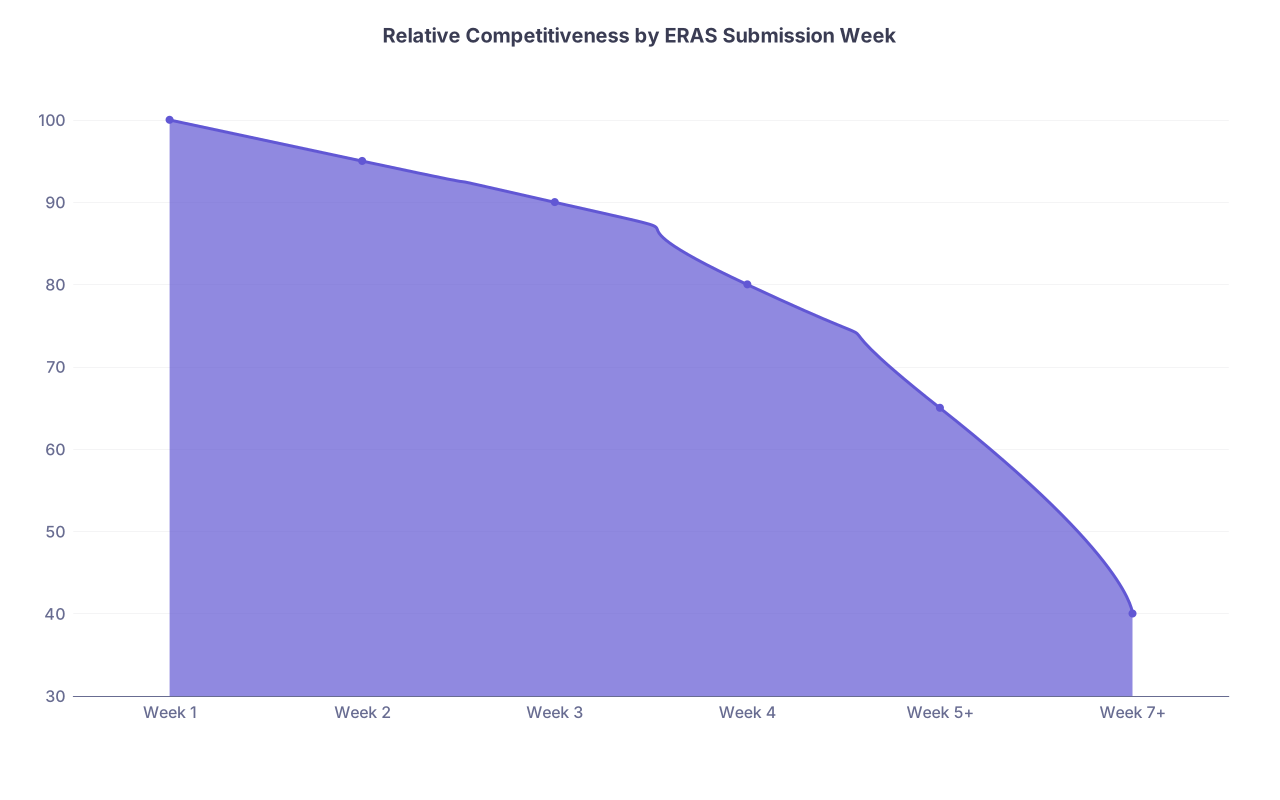
Let me put numbers on what everyone hand-waves.
Forget the emotional “I feel late” and look at approximate windows. This is not gospel, but it’s reality-based enough to calm or warn you.
| Category | Value |
|---|---|
| Week 1 | 100 |
| Week 2 | 95 |
| Week 3 | 90 |
| Week 4 | 80 |
| Week 5+ | 65 |
| Week 7+ | 40 |
Think of that “relative competitiveness” curve like this:
- Week 1–2: Basically “on time.” If your app is good, this is ideal.
- Week 3–4: Yes, technically later. But for many fields and many programs, still absolutely in the mix.
- Week 5+: Now you’re noticeably late. Not hopeless, but you’re depending more on less-competitive programs, connections, and luck.
- Week 7+: You should be realistic that many places already sent most invites.
Does this shift earlier for ultra-competitive specialties (DERM, ENT, plastics)? Yeah. Those operate on hard mode. But most reapplicants aren’t reapplying derm with a marginal package and hoping timing saves them.
For IM, FM, psych, peds, neuro, pathology, prelims, etc.—week 2 vs week 3 is not the apocalypse the forums make it sound like.
Specific Reapplicant Fears (And How Much They’re Actually True)
Let me hit the main thoughts that are probably looping in your head.
“Programs Will See I’m Reapplying and Auto-Ding Me If I’m Not Early”
No. They’ll ding you if:
- Your new app looks almost identical to the last one
- Your scores/grades are far below their comfort range
- Your letters are weak or generic
- Your story screams “backup specialty I don’t care about”
Being a couple weeks “behind” doesn’t suddenly turn you into a red flag.
What actually raises PD eyebrows:
- A reapplicant who looks copy-pasted from last year
- No clear explanation of what they did this past cycle
- Sloppy personal statement that doesn’t acknowledge the reapp status or growth
- LORs dated years ago with nothing recent
That’s what they talk about in selection meetings. Not “oh look, this one was submitted on September 29, disgusting.”
“If I’m Late Again, I’ll Just Repeat Last Cycle”
You’re not doomed to repeat last time unless… you repeat last time.
Reapplying with:
- Same personal statement theme
- Same red flags unaddressed (failed Step/COMLEX, big gaps, professionalism issues)
- Same letters, same experiences, same everything
…is how people relive the same horror show.
But if this year you can honestly say:
- I have at least one new or stronger letter
- I have new clinical/research/work that shows commitment
- I’ve rethought my school list and applied more strategically
- I’ve clearly explained my growth in my PS and experiences
…then your odds aren’t controlled by a 7–10 day timing shift.
“If I Take Extra Time to Fix My App and Still Don’t Match, I’ll Hate Myself for Not Submitting Early”
Here’s the brutal flip side:
If you rush to submit early, then later realize your app was half-baked, you will definitely hate yourself.
You’re going to have regret either way if things don’t work out. That’s just how our brains work. The question is: which regret would be more honest?
- “I took the time to make my application truly better, and it still didn’t work”
vs. - “I panicked about timing and turned in something I knew wasn’t my best”
One of those is painful but shows integrity. The other is just self-betrayal dressed up as “strategy.”
Timing Strategy for This Year: A Practical Plan
Let’s pull this out of the abstract. Here’s how I’d approach timing as a scared reapplicant who doesn’t want to be paralyzed or reckless.
Step 1: Decide Your Absolute Latest Acceptable Date
Not vibes. A real date on a calendar.
- For most core specialties: aim to submit within the first 2–3 weeks of applications releasing to programs.
- If you’re already beyond that: aim to be “as early as humanly possible while still improving key weaknesses.”
Draw a line: “After this date, I hit submit no matter what, unless something catastrophic is missing (like all my letters).”
Step 2: Identify What Actually Needs Time vs. What’s Just Perfectionism
You don’t delay for:
- Tweaking 3 words in your personal statement
- Reordering bullet points
- Staring at your photo wondering if you look “matchable”
You do delay (within reason) for:
- Waiting on a significantly better letter
- Adding a substantial new experience that will meaningfully change how PDs see you
- Fixing a weak personal statement that doesn’t address your reapplicant status or growth
- Correcting major content errors or missing info
If your delay isn’t serving one of those, then yeah—you’re just feeding the anxiety beast.
How Programs Actually Review Over Time (You’re Imagining a Stampede That’s Not Real)
Picture this instead of the fantasy where every app is read on day one:

| Step | Description |
|---|---|
| Step 1 | Applications Released |
| Step 2 | Bulk Download in Batches |
| Step 3 | Initial Filters Applied |
| Step 4 | Spreadsheet of Filtered Applicants |
| Step 5 | Faculty/PD Slow Review Over Weeks |
| Step 6 | Interview Invites Sent in Waves |
There are waves:
- First wave: very early invites, sometimes to people they already know (rotators, home students, strong connections)
- Second/third waves: after more thorough review
- Late waves: as people decline invites, cancel, or they realize they under-invited
If you submit 3–10 days “late” but your app is obviously stronger than last year, you can still end up in those second and third waves.
I’ve watched programs send out meaningful numbers of invites in October. Even November. Is that ideal? No. But it happens every year.
Using Timing to Your Advantage as a Reapplicant
Here’s a mental shift that might help: instead of seeing timing as a yes/no, on-time/late binary, use it as a tool.
- If your app is already clearly stronger: submitting in the first week or two is great. Hit send. Don’t overcook it.
- If you know, deep down, that your personal statement is generic or your reapp story is messy: buying yourself 7–14 days to fix that is not insane—it’s smart.
- If you’re waiting on one key letter that will be miles better than your backup: you can submit your ERAS, then assign that letter later. Don’t hold the entire submission hostage if everything else is ready.
| Category | Value |
|---|---|
| Better PS | 40 |
| New LOR | 30 |
| More Programs | 20 |
| 1 Week Earlier | 10 |
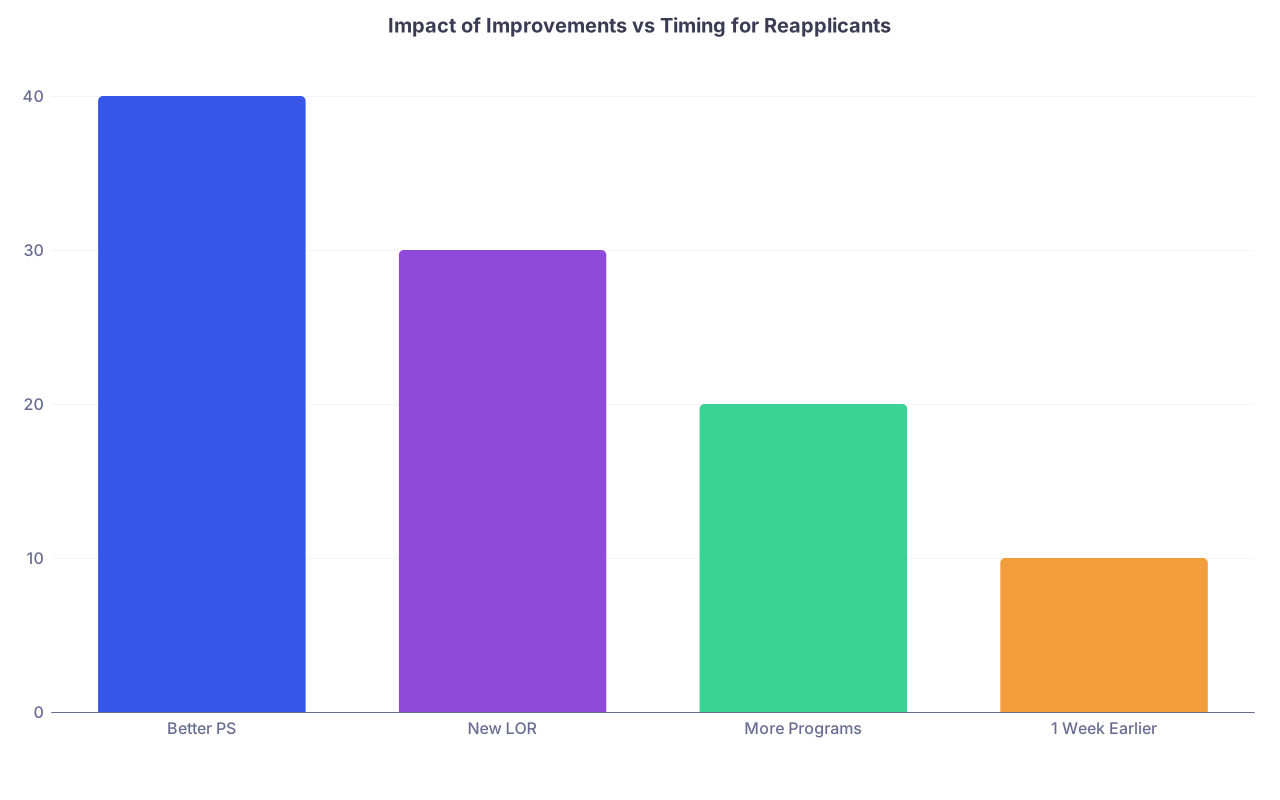
If I had to bet: improving your narrative and letters beats “submitting 1 week earlier” by a mile.
What You Should Do Today (Not Next Week, Not Once You’re ‘Ready’)
You’re anxious. Waiting makes it worse. The only way out is specific action.
Here’s what I’d do today:
- Open last year’s application side by side with this year’s draft.
- Ask yourself, without lying: “Would a program director clearly see a different, more mature, more committed applicant here?”
- Circle the 1–2 biggest things that still feel weak: PS, letter situation, specialty explanation, gap year story, etc.
- Decide: does fixing those require days or weeks?
- Set a hard submission date and write it down.
Then take one concrete step:
Open your personal statement right now and add one honest, specific paragraph explaining what changed since last cycle—what you did, what you learned, and why you’re a better fit now. Just that. No perfection. Just truth.
Hit save.
That’s how you stop timing anxiety from quietly wrecking this cycle too.