

You should tell an attending you’re interested in their specialty more directly than you think—just not more awkwardly.
That’s the whole game here. Most students are too vague, too late, or way too over the top. The sweet spot is clear interest, low pressure, and good timing.
Let’s break it down so you know exactly what to say, when, and how far to push it.
The Short Answer: Yes, Say It Clearly
If you’re asking, “Should I directly tell an attending I’m interested in their specialty?” the answer is: yes. 100% yes.
If they don’t know you’re interested:
- They won’t think of you for research, letters, or sub-I opportunities
- They’ll assume you’re just passing through
- You’ll miss mentoring you could’ve easily had
What you don’t want is:
“Hi Dr. Smith, I want to do ortho, can you write me a letter?” on day two.
What you do want is something like:
“Dr. Patel, I’ve been seriously considering internal medicine and this rotation is a big part of that decision. I’d really appreciate any feedback on how I’m doing and what I should work on if I go this route.”
Direct. Honest. Not clingy.
When To Say It (Timing Matters More Than the Perfect Words)
Don’t overthink the exact sentence. Think timing and context.
Here’s the usual order of operations:
General rule:
Say something by the end of week one. Don’t wait until the last day and then drop, “By the way, this is my dream specialty.”
Here’s a simple progression that works:
First 2–3 days
Focus on:
- Showing up prepared
- Being normal and useful
- Not being a disaster on notes and presentations
End of week 1 – light, low-pressure interest
Example:
“I’ve really enjoyed this week. I’m trying to figure out if anesthesia is something I want to pursue more seriously, so I’m paying close attention this month.”
Week 2–3 – clearer statement + ask for feedback
Example:
“I’m leaning pretty strongly toward OB/GYN at this point. Could you let me know if there are specific skills I should work on to be a strong applicant for this field?”
Final week – if things have gone well, you can talk letters, research, next steps
More on that later.
How Direct Is “Too Direct”?
Let’s put some structure on this, because students either whisper it apologetically or throw their entire career plan at the attending in one go.
Think of “directness” in levels:
| Level | Example Phrase | When It's Appropriate |
|---|---|---|
| Mild | "I'm exploring this specialty." | Early rotation, not sure yet |
| Moderate | "I'm seriously considering this specialty." | After a few days, genuine interest |
| Clear | "I plan to apply in this specialty." | Mid-late rotation, decision made |
| Aggressive | "This is my dream specialty, I need a letter." | Rarely; only if relationship is strong |
You should almost always live in “Moderate” to “Clear.”
Concrete examples:
Mild (early, you’re unsure):
“I’m still keeping an open mind, but EM is definitely on my shortlist, so I’m trying to see what the day-to-day really feels like.”
Moderate (you’re leaning):
“I’m strongly considering psych and this rotation is a big factor for me.”
Clear (you’re in):
“I’m planning to apply to general surgery this cycle and I’d really value your advice on how to make the most of this rotation.”
Aggressive (usually too much):
“I need a letter from you to match here.”
No. Don’t do that unless the attending has basically already told you they want to write for you.
What Attendings Actually Want From You
Most attendings are not annoyed you’re interested. They’re annoyed when:
- You pretend not to care, then ask for a letter last second
- You say “this is my dream specialty” but act checked out
- You want mentorship but don’t do the work
You get points for:
- Being explicit about interest
- Backing it up with effort
- Asking focused, realistic questions
Here’s what I’ve literally heard attendings say in workrooms:
- “I had no idea she wanted derm until the last day. I would’ve helped her.”
- “He told me early he was thinking about cards. Easy to give him cases and some teaching tailored to that.”
- “I’m happy to write letters. I just don’t want to be ambushed.”
So help them help you. Say it. Early enough.
Exact Scripts You Can Steal
You don’t need poetry. You just need a clean, adult sentence.
First week “interest” scripts
Use these when you’re not 100% sure yet:
- “I’m still keeping an open mind, but ortho is one of the specialties I’m seriously considering.”
- “I’m trying to figure out if I see myself in neurology long term, so I’m really interested in what you look for in residents.”
Mid-rotation “I’m serious” scripts
Use these once you already have some rapport:
- “I wanted to let you know I’m planning to apply into EM. I’d appreciate any feedback on where I stand and what I should focus on.”
- “I’m pretty sure I want to go into peds, and this rotation has been confirming that for me.”
Final week “letter / next steps” scripts
Use only if things have gone reasonably well and you’re not a stranger:
- “I’ve really appreciated working with you this month. I’m applying to internal medicine. If you feel you know my work well enough, would you be comfortable writing me a strong letter of recommendation?”
- “I’m set on ENT and planning my sub-Is. Do you have any advice on programs I should consider or people I should reach out to?”
Short. Direct. Professional.
How Honest Should You Be If You’re Not Sure Yet?
You don’t need to fake certainty. Attendings know you’re still figuring things out.
Totally acceptable:
- “I’m deciding between IM and neuro, and I’m using this month to get more clarity.”
- “Right now, EM and anesthesia are my top two, so I’m trying to understand the lifestyle and training differences.”
What you should avoid:
- Saying “You’re my dream specialty” to every attending on every rotation
- Acting like you’re 100% committed when you’re really not even close
You can say you’re “seriously considering” or “leaning toward” a specialty. That’s honest and still gives them a reason to invest in you.
What If You’re Interested But Know You’re Not Staying in That Specialty?
Two common scenarios:
- You like the specialty but know you’re applying to something else
- You want a strong letter for a different specialty (e.g., IM letter for cards later)
Be upfront. Example:
“I’m planning to apply in cardiology long-term through internal medicine, so I really care about being strong in IM. I’d love feedback on what I can improve.”
or
“I’ll be applying to anesthesia, but I know a strong IM foundation is critical, so I take this rotation seriously.”
This is way better than pretending you’re applying to their specialty when you’re not. Word gets around. And lying about your plans is a fast way to burn bridges.
Common Mistakes Students Make (And How To Fix Them)
Let me just call out the usual patterns.
1. Waiting until the last day
Student: “This was great. I’m actually applying to this specialty.”
Attending (internally): “Okay? Why didn’t you tell me that three weeks ago?”
Fix: Say something in week one. Even a light “I’m considering X” is enough.
2. Being vague to the point of useless
“Yeah, I think it’s interesting.”
That tells them nothing. You can say:
“I’m very interested in this field and trying to see if it’s the right fit for me.”
Now they know to take you a bit more seriously.
3. Over-selling your interest
“I’ve wanted to be a neurosurgeon since I was five.”
Most attendings hear that twelve times a year. They don’t care.
Just say:
“Right now, I’m planning to apply in neurosurgery.”
That’s specific. That’s adult.
4. Leading with “Can you write me a letter?” before building anything
Huge red flag. Attending feels used, you feel awkward.
Fix:
First: show interest + work ethic
Then: ask for feedback
Finally: if that goes well, ask about a letter
How Direct Should You Be Over Email vs In Person?
In person is almost always better. Quick, casual, non-weird.
Good times:
- After rounds while walking between floors
- End of clinic when things slow down
- After they give you feedback or compliment your work
If you must use email (e.g., attending is rarely on the floor, schedule misaligned), keep it short:
Subject:
“MS3 on your service – interested in [specialty]”
Body:
Dr. Lee,
I’m [Name], the MS3 on your team this week. I wanted to briefly mention that I’m seriously considering [specialty] and this rotation is a big part of that decision. I’d appreciate any feedback during the month on what I can work on to be a strong applicant for this field.
Thanks for your time,
[Name]
Then reinforce it casually in person:
“I’m the one who emailed you about being interested in EM.”
How This Plays Into Letters, Sub-Is, and Matching
Let’s be blunt: telling attendings you’re interested is not just about “exploring.” It’s about future leverage.
Here’s what opens up when you’re clear:
- They may suggest: “You should do a sub-I with Dr. X at our program.”
- They may say: “If you keep this up, I’d be happy to write you a strong letter.”
- They may plug you into research or QI projects
And yes, it impacts how they evaluate you. If you tell an attending:
“I’m applying to surgery.”
they’ll watch your OR skills, presentations, and work ethic more closely and remember you more clearly. That’s good. You want to be on their radar.
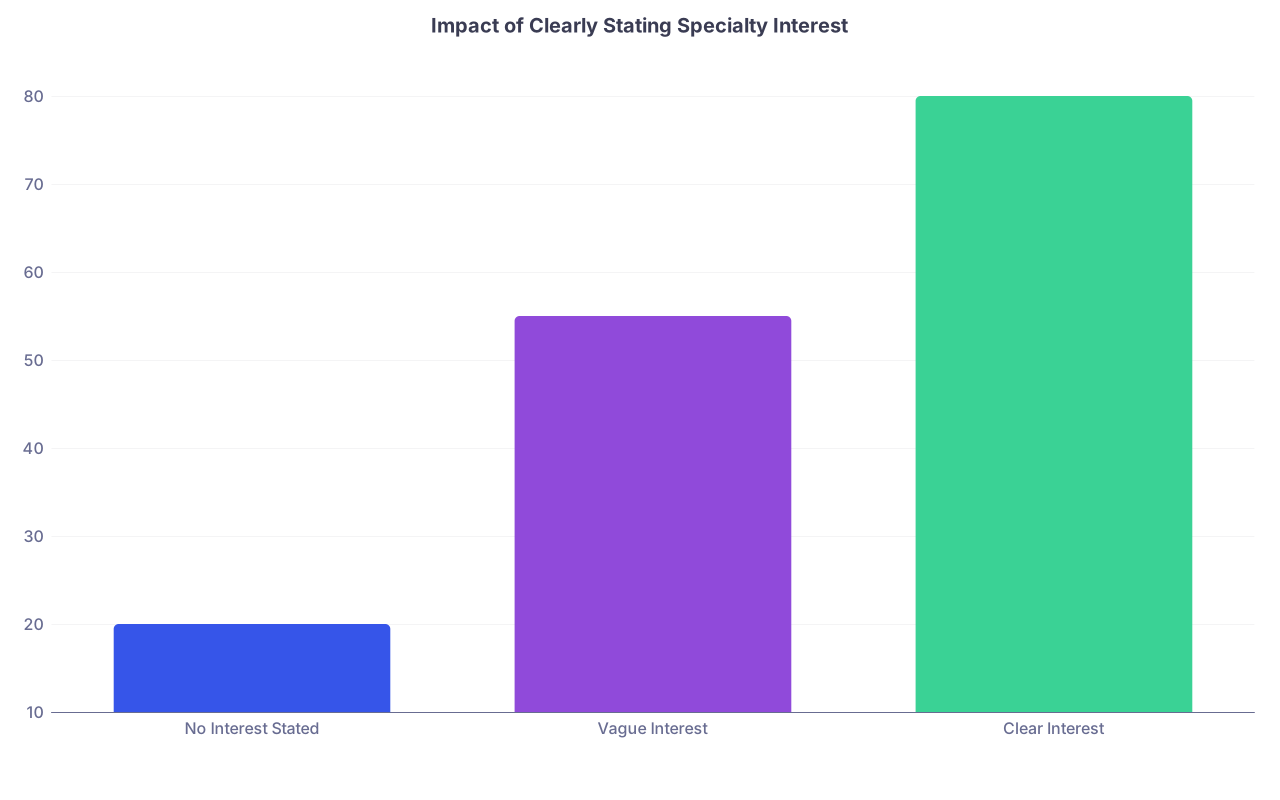
| Category | Value |
|---|---|
| No Interest Stated | 20 |
| Vague Interest | 55 |
| Clear Interest | 80 |
Interpretation: as your clarity goes up, odds of tailored feedback, mentorship, and letters climb dramatically.
Quick Specialty-Specific Nuances
I won’t overcomplicate this, but a few patterns do exist:
- Surgical fields (gen surg, ortho, ENT, neurosurg): They like decisiveness. Saying “I’m planning to apply into [field]” comes off well if you back it up with work.
- Cognitive fields (IM, neuro, psych): Very open to “I’m strongly considering X and want to see if it fits.”
- Competitive fields (derm, plastics, ortho): Don’t oversell; be clear but grounded:
“I’m planning to apply to dermatology and I know it’s competitive, so I’m trying to be as strong as I can on my core rotations.”
You don’t need a totally different strategy per specialty. Just slightly adjust the tone.
Visual Cheat-Sheet: What To Say, When
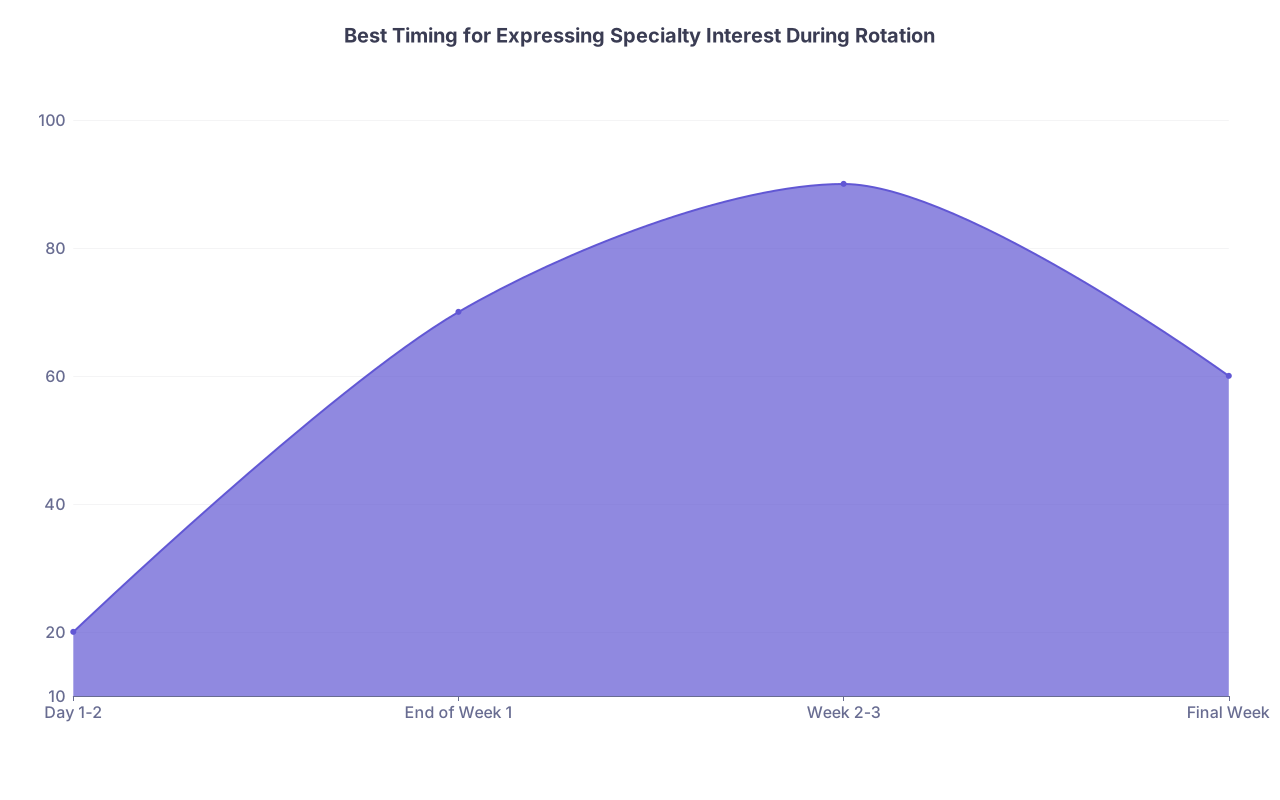
| Category | Value |
|---|---|
| Day 1-2 | 20 |
| End of Week 1 | 70 |
| Week 2-3 | 90 |
| Final Week | 60 |
Peak time: End of week 1 through week 3 for clear statements of interest and meaningful conversations.
Final Takeaways
- Yes, you should directly tell an attending you’re interested in their specialty—just do it early, calmly, and without drama.
- Use simple, honest phrases like “I’m seriously considering X” or “I’m planning to apply in X” and back it up with good work.
- Don’t wait until the last day, don’t oversell, and don’t lead with “Can you write me a letter?” before you’ve shown them anything.
FAQ (Exactly 5 Questions)
1. What if I change my mind after telling an attending I’m interested in their specialty?
Then you changed your mind. That’s allowed. If you already asked them for a letter “for X specialty” and you pivot hard (e.g., from surgery to psych), send a short update email:
“I ended up deciding to apply to psychiatry, but I’m still very grateful for your mentorship and what I learned on your service.”
You don’t need a big confession. Just don’t keep lying about it.
2. Is it weird to tell multiple attendings in the same specialty I’m interested?
No. That’s actually smart. On a surgery rotation you might work with 4–5 attendings. Telling each one, at an appropriate time, that you’re interested in surgery increases your odds of at least one strong letter and several people remembering your name.
3. What if I’m interested in two specialties at once—do I tell them that?
Yes, but be specific. Instead of “I have no idea,” say:
“Right now I’m deciding between EM and anesthesia, and this rotation is helping me compare them.”
You look thoughtful instead of lost, and the attending can actually help you compare realistically.
4. How do I know if an attending likes me enough to ask about a letter?
Signals that it’s reasonable: they’ve seen you for at least 2 weeks, given you individual feedback, complimented your work, or specifically said you’re doing well. If none of that has happened and they barely know your name, they’re not your letter writer. Find someone else.
5. Can saying I’m interested in another specialty hurt my evals?
Usually no, if you frame it correctly. If you say, “I don’t care about IM, I’m going into derm anyway,” that will absolutely hurt you. But if you say, “I’m going into derm and I want a very strong IM foundation,” most attendings respect that and still expect you to show up and work. The key is: interest in another field is fine; disrespect or disinterest in their field is not.


