

The worst time to ask for a “strong letter” is when you haven’t actually earned one.
Let’s be blunt: you don’t get a powerful rotation letter because you need it. You get it because you made someone’s life easier, impressed them clinically, and they genuinely remember you. Your job is to create that situation, then ask at the right moment, in the right way.
Here’s exactly how to know when it’s appropriate to ask for a strong letter from a rotation—and what to do if you’re not sure you deserve one.
1. The Core Rule: Don’t Ask Until You’ve Shown Value
You should only ask for a strong letter from a rotation after you’ve had enough time to clearly demonstrate:
- Clinical growth
- Reliability and work ethic
- Professionalism and teamwork
- Genuine interest (especially if it’s your target specialty)
For most rotations, that means:
- For a 4-week rotation: asking around week 3–4
- For a 6–8 week rotation: asking around week 4–6
- For a sub-I/acting internship: asking in the last 1–2 weeks
Too early and they barely know your name. Too late and they’ve already mentally moved on to the next student.
| Rotation Type | Usual Length | Good Time to Ask |
|---|---|---|
| Core clerkship | 4–6 weeks | Final 1–2 weeks |
| Sub-I / Acting Intern | 4 weeks | Week 3–4 |
| Away rotation | 4 weeks | Week 3–4 |
| Longitudinal clinic | 3+ months | Last 4–6 weeks |
The unspoken rule: don’t ask in week 1. Don’t ask after one good call night. Don’t ask because everyone says “this is a letter-earning rotation.” Ask when your attending has actually seen you in action across different days, different patients, different moods.
2. Signs You’re Ready to Ask (Green Flags)
You shouldn’t be guessing. There are pretty reliable signs that it’s appropriate to ask.
You’re in good shape to ask for a strong letter if:
You’ve worked closely with the attending.
They’ve seen you present, write notes, call consults, talk to patients. Not just “shadowed them twice.” I’ve watched students try to get letters from attendings who barely interacted with them—those letters are generic and useless.You’ve gotten specific, positive feedback.
Not just “You’re doing fine.” I mean things like:- “You’re functioning at a sub-I level.”
- “You’re one of the strongest students I’ve had this year.”
- “I trust your assessment and plan.”
These are hints they’d probably write you a strong letter.
You’ve been entrusted with more responsibility.
You’re getting:- More patients
- First shot at procedures
- Asked to teach junior students or new rotators
This means they see you as capable and dependable.
There’s some relationship and recognition.
They know:- Your name
- Your career interest
- Something about your background or goals
If you still feel like a stranger to them, push harder to engage before you ask.
You haven’t had major professionalism or performance problems.
If you showed up late repeatedly, blew off tasks, or disappeared post-call, you’re not a good candidate for a “strong letter” from that rotation. Be honest with yourself.
If three or more of those are true, it’s probably appropriate to ask.
3. The Best Timing Within the Rotation
There are two parts to “when”: the point in the rotation and the moment in the day.
Point in the rotation
Best window:
Sub-I or away rotation:
Ask near the end of week 3 or start of week 4. They’ve seen enough of you, and they haven’t forgotten you yet by evaluation time.Core clerkship:
Usually final week works well. If you work with the attending only part-time, wait until after a stretch of several days in a row with them.Longitudinal clinic (weekly clinic for months):
Ask after a couple of solid months when you’ve been consistent and they clearly know you.
Don’t wait months after the rotation ends if you can avoid it. They’ll still write it, but details fade and letters get generic.
Moment in the day
Pick a calm moment:
- After rounds when things have settled
- After clinic at the end of the session
- After a good case or interaction where they just praised you
- Not when they’re clearly stressed, behind, or mid-crisis
Literally something like:
“Dr. Patel, do you have a quick minute after rounds? I wanted to ask you something about residency applications.”
That’s better than blurting, “Can you write me a letter?” in the hallway between three pages.
4. How to Ask for a Strong Letter (Without Sounding Awkward)
You’re not asking for “a letter.” You’re asking for a strong, supportive letter. And yes, you should use that word. It gives them an easy out if they can’t honestly say yes.
Here’s simple language that works:
In person ask:
“Dr. Smith, I’m applying into internal medicine this year, and I really enjoyed working with you on this rotation. I was wondering if you’d feel comfortable writing me a strong letter of recommendation for residency?”
Then shut up and let them answer.
If they say yes, follow up with:
“Thank you so much. I’ll email you my CV, personal statement draft, and a summary of the patients we took care of together to make it easier.”
If they hesitate or say something vague like “I can write you a letter” but avoid the word “strong” or “supportive,” that’s your sign to back off and find someone else.
5. When You Shouldn’t Ask From That Rotation
There are rotations where asking is technically possible but strategically dumb.
Skip asking for a strong letter from a rotation when:
Your performance was shaky or you got negative feedback.
- Multiple write-ups on mid-rotation eval
- Concerns about knowledge base or professionalism
That letter may subtly (or not so subtly) hurt you.
You barely interacted with the attending.
“We rounded together three times” is not enough. Expect a generic letter:
“This student was on my service. They were punctual. They read. They worked well with the team.” Translation: useless.They don’t know your name or mix you up with another student.
If they call you the wrong name halfway into the rotation, that’s your answer.Their feedback is lukewarm or damning with faint praise.
- “You’re quiet but solid.”
- “You’ll do fine.”
Not someone who’s going to write: “Top 10% student I’ve worked with.”
You didn’t show real interest in that specialty.
If you were checked out on your family medicine rotation and now you want a “strong letter” from that attending for your family medicine application…that’s going to ring hollow.
In those cases, it might still be reasonable to ask for a letter if you desperately need another one. But I’d be very careful asking for a “strong” one. And I’d lean on better rotations instead.
6. Rotation Type Matters: Core vs Sub-I vs Away
Not all rotations are equal for letters. You should know how each plays into your strategy.
Core clerkships
Good for:
- Showing you can succeed in the bread-and-butter of medicine
- Getting broad support if they really loved you
But many core clerkship letters end up generic because you’re one of dozens that year. Aim for letters from attendings who:
- Knew you well
- Saw you multiple times/week
- Explicitly praised you
Sub-I / Acting Internship
These are prime letter territory. You’re functioning closer to an intern; the bar is higher, and programs know it.
Ideal time to ask: Late in the rotation, if you’ve really stepped up to:
- Pre-round independently
- Put in orders (where allowed)
- Call consults
- Take ownership of your patients
If you crush a Sub-I and don’t ask for a letter, you’re leaving easy points on the table.
Away rotations
Away rotations in your target specialty are letter gold—if you actually impressed people.
You should ask:
- In the last week of the rotation
- From someone who really saw you work (not just the department chair you met once)
Some programs even expect at least one away rotation letter for very competitive specialties (ortho, derm, neurosurgery, integrated plastics, etc.). In those fields especially, your timing and choice of letter writer matters a lot.
7. Exactly What To Do Right After They Say Yes
Once they agree to write you a strong letter, don’t make them chase you for info. Within 24–48 hours, send an email that includes:
- CV
- Step scores / shelf scores (if decent)
- Personal statement draft (if you have it)
- A short paragraph about:
- Your specialty choice
- What you’re aiming for (academic vs community, geographic preferences, etc.)
And crucially: a brief bullet list of concrete things you did on their rotation:
- “Managed 5–7 patients daily on rounds, wrote daily notes”
- “Gave a presentation on COPD management”
- “Took lead on goals-of-care discussion with Mr. X’s family”
You’re not writing your own letter. You’re jogging their memory so they can write a specific, detailed one.
8. What If You Realize Too Late That You Need a Letter?
Happens every year: someone panics in August and tries to get letters from a rotation they finished in March.
If it’s been a while:
Email the attending with a reminder of who you are and what you did:
- When you rotated
- Something memorable from the rotation
- That you’re now applying to X specialty
Politely ask if they’d feel comfortable writing a strong letter based on your work together, and offer to send an updated CV and personal statement.
Is it ideal timing? No. Is it doable? Yes. But the letter will almost always be stronger if you asked at the end of the rotation, when they still remembered specific patients and your performance.
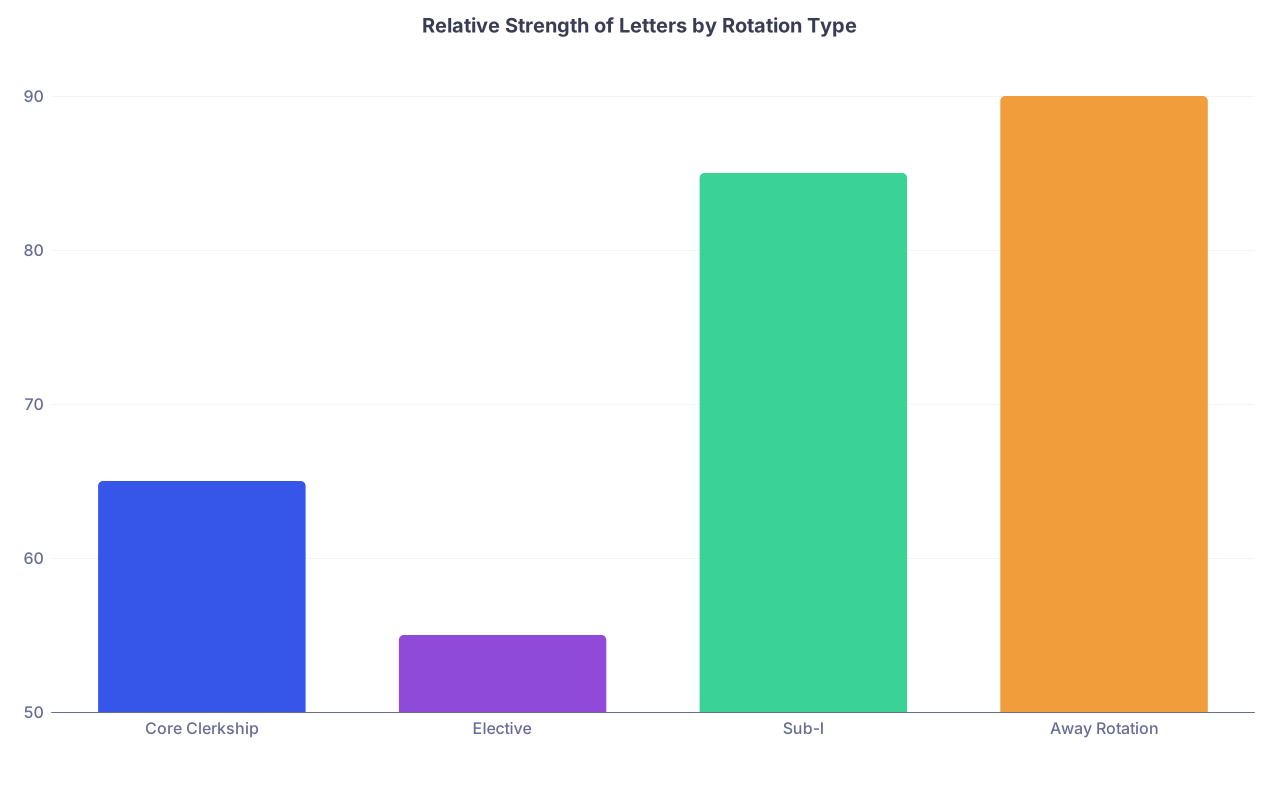
| Category | Value |
|---|---|
| Core Clerkship | 65 |
| Elective | 55 |
| Sub-I | 85 |
| Away Rotation | 90 |

| Step | Description |
|---|---|
| Step 1 | Finished majority of rotation |
| Step 2 | Dont ask / choose someone else |
| Step 3 | Maybe ask for generic letter only |
| Step 4 | Optional letter |
| Step 5 | Ask in final week |
| Step 6 | Send CV + PS + reminders |
| Step 7 | Worked closely with attending? |
| Step 8 | Received strong feedback? |
| Step 9 | Interested in this specialty or strong performance? |
FAQs
1. Is it rude to specifically ask for a “strong” letter?
No. It’s smart. Asking for a “strong” letter signals that you only want them to say yes if they can genuinely support you. Most attendings get this and appreciate the clarity. The people who can’t write you a strong letter will self-select out—which is good for you.
2. What if the attending says they can’t write a strong letter?
Say something like:
“Thank you for being honest, I really appreciate it.”
Then move on and find someone else. Don’t argue. Don’t push. A lukewarm letter can hurt more than having fewer letters.
3. Can residents or fellows write letters, or does it have to be an attending?
Attendings carry more weight, but a co-signed letter (resident/fellow drafts, attending signs and submits) can be excellent, especially if the trainee worked with you more closely. If you were on a team where the resident saw you daily and the attending only briefly, asking the attending through the resident can work well.
4. How many rotations should I realistically expect “strong” letters from?
If you’re doing things right:
- 1–2 from your home institution in your specialty
- 1 from a sub-I (home or away)
- 1 from another core or related specialty where you shined
You don’t need 10 letters. You need 3–4 truly strong ones.
5. What if my rotation was all virtual or I barely had face-to-face time?
Virtual-only rotations are brutal for letters. If they haven’t seen you present, interact with patients (even via telehealth), or work with a team, I’d be cautious. Better to lean on rotations where you had real, longitudinal interaction. If virtual is all you have, you need to be extremely engaged—cameras on, active participation, presentations—to justify asking.
6. Do I have to ask in person, or is email okay?
In-person is better when possible. It’s more personal, and they can ask follow-up questions. If logistics are tough or the rotation ended, a well-written email is fine. Just keep it clear and respectful, include the “strong letter” language, and remind them who you are and what you did with them.
Key takeaways:
- Ask for a strong letter only after you’ve clearly proven yourself on the rotation and the attending actually knows your work.
- The sweet spot is usually the final week of the rotation, in a calm moment, using direct language: “strong letter of recommendation.”
- If your performance was mediocre or the attending barely knows you, skip that rotation and put your energy into letter writers who can genuinely go to bat for you.


