

You’re two days into a four-week rotation. You keep hearing “Ask for feedback early and often,” but nobody says what that actually means. Every case? Once a week? End of the day? You don’t want to be annoying, but you also don’t want to find out in week four that your “solid performance” was actually “below expectations.”
Let’s fix that. Here’s the concrete answer you’re looking for.
The Short Answer: A Simple Feedback Schedule
Here’s the baseline frequency that works on almost every four-week rotation:
- Brief check-ins: 2–3 times per week
- More formal, structured feedback: once per week
- Mid-rotation sit-down: once (around end of week 2)
- End-of-rotation debrief: once (final 1–2 days)
If you want a one-line rule:
Ask for quick, targeted feedback a few times a week, and explicit, big-picture feedback at least weekly, with a clear mid-rotation conversation so you can actually change things in time.
Let’s break that into something you can actually do on the wards.
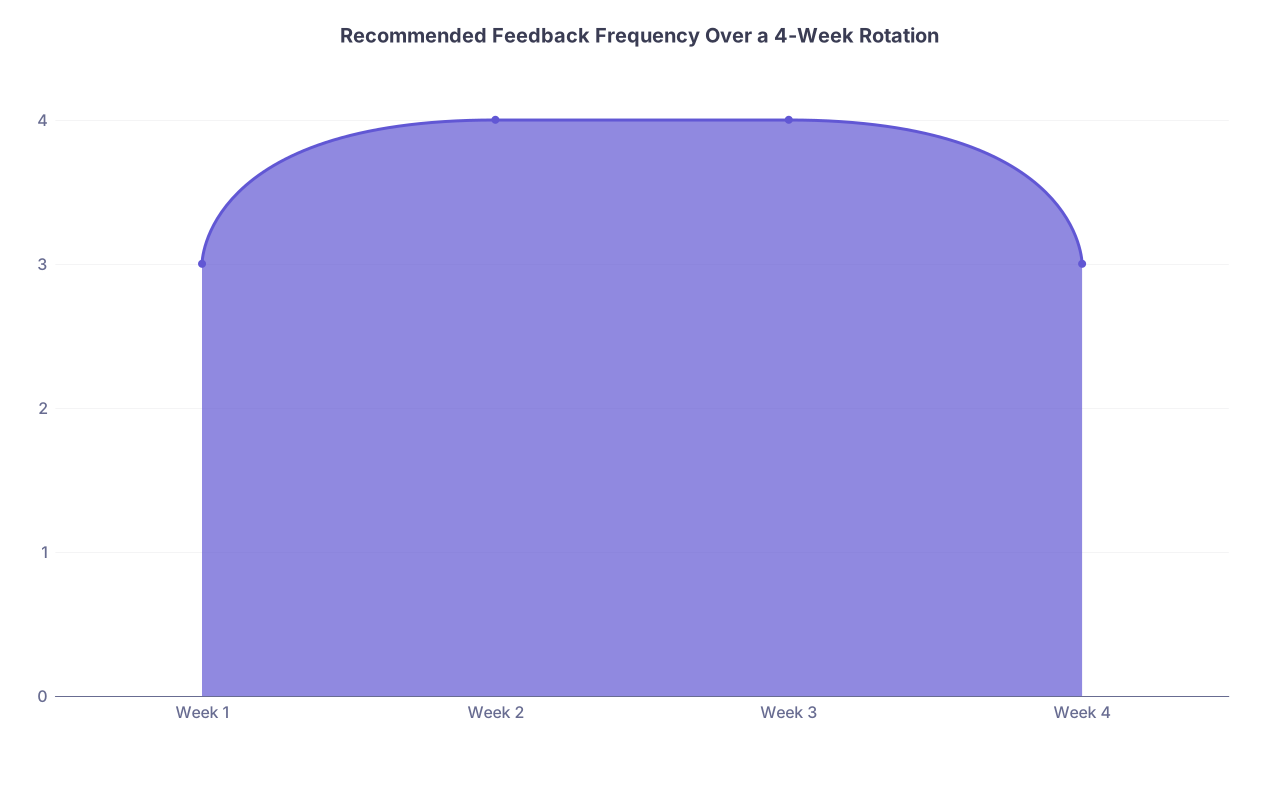
| Category | Value |
|---|---|
| Week 1 | 3 |
| Week 2 | 4 |
| Week 3 | 4 |
| Week 4 | 3 |
Week-by-Week: What “Good” Feedback Frequency Looks Like
Week 1: Front-load the expectations
Your goal in week 1 isn’t to be amazing. It’s to calibrate.
Target:
- 2–3 brief feedback moments
- 1 explicit “How am I doing so far?” by the end of the week
Concrete examples:
Day 1–2:
You don’t need full “feedback” yet. You need expectations.
Say something like:
- “Could you tell me what you expect from students on this service, especially on presentations and notes?”
- “For students who do well with you, what do they usually do differently?”
This counts as feedback. You’re reverse-engineering the grading rubric.
Day 3–4:
Ask for focused, micro feedback.
Examples:
- After rounds: “Dr. Smith, could I get 30 seconds of feedback on my presentations today—one thing I did well and one thing to improve?”
- After a patient encounter: “Anything you’d tweak about how I explained that to the patient?”
End of Week 1: Ask for early global feedback from at least one evaluator (resident or attending).
Script:
- “We’re at the end of my first week—could I get a quick sense of how I’m doing overall and what I should focus on for next week?”
If they say “You’re doing fine,” don’t stop there. Follow with:
- “Thanks. If you had to pick one specific thing that would make the biggest difference in my performance by the end of the rotation, what would it be?”
That’s how you turn useless “You’re fine” into something you can act on.

Week 2: The critical mid-rotation zone
Week 2 is where smart students pull ahead. This is when you must get real feedback, not fluff.
Target:
- 2–3 quick micro-feedback moments again
- 1 clear mid-rotation conversation (10–15 minutes)
Micro-feedback examples:
- “Did you like the way I structured that differential?”
- “Should I be putting more detail or less detail in my notes?”
- “On rounds this morning—was my level of detail about right?”
Now, the big one: mid-rotation feedback.
Timing:
Some rotations schedule formal mid-rotation evaluations. Many say they do but don’t. Assume it won’t happen unless you make it happen.
What to say (early in Week 2):
- “We’re coming up on the middle of my rotation. At some point this week, could we do a few minutes of mid-rotation feedback so I can adjust before the end?”
Then in the actual conversation:
- “Could you tell me where I stand right now compared to expectations for this stage?”
- “If my eval was written today, what would it likely say?”
- “What are 1–2 specific, concrete things I can change starting tomorrow?”
You want:
- Direct comments on your presentations, notes, teamwork, knowledge, and initiative
- At least one thing you’re doing well (so you keep doing it)
- At least one thing that needs to change now (so your eval actually improves)
If the attending looks rushed, ask the senior resident instead. Residents’ comments often carry major weight on evaluations.

| Step | Description |
|---|---|
| Step 1 | Start Rotation |
| Step 2 | Week 1: Expectations + Early Check-in |
| Step 3 | Week 2: Mid-rotation Feedback |
| Step 4 | Week 3: Targeted Refinement |
| Step 5 | Week 4: Final Feedback + Wrap-up |
The Right Frequency vs. Being Annoying
Here’s the line you don’t want to cross: asking for feedback so often that you look insecure or needy.
A good rule:
- Don’t ask the same person for “overall feedback” more than once a week
- Micro feedback (on a specific skill) is fine 2–3 times per week as long as you’re brief
Annoying:
- “Can I get some feedback?” after every single presentation
- Huge, open-ended asks when they’re obviously slammed: “Can we talk about how I’m doing in detail?”
Reasonable:
- “One quick thing about my presentation—do you prefer the problem-based or systems-based format?”
- “Yesterday you mentioned being more concise—was that better today?”
If you’re changing teams weekly (e.g., different attending each week on medicine), then your “once per week” rule resets with each attending.

Who You Should Ask (and When)
You’re not limited to attendings.
Hierarchy for feedback on a four-week rotation:
Senior residents
They see you the most, know the expectations, and are usually the ones writing or heavily influencing your eval.Interns / junior residents
Great for micro-level feedback (notes, presentations, patient interactions). Less helpful for global grading, but still valuable.Attendings
Critical for formal/mid-rotation/end-of-rotation feedback and for understanding what they personally care about.
Split it like this:
- Day-to-day micro feedback: mostly residents
- Weekly “How am I doing overall?”: 1–2 key people (senior resident and/or primary attending)
- Mid-rotation + end-rotation: attending, if possible; senior if attending is absent/unavailable
| Situation | Best Person to Ask |
|---|---|
| After daily presentations | Senior or intern |
| Note-writing style/content | Senior or intern |
| Mid-rotation overall assessment | Attending or senior |
| End-of-rotation performance recap | Attending |
| Teamwork and reliability feedback | Senior resident |
How to Ask Without Sounding Awkward
Most students sound stiff when they ask for feedback. You don’t need a speech. You need two things: be specific and be brief.
Good, simple phrases:
- “Can I get 30 seconds of feedback on X?”
- “Was that closer to what you’re looking for?”
- “What’s one thing I could do better tomorrow?”
- “If you were in my shoes as a student, what would you focus on for the rest of the rotation?”
Notice the pattern:
You’re not asking them to write your life story. You’re asking for one or two actionable things.
If your team is always rushed on the wards, ask during downtime:
- After sign-out
- Between cases in the OR
- End of clinic, when the last patient is done
- Walking back from seeing a consult
Timing matters more than wording.
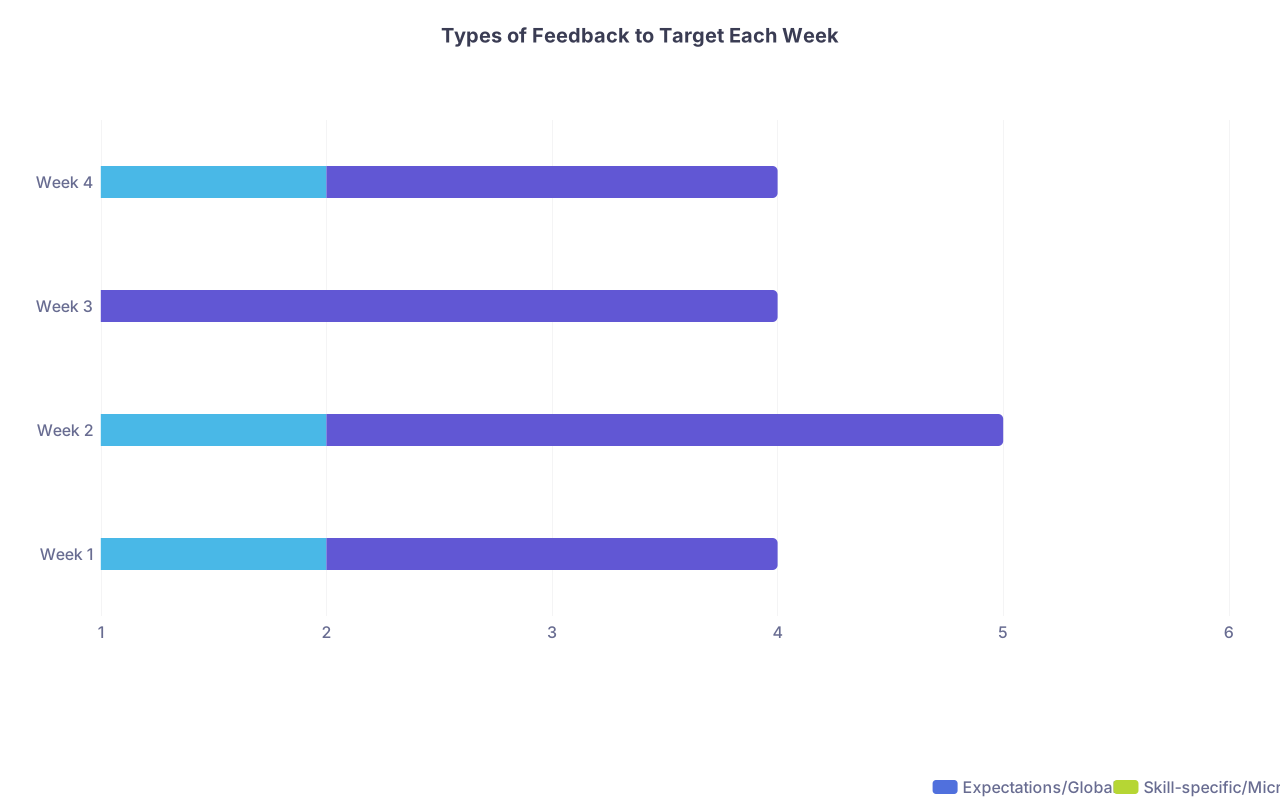
| Category | Expectations/Global | Skill-specific/Micro |
|---|---|---|
| Week 1 | 2 | 2 |
| Week 2 | 2 | 3 |
| Week 3 | 1 | 3 |
| Week 4 | 2 | 2 |
Using Feedback So People Want to Give You More
Here’s something attendings won’t say directly: they like giving feedback when they can see you actually listened.
So every time you get feedback, your next move is:
Repeat back the plan briefly.
“Got it—I’ll tighten up my assessment and focus more on next steps rather than re-summarizing the HPI.”Change your behavior within 24 hours.
You don’t have a month. On a four-week rotation, your window is small. Show improvement the next day.Close the loop.
“Yesterday you mentioned being more concise—was that better today, or should I tighten it even more?”
That “close the loop” moment signals maturity. It tells them:
- You listened
- You care
- You’re coachable
- Their time wasn’t wasted
Those are exactly the qualities that show up in narrative evals and letters.

Week 3–4: Don’t Coast, Finish Strong
By week 3, a lot of students relax because they feel “comfortable.” That’s how you end up with evaluations like “pleasant to work with” instead of “outstanding.”
Week 3:
- Keep micro feedback going 2–3 times per week
- Ask: “I’ve been working on X—anything else I should add to get to the next level?”
Week 4: Early in the week:
- “We’re getting close to the end of my rotation—could I get a quick sense of where I’ll likely land on your evaluation and if there’s anything I can still improve this week?”
End of the rotation:
- “Could we take 5 minutes before I leave to talk about what I did well and what to work on for my next rotation?”
This last conversation matters because it sets you up for the next service. You don’t want to start every rotation from zero; you want to build.
What If Nobody Gives You Real Feedback?
You’ll run into this:
You ask, and you get, “You’re doing fine.” That’s it.
Here’s how you push, politely:
Step 1: Narrow the field.
- “Thanks. Could we zoom in on one area—maybe my presentations or my notes?”
Step 2: Force a choice.
- “Between organization, clinical reasoning, and conciseness, which one should I focus on most?”
Step 3: Ask for an example.
- “Could you give me one example from this week where I could have done that better?”
People are terrible at “give feedback” but much better at “answer this very specific question.” Your job is to move them from the first bucket to the second.
FAQs
1. How many times total should I ask for feedback in a four-week rotation?
Aim for about 8–12 feedback interactions total:
- 2–3 micro feedback moments per week (short, focused questions)
- 1 structured global check-in per week
- A dedicated mid-rotation conversation around the end of week 2
Some will be 30-second hallway chats, some will be 10-minute sit-downs. That’s normal.
2. Is it better to ask attendings or residents for feedback?
Both, but for different reasons.
Residents (especially seniors) are best for frequent, detailed, practical feedback because they see your charting, patient interactions, and real-time decisions. Attendings are key for overall assessment, expectations, and written evaluations. Don’t pick one. Use both.
3. What if my attending seems too busy or uninterested?
Then pivot. Ask the senior resident for intermediate and even “global” feedback; their input often shapes your eval anyway. For the attending, catch them at a natural pause (between patients, end of day) and keep it tight:
“Quick question—any suggestions for how I can be more helpful to the team this week?”
If they still blow you off, that’s on them, not you. Document their name, date, and that you asked; you did your part.
4. How early is too early to ask for feedback?
Don’t ask for a full “How am I doing overall?” on the first day. They barely know your name. Day 1–2: focus on expectations and preferences. End of week 1 is a perfect time for the first true “How am I doing so far, and what should I focus on?” conversation.
5. How do I handle negative feedback without looking defensive?
Three steps:
- Listen fully without interrupting.
- Summarize what you heard: “So I need to be more concise in my presentations and come in with a clearer plan.”
- Ask for a concrete next step: “What would ‘more concise’ look like to you tomorrow?”
No excuses. If there was context they truly need to know, add it briefly, once, then move on. Growth matters more than justification.
6. How can I tell if I’m asking for feedback too often?
If you’re asking the same person for broad “how am I doing?” feedback more than once a week, you’re overdoing it. If you’re asking micro questions multiple times a day, also too much. The sweet spot: 2–3 specific, quick questions per week per main evaluator, plus one weekly bigger-picture check-in. If someone starts saying “You’re fine” with obvious annoyance, back off a bit and give it a few days.
Key takeaways:
- On a four-week rotation, you should be getting frequent micro feedback (2–3x/week) and structured global feedback at least weekly, with a real mid-rotation conversation.
- Be specific, brief, and intentional with your questions so you don’t become “the feedback student” everyone avoids.
- The goal isn’t just to collect feedback—it’s to show visible change quickly, so your evaluation reflects the best version of you by week four.


