Introduction: Why Communication Matters So Much in Couples Matching
Couples Matching in the residency process can be one of the most rewarding—and one of the most stressful—experiences of your medical training. You’re not just planning one medical residency; you’re planning two intertwined healthcare careers, often across different specialties, programs, and cities.
In this context, effective communication is not a “nice-to-have.” It is the foundation of a successful strategy and a healthy relationship. How you talk with each other about priorities, fears, trade-offs, and long-term goals can make the difference between feeling like you are facing the match as a team versus feeling like you are negotiating against each other.
This guide will help you:
- Understand why open, honest dialogue is crucial in Couples Matching
- Structure early conversations about career and life goals
- Use concrete communication strategies and tools to manage disagreements
- Plan for different match outcomes and support each other through them
- Build long-term relationship strategies that support both partners’ healthcare careers
Whether you are both physicians or one partner is non-physician but relocating for the other’s residency, the principles below can help you navigate the process together with clarity and confidence.
The Role of Open Dialogue in a Successful Couples Match
Couples Matching allows two applicants to link their rank lists so they attempt to match in the same geographic area. It can be used for:
- Two physician partners applying to residency
- A physician and a partner in another field who wants to be in the same city
- Relationships at any stage—married, engaged, or long-term committed partners
The logistics of the NRMP Couples Match are complex, but the emotional and relational challenges can be even more so. That’s why deliberate, structured communication is essential.
Why Open Communication Is Non‑Negotiable
1. Clarifying Individual and Shared Career Goals
Both partners must clearly understand:
- Target specialties (primary vs. backup)
- Competitiveness of those specialties and programs
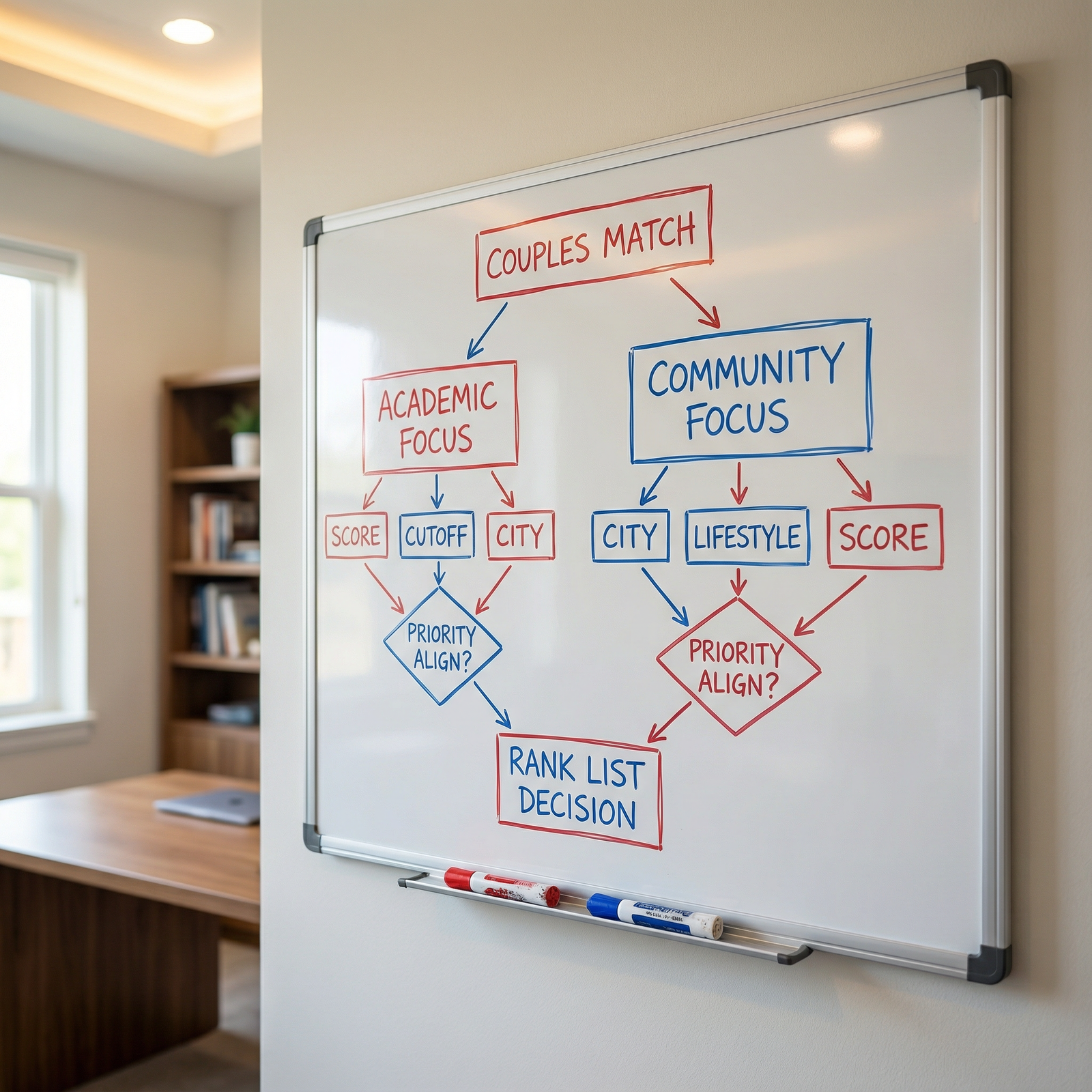
- Whether you’re aiming for academic vs. community programs
- Long-term career visions (fellowship, research, leadership, location stability)
Without this clarity, it’s easy to make assumptions—such as believing your partner is willing to go “anywhere” when they actually have strong regional preferences, or assuming they’re fully committed to a competitive specialty when they are quietly considering a switch.
2. Reducing Hidden Anxiety and Assumptions
The Couples Match amplifies common worries:
- “Will my partner resent me if my specialty limits our options?”
- “What if one of us has significantly stronger metrics—who gets priority?”
- “What happens if only one of us matches or we are far apart geographically?”
Discussing these worries openly:
- Normalizes the anxiety—both of you are under stress
- Prevents unspoken resentment
- Allows for proactive planning, rather than reactive crisis management
3. Creating a Unified Plan You Both Own
Effective Communication leads to joint decision-making, where:
- Both partners understand and agree on application strategies
- Trade-offs and compromises are explicit, not implied
- Each partner feels their voice is heard and respected
This sense of shared ownership will matter later—especially if things don’t go exactly as planned.
4. Strengthening Your Relationship Under Pressure
Residency is hard on relationships even without the added layer of Couples Matching. Learning to:
- Listen without interrupting
- Validate each other’s emotions
- Negotiate fairly
…will help you not only during the Match but throughout your future healthcare careers, fellowship decisions, and job searches.
Laying the Groundwork: Early Conversations That Set You Up for Success
The best time to start talking seriously about Couples Matching is well before ERAS opens. For most students, that means late third year or very early fourth year. Early conversations allow you to explore options thoughtfully, rather than in a panic.
Start Early and Start Structured
Instead of vague, occasional mentions (“We’ll figure it out later”), schedule deliberate conversations. Consider them “planning meetings” for your shared future.
You might start with three structured sessions:
- Individual Goals & Values
- Lifestyle and Location Preferences
- Match Logistics and Contingency Planning
Treat these discussions like you would any complex clinical case: gather data, clarify the problem, and then plan together.
Core Discussion Topics for Early Conversations
1. Personal Career Goals
Each partner should define:
- Primary specialty choice and why it matters to them
- Openness to backup specialties (and which ones)
- Preferences regarding:
- Academic vs. community programs
- Emphasis on research, teaching, or clinical volume
- Desire for a particular fellowship path
Example prompts:
- “What parts of medicine bring you the most fulfillment?”
- “How important is it to you to be at a top-tier academic center?”
- “Would you ever consider switching specialties if matching together required it?”
2. Lifestyle and Work–Life Balance
Residency experiences can look very different:
- 80-hour weeks in high-acuity tertiary centers
- More moderate volumes in community hospitals
- Variability in call schedules, night floats, and clinic demands
Talk explicitly about:
- Your tolerance for long hours and frequent calls
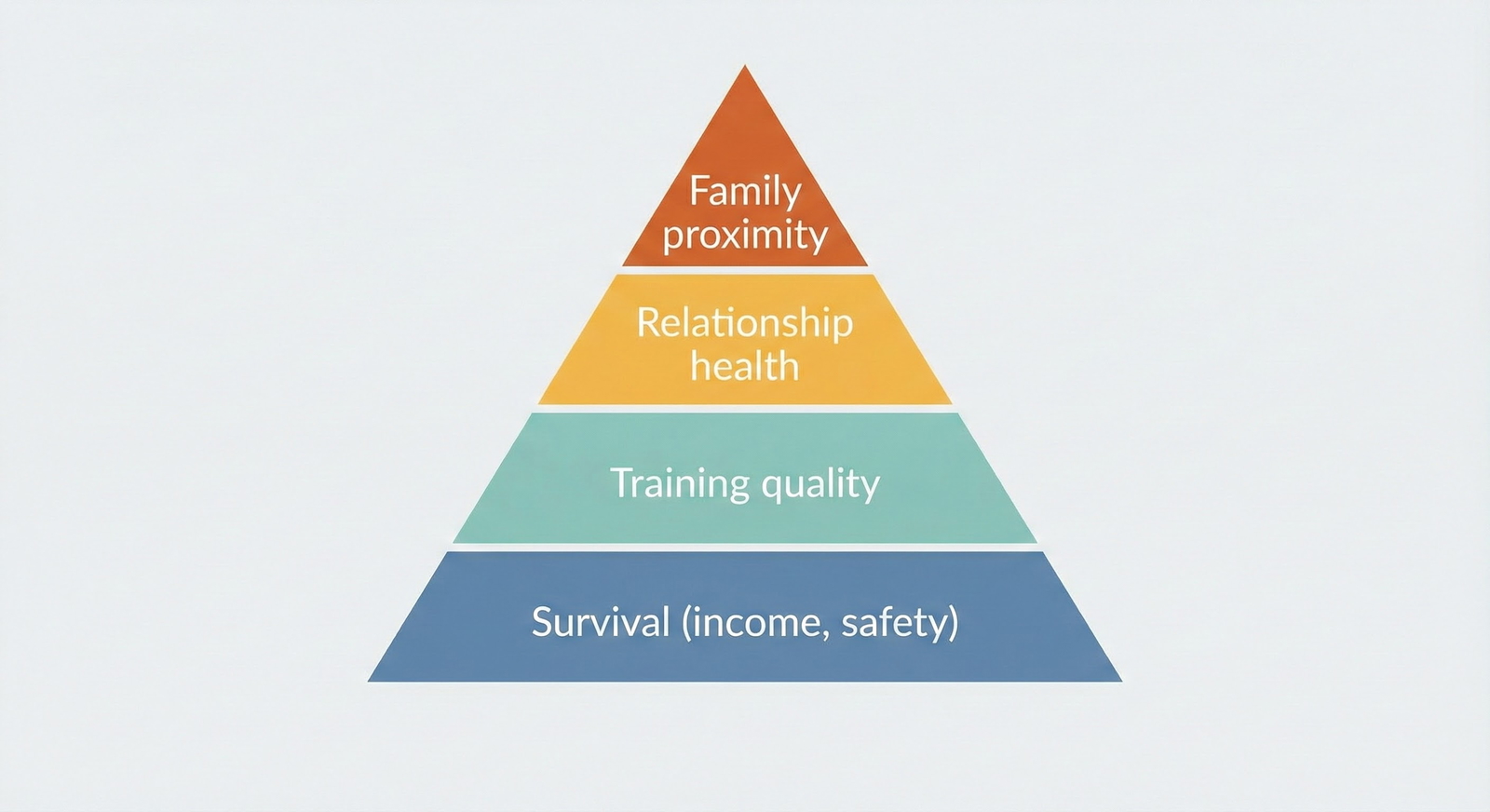
- The importance of being close to family or a strong social support network
- Desire for time together vs. prioritizing individual training environments
Concrete example:
One partner wants a high-powered surgical residency at a major academic center; the other strongly values living near family for support and future childcare. This conflict needs to be named and explored explicitly, not discovered late in the process.
3. Geographic and Regional Preferences
Location is often the biggest Couples Matching challenge. Discuss:
- Absolute “no-go” regions (for climate, cost-of-living, cultural reasons, etc.)
- Top preferred cities or states and why
- Willingness to consider regional rather than city-level matching (e.g., “Northeast” instead of “Boston only”)
Create a simple list:
- Tier 1: Dream regions/cities
- Tier 2: Acceptable, with pros and cons
- Tier 3: Would consider if necessary
Then cross-compare your lists to find overlap.
4. Long-Term and Family Planning Considerations
Even if kids or marriage feel distant, they matter in residency decisions:
- Do you hope to start a family during residency or wait until attendinghood?
- How important is access to childcare, parental leave policies, and family-friendly programs?
- Are there cultural or religious factors that influence where you live?
Raising these now helps you both see the bigger picture beyond the next 3–7 years.

Practical Communication Techniques for Couples Matching
Knowing what to talk about is only half the challenge. The how matters just as much. Good communication can turn a potentially tense discussion into a productive strategy session.
Create a Safe Environment for Difficult Conversations
1. Schedule Dedicated “Match Talks”
Instead of squeezing conversations into late-night stress vents:
- Choose a weekly time when you’re both relatively rested
- Set an agenda (e.g., “Tonight we’ll talk about backup specialties and geographic tiers”)
- Agree on a time limit to prevent emotional exhaustion
2. Use Active Listening Skills
Borrow techniques from patient communication:
- Maintain eye contact and avoid multitasking
- Use phrases like “What I hear you saying is…”
- Ask clarifying questions instead of making assumptions
This is especially helpful when one partner has more anxiety, or when disagreements surface.
3. Use “I” Statements, Not Blame
Examples:
“I feel overwhelmed when I think about cities where I don’t know anyone,”
instead of: “You’re pushing us toward cities I don’t want.”“I worry I’ll regret giving up my preferred specialty,”
instead of: “You’re making me compromise too much.”
This reduces defensiveness and keeps the focus on shared problem-solving.
Foster Honesty, Even When It’s Uncomfortable
Honesty means sharing the whole picture, not only what seems convenient.
Talk Explicitly About:
- Fear of not matching or underperforming on interviews
- Imposter syndrome and how it affects ranking decisions
- Doubts about specialty choice or second thoughts
You might ask each other:
- “What are you most afraid to say out loud about the match?”
- “Is there anything you’ve been downplaying to avoid worrying me?”
Financial Realities and Expectations
Residency finances can be stressful, especially with:
- Application and interview travel costs
- Relocation expenses for two people
- Loan repayment starting, depending on your plan
Discuss:
- How much you’re willing to spend on applications and travel
- Whether one partner may need to rely more heavily on the other financially
- Budgeting for moving, deposits, and cost-of-living differences among cities
Consider making a shared spreadsheet for:
- Application fees
- Travel/housing estimates for interviews
- Estimated resident salary and cost-of-living by region
Prepare to Negotiate and Compromise Fairly
Compromise in Couples Matching is not about one partner “winning.” It’s about balancing two legitimate sets of aspirations.
1. Make Individual Priority Lists
Each of you separately lists:
- Top 5–10 programs
- Top 3–5 cities or metro areas
- Non-negotiables (e.g., “I cannot be more than X hours from my chronically ill parent”)
Then:
- Identify overlaps as high-priority joint targets
- Flag areas where preferences diverge sharply
2. Consider Relative Competitiveness and Program Strengths
Sometimes one partner’s specialty is much more competitive or geographically constrained. You may need to discuss:
- Whether the more competitive specialty takes priority for program rankings
- Whether the less competitive partner is willing to cast a wider net, rank more programs, or adjust preferences to support proximity
This is not about assigning “more value” to one career, but about understanding how the mechanics of the Match work.
3. Stay Flexible and Revisit Decisions
Agree that:
- Nothing is fixed forever until rank lists are certified
- Both of you can request a “revisit” of any decision if new information arises (e.g., an unexpectedly great interview, a program surprising you, a negative gut feeling after a visit)
Flexibility is crucial; you may enter interview season with one plan and discover new priorities based on actual experiences.
Communication Around the Interview Season and Rank List Creation
Once applications are submitted, your communication patterns will need to adjust to a fast-changing landscape.
During Interview Season
Debrief After Each Interview
After each interview day, consider a short, structured debrief:
- What did you like and dislike about the program?
- How did you feel about the culture, faculty, and residents?
- How did the city or surrounding area feel to you?
- Would you see yourself being happy here if your partner were nearby but not at the same institution?
Capture notes in a shared document or spreadsheet while impressions are fresh. This will be critical when building your Couples Matching rank list.
Avoid Over-Influencing Each Other Too Early
Try to:
- Share impressions honestly, but
- Avoid pressuring your partner to like or dislike a program based on your experience
You can say:
- “I really liked this program for me because of X, Y, Z”
- Not: “You should definitely rank this high too or you’re making a mistake.”
Building the Couples Rank List Together
This is where Effective Communication is especially important.
Stepwise Approach:
- Each partner independently drafts a solo rank list.
- Compare and highlight:
- Strong mutual preferences
- Programs/cities where one partner feels strongly and the other is neutral
- Construct your paired rank list:
- Start with combinations where you both would be happy or very satisfied
- Then move to “one thrilled, one content” combinations
- Only then consider combinations that one or both of you view as fallback options
Talk Through “Worst Acceptable” Options
Ask:
- “What is the lowest-ranked combination that we would still be okay living with for the next 3–7 years?”
- “Is there any scenario on our list that, if it actually happened, one of us would deeply regret?”
Anything that fails that test should be carefully reconsidered.
Navigating Post‑Match Outcomes and Supporting Each Other
Despite the best planning, the Match can bring surprises—good and bad. How you communicate after results are released matters as much as everything leading up to that day.
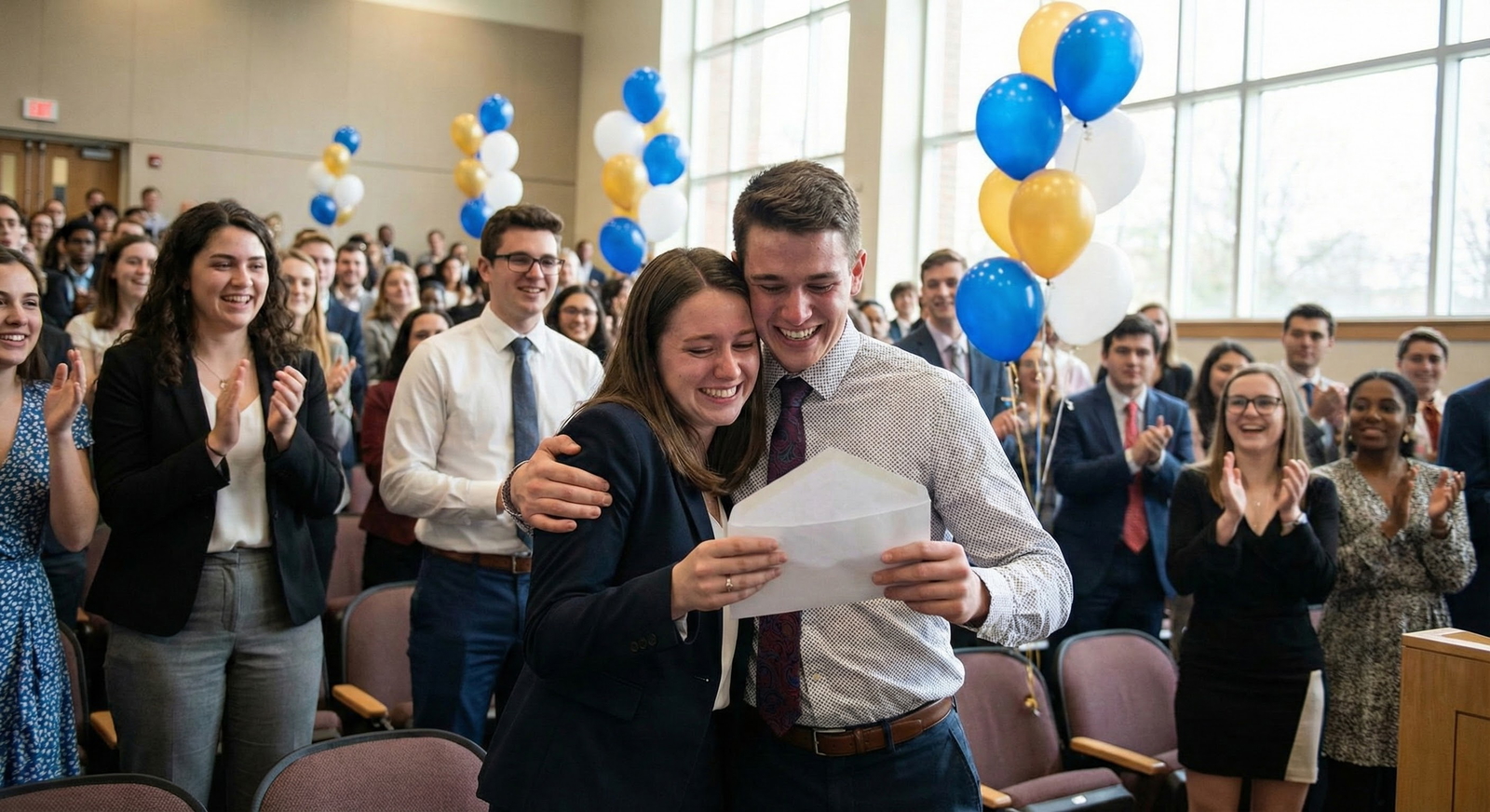
Processing Match Day Emotions Together
On Match Day (and the days after):
- Make space for both joy and grief. One partner might be excited while the other feels ambivalent or disappointed.
- Avoid minimizing each other’s emotions:
- “You should be happy, at least we matched together,” can feel invalidating.
- Instead: “I’m grateful we’re together, and I also see that this outcome is tough for you.”
Give each other permission to:
- Take a few hours, or even a day, to process
- Talk with mentors or friends individually as needed
- Then come back together for a joint conversation about next steps
Planning for Less-Than-Ideal Scenarios
If One Partner Matches and the Other Does Not (or SOAPs):
- Reaffirm that your relationship is not defined solely by this single outcome
- Talk about concrete options:
- Research years, prelim years, reapplying
- Remote or long-distance arrangements for some period
- Involve advisors early and jointly if possible, so both partners hear the same information
If You Match Farther Apart Than Hoped:
- Discuss what timeline you’re aiming for to reunite (e.g., PGY-2 transfers, fellowship planning)
- Clarify expectations about:
- Visit frequency
- Communication habits (daily calls, video chats, etc.)
- Financial responsibilities associated with travel
Even in these scenarios, strong communication and shared planning can help you navigate a difficult start.
Leveraging Outside Support and Professional Guidance
You do not have to navigate the Couples Matching process alone as a couple.
Consider Couples Counseling or Coaching
Short-term counseling or relationship coaching can help with:
- Conflict resolution strategies
- Navigating resentment or fear that may arise from necessary compromises
- Clarifying shared values and long-term goals
This is especially helpful if:
- You find yourselves repeating the same arguments
- One or both of you tends to shut down during difficult conversations
- There is a significant power differential (e.g., one partner is more financially secure, or one specialty is dramatically more competitive)
Build a Supportive Network
A strong support system can make a big difference:
- Mentors in your specialties who understand program cultures
- Residents who previously Couples Matched and can share real-world experiences
- Friends and family who can offer emotional backing (but without overriding your decisions)
When seeking advice:
- Be specific: “We’re trying to decide between two cities; can you help us think through training quality and lifestyle differences?”
- Filter input: You and your partner are the final decision-makers.

FAQs: Communication and Couples Matching
1. What if we strongly disagree on our top locations or specialties?
Start by unpacking the “why” behind each preference:
- Is it about career prestige, family proximity, financial concerns, or lifestyle?
- Are there underlying fears (e.g., fear of regretting a specialty change, fear of isolation in a new city)?
Then:
- Look for overlapping second-choice options where both of you could be content, not just one person thrilled and the other miserable.
- Consider whether there is room for temporary sacrifice for long-term gain—for example, prioritizing one partner’s dream specialty now with an agreement to prioritize the other’s preferred location later for fellowship or attending jobs.
- If disagreements feel intractable, a neutral third party (mentor, advisor, or counselor) can help facilitate a fair conversation.
2. How can we manage the stress and emotional load of Couples Matching?
Proactively build stress-management into your routine:
- Schedule “no match talk” times or days to protect your relationship from being consumed by the process.
- Maintain individual self-care habits—exercise, sleep, hobbies, therapy when needed.
- Do activities together that are explicitly not about medicine (cooking, movies, time outdoors).
If you notice irritability, frequent arguments, or withdrawal, treat these as signals to pause logistics and focus on emotional connection and support.
3. Should we involve friends and family in our Couples Match decisions?
Involving others can be helpful if:
- They provide practical support (e.g., housing input, city knowledge, childcare help).
- They can offer balanced perspectives without pushing their own agenda.
However:
- Keep final decision-making between you and your partner.
- Be cautious about oversharing early, especially if it might generate pressure or guilt (“We were really hoping you’d come back home”).
- Consider sharing your decisions once you and your partner feel aligned and confident.
4. How do we handle it if one partner feels they compromised more than the other?
This feeling is common and worth addressing directly, not ignoring.
- Acknowledge it openly: “I appreciate that you gave up X for us to be here; I want to make sure that’s recognized and valued.”
- Discuss how to rebalance over time:
- Prioritizing that partner’s preferences in future fellowship or job searches
- Supporting additional career development or leadership opportunities for them
- If resentment persists or grows, a few sessions with a couples therapist can help you both explore those emotions in a safe setting.
5. What if we’re unsure whether Couples Matching is right for us at all?
Ask yourselves:
- Are we both truly committed to building a life together beyond residency?
- Are our relationship and communication stable enough to handle shared stress and compromise?
- Do we both feel that linking our applications will, on balance, improve our personal and professional lives?
If one or both of you feels uncertain, it’s worth:
- Having a candid conversation about expectations and commitment
- Seeking input from trusted mentors or a counselor
- Considering applying independently if significant doubts remain—linking rank lists should feel like a deliberate, mutual choice, not an obligation or test of loyalty.
Conclusion: Communication as the Core of a Successful Couples Match
Couples Matching is not just a logistical exercise; it is a test and a catalyst for how you communicate as partners and as future healthcare professionals. Clear, honest, and compassionate communication will help you:
- Align your individual and shared goals
- Make informed, realistic decisions about programs and locations
- Navigate disagreements without damaging your relationship
- Support each other through the uncertainty of the Match and beyond
By starting conversations early, using structured communication strategies, and being willing to revisit and refine your plans, you can approach the residency match season with greater unity, resilience, and confidence. The habits you build now—listening, compromising, planning together—will serve you not just during Match Day, but throughout your intertwined healthcare careers.