

You can switch to couples match after submitting ERAS—but only up to a point, and not the way most people think.
Let me be precise:
ERAS and the NRMP Match are not the same thing. You do not “couples match” in ERAS. You couples match in the NRMP registration and rank list system. That distinction is where most of the confusion comes from.
If you already submitted ERAS applications and now want to couples match, you’re not doomed. But there are hard deadlines and real risks depending on when you decide to make the switch.
Let’s walk through what’s actually possible, what’s not, and what you should do right now depending on where you are in the timeline.
Step 1: Understand Where Couples Match Actually Happens
You do not indicate couples matching in ERAS. You do it through the NRMP.
Here’s the split:
ERAS = Application portal
- You pick programs
- Upload personal statements, LoRs
- Pay fees and submit applications
NRMP (the Match) = Contract & ranking system
- You register for the Match
- You indicate you’re couples matching
- You link with your partner using each other’s AAMC/NRMP IDs
- You create and certify your paired rank order list
So no, you don’t need to “change” your ERAS application to couples match. There is no “couples” check box in ERAS. The switch is all about how you register and rank in NRMP.
Step 2: The Real Question – When Are You Trying to Switch?
You’re probably in one of these situations:
| Timing | Can You Couples Match? | What Changes Needed? |
|---|---|---|
| Before NRMP registration | Yes | Register as a couple from start |
| After ERAS submit, before NRMP | Yes | Register in NRMP as couple |
| After NRMP registration, before rank list deadline | Yes | Update NRMP to couples + build joint list |
| After rank list deadline | No | You’re locked into solo lists |
The key deadline: NRMP rank order list certification deadline (usually late February / early March, depending on year and specialty).
As long as that deadline hasn’t passed, you can still switch to couples match in NRMP. After that, you’re done. You’re treated as individual applicants.
Step 3: How to Actually Switch to Couples Match (NRMP Mechanics)
Let me lay this out simply. Here’s what you do if you already submitted ERAS but haven’t set up couples match yet.
A. Confirm you’re both NRMP-registered
Each of you needs:
- Your own NRMP account
- Your own, separate Match registration completed and paid
- Your NRMP ID (or AAMC ID if NRMP uses that link in your year)
If one of you hasn’t registered yet, do that immediately.
B. Set up the couple in NRMP
Log into NRMP (both of you, separately):
- Go to your NRMP Main Residency Match registration.
- Find the section for “Couples in the Match” (wording varies slightly by year).
- One of you initiates the couples request by entering the other person’s information (usually NRMP ID).
- The other person logs in and accepts or confirms the couple request.
You’re not actually “couples matching” until both sides have confirmed. Half-done setups don’t count.
C. Build a paired rank order list
This is the real work.
You must create:
- A joint list where each line is a pair of programs:
- Partner A – Program X
- Partner B – Program Y
That’s one rank line.
Then the next line might be:
- Partner A – Program X
- Partner B – Program Z
Next:
- Partner A – Program A’
- Partner B – Program B’
And so on.
You’re not ranking “I like Mayo #1 and Stanford #2” individually. You’re ranking pairs of outcomes you’d both accept.
If you do not create and certify this joint list before the NRMP deadline, you will not couples match. You’ll either match as individuals or not match at all, depending on what the system has on file.
Step 4: What About ERAS Applications Already Sent?
Here’s the part many people overcomplicate.
Once ERAS applications go out:
- You cannot “flag” them retroactively as couples match
- You do not need to resubmit ERAS to switch to couples match
- Programs don’t see some official “this candidate is couples matching” label by default
Your ERAS is your ERAS. Switching to couples in NRMP doesn’t change what’s already been sent.
However, there are a few strategic questions you need to answer.
Do we need to apply to new programs to create realistic pairs?
Often, yes.
If you each applied to totally different geographic regions, your joint rank list might be very thin. So you might:
- Add programs in areas where you both could plausibly end up
- Apply to more community programs in the same cities as each other’s big academic targets
- Consider adding preliminary or transitional years in the same metro area
As long as ERAS is still open for applications (which it is for months), you can keep adding programs.
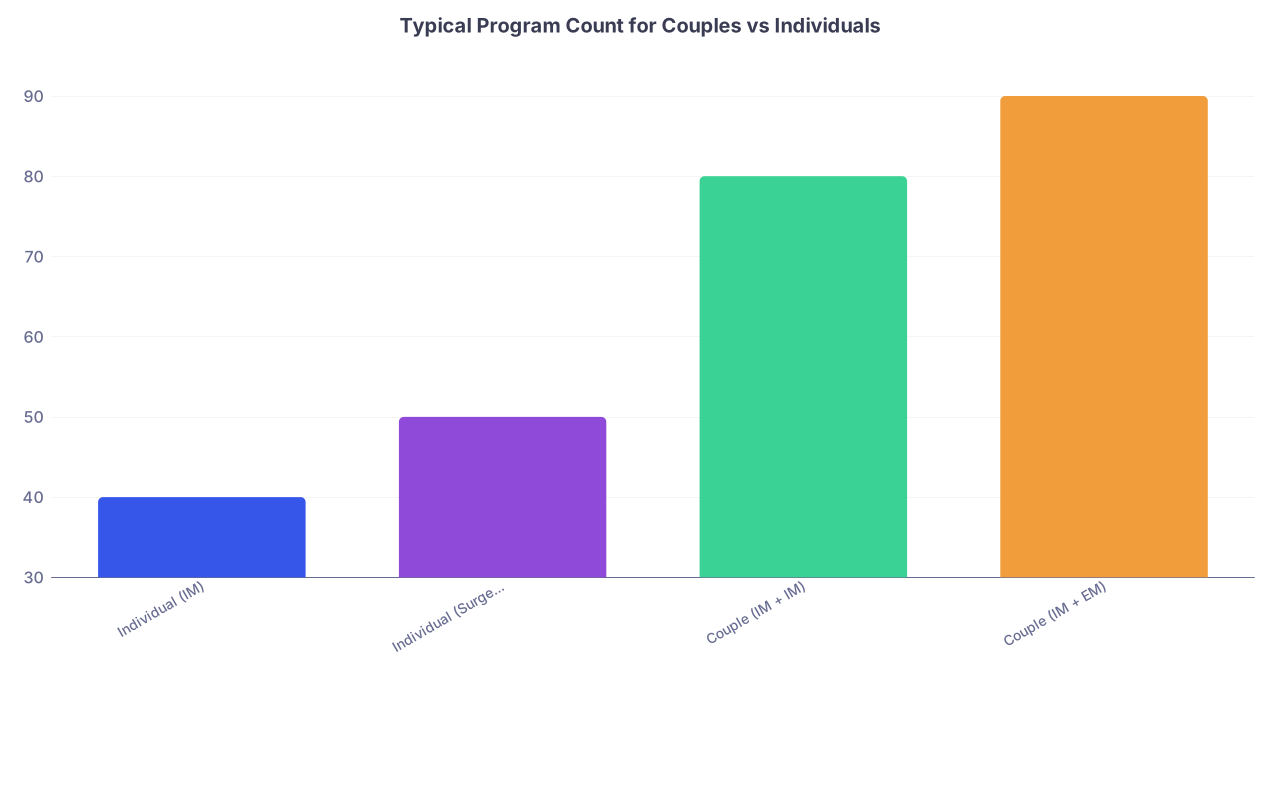
| Category | Value |
|---|---|
| Individual (IM) | 40 |
| Individual (Surgery) | 50 |
| Couple (IM + IM) | 80 |
| Couple (IM + EM) | 90 |
Rough reality: couples often need to apply to more programs than singles to create enough viable pairs.
Should we tell programs we’re couples matching?
This is optional but often smart.
You can:
- Mention it briefly in your personal statement
- Bring it up during interviews
- Send a short, targeted email to PDs or coordinators at programs both of you are applying to
Something like:
“I wanted to let you know that I’m participating in the NRMP Couples Match with my partner, [Name], who has also applied to your [X specialty] program. We’re both very interested in training in [City/Institution] and would be thrilled to match there together.”
Some programs genuinely try to help couples when they can. Not all. But enough that it’s worth the 30 seconds it takes to send that email.
Step 5: The Risks and Tradeoffs of Switching Late
Switching to couples match isn’t just a settings change. It changes your Match math.
Here’s the blunt version:
- Couples have a higher chance of at least one partner not matching than two strong individual applicants ranking independently—if they’re unrealistic in their joint list.
- Couples must accept that they may end up at:
- Lower-tier programs than they’d individually match at, or
- In different but nearby cities, or
- With one partner unmatched if they rank too aggressively
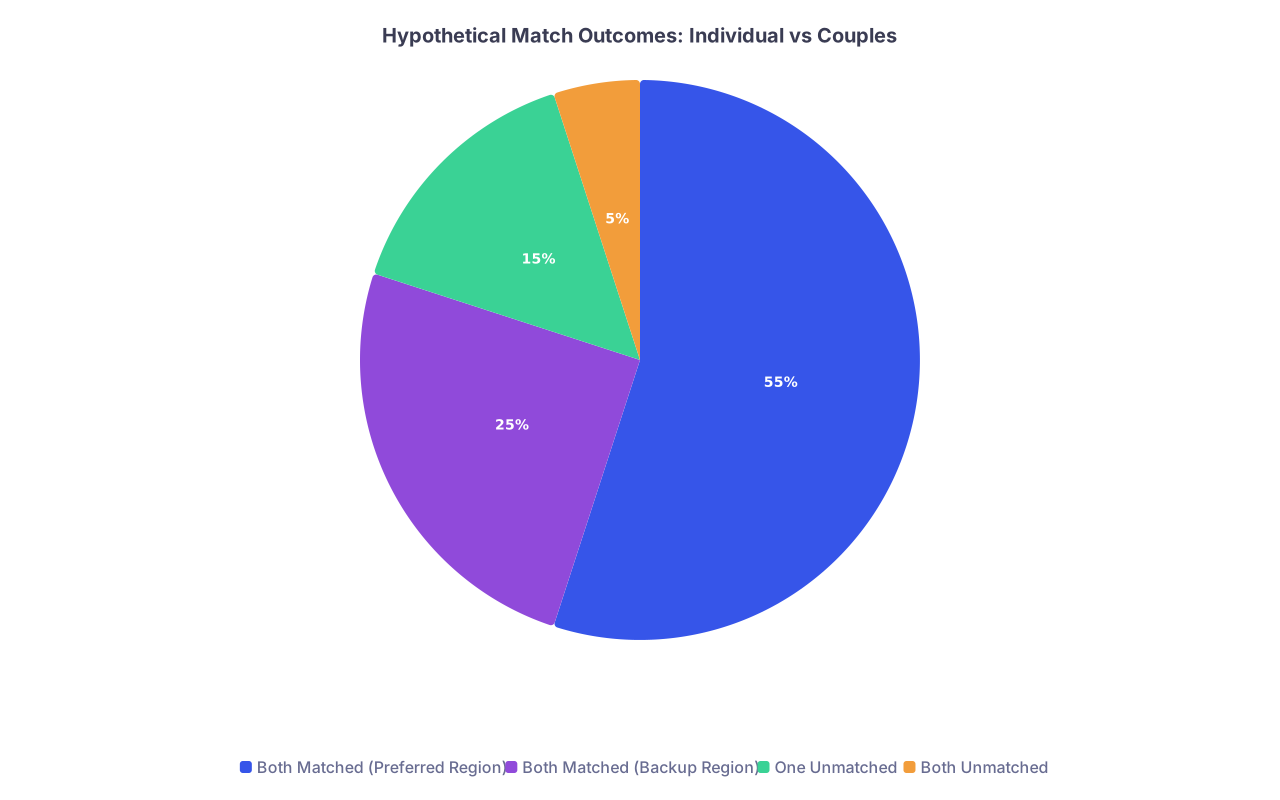
| Category | Value |
|---|---|
| Both Matched (Preferred Region) | 55 |
| Both Matched (Backup Region) | 25 |
| One Unmatched | 15 |
| Both Unmatched | 5 |
The risk increases if:
- You switch late and have very few overlapping programs
- One partner’s application is significantly weaker
- You’re geographically rigid (“this one city or nothing”)
Switching to couples match after ERAS submission is fine. Switching to couples match without expanding your program list or being flexible? That’s how couples get burned.
Step 6: Common Scenarios – What You Should Do
Scenario 1: We submitted ERAS, haven’t registered for NRMP yet
You’re in good shape.
What to do:
- Both of you register for NRMP.
- Set up couples matching in NRMP as described above.
- Review each other’s ERAS program lists. Add overlapping programs where needed.
- Keep an eye on interview invites and start sketching a joint rank list.
No need to “undo” anything in ERAS.
Scenario 2: We registered individually for NRMP, now want to couple
Also fixable.
What to do:
- Log into NRMP and update your registration to indicate you’re couples matching.
- Send and confirm the couples request between accounts.
- Build a joint paired list.
- Double-check that your individual solo lists are either cleared out or clearly secondary to your couples list strategy.
If you’re lost, NRMP has decent PDF guides on “Couples in the Match.” Use them; they’re straightforward.
Scenario 3: We already certified our individual rank lists and just realized we want to couples match
If the rank list deadline has not passed, you can still:
- Uncertify your list
- Edit your registration to indicate couples
- Build a joint paired list
- Re-certify before the deadline
If the deadline has passed, you’re done. You cannot switch to couples after the certification deadline. NRMP will not reopen it for you.
This is one of those “no, they really won’t make an exception” situations.
Step 7: Strategy Tips If You’re Switching Late
If you’ve decided to couples match after ERAS went out, do these three things immediately:
Audit overlap.
Make a simple spreadsheet with:- Programs you both applied to in the same city
- Programs one applied to but the other has not (but could)
- Realistic backup cities you’d both actually live in
Add programs smartly, not randomly.
Don’t just spam 40 more programs in random states. Focus on:- Second and third-tier programs in your target cities
- Programs known to take couples (ask residents, mentors, or look at prior grads)
- Cities with many programs across both your specialties (big metros beat small towns for couples)
Be honest about your floor.
Discuss together:- How low you’re willing to go in terms of program prestige to stay together
- Whether you’d rather:
- Stay together at a less competitive program, or
- Risk one person going unmatched but let the stronger partner aim higher
No right answer. But you cannot rank wisely if you don’t have this brutally honest conversation.
Visual: Simplified Couples Match Process

| Step | Description |
|---|---|
| Step 1 | Submit ERAS Applications |
| Step 2 | Register for NRMP |
| Step 3 | Create Individual Rank Lists |
| Step 4 | Set Up Couple Link in NRMP |
| Step 5 | Review Overlap & Add Programs |
| Step 6 | Build Paired Rank List |
| Step 7 | Certify Joint Rank List Before Deadline |
| Step 8 | Couples Match? |
FAQ: Couples Match After ERAS – 6 Direct Answers
1. Can we switch to couples match after submitting ERAS applications?
Yes. ERAS and NRMP are separate. You can switch to couples match in NRMP any time before the rank list certification deadline, regardless of when you submitted ERAS.
2. Do we need to re-submit ERAS if we decide to couples match?
No. There is no “couples” flag inside ERAS. Your ERAS applications stay exactly the same. What changes is how you register and rank in NRMP, plus any additional programs you choose to apply to for better overlap.
3. Can we tell NRMP we’re couples matching after we’ve already registered individually?
Yes. Log back into NRMP, edit your registration to indicate you’re couples matching, send a couples request to your partner’s NRMP ID, and have them confirm. Then build a paired rank list. All of this must be done before the rank list deadline.
4. Do programs automatically know we’re couples matching?
Not by default. There’s no universal banner that appears on your ERAS file just because you checked “couples” in NRMP. If it matters strategically, you need to tell them via:
- A line in your personal statement,
- Direct email to PDs/coordinators, or
- During interviews.
5. Is it riskier to couples match if we decided late?
It can be. The risk isn’t in the timing itself; it’s in the lack of overlap and poor joint planning that usually come with late decisions. If you don’t add enough overlapping programs or build a realistic paired list, your chance of one partner not matching goes up.
6. What if we want to couples match but the rank list deadline already passed?
You’re too late for this Match cycle. Once the NRMP rank list certification deadline has passed, you cannot switch to couples match, change your status, or adjust to a joint list. You’ll participate as individuals in that Match.
Key takeaways:
- You couples match in NRMP, not ERAS—switching is possible up to the rank list deadline.
- You don’t redo ERAS, but you probably need more overlapping programs and a carefully thought-out paired rank list.
- Late decision = higher risk unless you’re realistic, flexible, and strategic about where and how you rank together.


