
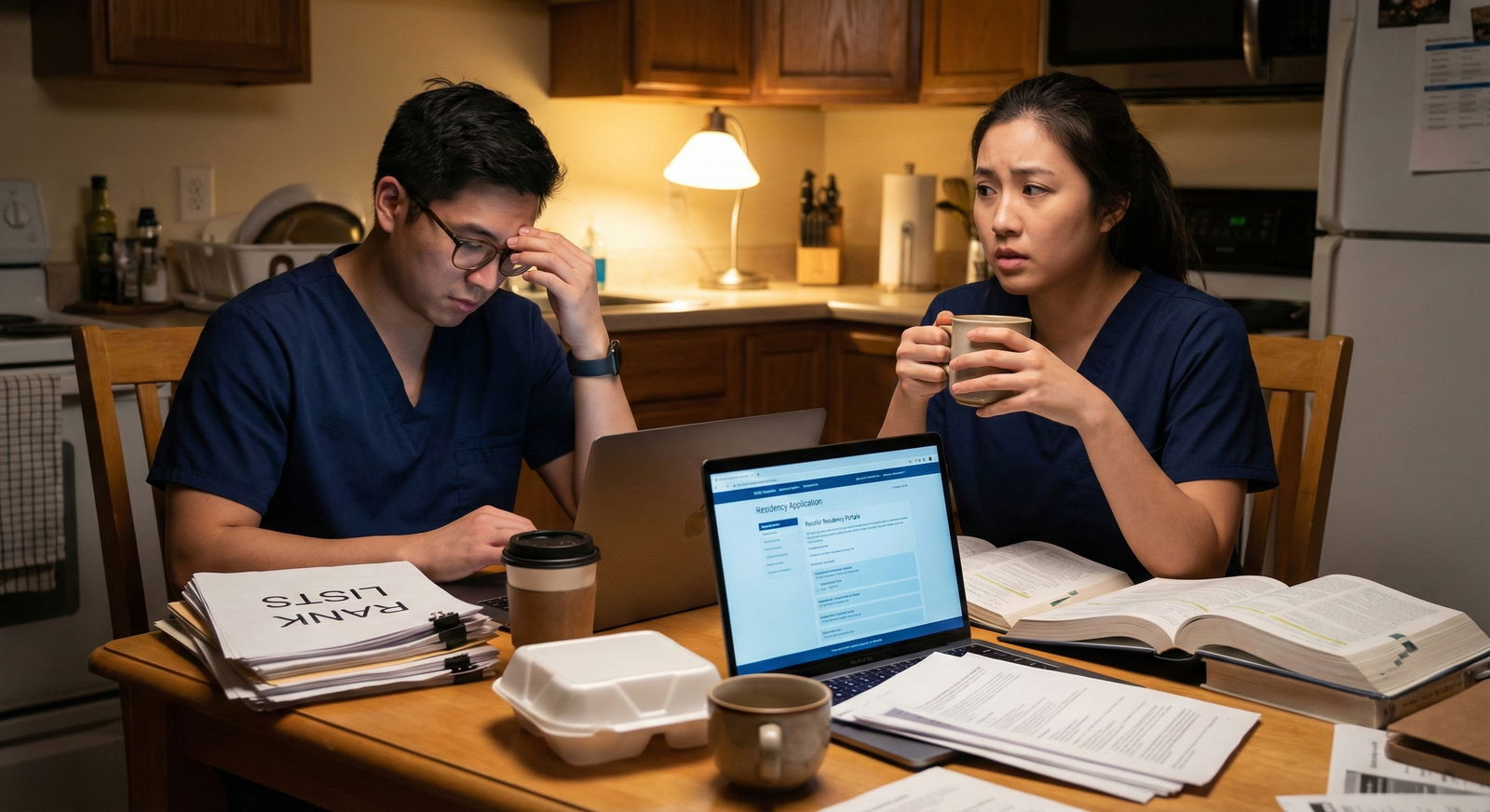
You should tell programs you’re couples matching before interviews. And if you don’t say it before, you definitely should say it during the interview. Telling them only after interviews is late and weakens how much they can actually help you.
Let me walk you through why, how, and the few situations where you might delay.
The Core Answer: Timing and Strategy
Here’s the clean, no-BS version:
- It’s usually best to disclose in applications and before interviews (ERAS application + supplemental questions + early emails if needed).
- You should explicitly mention it in the interview—to your PD, APD, or faculty/interviewers when they ask about your rank list, plans, or personal life.
- You can remind them after interviews (update emails), but that should be confirmation, not the first time they’re hearing it.
Why early?
Because programs can’t factor you into their internal discussions, PD meetings, or regional coordination if they only find out you’re couples matching after everything’s basically done.
Here’s what actually happens behind the scenes:
Programs that care about couples—and many do—will:
- Flag your file as a couples applicant
- Coordinate informally with other programs in your partner’s specialty or city
- Talk at rank meetings about how to position you and your partner to give you both a realistic chance
They can’t do any of that if they don’t know.
So the default rule:
If you and your partner are serious about couples matching, tell programs early and often, in a calm, matter-of-fact way.
How To Tell Programs You’re Couples Matching (Step by Step)
Let’s be practical. Here’s how to handle this from start to finish.
1. On the ERAS Application
Use every official place that exists:
- There’s a couples match section in NRMP/ERAS where you link your IDs.
- In your personal statement (or at least one of them), briefly mention that you’re couples matching and what you’re both looking for (especially geographic or program type priorities).
- If a program’s supplemental application asks about “special circumstances” or “anything else we should know,” that’s a perfect spot for a one-sentence note.
Keep it short and sane. Something like:
“My partner and I are participating in the couples match. We’re both strongly interested in training in the [Region/City] area and are looking for programs that value teaching, mentorship, and a collaborative culture.”
That’s it. You’re not begging. You’re just supplying relevant data.
2. Before Interviews: Email or Not?
Do you need to cold-email every program saying “We’re couples matching”?
Usually, no. If it’s clearly in your application and you’re both reasonably competitive, most programs that care will notice it.
But there are some situations where a pre-interview or early-cycle email helps:
- You and your partner are targeting a specific city (e.g., “We are both very interested in staying in Chicago to be near family”).
- One of you has interviews piling up at a particular location, the other doesn’t, and you want to gently flag the connection.
- One of you is a weaker applicant and you’re trying to avoid a split-city disaster.
In those cases, a short, professional email to the program coordinator or PD is totally reasonable.
Example:
Subject: Couples Match – [Your Name], [Specialty] Applicant
Dear Dr. [PD Name] and [Program Name] Team,
I wanted to share that I’m participating in the NRMP couples match with my partner, [Partner Name], who is applying in [Partner Specialty]. We’re both very interested in training in [City/Region] and are applying to several programs in the area.
I remain very enthusiastic about your program and would be grateful for the opportunity to interview if positions are still available.
Sincerely,
[Your Name], [Medical School]
Not needy. Just data.
3. During the Interview: You Should 100% Say It
This is where a lot of people get awkward. They worry:
- “Will they think I’ll rank them only for location?”
- “Will I look less committed?”
- “What if my partner doesn’t get an interview here?”
Here’s the reality: programs are adults. They know couples matching exists. They’d rather know the truth and be able to think strategically than be surprised later.
You want to:
- Mention it when they ask about future plans, geography, or “anything else we should know.”
- Be clear, calm, and confident—not apologetic.
Example phrasing:
“I should mention I’m participating in the couples match with my partner, who’s applying in [Partner Specialty]. We’re both hoping to be in [City/Region] if possible. I’d be excited to train here even independently, but having that geographic overlap is important to us.”
If you’re at a smaller city with limited programs:
“We recognize this area has a limited number of programs, so we’re casting a reasonably wide net. But if we’re able to match here together, that would be ideal.”
You can also ask a non-pushy, strategic question at the end:
“Do you have any advice for couples matching applicants in this region? Anything you’ve seen work well for prior couples?”
Now you’ve told them, you’ve acknowledged reality, and you haven’t sounded desperate.
4. After Interviews: When to Reiterate
After interviews, you're in “update/thank-you” territory.
This is where the question in your head usually is:
“Should we tell programs we’re couples matching before or after interviews?”
If you haven’t told them by now, you’re late. But it’s still better than never.
Use post-interview communication to:
- Confirm you’re couples matching.
- Re-emphasize your interest in that region or program.
- Clarify if you’re ranking them highly (if you genuinely are).
Example:
Dear Dr. [PD Name],
Thank you again for the opportunity to interview at [Program]. I enjoyed learning more about your [specific aspect you liked].
I also wanted to reiterate that I’m participating in the couples match with my partner, who is applying in [Partner Specialty]. We’re both very interested in training in [City] and are ranking programs in this area highly.
I’d be thrilled to train at [Program] and believe it would be an excellent fit for my goals in [interest].
Sincerely,
[Your Name]
Programs can and do take that into account at rank meetings—especially if they’re aware of your partner’s application at a nearby institution.
Will Telling Programs Hurt You?
This is the fear under all of this.
Here’s my blunt answer:
For 95% of applicants, disclosing couples match is neutral or beneficial. The small minority of programs that might see you as “complicated” are not the ones bending over backward for you anyway.
Some realities:
- Big academic centers and urban areas? They see couples every year. This is normal for them.
- Community programs in regions with multiple residencies? Often very supportive—they know their colleagues across town.
- Tiny, isolated programs with no nearby partner specialties? They might be less enthusiastic, but they also know you might not rank them highly if your partner has no options there.
If a program quietly deprioritizes you because you’re couples matching and want a realistic shot at being in the same place as your partner…that’s not a program you’d be thrilled with long-term anyway.
When Not to Lead With It
There are a few edge cases where I’d be more cautious about shouting it from the rooftops early:
You and your partner are applying to wildly different competitiveness levels
Example: one is a top 240+ Step neuro applicant, the other is a marginal candidate in derm.
Strategy: still disclose, but focus more on region flexibility and emphasize that you’re ranking a broad range of options, not just ultra-narrow overlapping unicorn programs.You’re only loosely “couples matching”
If you’re technically signing up as a couple but are willing to match in different cities without losing sleep, then it’s less critical to push this narrative. You can still mention it, but you don’t need to make it a central theme.You’re applying to a very small, single-hospital town with no other programs in your partner’s specialty
In that case, it’s sometimes smarter to frame it like:“We’re couples matching, but we recognize that may mean different cities. I’d still be happy to train here independently.”
That tells them you’re not a high risk for ranking them low just because your partner may not land nearby.
What Programs Actually Do With This Info
Here’s where this all becomes practical.
When you disclose early and clearly, programs might:
- Look for your partner by name on interview and rank lists at nearby programs.
- Informally chat with their colleagues in the same hospital system or city.
- Keep you on their rank list even if you’re not their absolute top pick, because they know couples need some matching flexibility.
- Use you as a “connector” case—moving you and/or your partner slightly higher so you line up.
None of this is guaranteed. There’s no magic couples preference switch. But I’ve seen PDs literally say in meetings:
“This applicant is couples matching with someone at [Other Hospital], we should keep that in mind if we want to help them stay together.”
If they don’t know, they can’t do that.
Quick Comparison: When To Tell
| Stage | Should You Tell? | How Direct? |
|---|---|---|
| ERAS application | Yes | Explicit |
| Pre-interview | Sometimes | Brief email |
| During interview | Yes | Very clear |
| Post-interview | Yes (reminder) | Short confirmation |
Common Mistakes to Avoid
A few things that actually hurt:
- Begging emails: “If you don’t interview us both we’ll be separated…” No. Don’t do that.
- Lying or hiding it until rank time and hoping nobody notices.
- Sounding rigid: “We’ll only rank programs where we’re both together in X specific city.” That can make you look inflexible and risky. Better: “Our strong preference is to be in [region], but we understand the match isn’t perfect.”
- Blowing up PD inboxes with repeated, anxious messages about your couple status.
Be honest, be clear, then move on. Say it, document it, and then focus on being a strong applicant.
Visual: Couples Match Timing Overview
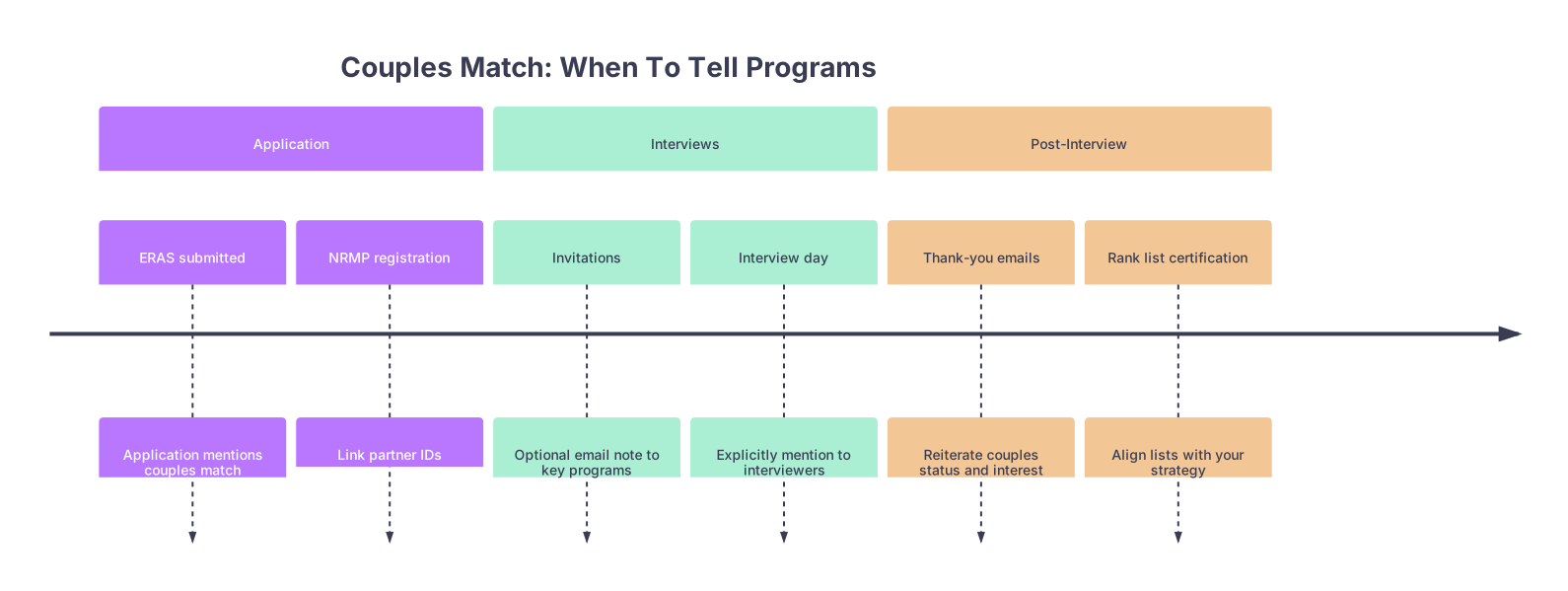
| Period | Event |
|---|---|
| title Couples Match | When To Tell Programs |
| Application - ERAS submitted | Application mentions couples match |
| Application - NRMP registration | Link partner IDs |
| Interviews - Invitations | Optional email note to key programs |
| Interviews - Interview day | Explicitly mention to interviewers |
| Post-Interview - Thank-you emails | Reiterate couples status and interest |
| Post-Interview - Rank list certification | Align lists with your strategy |
How to Talk About It Without Sounding Desperate
You want your tone to be:
- Matter-of-fact
- Mature
- Focused on fit, not just geography
Use lines like:
- “I’d be excited to match here regardless, but being near my partner would obviously be a plus.”
- “We’re both applying broadly but centering our lists around [Region].”
- “We understand there are no guarantees in the couples match, but we’re trying to optimize our chances of being in the same area.”
You’re not asking for special favors. You’re giving them context.
One More Visual: Priority Balance
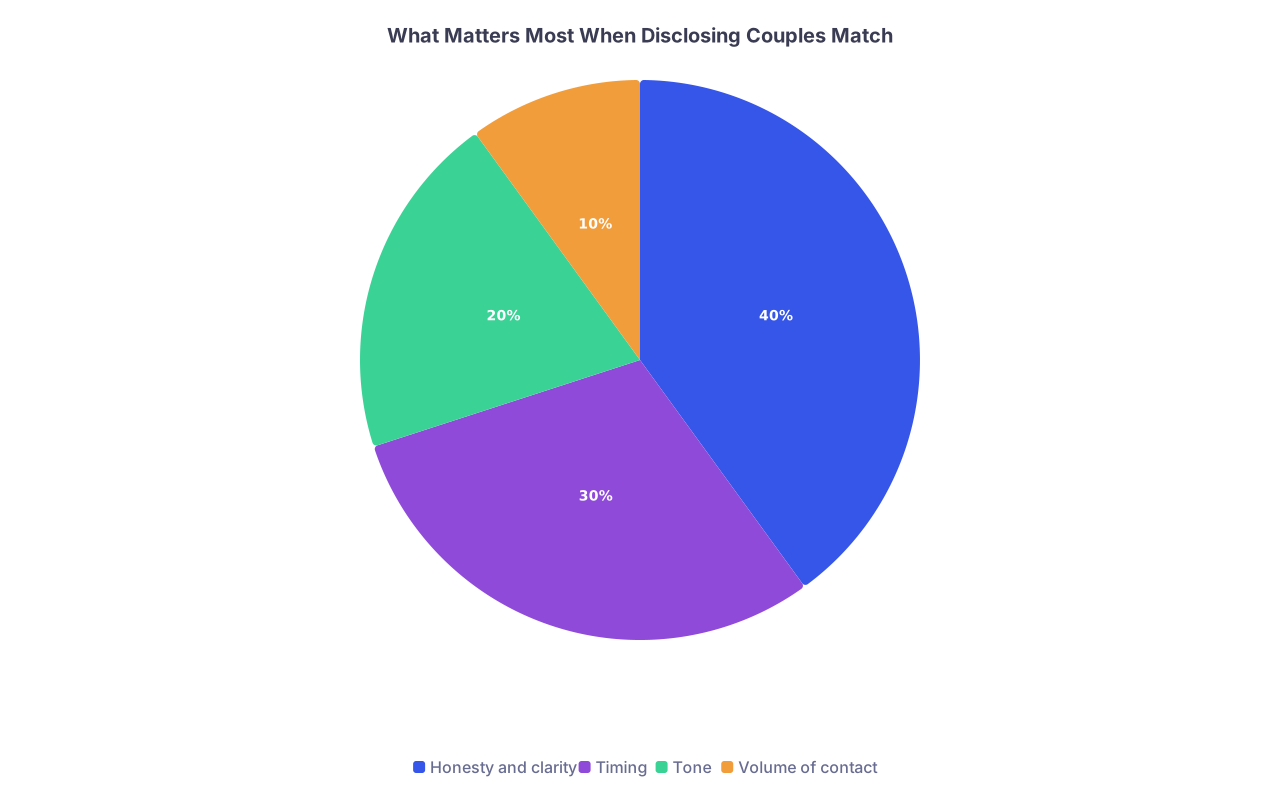
| Category | Value |
|---|---|
| Honesty and clarity | 40 |
| Timing | 30 |
| Tone | 20 |
| Volume of contact | 10 |
FAQs
1. Will telling programs we’re couples matching lower my chance of getting ranked?
Usually not. For most programs, it’s neutral to positive. The rare place that’s annoyed by couples is not doing you a favor anyway. If anything, being clear and reasonable about your situation makes you look mature and honest, which helps.
2. Should we name our partner and specific program during the interview?
Yes, that’s fine and often helpful. For example:
“I’m couples matching with my partner, [Name], who interviewed at [Hospital/Program].”
Programs in the same city or system sometimes coordinate informally. Don’t expect miracles, but giving specifics lets them actually act on the information.
3. What if only one of us gets an interview at a program in our target city?
That’s a good time for a light-touch email. The non-invited partner can email their program of interest in that city and say they’re couples matching with someone who already has an interview there and that they’re very interested in training in the same area. No demands, just information and interest.
4. Should we bring up couples matching in every single interview?
Yes, in some form. It doesn’t have to be a monologue, but at least one clear mention. If nobody asks you about geography or plans (rare, but it happens), you can bring it up briefly when they say, “Anything else you’d like us to know?”
5. How do we handle it if our partner is in a very different specialty?
You still disclose. Emphasize that you understand the constraints and you’re ranking broadly. Example: “We know [Partner Specialty] is very competitive, so we’re keeping an open mind about specific cities, but aiming to be in the same general region.” That tells programs you’re realistic, not demanding.
6. Is it ever smart to hide that we’re couples matching until after interviews?
Almost never. The only marginal case is when your situation is extremely unbalanced or complicated and you genuinely don’t want it affecting initial interview decisions. Even then, I’d still tell them at the interview stage. Post-interview first disclosure is late and limits what they can do.
7. How many emails about couples matching is too many?
One pre-interview (if needed), plus one post-interview note that mentions it is plenty. Anything beyond that starts to feel anxious and repetitive. Say it clearly once or twice, keep your tone professional, and then trust your application and rank strategy.
Key takeaways:
Tell programs you’re couples matching early—ideally in your application and during interviews—and use post-interview messages only to reiterate, not to reveal it for the first time. Be clear, calm, and realistic, and let programs use that information to help you where they can.


