

Couples Matching in Different Specialties: Strategies for Success
The residency application process is demanding for any medical student. When you add a committed relationship and the goal of matching in the same city—especially across different specialties—the stakes and complexity increase significantly. Couples Matching can be a powerful tool for aligning your medical careers, but it requires intentional planning, clear communication, and a strategic approach to the Residency Application process.
This guide walks you through how the Couples Match works, key Communication Strategies, practical planning steps, common Healthcare Challenges couples face, and real-world tactics to improve your chances of matching together—even in different specialties and at different competitiveness levels.
Understanding the NRMP Couples Match: The Basics You Must Know
Before you can build a smart strategy, you need a concrete understanding of how the NRMP Couples Match actually works behind the scenes.
What is Couples Matching?
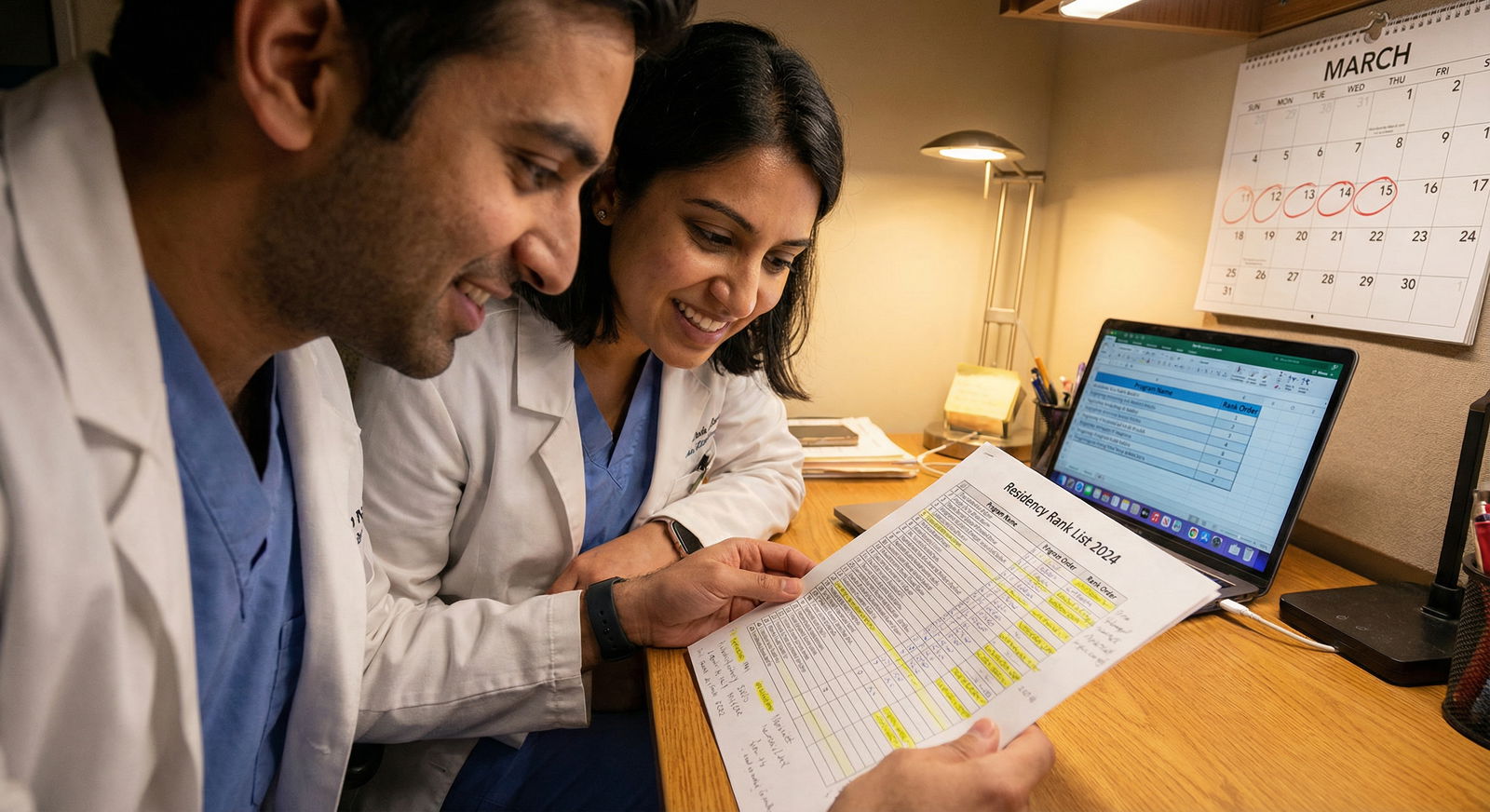
In the NRMP system, Couples Matching allows two applicants to link their rank lists so that they attempt to obtain positions in the same geographic area. You are not applying as “one combined applicant,” and programs do not see a “joint” application file. Instead, you and your partner each apply and interview individually, but when it comes to ranking, your choices are paired together.
Key points:
- Each partner has their own ERAS application, letters, scores, and interviews.
- You “register as a couple” in NRMP and create paired rank order lists.
- The algorithm attempts to match you to the best possible pair of programs on your joint list, following NRMP rules.
How Paired Rank Lists Work
Couples Matching does not mean you submit one single shared list. Instead:
- Each line on your rank list is a pair of programs: one for Partner A, one for Partner B.
- Example pair:
- Line 1: Partner A – Internal Medicine at Hospital X / Partner B – Pediatrics at Hospital X
- Line 2: Partner A – Internal Medicine at Hospital X / Partner B – Pediatrics at Hospital Y
- Line 3: Partner A – Internal Medicine at Hospital Y / Partner B – Pediatrics at Hospital Y
The algorithm will move down your list until it finds the highest-ranked pair where both of you can simultaneously match to the programs listed for that pair.
You can also pair a real program with “No Match” for one partner, a strategy sometimes used when one partner chooses to prioritize the other’s placement or when one is planning a gap year or research.
Important Clarifications and Common Misconceptions
- Programs do not automatically know you are Couples Matching unless you tell them in your application or at the interview.
- Programs do not rank you as a couple. They rank each applicant individually, then the algorithm works with your paired list.
- Couples Matching does not guarantee matching together. It simply allows the algorithm to treat your two matches as linked preferences.
Understanding these mechanics is essential so you can design a realistic and effective rank strategy.
Planning Early: Foundations for a Successful Couples Match

Successful Couples Matching begins well before ERAS opens. Ideally, you start these conversations during third year of medical school—or earlier—so you can align expectations and gather information.
Step 1: Commit to Structured, Ongoing Communication
“Endless communication” is not just a cliché—it is a core survival strategy.
Practical habits:
Schedule regular check-ins
- Example: 30–45 minutes once every 1–2 weeks during third year, weekly during application season.
- Treat this as a standing meeting: no phones, no distractions.
Use guiding questions
- What are your top 3 specialty choices and why?
- What are your absolute dealbreakers (e.g., specific city, academic vs. community, family needs)?
- How flexible are you on prestige vs. location vs. lifestyle?
Normalize revisiting decisions
Interests and comfort levels can change after rotations, exam scores, or new information. Make it okay to reconsider plans without blame.
Step 2: Clarify Specialty Goals and Competitiveness
When couples are in different specialties—especially with varying competitiveness levels (e.g., dermatology + family medicine, orthopedic surgery + psychiatry)—you must honestly assess the landscape.
Actions:
- Review NRMP’s Charting Outcomes in the Match and specialty-specific data for:
- Average Step/COMLEX scores
- Research expectations
- Match rates for US MD, DO, and international graduates
- Talk with specialty advisors about:
- Your realistic competitiveness tier (reach / solid / safety)
- How many programs to apply to in each category if Couples Matching
If one partner is in a highly competitive specialty, you may need to:
- Expand geographic flexibility (apply broadly across the country)
- Increase the number of applications
- Build stronger backups (prelim/transitional years, less competitive specialties if appropriate)
Step 3: Align on Geographic Strategy
Location is the backbone of any Couples Matching plan. Decide early how you want to balance location vs. program prestige vs. specialty fit.
Questions to consider:
- Are there must-have regions due to family, finances, or visas?
- Are there regions one of you is NOT willing to live in?
- Are you open to:
- Big cities only?
- Smaller cities or rural areas if both specialties are available?
- Commuter situations (e.g., 30–60 minutes between hospitals)?
Practical tip:
List 3–5 “priority regions” and 5–10 “acceptable regions.” This will later guide where you send most applications and how you prioritize interviews.
Step 4: Budget Realistically for a Two-Person Match
Couples Matching is often more expensive than a typical Residency Application process:
- Application fees for both partners
- Potentially more programs per person to maximize overlap
- Double travel costs for interviews
- Temporary housing or second-look visits
Build a rough budget early:
- Estimate application volume: e.g., Partner A 60 programs, Partner B 80 programs.
- Anticipate travel: Can you group interviews regionally? Are you comfortable with virtual interviews if offered?
- Explore cost-saving strategies:
- Shared travel and lodging
- Staying with friends/family in target cities
- Maximizing virtual interviews when acceptable for your specialties
Practical Strategies for Couples Matching in Different Specialties
Once your foundation is set, you can move into concrete tactics for navigating the application, interview, and ranking phases.
1. Use a Shared System: Calendars and Trackers
A shared organizational system is essential to avoid missed opportunities and miscommunications.
Tools to consider:
- Shared digital calendar (Google Calendar, Outlook) with:
- ERAS deadlines
- NRMP deadlines
- Interview dates and times
- Program social events and second-look days
- Spreadsheet or project management tool for:
- List of programs each of you applied to
- Overlapping locations
- Notes on culture, call, benefits, and “couple-friendliness”
- Post-interview impressions and ranking scores
Color-code programs by region or “tier” so you can quickly see which overlapping options are strongest for both of you.
2. Target Programs and Cities with Both Specialties
When in different specialties, you must be strategic about where you apply.
Tactics:
- Start with cities that have multiple hospitals and a high density of training programs:
- Major academic hubs (e.g., Boston, Chicago, Houston)
- Multi-hospital systems (e.g., different campuses of the same institution)
- Look beyond “same institution only”:
Matching at two separate but nearby hospitals (e.g., one at a university hospital, one at a community affiliate 15–30 minutes away) is often very workable.
Example:
One partner applies to Internal Medicine at University Hospital A and Community Hospital B; the other applies to OB/GYN at Women’s Hospital C and Community Hospital B. You can create multiple rank pairs across these combinations, increasing your chance of landing in the same metro area.
3. Be Explicit About Couples Matching in Your Application
Programs cannot support what they do not know.
Approaches:
ERAS application:
- Mention Couples Matching briefly in your personal statement or experiences if appropriate.
- Example: “My partner and I are participating in the Couples Match and are prioritizing programs in [region] where we can both train and support each other’s growth as physicians.”
Interviews:
- When appropriate, inform program leadership that you’re Couples Matching (especially if your partner is applying to the same institution or system).
- Ask whether they have experience supporting couples and whether they coordinate across departments.
This can sometimes lead to additional advocacy or at least awareness during ranking discussions.
4. Coordinate Interviews and Use Travel Time Wisely
Whenever possible:
Align interview dates
- If you both interview at the same institution or city, contact programs early to see if they can schedule you on adjacent days.
- Even if not on the same day, overlapping travel helps share transportation and lodging costs.
Use trips for life logistics
- Explore neighborhoods, housing, commute options, daycare/schools (if relevant).
- Talk with residents—especially any who matched as couples—about the culture and supportiveness of the program.
5. Identify Programs Known to Be Couple-Friendly
Some programs and institutions have a track record of supporting Couples Matching.
How to find them:
- Ask recent graduates at your medical school who successfully Couples Matched:
- Where did they apply?
- Where did they feel most supported?
- Speak with program directors or coordinators at target institutions:
- “Do you frequently work with couples in the Match? Are there opportunities for cross-department coordination?”
- Look for:
- Multiple examples of current residents who are in relationships with co-residents.
- Positive anecdotes from alumni or online forums (with the usual caution about online sources).
Programs open to Couples Matching may be more flexible about ranking both of you favorably if they view you as a net benefit to their departments.
6. Rank Strategically and Thoughtfully
Your joint rank list is where all of your planning converges.
Key principles:
- Start with your ideal combinations:
- Same institution, both in top-choice programs.
- Then add same-city, different-institution combinations:
- Both in strong programs, commuting feasible.
- Then consider less ideal but acceptable combinations:
- One partner in a slightly lower-tier or community program, the other in a top-choice program.
- One partner in a prelim year in the same city while reapplying.
Use a tiered ranking approach:
- Tier 1: Dream scenarios (top city + top-fit programs for both).
- Tier 2: Strong city + solid-fit programs.
- Tier 3: Broader geographic spread + acceptable programs.
- Tier 4: “Safety” scenarios, including those where one partner might not match (if you choose to list No Match options).
Be sure you are both comfortable with every combination on the list. If you would not want to train at a program under any circumstances, it should not appear in your rank pairs.
7. Seek Mentorship and Honest Feedback
Mentorship is especially valuable for Couples Matching across different specialties.
Seek:
- Specialty-specific advisors for each of you:
- Review competitiveness, program list, and backup options.
- Deans’ offices or student affairs:
- They often have institutional memory of past couples and can provide real-world insights.
- Residents who couples matched:
- Ask what they would do differently.
- Learn which programs were particularly helpful or unhelpful.
Bring mentors into your thought process early so they can help you avoid common pitfalls.
8. Maintain Backup Plans and Emotional Flexibility
Even with strong applications and strategic planning, Couples Matching adds complexity and risk. You should explicitly discuss “what if” scenarios.
Potential backups:
- One partner matches; the other does not:
- Reapplication strategy, research years, prelim years, or additional training.
- Matching in different cities:
- Distance relationship with planned reunification after 1–3 years.
- Exploring transfers after PGY-1 (recognizing this is competitive and not guaranteed).
- Specialty flexibility:
- For some applicants, being open to a second-choice specialty can significantly improve the chance of training in the same city.
Have these conversations well before rank list certification so decisions are thoughtful, not panic-driven.
Common Challenges in Couples Matching—and How to Navigate Them
Couples Matching in different specialties inevitably introduces tension points. Anticipating them can help you respond thoughtfully rather than reactively.
Challenge 1: Unequal Competitiveness Between Partners
When one specialty is significantly more competitive, the lower-risk path for the couple often involves:
- The more competitive partner:
- Applying very broadly.
- Remaining slightly more flexible about program type and location.
- The less competitive partner:
- Targeting a wide range of programs, including community and smaller centers.
- Being prepared to anchor the couple in regions where the other has realistic chances.
Openly acknowledge any imbalance and discuss how you will define “fairness” and “support” in your decisions. Sometimes, prioritizing one partner’s long-term specialty satisfaction now can prevent resentment later—but that must be mutually agreed upon.
Challenge 2: Limited Geographic Overlap of Specialties
Some specialty combinations are hard to overlap regionally. For example, niche fellowships or smaller residency programs may only exist in certain cities.
Strategies:
- Identify cities with both specialties early and prioritize them.
- Decide whether you are willing to:
- Expand to less desirable regions if both specialties are present.
- Consider commuter relationships (e.g., 1–2 hours apart) if daily commuting is unrealistic but weekend visits are feasible.
- Consider long-term trajectory:
- Could one of you do residency in one city and fellowship in another where the other partner trains?
Challenge 3: Time Pressure and Emotional Stress
The application season can strain even strong relationships:
- Long interview days and travel
- Uncertainty about outcomes
- Comparing yourself to peers or to each other
Protect your relationship with:
- Explicit boundaries: Set times when you will not talk about residency.
- Support systems: Lean on friends, family, counseling services, or peer groups.
- Perspective: Remind yourselves that this is one (important) step in long medical careers, not the total definition of your worth or your relationship.
Challenge 4: Mismatched Preferences or Risk Tolerance
One partner may prioritize academic prestige, while the other focuses on lifestyle or geographic stability.
Approach:
- Use a structured decision-making tool:
- List factors (location, program reputation, call schedule, family support, cost of living).
- Assign each factor a weight individually, then discuss and adjust as a couple.
- Make trade-offs explicit:
- “We are choosing City X over City Y because it offers a better program for Partner A and a slightly less ideal program for Partner B, but we both feel the overall balance is better.”
Frequently Asked Questions About Couples Matching in Different Specialties
1. How exactly does the NRMP Couples Match work?
In the NRMP Couples Match, each partner submits their own ERAS application and interviews individually. When it is time to rank programs, you register as a couple and create paired rank lists. Each line on your list is a combination: one program for Partner A and one program for Partner B.
The NRMP algorithm then looks for the highest-ranked pair on your list where both partners can be matched simultaneously. If one partner cannot match to their program on a given line, the algorithm moves to the next line. You can also pair a program with “No Match” for one partner if you choose, though this should be used thoughtfully.
2. Is Couples Matching riskier than applying individually?
It can be. Because the algorithm is trying to satisfy both of your matches together, you might bypass programs where one of you could have matched independently. This can lower each person’s individual probability of matching at their single top choice.
However, if your rank list is broad and you are flexible on location and program type, Couples Matching can still produce excellent outcomes while keeping you in the same city or region. The key is to avoid overly restrictive rank lists and to be realistic about competitiveness.
3. How can we improve our chances of matching together in different specialties?
Several strategies can help:
- Apply broadly, especially in the more competitive specialty.
- Target cities and institutions that offer both of your specialties.
- Communicate clearly with programs about Couples Matching.
- Use a shared organization system to track overlapping options.
- Create a thoughtful, tiered paired rank list with a mix of “dream,” “solid,” and “safety” combinations.
- Seek mentorship early from advisors and residents who have Couples Matched.
4. What if we do not match together—or one of us does not match at all?
You should plan for this possibility in advance:
- If one of you matches and the other does not:
- Work with your school or advisors on SOAP, research years, or reapplication strategies.
- Consider geographic strategies for the unmatched partner’s next cycle that align with where the matched partner is training.
- If you match in different cities:
- Discuss whether you will maintain a long-distance relationship during training, with a plan to reunite for fellowship or later.
- Explore potential transfers after PGY-1 (though these are never guaranteed and depend on vacancies and performance).
Having a pre-discussed framework prevents rushed decisions and resentment when emotions are high.
5. Are there residency programs known to be especially supportive of Couples Matching?
Yes, though there is no official list. Programs with a history of Couples Matching often:
- Have multiple departments and training sites within the same system.
- Are located in cities with several residency programs, creating flexible combinations.
- Can share informal examples of current residents who matched as couples.
To identify them, ask:
- Recent graduates from your school who Couples Matched.
- Program directors or coordinators directly about their experience with Couples Matching.
- Residents at interviews whether they know colleagues who matched as couples and how the institution supported them.
By approaching the Couples Matching process with intentional preparation, honest communication, and a shared understanding of priorities, you and your partner can navigate one of the most complex phases of your medical careers together. The path may involve trade-offs and unexpected turns, but with careful planning and mutual support, it can also strengthen your relationship and set the stage for two fulfilling, aligned medical careers.


