Introduction: Why Time Management Matters in the Couples Match
Navigating the residency application process is demanding for any medical student. When you add the complexity of Couples Matching, the stakes feel even higher. You are not only planning your own professional future—you are trying to align two careers, two sets of interviews, and two rank lists, often across multiple cities and specialties.
The Couples Match can be an incredible opportunity to launch your medical careers together, but it also introduces additional layers of logistics, decision-making, and stress. Effective Time Management and Stress Management become more than buzzwords; they are critical skills that can directly influence your Match outcome and the health of your relationship.
This guide breaks down practical strategies to help you:
- Coordinate busy and often conflicting schedules
- Use tools and systems that simplify planning
- Maintain your relationship and mental health during an intense year
- Make clear, values-driven decisions about your medical careers
By approaching Couples Matching with structure, communication, and intentional planning, you can move through this phase with greater confidence—and less chaos.
Understanding the Couples Match: Foundations Before Time Management
Before you can optimize your schedule, it helps to understand the structure, rules, and typical challenges of the Couples Match within the residency application process.
What Does Couples Matching Actually Mean?
In the NRMP (National Resident Matching Program) Couples Match:
- Two applicants link their rank lists so they are considered as a unit.
- Each rank list entry corresponds to a pair of programs—one for each partner.
- The algorithm attempts to match both partners at the highest pair where both can be placed simultaneously.
This does not mean you must match in the same specialty or at the same institution, but it does mean your rank lists are fundamentally intertwined.
Key Components of a Successful Couples Match
Understanding NRMP Couples Match Rules
- You must both register as a couple through NRMP.
- Rank lists are paired: each line is “Partner A Program – Partner B Program.”
- You can rank combinations like:
- Same institution, different specialties
- Same city, different institutions
- “Program A – No Match” (if one partner is willing to risk unmatched for a specific program)
- It is essential to read the latest NRMP Couples Match policy each cycle; rules and details may be updated.
Relentless Open Communication
The couples match magnifies miscommunications. You will need open, frequent dialogue about:- Specialty choices and competitiveness
- Geographic priorities
- Deal-breakers versus preferences
- Emotional responses to interviews, rejections, and uncertainty
Shared—but Not Identical—Goals
You don’t need the same top program or identical dreams, but you do need:- Agreement on important themes (e.g., “We prioritize being in the same city over both being at ‘top-10’ programs”).
- A shared understanding of what compromises each of you is willing to make.
Once you have clarity on these foundations, you can start building the time management systems that support both your individual and shared goals.
Core Time Management Strategies for Couples Matching
Time is one of your scarcest resources during the residency application year—along with emotional bandwidth. Thoughtful planning helps you use both wisely.

1. Build a Joint Residency Application Timeline
A shared timeline is the backbone of effective time management in the Couples Match.
What Your Joint Timeline Should Include
ERAS Milestones
- Personal statement drafts and finalization
- Letters of recommendation deadlines
- Transcript and MSPE release dates
- Application submission date (build in buffer time)
Interview Season
- Anticipated start/end of interview offers
- Each scheduled interview date and location (for both partners)
- Travel days, buffer days, and virtual interview blocks
Rank List Preparation
- Time to debrief each interview
- Periodic “checkpoints” to reassess priorities (e.g., monthly)
- Final rank list construction and review deadlines
How to Implement It
- Use a shared digital calendar (Google Calendar, Outlook, Notion, etc.).
- Color-code events:
- Blue: Partner A interviews
- Green: Partner B interviews
- Purple: Joint tasks (travel, rank meetings, couples conversations)
- Set reminders well ahead of deadlines (1 month, 1 week, 2 days).
Example:
You might set a weekly Sunday evening 30-minute meeting to review the coming week: any new interview offers, possible conflicts, and time reserved for relationship and self-care.
2. Coordinate Study, Clinical, and Application Demands
During this period, you’re juggling clinical rotations, board prep, and the residency application process. Without intentional planning, something important often gets neglected.
Designate Shared Study Blocks
Even if you’re on different rotations or studying for different exams, synchronized study times can:
- Create a predictable rhythm in your week
- Reduce friction (“Are you free now?” “I still need to study…”)
- Reinforce accountability and focus
Tips:
- Pick 2–4 consistent time blocks per week (e.g., Tue/Thu 7–9 pm, Sat 10–1 pm).
- Decide in advance: board prep, rotation reading, or application work.
- Use techniques like the Pomodoro method (25 minutes focused, 5 minutes break).
Example:
A couple agrees that three nights a week, they study together at the library from 6–9 pm. One is reviewing UWorld questions, the other is editing program-specific personal statements—but they’re present, focused, and aligned.
Align Clinical Schedules When Possible
You may have limited control over rotation schedules, but you can often:
- Request the same or similar blocks for heavy vs lighter rotations.
- Coordinate vacation/elective periods to overlap peak interview season.
A month of EM plus night float for one partner while the other has light outpatient weeks can create stress and resentment; pre-emptive planning with your admin office can mitigate this.
3. Protect Personal Time and the Relationship
Couples Matching isn’t just about logistics—it’s about preserving the relationship you’re working so hard to keep geographically close.
Schedule Individual Personal Time
You both need space to decompress, process, and be yourselves beyond “applicants.”
- Block off non-negotiable “me time”:
- Solo gym sessions
- Time for hobbies (music, art, gaming, reading)
- Calls with family or non-medical friends
- Protect this on your shared calendar—respect it as you would an interview.
Maintain Dedicated “Non-Residency” Time Together
If you’re not careful, every conversation will drift toward programs, applications, or anxiety.
- Schedule standing date nights or time blocks with a clear rule:
No residency talk for at least the first 60 minutes. - Rotate who plans the activity: dinner, walk, movie night, board games, exploring a new neighborhood.
This isn’t frivolous; it’s proactive Stress Management and relationship maintenance.
4. Plan Interview Season Strategically and Flexibly
Interview season is where Couples Matching logistics really intensify. Smart planning now can save you time, money, and emotional strain later.
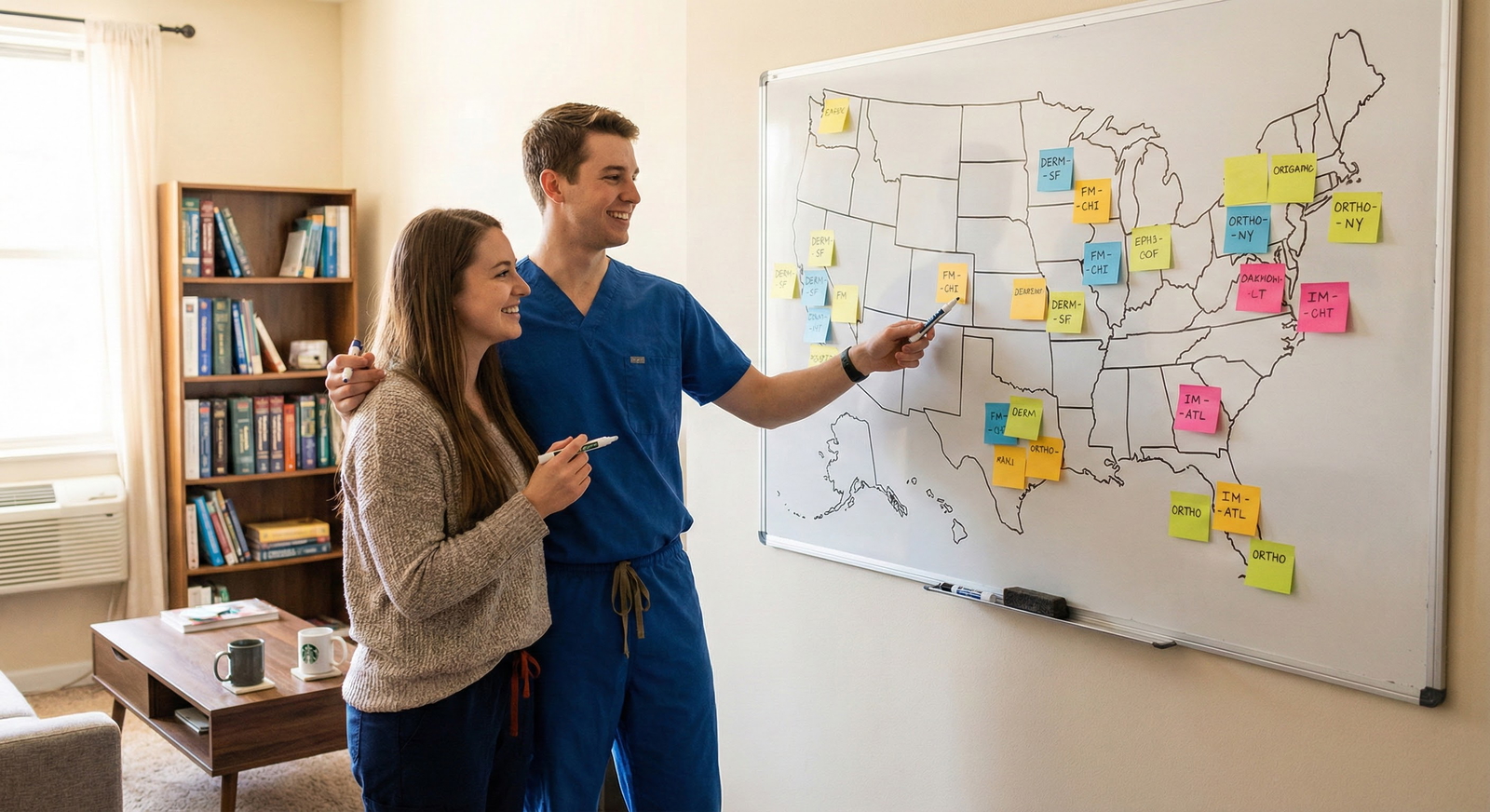
Map Geographic Clusters
Before interview offers roll in:
- Identify city and regional clusters where both of you are applying.
- Rank these clusters loosely (e.g., “high priority cities,” “acceptable,” “fallback regions”).
As invites arrive, try to:
- Schedule interviews in the same city around the same dates.
- Bundle travel (e.g., 3 programs in the same metro over 4 days).
Use Shared Travel When Possible
Traveling together can:
- Reduce financial costs (shared lodging, rides).
- Provide emotional support before/after high-stakes interviews.
- Save time in planning (one combined itinerary).
But maintain flexibility:
- One partner might need to accept a date that doesn’t perfectly align with the other’s.
- Prioritize program strength, perceived fit, and feasibility over a perfectly synchronized schedule.
Case Example:
Partner A gets a high-priority interview in City X on Monday. Partner B later receives an interview in the same city, but for Wednesday. They decide to travel together Saturday, spend the weekend exploring, and support each other through both interviews, using Tuesday as a decompression and note-writing day.
Build in Buffer and Recovery Time
Interviewing is exhausting. Protect margins by:
- Avoiding back-to-back interviews plus overnight travel whenever possible.
- Blocking 1–2 “recovery” days per month in your calendar where you avoid scheduling additional interviews unless absolutely necessary.
- Planning brief decompression rituals (walks, journaling, quick debriefs) after each interview.
5. Communicate Preferences and Priorities Clearly
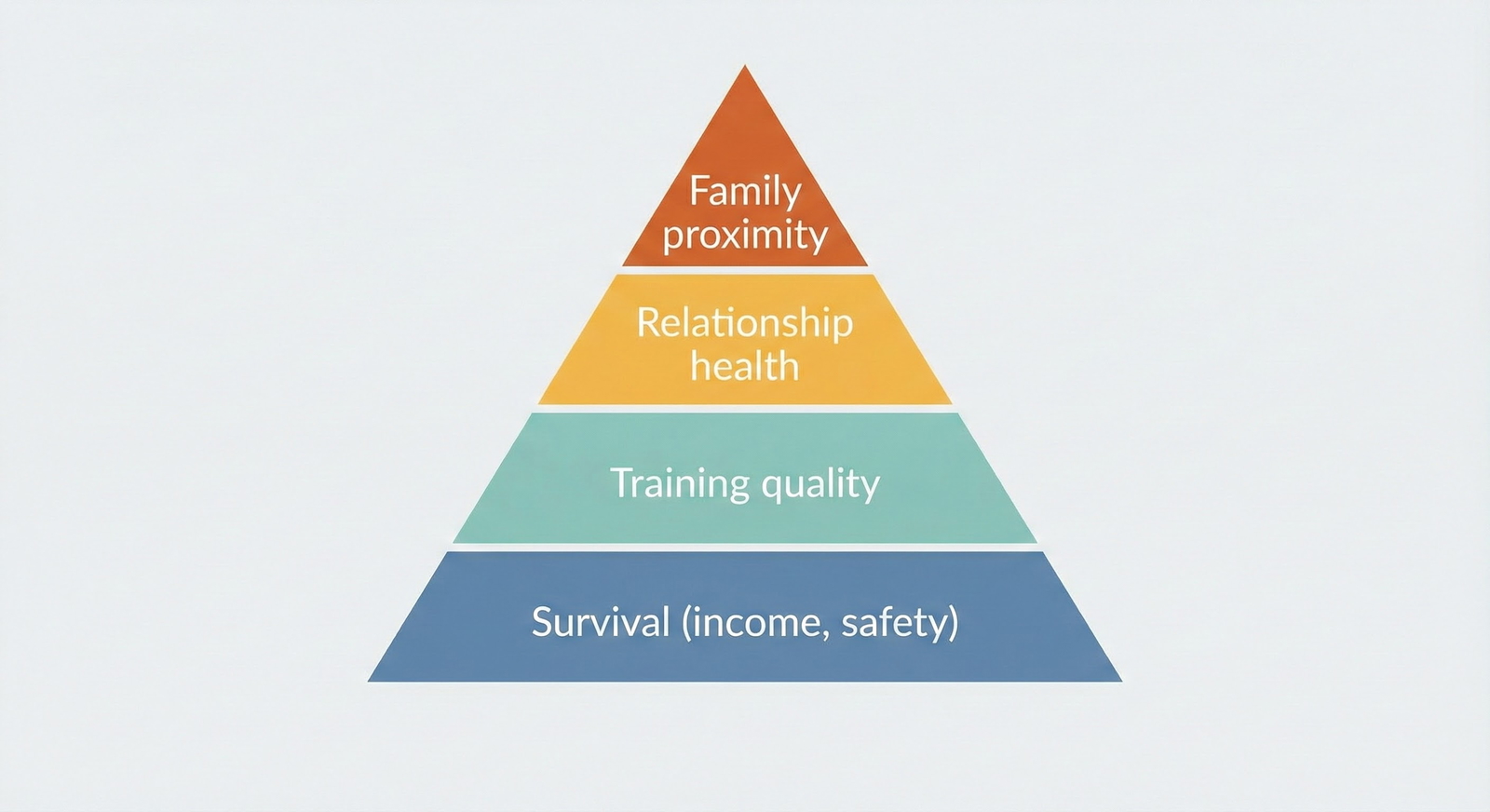
Time management is not just about hours—it’s about mental clarity. The more aligned you are on big-picture goals, the less time you’ll waste in indecision and conflict.
Have Structured “Values and Priorities” Conversations
Set aside several dedicated sessions (not rushed pre-sleep chats) to discuss:
Geographic priorities:
- Strong preference for specific cities or regions?
- Deal-breakers (e.g., “We cannot live more than X hours from aging parents.”)
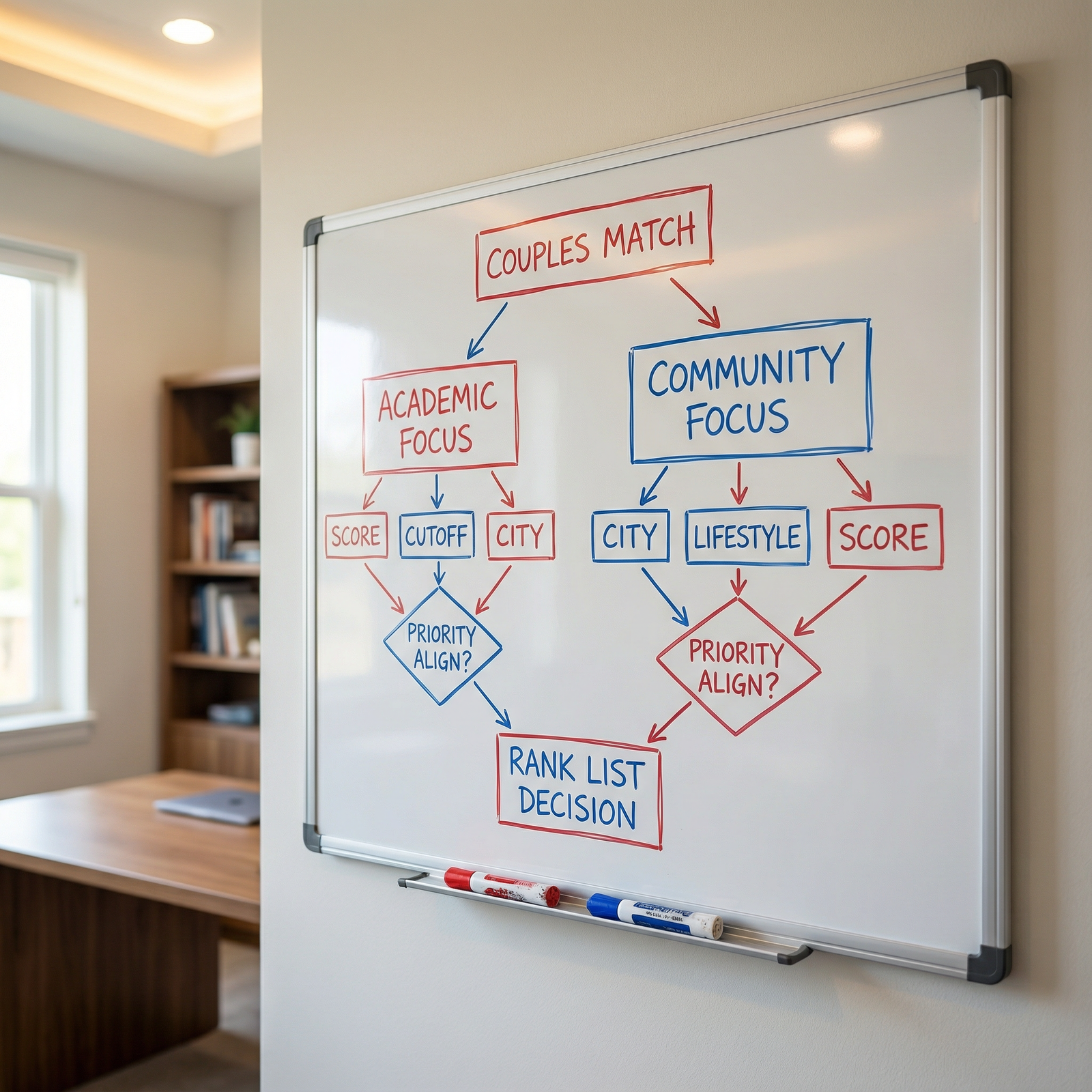
Career priorities:
- Prestige vs. work-life balance
- Academic vs. community vs. hybrid settings
- Fellowship aspirations
Relationship priorities:
- Is being in the same city non-negotiable?
- Would you ever accept being in neighboring cities or within a commute distance?
Capture outcomes of these discussions in writing—a shared document you can revisit.
Establish a Feedback and Check-In System
As interview season evolves, so will your opinions.
- Hold a weekly or bi-weekly “couples match check-in”:
- How did you feel about programs interviewed this week?
- Any shifts in ranking or regional preferences?
- Any new anxieties or worries to acknowledge?
- Use a simple rating system (e.g., 1–5) for each program on:
- Fit for you
- Fit for your partner
- Overall couples viability
This structure keeps emotions from building unspoken and helps you adjust your strategy in real time.
6. Use Technology to Synchronize Your Routines and Tasks
You can’t hold everything in your head. Offloading to well-chosen tools frees mental space and reduces errors.
Recommended Tools and How to Use Them
Shared Calendar (Google Calendar, Outlook)
- Interviews, travel, deadlines, joint meetings.
- Color-code by partner and task type.
Task Managers (Todoist, Trello, Notion, Asana)
- Create boards for:
- Application tasks (PS, LORs, ERAS entries)
- Interview tracking (invite, scheduled, completed, thank-you note sent)
- Program research (notes, pros/cons)
- Assign due dates and owners (Partner A vs Partner B).
- Create boards for:
Note Apps (Evernote, OneNote, Notion)
- Keep structured interview notes:
- People met
- Atmosphere, call schedule, mentorship, fellowship placement
- How each program supports couples or dual-career households
- Keep structured interview notes:
Communication Tools
- Use your usual messaging app, but consider a dedicated shared channel or thread just for residency logistics to separate it from everyday relationship conversation.
Make Technology Work for You, Not Against You
Avoid notification overload:
- Turn off non-essential notifications.
- Batch-check emails for interview updates at set times (e.g., morning, midday, evening), especially if constant checking spikes anxiety.
- Use filters in your email to label and highlight messages from key programs.
7. Prioritize Self-Care and Stress Management as a Couple
Burnout, anxiety, and decision fatigue can silently derail even the best-laid plans. You need a Stress Management strategy as deliberately designed as your interview schedule.

Individual Self-Care Strategies
Physical Activity
- Aim for at least 2–3 workouts per week—walks, runs, yoga, gym sessions, home workouts.
- Keep some sessions flexible and brief (20–30 minutes) for busy weeks.
Mental Health Practices
- Short daily mindfulness, breathing exercises, or journaling.
- Use apps like Headspace, Calm, or Insight Timer for guided practices.
Professional Support
- Consider proactive check-ins with a therapist or counselor, especially if you have a history of anxiety or depression.
- Many med schools and hospitals provide confidential counseling for trainees.
Couple-Based Stress Management
Build joint routines that support calm and connection:
- Evening walks phone-free
- A weekly “mental health check-in” where each partner shares honestly how they are coping
- Shared workout classes or home yoga sessions
Identify early warning signs of burnout or relationship strain:
- Increased irritability, frequent arguments over small things
- Withdrawal or emotional numbness
- Sleep disturbances or somatic symptoms (headaches, GI upset)
If you notice these signs in yourself or your partner, treat it as a signal to reassess workload, reduce non-essential commitments, and possibly seek additional support.
Conclusion: Turning a High-Stakes Process into a Shared Growth Experience
Couples Matching in residency is undeniably complex. You are coordinating two high-stakes Residency Applications, managing Time Management puzzles, making major life decisions, and trying to protect your relationship—all under a firm deadline.
Yet with intentional planning, structured communication, thoughtful Stress Management, and the right tools, this season can become more than just something to “get through.” It can be:
- A chance to clarify your individual and shared values
- A training ground for future joint decisions in your medical careers
- A powerful bonding experience that strengthens your partnership
By building a shared timeline, harnessing technology, fiercely protecting your personal and relationship time, and communicating honestly about preferences and fears, you position yourselves not only to match—but to enter residency aligned, resilient, and connected.
FAQ: Couples Matching, Time Management, and Residency Applications
1. What is Couples Matching in residency, and how does it affect our rank lists?
Couples Matching is an NRMP option that allows two applicants to link their rank lists so the algorithm attempts to place them in programs that form an acceptable pair. Instead of ranking programs individually, you rank pairs of programs (one for each partner) on each line. This affects your strategy because:
- You must think in terms of combinations (e.g., “Program A for me + Program B for you in the same city”).
- You may rank more total entries than a typical applicant to account for all reasonable combinations.
- You must negotiate which trade-offs (career vs location vs prestige) are acceptable to both of you.
2. How can we start organizing our time effectively for the Couples Match?
Begin by:
Creating a shared digital calendar with:
- Application deadlines
- Interview dates and travel days
- Rank list discussion sessions
Setting weekly or bi-weekly check-ins to review:
- New interview offers
- Schedule conflicts
- Shifts in program or geographic preferences
Dividing responsibilities:
- One partner can track interview data and logistics, while the other manages shared documents and program notes.
- Rotate responsibilities if one person begins to feel overloaded.
3. What happens if one partner matches and the other does not?
If one partner matches and the other does not, several paths are possible:
SOAP (Supplemental Offer and Acceptance Program):
The unmatched partner can apply to unfilled positions during SOAP week. This can sometimes result in a placement that is geographically compatible with the matched partner, but it is not guaranteed.Deferred or Gap Year Options:
The unmatched partner might consider:- Research positions
- Preliminary or transitional year spots (if available)
- A reapplication strategy with strengthened credentials
Communication and Support:
This outcome can be emotionally intense. It is important to:- Avoid blame
- Seek support from advisors, mentors, and mental health professionals
- Revisit and adjust future joint plans with compassion and realism
4. What are the most common challenges couples face while matching, and how can we manage them?
Common challenges include:
Differing Specialty Competitiveness:
One partner applying to a highly competitive field (e.g., dermatology) while the other applies to a less competitive specialty can unbalance options.- Strategy: Work with advisors early to develop realistic lists and geographic flexibility.
Geographic Disagreements:
One partner prioritizes a specific city or coast; the other is more flexible or has different preferences.- Strategy: Use structured conversations to identify non-negotiables vs “nice-to-haves” and rank cities/regions together.
Scheduling Conflicts and Fatigue:
Overlapping interviews, rotations, and travel can lead to exhaustion.- Strategy: Protect recovery time, maintain a joint calendar, and be selective about adding lower-priority interviews.
Emotional Strain and Miscommunication:
Stress can amplify small disagreements.- Strategy: Schedule regular check-ins, practice active listening, and seek early support if conflict escalates.
5. How can we manage stress and protect our relationship during the Couples Match?
Practical steps include:
- Set boundaries around residency talk (e.g., no rank list debates after 9 pm).
- Plan regular non-medical activities together: walks, meals, hobbies, short local trips.
- Normalize emotional ups and downs and offer each other validation rather than immediate problem-solving.
- Use counseling resources if needed—many couples benefit from a few sessions focused on communication skills during this season.
- Remember your “why”: Keep sight of the reasons you chose each other and your long-term goals beyond the Match.
By integrating these strategies, you can transform the Couples Matching process from a purely stressful logistical challenge into a structured, collaborative step forward in both your medical careers and your life together.